We recently uncovered some old apple trees on our property that we didn’t even know existed. They were completely swallowed up by blackberries, salmonberries, and encroaching forest. After clearing the area, we found three still alive and three that, unfortunately, didn’t make it.
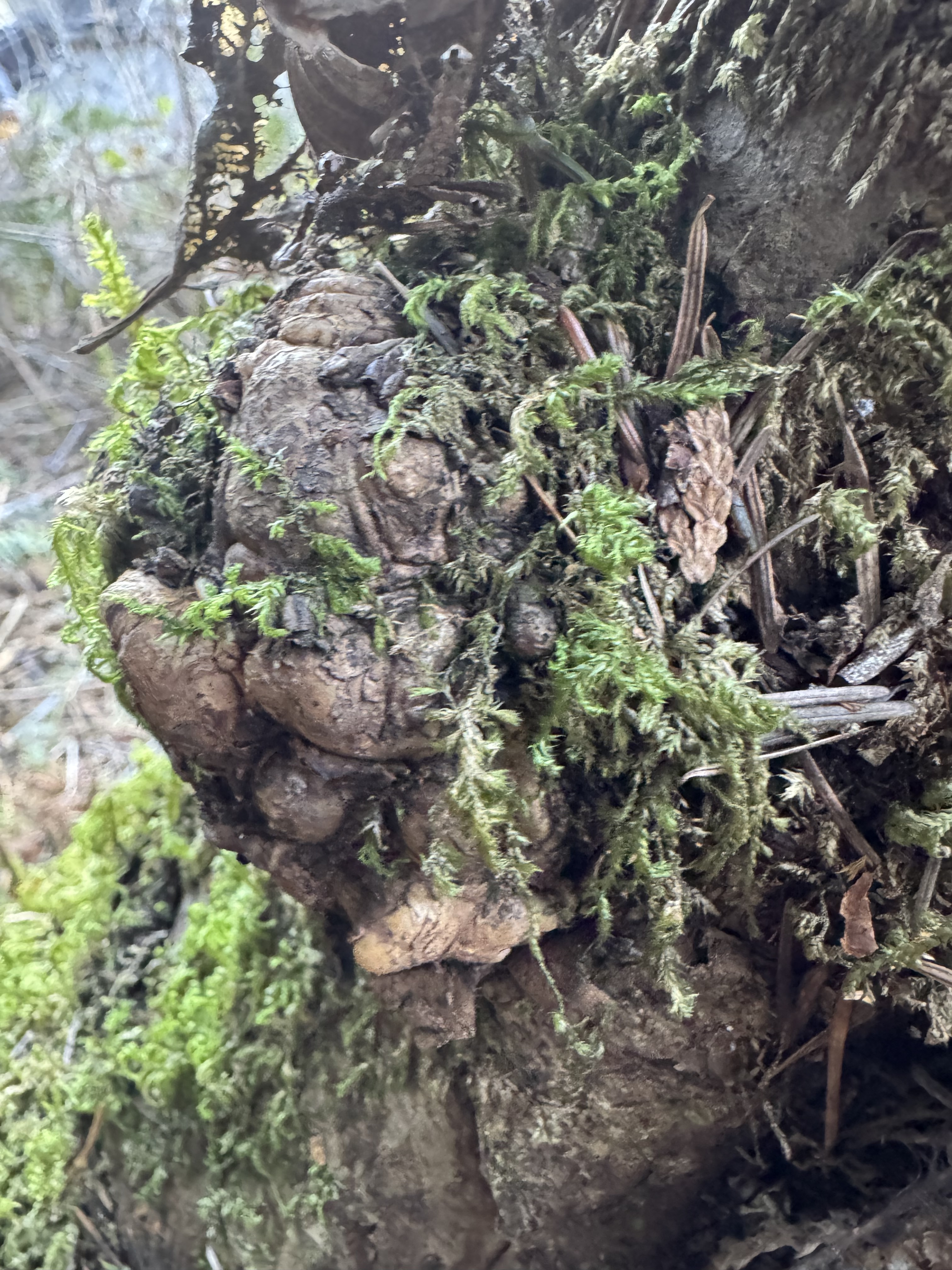
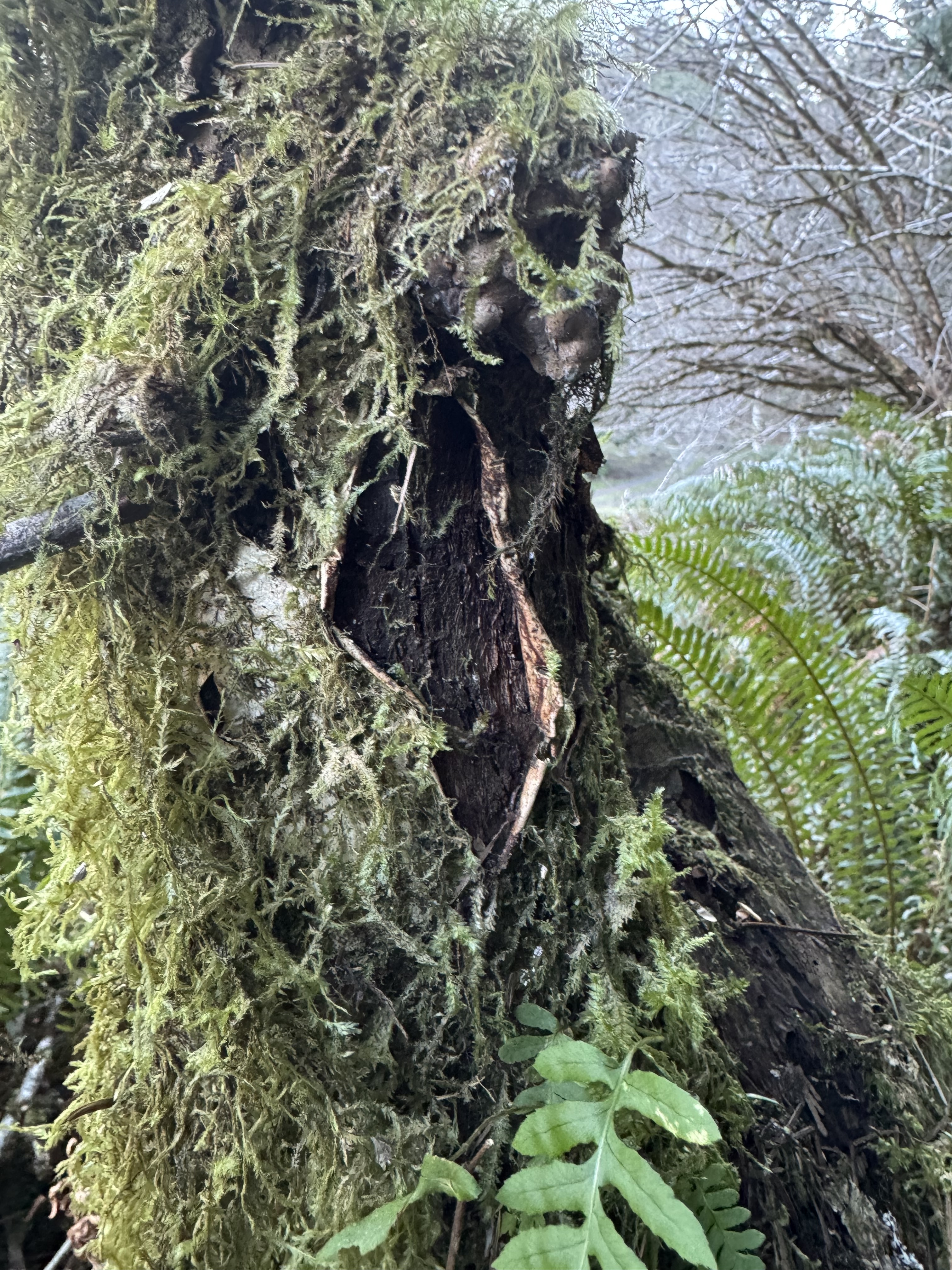
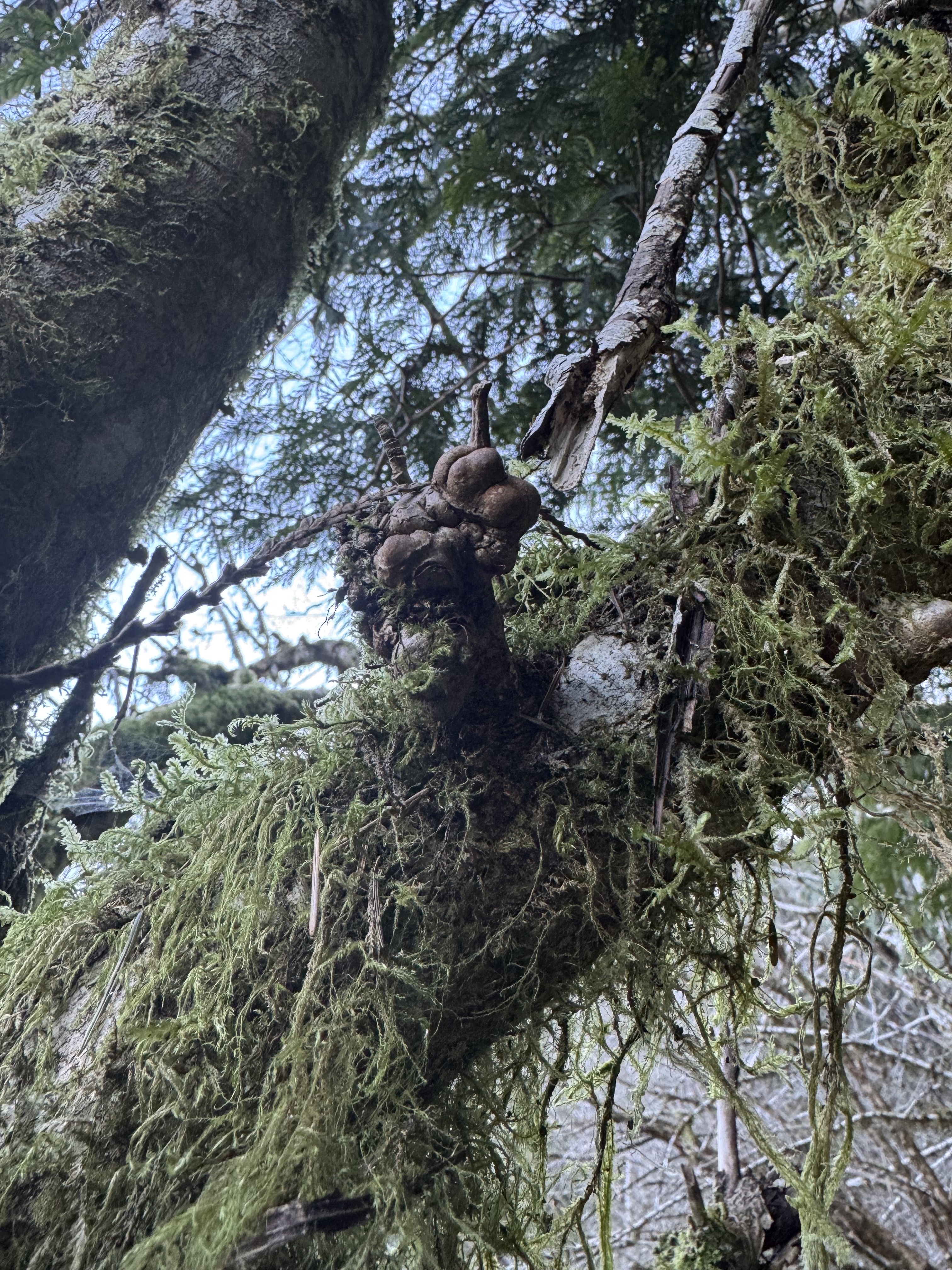
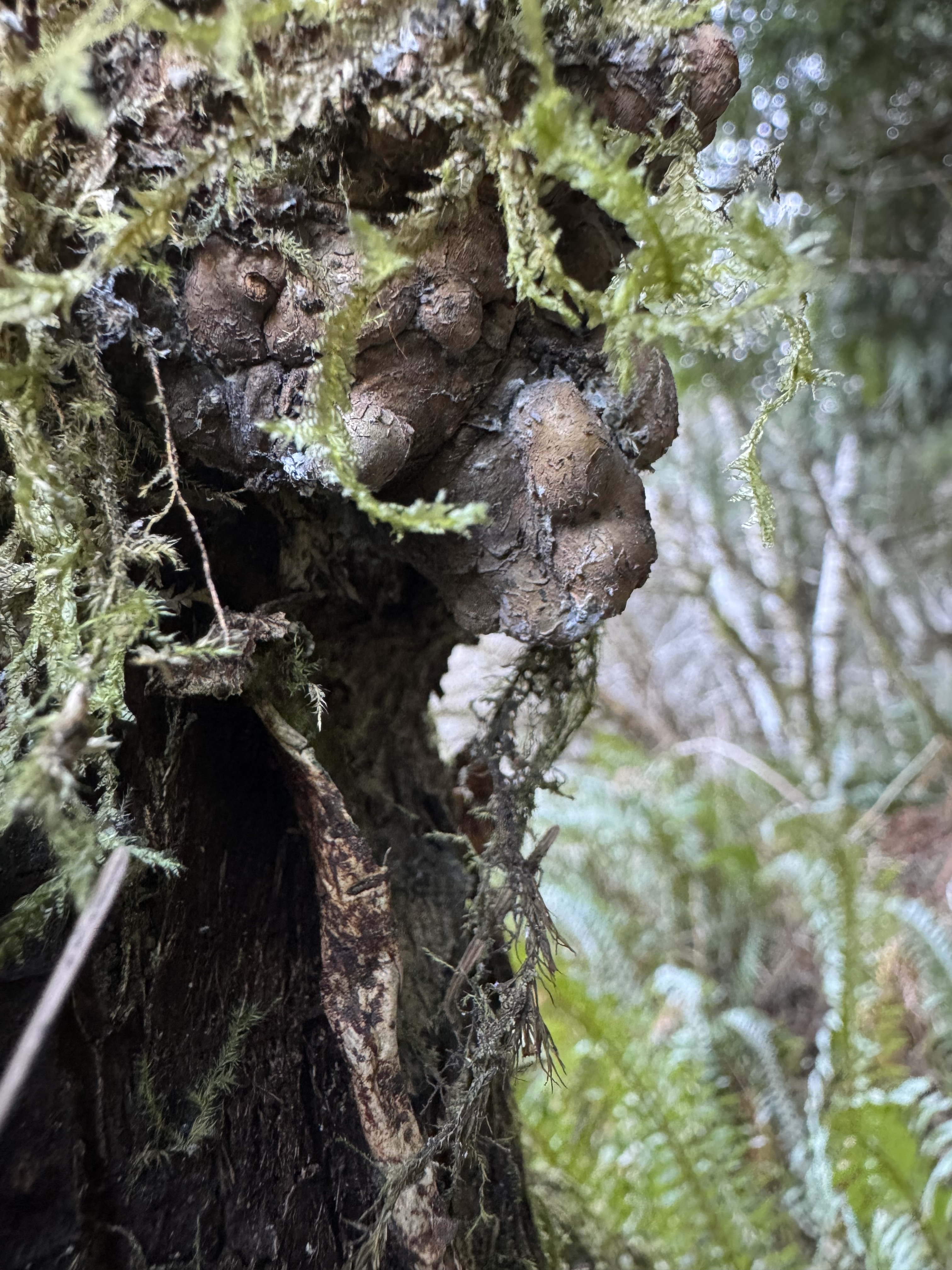
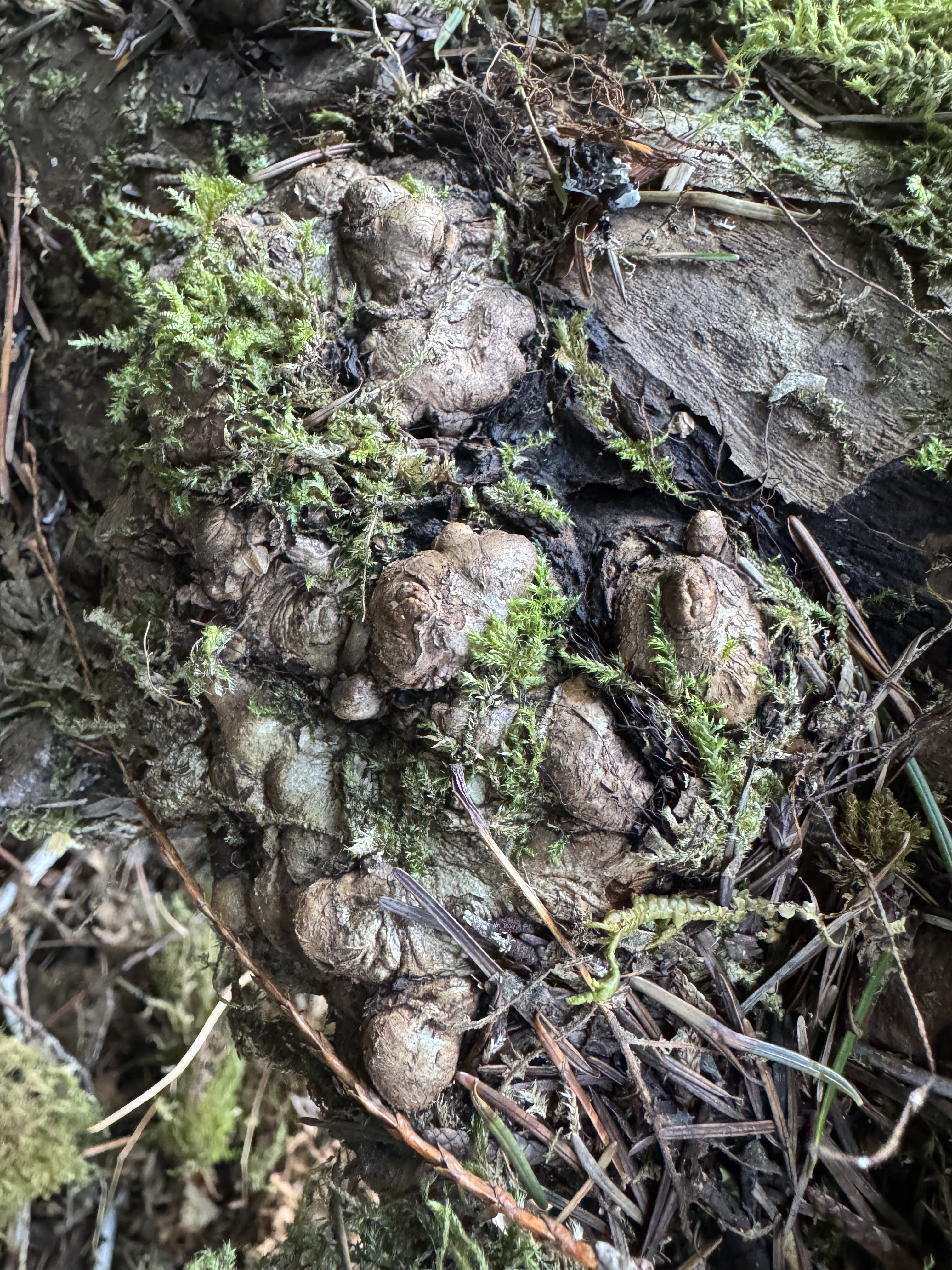
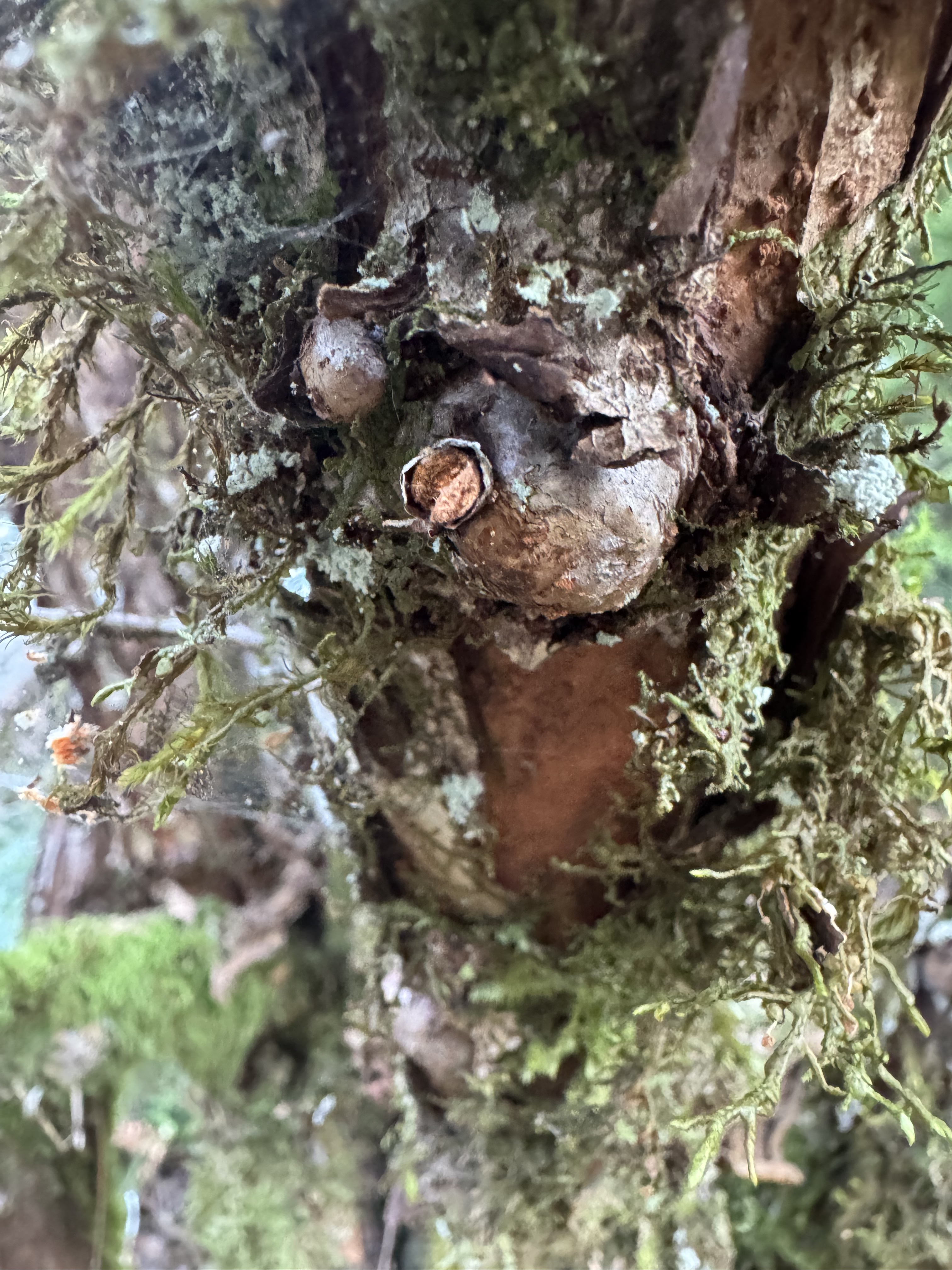
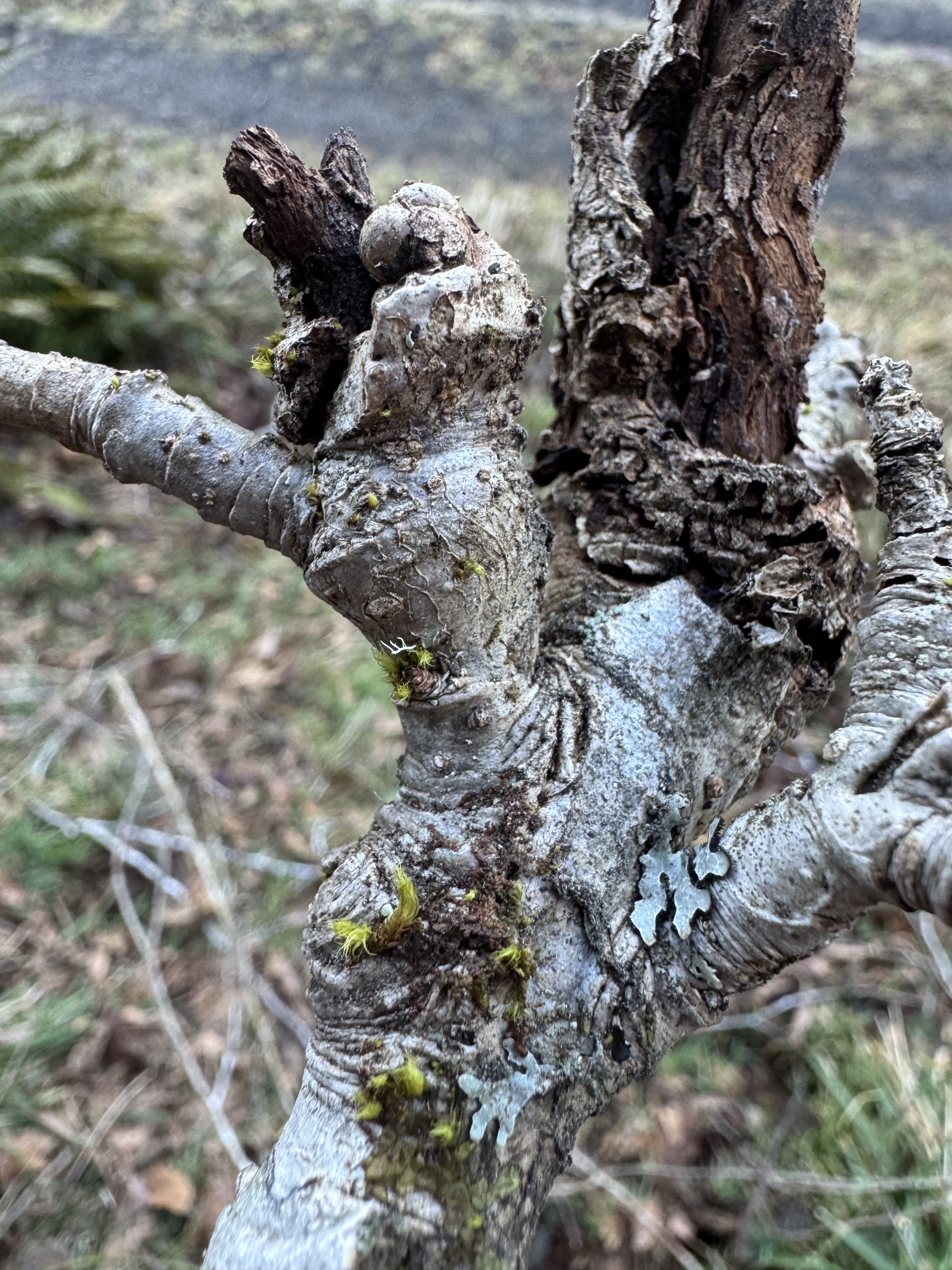
We’ve been cutting back the overgrowth to give them more sunlight and airflow, and trying to take scions, but one tree near the dead ones looks really rough—lots of brittle, dead limbs, weird bulbous growths (maybe galls?), and some rotting bark. I’m wondering if this tree is salvageable or if it’s too far gone.
Has anyone dealt with something like this before? Can I save this tree, or is it better to remove it? I’ve attached some pictures (apologies if they’re a bit gross). Any advice on identification and next steps would be greatly appreciated.
Those look like burls, which are harmless. It’s easy to graft into burls though (thicker cambian layer by a lot). If you don’t like the shape or condition of the tree and if there are any suckers, you can graft onto one with whatever you want, then eventually remove the old tree but save the original roots(or regraft it back on its self to completely retain the original tree). Or you open it up to let more light to the base and graft directly into the base of the trunk if there are no suckers. If you don’t want to do that it might help to show us pictures of the whole tree in one frame, so we can see.
Are those rounded growths woody or relatively soft/leatherly? If the latter, they are probably mushrooms, indicating that the tree is infected by a fungus and will not survive.
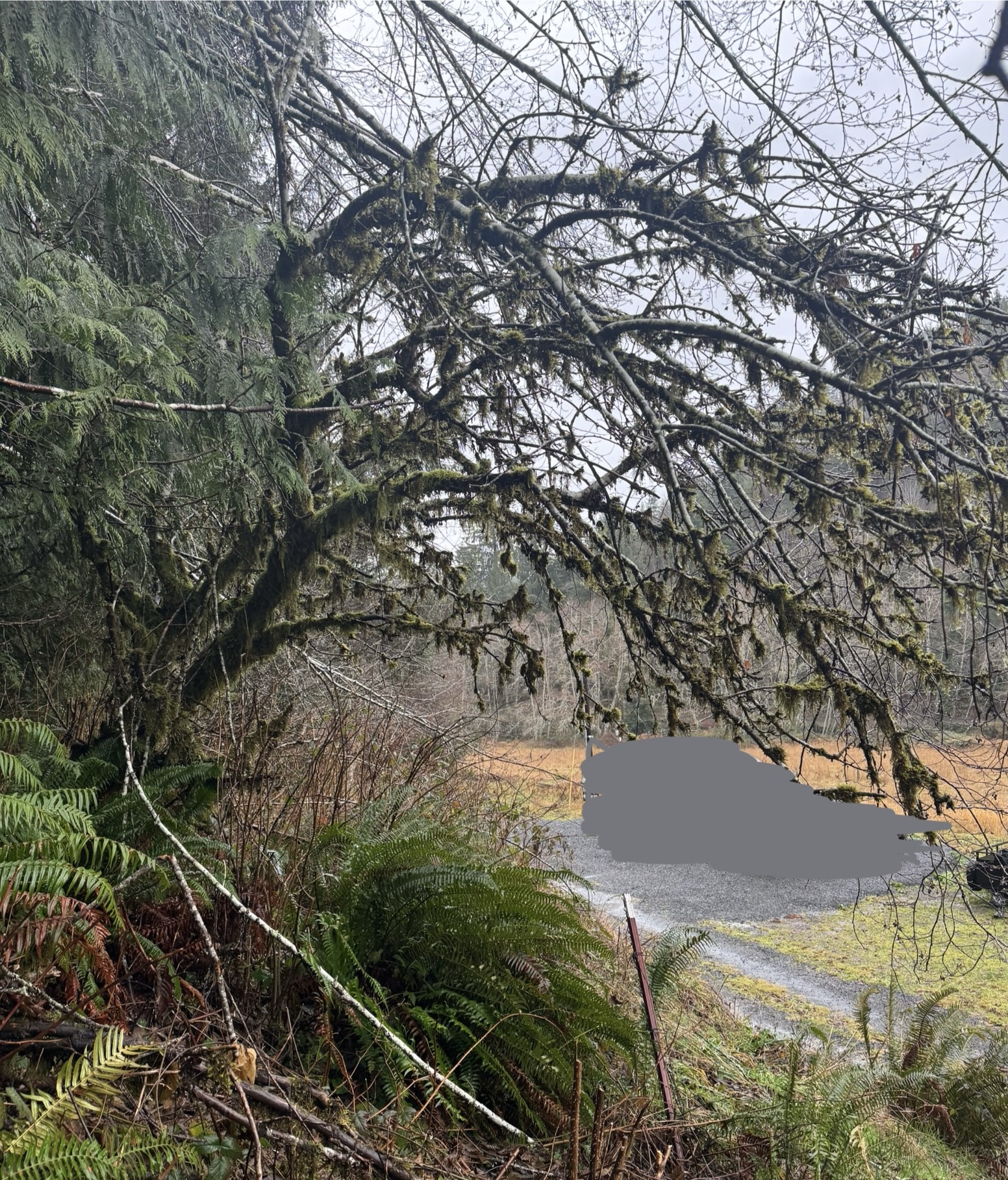
Do burls form at the branch tips and intersections too? That would be a relief. Here is the whole tree after some clearing, the branches above are from an alder that are sitting over it.
They do make burls on small branches, it especially happens when twigs get broken off resprout next to the break then getting broken and resprouting repeatedly, the tree just tries healing over the broken spots and makes a burl. Or they can be made if it stays wet enough (usually poor air movement) and the tree tries to make roots and then it becomes dryer so the roots that were almost starting to form do not and it just makes a knarly knob with some bark or unformed dead root nubs in it. The only problem they can cause is insects can hide in crevices.
With the lean on that tree I would be careful especially after removing the trees around (which I would advise to remove them to let in more light) it, because a slight wind after that might knock it down because it’s probably used to being protected.(I cut out trees around the trees I wanted kept before and within the next year a couple fell down uprooted, could either have been the roots from the other trees held it or just caught more wind)
For restoring old unkept fruit trees my only longish term experience is grafting onto a sucker and removing the rest of the tree. With pruning to restore that type of trees, my experience is just kind of educated experiments that are still in the testing phase, someone else could answer better than me that has more experience.
Anyway, apples are not worth growing in the shade but if they get enough light and don’t have too much competition from ground growth they can be brought back fairy quickly in most cases. If they show vigorous growth you can not only save them, but change them into any variety that will do well in your very moist climate.
You nailed it, we are in the NW coast, and moisture here is something else.
Looking for scions, there was growth, but minimal. Hopefully by clearing the area and with airflow and pruning will get them back. I’m feeling much more optimistic given that no one seems alarmed at the growths on the tree. But to your point, I’d like to replant some varieties in the field that will do better over time, but save these to maintain the history of the place. I suspect this area will be a battle every year!
The scenarios you’ve outlined certainly fit our environment and the condition of the tree, which makes a lot of sense. Additionally, the burls on the branches seem to be located in areas where there was damage.
Also, thank you for pointing out the lean! I hadn’t even considered the risk of it falling over. The other two trees have the same lean as well.
I appreciate you taking the time to answer questions and chiming in on the photos. Although I’m worried about the lean, I’m also much more optimistic if they are not completely diseased and too far gone.
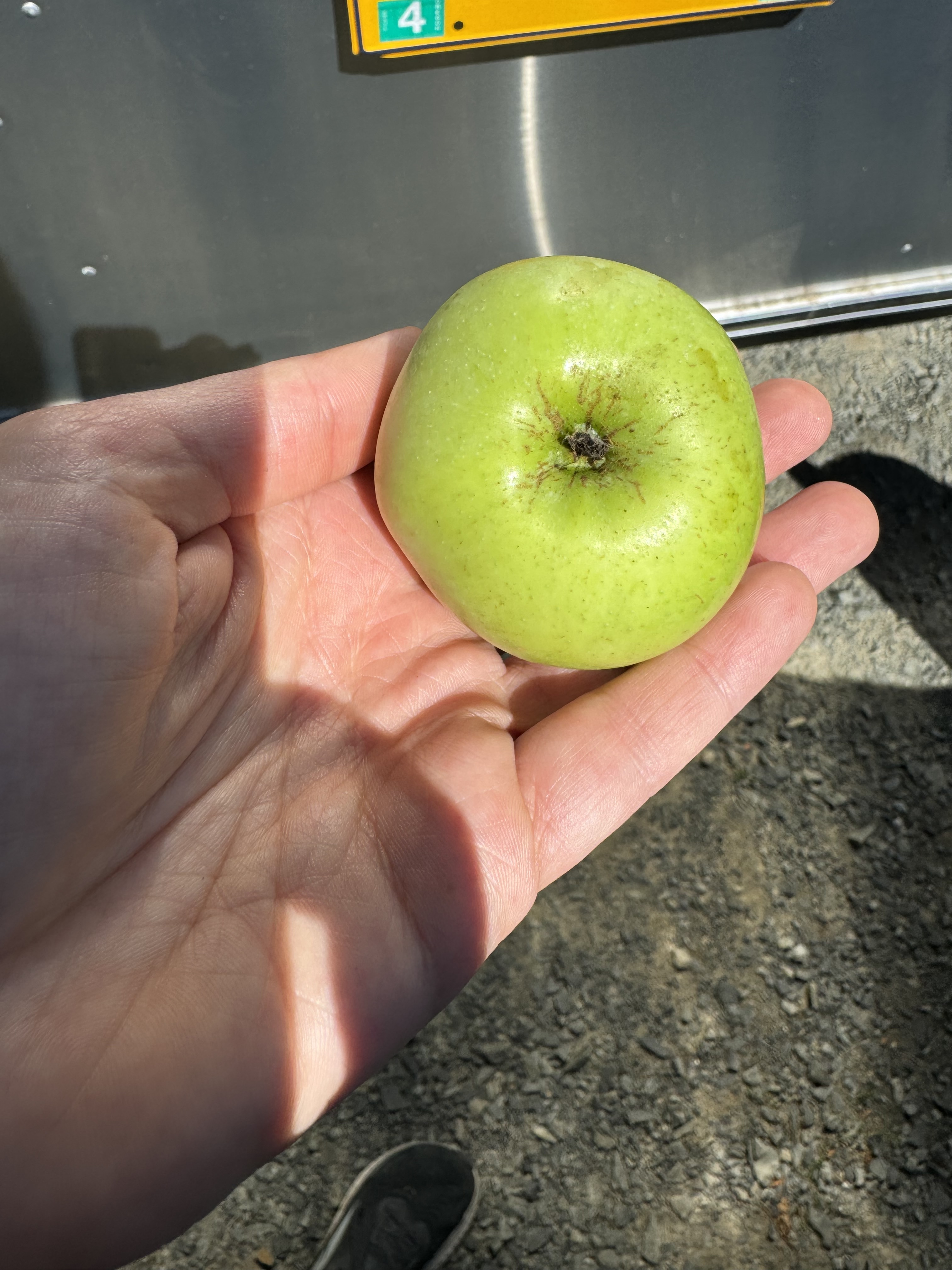
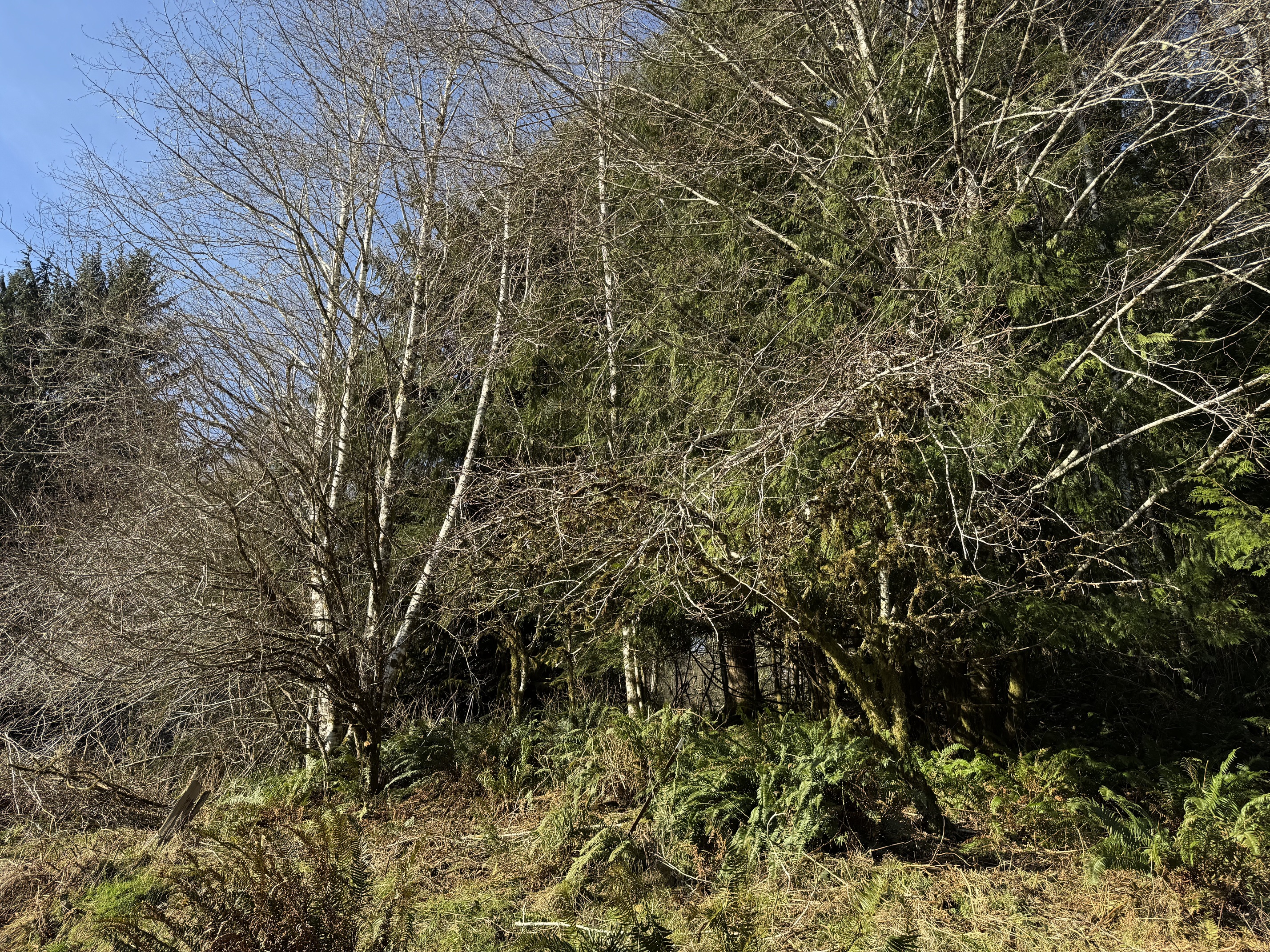
They look different from the surrounding native trees, had a fruit tree like appearance. Then when they were blooming I did a google image search which further confirmed my suspicions. From there, I waited to see. The middle tree produced a very small crop of green apples. By that time, it was so grown over I had to use a brush cutter to get in and grab one.
Photos below of the apple and of the surrounding trees. A hundred years ago, this was the original homestead of a Finnish community. Is gone through two owners and left to its own devices since. Trees could be much more recent but most people out here want a fruit tree or two.
I’ve seen trees like that on my sister’s land in West Haven north of Eureka. I even saw some in the understory that had been completely girdled by goats but refused to die several years after the event.