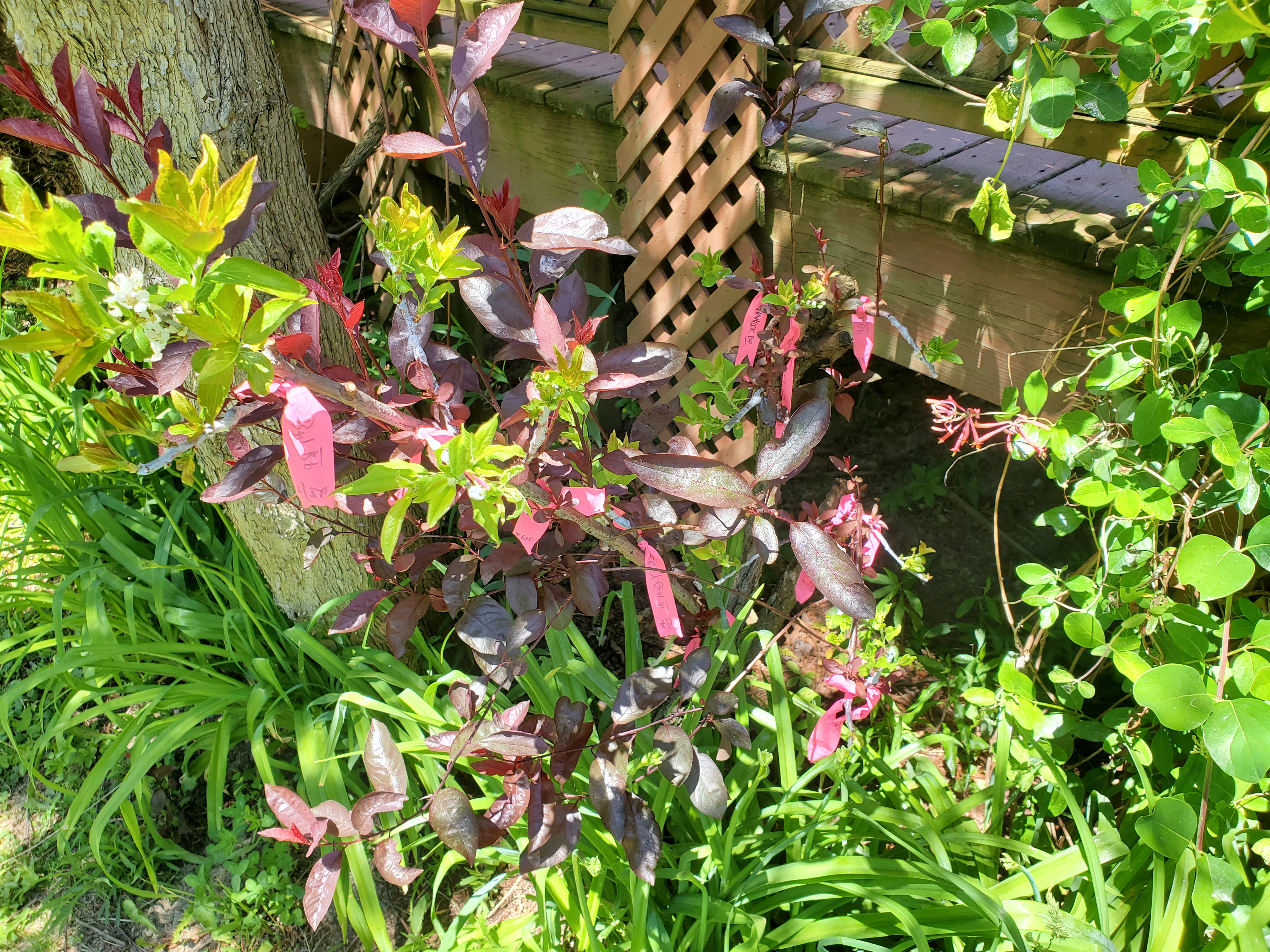
Just wondering if anybody has ever tried grafting Chickasaw onto Beach Plum. I’ve got a Three-foot-tall dwarf beach plum in my backyard that appears to be pretty much fully grown. It doesn’t produce the greatest plums, but I thought I would try grafting some other varieties on it, and thought Chickasaw might be interesting to try.
I’ll bet that it will work just fine. I have Guthrie and AU Rubrum grafted on Chickasaw rootstock.
I have put Japanese hybrid plums and peach on Nanking cherry, in the past(it’s actually more closely related to plums than to true cherries)… was EXTREMELY dwarfing for the peach… but not for the plums.
I’d love to hear more about your experience with Nanking cherry as a rootstock. Dr. Sax did some work with it and found that certain Prunus species, when grafted onto it, could be grown naturally in tree form without excessive suckering. Combined with the dwarfing effect and early bearing he observed, Nanking as a rootstock almost seems too good to be true.
@AdamNY It was just a fun little project I did over 20 years ago - and it may have been after I read of some of Dr. Sax’s work. Bought a bundle of 10 row-run Nanking seedlings from Gurney or some similar outfit. Grafted a couple of my Dad’s best hybrid plums… IDK what varieties, but suspect they were Japanese hybrids of some sort… and a piece of an old landrace white freestone peach that had been growing in the fencerow surrounding the garden at my grandparents’ home for decades.
The plums were not dwarfed, but I don’t know that the peach ever got more than 4 ft tall. Dad passed 20 yrs ago, and the farm & home were sold, so I’ve not been back to see if any of those are still surviving.
Hey Pete, it would be interesting to try Chickasaw further north of its range in Ohio. I grafted your selected Beach Plum variety of scions this spring on 10 native American Plum with only 20% takes. All 13 grafts on this Sand Cherry were successful but the real test will be graft winter hardiness. Last January that Polar Vortex dropped down south of the Great Lakes. It spent three weeks over NE Ohio with nightime temps not climbing above minus -20F.
That Polar Vortex wiped out all my American Chestnut orchard grafts from past three seasons, although they were mulched heavy in hay.
You’re doing better than I did my first time! My first and second tries with plums yielded 0% takes. Since then I’ve learned:
Prunus calluses at lower temperatures than carya. So aim to graft when temps are going to be in the seventies. In fact, I’ve been successful grafting even when frost was still predicted by wrapping the graft union and scion in bubble wrap, then removing when it gets warmer (be VERY careful with this as you can bake the graft).
Water is crucial if you are doing any kind of bark grafting (even in spring, a dry spell will prevent bark from slipping/peeling well). Make sure that your rootstocks get plenty of water starting a few days before you graft, and are kept well but not over watered.
Preventing the scion from drying out once grafted is one of the most important steps to take. I either wrap in parafilm completely or cover with grafting wax. But don’t let them bake in the sun!
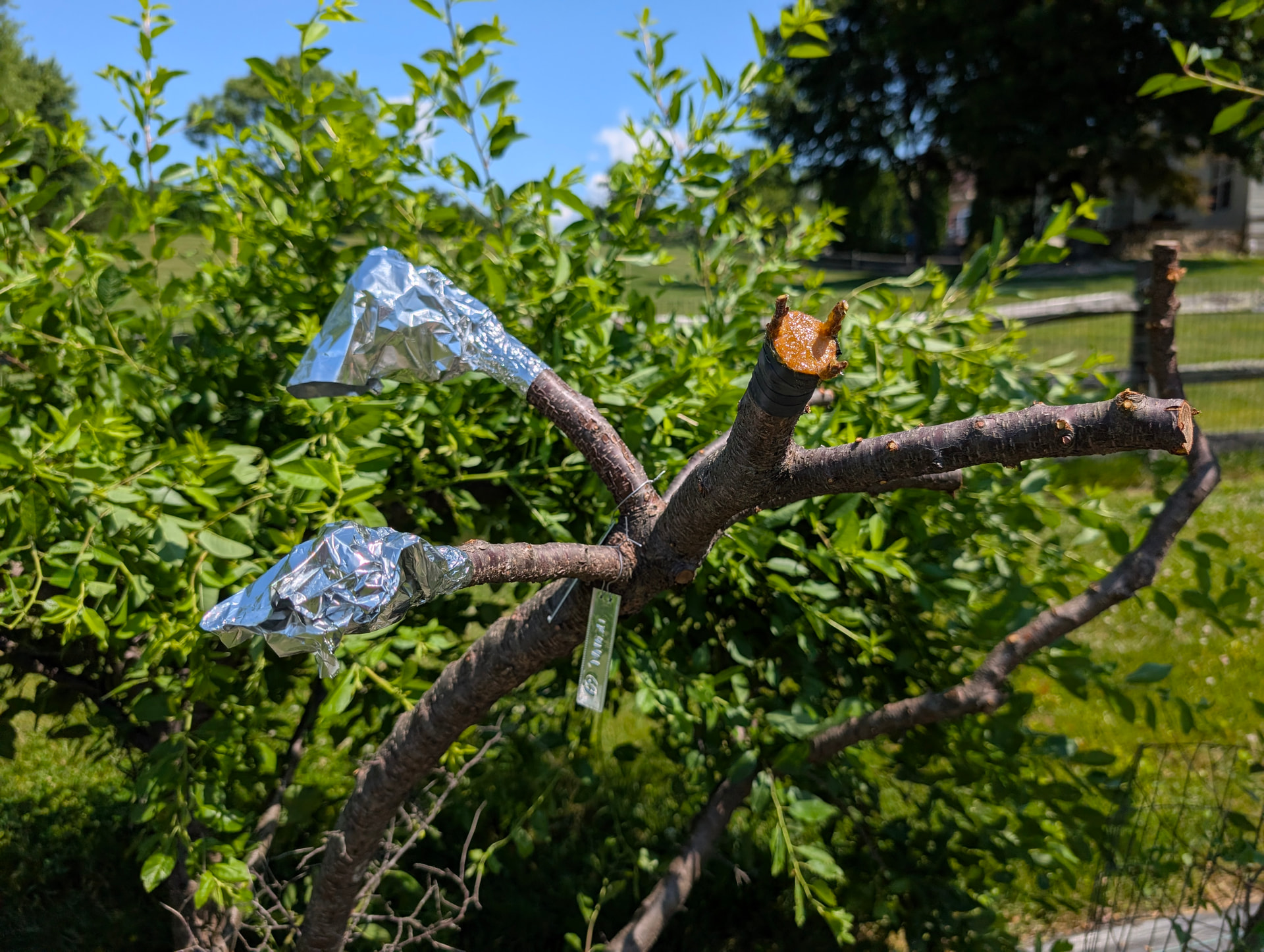
Avoid full sun when it gets warmer! After preventing desiccation using parafilm or grafting wax, I wrap the entire graft and scion with tinfoil, shiny side out.
Rick Uva recommended the cleft graft to me and I have used it successfully with beach plums. I am also partial to chip-budding and usually put two of the same chip buds on a single e.g. myrobalan rootstock. I’ve also been successful with side grafts and splice grafts, as well as a modified chip bud I like. Bark grafting is great if you’re top working a larger tree (see photos).
I take my scionwood out to the field in a cooler with an ice pack, and take it out only during the grafting process, one stick at a time.
I usually save any significant left over wood, sometimes rewaxing if necessary before storing it back in the fridge, in case a graft doesn’t take, so I can retry.
Try again! I’ve successfully grafted later in the season and into summer using mostly chip budding. You have to be careful to keep your grafts out of the sun, otherwise you’ll bake the scion.
Scionwood Storage Tips
I Always wax dip the ends of my scionwood before storing in the fridge. If you don’t you’ll notice more discoloring of the scion wood nearest the ends that you should really cut away to fresh wood before grafting. Keep scionwood refrigerated (avoid ethylene - no apples or ripening fruit in the same fridge)
To keep my scions moist during long storage, I place them in a ziplok WITHOUT a damp paper towel. I then zip up the ziplok, roll it up, then wrap THAT WHOLE BAG with a couple of layers of paper towel, which I then wet under a faucet (just enough - not dripping). That all goes into a SECOND bag, zipped tight. Works wonders, and the mold that likes to grow on damp paper towel in the fridge over the winter grows on the damp paper towel but is kept away from scionwood. Credit to John Gordon for this trick. ALL my scionwood gets this treatment.
Here’s a photo of the dwarf BP - 7-variety Chickasaw I grafted last week (thanks @yellowcreekdan !). Not sure how practical it will be, but we’ll figure that out as we go. Also a photo of my foil wrapping. (The cage is something I already had that I dropped on top due to heavy deer pressure. They don’t usually eat plums (they know where to find my thornless blackberry shoots and mulberries), but I don’t trust them to not run into the grafts)
@S2SVeteransMission I am growing a lot of chickasaw varieties in Z6A Pennsylvania and they have experienced down to -13 (fully dormant) with zero winter injury. They seem to bloom with or a few days after my european plums here.
@Petebacher I had really high success with the plum scions you sent me! I graft my plums even cooler, with highs around 60 and lows above freezing for about a week. I do cleft grafting with rubber bands and parafilm (graft union and entire scion) and get around 90% takes this way with good scions.