Many ask questions about growing their fruit in the shade of other trees. The answer you would expect me to say is don’t do it. That might be my standard answer because i often dont want to explain that there is much more to it. The first thing I advice everyone to do is learn like i did in old growth woods. At the bottoms of the hollers there are creeks and along those creeks you find pawpaw which the first couple of years of their life they grow in the shade of other trees. The pawpaw in these locations are 8" long and delicious. Water is plentiful. These pawpaw are specifically adapted to wet shaded areas very high in nutrients . Gooseberry thickets grow plentiful in the shaded forests. We picked gallons of those berries. Many areas are covered in wild grapevines and they are loaded with fruit. Nut trees grow in abundance hickory, white oak, butternut, walnut, hazelnut etc.
That is the positive side of things, but the negative side is things like pears , apples,cherries, and peaches that don’t like growing in the shade. It makes the fruit taste more blan. That is why apples etc. Taste so bad from Washington etc. They grow fruit to close together and dont have enough sun. This is why many people say they dont care for red delicious and other apples. My experience is limited to Kansas, Colorado, oklahoma, Missouri, Arkansas, Nebraska. Texas and Louisiana is very hot and humid and though i spent plenty of time there also i cant say i understand those places. The rules are different like they are in Florida.I have spent time in Kentucky and Tennessee, but i’m no expert in these places outside Kansas and Missouri. One thing i would point out is that most of Colorado and Western Kansas are nothing more than flat dry plains and high plains deserts. It is best to stick to goats there in my ooinion
everyone knows that Washington’s official nickname should be the Apple State. For more than 100 years, Washington has been synonymous with the sweetest, crunchiest, highest-quality apples grown anywhere in the world. Washington is home to the Apple Cup, the Apple Blossom Festival, the Apple Capital of the World (Wenatchee), and TikTok’s Apple Queen. Washington has more orchards, more acres, and more trees producing better fruit than any other state in the United States.
Washington farmers harvest 10-12 billion apples every autumn. That’s billion, with a B.
YMMV… but i really enjoy Cosmic Crisp and Opal etc.
Actually I am glad many of my fruit trees are still in pots. Summer gets too hot for many here. And shade clothes for fruit trees is a thing. Sunscald is real here. I just moved potted trees back onto the pad and they are responding well even with some light chill hours accumulating.
Our nanking cherries and PawPaws were awful out in the sun. But they look great shaded by the house.
Washington has begun to topwork old varities that tasted like cardboard and migrate to better tasting apples. Intense farming is not a win for anyone. Many old orchards soil is saturated with chemicals and heavy metals.
too many factors to make a general statement about growing trees under trees. Weve been transitioning a forrested hill to nuts and fruit, much like masanobu fukuoka advises in the one straw revolution. chestnuts and walnuts are growing well. theres some good looking wild apple seedlings and asian pears too. The canopy will be thinned over time.
I read somewhere that euro plums are a little more shade tolerant than other fruit trees. So my Mt royal and Italian plums are west of an medium elm tree and are shaded until 11a-12p, but then they get full sun till dark. They haven’t flowered yet but hopefully next year.
I live in a very narrow mountain valley. Nearly all my apples are in afternoon shade from both towering oaks and mountains. I would have even more sunscald and dryness without this shade. Most of my apples also have morning shade from the other mountain, which is a problem for trees prone to fireblight or bacterial canker during our wet springs. I learned this about 4 or 5 years in, and ended up replacing many trees. So from my perspective, morning shade is bad, because we want trees to warm and dew to dry off their leaves for a good portion of the day. Afternoon shade may, however, be very beneficial, especially in hot climates.
Found a cool photo from last year that shows how skinny the valley is. I can’t water, or even dig on most of my 9 acres. I am currently actively growing on 1 flat area and 1 slope, amounting to about 2/3 an acre.
It seems we are in an age of confusion when it comes to knowledge. There are different answers for most everything. A person can say that their fruit is better in part sun or shade and another will say that theirs is better in full sun. One person can say no and another say yes. I just say YMMV because that seems to be the truest statement.
‘Pear trees are well-suited for shaded gardens, with some varieties being more tolerant of lower light conditions. The European pear (Pyrus communis) can adapt to partial shade, particularly in regions with intense summer sun. Varieties such as ‘Bartlett,’ ‘Kieffer,’ and ‘Anjou’ are known for their ability to thrive in less sunny areas while still producing abundant and yummy fruit.’
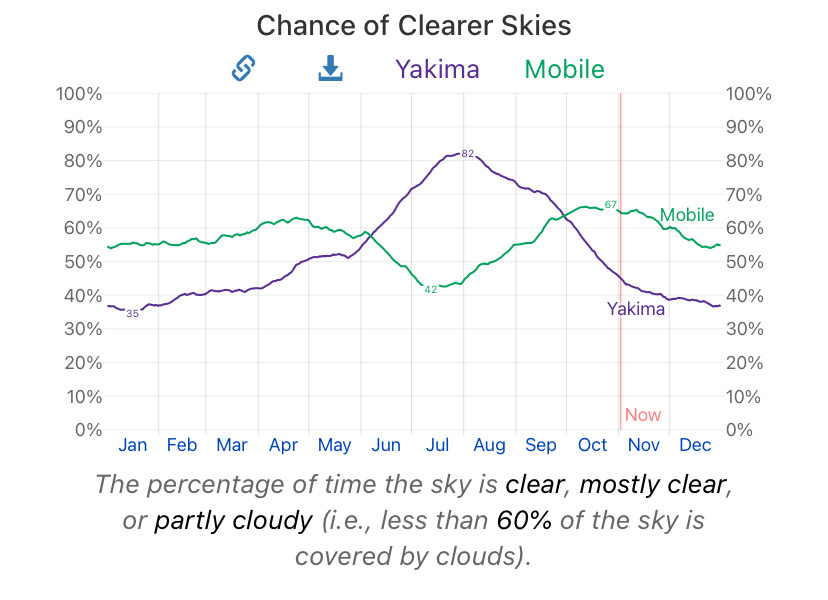
Maybe a different thought process is not growing in the shade of other trees… but what about the most cloudy days?
Oregon, Washington, Michigan, New York have the most cloudy days… alot of fruit comes from those states.
My state for example-
6. West Virginia. The Allegheny Mountains that stretch along the border between West Virginia and Virginia are responsible for much of the overcast weather in this state. Because the Alleghenies trap moisture flowing into the state from the north and west, most of the state experiences only 60 to 65 clear days per year.
How will I grow an orchard with only 60 clear days per year?
Washington has the most cloudy days of any state other than Alaska and produces the most fruit i think.
You bring up a very interesting point. I have looked at my shady spots on the sunniest of days and wondered how much light actually is there since the shade seems “bright.” If that makes any sense. The shade isn’t even close to no sun, it’s almost like it’s “shade cloth-sun.” Like the cloud cover perhaps…providing just enough sunlight without the damaging effects of direct sun in our rising temperatures.
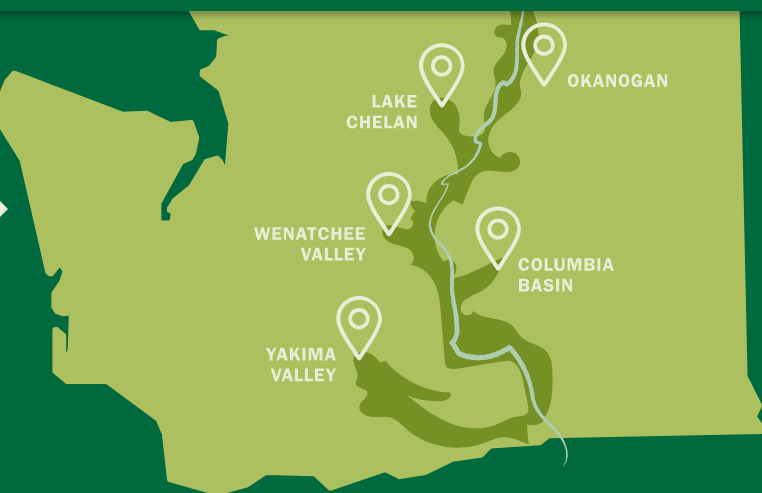
The fruit isn’t grown in the cloudy parts of washington nor during the cloudy part of the year. Here is the apple growing region of washington compared to a random city in Alabama that is not known for apples.
Well, the interesting thing about using PNW states is that most apples are grown in wide, flat areas, far from the coastal mountains. The farther you go east, the less rain, fog, and clouds. Ram Fishman, for example, in the very wet Humboldts said it was very dry all summer, and he saw fog clinging to the mountain closer to the coast, but not over his property. Wet, cloudy areas experience more fireblight, which is why so much fruit is grown further inland.
Also, being at a highier latitude, Washington gets more hours of Sun in the summer than southern or central states. Kansas for example, gets 1.5 to 2 hours less sunlight on the summer solstice than Washington state. Look it up…
And as others mentioned, eastern Washington gets almost no clouds or rain the summer. Western Wa is a cloud forest compared to eastern Washington. Once you are east of the cascade range it is like a desert. There are few trees which don’t fill back in densely again until you reach the foothills of the Rockies 300 miles east At Spokane or pend orille county. Walla walla at the south east is flat plains grasslands converted to wheat. The eastern Washington sun is no joke and will fry you like bacon. Daily temperatures east of the cascades average 20 degrees highier in the summer than the western side of the state. If it were not for the colombia river irrigation project eastern Washington would be a desert waste land except at the river crossings.
Born and raised in eastern Washington. Went west to be edumacated at UW in chemistry. Raised in a big family that hit every camping site in the state of Washington and northern Idaho in an old clanky RV. We never flew to anywhere but Disneyland. Summers were spent seeing every corner of our state as a family.
That there river is probably the most irrigated pumped river in the world. Except maybe the Colorado. The snake river fork goes east to the south east corners too. If you drive, I 90 E. there’s a pump station almost every couple miles.
Another fun Washington fact, the Pend Orille river in N.E. corner flows due north to Canada. Canoed that one.
Yes, the cold desert climate reduces diseases and the river allows for irrigation. The rocky mountains to the west also keep also keep the cold air back in montana and north dakota so the winters are warmer than they otherwise would be. The cold dry climate is surprisingly similar to Kazakstan where apples were domesticated.
Neighbors shade trees is an issue with me. The answer is to do a sun survey. Other issue is the neighbors giant tree limbs falling and taking my little trees out.
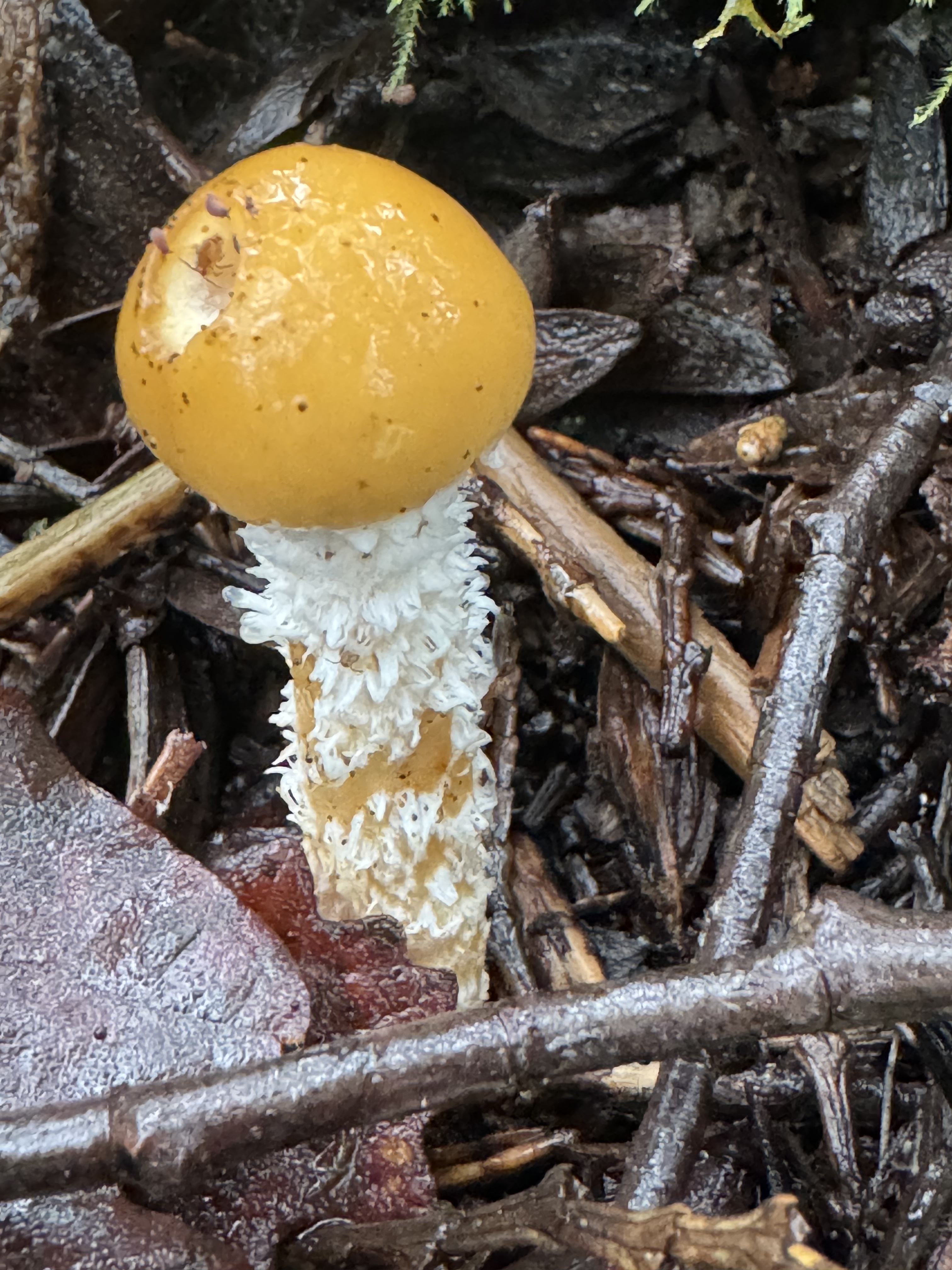
Because uphill is very steep and rocky. Most of it won’t grow anything but western redcedars and fungi. Downhill is a muddy creek that rises - no exaggeration - 40 feet or more in the winter and occasionally floods even more than that. I tried to upload a couple photos but they aren’t loading now. I have terrible internet.
Before anyone thinks I am complaining about where I live, it is very challenging, but also very beautiful.
Oh, look. Fungi will load, but trees won’t.