Ow! I’m so sorry.
2 Likes
That’s really fascinating. Strawberry and raspberries both have an aspect of acidity to them with raspberries having an intense tart + sweet combination. Does UKR 15-9 have tartness in the flavor or is the flavor reminiscent of a sugary strawberry/raspberry flavored candy? I also have UKR 15-9 in my collection. I look forward to tasting it in a few years. 
As I remember UKR 15-9 from a little over a year ago, they were mildly sweet. Not a big sugar hit, nor tart, with a deep red color.
It was late in the season and they had ripened on the tree, of course, and were at their best. And separated themselves from the other hybrids by being different in taste.
This year, one of mine bore a handful, in its third year, so maybe you won’t too long to wait.
1 Like
That’s important to me too. I’m looking to add another variety. I’m interested in extending the season with a mid to late variety for zone 7B. Have you tried UKR 12-21? I’m wondering if it’s different enough from 15-9, Chuchupaka, and Sosnovskaya to be a good addition. I have room for no more than 2 trees. I’m trying to create my MLB all-star (persimmon) starting lineup.
No, I haven’t tried UKR 12-21 but have read some good things about it.
Its a difficult decision and we want to make the right one because of the years involved to fruition.
I visited England’s Orchard at Sand Gap Kentucky during his field days during which you are allowed to sample the fruit. This year it is October 12. Lots of the hybrids will not be ripe at that time. So I will make an appointment to go back in November when he sells fruit by the pound. I will gather numerous unripe fruit which I let ripen in a cool garage. Then make my decisions
This lets us cater to our individual taste buds, when selecting potted trees or scion wood.
Tried and true hybrids that everyone loves, and most persimmon enthusiasts have are Kasandra and Nikita’s Gift. Get them. They will keep you in the game, and insure you have tasty persimmons every year. I’m inserting JT-02 in a starting role. 2 1/2 ", sweet jelly interior.
If you have plenty of NIL money, I’ll try bid with you on Uzbek, Adolph Luschick, V. Derevyanko, Pamyity Chemaya, Sophia’s Gift and others.
I expect the All Star line up to shift during the next few years!
I’ve been scouting these persimmon prospects for awhile. I’ve been very methodical with adding them to my roster. 
I have to rely on the information of others since I’m not fortunate to be around persimmon growers who are growing the latest varieties. I will say that I’ve had my eye on Kasandra, Zima Khurma, Nikita #4, and 12-21.
12-21 is the most mysterious of the bunch. Hardly any information about it online that I can find. Here is Ockoo Farms talking about it very briefly. He seems quite excited when talking about it:
Marta seems to rave about Zima Khurma every time she does a taste testing. She often talks about it having the American persimmon taste. Zima Khurma from what I understand means “winter persimmon” in Ukranian. So it’s supposed to be a late ripening variety. It’s probably the most obvious prospect I should add to my team right now. Here is her comparing it to Kasandra & Bliznetsnaja. (bonus points: apparently both Zima Khurma and Kasandra look absolutely beautiful with its fall colored leaves from what I’ve read. Something not mentioned often with other varieties).
Nikita #4 is another interesting option since from what I’ve read about it seems to be as close to Nikita’s gift as possible but with much better cold hardiness. I guess the biggest question I have is if it also has fruit drop problems like Nikita’s gift? I’ve read people on these forums having their Nikita’s gift dropping all the fruit off the tree for 6+ years straight. I certainly don’t want that! From what I understand this variety also pumps out so much fruit it seems to be HIGHLY suggested to stake the tree to help support it. I’m still trying to scout this prospect. Might not fit the culture of our team. Could be a locker room problem. 
7 Likes
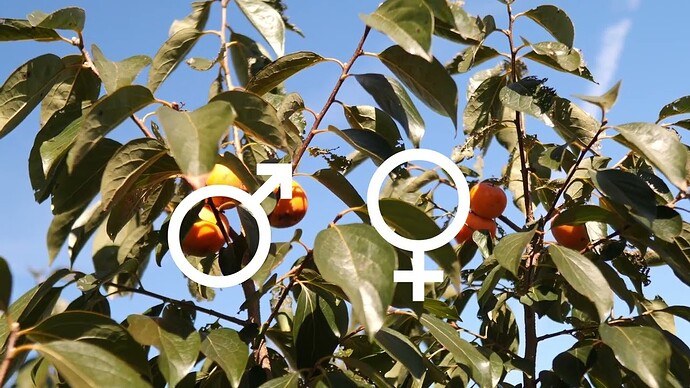
There was probably a male flower somewhere, but it’s interesting; where?
1 Like
I will keep a close eye on it next year because some of my male hybrids may flower as well.
Tony
2 Likes
Have you tried looking at iNaturalist app and filtering for American persimmon and looking on the map? I’d be curious if you find some relatively close by identified by people.
I discovered another thicket of like 10 trees near me by using that app.
2 Likes
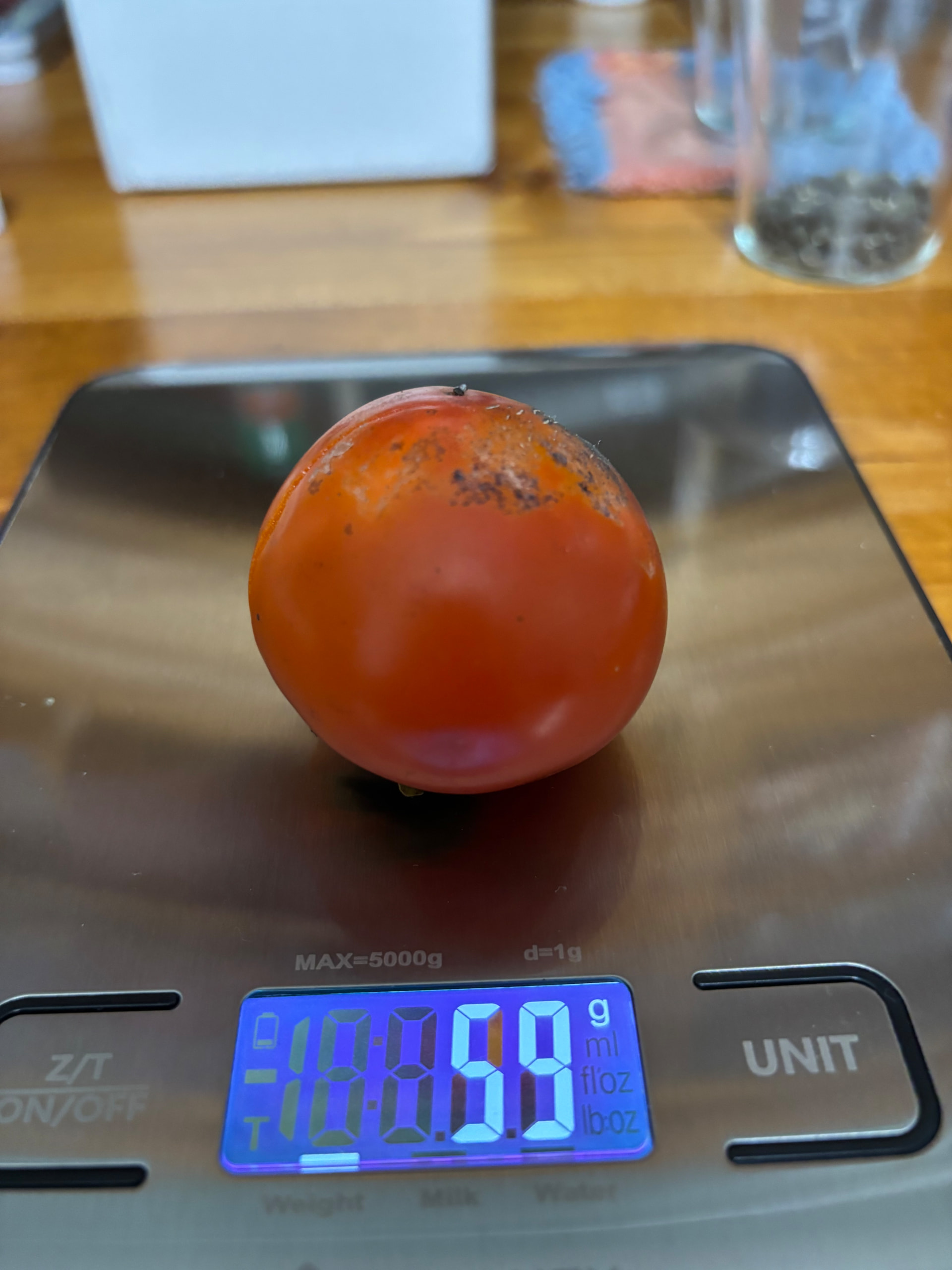
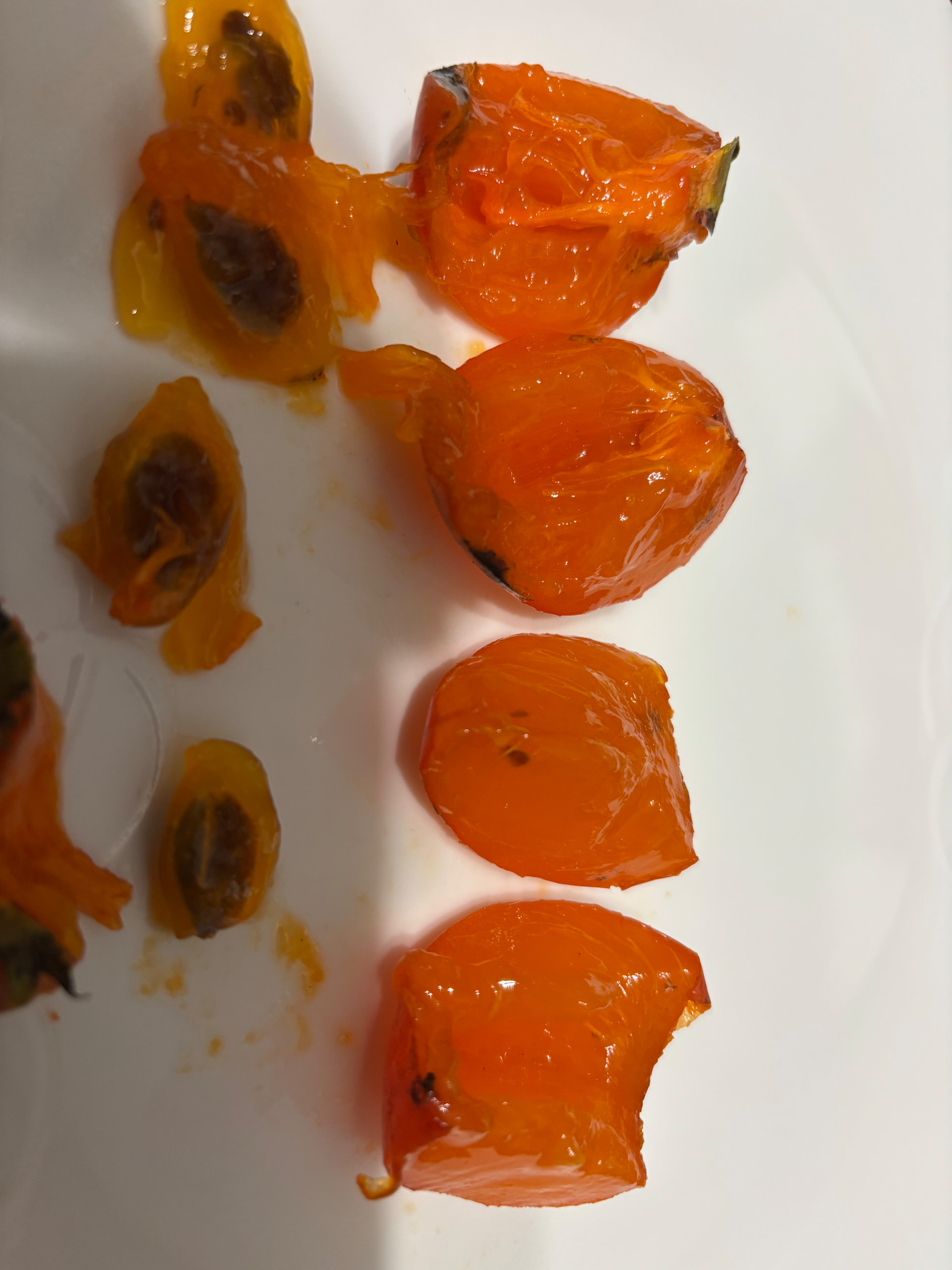
Bozhy Dar or Gods Gift.
The second hybrid to ripen, the first being Dr. Kazas here in zone 7b.
There are two sizes of fruit on the tree, the tree having male and female and hermaphroditic blossoms. This being a larger fruit, I assume it is from a pollinated female bloom.
The 59 grams is smaller than the literature says so I’m laying that on our super hot dry summer.
The tree is a third year graft on a 60 chromosome rootstock but it also had fruit its second year. Precocious.
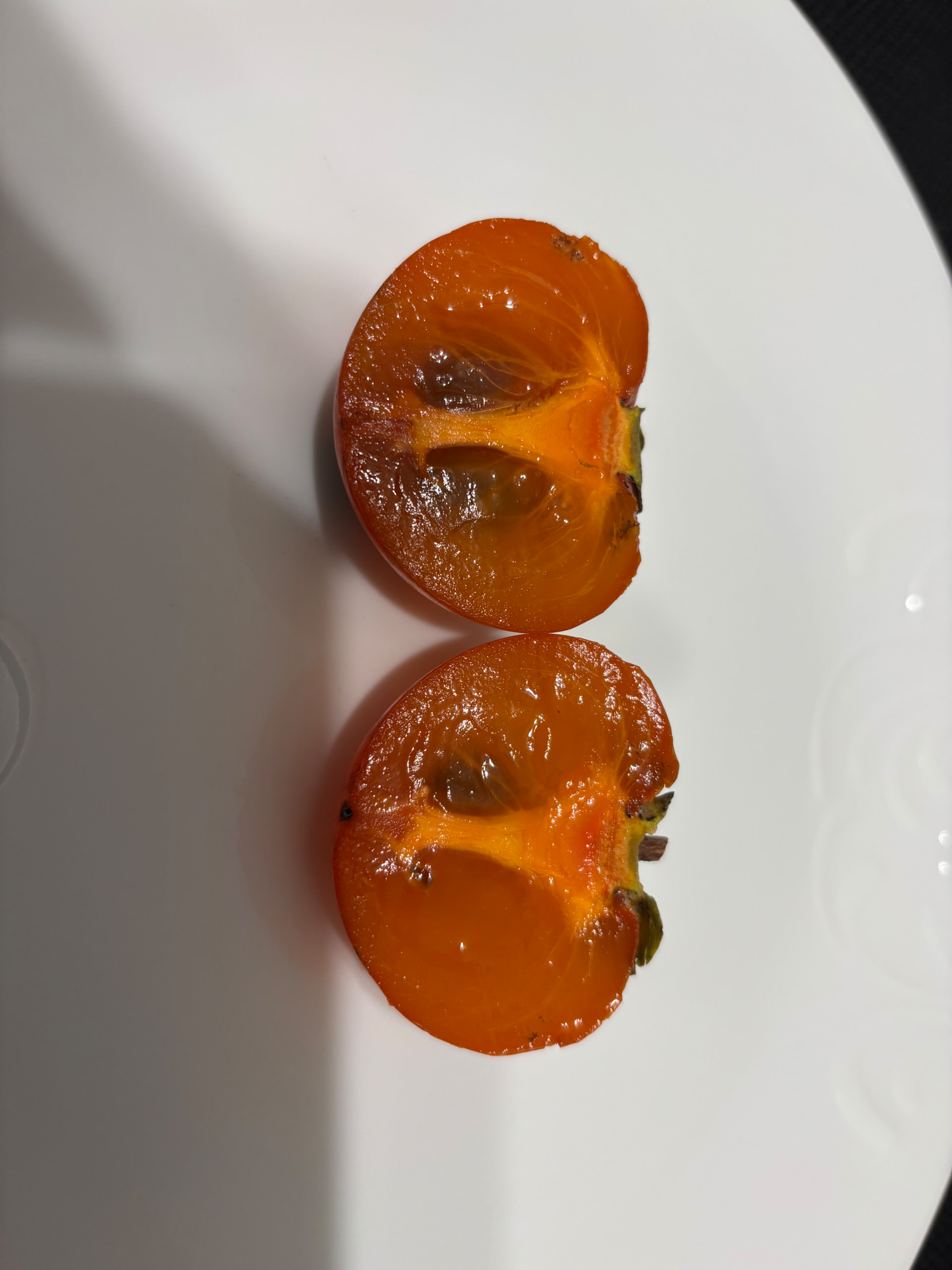
The four seeds are extra small but seem hard like they would sprout if stratified.
The taste is sweet, and kinda like Nikita’s Gift , its forerunner.
And to me, a very important factor, it has no astringency. I like it.

16 Likes
any insights about Dr. Kazas?
Curious to see how those hybrid seeds look once they germinate. I’m assuming you are going to plant them?
Nice to see that hybrids are ripening up well for you!
I tried to plant the seeds out to see what I will get. I got over 30 hybrid persimmon trees going right now. There will be plenty of fruits to taste test in a few years for sure. I just harvest another Sosnovskya. Just wanted to compare it to my baby Red Jujube for sizes.

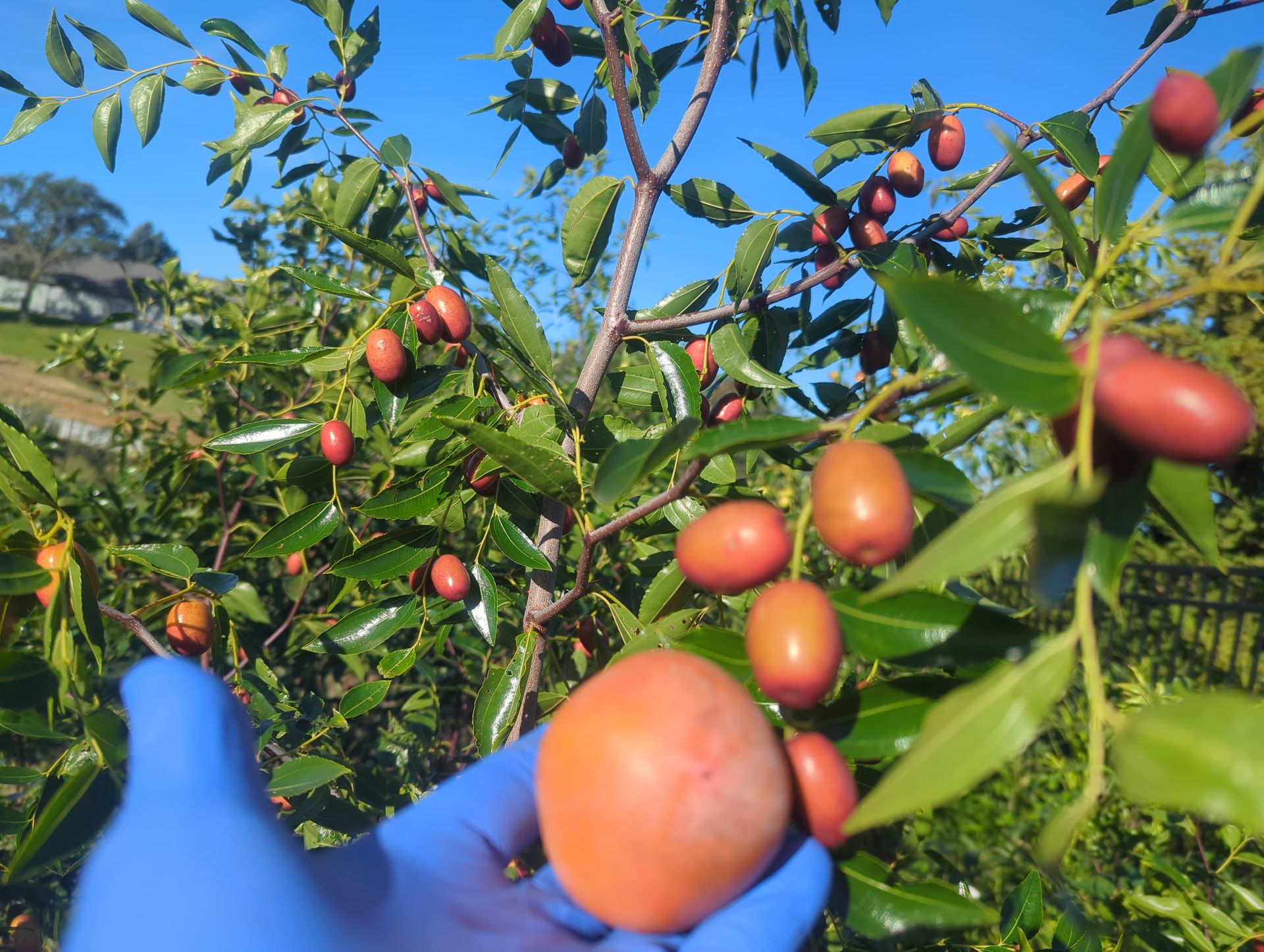
Here compare to Bing Tang aka Rock sugar/ Icy sugar
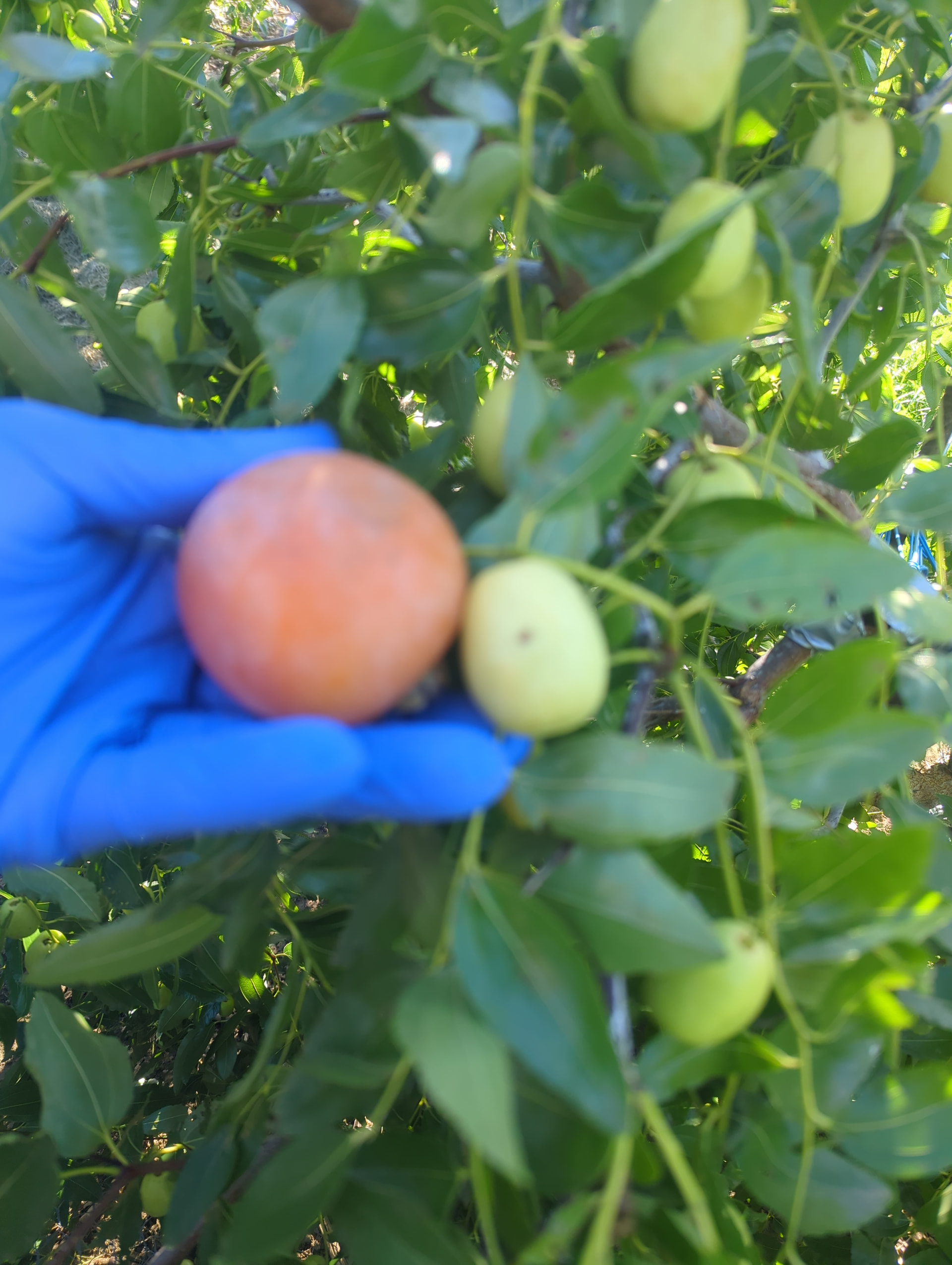
10 Likes
Consider that we experienced a dramatically hot, too wet when raining, too dry between showers summer.
Dr Kazas was so Virginia like that I had concern the tree was mislabeled. It wasn’t.
It was my earliest hybrid, ripening right on the heels of H-118. August.
The fruit dropped from the tree, retaining the calyx.
Seeds were present that seemed mature.
Fruit was shaped like a common Virginia persimmon, round and flat, and I now estimate 1 1/4” across.
Flesh was dry and not especially sweet, light brown in color.
So much of the above differs from its reputation.
It’s supposed to be larger, sweeter, clearer flesh so I’m thinking it just had a bad year, here.
3 Likes
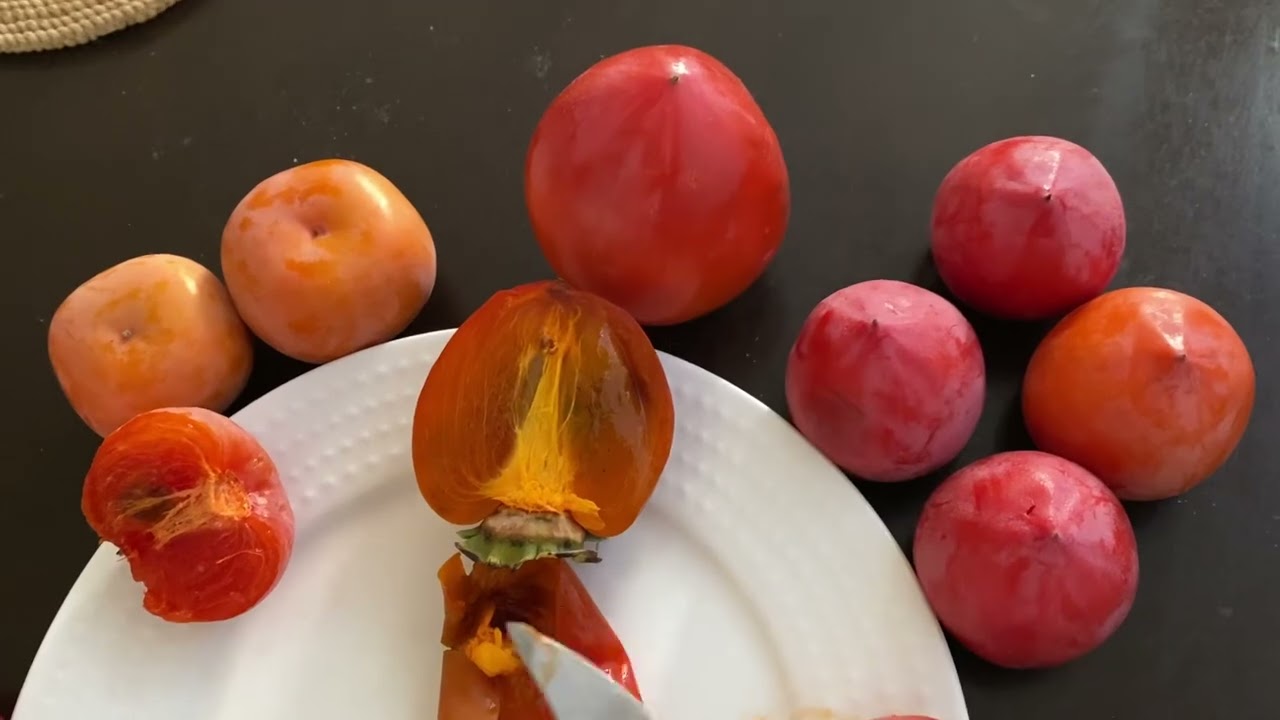
I would recommend growing a Sosnovskya hybrid persimmon. It is hardy and tasted great. The flavor is like 80% Kaki and 20 % American persimmon with firm caramel flesh. This one also had 3 seeds. I will have to look hard next spring to see which tree has a male flower.


10 Likes
Your post comes with incredible timing. I was just trying to research something about Sosnovskya (discussed below). But I had my last Sosnovskya fruit today from my very young tree. That fruit did have a little extra flavor in it compared to my last two fruits I tried. It had some more complexity in the sweetness. It wasn’t one dimensional granulated sugar. I enjoyed it a lot. 
But something I noticed in all 3 of my fruit. Every fruit had seeds in it. Two of them had 3 seeds. The one today only had 1 seed in it. At first I thought: “The person that sold me the tree most likely had male pollen donors on their property”.
But the more I look into it, the more I’m confused. I was having a.i. analyze possible male donor persimmon varieties for a potential PVNA variety I’m looking at. It then tells me that Sosnovskya is an exceptional pollinator that outputs male flowers just like God’s gift. So I asked it for proof of this and it said that Ukranian nurseries list it as a monoecious line of persimmon trees along with God’s gift.
I then noticed that this page: Persimmon (D. kaki x D. virginiana) SOSNOVSKAYA - kontajner
It mentions that Sosnovskaya is an exceptional pollinator and donor. It even says that 80% of the fruit has 1 to 4 seeds, with 20% of fruit being seedless.
It also gave me this Russian youtube video of this gentleman who talks about Sosnovskaya:

In his video description he mentions: “It forms flowers of female and male types. Can bear fruit without pollination, independently”.
So at first just a few months ago I did not want a male pollinator in my small orchard, and now I potentially have one. But God works in a mysterious way because here I was looking to add (potenially) a male pollinator after tasting a grocery store Coffee Cake persimmon which changed my entire view on life. That dang Coffee Cake persimmon had pastry notes in its taste. It was so good. I was like: “I need this in my life”. If it tasted that good at a grocery store, I can’t imagine how good it would taste coming ripe off the tree.
So if Sosnovskaya does indeed put out male flowers, all my persimmon trees are going to have seeds in their fruit… so I might as well just add a PVNA variety in my life & enjoy the ride.
3 Likes
Great information. I now have at least 3 make source for breeding hybrid persimmons.
Tony
2 Likes
Now I’m confused. I see the videos above, but I have also read a prior report from the breeders (see below) that describes the variety (with it’s Ukrainian name) as pure female. Here’s the relevant excerpt with my emphasis added:
Sosnivska
Authors: V. M. Derevianko, V. V. Dudchenko, I. V. Mitrofanova, V. M. Svyrydovskyi, N. V. Derevianko. Trees are of medium vigor, long-lived, and enter fruiting early. When budded into an existing crown, the first crop forms as early as the second year. Today ‘Sosnivska’ is considered the most reliable hybrid persimmon cultivar in Ukraine for household and dacha plots, with prospects for small-scale commercial production in regions whose frost-free period is long enough to ripen the fruit. The plant is purely female, forming only pistillate flowers. Morphologically its plants are closer to American persimmon. Fruit mass is up to 60-90 g. Yield from one tree reaches 100 kg, and on average is 40-60 kg. This hybrid form has a clear tendency toward parthenocarpy, so in single-cultivar plantings without pollinizers, ‘Sosnivska’ forms fairly high yields of beautiful, uniform, extremely tasty seedless fruits. When pollinizers are present, seeds form in the fruits; in some cases there are very many seeds, which is undesirable for consumption. In Nova Kakhovka, in an autumn of average warmth, fruits ripen in the second ten-day period of October, but almost immediately drop; leaf fall occurs at the same time. By contrast, fruits harvested ahead of time, while firm but with characteristic color, can be stored for up to three weeks. In winter hardiness, plants of ‘Sosnivska’ exceed ‘Rosiyanka’. After the winter of 2005-2006, when temperatures fell to -27 C, unlike ‘Rosiyanka’ it bore a full crop. According to reports from amateur gardeners, this cultivar withstands brief drops below -30 C, close to the figures for American persimmon cultivars. Because of its higher winter hardiness and much shorter growing season than ‘Rosiyanka’, ‘Sosnivska’ is suitable for cultivation farther north than ‘Rosiyanka’, primarily for local fresh use.
zbirnik_tez_persimmon_translation.pdf (62.0 KB)
1 Like
Sosnovskya -22F, early ripening, and productive. Sounds great. Now with this new information then there got to be another male tree near my property. I will keep a close eye on all the flowers to see any of them have a cluster of three next Spring.
Tony
3 Likes
Good info! So if we assume your document is the correct/definitive information about these varieties then I learned something else. According to that document it says for Chuchupaka: “This cultivar is dioecious, with low expression of parthenocarpy, so for normal fruiting it requires pollinizer cultivars (‘Bozhyi Dar’)”.
Here is a post from Harbin showing Chuchupaka and his fruit is seeded.
There is such little information online from nurseries and some nurseries simply list ChuChupaka as parthenocarpic without any suggestion of a pollinizer, which is going to lead to people being disappointed with harvests on that tree.
I have Chuchupaka growing as a young tree. So for me it looks like I need to consider at least grafting a male pollinator scion to the ChuChupaka tree.
Ai explaining the terms below:
What “Low Parthenocarpy” Means
“Low parthenocarpy” simply measures how effectively the tree produces those hormones on its own:
-
High Parthenocarpy (e.g., ‘Sosnivska’ or ‘Fuyu’): The female ovaries produce strong hormone signals by default. Even if zero pollen touches the flowers, 80–90% of them will stay on the tree and swell into full-sized, seedless fruit.
-
Low Parthenocarpy (e.g., ‘Chuchupaka’): The female ovaries produce very weak hormone signals on their own. Without the boost provided by fertilization and seed creation, the tree considers unpollinated fruit a waste of energy and triggers “fruit drop,” shedding almost all the unpollinated flowers. Only a tiny fraction might accidentally cling to the branch and mature into seedless fruit.
-
“Self-Sufficient” vs. “Self-Pollinating”: Because Sosnivska has strong parthenocarpy, growers can plant just one tree and get a massive yield (40–100 kg) without any male trees nearby. This leads nurseries to market it as “self-fertile,” which many gardeners misinterpret as meaning the tree is pollinating itself or able to pollinate neighbors. In reality, it is simply setting seedless fruit vegetatively without any pollen at all.
6 Likes