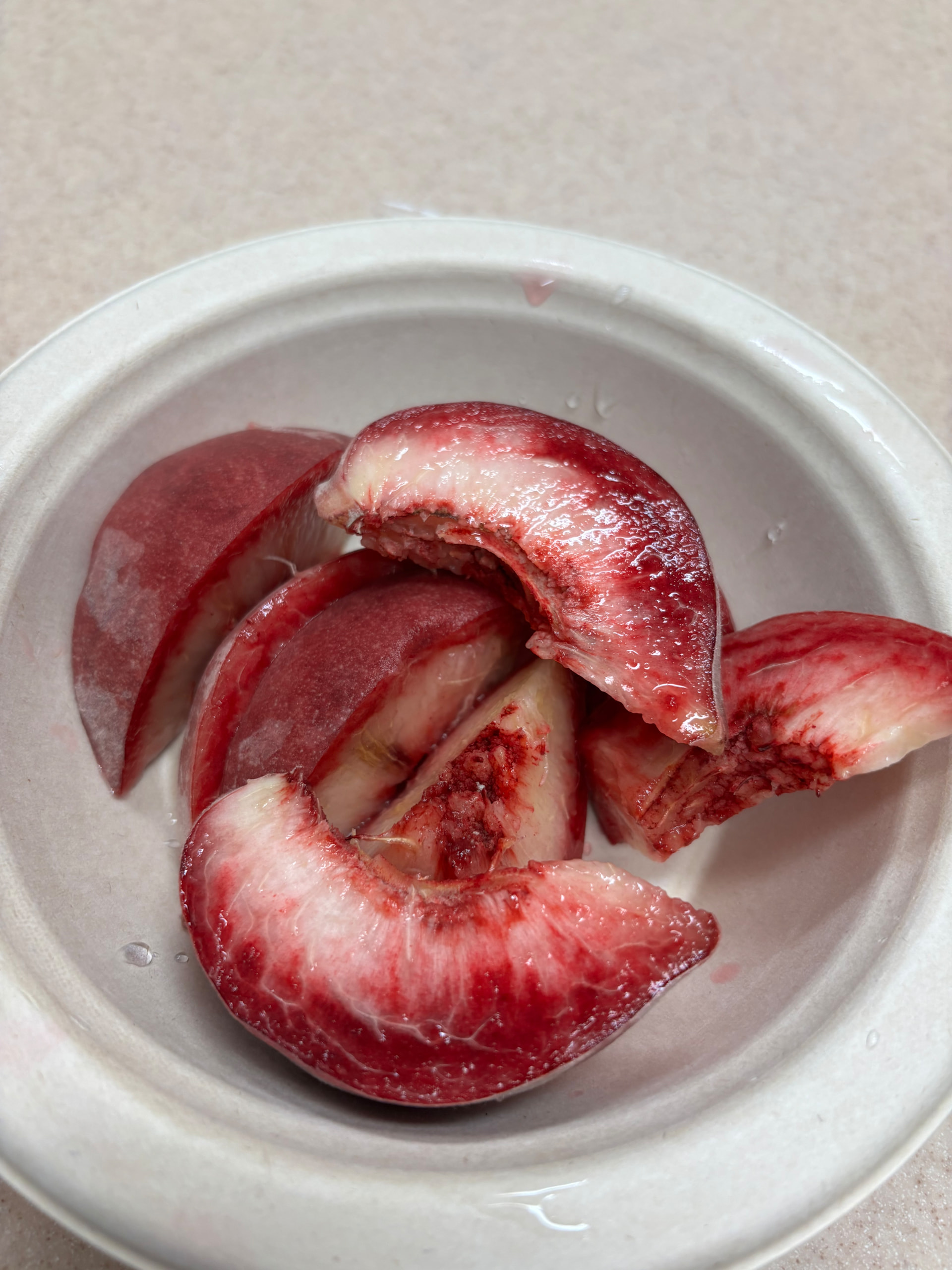
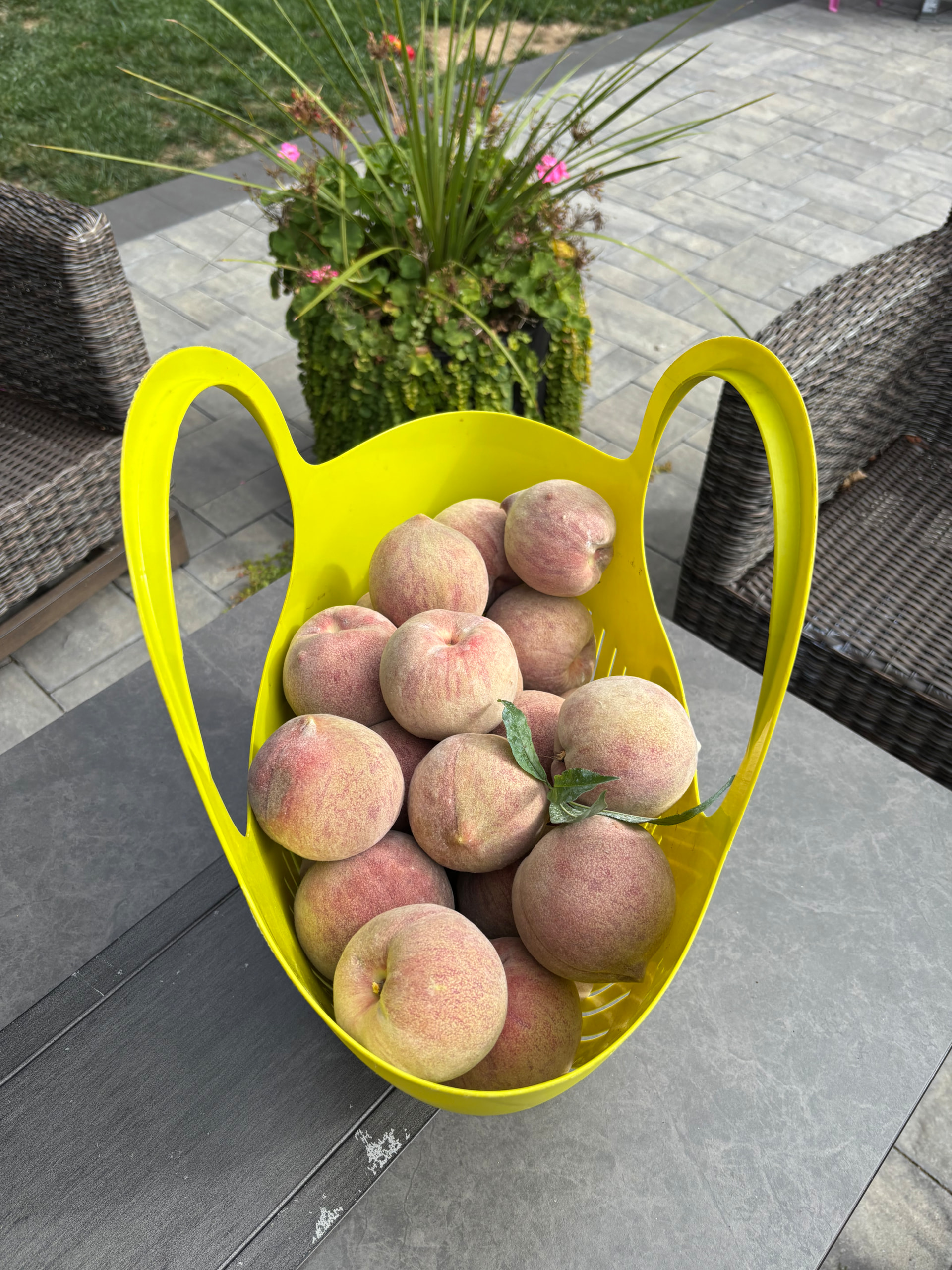
Indian Blood Peach a Bust in the Northeast

I wrote that a long time ago and my site is a soup bowl of humidity. I’ve long since discovered that at sites with better ventilation the peach can be great and the most unusual peach I have ever grown. When I get to harvest some I do love it.

I post of lot of comments, but my opinions are always evolving. I had forgotten that I wrote this one and would edit it if I could.

1 Like

One of the guys at the farmer’s market is growing Indian Blood and brought me a few to sample. He had been meaning to do it for a while and I think these were the last of his crop. They have an interesting balanced flavor and OK brix. These were pretty soft, but he said that most of the ones he had were like this. He liked the Heath Cling I grew more than his IB.

I planted an Indian Blood free this past spring, but it didn’t make it. I also planted an Indian Blood Cling, which is doing better. Based on these peaches, I probably won’t try to get another Indian Blood Free tree. Maybe someday I’ll graft a branch of it.

3 Likes

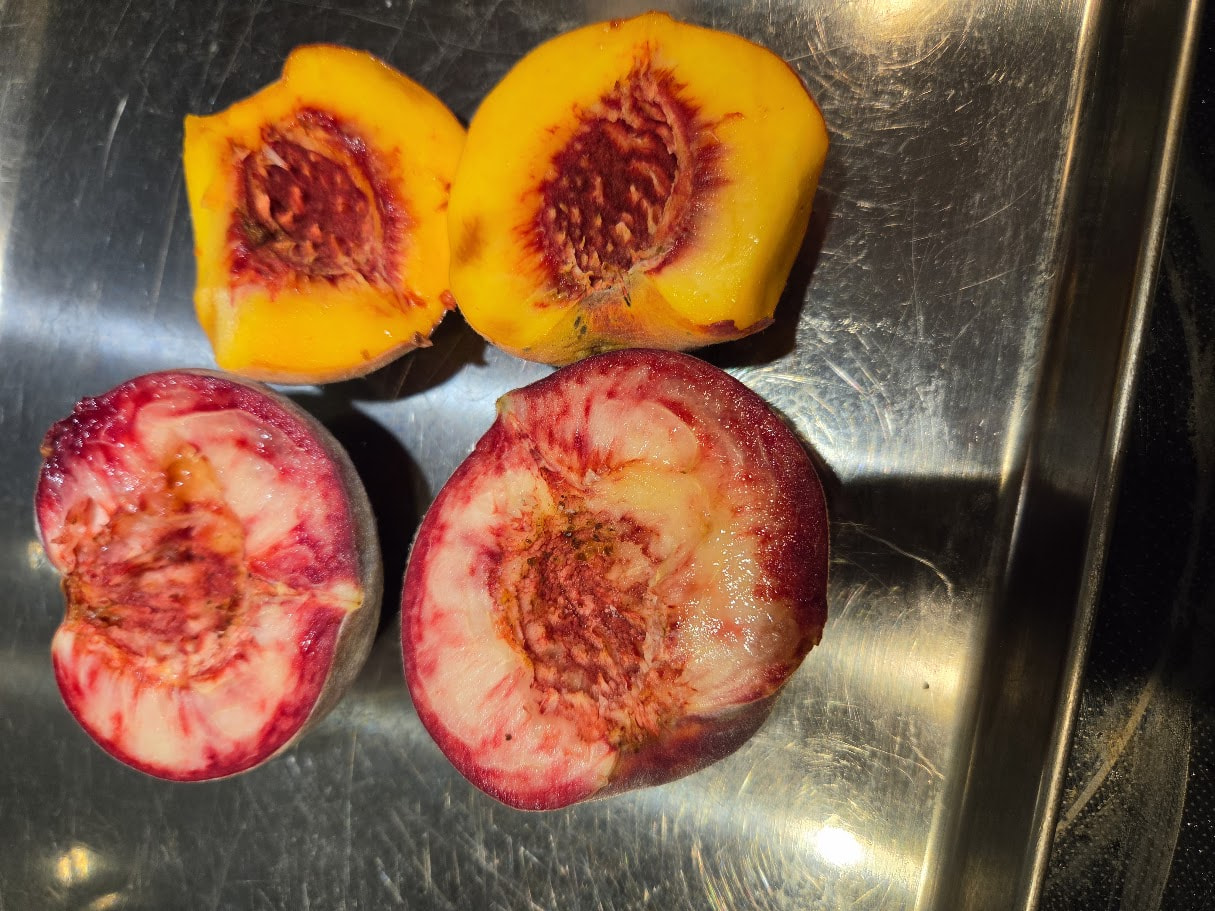
It wasn’t a bust for me this year and was one of the best in providing a crop after the obscene April temp swing that destroyed my entire nectarine crop and vasly reduced peaches. The surviving fruit had so many split pits that I lost much of the fruit that stuck to the trees to rot before they ripened- some varieties just dropped after achieving full size but not ripeness. I use a lot of my peaches warmed with my oatmeal, and Indian Blood adds more flavor than most any other peach- but it is a bit intense for fresh eating by itself. Here is a photo of one next to a Victoria (mostly frozen out of production) cut open. Usually I eat frozen nectarines I’ve grown all winter out of the freezer, this year I will mostly be using plums and slices of Indian Blood with frozen blueberries from my patch. I’m eating fruit out of my freezer for much longer than harvest season.

Incidentally, Bob may like Heath Cling, but I can’t detect any peach flavor from that one- Indian Blood has the most intense flavor of any peach I grow and is visually the most stunning. I love it today, may hate it later. It also can be a very difficult peach subject ot OFM and uneven ripening. I have to admit, it hasn’t bee a consistant producer for me although it does better at other orchards I manage.

Bob, you shouldn’t still be buying peaches- you need to focus more on your fruit trees and less on your real estate investements- life is short :wink:

7 Likes

I was visiting back East last week and was fortunate to get to try an Indian Free peach. It was excellent- as Alan points out, one of the most flavorful peaches and visually striking flesh. I have kept the pit and planted it. If anyone has more pits they’d be willing to send my way, please message me. I’d be happy to reimburse for postage.

1 Like

Maybe my expectations were too high based on reading your description in the past. Or maybe the ones I ate were mellowing a bit due to how ripe they were. But I didn’t think IB had that much flavor. It wasn’t bland, but didn’t stand out to me, other than visually.

I do like Heath Cling, but not as much as when I first sampled it. Part of that is probably due to the massive amount of them I eat each year. I lose a lot of earlier peaches to animals or rot, but Heath Cling ripens late enough to escape a lot of that. And I have 3 productive trees of it (or rather seedlings of it, which seem about the same) at various locations, so sometimes I find myself picking 100+ pounds. A well thinned one is still very good, with nice tropical overtones. NJF 17 (the white one) seems a bit similar, though I like it even more than Heath Cling. This year I actually got quite a few NJF17’s from a rental. I was shocked it didn’t get stripped by wild-life, though I did use Scott’s idea and netted the heck out of the base.

In terms of late season peaches, two that I’ve really liked in the past, Carnival and Octoberfest didn’t produce at all this year.

Are you talking about the farmer’s market or me considering another IB tree? I didn’t actually buy them at the FM- I give him plenty of novel fruit (jujube, kiwi, persimmons, pawpaw, etc), so he was happy to bring me a sample of a new fruit. He also had a couple interesting apples, Sweetie and LudaCrisp.

In terms of trees, I’m transitioning my home from one location to another (larger) property. This gives me a rare opportunity to add a few more trees. I’m not looking to add any more long term rentals- I’m already growing enough jujubes at them. I picked 100 pounds just in the last 4 days, so it is taking quite a bit of time. One reason I’m optimistic about the new property is that it is fenced, level, and open enough that I have a chance to potentially protect things from animals.

I did mess up when planting small peach trees this spring. I put them too deep and at least half of them died (lots of rotten bark and goo and around the bases). I think one of the Indian Blood cling may pull through. The Indian Blood free didn’t make it long enough to run into that issue- it took a while to leaf out and only had tiny leaves for a while before dying. The Jon Boy from Mehrabyan was good sized and did pretty well. I may get some more from them. I see they have Orion and NJF16, a couple donut peaches I’m interested in, though the selection of nectarines isn’t great.
3 Likes

I didn’t realize that you brought fruit to a farmer’s market- we haven’t seen each other for quite a while, unfortunately. I would have tried to have you over this year but my crop was too depressing to want to share the experience. Of course, my orchard is so expansive and all in one place where I am at least part of every day (unlike your spread of fruit trees on various properties) so I was able to harvest what I needed. I generally can protect most of my crop from birds and squirrels with baffles and nets when necessary.

Indian Blood varies from peach to peach on the tree more than most, it is the largest peaches that tend to be the best- by far. The peach I grow that bears almost as late is Victoria, which is good for a late peach and generally very reliable- therefore propigated by ACN. I’m not a big fan of white peaches because of their tendency towards low acid. Nectarines are another story and whites can have acid punch there. I like low acid in plums and nectarines if the brix gets above 20, which is virtually impossible ot achieve in my region with any peach- 13 is good from a peach.

I tasted a couple of Orian this year before the squirrels finished it off. Saucer peaches seem generally tougher against spring frosts here than round ones. I got a very full crop from my older and excessively vigorous TangO’s whose pits crack a lot at my site, probably partially because the fruit gets too big on my tree for the variety. It is the only variety that I grow I can’t reasonably protect from brown and black rot no matter how often and late I spray it- split pits start rot untouched by fungicides. I managed to harvest enough of them to make it the most productive of all my peach trees this horrible season- so I have a couple gallon freezer bags of it to get me through winter. It is the 2nd most highly flavored peach I grow after IB.

Orion is much like Saturn, but a couple weeks earlier making it a vey useful early white peach. I don’t tend to like white peaches for their lacke of peachiness, but Saturn and Orion partially make up for that with their relatively high brix, which is especially notable in a peach as early as Orion. A lot of early yellows haven’t achieved good brix since springs started getting excessively wet here- seems like for the last decade. Flavor May and Glen Glo arre the exceptions, for me, and Flavor May is one everyone seeking early peaches in my region should grow. It is a difficult tree to manage pruing wise though. Glen Glo isn’t great in that regard either. .

1 Like

AI says mostly 11-14 brix under commercial conditions, but can reach 15-16 with care. And 14 days before Redhaven sounds pretty good, as I don’t have much early on. One of the nursery descriptions says resistant to brown rot. I’m always a bit skeptical of those descriptions, but if it is only normally susceptible that is better than a lot of donuts.

I was really surprised how clean my NJF 17 was this year. I’m sure it helped that I have almost complete sun at that location, at least as much as you can have in such a neighborhood. There was a bit of rot, but 95% was good.

I was looking forward seeing how May Joy would do, but it may have been a casualty. We’ll see in the spring.

Why is that? Too vigorous?

I like NJF16 a lot. That’s one I want to re-add. Mine died several years ago. I think with the wider spacing I’m using now (15x15) it would do better than when I last grew it at 5’ spacing.

4 Likes

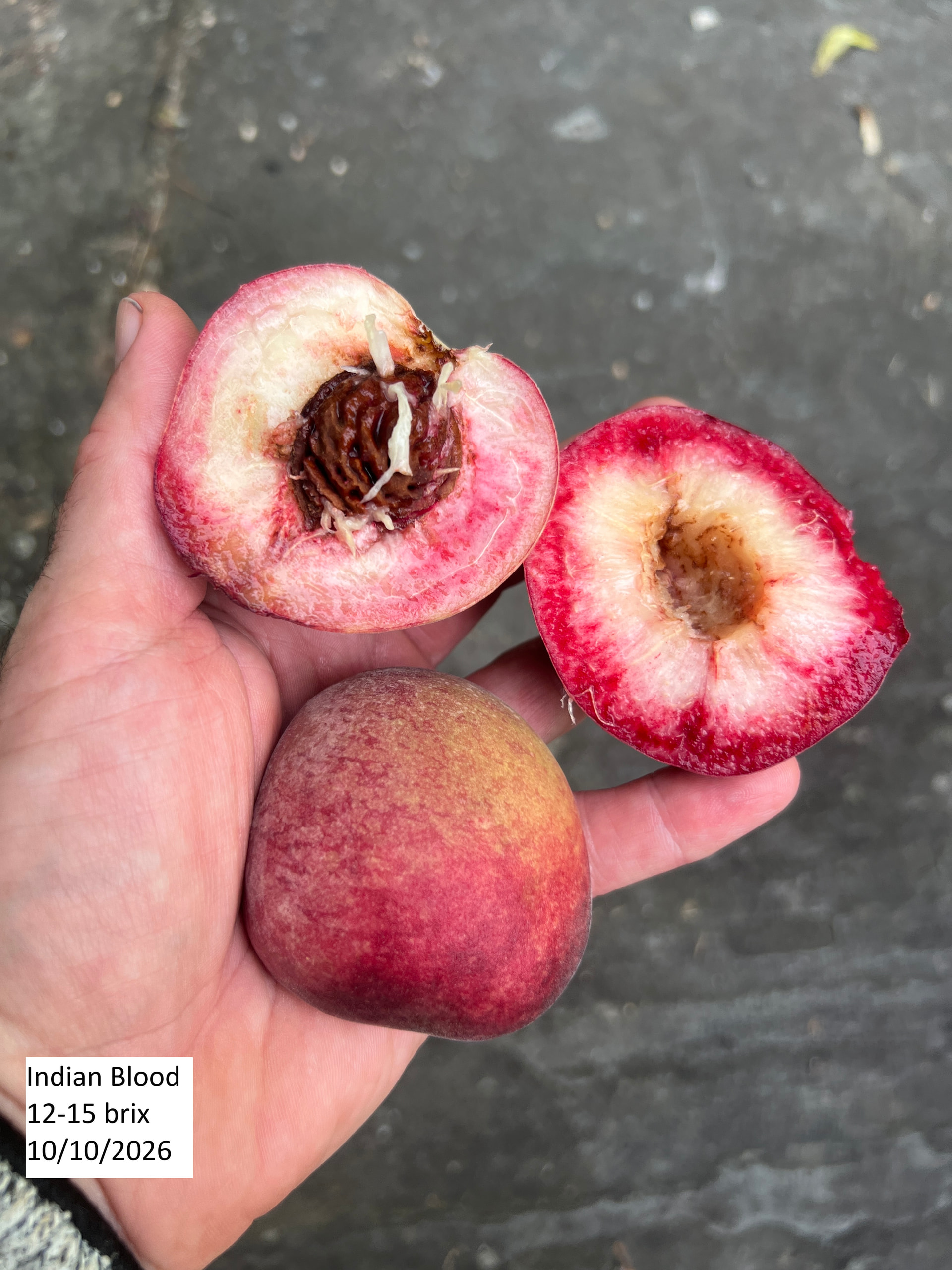
I’m on Long Island. I live close to the sound and that helps a lot with temperatures. This is my second year harvesting Indian free and my first real crop. I agree that quality varies throughout the tree with bigger fruit tasting better. I’ve been getting somewhere between 11 and 12.5 brix. At 11 I felt they were tart. At 12.5 they were very tasty, a good balance of sweet and acid. Texture is very good. I’m still relatively new to this but definitely better than 95% of store bought peaches I’ve had

9 Likes

Yes, and this was not a good year to develop the best quality for it with all the rain, yours look truly beautiful- good job!

Bob, your NJ 17s look great too. I’m glad they taste good to you and maybe they do better at your site than mine. I gave up on TangO’s II (the name ACN sold it by) a long time ago. Just didn’t get the brix required of a bland peach for me. This year I also tasted a lot of terrible Saturns even ones adequately thinned and on other years it has usually been sweet enough to be a very good white. TanO’s II had about 3 years to prove itself on my site and then I cut it down. Your tree looks like it gets real good light and that also might be crucial for the variety- mine had a bit too much morning and afternoon shade. The only other site I tested it has more shade tham mine- 10 years later or more it is a big vigorous tree there with fruit no one eats. The owner won’t cut it down so I prune and spray it year after year for nothing (besides the money).

4 Likes

Oo fellow long islander! Im adding a black boy and red raspberry nectarine but ive still never actually tried a blood peach haha

2 Likes

The colour of the flesh makes it worth persevering with for me, there’s nothing else quite like it. I’ve found timing the last spray closer to harvest makes more difference than the total number of sprays.

1 Like

That is a point I’ve often posted here for stone fruit and brown rot. Indian Blood at my site can also benefit from a much later insecticide spray than other peaches I grow, even Victoria, which is almost as late. IB is a sponge for OFM on my site.

Most years a dose of Indar a full month before harvest usually protects peaches and plums- nectarines can be tougher on wet years. here. Often an early August app protects later ripening stone fruit through Sept.- or seems to.

Thank you @alan

I had very little rot this year despite the rains so that is encouraging. I’m at a small scale (3 peach trees) and as has been discussed previously Indar is only sold in relatively large quantities (a bottle is $390)

Instead I used two wdg products that were cheaper and presumably will last a long time, captan and fenhexamid (brand name elevate). I think they were cheaper when I got them but now listed at $60 and $120 respectively.

I got the idea for the elevate from another thread I think @olpea mentioned it. It’s for late season, I sprayed 4 weeks and 2 weeks prior to harvest. Both captan and fenhexamid are surface protectants so I try to time prior to wet weather.

Different scales require different trade offs. Just some food for thought for us smaller folks

1 Like

In guides I posted my ideas about low spray production using products packaged for home growers. Infuse is the one I recommend for brown rot. It is illegal to split a bottle of Indar between users, but some laws just beg to be broken. If you print a label and attach it to a solid container and follow the label, breaking the law does not equate using the material irresponsibly. However, infuse should work well enough.

2 Likes

I used Infuse or Monterey Fungi-Fighter (both are propiconazole) for several years and didn’t get great results. Better than nothing, but still quite a bit of brown rot. I’ve been happier with rotating Indar, Elevate, and (I think) Luna Sensation. I should probably keep better track of which I use at what time. But I think a lot of it could come down to how a given season’s weather goes (like all the rain late this summer). And sometimes I wait too long to spray and get rot. I don’t think I sprayed my Heath Clings after July (probably when I sprayed the TangO II’s) and had a shockingly low amount of rot, given how much rain we had.

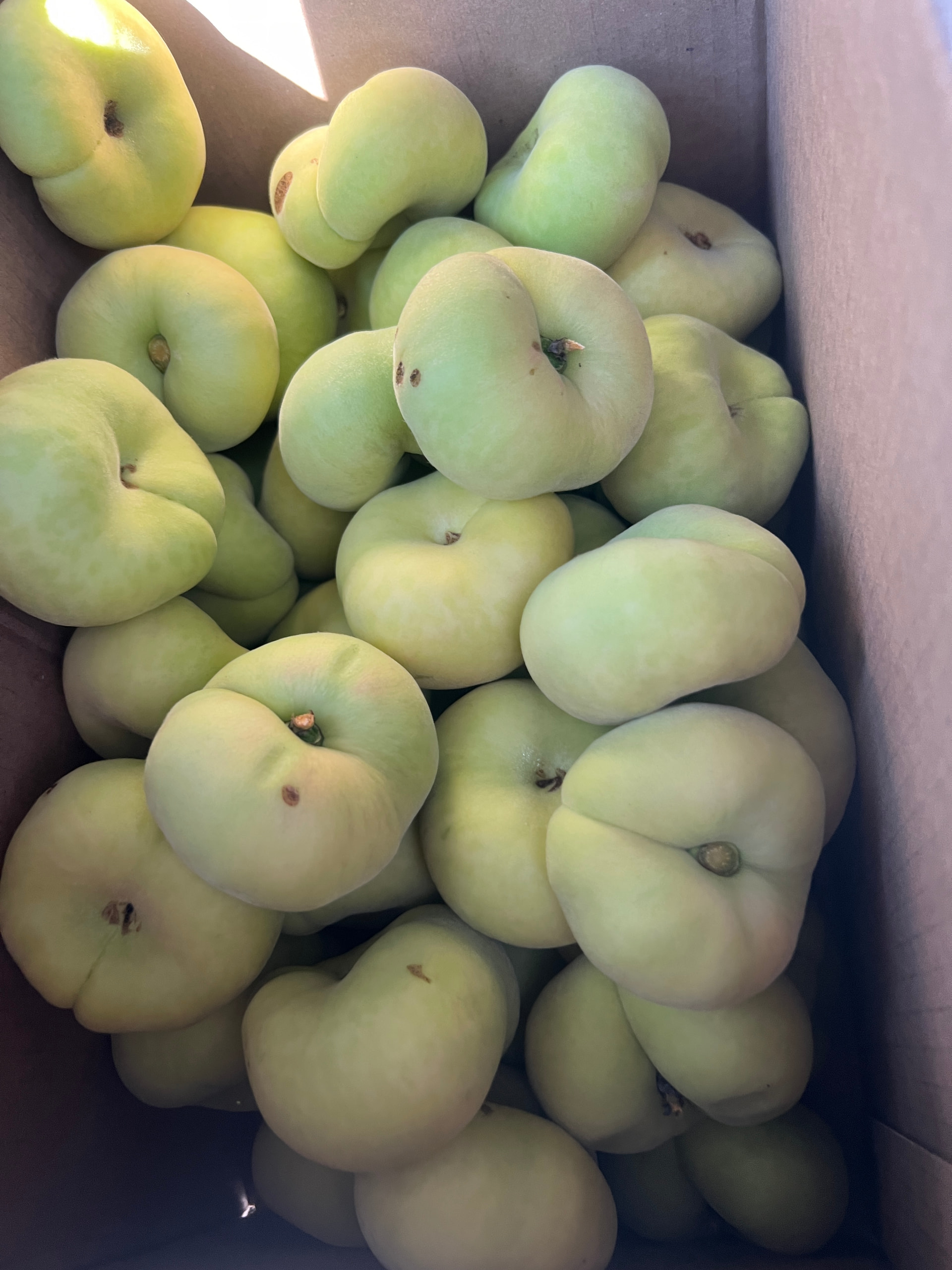
Maybe the ones I’ve had weren’t thinned enough, but in the past I’ve never been that fond of Saturn or the BuenO’s. NJF 16 and 17 are the best donut peaches I’ve had. I was pretty happy with NJF 20 (a yellow fleshed donut nectarine) as well, though I need to remember to thin it first thing in the spring, as it ripens so early. By the time I got to thinning in late June, it was almost ripe (around July 4th). Some of them were still quite good, especially for such an early season option.

Random experiences by growers not keeping records of spray times and not fully focusced on their trees are far from useless sources of information- I’ve never even used Infuse (Monterey Fungus Fighter with prop. is no longer available, as I understand it) and I am skeptical of the research on all things fruit trees, but the research suggests that prop is almost as affective as Indar. So have some comments I’ve read from other growers on this forum.

Rotation is done as a means of reducing the opportunity for pests to develop resistance, of course, but I don’t believe there is any virtue in rotating fungicides for non-comercial production of only a few trees of any given species.when one is a small grower of only a few trees isolated from large stands of trees sprayed with the given pesticide you are using. By my logic that should vastly reduce the opportunity for pests to develop resistance. This has long been my opinion, but I just questioned CHAT GPT about research related to the issue of orchard scale affecting the speed of resistance developments. As I said, I tend to be skeptical of all information sources- even my own observations. There are just so many variables in play.

Pfeufer & Ngugi’s 2012 study of apple scab, Venturia inaequalis , and DMI fungicides in Pennsylvania. They assayed 644 isolates from 20 apple orchards and related resistance to orchard-management characteristics. Larger orchards were significantly associated with a higher incidence of DMI-resistant isolates. The same study found, predictably, that >4 DMI applications increased resistance substantially; lack of dormant copper, older trees, and some other orchard characteristics were also associated with resistance. APS

That result was important enough that the later large multistate survey by Villani, Cox and colleagues mentioned it in trying to explain why Maine orchards retained unusually good myclobutanil sensitivity: they specifically noted that Maine orchards tended to be relatively small and cited Pfeufer & Ngugi’s finding that orchards under 10 ha—about 25 acres—had significantly greater DMI-sensitive scab populations.

Peaches need to be thinned early in their development because they uniquely form the ability to hold their sugars long before they begin to sweeten up. Earlier thinning improves their capacity to hold sugar. This is another amazing little bit of information brought to me by AI. Thin peaches and nects first and worry about apples later if your goal is primarily to increase fruit sugar. Annual production and maximizing fruit size are different issues. If apples aren’t thinned early they are less likely to bear the following year (depending on lots of other factors) and the apples will be smaller, but for flavor, thinning even 2 or 3 weeks before harvest should increase brix significantly.

Some peaches develop an insane amount of fruit when left unthinned and Saturn is one of them. The fruit also takes more time to thin because its stems are tough. If you don’t thin them at least 6" apart during early development its pretty hard to evalute them in my region. Saturn is recognized as being a high brix peach as studied commericially.

1 Like

You need to change the title of this thread otherwise it will mislead new growers.

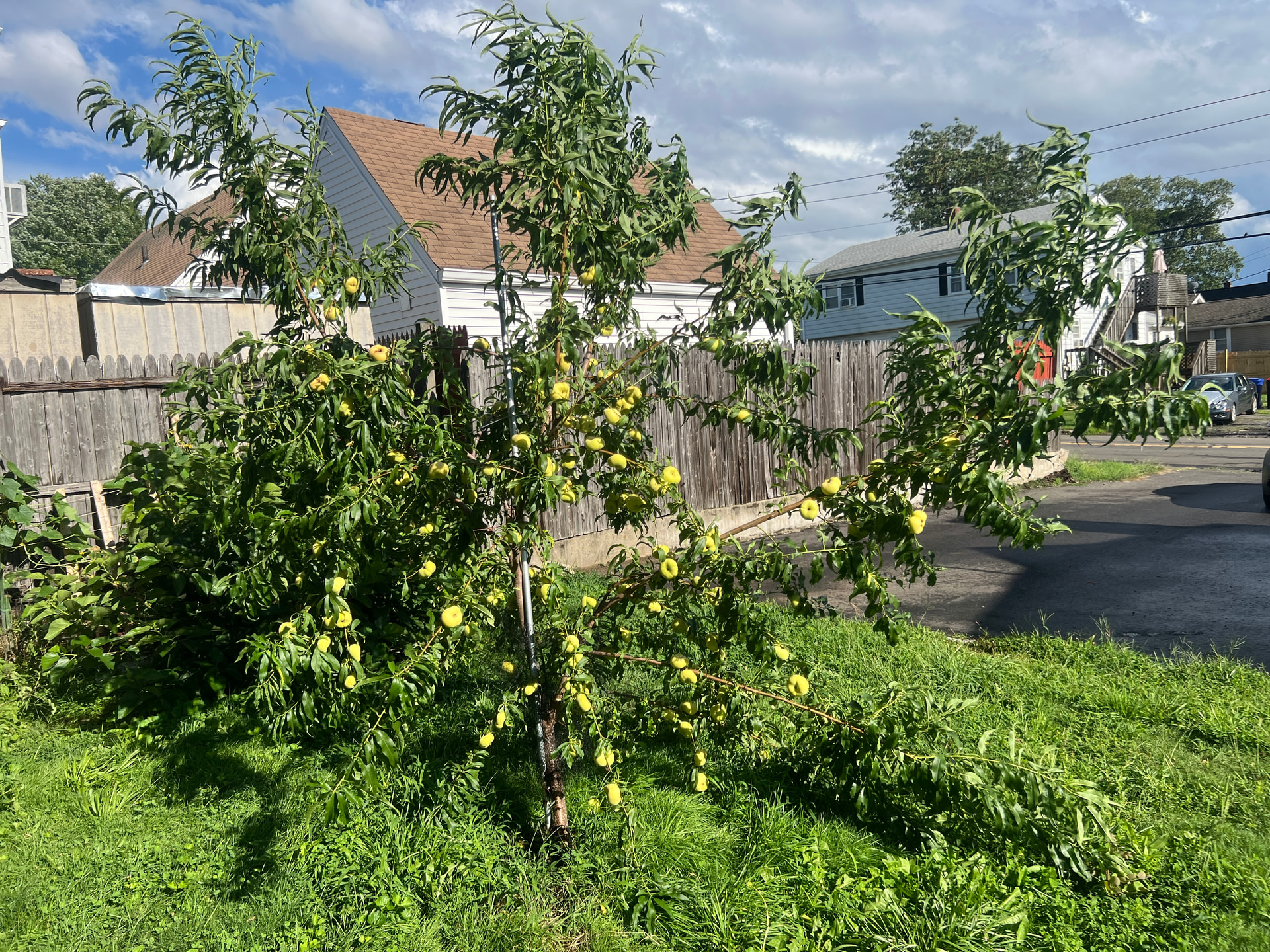
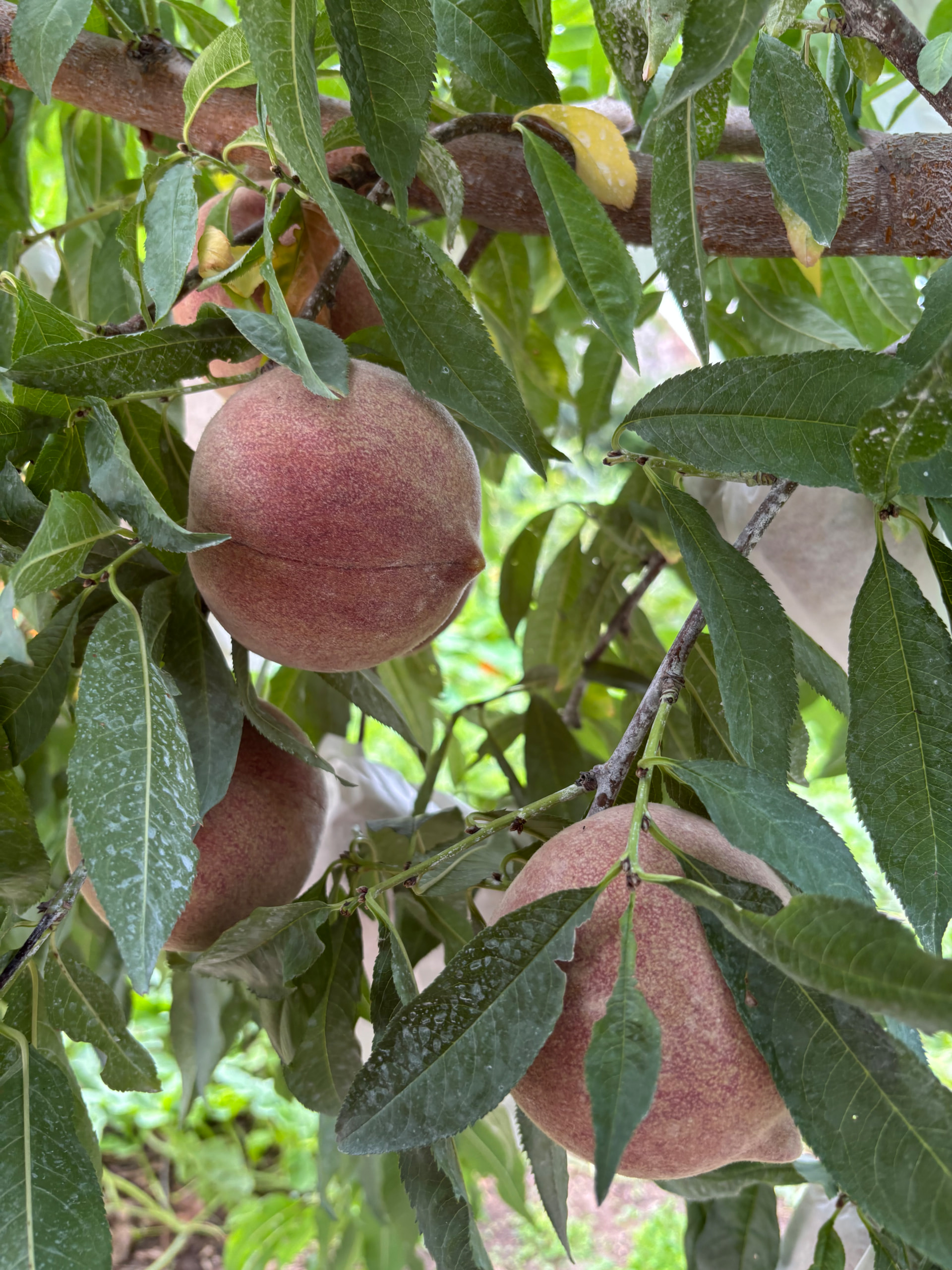
Indian blood peach is probably the easiest and tastiest peach to grow in the East. I have a 9 year old black boy tree that gave me 150 lbs this year despite the notorious April frost in the region that wiped out most orchards. The peaches were well thinned and only grown on long and thin branches - many peaches were around half pound, very big for this variety.

I only sprayed it 1 fruitguard and 1 sevin + infuse in end of April and early May. 95% of the peaches were perfect looking except some of them had split pits due to excessive rain this year.

The tree is very vigorous and you need to learn how to prune it well.

1 Like

IMO, go grower of a single tree on a single site can ever logically predict how it will perform elsewhere- not even nearby, as pest pressure varies from site to site and certainly a great deal in the entire eastern region. Hell, in my orchard it varies from one end to the other with trees closer to wild meadow suffering more damage from pland bugs, for one thing.

For me, Indian Blood is a challenge at some sites, including my own, due to late attacks of OFM and rot. The trees I am closely observing on a daily basis at scores of sites at least receive a lot of Surround and some synthetic fungicide intervention because otherwise most stonefruit, most sites, most years will suffer terribly from brown rot. However, a single spray may work for stonefruit for brown rot and fuzzy peaches like Indian Blood, have some resistance to insects (some sites, some years). The trees I manage all automatically get some fungicide because I include it in the spring insecticide mix.

Pictures please!