Human settling of the Americas started between 15-20,000 years ago. The ecology of northern North America at the end of the ice age was so different from today that you could argue that many modern-day forests in the area have spent most of their existence with humans. For example, there’s genetic evidence that humans played a major role in allowing oak forests in California to spread southwards faster than they could have naturally.
2 Likes
It’s about more than imported pests. Native insects and diseases sometime take a long time to adapt to new food.
1 Like
Yep. For example plum curculio is native to the eastern US. It’s possible they originally could not feed on peaches until this was selected for
He clearly showed curculio was an issue before the 1840s and not a huge issue until the late 1800s so I feel pretty confident your assertion isn’t borne out in the historical record
1 Like
I’m uncertain Indians burned their peach orchards. The flint hillls here in KS are one of the last “natural” tall grass prairies of any significance, so it’s a big thing here. Cattle ranchers maintain the burns now. They do it for the same reason the Indians did, lush new grass to feed bovine. And it keeps the area from becoming forested, by killing young trees.
Peach trees are short lived and must constantly be replanted. A burning orchard floor would destroy any young trees, unless strong measures were taken to protect the trees.
My guess is Indians probably maintained peach orchards the same way they did their gardens, via hand tillage, which could be much more easily controlled vs. fire.
I’ve no doubt Indians spread the seeds of peach trees where ever they traveled. The peach sprouts easy and produces abundant fruit, which would make a good staple for a subsistence population. Much like the fig in the ancient Middle East, or the potato in Ireland.
As is mentioned, it’s easy for history to be romanticized. Like the 50s were the “good old days” even though polio was still rampant, the world was under constant threat of of an extinction event nuclear war, most cancers were an automatic death sentence, little over half the households didn’t have phones and the ones which did had one phone and were on a party line, etc, etc.
Likewise, I can imagine peach trees grown in Indian orchards had plenty of worms to eat around. I’m sure the Indians, as well as European settlers picked up worm infested drops and made the best use of them they could. Heck, Indians sometimes ate grasshoppers and crickets.
As wdingus and others mentioned many pests of peaches simply were not present in 1840, such as Oriental fruit moth, green peach aphid, Japanese beetles, spotted wing drosophila, brown marmorated stink bug, spotted lanternfly. Diseases like bac. spot and peach leaf curl were also not here in 1840. So, without a doubt it must have been easier to raise pesticide free peaches then vs. now.
If there are objective accounts of better quality and varieties of peaches in Indian attended orchards, perhaps that could be due to the diversity of peach plantings in North America. If Indians planted the peach ubiquitously I could imagine more diversity of expressed peach genes compared to European farmer’s who relied more on grafting for “proven” varieties, which without vigorous breeding programs, tends to produce some level of stagnation in improved crop traits. That is, compared to Indians constantly planting seeds and selecting pits from the best trees to replant, which is basically a breeding program. They may not have selected the best fruit for pits, but it would be an easy thing to recognize for pretty much any human being. Kids look like their parents, it’s not a leap to make the connection fruit does sort of the same thing.
Still, I doubt the varieties were really that great compared to today. Belle of Georgia was supposed to be a great tasting peach in it’s release in the 1870’s. It’s only considered a fair tasting peach today.
4 Likes
Plum curculio is only found in North America, so it would seem to be native to there. IMO it’s more like the Colorado Potato Beetle, a species that expanded its palette to consume new arrivals.
3 Likes
Another aspect could be with Dorymyrmex bureni, an orange pyramid ant known to predate on curculio. They live in most of the areas where colonists recorded peaches.
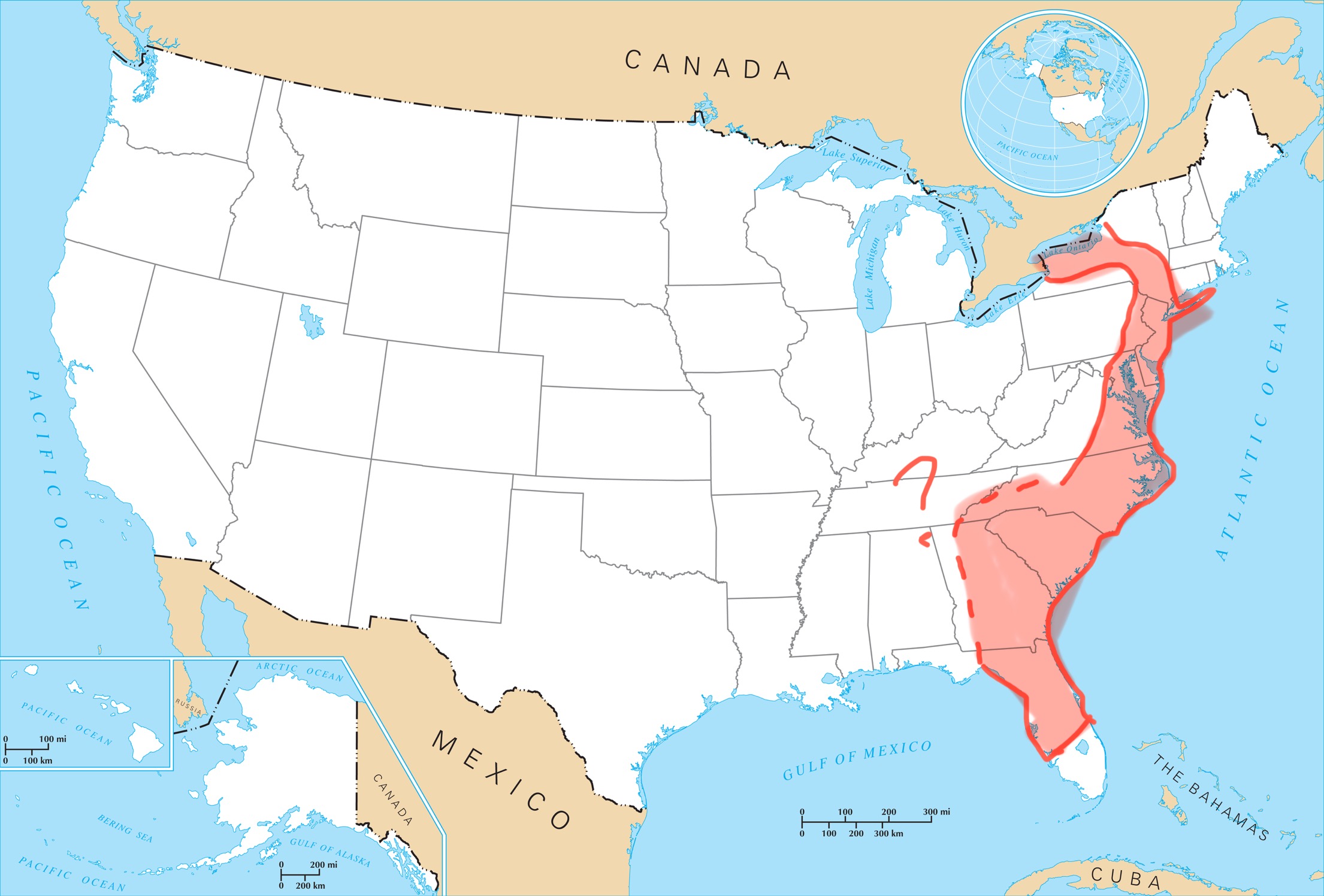
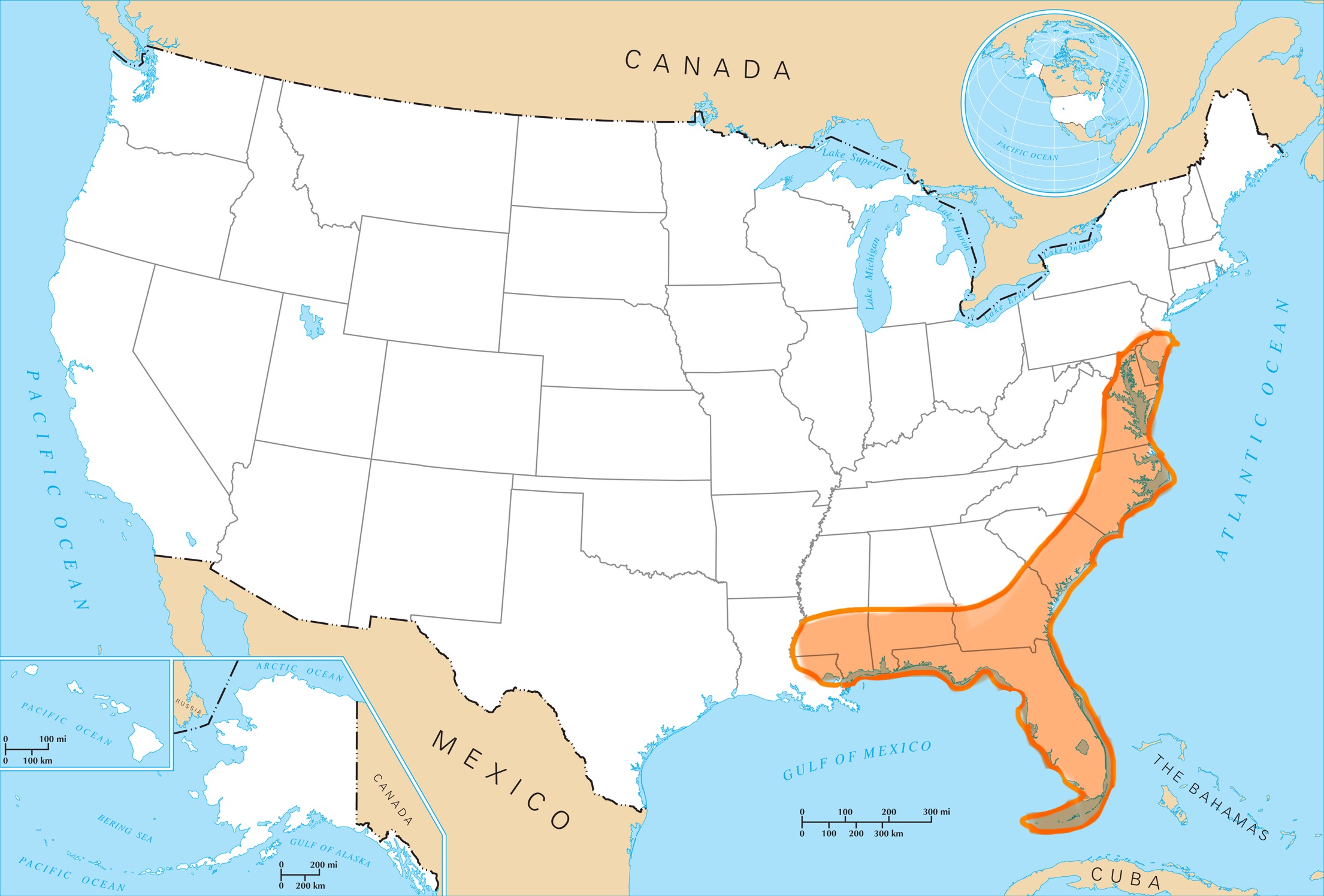
Indian distribution of peaches (rough guess)
Orange Pyramid Ants (Dorymyrmex bureni)
2 Likes
It’s possible you are giving humans too much credit. When I read this I wondered why indigenous Americans didn’t just keep expanding prairie, given it provides more food than forest. I had always thought that climate was the most important factor separating forest from prairie, although I’ve long forgotten how I came to that conclusion- so I ran your statement by CHAT. You can tell me if it makes sense to you. I should add that currently human intervention may have become essential because our species limits the spread of lightning induced fires. Studies done about the requirements of meadow maintanance now cannot take this into account.
Humans modified the frequency, season and spatial pattern of fires in a landscape that already had strong climatic and natural-fire tendencies toward prairie.
And the Flint Hills are particularly revealing because prairie expansion around 10,000–8,000 years ago coincides strongly with climatic drying , not with the arrival of humans. USGS describes loss of tree parklands during that interval as warming and drying intensified, accompanied by increased fire.
I should add that there is apparently no historic evidence of controlled burning being used in established peach orchards as a maintenance practice- prunus are more vulnerable to burn damage than most other species, both because of the physiology of their bark and their relatively low growing habit. It was used for nut trees, though.
I could probably agree with that statement. It’s a nuanced point. How much did climate and soil type affect the landscape of the flint hills vs. human intervention? I would agree it was probably a combination of both.
I remember watching a TV program about the burning of the flint hills. Some groups are against the burning for ecological reasons (i.e. Sierra Club) others just don’t like all the smoke and ozone it produces over cities, like Kansas City, in the wind path. The strongest advocates for burns of course are the ranchers. They made the claim the flint hills receive plenty of moisture to germinate seedling trees, though it’s not as much as the eastern part of the state. I think that’s true. 30 inches of rainfall is plenty of rain to germinate trees even on thinner soils.
So, if there were no human burns, would there be enough lightening strikes to keep the flint hills prairie, if there was no human intervention to stop natural range fires produced by lightening? I just don’t know. Maybe there would be some hybrid plains/forested areas of the flint hills?
1 Like
Yeah, I suppose I leaned a bit too heavily into the non-native pests.. Which likely weren’t an issue for indigenous people’s peach cultivation. At least from the period peaches were first introduced to North America (1500’s) through perhaps the late 1800’s when many of the “introduced” pests first arrived.
How did they deal with the native pests though? Various borers, curculio, etc. In my own home orchard there was a “honeymoon period” the first few years where there was little pest pressure. Then they arrived, by the seemingly millions. Was population and development and other factors such that at that time the honeymoon period was much longer? Or did they have “organic” pest control techniques which have perhaps been lost/forgotten?
An aspect of fire which they may have figured out (and settlers may have learned from them) is wood ash to deter peachtree borer.
Here’s an AI overview of the practice:
The practice of packing wood ash around the base of peach trees to deter the peachtree borer was developed and documented in the United States in the late 1700s to early 1800s .
Because the peachtree borer (Synanthedon exitiosa ) is a native North American insect, early colonial farmers had no European playbook for fighting it when it aggressively transitioned to eating their imported peach trees. The use of wood ash emerged as an early, trial-and-error folk remedy.
The earliest formal documentation of this exact practice appears in the foundational writings of American agricultural societies. A primary historical citation comes from Richard Peters , President of the Philadelphia Society for Promoting Agriculture. In his widely circulated letters titled “On Peach Trees” (published in the Memoirs of the Philadelphia Society for Promoting Agriculture , Vol. 1, 1808 ), Peters and his contemporaries detailed the borer’s lifecycle and prescribed a specific defense: excavating the soil around the base of the trunk, manually digging out the grubs, and heavily packing the excavated collar with wood ashes, lime, or soot.
The historical logic behind the practice:
- Physical Barrier: The mounded ash altered the soil line, creating a hostile, powdery physical barrier that discouraged the adult female clearwing moth from laying her eggs in the bark crevices at the soil line.
- Caustic Alkalinity: Hardwood ashes are highly alkaline and rich in potassium carbonate (potash). When combined with soil moisture, they create a highly caustic, soapy environment (essentially primitive lye). Early horticulturalists correctly deduced that this caustic environment would burn, desiccate, or kill the fragile newly-hatched larvae before they could successfully bore into the cambium layer.
While this was one of the earliest documented forms of Integrated Pest Management (IPM) in North America, modern entomologists consider it unreliable as a standalone treatment. The fatal flaw of the wood ash method is that rain quickly leaches away the water-soluble alkalinity, neutralizing the caustic effect and requiring constant, heavy reapplications to protect the tree throughout the moth’s entire summer flight window.
1 Like
The same thing goes for other regions where the understory becomes dangerous to the bigger trees when allowed to grow unchecked. Same controversies, of course.
By the way, I just called out Chat on this statement
I told it that it was an absolute misinterpretation. It suggests natural causes when the evidence is at least as strong that human activity may have been what originally turned the Flint Hills area into prairie. This is why you have to proof read every sentence AI texts. Lots of useful information if you sort out all the errors.
Chat admitted its mistake and showed absolutely no shame 
Humans and hot dry weather arrived at around the same time.
There is a interesting article about the peach trees of the Navajo and Pueblo Indians grew and selected for hundreds of years. I first heard about it on a pod cast.
Extensive orchards were found then destroyed. Some survived and are now resurfacing and being preserved and studied.
2 Likes