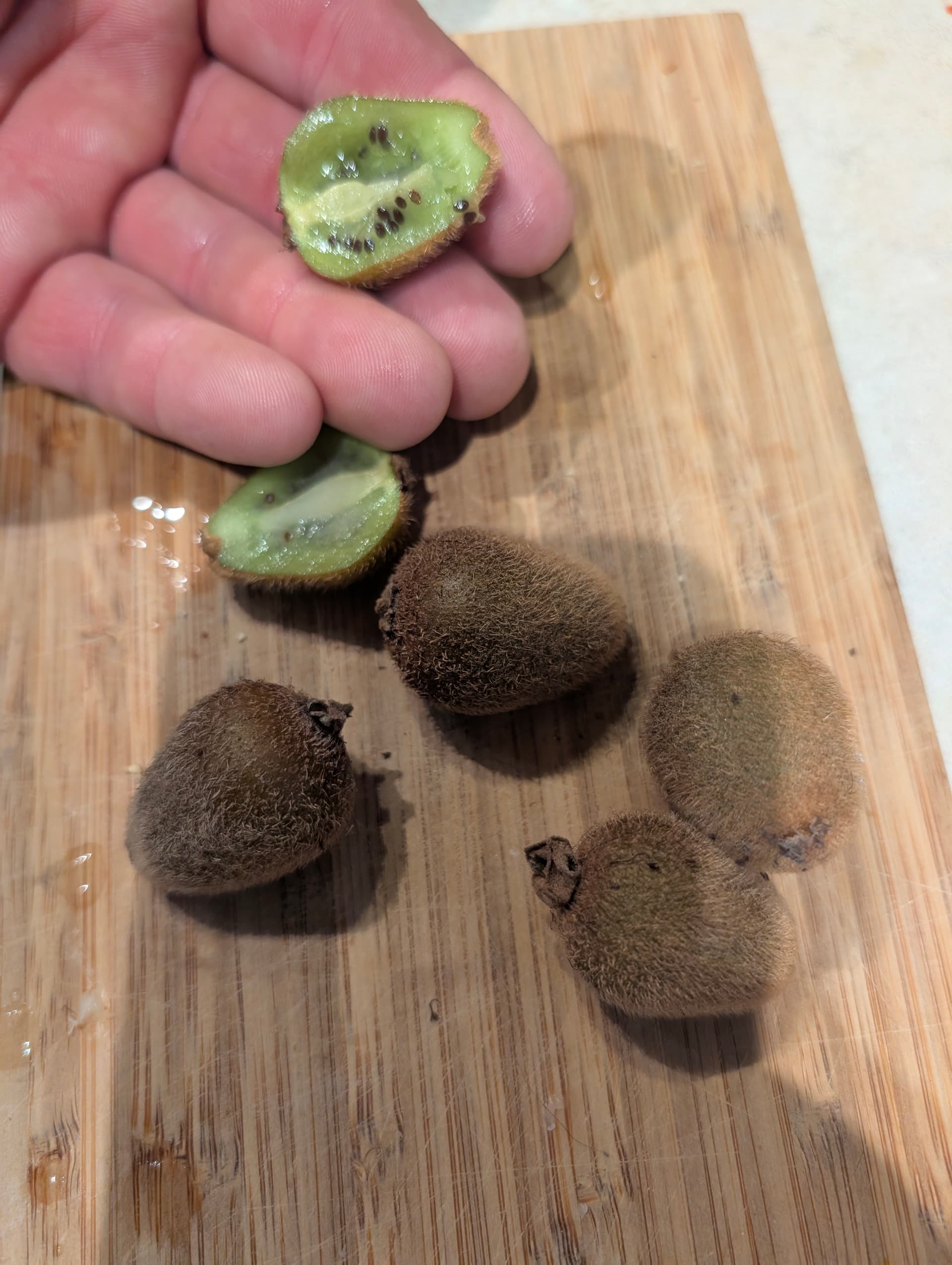
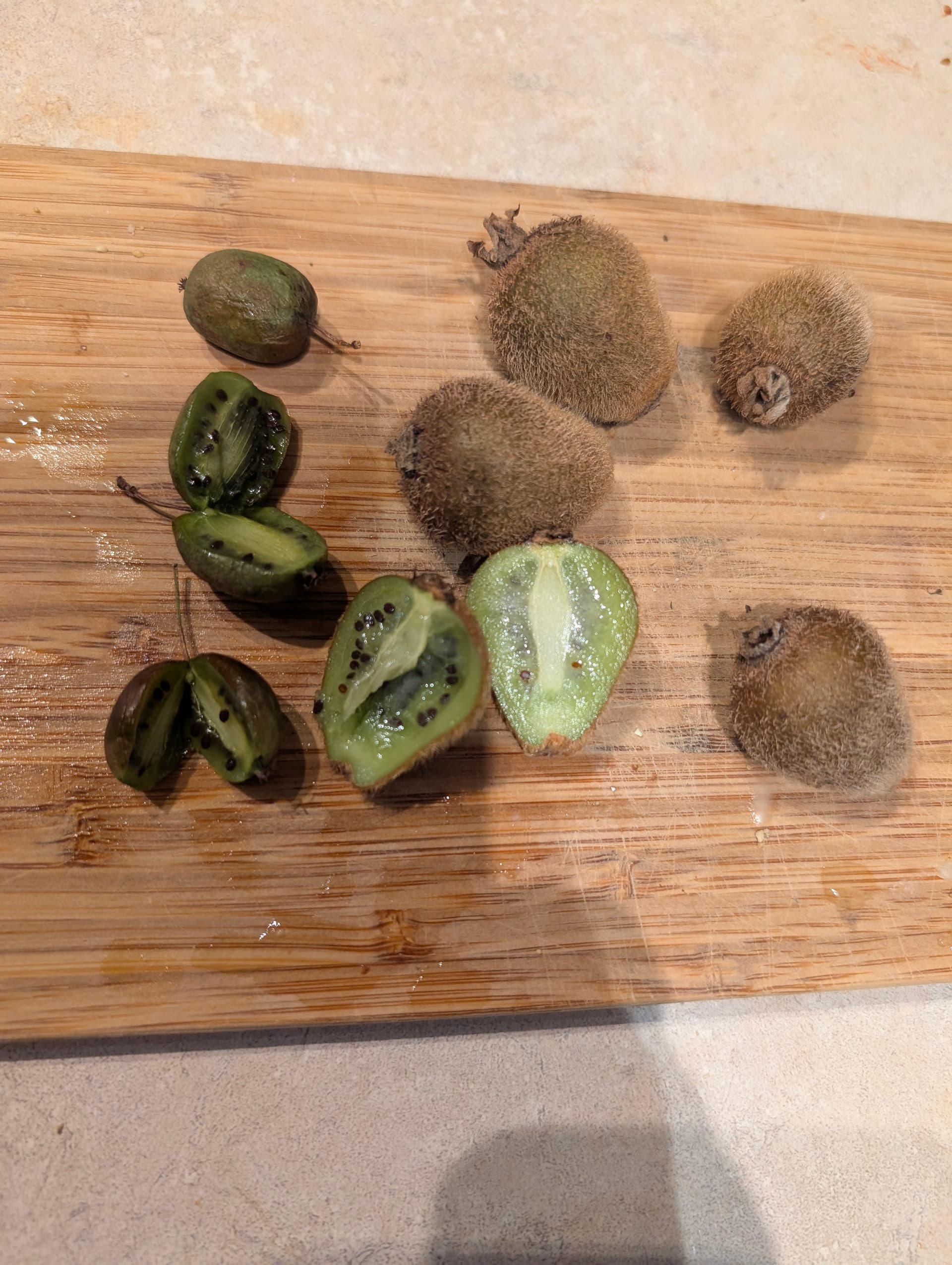
Fruit is tasty with a really strong kiwi flavor. However, they are too small and have too large of a core. Unlike a hardy kiwi, they are extremely fuzzy so you can’t just eat them as is. Here’s a comparison to some Anna I picked the other day.
I would first try grafting something like Saanichton on to it. The fuzzy kiwis I find much more rewarding, the fruit tastes better and they are not so small (except for Jenny apparently). You might also need a male.
That’s a shame, I thought they might get a little more size after a couple years. Now I’m glad I never found any plants of them to buy. Like Scott said graft Saanichton and a male to it. No need to waste it. That’s what I’ve been growing and they seem to survive the winter while fruiting early enough.
Do you think they would get softer allowed to sit and ripen further? Even though it’s a 2 scoop kiwi, I’m glad you like the flavor and the vine. I still plan on planting it next spring. I’m OK with little fruit.
I don’t mind eating the skin on kiwi if it’s not very fuzzy (like the golden types). I wonder if these really fuzzy types could be held over a flame to singe off the hairs and make them more suitable for eating without the need to peel. That would really help if they’re too small to be worth peeling.
Three thoughts which you may already have considered…
A lot of fruiting plants provide smaller fruits in the first few years they produce then size and flavor up after they have been in ground longer, especially if they are being harvested.
A lot of self-fertilizing plants have smaller fruits/seeds if there is not a pollinating partner nearby.
Fruits require consistent readily available water while growing to reach their full potential. Too much and they split, and too little they are competing with each other for a finite resource.
My Jenny hasn’t started fruiting yet, and I haven’t seen it flower, but I did not try hard to look for flowers this year and it’s infiltrating a rose of sharon with it’s big flowers to catch the eye. Thus, I cannot offer comparison, just a reminder that impatience often causes us to throw things out right before all the work we’ve done (literally) bears fruit.