Jujubes- Our New Adventure

Yes, but “3rd generation” means it is not exactly Bing Tang. It isn’t clear to me if 2nd/3rd generation is a label applied to seedlings or branch sports (a mutation on a branch, similar to how extra-red Red Delicious came about). I am growing 2nd and 3rd generation Dong, so maybe I’ll get a better feeling for the subject based on how different they end up. One thing I have noticed is that 2nd Gen Dong really grows fast and produces little/nothing (yet).

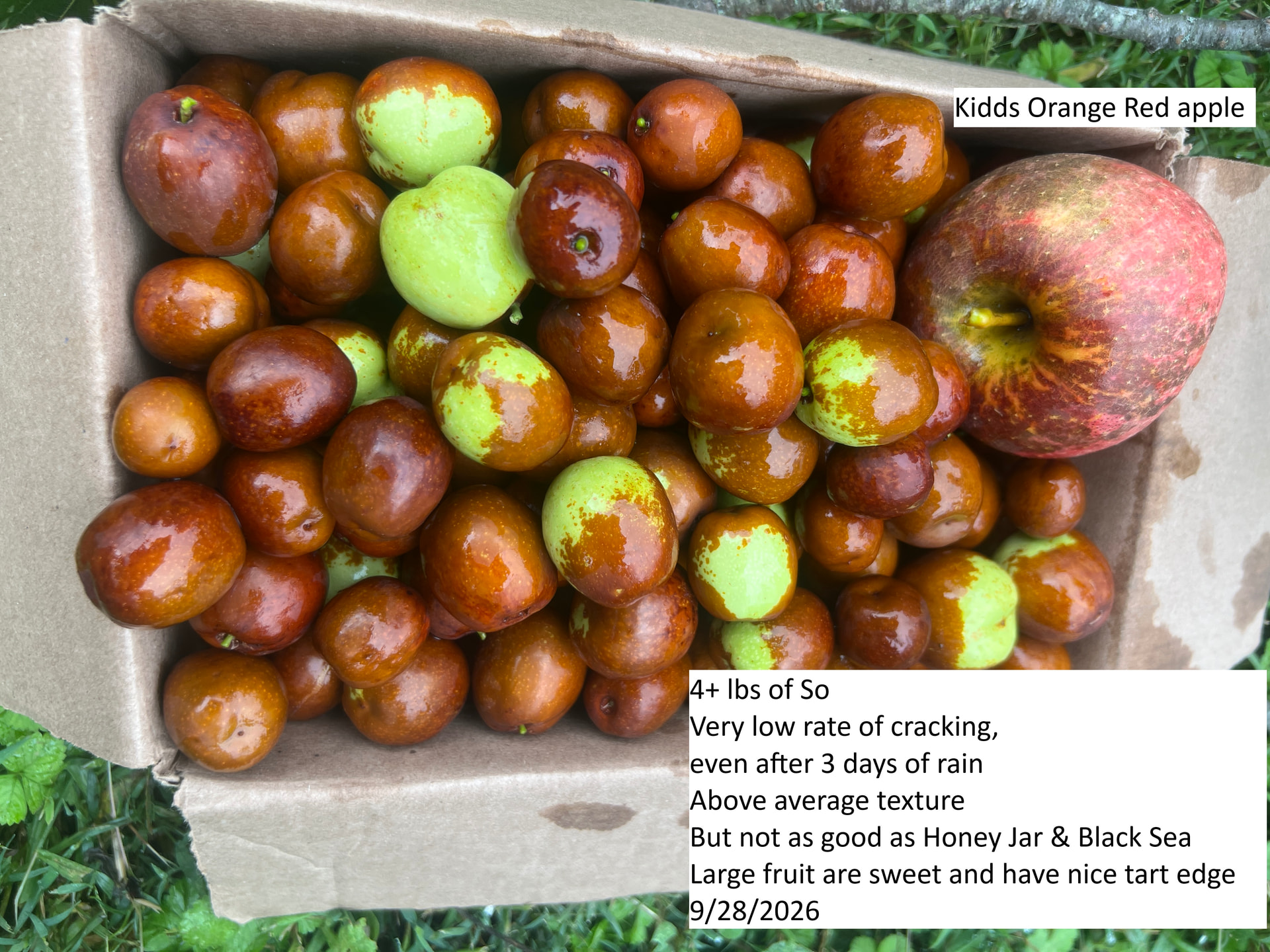
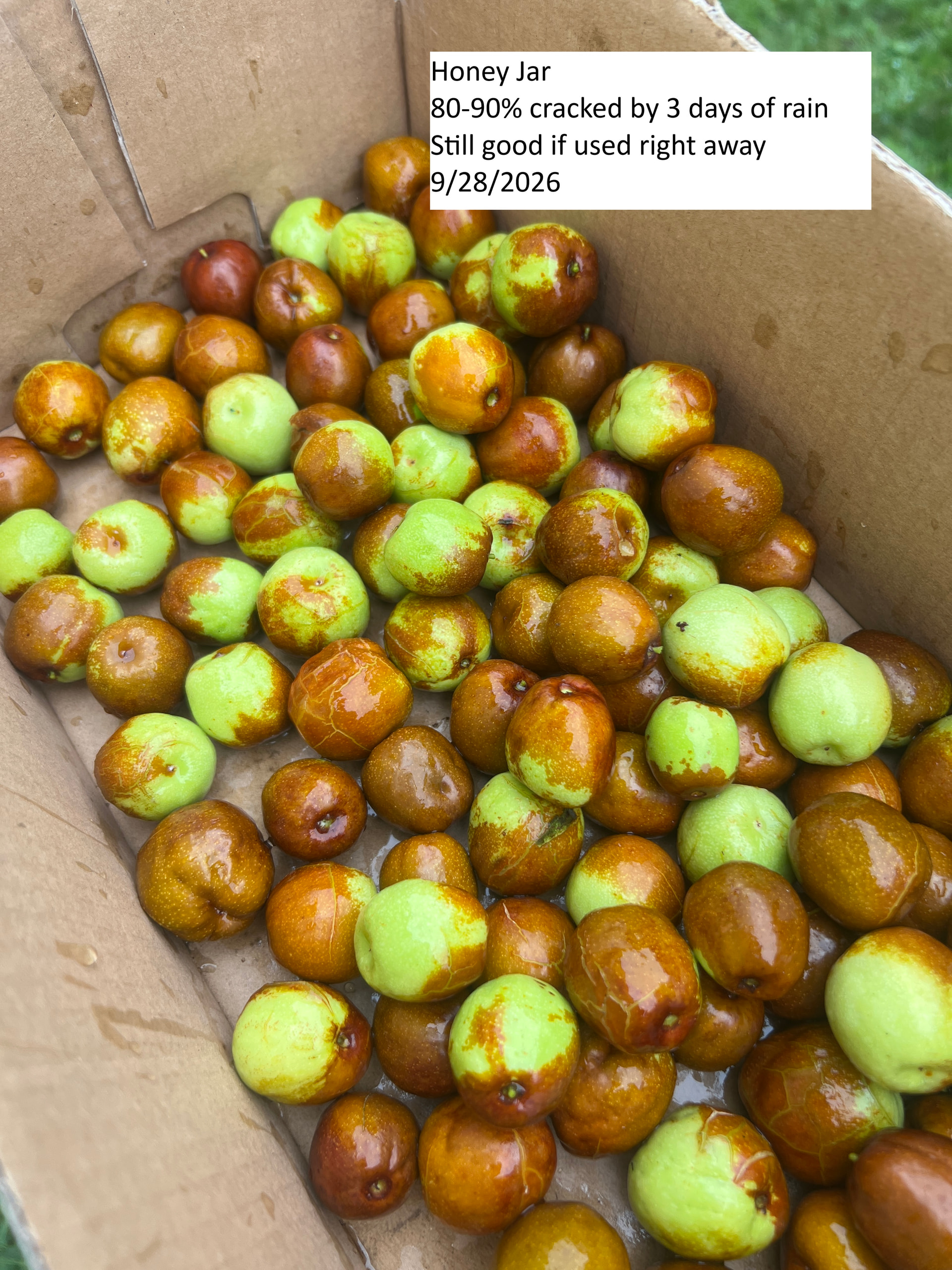
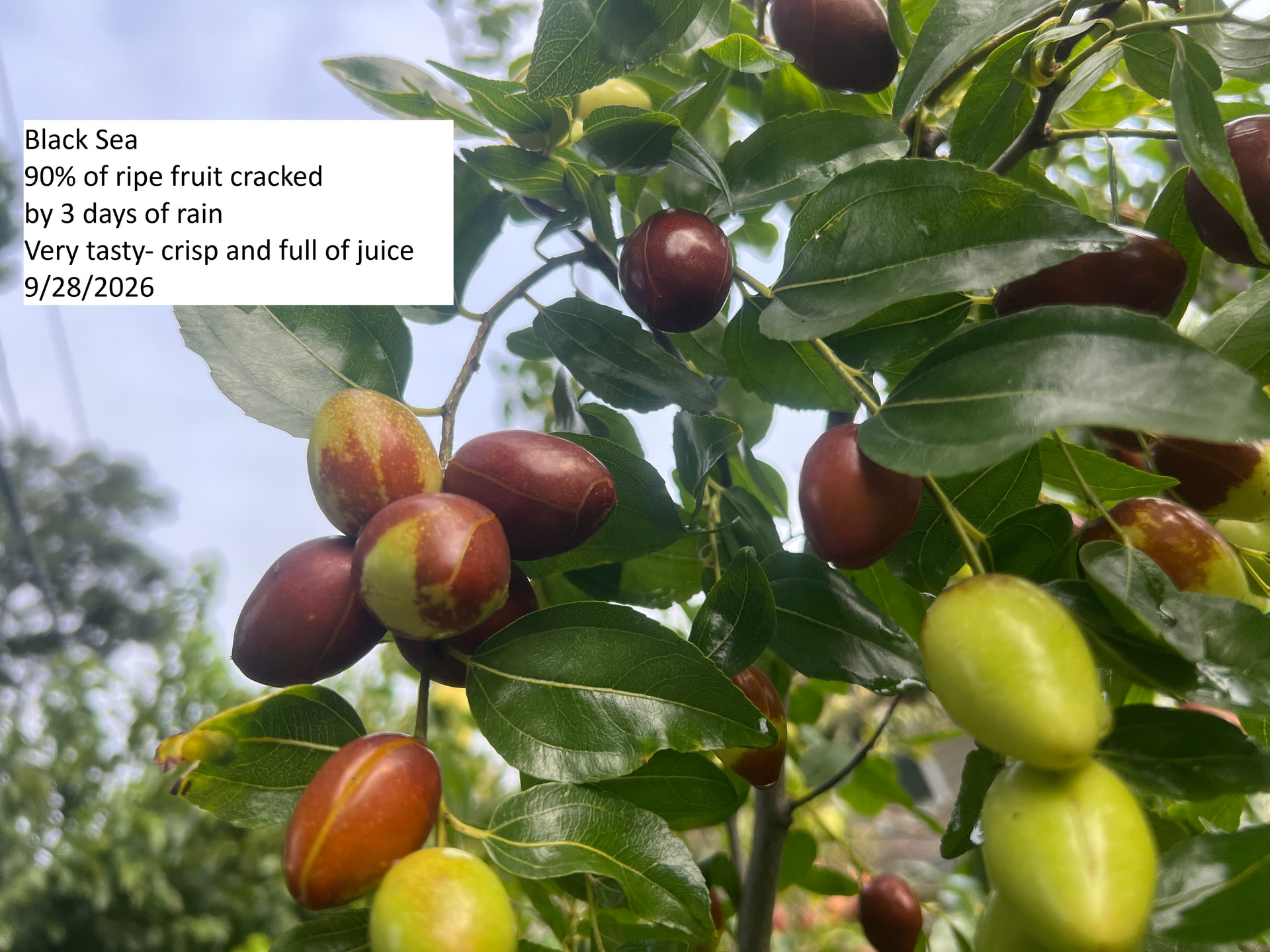
We’ve gotten 3 days of rain from a nor’easter and it has cracked a lot of jujube. I picked a lot before the rain (probably 100 lbs over the previous week), but there is still a lot that is close enough to crack.

The ripe fruit from Honey Jar and Black Sea are almost completely cracked. There are still plenty of green fruit which is fine, so I’ve been going around and picking cracked fruit as soon as the rain tapered off (maybe 10-12 lbs today). If you use it right away, the cracked fruit is good. But if you leave it for a few days, it softens, get fruit flies, etc.

10 Likes

I’d like to be on your waiting list, too!

1 Like

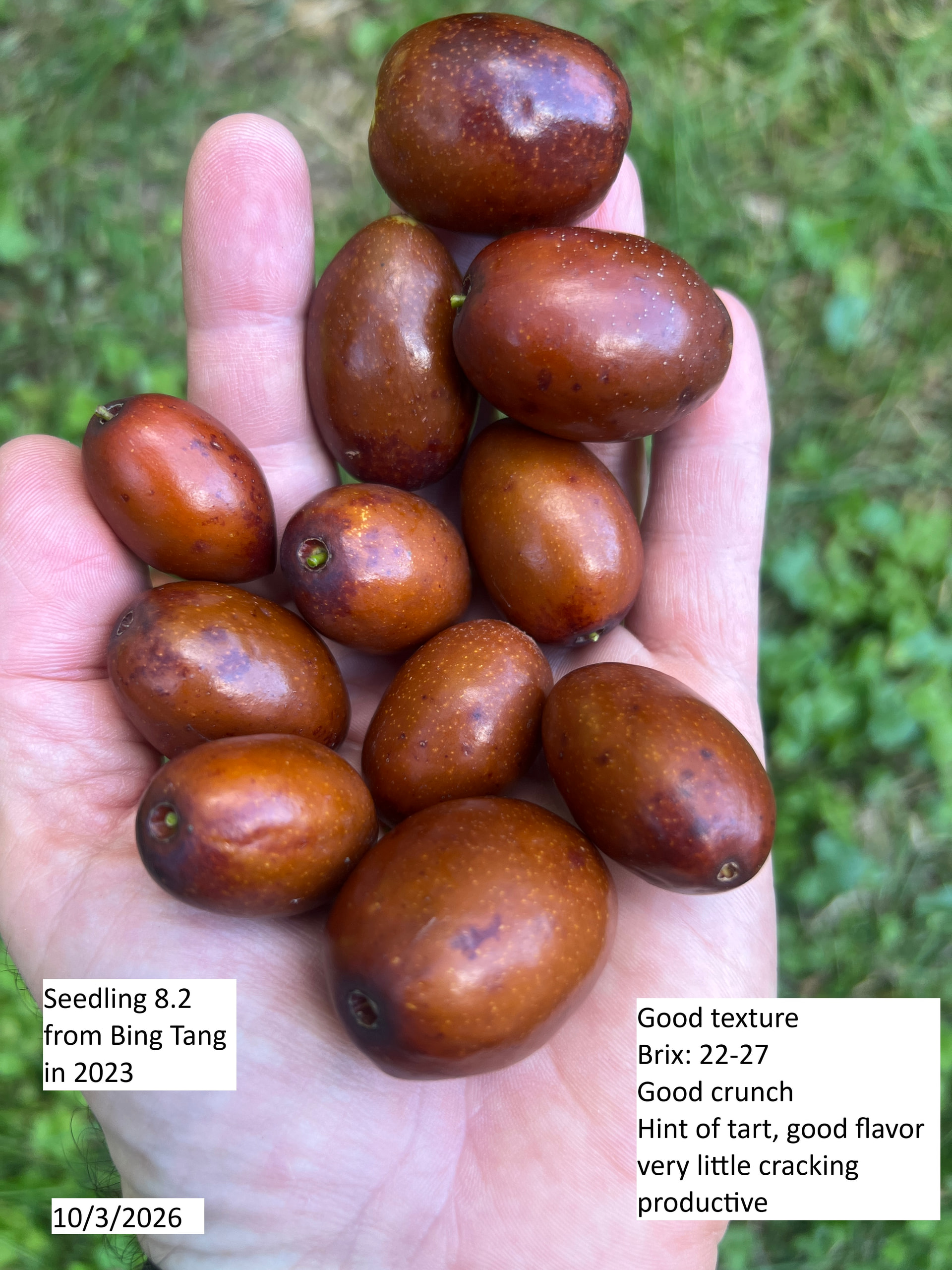
I’ve been picking some seedlings and there are a couple which are promising. All 3 are seedlings of Bing Tang.

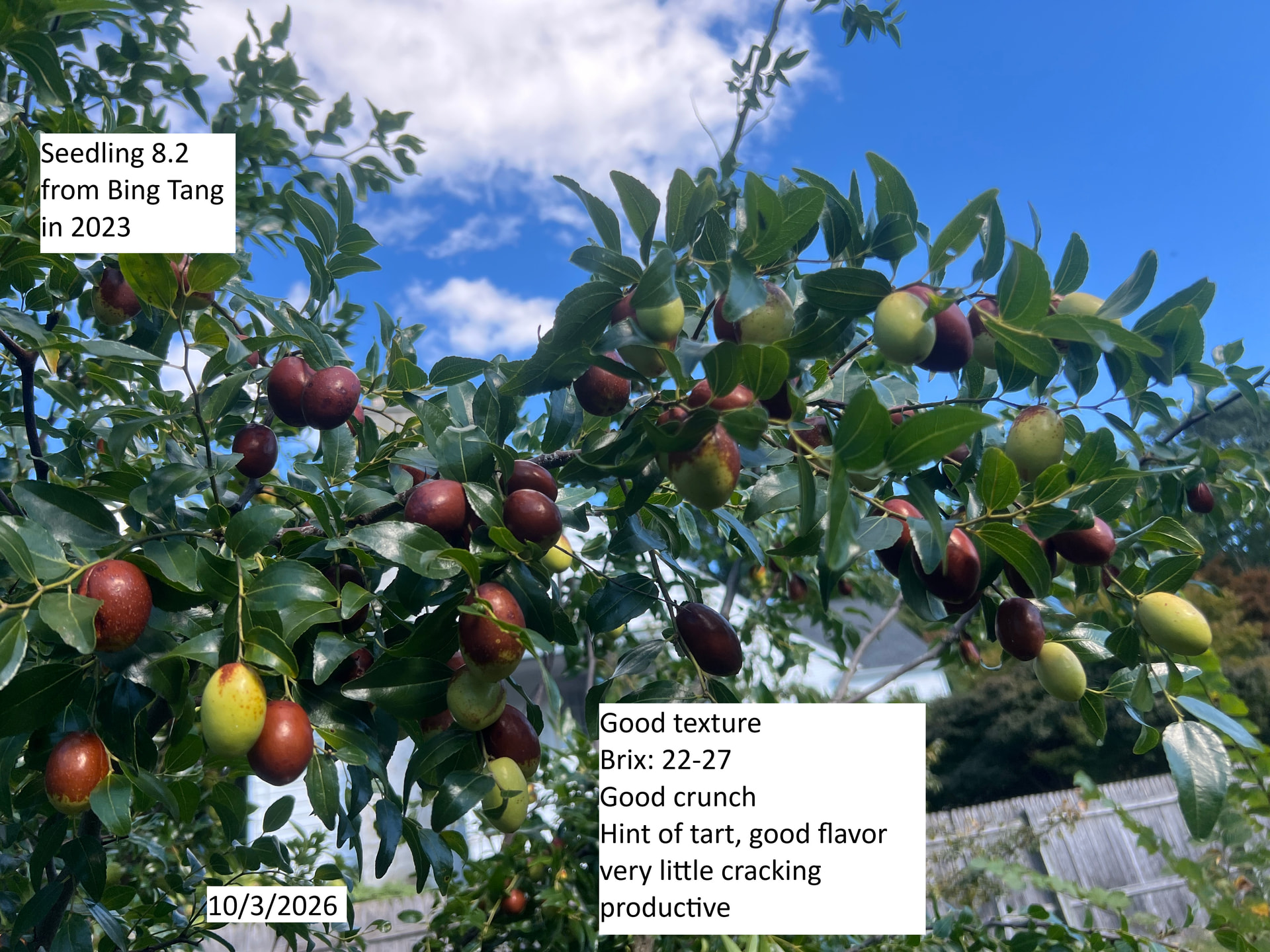
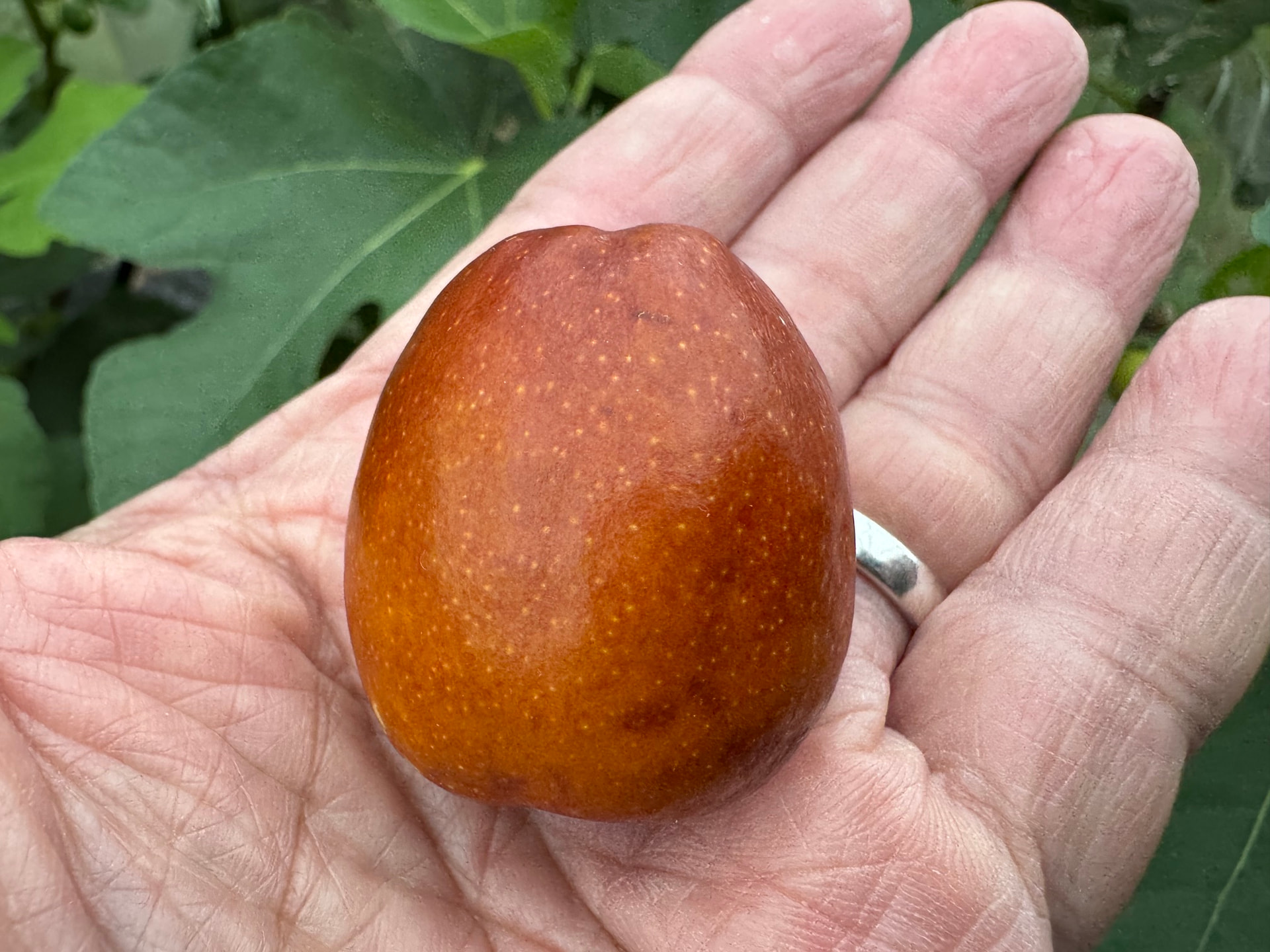
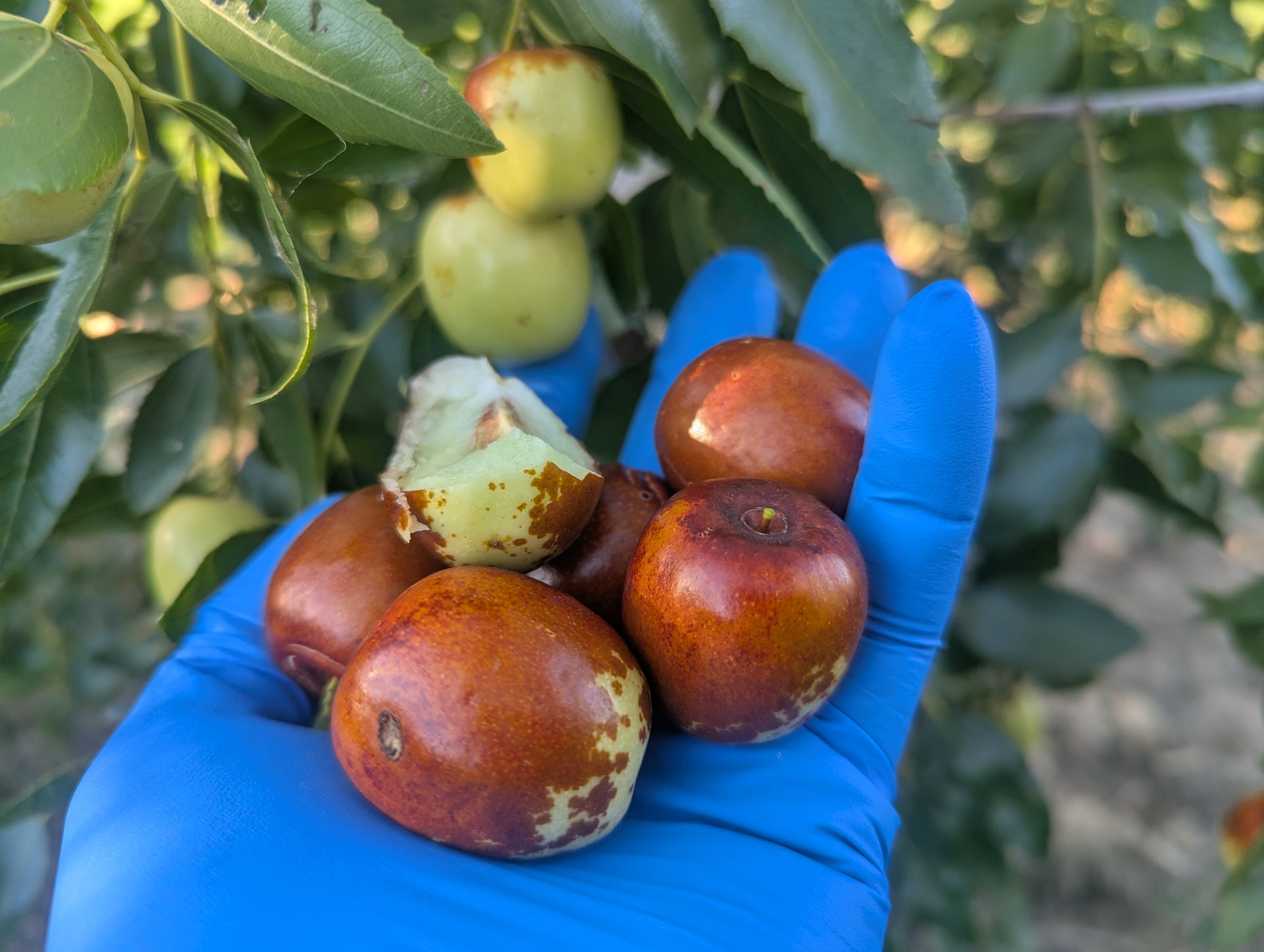
Seedling #8.2 (pot #8, 2nd seedling of 5 in the pot) is good enough that I think I will give it the BV2 title. These fruit are from a graft I made onto a mature (planted 2011) tree back in 2024. The original seedling is planted in a good spot (10’ spacing in an area with good sun) at my new house, as I had some indication last year that this could be a good variety. The ones I had today were particularly good and reminded me of a cross between Bing Tang and a good So (the large ones that are crunchy, high brix and have a bit of tart).

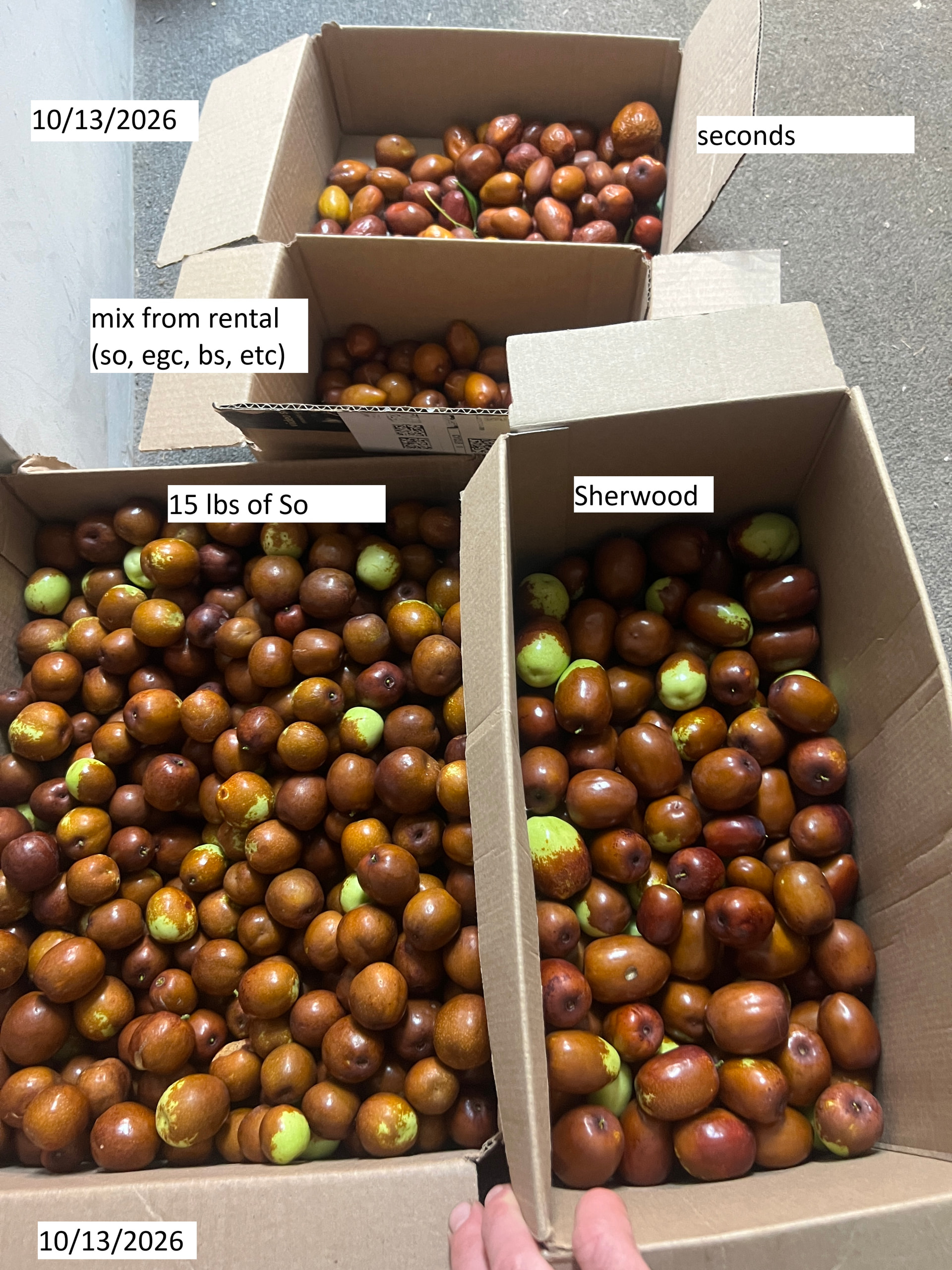
In addition to the quality and production, I was surprised at how little cracking there was, given how ripe they are and the recent 3 day rain storm. Picking has been a pain recently, dealing with all the cracked fruit. Normally I try to separate damaged fruit as I pick it. But I knew I’d never get through it that way. So I just dumped everything into boxes and enlisted my wife to sort through 20 lbs of mixed jujubes (probably 6-7 varieties as well as various levels of damage).

I had her split it into:

1.) Pristine and fine to store in the fridge for a few days

2.) Cracked, but otherwise perfect. Those go in a separate bag for her or her mom to eat while traveling. They don’t store for long though.

3.) Damaged in such a way that there is a bad spot to remove. She ate those on the spot (hopefully after removing the bad spot, but I didn’t watch closely…)

By the end, there was 13-14 pounds of good fruit and maybe 3.5 lbs of cracked fruit. Leaving roughly 3 lbs of quite damaged fruit.

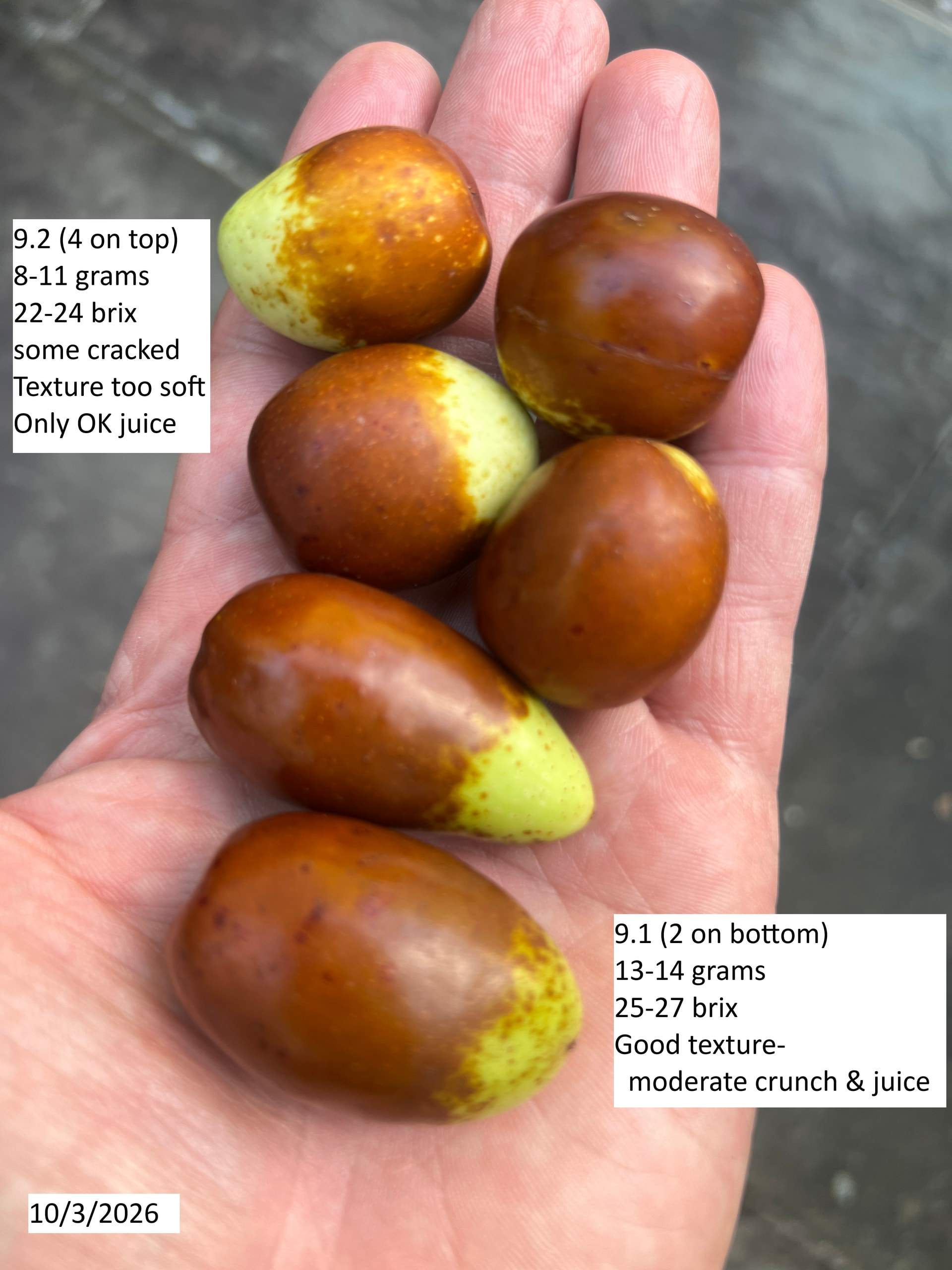
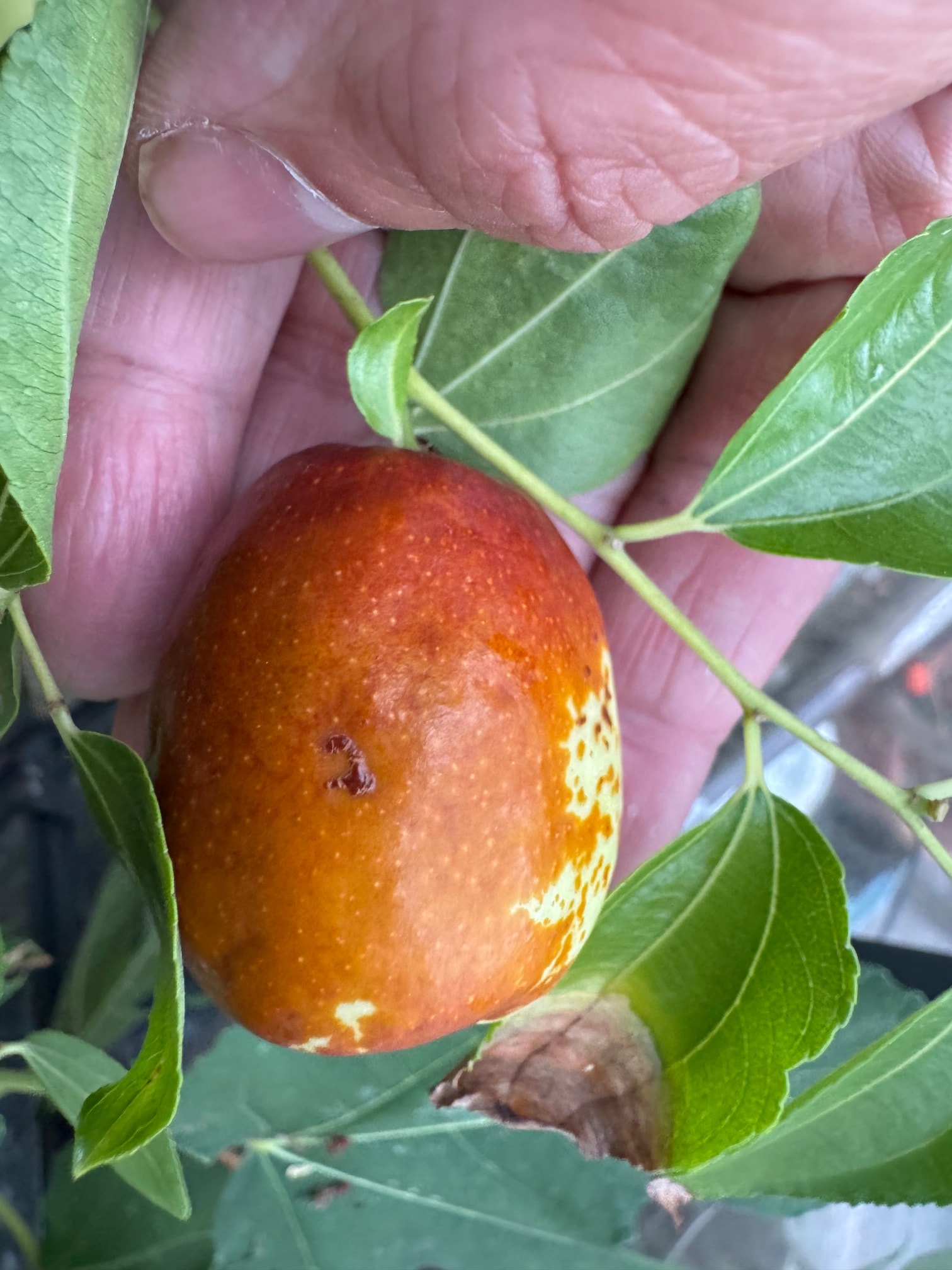
Here are two other Bing Tang Seedlings. Of the two, #9.2 is probably not a keeper. #9.1 may be and I’ll need to keep an eye on it in the future.

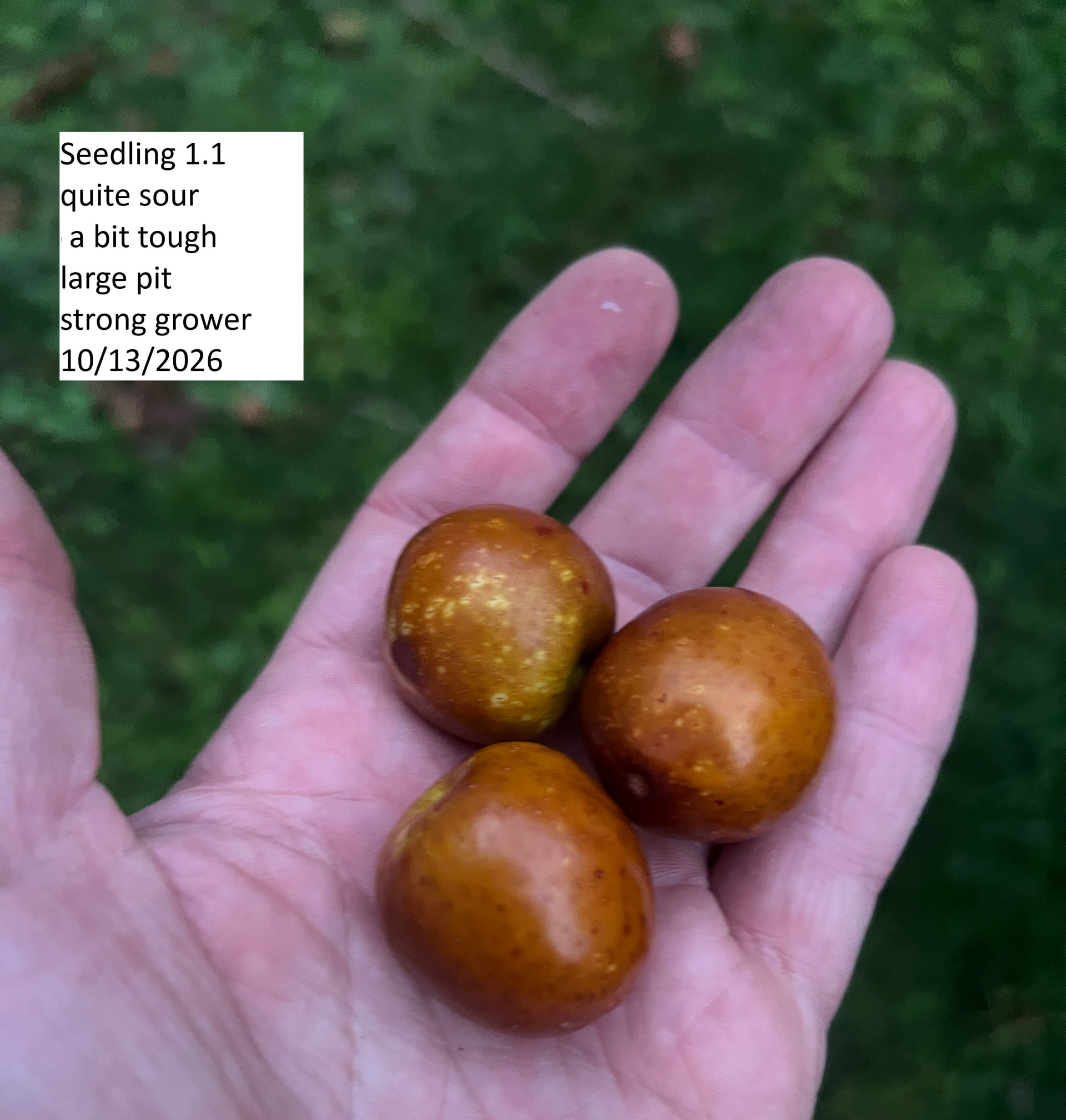
I also sampled a #1.1 (an EGC seedling). While it has grown very vigorously, the fruit wasn’t impressive at all. Sour, dense/tough and a big pit. I’ve had better rootstocks. But one fruit is a very small sample size and I see more ripening, especially on the original seedling.

4 Likes

Great trials on the Bing Tang. My BV1 graft got eaten by the deer. Bummer. I save a bunch of Panzao seeds that surrounded by the Bing Tang, Honey Jar, and Black Sea Jujube trees. Hopefully I can come up with a great variety with all those great genetics.

Tony

1 Like

@BobVance @tonyOmahaz5

What do you do with cracked jujubes that too cracked to give away but not rotted (yet). I am up to my eye balls with these. I can’t eat them fast enough. Dehydrating, freezing? What do you do?

I am running out of space in my two fridges to store them, too.

2 Likes

You can dehydrate them in a food dehydrator. They will turned mahogany color and became dates texture then airtight sealed them. They will last a year or more. You can eat them in cereal or cook them in a pot pot style.

Tony

1 Like

Thanks, Tony. I dehydrated last year jujubes. I still have them in the container. No one in my family eat them. My blood sugar must be sky high with all sweet fruit I have been eating.

3 Likes

I have a few hardy mums. They are pretty.

1 Like

This year I’ve given away some cracked ones. Generally only to people who I know can eat them quickly. And I give the warning that they won’t last.

Same for me- I dehydrated a lot last year and still have 90% of them. During the winter I’ll occasionally have a handful. But they are nowhere near as appealing as when fresh.

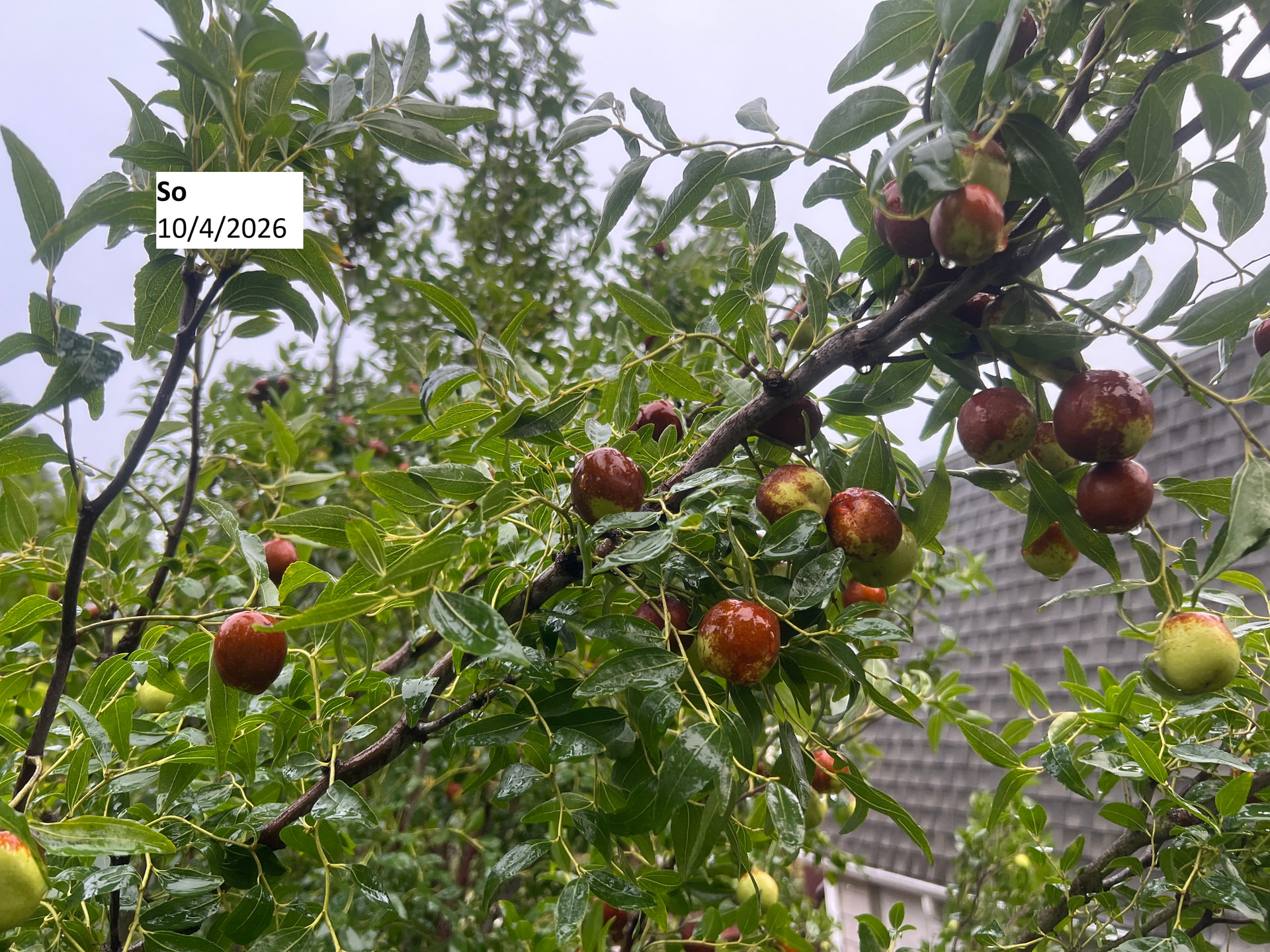
I had my parents over today and they tried both So and the 8.2 seedling (both fresh picked from the same tree). The seedling was far preferred over So, so I feel more confident about naming it BV2.

Here’s a pic of the So:

5 Likes

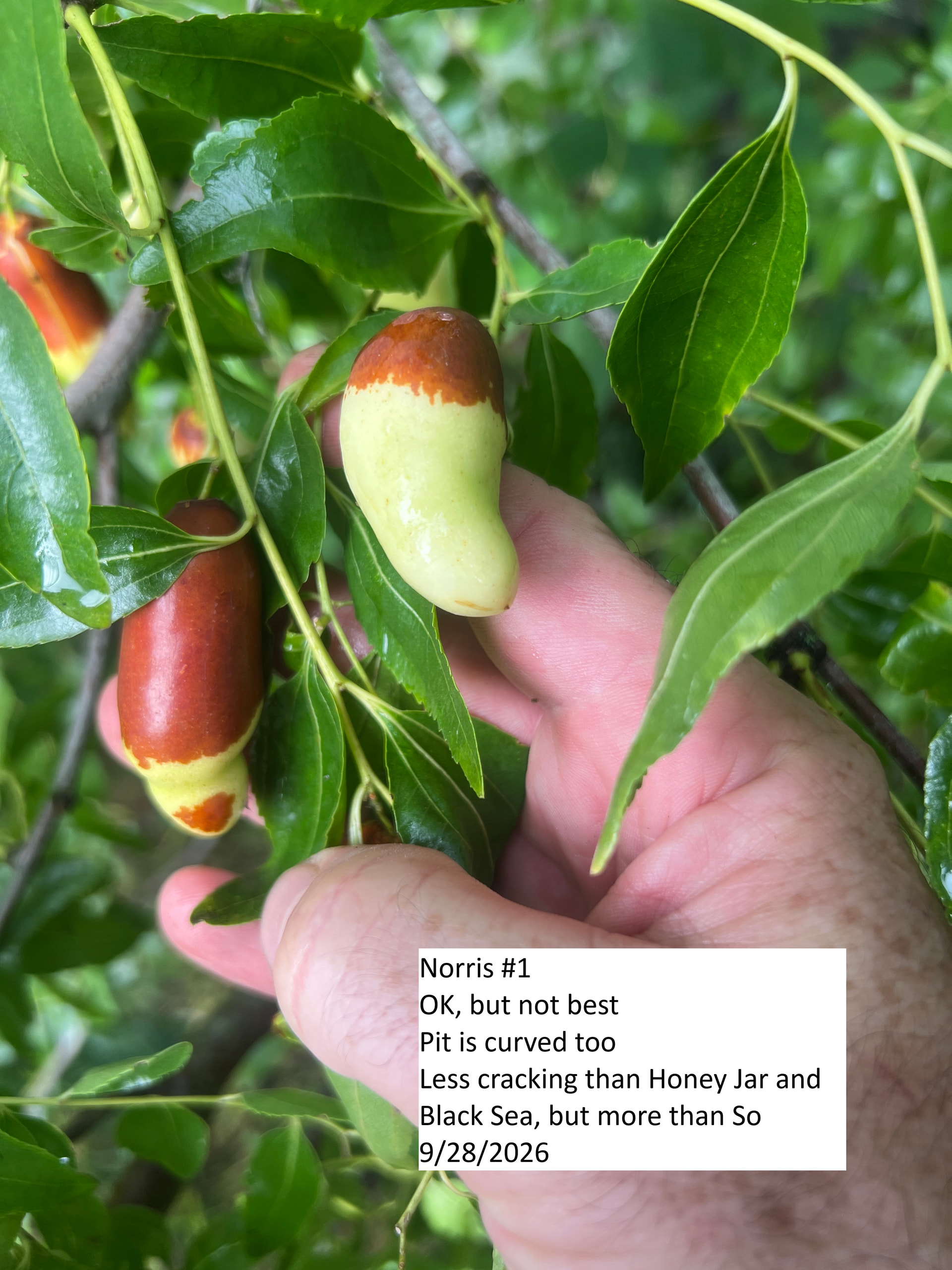
Here are a couple tart ones.

There is a massive difference in their productivity. One branch (maybe 4’ long, but not much in the way of side branches) of Chaoyang had about 2 pounds of fruit. Half of a pretty large Orange Beauty had 3 fruit, plus a couple badly cracked ones. I have a couple other grafts of Orange Beauty, but I don’t think either has any fruit. One was transplanted this spring, so that is understandable, but the other has been in a very good location for several years.

While the productivity and texture of Chaoyang were better, Orange Beauty was larger and slightly higher brix. Though I suspect that both characteristics are improved when there is a very small amount of fruit on a tree.

In terms of tart, I think Chaoyang is a bit more tart. I would rank tartness, from least tart to most:

Just a hint: Bing Tang, Mei Mi

Stronger hint: BV2 (8.2), Churchpoint (sometimes)

Quite noticeable : So (sometimes)

A moderate bite: Orange Beauty

Solid sour Chaoyang, Chico

Impersonating a lemon: Texas Tart

And the biggest gap in those categories is between Texas Tart and the rest. Different world entirely.

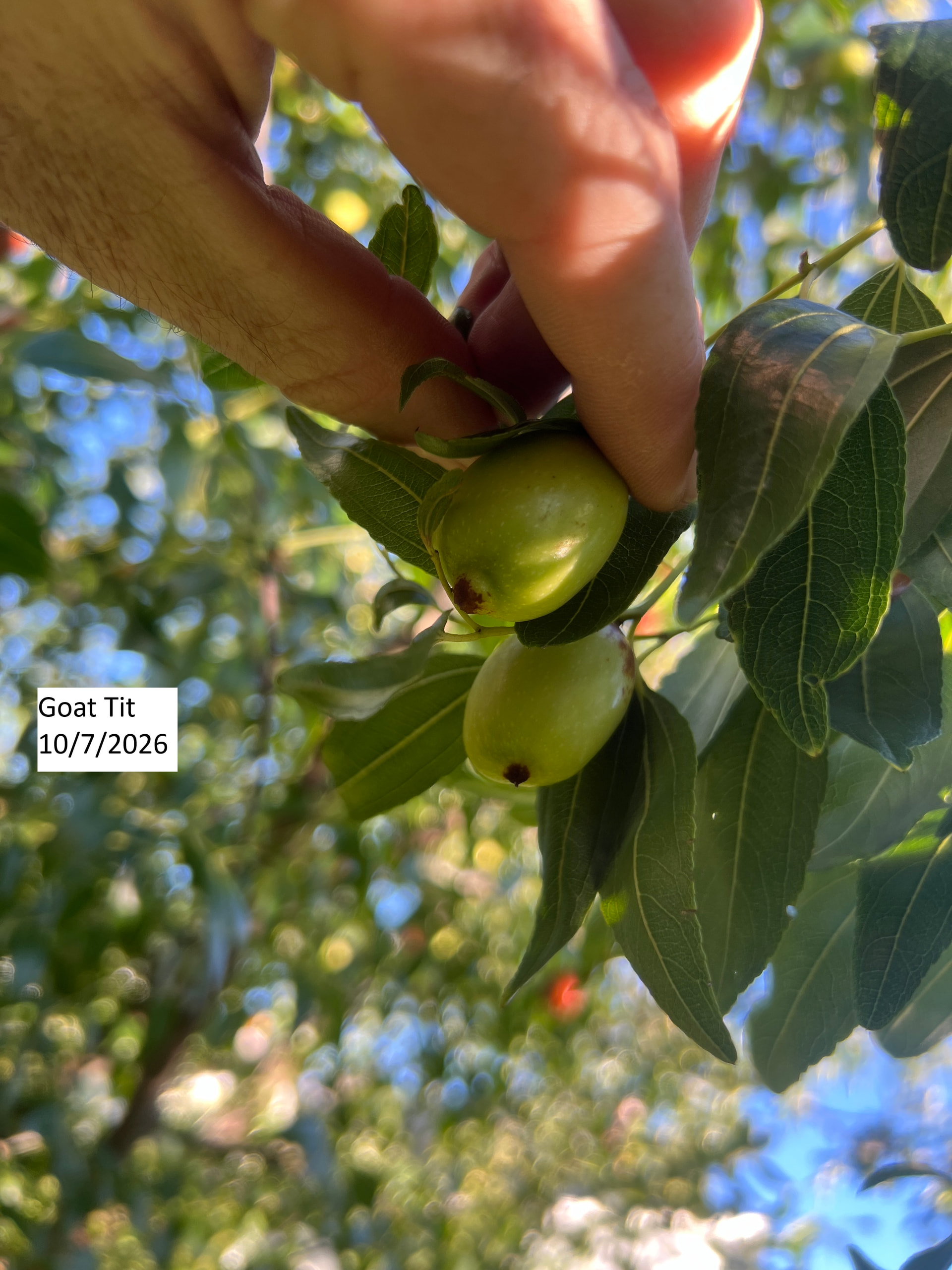
Interesting thing I’ve seen recently- Goat Tit has a lot of shriveled tips. Makes the fruit look even more appropriately named…

4 Likes

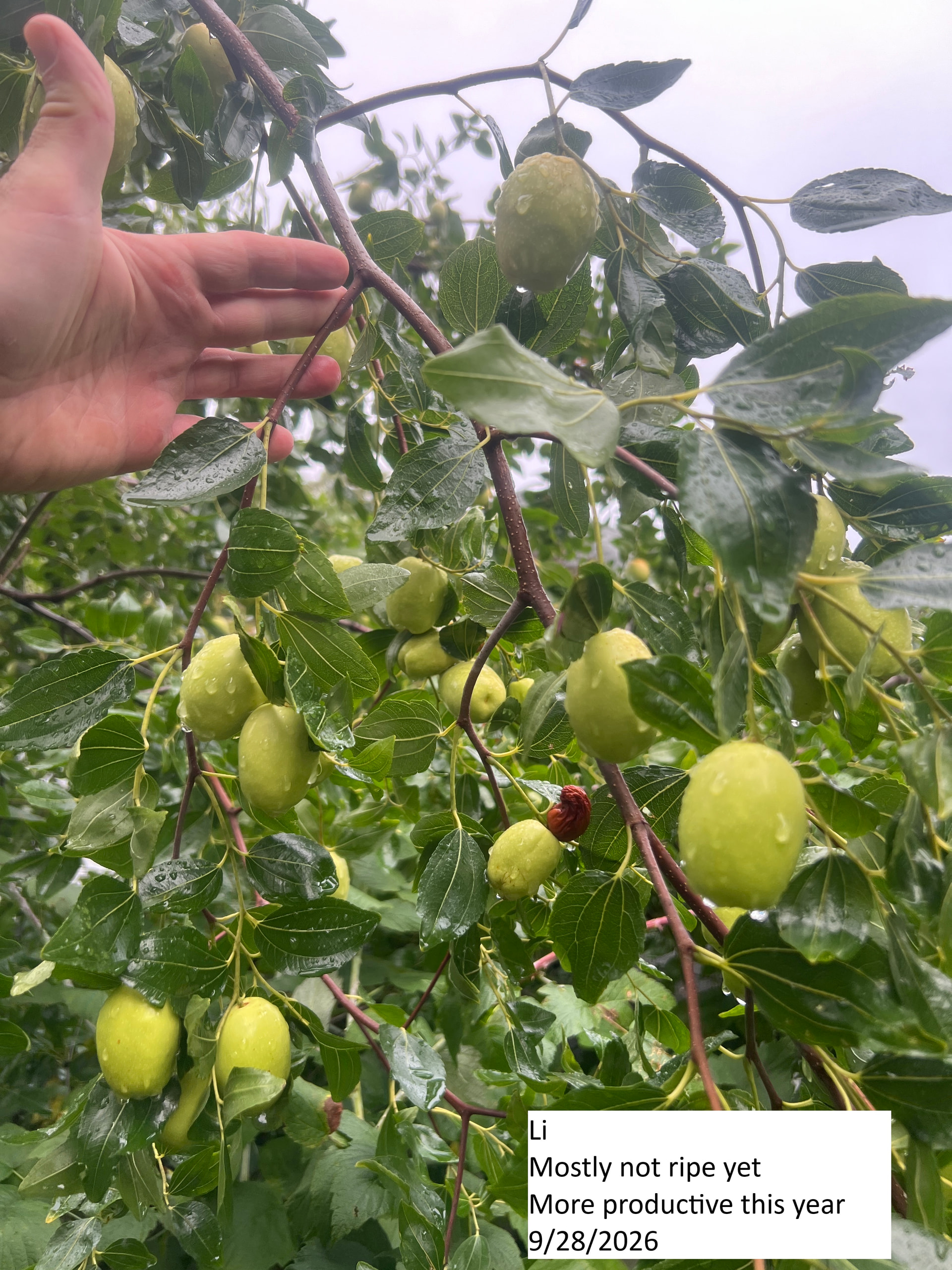
My first mini harvest of Li:

They cracked because of the rain, but are still tasty.

5 Likes

Congrats on getting a first harvest! Li isn’t bad if you don’t have other jujubes to compare it to.

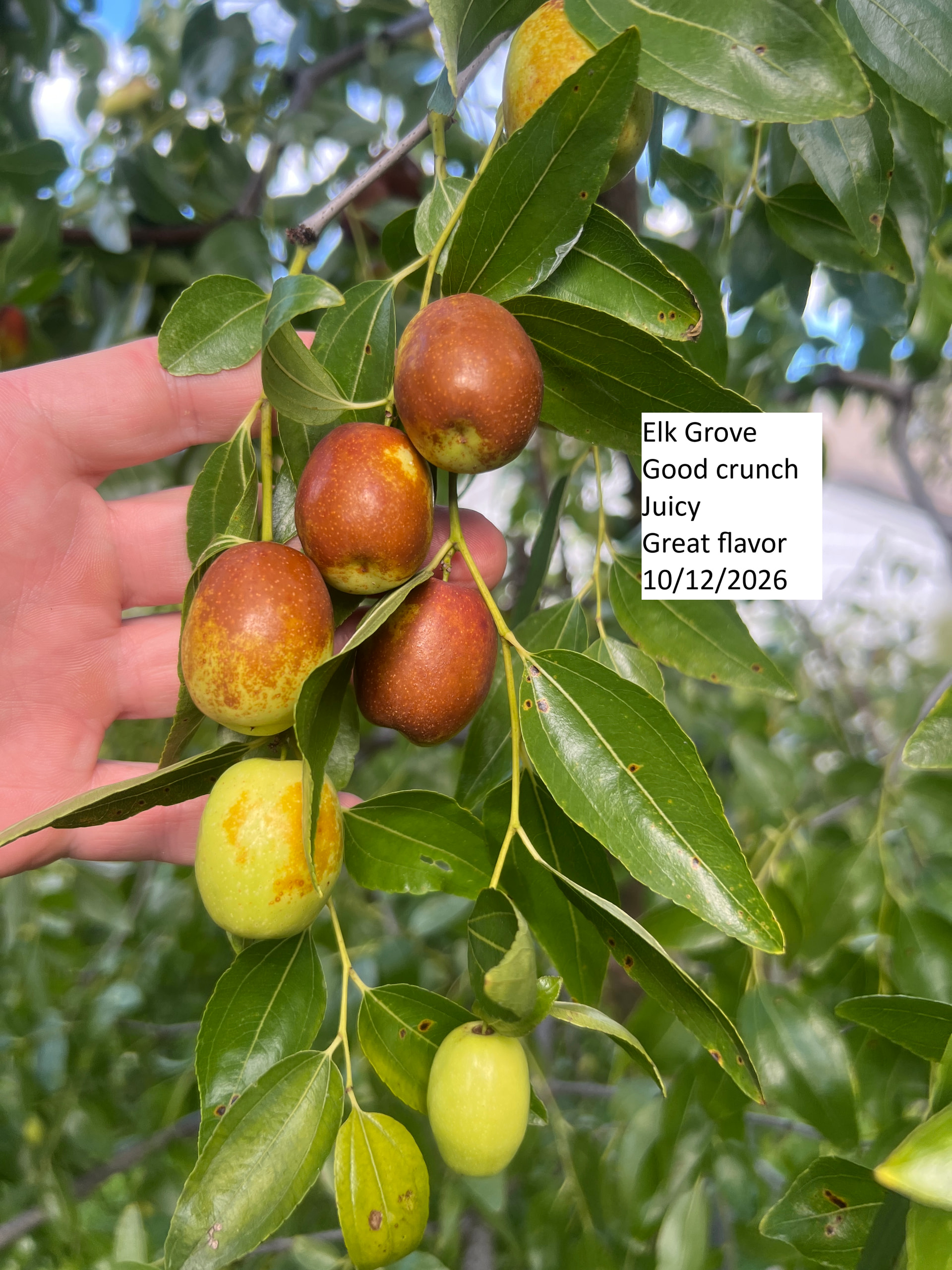
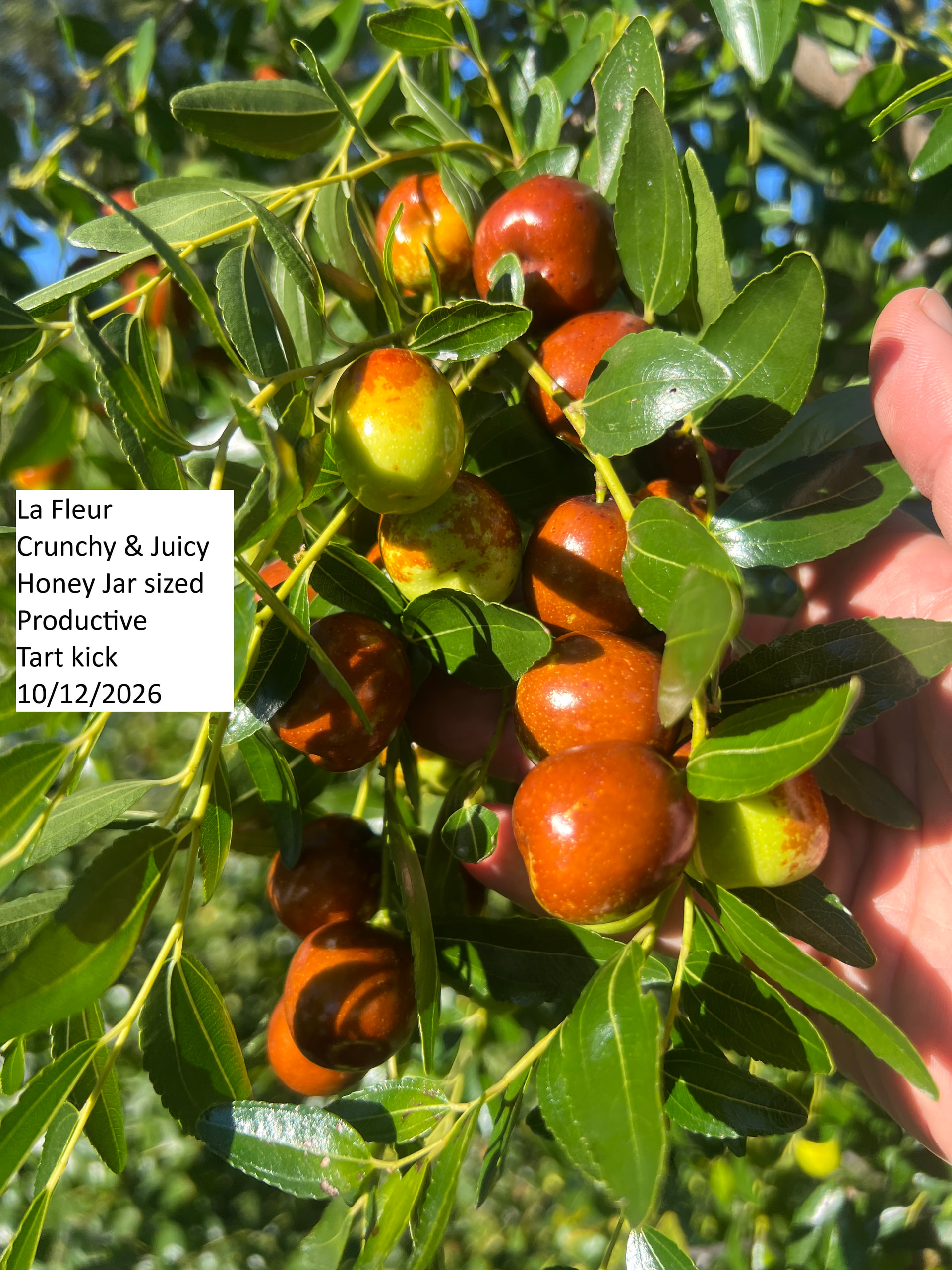
Here’s 3 good ones I picked today.
I think I may rank Elk Grove first of the 3. Complete package- flavor, texture, and productivity. Not over-the-top production like Bok Jo, but enough that I was worried about the top of the tree breaking off. I did have a large branch break last year.

These So were excellent. It was right up there with Elk Grove today, except So borders on slightly too crunchy. I’m sometimes worried about my teeth… :slight_smile: These So are the good ones. I often get a ton of smaller fruit with a uniform brown color. Those are OK, but more on the same level as Li, rather than being a treat to eat like these larger ones. Only the larger ones have the tart kick.

La Fleur may be the same as Churchpoint, as in the past I’ve seen almost identical fruit from them. But, this batch is better than usual and I’m not sure if it is site dependent or maybe the variety is actually different. I’ll definitely need to contribute samples next time Prof Yao does any genetic testing.

While not big, these La Fleur have good texture and crunch, along with a nice tart kick. A similar level of tart to So.

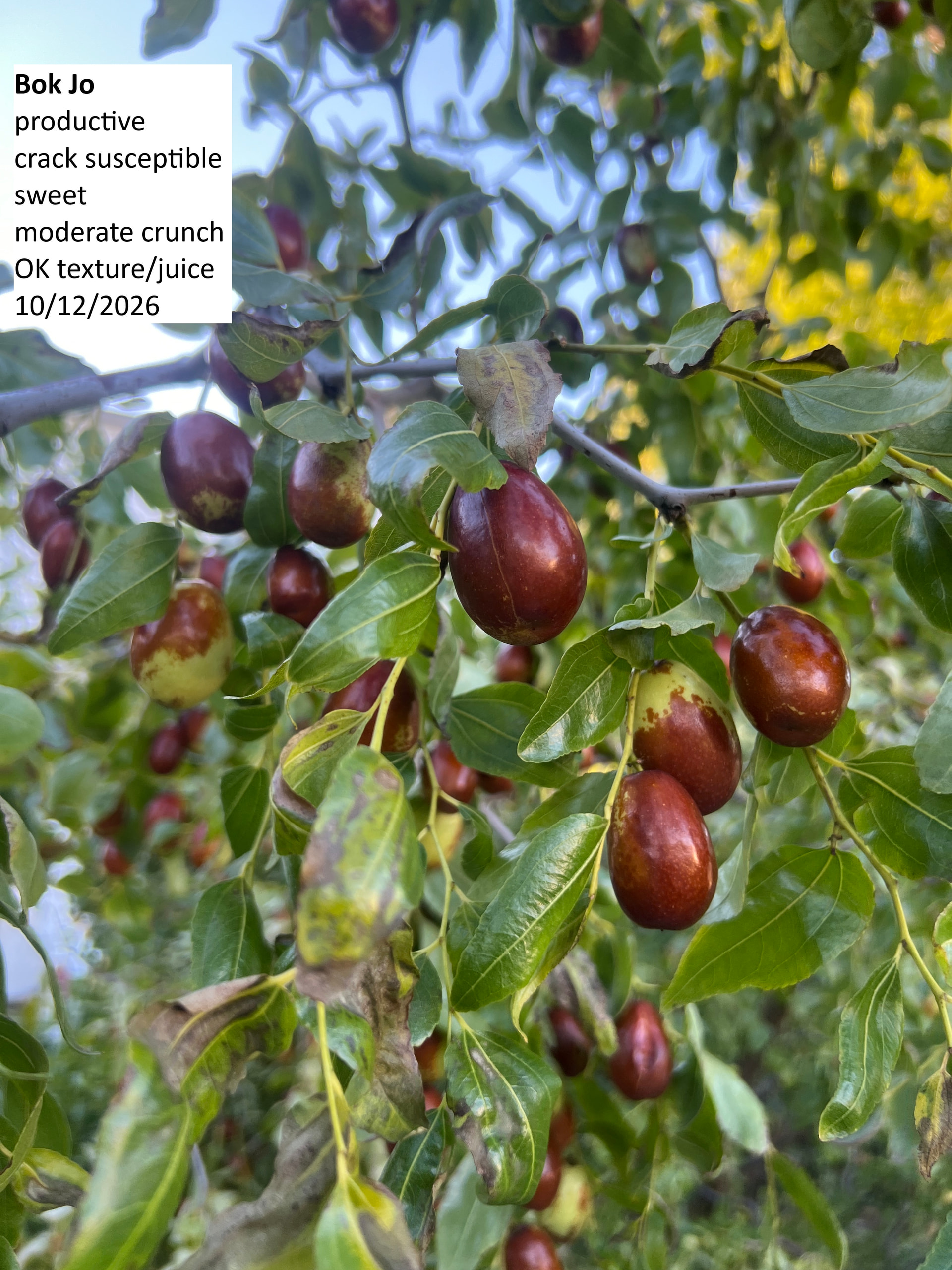
Here’s another one I picked a lot of today- Bok Jo. These cracked quite a bit and I don’t view their fruit quality as being any better than Li (a good Li, not a mushy one that sometimes just seems to happen).

Speaking of cracking, I didn’t notice very many La Fleur or Elk Grove which had cracked. There were a few, but I mostly ate them on the spot. But, I suspect it may be related to the site. Most varieties had lower levels of cracking than usual. I wonder if it is because the trees are planted a few feet uphill from an area which is often moist. Not exactly swampy, but it does get a lot of water. Maybe a continuous level of moisture makes them less likely to crack.

The So and the Bok Jo are both from another site- one that often gets pretty dry. A majority of the Bok Jo cracked and maybe 20% of the So. I also had some So from the moister site which cracked less, but weren’t as good. Maybe there is an optimal site for each variety. Of course, the answer could change a bit each year based on the weather.

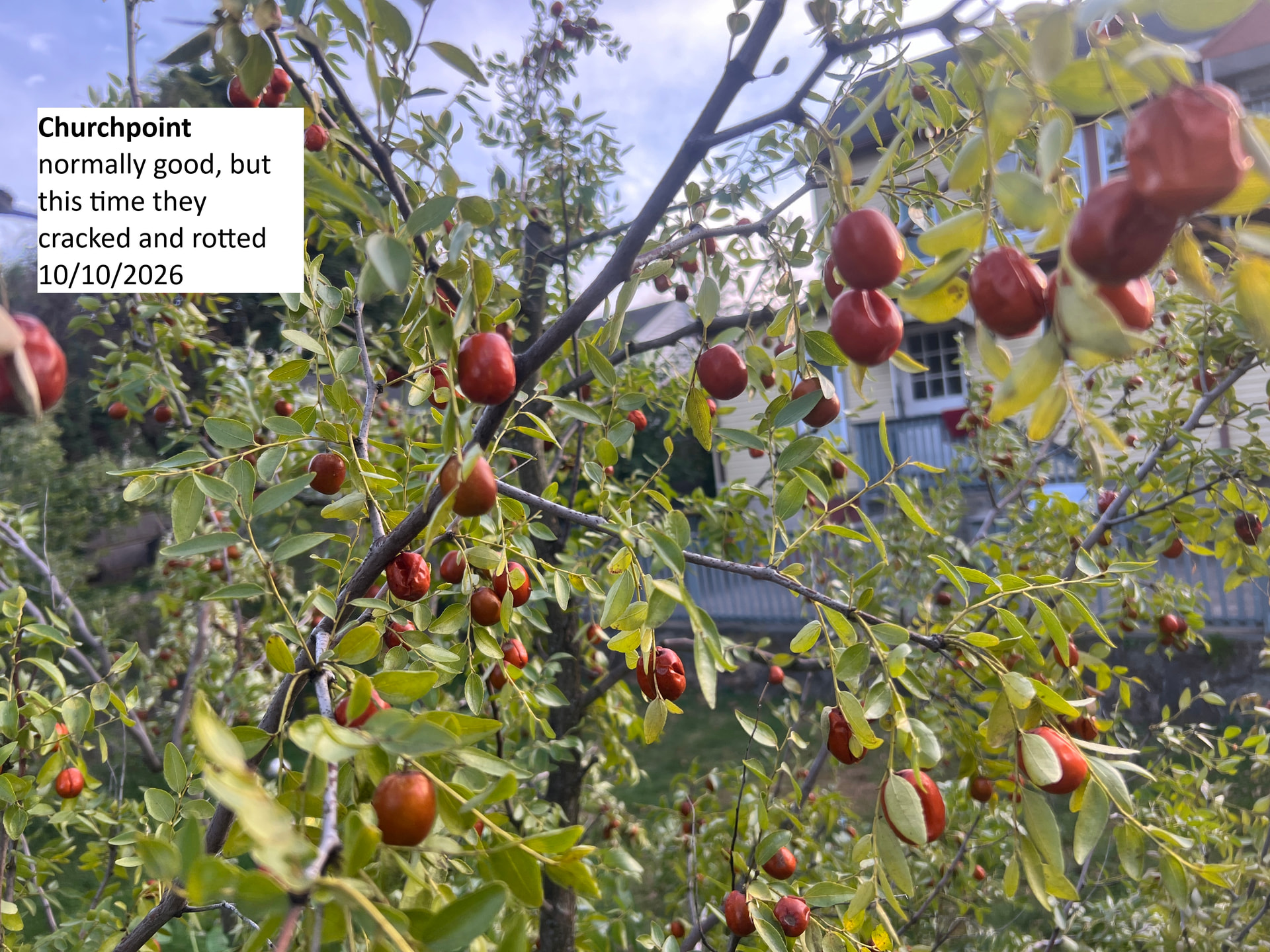
Here’s a 3rd site where churchpoint was further ahead and cracked and rotted (probably from the 3 day storm we had over a week ago). There is such a big difference between sites that I think I should graft Churchpoint and Le Fleur onto the same tree to better compare.

That wasn’t all the good ones I had today, but I don’t think I got pics of the others. EGC was great like usual. Even at the site wtih less cracking a large percent were damaged. Though less than some other sites. Maybe 50% vs 90% damaged (both cracking and rot spots). Though even the damaged ones were more salvageable. Black Sea and Sugar Cane were also very good, though we’re into the part of the season where they are tapering off.

Overall I picked a bit over 25 pounds today. 20 pounds of sound fruit, which went into the fridge and I ate and gave away the rest.

On Saturday (right before a 1 day rain storm), I picked about 40 pounds. Mostly So and Honey Jar. Though a lot of the HJ were damaged. Maybe 25 pounds of sound fruit.
4 Likes

I had my first and, so far, only jujube this year. It was from a So/Contorted.

Delicious.

Apple/Pear top and body, honey/date rolling in on the base, lightly tart, texture unique combination of crisp and cottony that was delightful and which, combined with the flavor, helped me understand what they’d be like in their dried/date form.

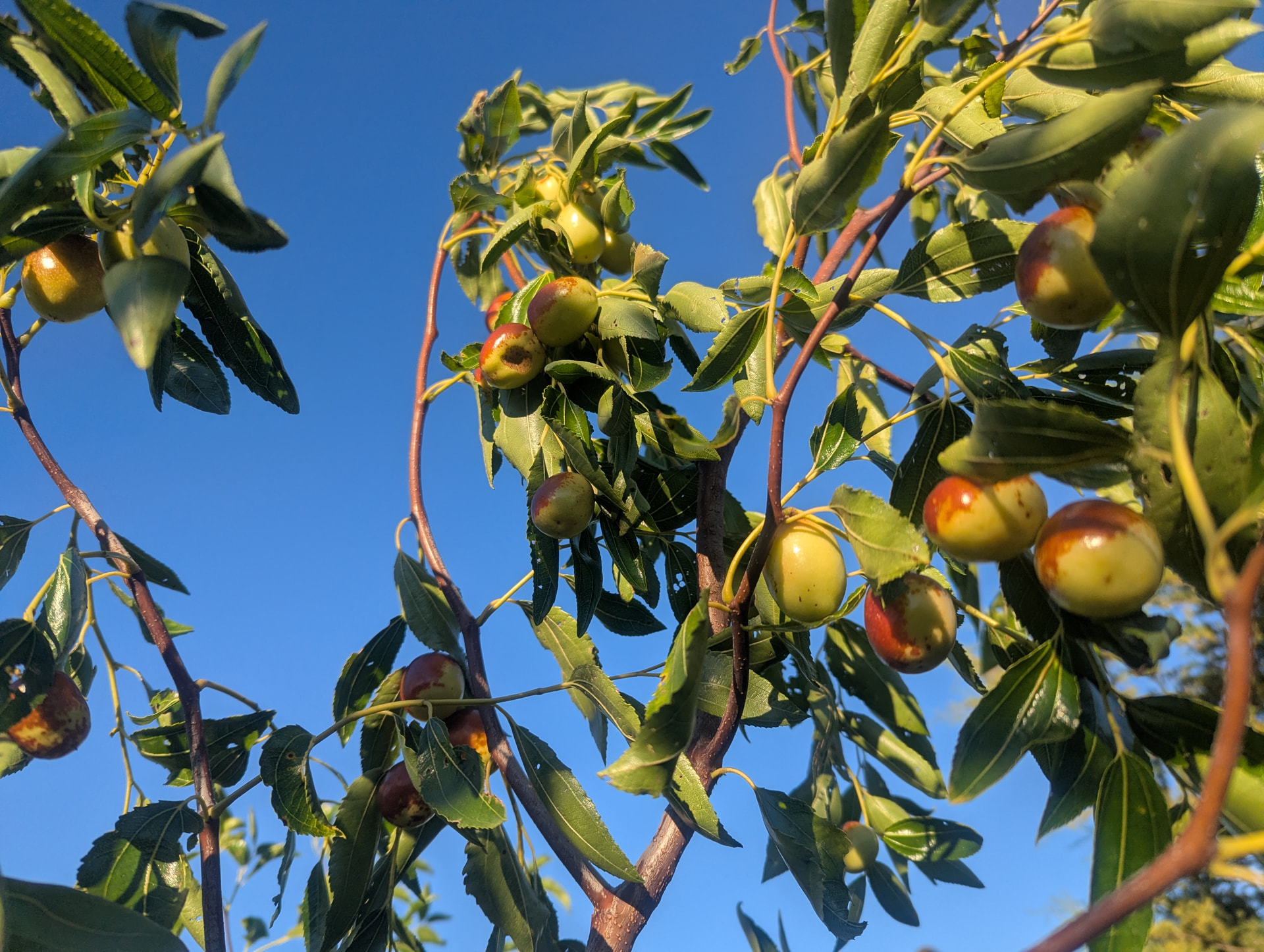
Lookin’ forward to fruit from my three trees next year:

So

GA-866

Shanxi Li

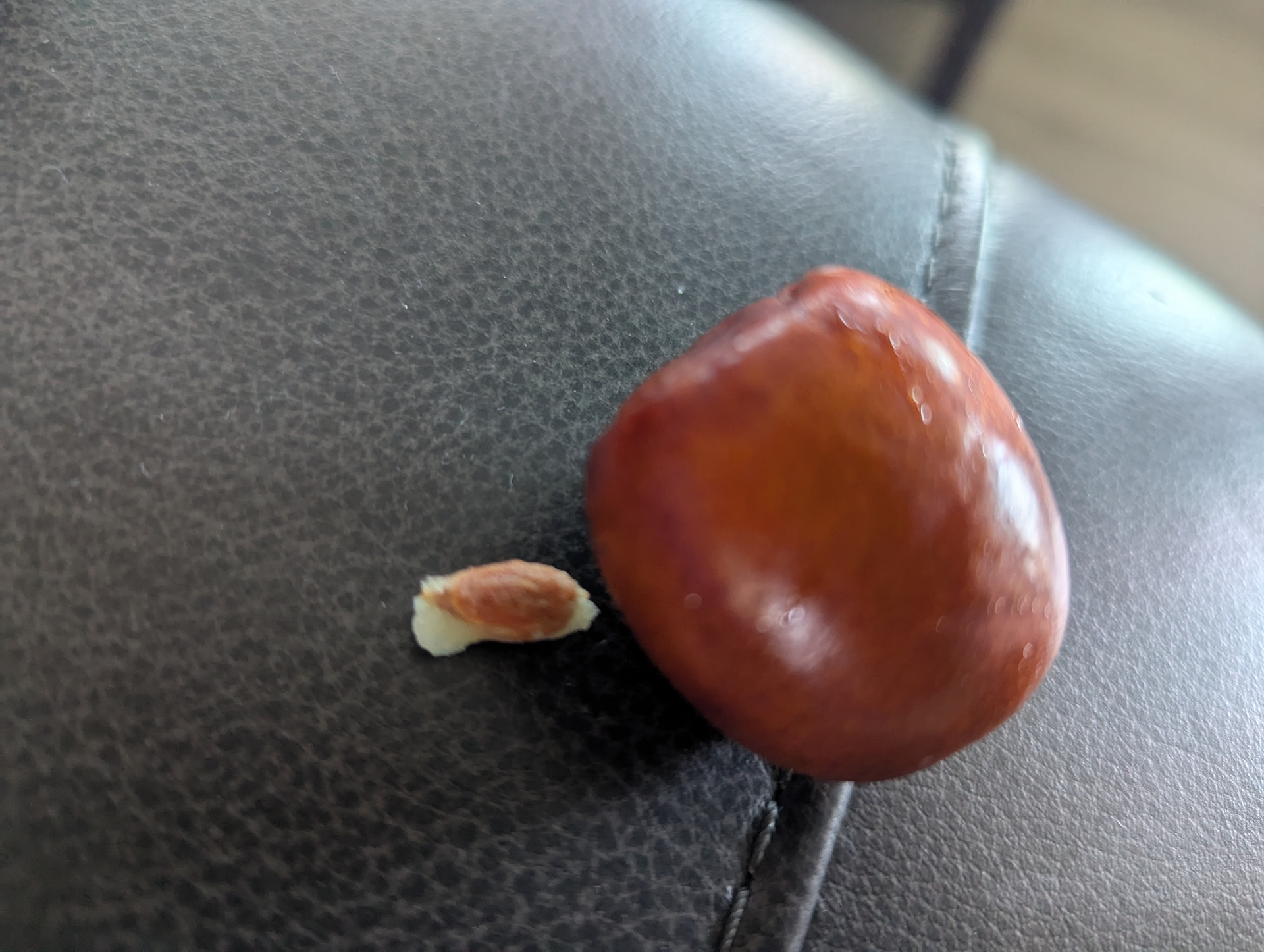
The photo was taken about 5 days before I harvested a completely brown fruit.

Notably, I cracked the endocarp on the seed and found an empty seed chamber. Bummer. Was gonna plant it, but not surprising, since this is a precocious fruit and the only successful fruit from a bunch of 5.

2 Likes

I Just had my first ones as well, very small harvest of Li (about 10 or so).

The biggest was about 22 grams 22 brix it’s not bad, quite sweet and reasonably juicy.

5 Likes

While I get to sample plenty of good ones each day (today’s best was more So, EGC, and BV2), there are plenty which aren’t as good.

Probably the worst today was the 1.1 seedling. Very sour and somewhat tough. My wife is pretty forgiving with most jujubes, but this one got an “oh my god!”

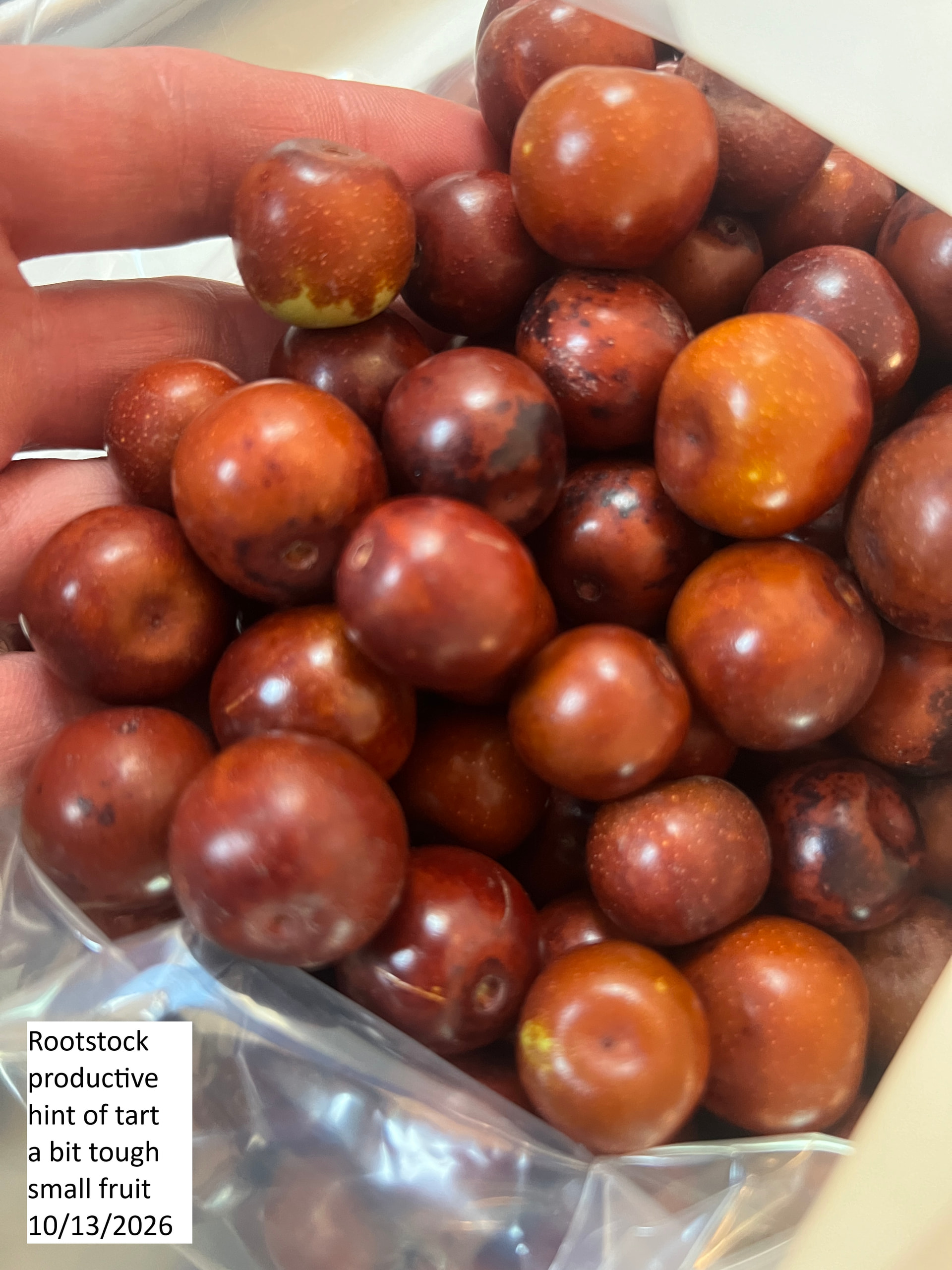
One step up from that is a very productive rootstock. It is ripe a bit earlier this year. Normally, it’s competition is mostly just Sherwood (but before Dong), so I end up eating a decent amount of it. But it can’t really match up to the early or mid season jujubes.

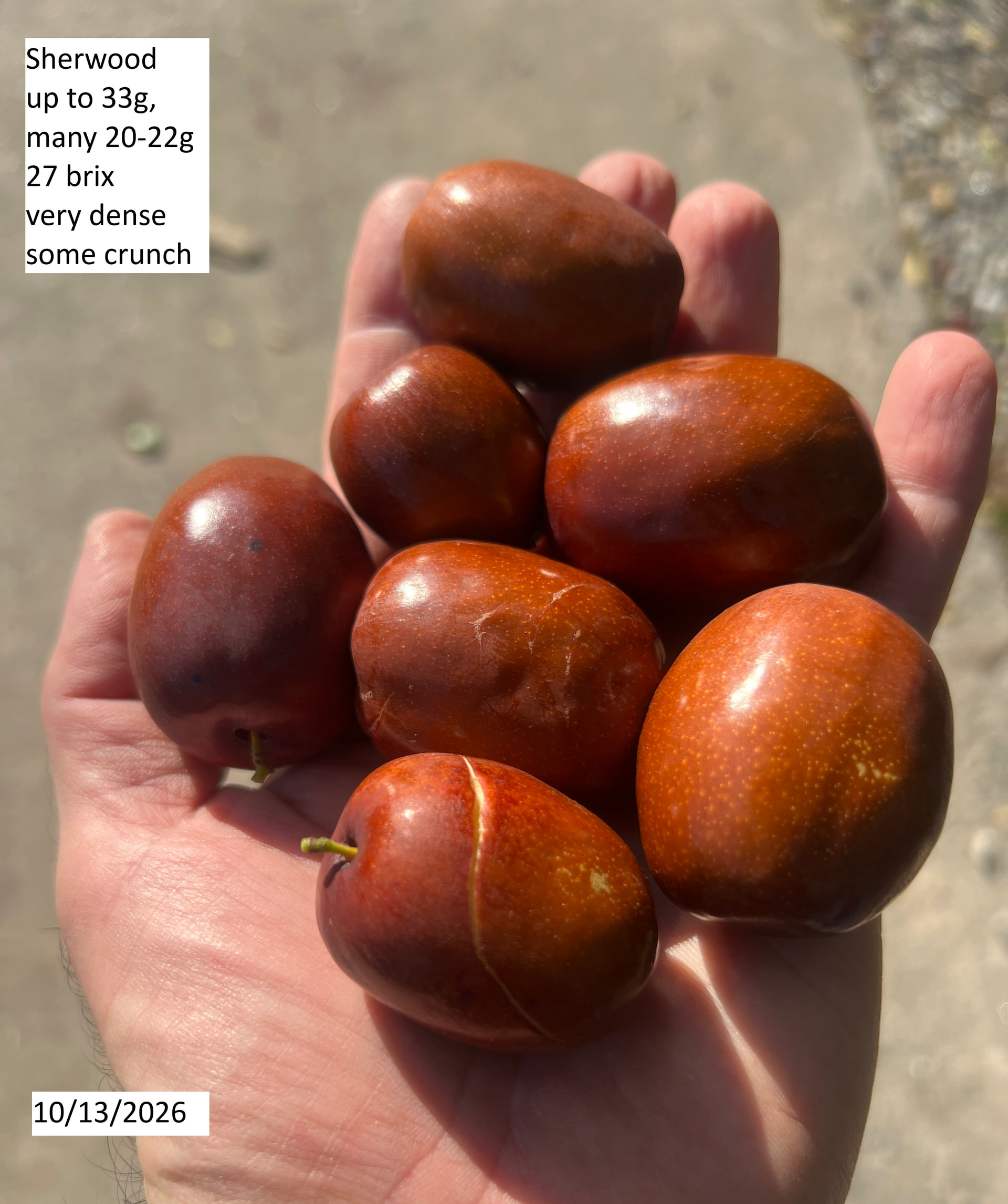
Speaking of Sherwood, it has started ripening. I’m not really a fan, as it is pretty dense, bordering on tough. And I don’t think it has enough juice, though my wife seems to think it is “fine, it’s sweet”. They are bigger than usual this year. Maybe all the rain helped them size up. The biggest I measured was 33 grams, over an ounce. Many were 20-22grams. I’m not sure what they were in past years, but I think it was more like 15-20g. This year the brix is a bit lower. In the pics I found from past years, I had 31-33 brix (in November) and in another year 26-29 around now. Maybe the earlier they ripen, the lower the brix reaches.

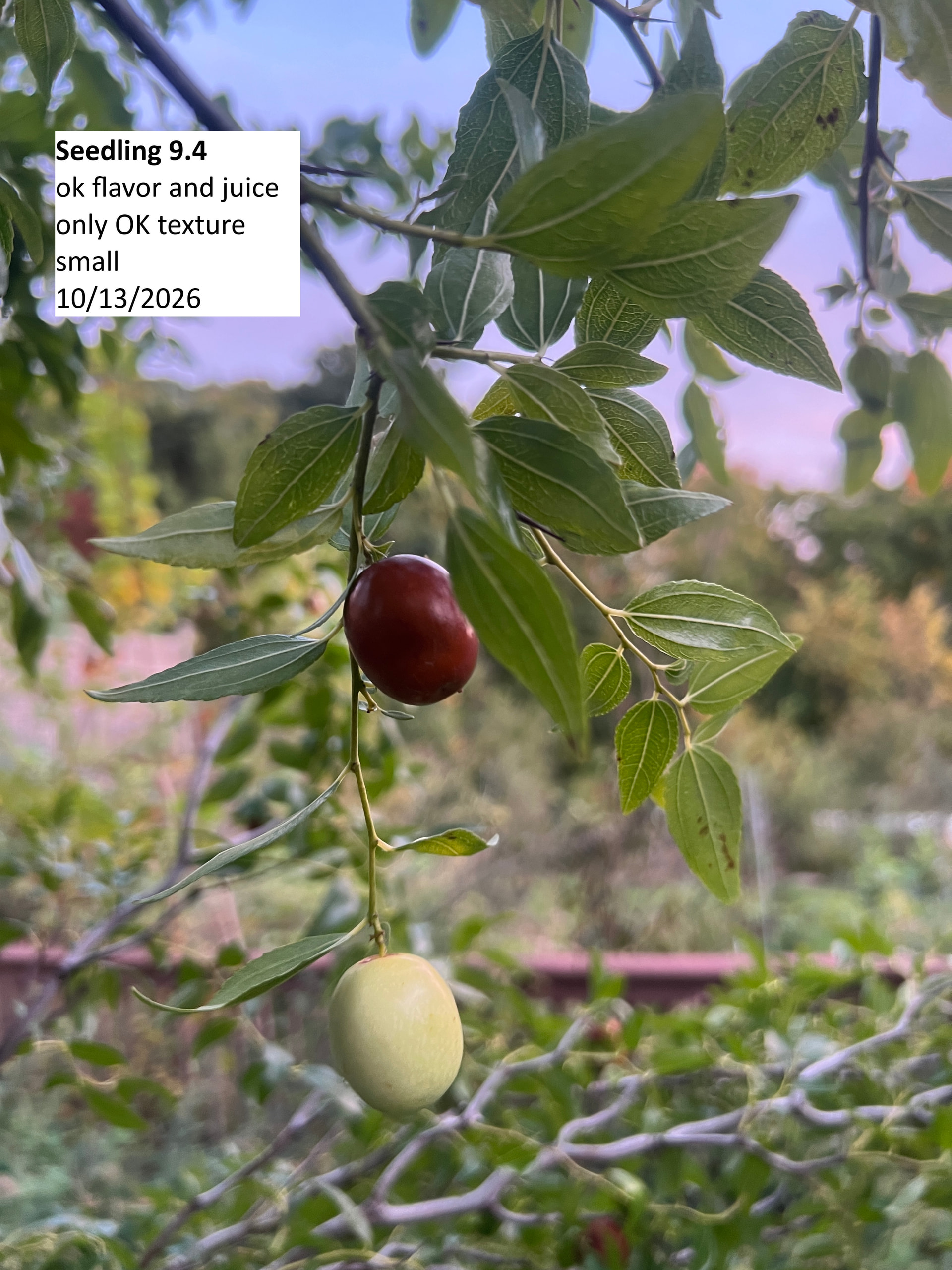
Seedling 9.4 didn’t grow enough to produce a ton of fruit, but I did get to sample a ripe one. Passable, but nothing special, and small fruit-size. It is right next to seedling 9.3, which produced 3 fruits which cracked and rotted. They were probably ready quite a while ago, but were hiding in the middle of a very big tree, so they never got sampled. Right after I had the 9.4, I ate a 8.2. Night and day, with 8.2 being very high quality.

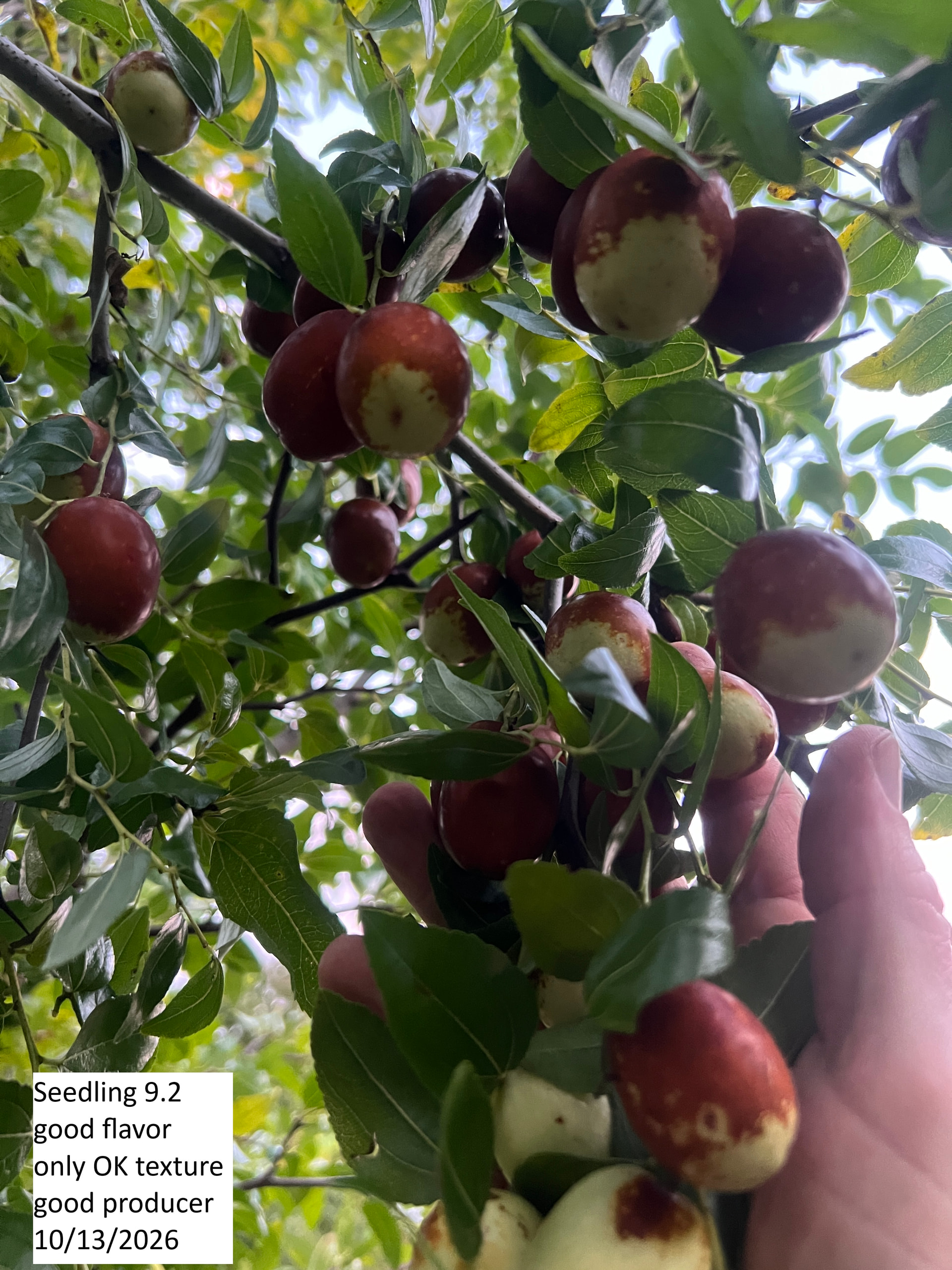
Seedling 9.2 is another variety which probably isn’t good enough to get release, but it is an example of a perfectly serviceable backyard tree. Productive, decent fruit quality, not a ton of cracking. I actually prefer it to Sherwood, though that says more about Sherwood than it does the seedling :slight_smile:

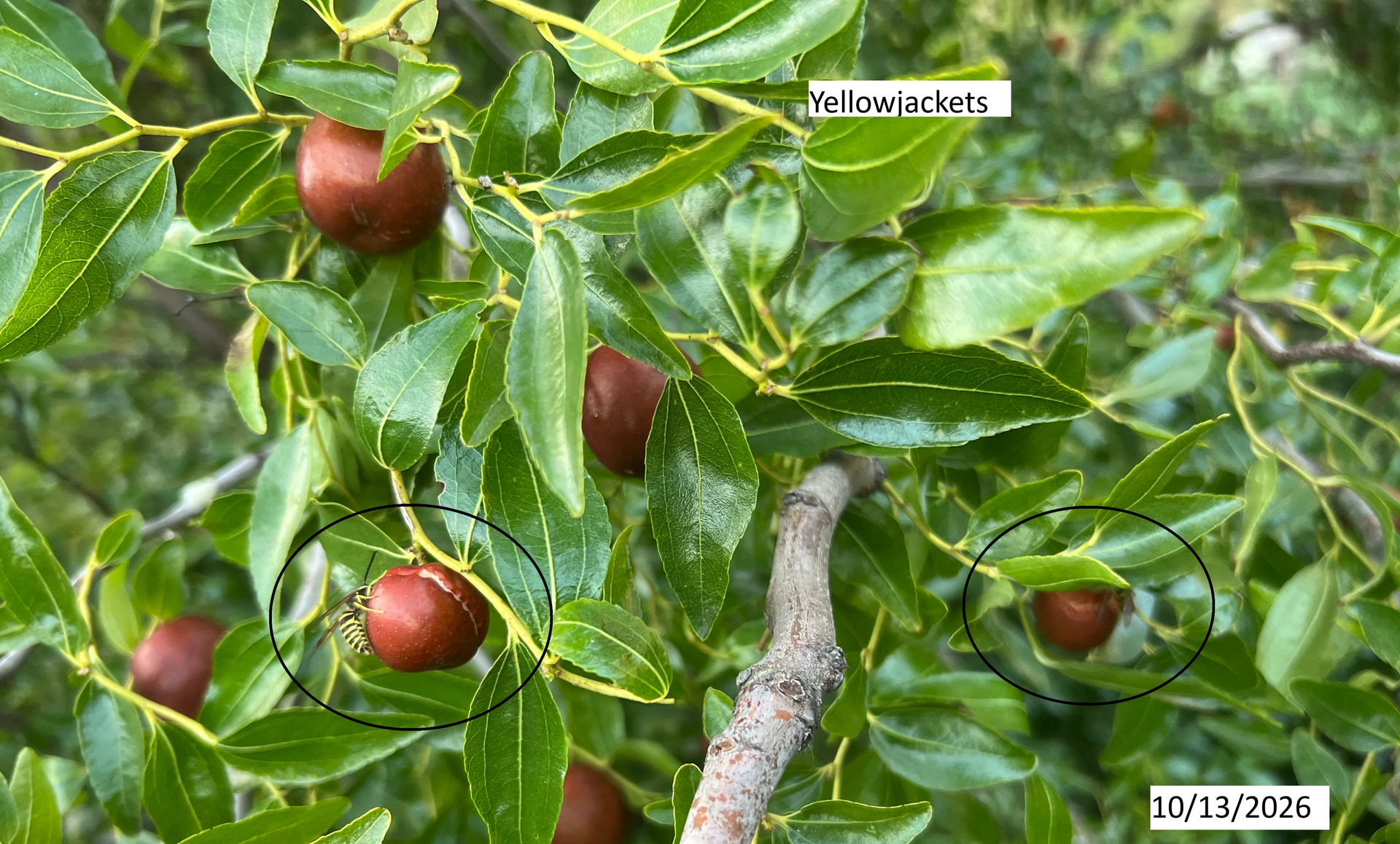
Picking cracked fruit can be a bit dangerous. There were actually 2 yellowjackets in this pic, though one started moving when I took the pic. Somehow I managed to not get stung, even though I picked one fruit with a YJ on it.

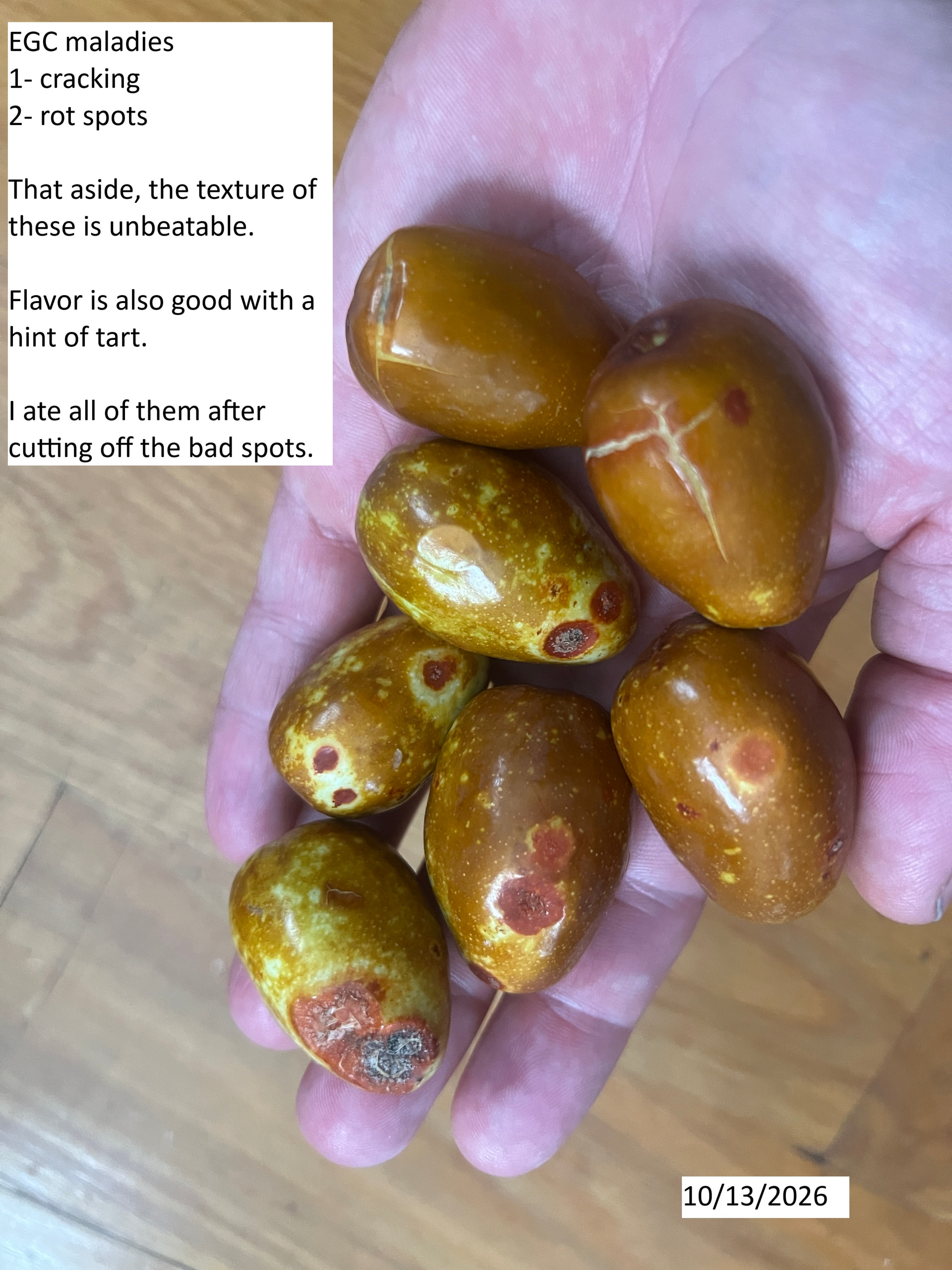
Some of you may want to look away, but here is a pic of what a lot of EGC look like this year:

The overall haul today was about 25 lbs (roughly 100 over the last 4 days).

The fruit in that pic looks pretty elongated for So. I’ll also note that GA866 is very hard to get any fruit out of, to the point that I’d suggest grafting over it.

6 Likes

You’re right.

I went back and checked: It’s ZigZag, not So.

That’s an interesting note on the GA,. I’ll see how it performs next year before I make any choices.

Baby Red Jujube is ready to be harvest in Z5 Omaha reasonably large fruit, crunchy, not overly sweet, and juice. A little tricky to find the right stage for picking. I ate one day for seven day trial to get it right at this color of ripeness. A very nice specimen tree though.

Tony

3 Likes

Grand Honey Jar is a great variety to have alongside with the regular Honey jar. Large fruit with super small seed with empty pit, crunchy, honey sweet, no thorns is a plus, and juice. Thanks for whomever in China crossed this improved regular Honey jar for Us.

Tony

7 Likes