This one is likely Jiro or one of its close relatives.
2 Likes

I don’t know much about persimmon flowering, but that would explain why the one I found in the alleyway behind their house a couple years ago, carried off by a squirrel (or maybe crow?) then abandoned, was full of seeds, even though I’m pretty sure this is the only persimmon in our neighborhood. I posted photos here:
2 Likes
Hi all  , I am based in Portland. I am just getting started with persimmons, pawpaws, figs, honeyberries, gooseberries, and (thornless!) blackberries. I’m frequently taking trips to whichever fruit orchard has something tasty in season. Berry season in the PNW is hands-down the best experience. I also have some trees in SW Florida (Jackfruit, Atemoya, Mangos, Avocado, Starfruit, Guava, Lychee, Passionfruit, Dragonfruit, Papaya).
7 Likes
Nice! Welcome to the forum. Always happy to see more members here with similar south FL ties. Any plans for a greenhouse, or will you stick to zone appropriate trees in Portland?
1 Like
Based on what @PharmerDrewee recently described about pollinated persimmon, the fruit on the tree appear like they got good pollination.
Also, if they let you pick a few fruit, even at this stage they’ll ripen on the counter and be very tasty.
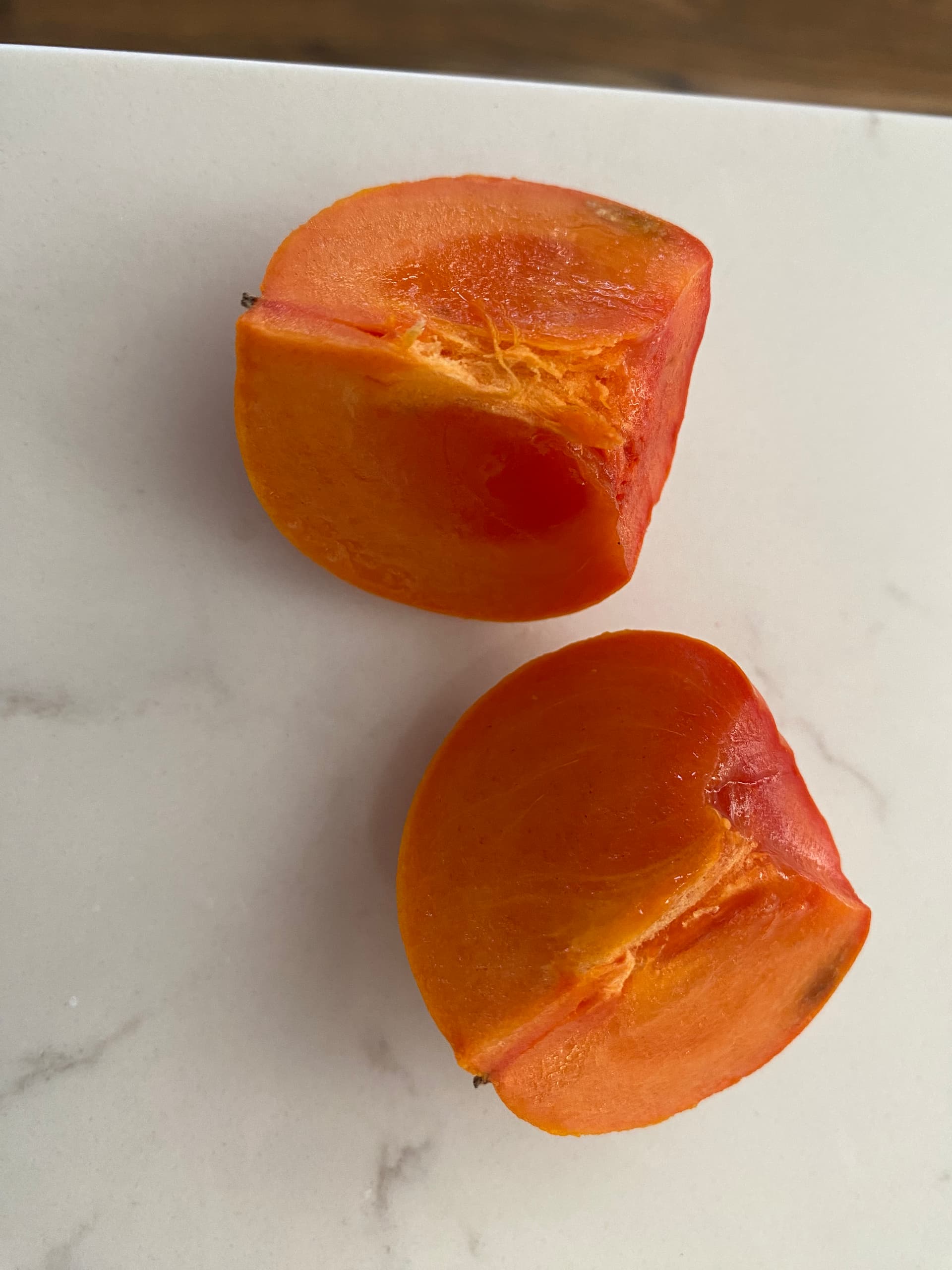
Here’s a fruit that I picked as an experiment in September (barely had orange tone) and let sit on the counter for about a month. It was sweeter than fruit we bought at Costco.
4 Likes
Maybe I’ll go ahead and pick one then. The person renting the house says she doesn’t eat them and the owner doesn’t pick them, so I could take all I wanted, but I was waiting until at least one seemed more fully colored up to pick. But I really don’t have any experience with picking kaki, I’ve picked hundreds of wild virginiana in the Mid-Atlantic, and those usually needed to get pretty soft before they’ll have any hope of losing their astringency on the counter.
3 Likes
Those are from male flowers.
3 Likes
i think it is a maru persimmon has some male flowers astringent type. have to be soft on the tree to taste sweet. Do you have any extra samples i can confirm with taste test. lol.
1 Like
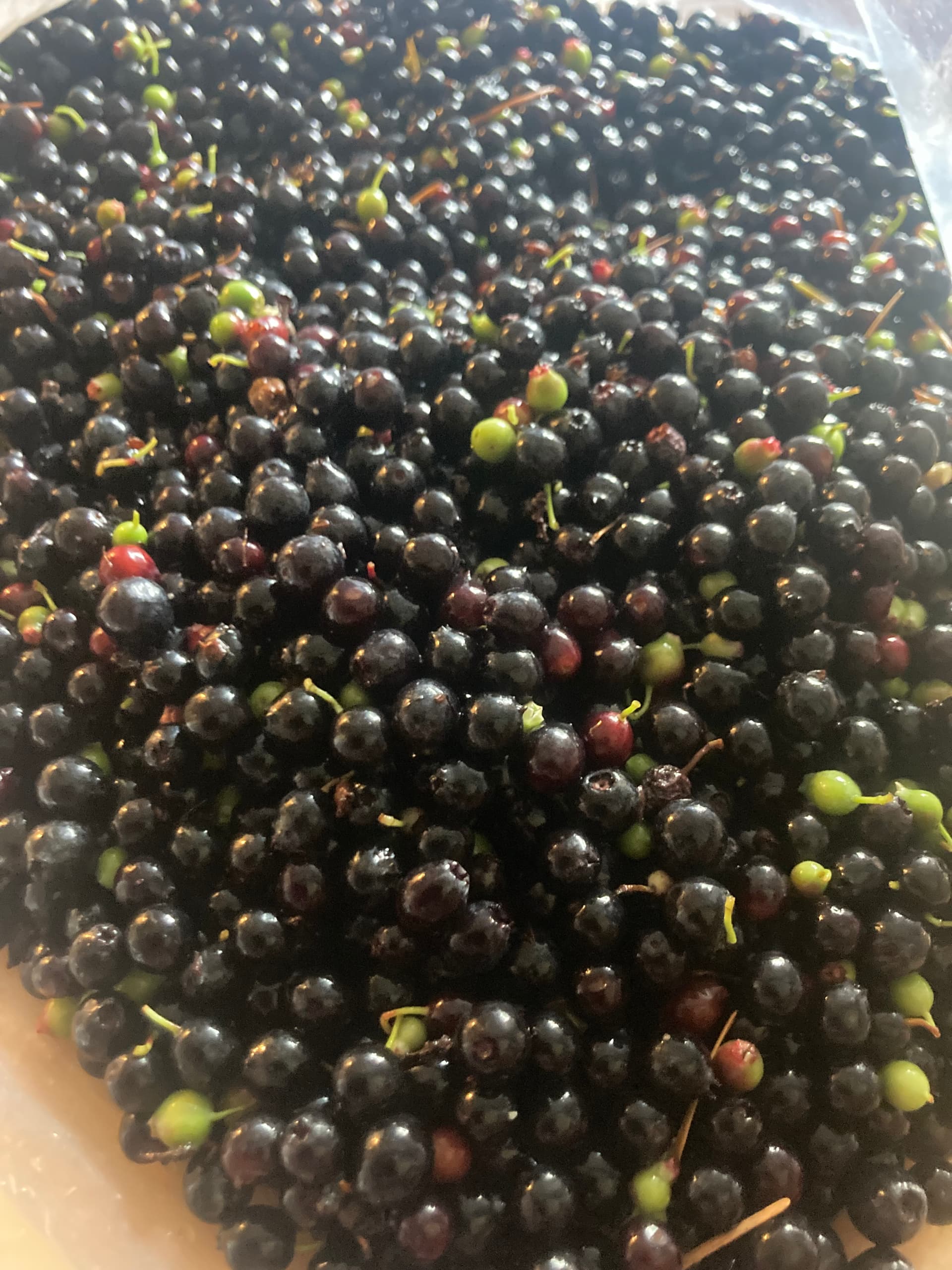
I visited this huckleberry bush again, I picked for 30 minutes and filled a gallon bag but there was still a lot left on the bush

strong text
13 Likes
What type of huckleberry is that? The wild ones here in southern Oregon are harvested in August. Would be nice to have fresh huckleberries in November
1 Like
Evergreen Huckleberry. You’ve got lots of them in southern Oregon especially along the coast. Chad Finn says they’re sweeter and less sour than the huckleberries in the mountains Comparing v ovatum and v membracium but people don’t pick them as avidly because they’re much smaller
1 Like
I have an Evergreen Huckleberry I got from Raintree about 12 years ago. It’s about 4’x4’, having been hacked back to fit under blueberry net.
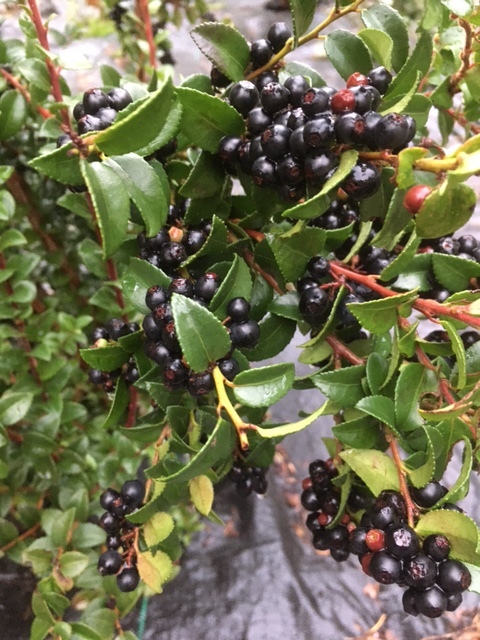
It’s been pest free and each year is loaded with berries. The berries on mine, however, lack any particular flavor! At the end of the season they are not tart. I wonder if the wild ones taste better?
Raintree’s description:
The best fruiting plant for your shade garden! A native of Pacific Northwest lowland forests, this evergreen bush is beautiful throughout the year. In the spring and the fall the young foliage turns from green to a striking bronze color. The late summer-ripening berries are a dark blue; tart and flavorful, half the size of a blueberry. The shrub grows best in the shade where it can reach 6-8 feet without pruning. In the sun it only grows to 3 feet tall. It has a dense growth habit and spaced about 3 feet apart makes a beautiful evergreen hedge.
2 Likes
If that bush isn’t very sweet or tart they might taste good cooked into a sauce with sugar added. They look normal colored so they should still have the flavor of all the phenolic compounds that I think tastes good
2 Likes
Root Knot Nematode infected plants sold from nurseries is that common? I heard RKN was common in FL, but how about other states? But is it spread from the potting soil itself or the in ground soil?
2 Likes
I wonder if the variety you found was the v. membranaceum, a variety that is not often offered in nurseries.
The berries you pictured seem larger than those from my v. ovatum.
Portland Nursery has good descriptions of both.
1 Like
Hi Johann
What advantage does a Clark rootstock offer?
I have grafted a few crabs on my mature trees for improving pollination, the small fruits do not seem worth using, so do you intend to graft larger varieties to your Clark rootstocks?
Dennis
I actually have a small vaccinium membranaceum that I purchased from a native nursery. Portland nursery messed up and used a picture of vaccinium ovatum instead.
https://www.inaturalist.org/taxa/48347-Vaccinium-membranaceum/browse_photos
https://www.inaturalist.org/taxa/48349-Vaccinium-ovatum/browse_photos
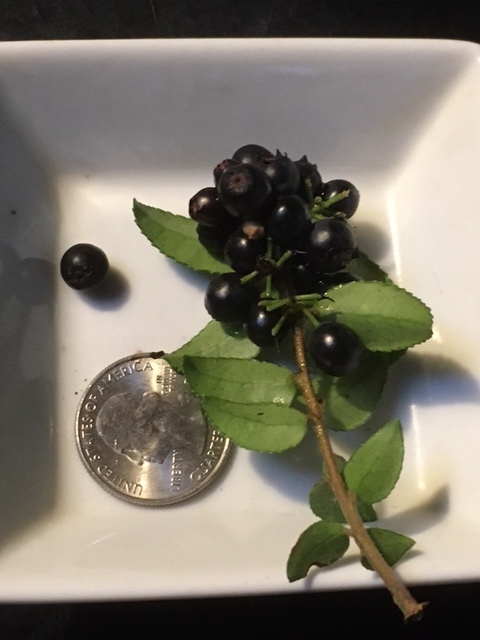
Also so we can compare berries these ones measured 6 to 7 milimeters
2 Likes
Great pictures of each.
Which were 6-7mm… the wild berries you picked or those from your v. membranaceum?
My v. ovatum berries measure 6-8mm.
Succumbing to plant addiction, I just went for three 2" plugs of v. membranaceum from Native Foods Nursery!
1 Like
The ovatum I picked are 6-7 mm,the membranacium is only a few inches high and really struggling
1 Like