I do not intend to use ‘Clark’s Crab’ as rootstock. I only intend to grow it on its own roots since it is naturally dwarfing due to heavy production and so wouldn’t need a different rootstock unless it was for specific conditions which required it.
4 Likes
Does anyone on here do anything with Arbutus menziesii (sometimes called madrona, madrone, or just arbutus)? I noticed they lost a lot of fruit during the windy stormy day today, would be easy to pick up a bunch if there was an easy use for them (jelly, perhaps?). They are described as edible, but I haven’t actually tried eating them. These seemed underripe maybe? They were pretty firm, so I didn’t taste them.
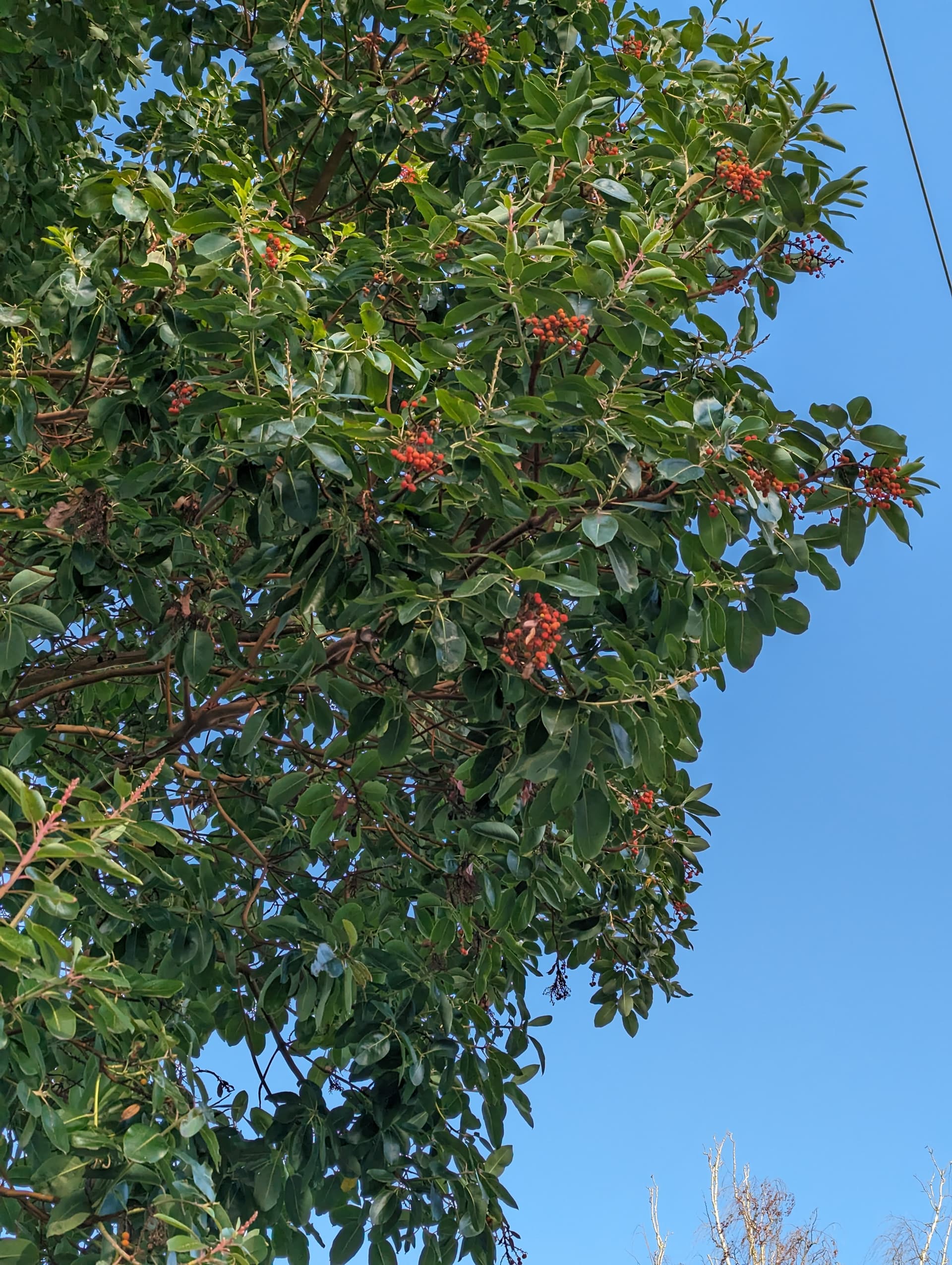
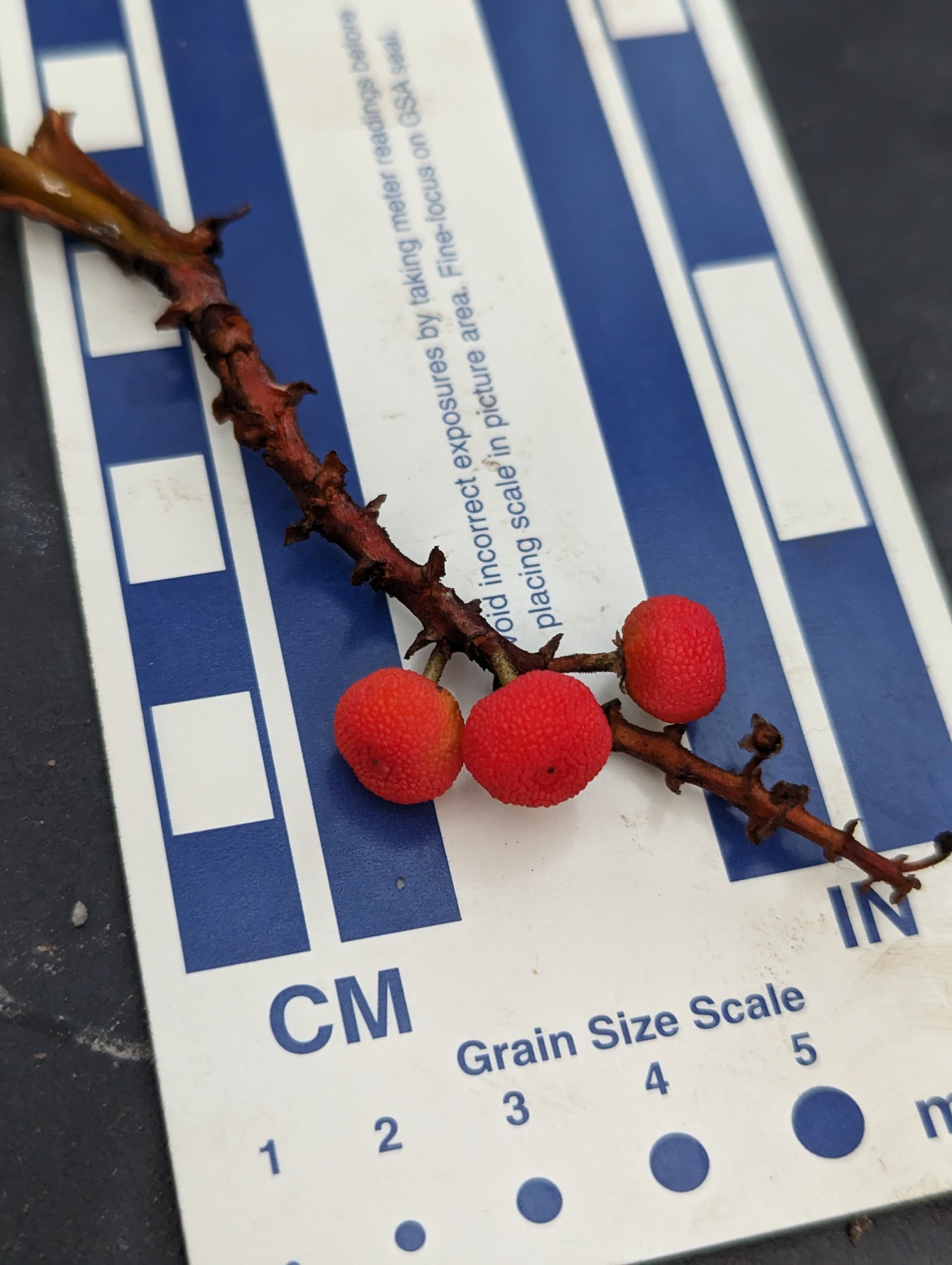
I see some stuff like this online, but no one seems to be singing their praise other than this kind of thing that seems like it might be AI written:
1 Like
The madrona fruit aren’t very fleshy so there’s not much to warrant use. I tried them before, but don’t recall any memorable flavor.
2 Likes
I like them, they’re sweet and tannic. They were described to me as a mouth-freshener and they lived up to the description. I don’t think they ever get soft no matter how ripe
2 Likes
@ cdamarjian, are your huckleberries growing in full sun or in the shade? I see that Raintree describes them as being good for shade gardens. What I’ve noticed during years of picking wild blueberries/huckleberries is that berries growing in the shade of trees never have much flavor. They seem to need sunshine to be any good.
1 Like
@vitog
My v.ovtum is growing in 7-hour summer sun along with my blueberries. According to Raintree’s height range of 3’-8’, my pruned ovatum( 4’) is at sunnier end of range. Might be interesting to grow in full-day summer sun to compare.
This spring I’ll acid fertilize them, along with blueberries, to see if that makes a difference. Having a load of juicy berries in November might be worth the taste trade off …so I plan to pick them today and add sugar and spices to see what I get.
3 Likes
I tried a few today and that’s my assessment, too. Slight tannin pucker without much flavor and no detectable sugar. Consistency of a very underripe fig. Though the ones blown down in the wind may not have been fully ripe.
Is that usually a little later in the season? These had no sweetness.
I have inherited a v.ovatum growing in deep shade (3-4 hours of afternoon sun in summer and virtually none in fall) and the berries are quite sweet when fully ripe, though difficult to pick them at their best since they’re very small (smaller than your plant). They’re better than a blueberry but the yield is extremely low, I only get individual berries on each branch, no bunches.
I’ve tried propagating it to sunnier spots to see if this will help with productivity, but taste at least is very good for me in the shade in a very cool climate.
2 Likes
August or September I think. I have only tried the trees that are in easy reach when I walk by
2 Likes
I tried some berries by the bainbridge island ferry terminal and the ones that were bright red were sweet and the ones that were not were not but they were slightly less bitter than I remembered. So my guess is that the fruit needs direct sunlight to ripen and get sweet
2 Likes
I’m looking for suggestions for Asian persimmons that have any chance of making usable fruit (after processing) where heat units are lacking. I have a southern wall and shelter from the maritime winds, but it’s still several degrees cooler than Seattle here on the strait. (There are a couple Fuyu types in town that unsurprisingly aren’t great but no other variety I’m aware of. Any main crop figs is already very marginal here so I don’t have very high expectations for persimmons!)
My first picks are H-118 and Nikita’s Gift and I’d like to add another astringent Asian type or two. I was considering Saijo based on Raintree’s recommendations but it doesn’t seem to be that early ripening. Coffee Cake is intriguing but requires pollinating and I’m not sure where it falls in the ripening schedule. OGW has Korean persimmons that they claim are early ripening, Cardinal has been discussed before but there doesn’t seem to be any information about Oriole or Raven.
Thanks in advance for any feedback, and I’ll be sure to report if I have any success 
1 Like
Can you grow persimmons in a greenhouse where you are?
In ground outside, even American persimmons may not ripen for you.
2 Likes
Unpollinated Coffeecake still make a good astringent persimmon.
2 Likes
coffeecake persimmon is early ripening for me when pollinated. mid season if not pollinated by chocolate.
4 Likes
Thank you, I wondered about that. My tree is small and has only produced a handful of fruit, but seems consistent with what you are saying - having gotten mostly seedless fruit so far.
The unpollinated fruit were at least as good as some store bought Hachiya I’ve gotten.
2 Likes
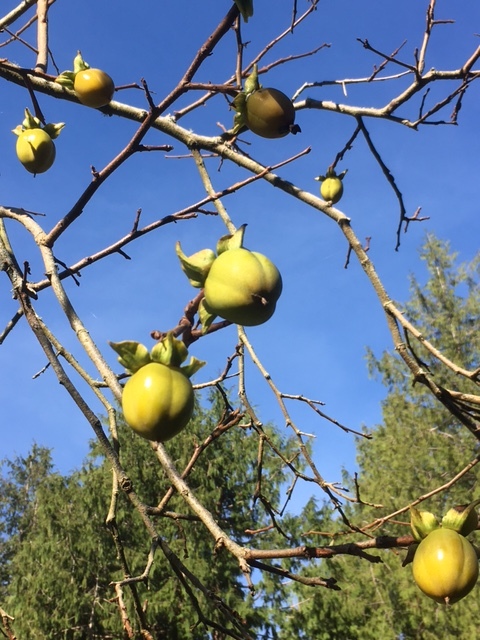
I’m in a setting similar to Port Angeles, 5-8 degrees cooler than Seattle. My 15 year old Saijo never makes it in time! It loses its astringency in Dec but tastes bland - like not very sweet squash!
My exposure is partially blocked in early am and late pm. If you have a completely open southern exposure, you might do much better.
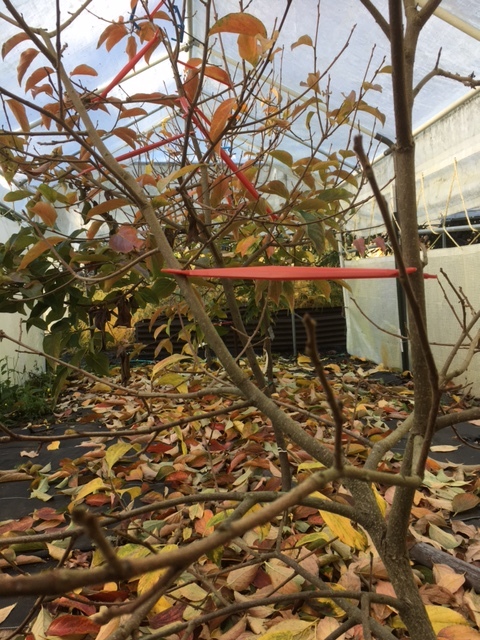
Under cover I have Fuyu, Izu, Matsumoto Was, Nikita, and Cardinal… no fruit yet.
7 Likes
Hi Christine,
Your Saijo looks healthy so at least you have a sturdy rootstock if you decide to topwork in other varieties. Ram has had some success with Saijo so I grafted several this spring to test it here. So far my stand alone IKKJ has ripened fruit for me for the first time after shedding the majority of its fruits this year (18 set initially) I actually harvested four that I’ve yet to taste but at least they made it to ripe stage. Also picked two Kasandras from last spring graft on my Chocolate tree, one is still in banana bag after trying the first too soon!
Dennis
Kent, wa Processing: IMG_1721.jpeg…
3 Likes
Strongly recommend Nikita’s gift as perhaps the best persimmon for marginal areas. It requires the least heat units of any persimmon I know.
3 Likes
Sorry to hear about your Saijo tasting bland! I had some hopes for that variety since its fruit is small and it was a partial success at Mount Vernon, but I’ll probably stick with the early American persimmons then since my exposure is also partially blocked off to the west and I don’t have much greenhouse space.
Thank you @Seattlefigs for confirming that Coffeecake ripens faster when pollinated. Parthenocarpy seems to work best in warmer climates so I wanted to try a pollinated version to see if it helps improve the ripening process at all, though I don’t expect anything still 
I’m definitely trying Nikita’s Gift too and will let you know if it works at all here.
2 Likes
plus unpollinated you probably have more flesh to eat than with the large seeded pollinated coffeecake!
1 Like