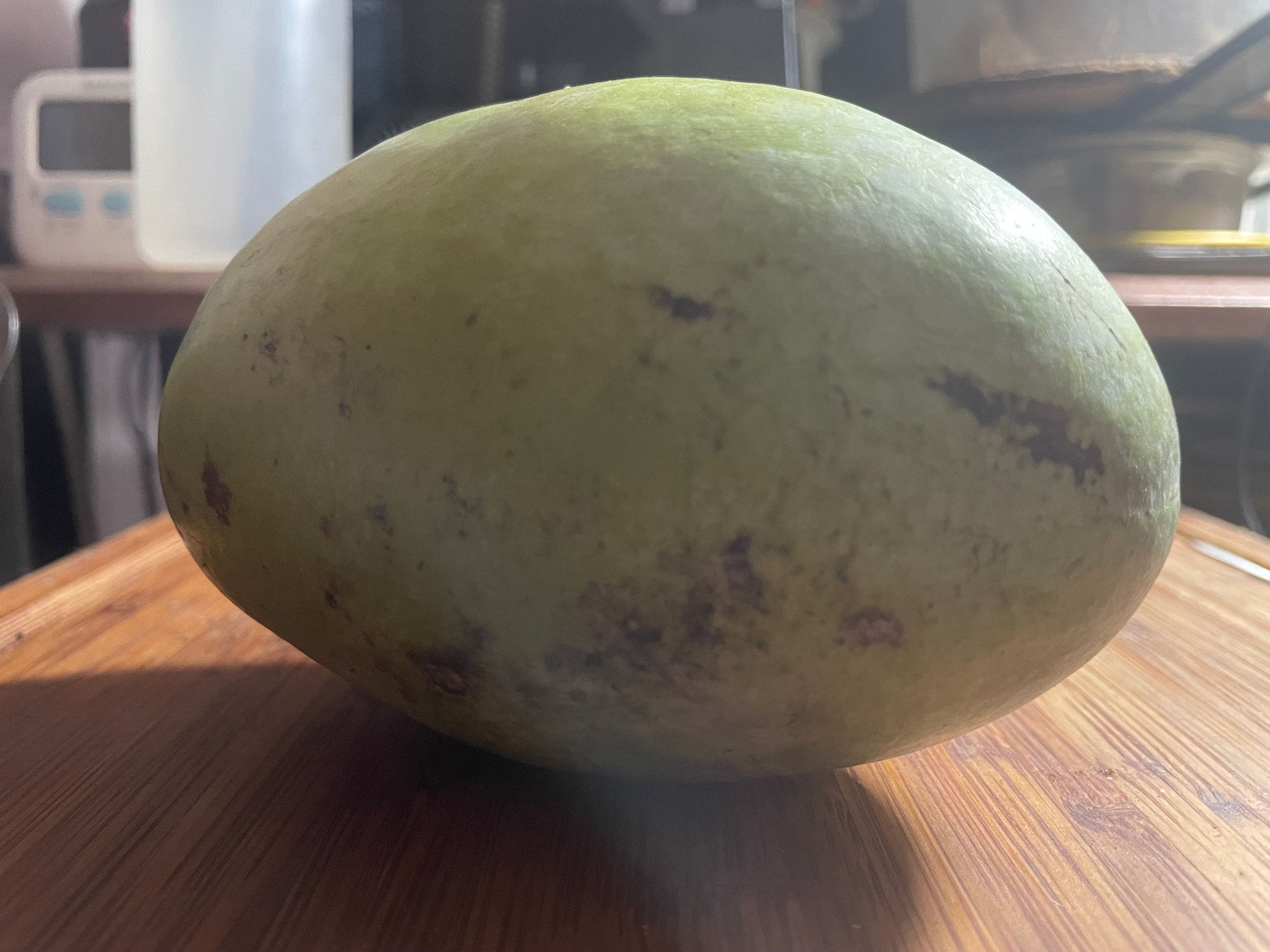
The ones I found in ohio were quite literally in a reservoir. Lots of standing water.
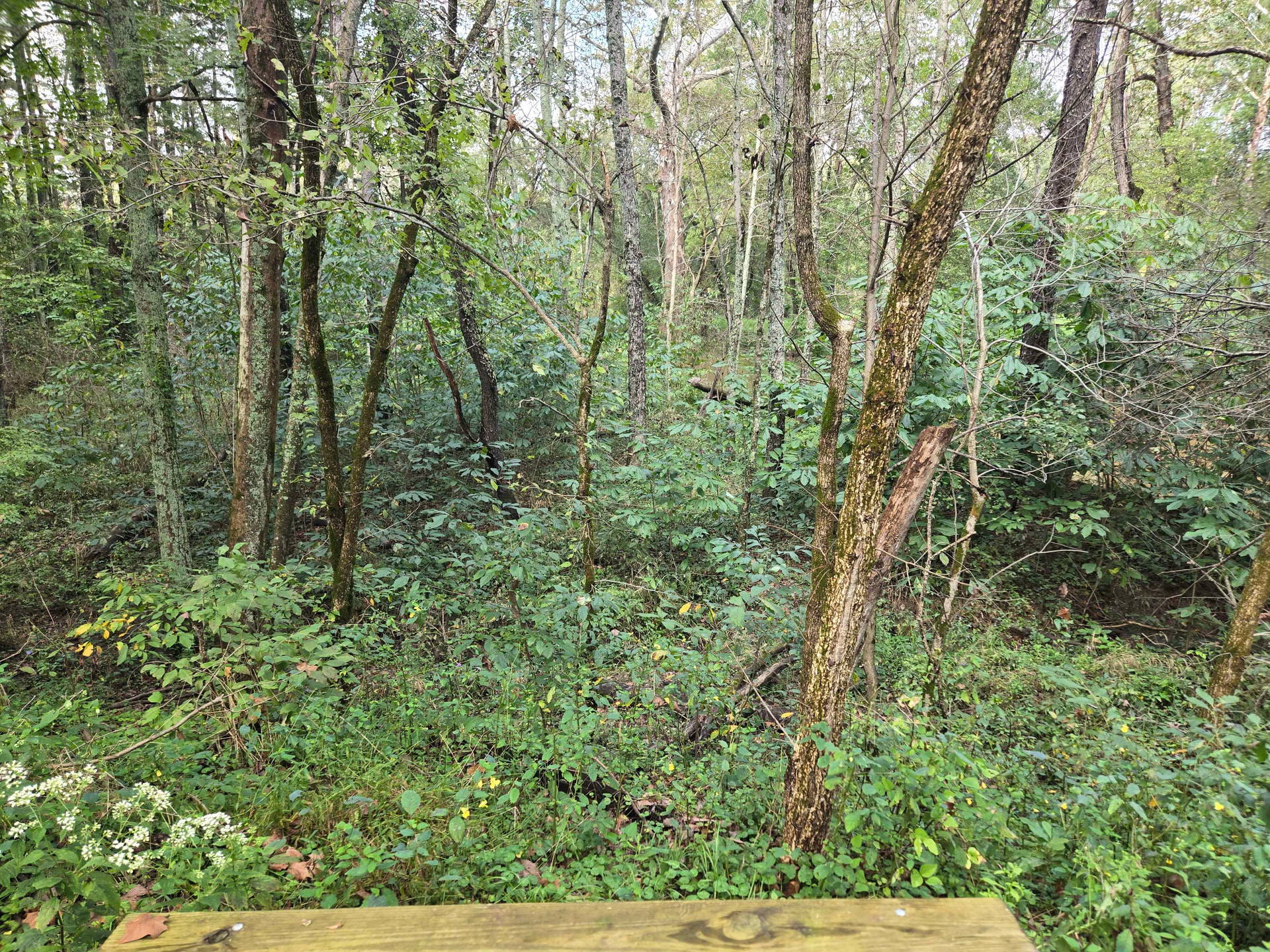
Ora E. Anderson Nature Trail Google Search
Many of them couldn’t be harvested cause they just fell straight into water.
The ones I found in ohio were quite literally in a reservoir. Lots of standing water.
Ora E. Anderson Nature Trail Google Search
Many of them couldn’t be harvested cause they just fell straight into water.
I have always said remove pawpaw limbs as small and young as possible to avoid making large wounds, as they heal slowly, if at all.
It’s amazing. It was my favorite in terms of flavor of all the R series that have fruited.
Here the wild pawpaw grow right on the river bank. Some in extremely wet soil. That seems to be where the bulk of the herd hangs out. As you get away from the river they start to thin out. Some of them are completely submerged when the river floods and they all seem to survive just fine.
How do newer introductions like Pomper’s Choice, Free Bird, Dunnigan and others compare to older top cultivars like Susquehanna and Chappell?
It’s hard to say exactly as pawpaw varieties vary so much. All the releases you mention, except possibly Dunnigan all stem from Susquehanna as the mother genetics, with Keener as the OG, and Free Byrd a seedling of Shenandoah with Overleese as the OG.
Dunnigan is tasty but I think it might lack other more desirable characteristics overall.
The newer releases besides Dunnigan, including Benson and Chappell, Freebyrd, Pomper’s Choice all focus on more round fruit (as opposed to banana-like), low seed weight and excellent flavor. Chappell has mixed reviews on phylosticta susceptibility, which is not ideal. Although it’s not been an issue for me. Benson and Chappell also sometimes crack.
In my breeding and selection efforts, I’m aiming for the following, forgive me if I already posted this:
Varietal factors we’re focusing on at PHN include:
Great flavor and texture
Low seed weight
Large but not necessarily massive fruits. I think a medium sized mango sized fruit (10-16 ounces) is plenty good and better for marketing, growing, and handling.
Freestone Seeds
Productive Trees
Disease resistance
No bitter aftertaste or metallic nasty flavors.
Did I post photos of my new release (R8) on here yet?
Dutchess County NY Z6A…lawn guy picked up 4 drops while planting the Kentucky Champion from Perry pawpaws…think they are Chappell by the shape…if so, only a day later and almost identical GDD 50F as last year… ..definitely not Allegheny…biggest was 395 gr…I think these somehow blew down in the storm as they are only very slightly soft…says tree has many more fruit… he will be back Thursday and I will try to find out what comes from what tree…tough not knowing really what is going on down there…I think I see a couple big ones in the binoculars on a third tree…many more fruit than I can eat…Beemster
…
As detailed elsewhere, this year I hand-pollinated my Allegheny tree with pollen from Sunflower. No other varieties bloomed nearby. The pollinated was successful. So far I’ve picked and eaten ~18 fruits and I’m expecting 1/2 dozen more.
As a result, I now have 62 seeds; I may accumulate 20-30 more.
Is anyone interested in these seeds? If so, I can send them. If not, I’ll probably throw them away. Note that these would be guaranteed Allegheny x Sunflower, if that matters.
Edit: I picked the last 6 fruits. So I believe that’s 24 in total as a result of my exercise in hand pollination.
Also, I’ve gotten a taker for the seeds.
Seedling trees from improved cultivars will give you winners enough for the bulk of market sales. People are selling wild foraged ones around me for $10-$12/lb or by the each for a few dollars. The expense of buying grafted trees, the failure rate of existing grafts and the difficulty in grafting the trees in general make seedlings a viable alternative for a majority of growers.
The difficulty arises in harvest times, as seedlings would be all over the place. The trees in all the rows would need to be checked probably twice a day in season. To be fair, the ripening times of known cultivars are overlapped enough for this to be an issue anyways.
I would still graft out some trees and sell the fruits as a premium or sell the scion wood for stupid amounts of money. Nobody cares about the pulp coming from certain cultivars, not enough to pay significantly more for it. If you really want to try and maximize processing, find the winners in your seedling pool and propagate them for free on the trees that are not as productive.
The orcharding of these trees is still brand new, and there is only anecdotal information available for harvest numbers. Even the stuff published by KSU is all over the place and has such a variability that it is basically useless.
If you end up having more of those seeds, I’d be interested but no worries if they were all previously claimed.
I apologize if you mentioned already but can you describe the taste of Allegheny in your experience? I only had a single one and it was divine.
I agree with this.
Another consideration however is TIME. For those with less time than money, the initial investment to establish a grafted pawpaw orchard can be expensive, depending on size. However, with fruit selling at extremely high prices with no end in sight and demand only increasing every year, it could likely become profitable after only a few years time. A decent yield on a fully bearing tree is around 30 lbs (40+ lbs would be a high yield). At $15/lb one tree can yield $450 in product in a decent year. A high quality grafted tree in good conditions could begin yielding like that after about 5-6 years.
A seedling pawpaw, assuming it’s 3 years old at time of planting and is a healthy and strong start with good roots in good conditions, would begin yielding 30-40 lbs in about 7-8 years. So, with grafted trees the ROI might take 3-6 years (accounting for smaller yet sellable yields in the initial bearing years), while seedlings would likely take closer to 6-8 years to be creating profits. Obviously land costs, irrigation, fertilizer, labor all factor in. But Hambone is the kind of dude that like to get stuff done himself, I’m sure, and I have a feeling he has a bit of land already.
Mmmmmm… no. Japan has been growing orchards of pawpaws since WW2 as banana replacement, and many growers in Europe and parts of Asia, as well as in the USA have been doing so for decades. It’s a ‘newer’ industry in terms of timelines for modern agriculture but not ‘brand new’. Growing pawpaws as orchard trees is pretty straightforward, and I haven’t found KSU data on growing the trees or harvest estimates to be inaccurate or ‘all over the place’.  ?
The KSU and other available information on yield is not anecdotal, it’s called data.
As with any ag crop, especially fruit, results can vary widely across geographical areas and climate zones. We’re dealing with living organisms, not machines. So KSU or any other data will not apply to every situation but certainly does apply to many situations in the Mid Atlantic, upper South, lower parts of the Midwest, etc, as they are based in KY.
In general, 30-40 lbs is a reasonable amount of expected yield per healthy mature tree and can be expected under good conditions as per what growers confirm as their yield data. 20lbs would be on the low end, anything more than 50 lbs would be unusual but likely possible. 30-40 is about average for this species under good conditions at maturity, and can be sustained around 10 years on a grafted tree.
I have no palate, so take these comments with caution. To me, the dominant flavor s very ripe banana. Then there’s something that is often described as melon. Maybe also a little vanilla, like vanilla ice cream. In the past I’ve described pineapple or citrus but today eating a perfectly ripe fruit, I don’t get anything with an edge at all. It’s very mellow. And the consistency is custard.
Dutchess County NY Z6A…since no other pollination could reasonably be expected, any idea what % of flowers you hand pollinated made fruit?? Allegheny seems to be a very fruitful variety…I got about 2 dozen fruit the first year it fruited…Beemster
Not with any precision. But I’ll take my best shot . . . .
I had ~24 fruits. At least half were in ~4 clusters of 3-4 ripe fruits, each of which I assume represents one pollination – a subtotal of 4. The rest were in ~6 clusters of 1-2 ripe fruits, which represent a subtotal of 6. So that would imply roughly 10 successful pollinations in total.
Meanwhile I’m gonna guesstimate that I did ~50 pollinations but my memory is fuzzy and it could have been as few as 30.
That would imply 20% successful as a best guess but possibly as high as 33%.
FWIW, in reviewing the process I’d say that the most important question is: Do I have a flower in the full male, pollen rich stage? The next most important question is: Which flowers are in a receptive female stage? Obviously if the flower sourced for pollen is not producing much pollen, the attempt will likely fail. Similarly if the flower pollinated is not in a fully receptive female stage, the attempt will likely fail. I have to believe that if the male flower bears pollen and the female flower is receptive, the odds of success are very high.
FYI do not let the seeds dry out. The seeds will not grow if they dry too much.
Pawpaw flowers always start in the female/pollen receptive stage and then release pollen about 3-4 days later. The female receptive stage lasts probably even longer than that, as green, opening flowers appear receptive if you look closely. The female stage could last more like a week.
Seedling Shade: if planting tiny seedlings next Spring in friend’s field that gets sun til noon then shade from adjacent forest, are tree tubes needed for shade? I guess maybe still needed for protection from rabbits, weedeaters, herbicide drift? If tubes, is 36 inch good, vented?
I think if the seedlings are ‘tiny’ then they will require all day shade. Vented tree tubes 36” tall are fine. I used to use Blue X tubes. Pawpaw trees always are better off with some form of protection around the base for the exact reasons you stated.
Thanks Blake! Really helpful. These will be seedlings from my seed of all named cultivars, so fun to see what fruit they make in a 8-ish years, a reason to live to 90 or beyond!
You look about 60 in your profile pic.
For real. If you’re in your 80s im feeling good about 90s…