On the contrary, bezoars are formed by tannins in an acidic environment. For that reason, I’ve read Japanese recommendations not to eat persimmons with protein, which stimulates the release of stomach acid.
No, in general human gastric pH is lower than that of canines, so ours is more acidic.
3 Likes
Really? When i look it up dog stomachs are 1-2.5 ph wheress humans are 2-3.5
1 Like
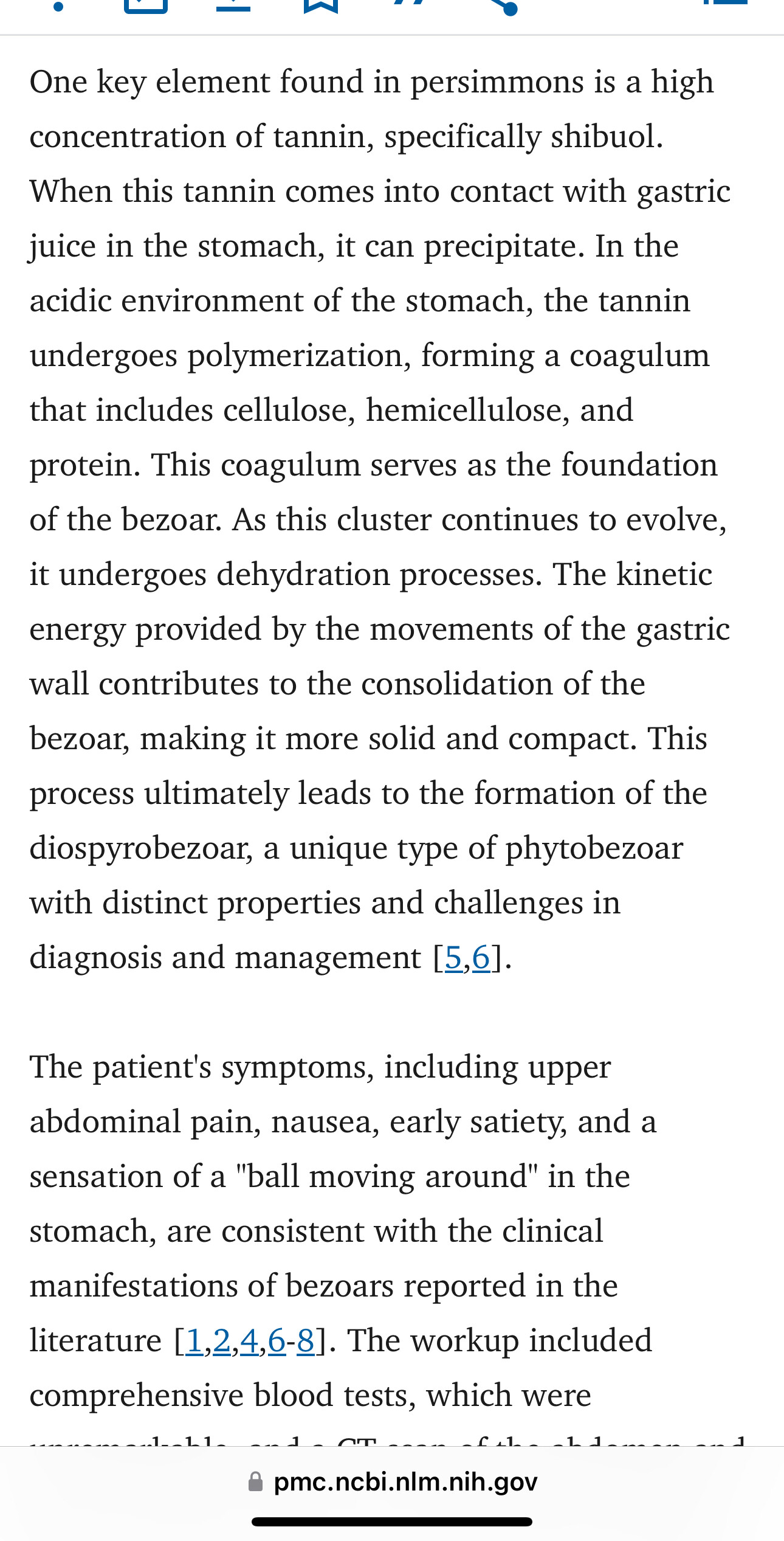
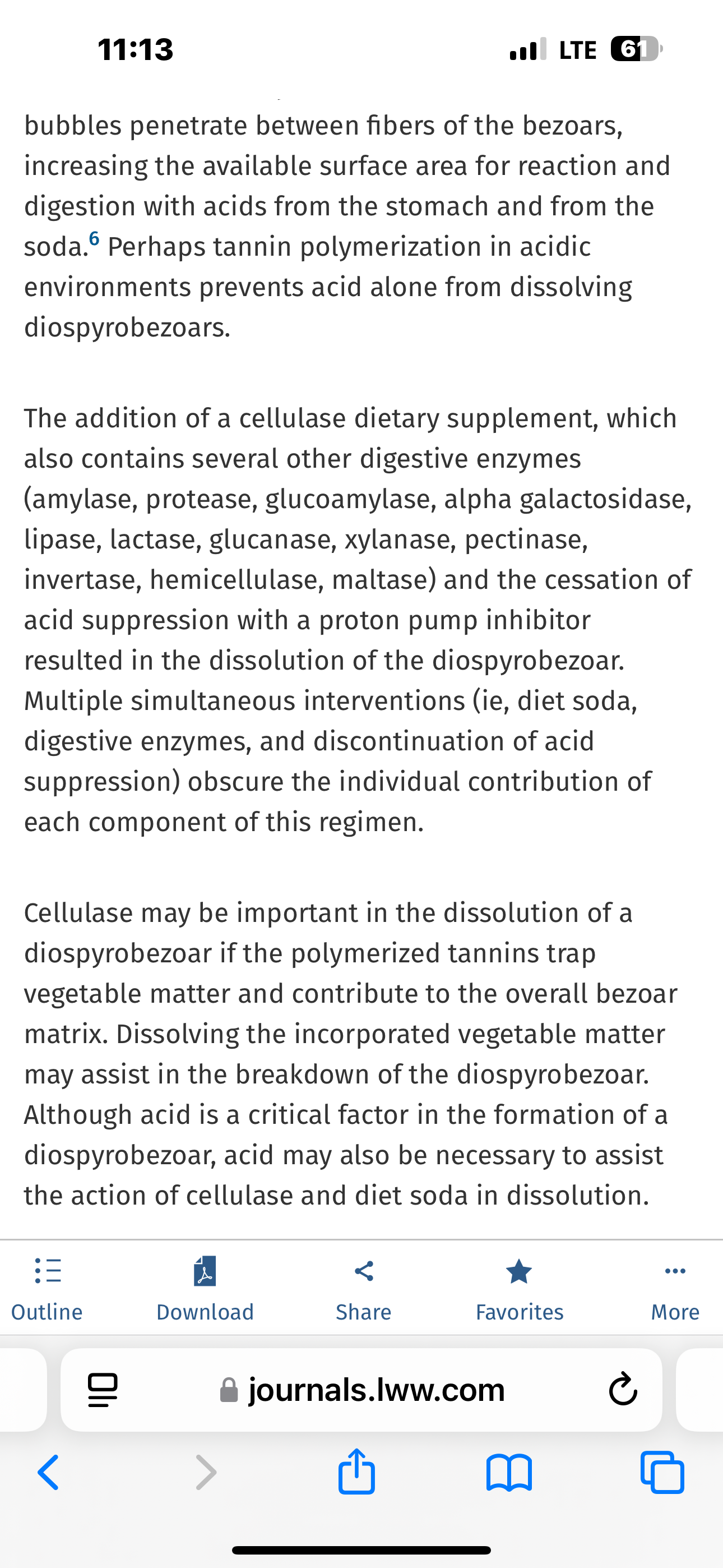
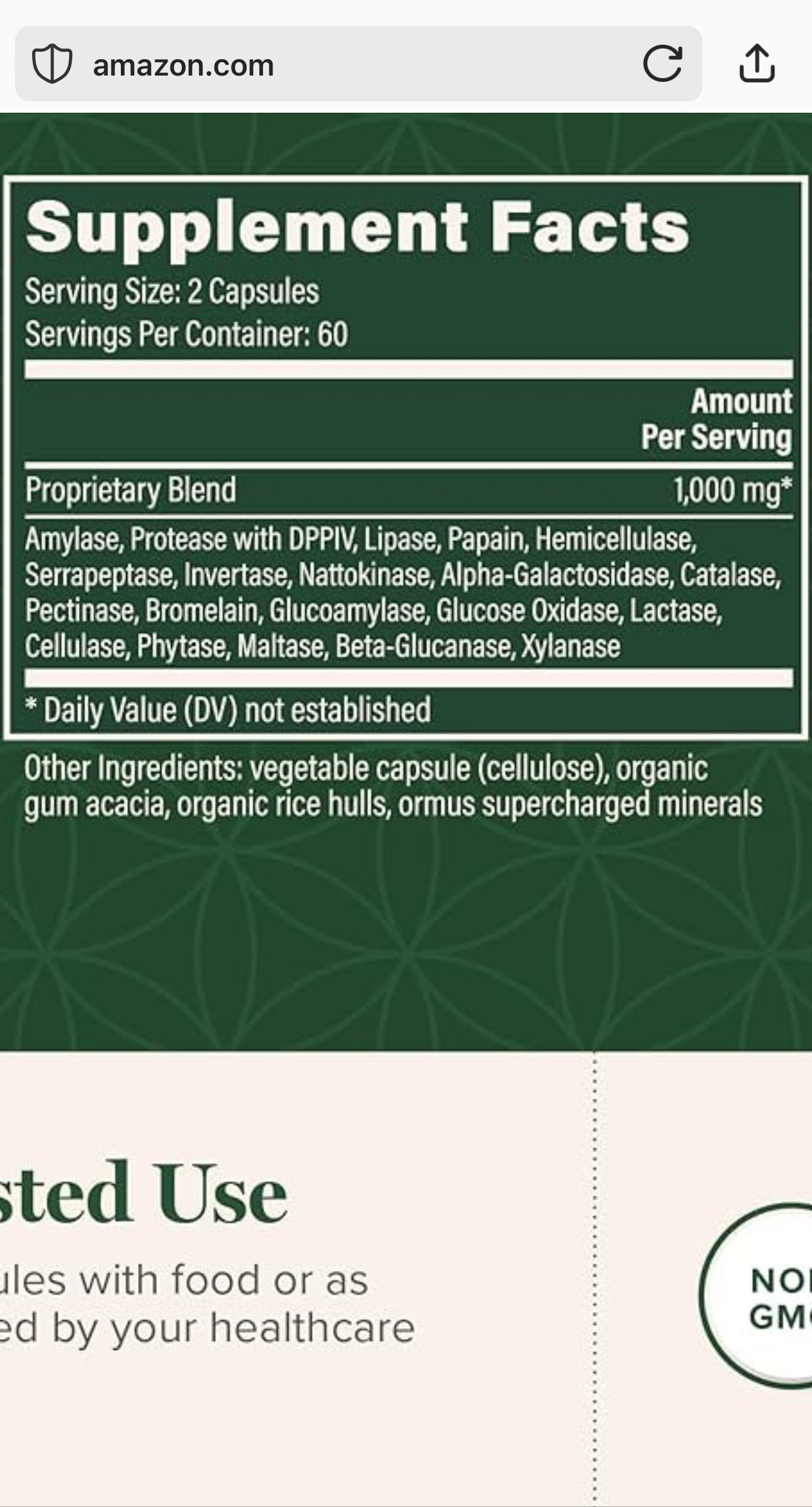
This is the information on the Ultimate Enzymes label which seems to be very comprehensively formulated.
I bet they ate it slowly, like a tobacco chaw, and didn’t gulp it down like kids do sweet fruit leather or I do gummies (unmedicated, but I eat my vitamin D as gummies and have to be careful I don’t over dose!).
make sure you don’t give your dog anything with artificial sweetener in it, xylitol in particular is fatally dangerous to them.
if you had a bezoar a doctor could see it on most kinds of scans i think including X-ray.
@fruitforestNC8a they dried them and pounded them into paste to mix as part of the pemmican.
1 Like
An update here May 16, 2026.
This year when persimmons are ripe I will be careful to not eat the skins of the fruit which is the part that can cause bezoars to form.
The inner flesh of the persimmons is not a problem and safe to eat.
My dog Jozi has been fine since last persimmon season of 2025 and is still with me.
1 Like
I don’t think this is exactly right. Persimmon bezoars result from an interaction of fiber, tannin, stomach acid, and dietary protein. Eating unripe persimmons with residual astringency is a particular risk, especially if combined with protein. The skin can be a contributing factor by adding more tannin and fiber.
From ChatGPT:
Tannins are central to persimmon bezoar formation. A persimmon bezoar is specifically called a diospyrobezoar, and it forms because persimmons—especially unripe or highly astringent ones—contain large amounts of soluble condensed tannins, often described in the literature as shibuol/phlobatannin-type tannins.
In the stomach, these tannins do three important things:
- They become insoluble in acid In the acidic gastric environment, soluble persimmon tannins can polymerize and precipitate, forming a sticky, glue-like coagulum. This is the key step that makes persimmons unusually prone to bezoar formation compared with most fruits.
- They bind plant fibers together. Once the tannin mass forms, it traps and cross-links indigestible plant material: cellulose, hemicellulose, skins, fibers, and other fruit residues. This creates a dense phytobezoar rather than a loose wad of fiber.
- They bind proteins. Tannins are polyphenols that bind proteins readily. In the stomach, persimmon tannins can complex with dietary proteins, salivary proteins, mucins, and possibly gastric proteins, helping convert the mass into a firmer cellulose–protein–tannin concretion. This protein-binding property is also why astringent persimmons make your mouth feel dry: tannins precipitate salivary proteins.
The result is that persimmon bezoars are often harder and more resistant than ordinary phytobezoars; some reports describe diospyrobezoars as unusually firm or woody.
2 Likes
I’m certainly not eating unripe or any persimmon with astringency.
Who would do that ???
Do you eat unripe persimmons ?
I should have specified that when I said the inner flesh (without the skin) is ok to eat when fully ripe and all astringency is gone.
thankyou for that
1 Like
“Unripe” is a relative thing. It’s not like an alarm goes off when the persimmon hits “RIPE!” It’s a judgement call.
Many people can tolerate a moderate amount of astringency. These people might decide to eat a not-quite-100%-ripe fruit, not appreciating the risk. I don’t want them thinking that they’re safe so long as they don’t eat the skin. I wouldn’t want anybody ending up in the hospital.
I say that having a friend who is a surgeon who has participated in operations to remove intestinal blockages caused by persimmon bezoars.
As a novice grower of American persimmons, I have to confess that I have tasted and eaten fruits that in retrospect I’d say were maybe only 80% ripe. I didn’t develop a bezoar but I did get really constipated.
2 Likes
I had 4 persimmon trees ripen fruit last year… ate more persimmons last fall than ever in my life.. and did not have any problems.
I don’t eat skins or seeds and try to only eat ripe non astringent fruit… but occasionally do get one that is a little astringent on the backside… after you eat it.. a little astringency can be detected.
This year it looks like I will have 7 persimmon trees ripening fruit… and some of those that produced a small amount of fruit last year are going to produce 10x more fruit this year.
Kasandra for example 32 fruit last year… looking more like 300 fruit this year.
What does it feel like initally when a bezoar developes.
Found this list on google.
Common Initial Symptoms:
Early Satiety: Feeling abnormally full after eating a very small amount.
Decreased Appetite: Noticeable loss of hunger.
Nausea and Vomiting: Occurring frequently, sometimes directly after eating.
Abdominal Discomfort: Mild to moderate pain or bloating, usually concentrated in the upper abdomen.
Unintended Weight Loss: Due to reduced food intake and poor nutrient absorption.
Of course it can get much worse if you ignore these initial symptoms.
TNHunter
2 Likes
Thanks for your additional persimmon cautions !
I’m hoping anyone new to growing persimmons will come across this thread and benefit from the knowledge.
When I initially bought D. kaki varieties online from nurseries in 2018 and 2019 there were no warnings given by the sellers.
If I hadn’t read some else’s post here on growing fruit.org I wouldn’t have even found out what a bezoar is. This is such a valuable forum in so many ways!
@TNHunter the Kasandra scions you sent have taken and are leafing out, I’m so looking forward to the fruit. 
3 Likes
@fruitforestNC8a.. my Kasandra in year 4 now.. out in my new orchard is on land that will eventually be with our future new (retirement years, empty nester) home.
Our current home and 10 acres will eventually be sold.
We are hoping our SIL & daughter will be able to buy it. Grandkids for next door neighbors.
I found a nice little wild dv just past the back yard at our current home place.. in the edge of a field and grafted some of my Kasandra scion to it this spring.
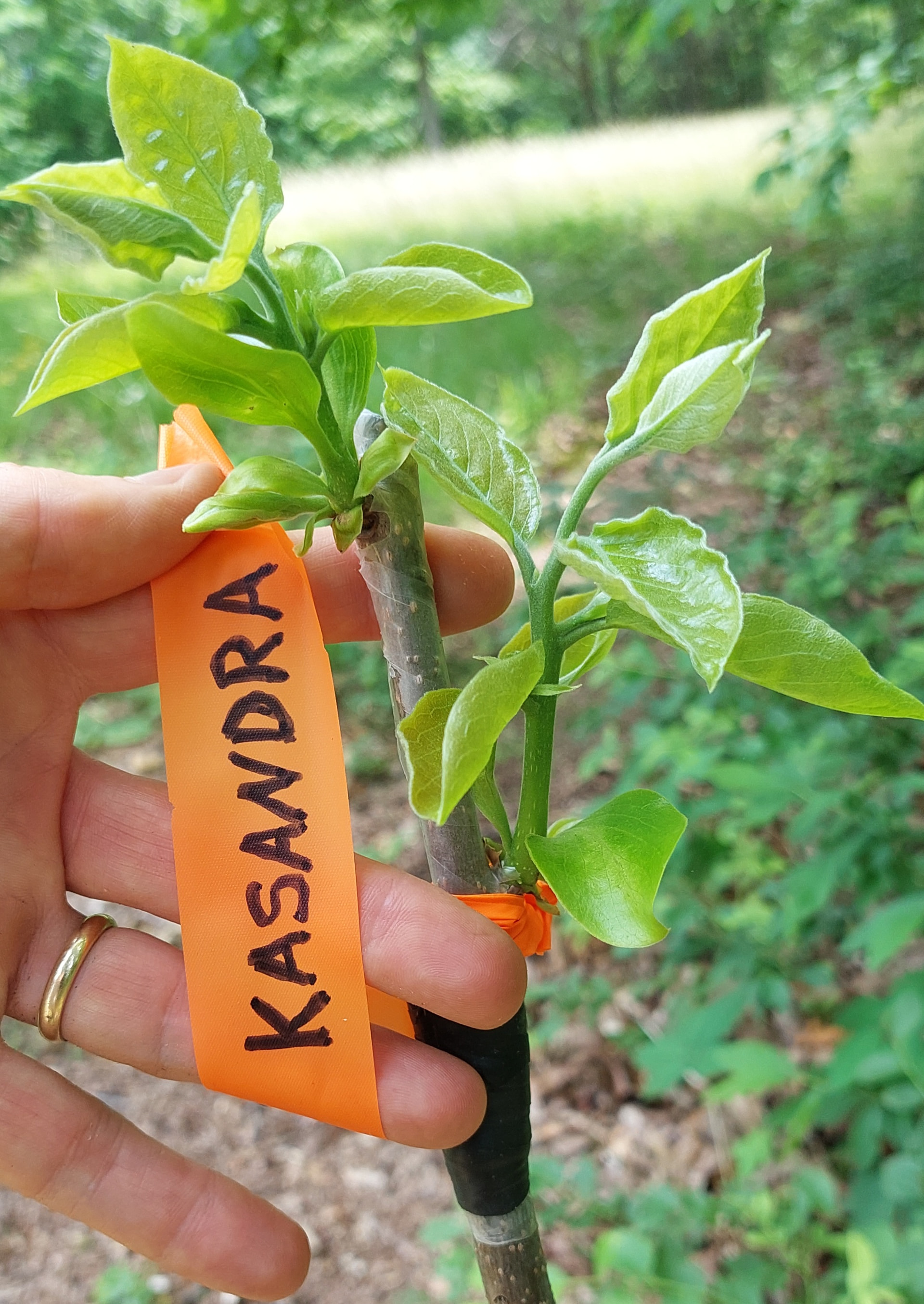
So who ever does buy our current home place will have a Kasandra in the field just past the back yard.
Looking good so far.
TNHunter
3 Likes
This was a topic I completely missed until now, good info. I typically gorge myself on as much fruit as I can so this is good to know. I had to limit myself to no more than half a watermelon a day because my digestive system doesn’t appreciate it haha.
My goal for example is to grow 200lbs+ of black raspberries annually in a few years so I can have enough to eat them daily until I get tired of them. My username is no joke I am a fruit fiend.
1 Like