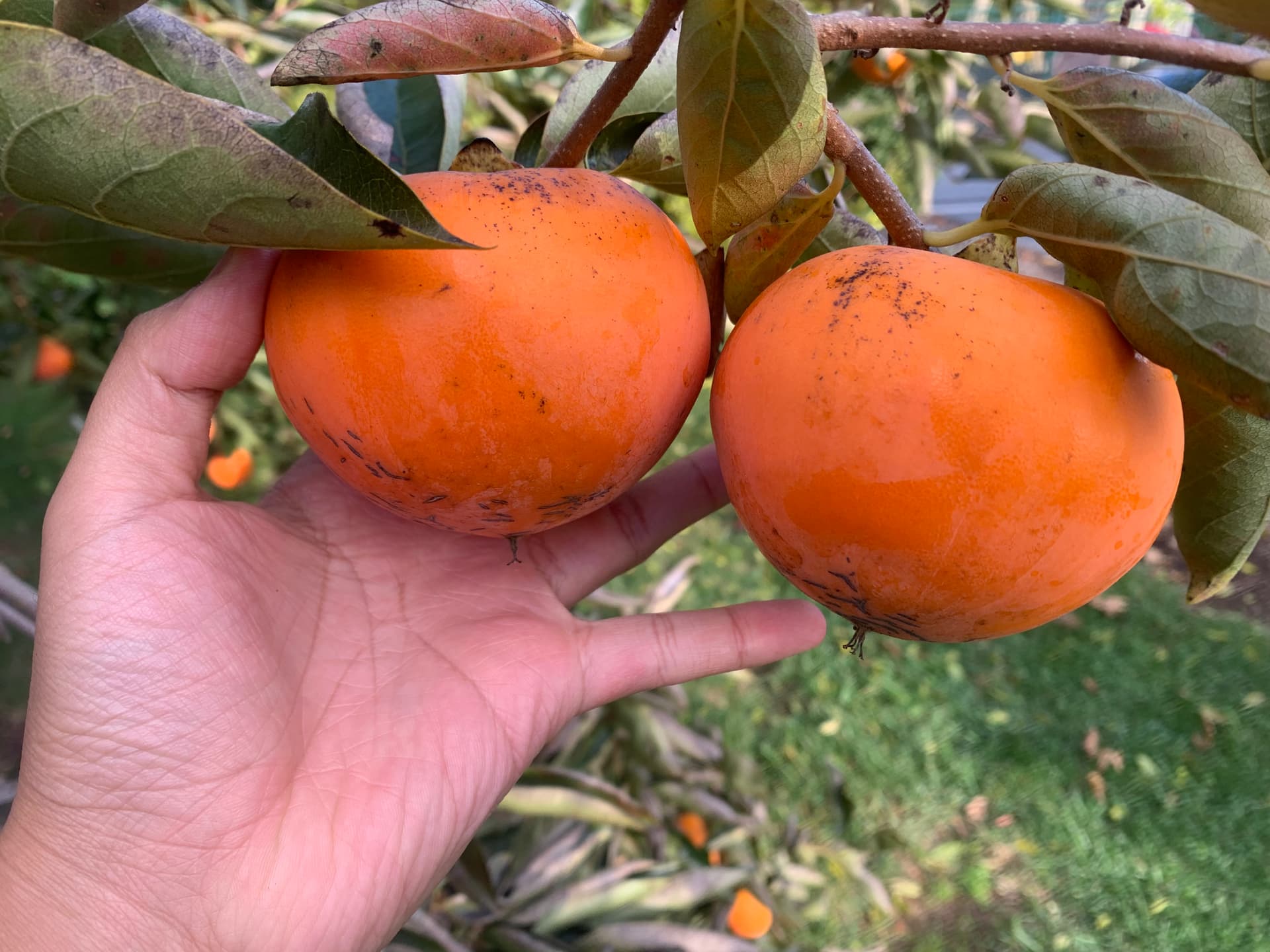
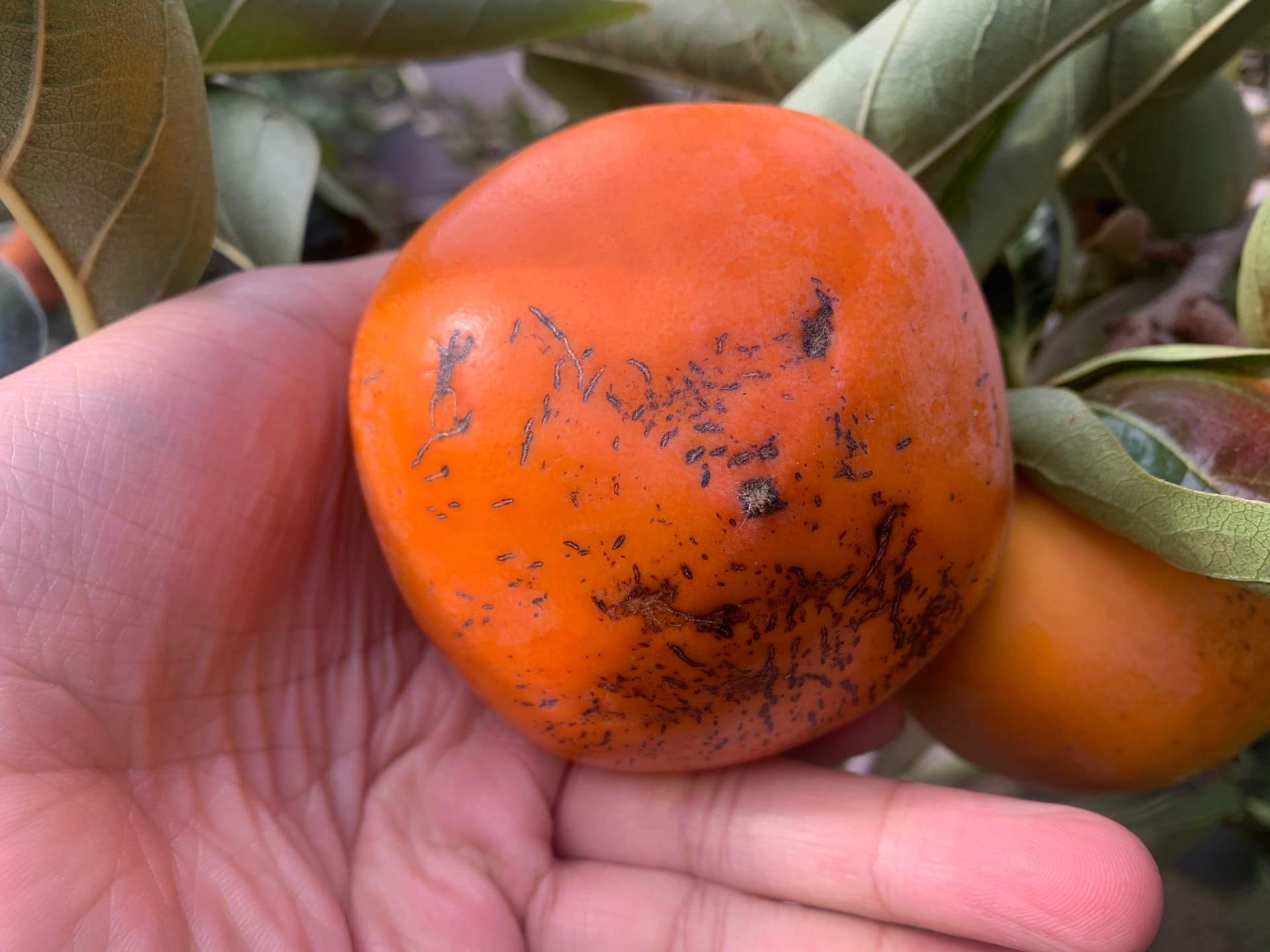
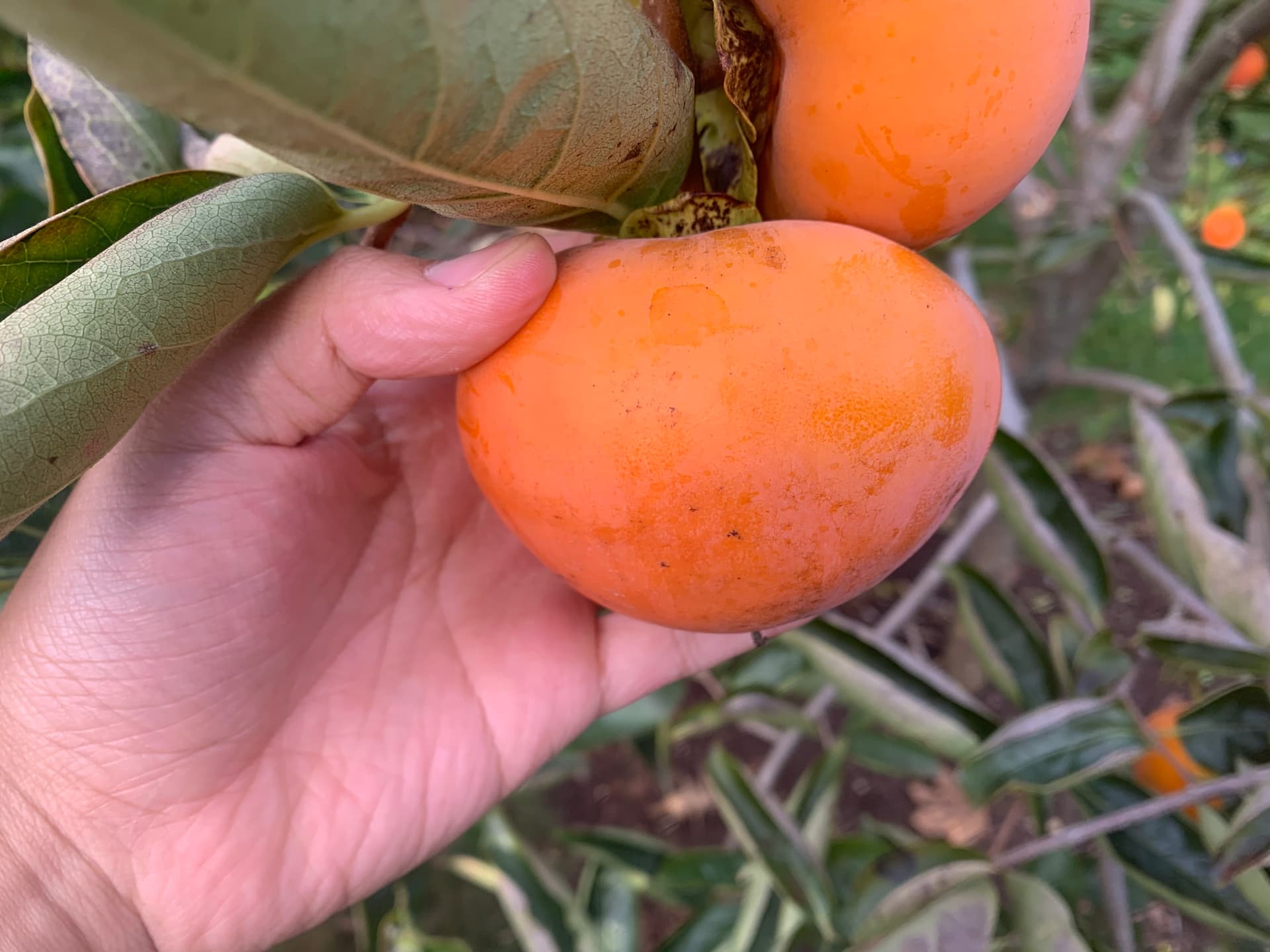
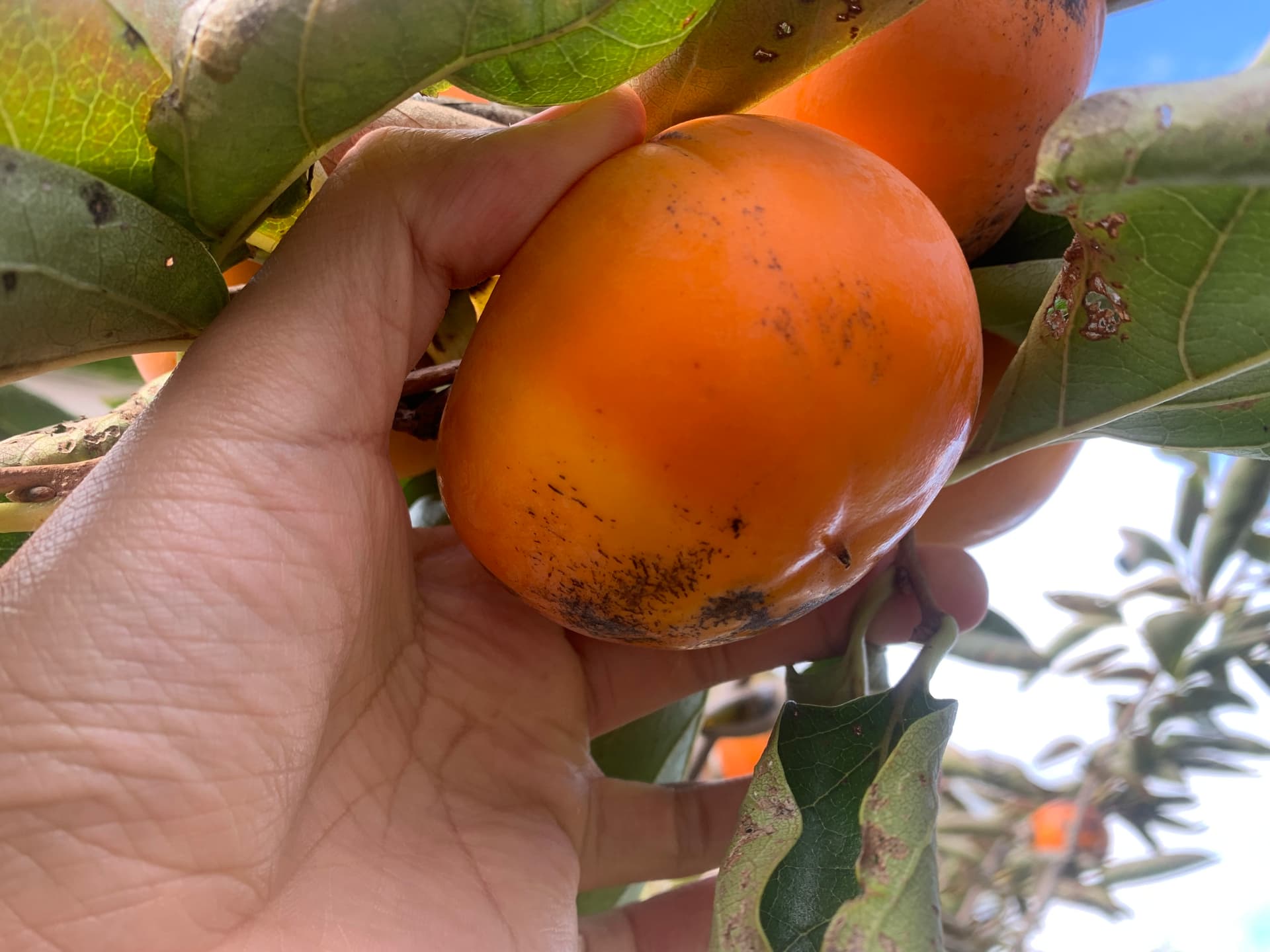
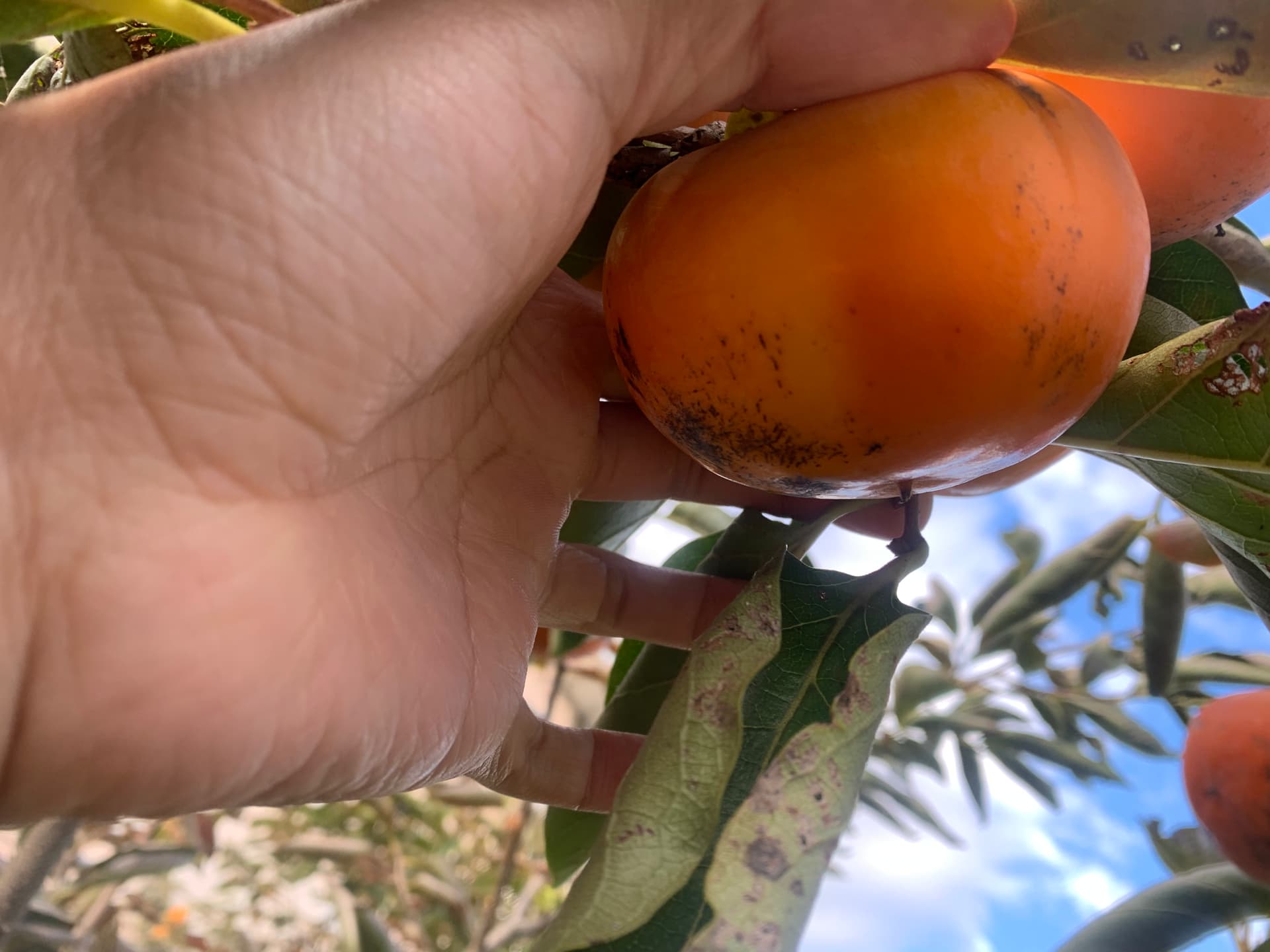
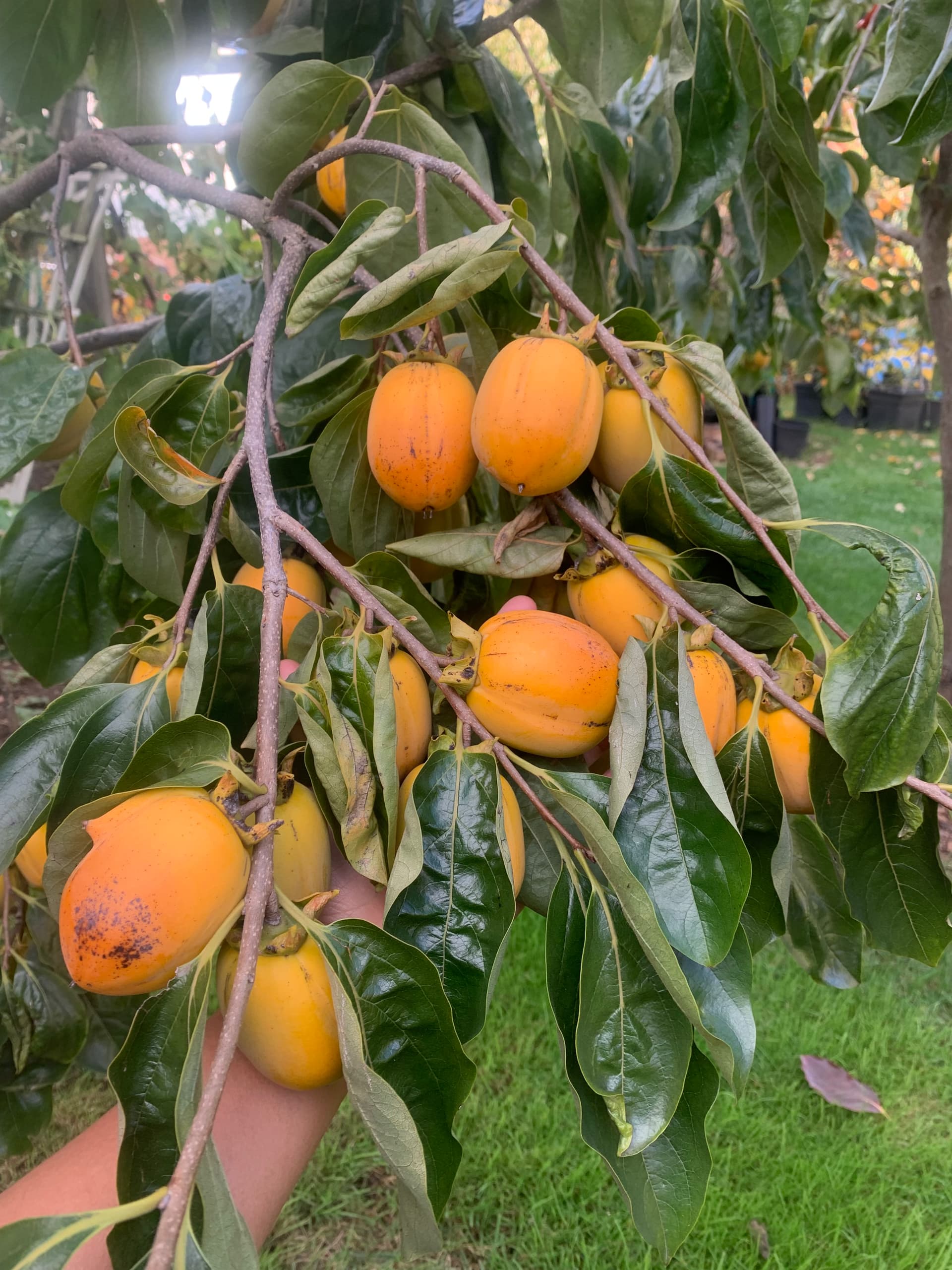
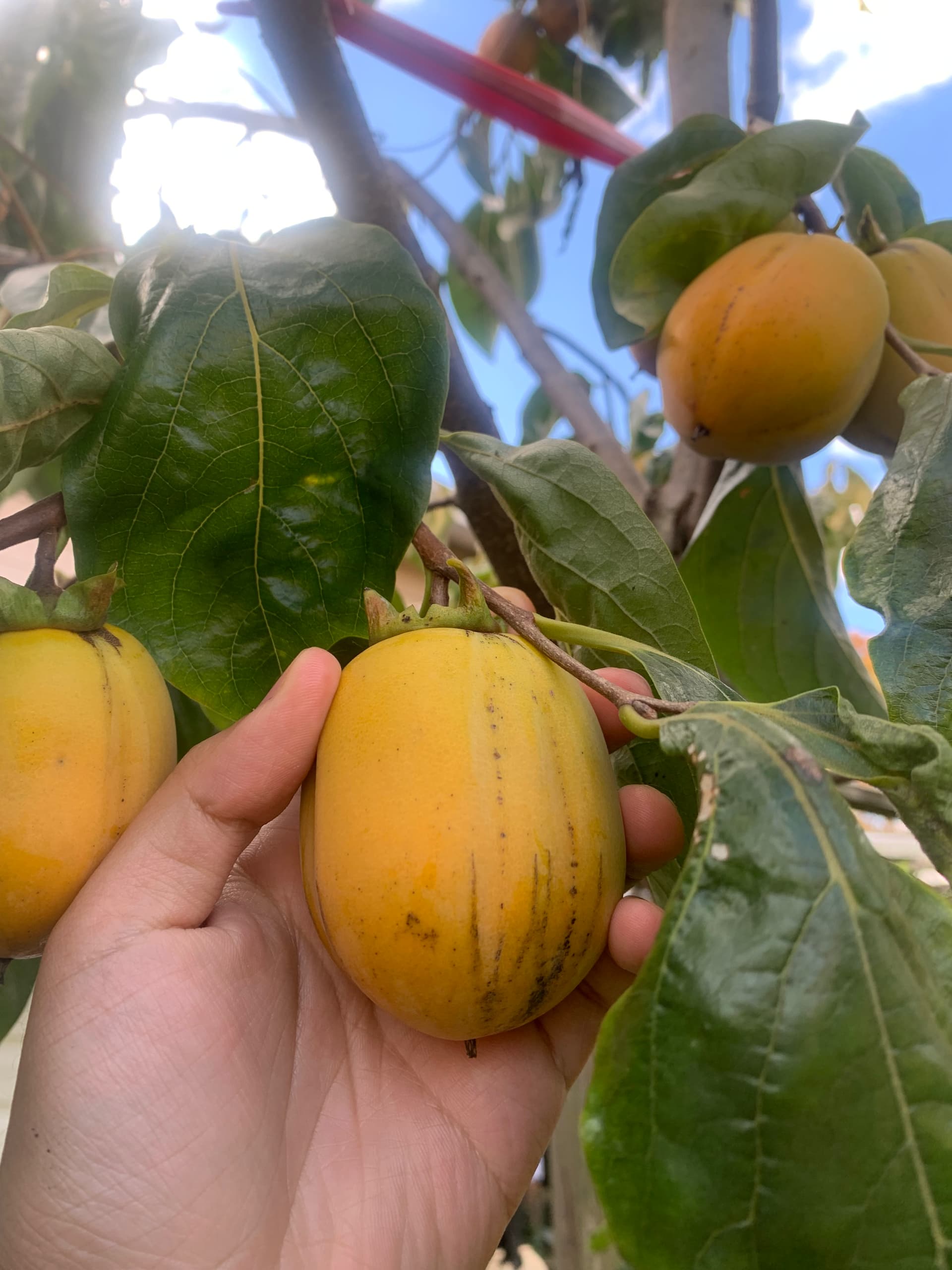
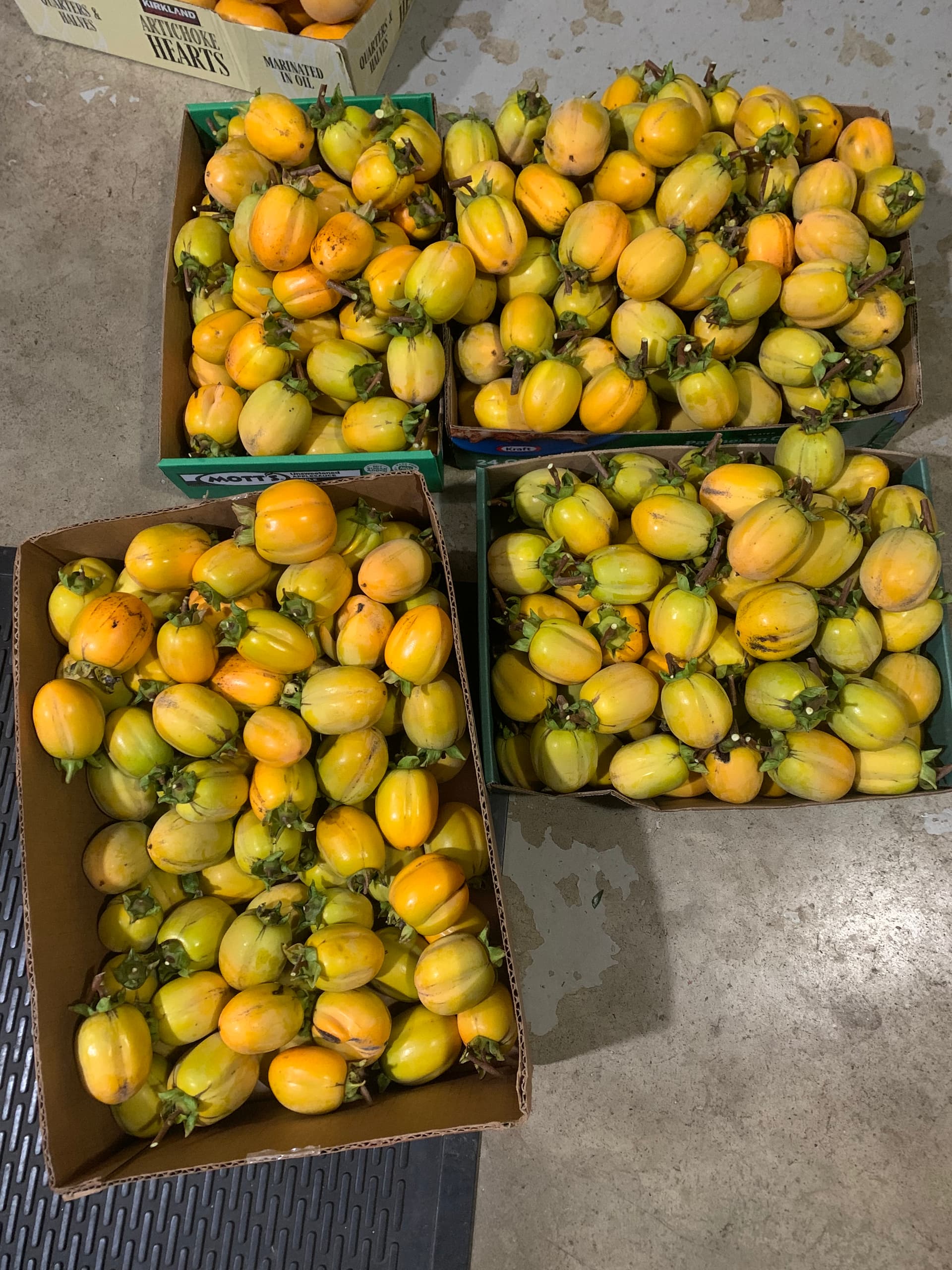
PVNA persimmons present an interesting challenge because the fruit could be parthenocarpic or poorly pollinated resulting in astringency of the flesh while still firm. Nishimura Wase fruit are shaped differently when well seeded vs poorly or unseeded. Being able to differentiate is important for those who enjoy eating the fruit while firm.
I actually hand pollinated whatever flowers I feasibly could with a paint brush because I really enjoy the pollinated fruit. My Nishimura Wase had plenty of male flowers too.
I also have some small male flowering trees in pots that I move around to female trees as they bloom to assist as well if I’m relying on bees.
It’s a bit of a misconception that there are only 60’s south of the Ohio. It’s really more that south of the Ohio is the only area where 60’s are prevalent. From what I’ve seen in publications, there are plenty of 90’s all across the region. The exact makeup in a given area will vary, and in some areas (say at the town or county level), there may be only one or the other.
A few differences can be seen. Leaves on 90 may have pubescence and 60 tends to make taller trees. I checked trees here and found them all to visually look like 60. More selection work with 60 chromosome trees is needed. I’ve seen fruit 2.5 inches diameter on a few trees.
I would be pretty sure that the wilds you are eating are 90C, since there really aren’t any 60C that have fruit that size that I am aware of. Perhaps someone knows something to the contrary, but there is a reason almost all the cultivars people grow are 90C varieties and I think even the 60C varieties people have bothered to name and distribute have pretty small fruit and don’t reach the same eating quality.
Pubescence: soft down or fine short hairs on the leaves and stems of plants. Many plants have pubescence designed to provide a tiny bit of shade to reduce the temperature of the leaves and stems and protect the leaves from losing too much water from transpiration .
Just curious, i have seedlings of my 100-46 (Lehmans Delight) and Prok…
What do you think the percentage of male seedlings will be (aka seedlings that don’t produce fruit) vs female seedlings (or hermanphrodidic or whatever kinda seedling produces fruit)?
Also I heard pawpaw seedlings produce similar fruit to their parents which got me thinking about persimmon.
Do persimmon behave in the same way? Will their seedlings (well the ones that produce fruit) have the same properties (mostly interested in fruit-size attribute the most). Otherwise I may just graft those seedlings over just to be sure, but might be fun to grow out a few to see how they turn out.
It is always fun to grow seedlings and see what shows up.
Persimmons should segregate close to 2 male to 1 female most of the time where 90 chromosome species are in question. Caveat that some male will produce a percent female flowers and some female will set some male flowers.
I mentioned this recently on another thread. I wondered why there seem to be no 60 x 90 crosses. The haploid number is 15n, with 60 chromosome being tetraploid (4n) and 90 chromosome being hexaploid (6n). If crossed, you’d wind up with pentaploid (5n) persimmons that I would presume tend to have similar advantageous traits as triploids (larger and higher quality fruit and flowers). Ive yet to hear of such to date and was wondering why.
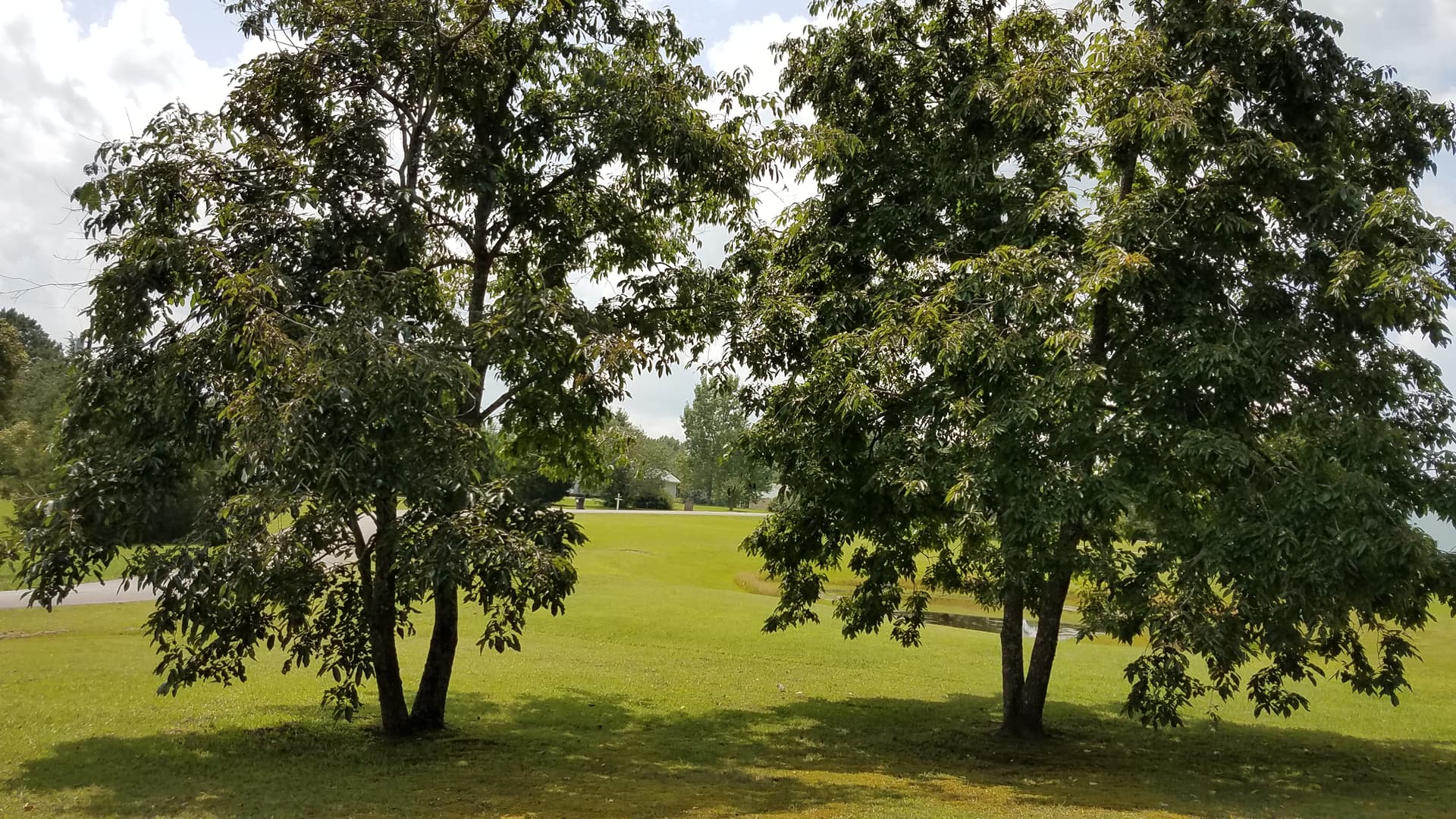
My sisters trees are not all that tall… 35-40 ft… but there is nothing growing near them… all by themselves in wide open full sun space. They have no need to grow tall.
But she has another growing behind her garage in a fence row with other trees on both sides… and it is quite a bit taller… probably 50 ft… and has a large spreading top.
I tasted the persimmons from it this year for the first time and they had the same taste as the ones in her yard and they were larger than most wild persimmons as well.
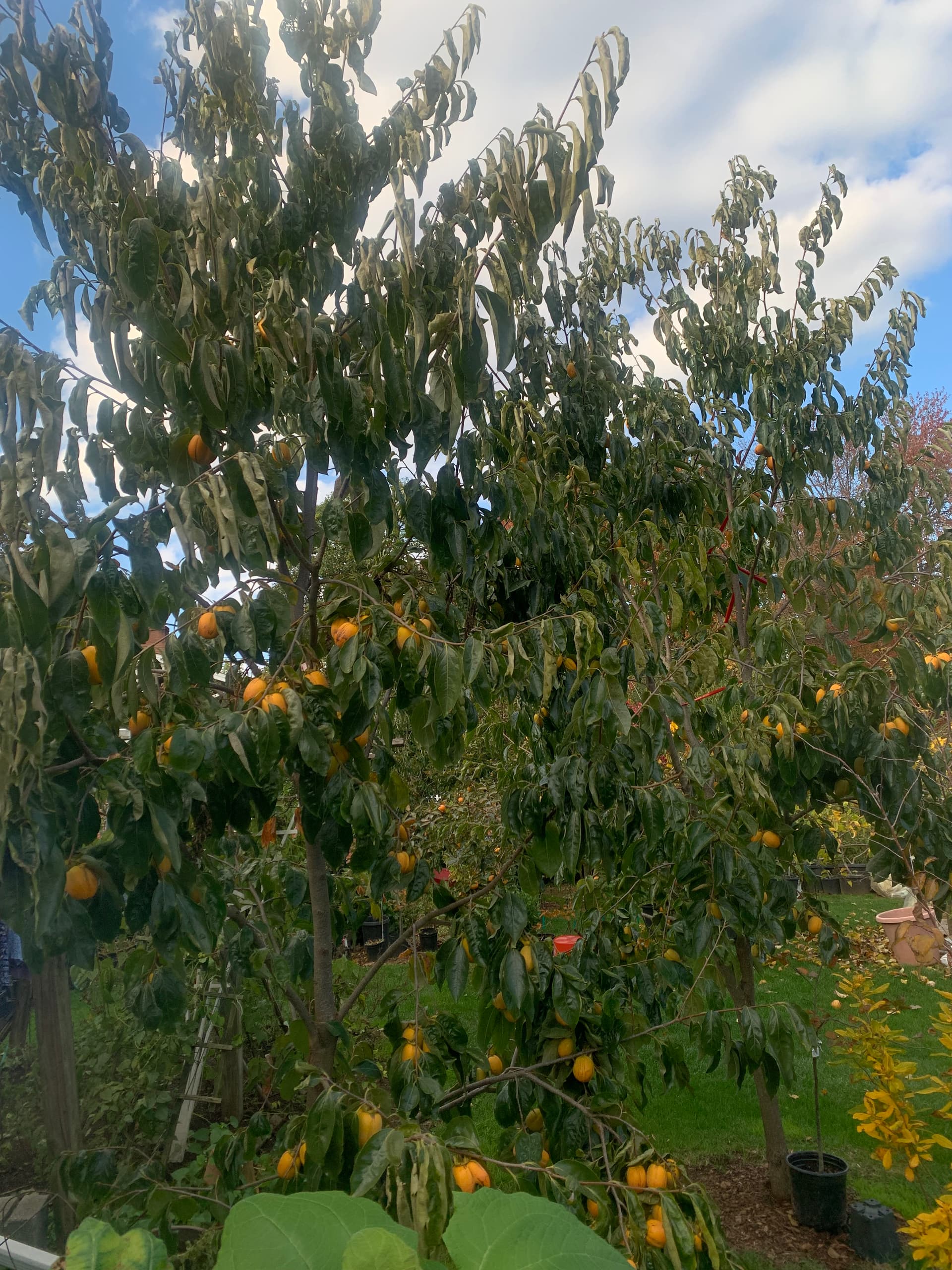
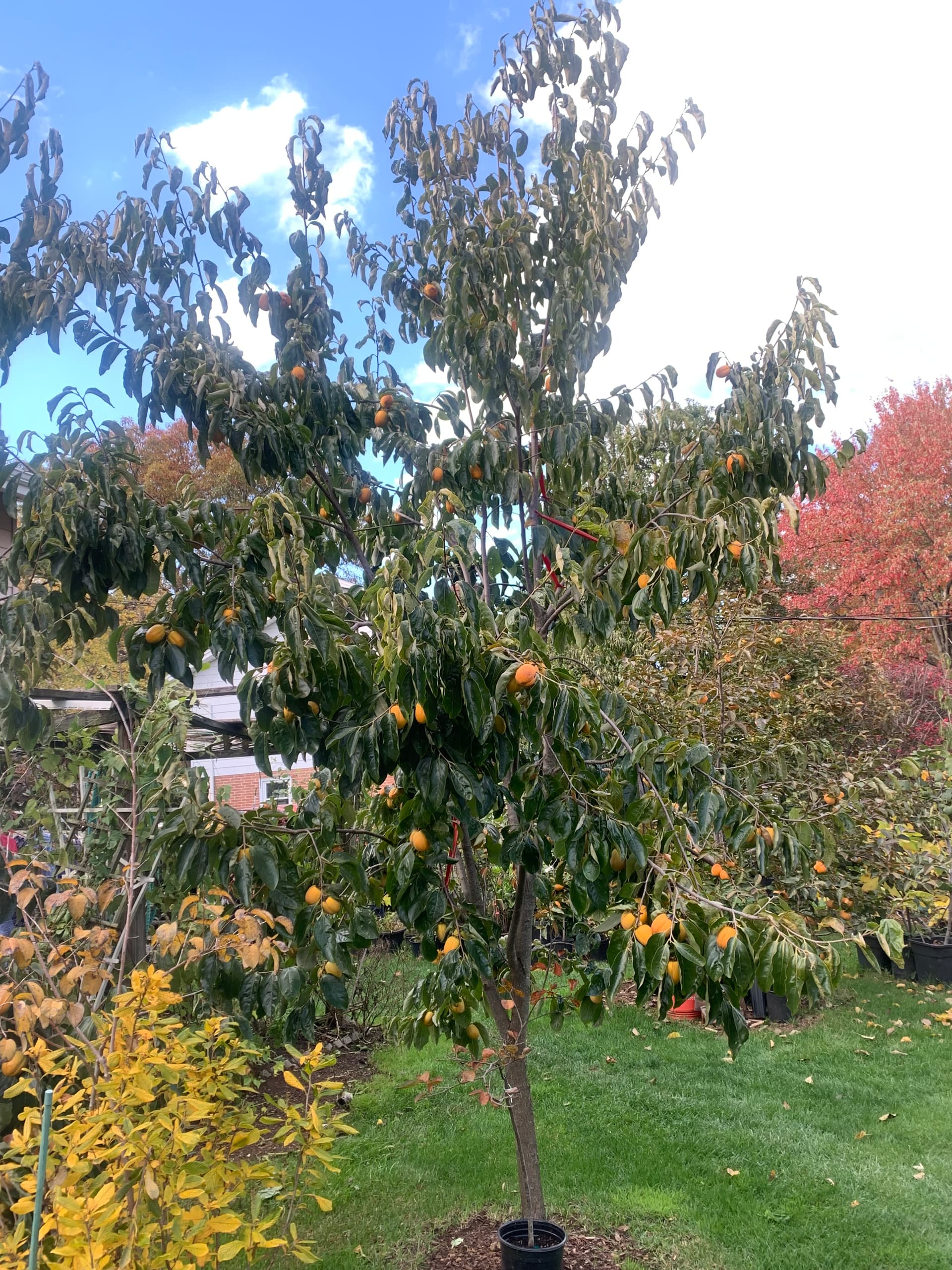
I love my Saijo trees. Who would’ve thought these 2 were carrying such a large crop. They were mostly hidden by the leaves. I must’ve picked nearly 300. Thanks @thecityman for convincing me to plant these. They went in the ground in 2019.