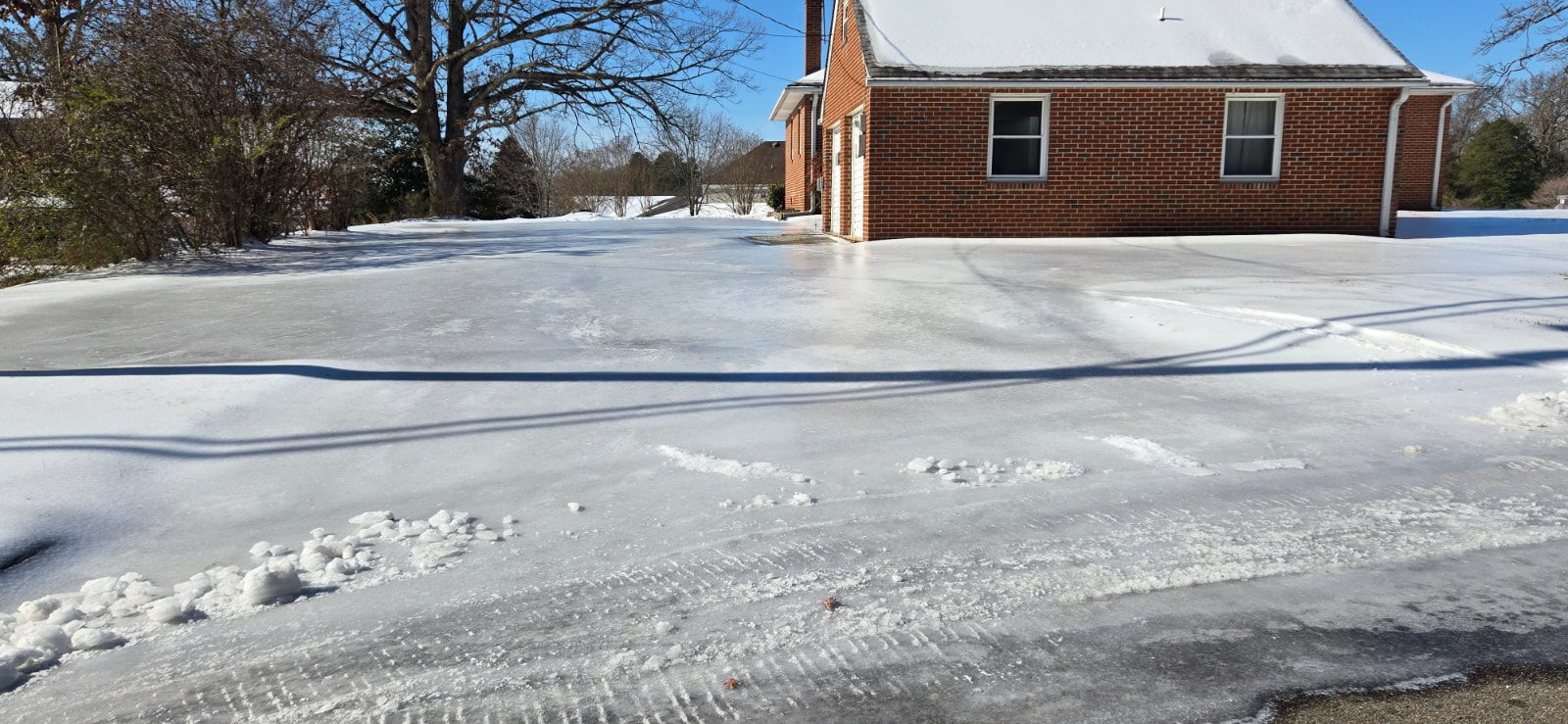
My office was closed for 5 days with a sheet of ice. Problem started when the snow guy kept saying he was coming but never did. By the time another person could come it was so thick it had to be broken up into chunks to push with a skid steer. Rental on skid steer was $165 hour. Took 4 hours to clear the lot.
3 Likes
I’m trying to get ahead of things this season and I found a company called Natural alternative that sells 100% CMA for $80 for 30 pound bag And has free shipping. While that is expensive for general ice melting products it seems to be fairly on par for 100 percent CMA.
I plan to get three bags And distribute them into five gallon buckets with silica packets. By my estimate each bucket should carry about 27 lbs to 29 lbs of CMA, and if I use one bucket per storm across my driveway that equates to about nine to 10 pounds per 1000 square feet which falls between the recommended 6 lbs per one thousand square feet for residential use and 15 lbs per 1000 square feet for commercial or heavy use and should meet most of my requirements for storms in the Mid Atlantic.
Keeping them in 5 gallon buckets will not only help with measuring application rates but keeping them watertight sealed bucket with a desiccant packet would hopefully lengthen their shelf life as they are highly hydroscopic. We don’t get many major winter storms where I am in the mid Atlantic area, so hopefully 3 plus buckets of CMA should last me a few years. I could even potentially ration it to the upper and lower portions of my driveway where it’s more shaded and prone to icing.
I wish I could source NAAC per bag but it sounds like this is a very specialty product and despite being roughly the same cost per pound as CMA, and needing a much lower application rate than CMA, It’s mostly a niche product used at airports and other commercial De-icing applications so it’s typically only sold by the pallet, Or in very cold climates.
1 Like
While solar dependent, crushed char makes a decent snow melt, through solar absorption, and improves traction.
I just shovel and use sand with just a lil salt.
Our drains go straight to the ocean and salt isnt good for it ig so they recommend to limit.
How much salt you tossing down to worry about trees 6-12 feet away?, like enough to melt 1ft of snow with no shoveling? I use salt in Milwaukee on the sidewalk every year and have not noticed damage to plants a foot or so away, the grass upto the sidewalk seems fine as well. Perhaps you’re planting something salt sensitive? I think snow melt is pretty good at rinsing the salt away, plus the big ol pile from shoveling…. But just an opinion from my own observations.
I’m the only one in my family who’s capable of doing any snow clearing. My kids are too young and my wife has a spinal issue. We don’t get enough snow to justify a snow blower or a plow, but to make it easier on myself I like to pre-treat my driveway if possible for the once or twice a year we get a decent snowstorm in my area. I estimate that my driveway is approximately 3,000 square feet of area to clear, so that’s a lot for one guy with a shovel without pre-treating.
I have years invested in both time and energy in planting my fruit orchard. I’m not taking any risks by applying standard sodium chloride. I would be so frustrated with myself if I cheaped out and applied standard salt to our driveway and I killed trees that I’ve spent years painstakingly nurturing to maturity.
Makes sense, but I highly recommend shoveling every. Couple of hours. Makes it a lot less work even if it fucks your sleep up. I usually do it every 4 hours over night unless it’s really bad
Under most circumstances I tend to agree with you but on the last snowstorm we had this method worked against me. The areas that I initially shoveled then became bare asphalt at first, but near the end of the storm it changed over to sleet and freezing rain. This meant that the areas I didn’t shovel had a nice layer of snow at the bottom that made it easier to clear after everything was over while the other areas that I did an initial clearing became about an inch or two of solid thick sleet/freezing rain mix that was impossible to shovel.
I think the last storm we had was a unique exception to the rule, but next time I see that a storm is expected to end with sleet and freezing rain I’m going to hold off until the entire storm is complete to not end up in this scenario again.
I’m personally not a fan of using any sort of melting chemicals for snow melt as I don’t think many of them are safe for pets, our waterways or nearby plants. Though I’m sure having salt tolerant plants nearby (like beach plums) will help.
However if someone is less physically able than I am or has another reason to use salt or something similar I get it
if in a snowy area a snowblower is a good investment but where I am it’s just 0-2 large snowstorms a year and a few smaller ones so having a collection of different hand tools is helpful. Large plastic scoop for soft Snow. Thinner metal one for icy snow and an ice chopper/scraper for ice. And not letting it pile up in a big storm. I used to struggle a lot more when I just had one shovel.
That’s why I specifically sought out CMA and NAAC. As I understand it, both are biodegradable and completely safe, although expensive and uncommon.
1 Like
Maybe get a yooper scooper? Not sure if they are available everywhere, I see they are unreasonable priced on Amazon. Essentially it is half giant shovel and half sled, you dont lift it just push and rock it to dump. It is meant for shoveling feet of snow.
1 Like
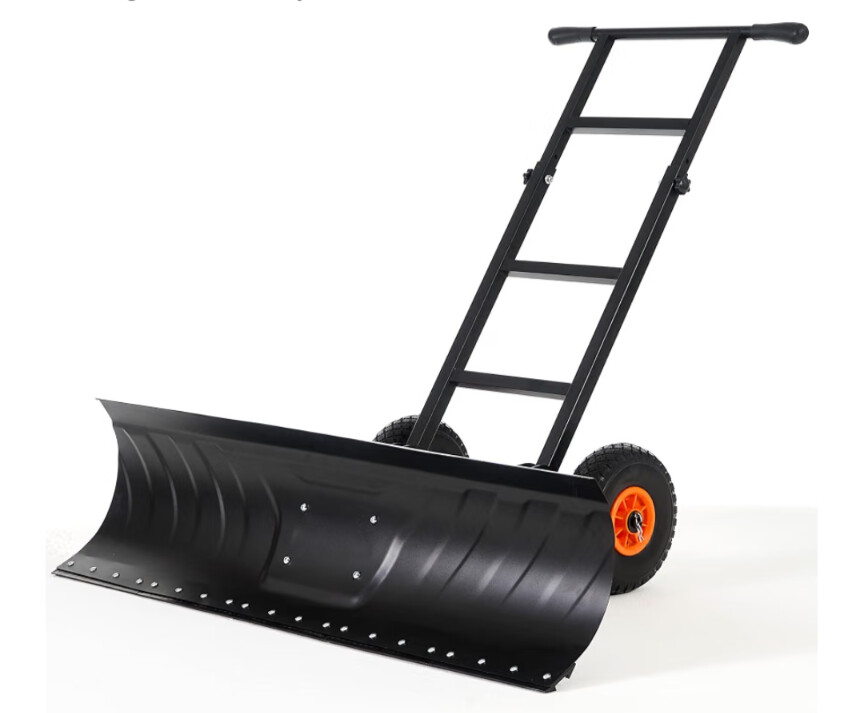
Ha, that would suck to push.
I do own one, it does work when a shovel or snoblower are overwhelmed, easy on the back.
I think I’d be looking for a battery powered snowblower or power broom.
I have the ego multi head power shovel. It’s good for small spaces but on a 3000 square foot driveway It’s like a drop in the bathtub. Also entirely useless on icey or sleet caked snow.