I know some of us get very creative and determined to figure out how to grow certain things that probably don’t truly belong in our climate zones.
What are your experiences with zone pushing? Have you had successes or surprises?
It is a multifaceted quest. For some, it is the desire to grow less cold-hardy plants in a colder climate. For others, it can be the desire to grow cold-hardy plants in a warmer climate, and still others a quest to grow plants from climates with the same temperature range but significantly different rain or soil.
I can report successes and failures on my part with all three. One of the failures was subtle: a winter chill is needed to overcome pathogens that will otherwise destroy black current in my warmer-winter climate. The pages of this forum are filled with other disappointing failures, such as the requirement in the US South for fig trees with rain- and humidity-proof “fruit.” There are also surprising success stories.
This is an excellent thread topic, I hope many folks chime in.
I have had success with potted figs in Z6. People push them in colder zones. But have had no success with inground figs in Z6. Only shuffling pots produces figs for me. I tried to push a Z7 persimmon in Z6 and it died fast.
I do not know if there is a coherent strategy involved. We are in a 8B zone with high heat zone 9 summers. But still get a fair amount of chill hours {550-750}. We grow some tropical s and some cold temperate plants.
A little known trick on chill hours is to use water or ice to bring the temp down for the number of hours needed. The entire plant needs to be kept from 32 - 45F depending on the plant. Some plants cannot tolerate any chill and you must be careful how its done.@fruitnut is a master at simulating chill hours in his greenhouse. Imagine you had a pear that needs 600 chill hours but you only get 200 hours. If it is a potted plant you can wheel it into cold storage. You could also use a trick used to protect plants but in this case its not protection you have in mind its cooling down with ice water but think on a larger scale Amazon.com . A high tunnel typically keeps plants warm but it could be used to keep them cold https://www.homedepot.com/p/Agfabric-10-ft-x-50-ft-Plant-Covers-Freeze-Protection-Frost-Blanket-for-Garden-Row-Covers-for-Vegetables-0-9-oz-W1RC0910050/317590681
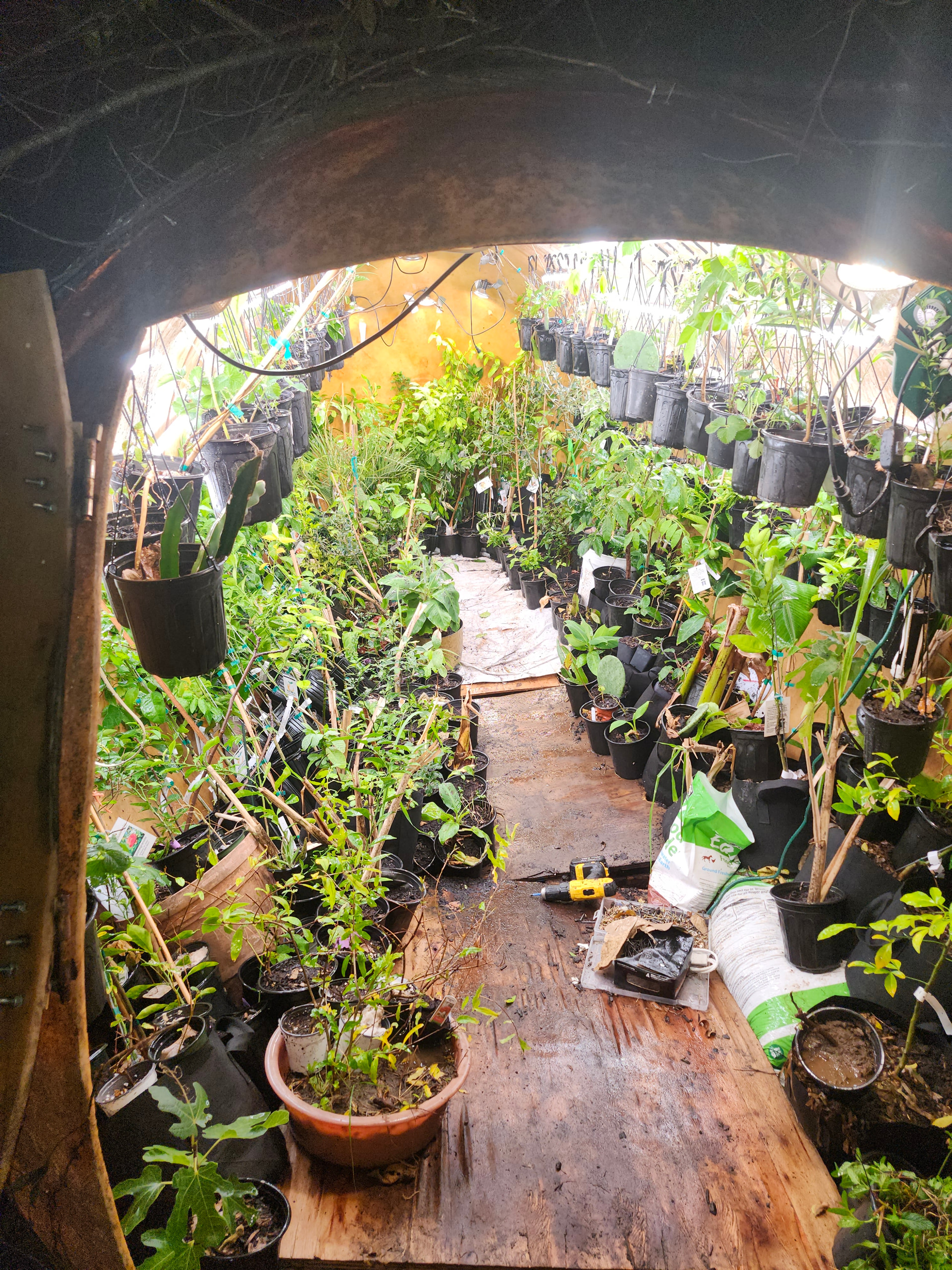
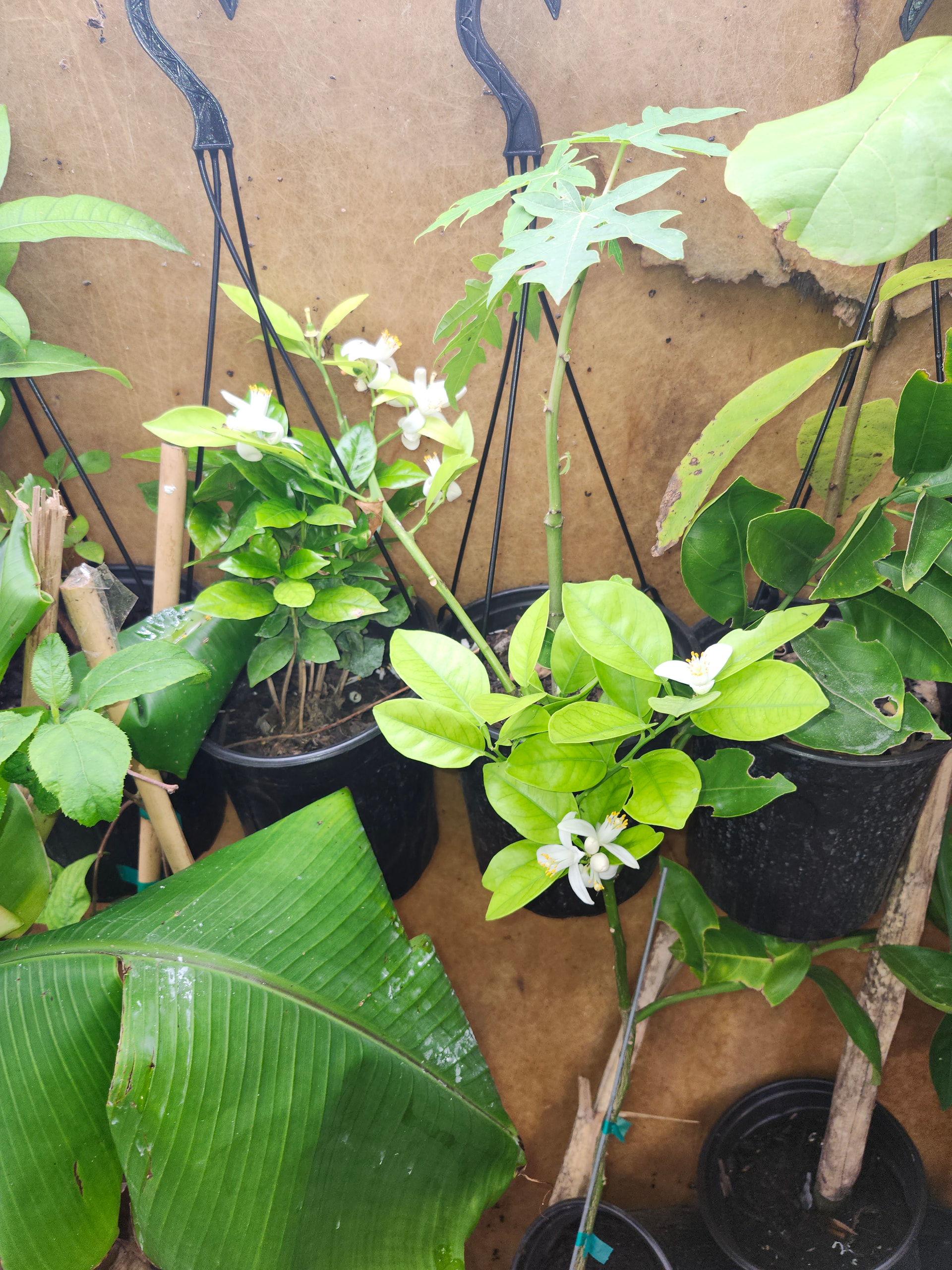
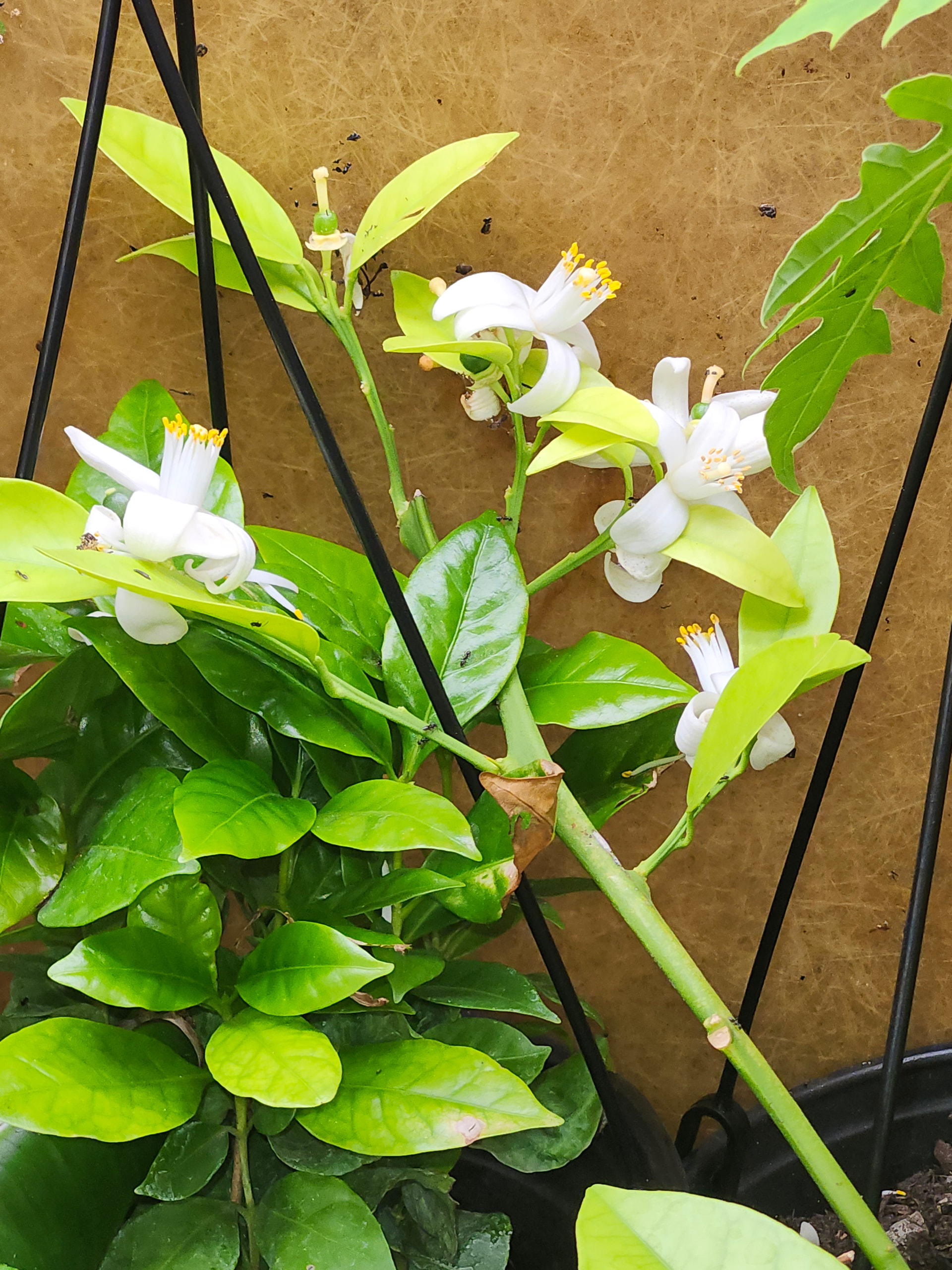
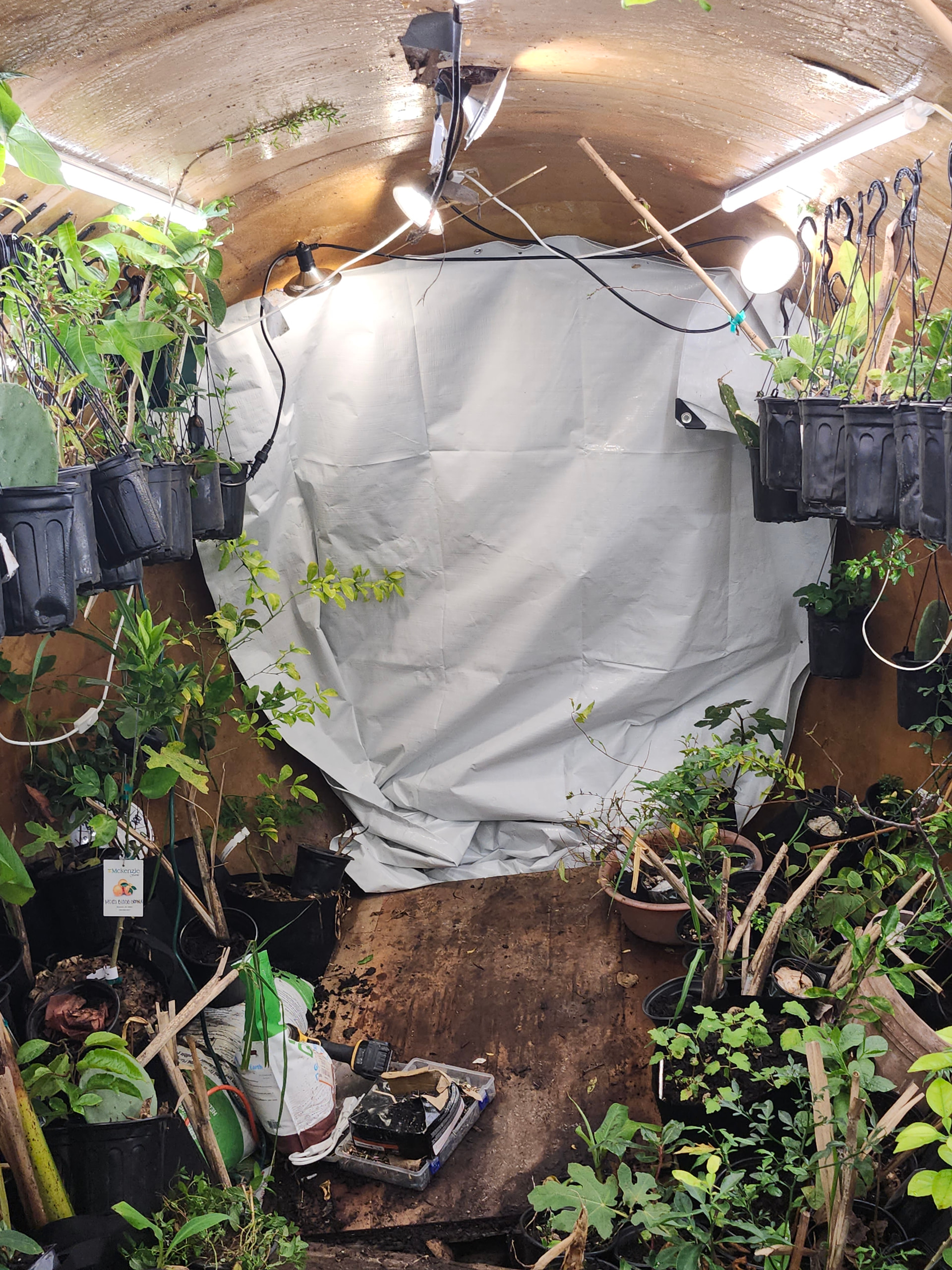
Underground shelters are highly beneficial. It is in the 30s outside tonight , but in my underground grow room its 70F +. My Hamlin orange’s continue to bloom. I could just as easily drop the temp to 30F easily with AC and a coolbot. I’m not even using a heater to maintain that temp it is just the ground and rain water bringing those temps to 70F. Well water can be very cold and can be ran through a sprinkler on trees very easy. No need to reinvent the wheel as we discussed it already Winter greens indoors - cloches
I have used well water to heat a greenhouse in north Florida to grow tropical plants, it worked well but we needed to dig a small retaining pond to deal with the water. When I was in the Florida Keys and working at Grimal grove we would have to strip the leaves off of our Anna apple to get it to flower correct. It all depends on what kind of pushing you are doing.
Zone6’s point about pots matches what I keep seeing with figs. Being able to shuffle them into a garage or against a south wall for winter seems to matter more than the zone number on the label. Inground, one bad cold snap and you’re back to the roots.
@clarkinks
Thank you for the information. However, the issue with European black currant in my location cannot be solved with simulated chill hours. Instead, the problem is susceptibility to pathogens in my environment without proper winter conditions. I decided they are not worth investing in a small refrigerated greenhouse.
I am having mixed success with other fruiting pit and pome fruit trees that supposedly need more chill. I can grow and fruit apples here, although several cultivars do not ripen properly in our unusual 10b environment (daytime overcast in the 60°Fs Feb. until mid May, then 70°-80°Fs until mid October, then 50°-60°Fs until mid January). We don’t care for low chill varieties, but have found Gordon, King David, and Black Limbertwig to be exceptional. Your crabapple is also doing well, maybe too well! It bears early, heavy, and often, so I am thinning it about every two months, year-round.
As you are aware, Pears can be a problem here owing to the nasty strain of Fireblight circulating among ornamental plants in southern California. Hood Pear has been a champion, while Flordahome has been a fireblight disaster–even though they both came out of the same breeding program. The Warren pear you recommended is still on trial here, but I expect it to do well in the long run.
For Prunus, the Garden Prince almond had a slow, painful death here, likely from our Spring weather. The bark took on a diseased look and was unresponsive to treatments. Our Katy apricot loves it here but is a shy bearer owing to our warmer winter. On the other hand, the Sprite plum hybrid is another champion.
Going in the other direction – fruits of warmer climates, I have tried Plinia here with mixed success. Some species have liked it, while others struggled. The P. cauliflora and P. edulis like it here, although the latter complains about brief overnight temperatures below 45°F in the winter. I also have a Eugenia involucrata that couldn’t be happier, making up for the absence of true Cherry in this location. Certain banana cultivars are also outstanding, with Namwa leading the charge.
Of course there are many other kinds of fruits growing here, but they are more-or-less standard for the region.
Yes. On December 15th the leaves get stripped from all of our apple trees.
What is considered zone pushing for a barely Zone 10a? So many things are considered to be Zone 10 hardy but not all are equally happy here and some are more or less resilient to the damage when we do get those rare cold events. Last winter was a doozy, not for total amount of cold but for the low temp that was very unusually extreme for our area. A lot of people have been discouraged from growing so many tropicals after that one but it doesn’t change much for me.
I’m growing a few Mango trees that are usually listed as Zone 10 and sometimes I’ve seen them listed as 9b and higher. They can definitely survive here but we occasionally get a bit too cold for them to be ideal. Young trees especially may need some protection if we have an unusual cold event. I actually was kind of encouraged by the outcome of the extreme cold event we had last winter with the mangoes in my immediate area. There are quite a few mature mango trees in my neighborhood that went unprotected and they all had significant damage but look like they survived and are growing back well.
The two most truly zone pushing things I have in the ground are a soursop and a coconut. The soursop died back to the ground from the cold last winter but has stormed back. I regularly start soursop from seed because I get the fruit to eat a few times a year and it’s just a fun experiment that doesn’t cost anything to do. The soursop had flowers on it when it froze last winter so maybe one day I’ll get one big enough and we’ll have a mild enough winter that I’ll get a couple fruit. That or one day I’ll decide it’s worth the effort to protect it over the winter in order to try to get it to fruit. I have too much going on right now for that though.
The coconut is still young and small but growing well enough. I’ll be able to protect it probably for the next winter or two while it’s still small enough. Once it’s a bit bigger it will handle cold a little better. There are a handful of mature coconut palms in my area that did survive the cold event so that is encouraging as well.
Bananas, the common more cold tolerant cultivars around here do well. Apparently they can sometimes die back to the ground but regrow without any issue in that case. Even the extreme cold last winter didn’t kill any of mine back to the ground and I still got fruit this summer so they seem pretty reliable here.
Another one is starfruit. Generally they deal with brief near freezing or slightly below pretty well. My young and recently planted starfruit tree died back but has regrown very well after last winter. I think a more established tree would have done significantly better still.
This topic involves a lot of different aspects of growing plants.
I’ll generalize one thought on this. It is often possible to overcome a single genetic mechanism to grow a plant outside its preferred climate. But when it is a major bio-mechanism such as cold hardiness, it is much more difficult. Growing citrus is a good example because it has very little inherent cold tolerance which confines it to “hothouse” cultivation in cold climates. Similarly, when there are multiple mechanisms involved, the barriers to cultivation outside the preferred climate are often insurmountable. Black currant seems to fit this because it needs low temperatures, low disease pressure, and relatively low humidity to thrive.
One big surprise for me is how well bald cypress performs at my location. Always thought of it as a south to deep south tree. Both of mine have gained about 4’ after 2 short growing seasons with a 4b winter and hard early and late frosts.
There is a northern ecotype of bald cypress and a southern ecotype. If you get the northern ecotype, it will grow and thrive at least up into Illinois and maybe further.
If the question is survival, I had only one near disaster: My three Ichi Ki Kei Jiro persimmons nearly died after two nights at -5 F and -7 F. All 1-2 year old wood died but the trees eventually recovered.
My biggest problem is ripening. I grow a lot of fig trees. Many varieties don’t ripen most of the crop in my short season. I also grow persimmons. The varieties I grow will ripen a few fruits on the tree but the vast majority must be finished indoors. I grow various berries. The primocane blackberries and black raspberries ripen very little unless I treat them as floricanes.
Bottom line: For figs and persimmons (and also pawpaws), I pay very close attention to ripening times. For me, zone pushing is mostly about growing varieties that may not ripen.
when i started figs were pushing it. now I’m zone 7 and they do ok along a well lit wall south facing, i don’t protect them much and we got handfuls.
i have olive trees, those are going in the ground they are pushing almost an entire zone. it’s a corner where I’m stacking rocks and plan to use straw and chip to cover them a bit for protection. experiments
less hardy figs are going against the greenhouse wall under chip and reflectix this year. more experimenting.
hibiscus died. all persimmons I’ve planted have died. pawpaw are growing so slowly but alive. i don’t feel like I’m pushing zone on those? but they sure act like it.
i planted out arp Rosemary this year to see if it’ll make it. the spot i planted less hardy lavender, it’s still alive so worth a shot.
the greenhouse gets a lot of insulation and a bit of heat to keep it above 40F all winter. gets dark in there but things are dormant until about Feb/March anyway.
sugar cane died. I’m sticking with sorghum now.
it’s a lot of work to try to push the zone and I’m pretty well done with what I’ve got going, no new things now.
edit to add I’m pursuing things that want less frigid winter than we get, for the most part- though also some things that can’t take dry high desert summer.
A few successes, mostly failures. Moved to east central SK from se AB about a decade ago. Much different climate. By the map we’re zone 3 but that’s optimistic.
We do have some z4 trees doing well, have had more that did unbelievably well for the first few yrs then died in not even an over cold winter despite being double wrapped in burlap with small square bales stacked at the base.
That died after producing and seeming prolific here: lapins cherry, russian peaches.
Have lost a few trees but are surviving if not thriving and are producing: williams pride apple, trader mulberry.
Apricots produced well in s ab, here they’re, “surviving”: westcot and debbies gold. They seem to do well, have flowered, but I doubt will ever produce.
Planted 3 supposedly cold hardy pecans, one was doa, one lasted 2 winters, third one seems very happy. Was hoping the russian peaches would survive to eventually pollinate it.
With moving here I just tried everything I thought, “might” survive here. In SE ab it took me years to find seedlings as I was always told, “that won’t grow here”. Every year we had a truckload of pembina plums, juliene pears, and about every 4th yr a 3 ton load of apricots.
You don’t know till you try. Just expect disappointments, being the gist.
Pawpaw are really super slow growers. They also seem happy in a humid summer. So do American persimmons (no idea about other kinds). I wonder if your difficulty with them is more about the lack of humidity in your climate?
Just assume that most zone pushing will be iffy. That’s why zone ratings were set up. If you have plenty of space and money for stock, give it a try if you wish, but realize it will be risky. Some people like to live on the wild side. Just realize it is a gamble and accept the failures. Once in a while there might be a success to whet your appetite to keep venturing onward. For the rest of us, just buy the elusive fruits at the store.
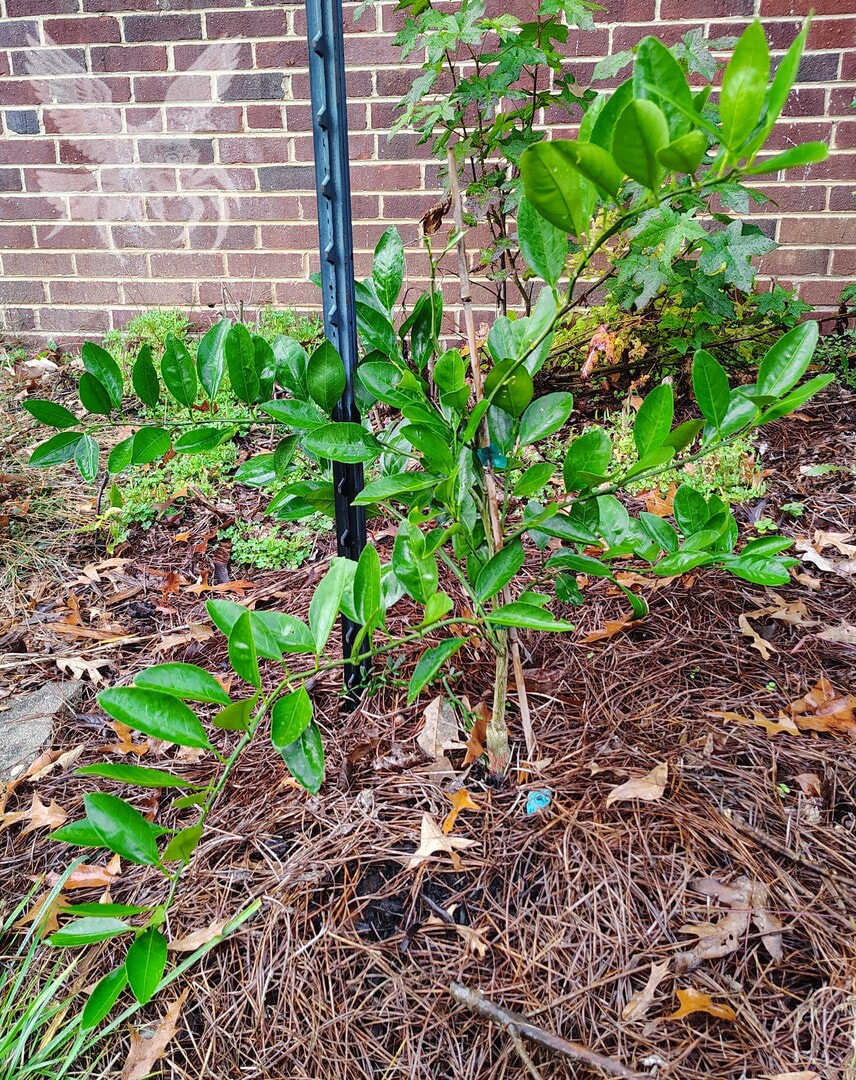
Thriving outdoors, zone 7b:
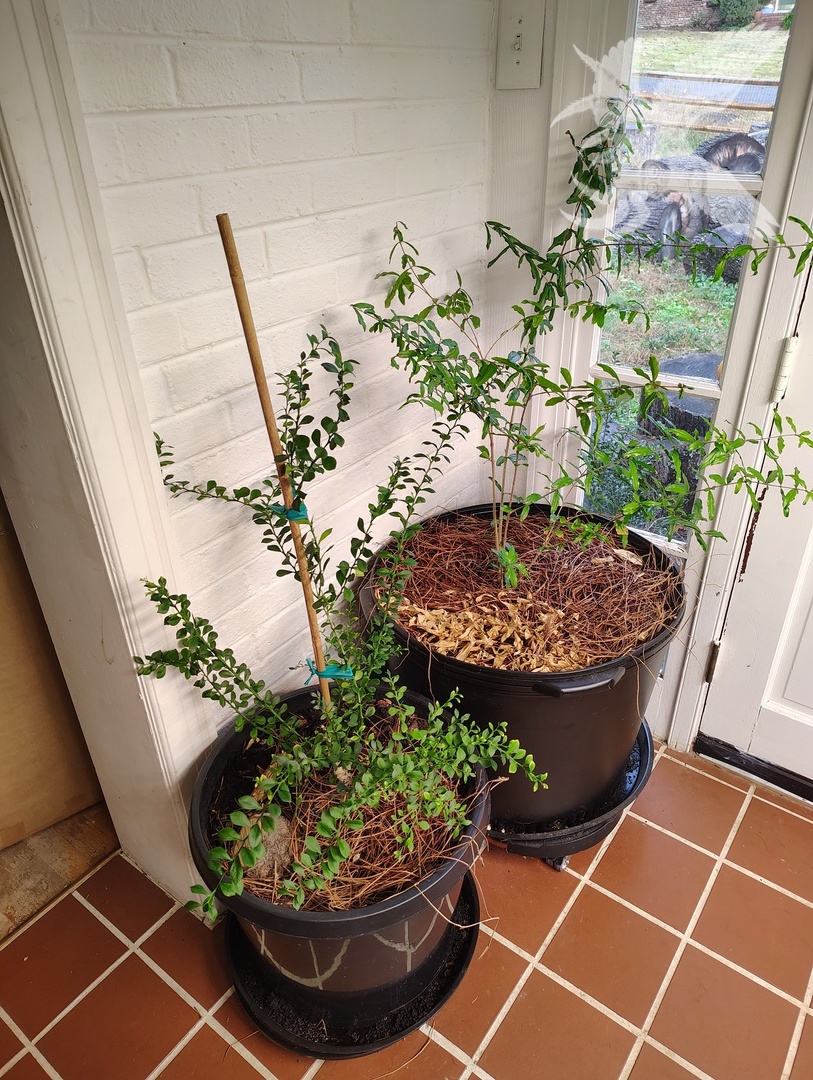
I have houseplants too, there were all planted in late spring 2025. Growth cycles are all over the place though with several exhibiting the fastest growth rates during late autumn/early winter.
Thriving indoors, top tier:
Growing strong, but different cultivars of the same species are doing better outdoors:
Growing, but not thriving:
Root Cause Hypothesis: These are more sensitive to “perfect” watering, which I am not reliably providing now.
Pushing the harvest-season
| Sun, Nov 08 | 1830 | - |
|---|
Don’t forget about lake effect
I grow things behind dirt mounds, in holes, on the south side of structures etc.