Based on what is growing best here; MM111 still maintains the lead{28 trees} in survivable and consistent grower here. They handle our poor soil and hot, humid climate well.
The worst by far has proven to be “seedling” rootstock from low budget nurseries. Which have had terrible blight and scab problems. Most of them gifted by friends and relatives. They also rarely bloom or fruit.
MM111 is the same here, does well in heavier clay where some of the dwarfing stocks really struggled. The big box seedlings are a gamble I’ve stopped taking, you really don’t know what you’re getting and the anchorage is rubbish like KS_razerback said.
M7 because it’s easily stooled for extra rootstock which I like. It also seems to handle wet feet pretty well. A tiny stream that managed to reroute itself from my neighbors property flooded a section with M7 and it was in standing water for most of the winter with no ill effects. Mostly wet clayey soil here and it seems to tolerate it well. Pacific (swamp) crabapple is my choice for rootstock in my really wet areas. Malus fusca (swamp crabapple) is also supposed to tolerate drought well, so I’ve started using it on dryer sections of my property that lack irrigation.
Was not aware that m.7 was more tolerant of wet areas. Have to keep that in mind.
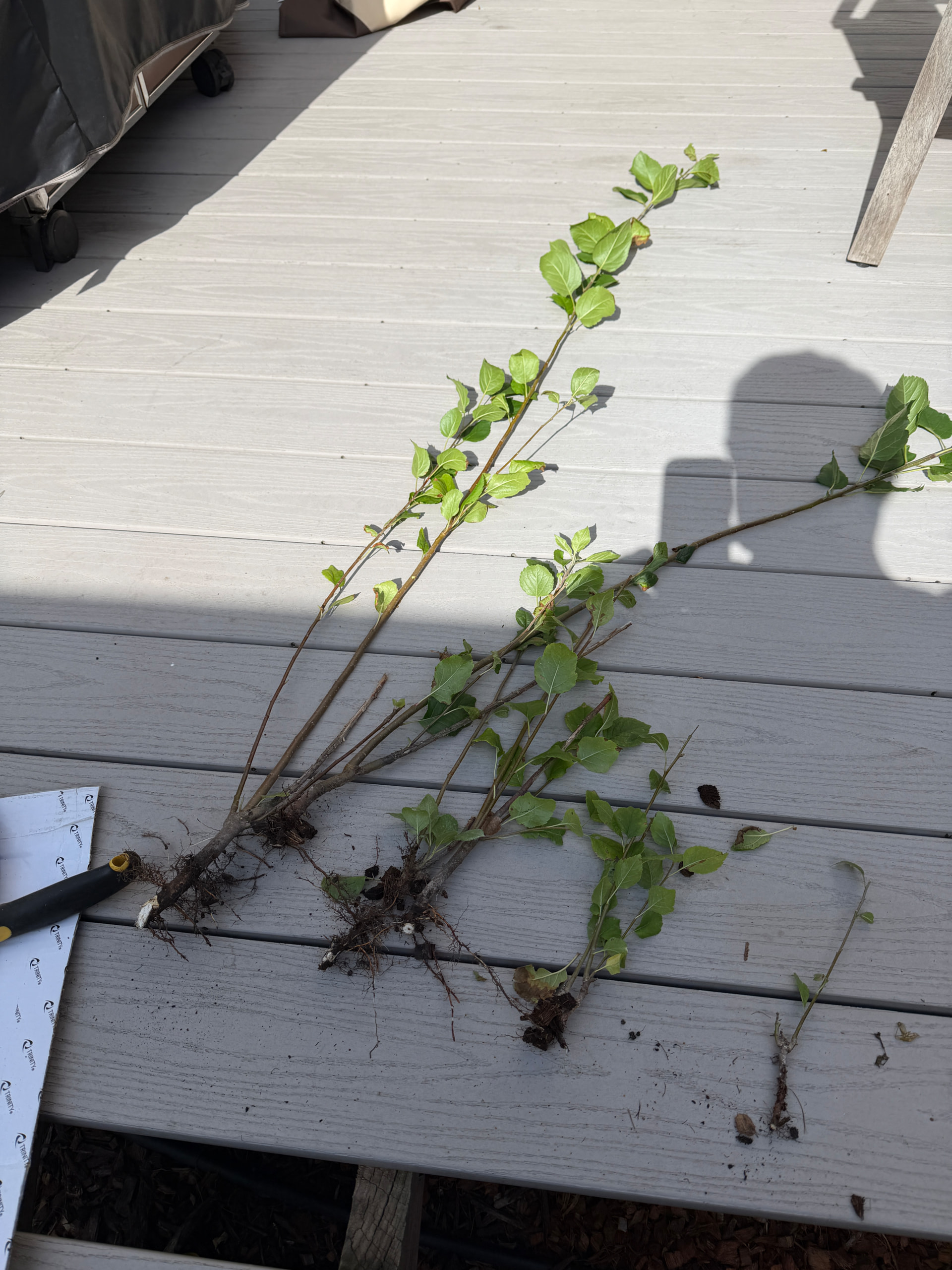
It is a continual source of free rootstock - suckers.
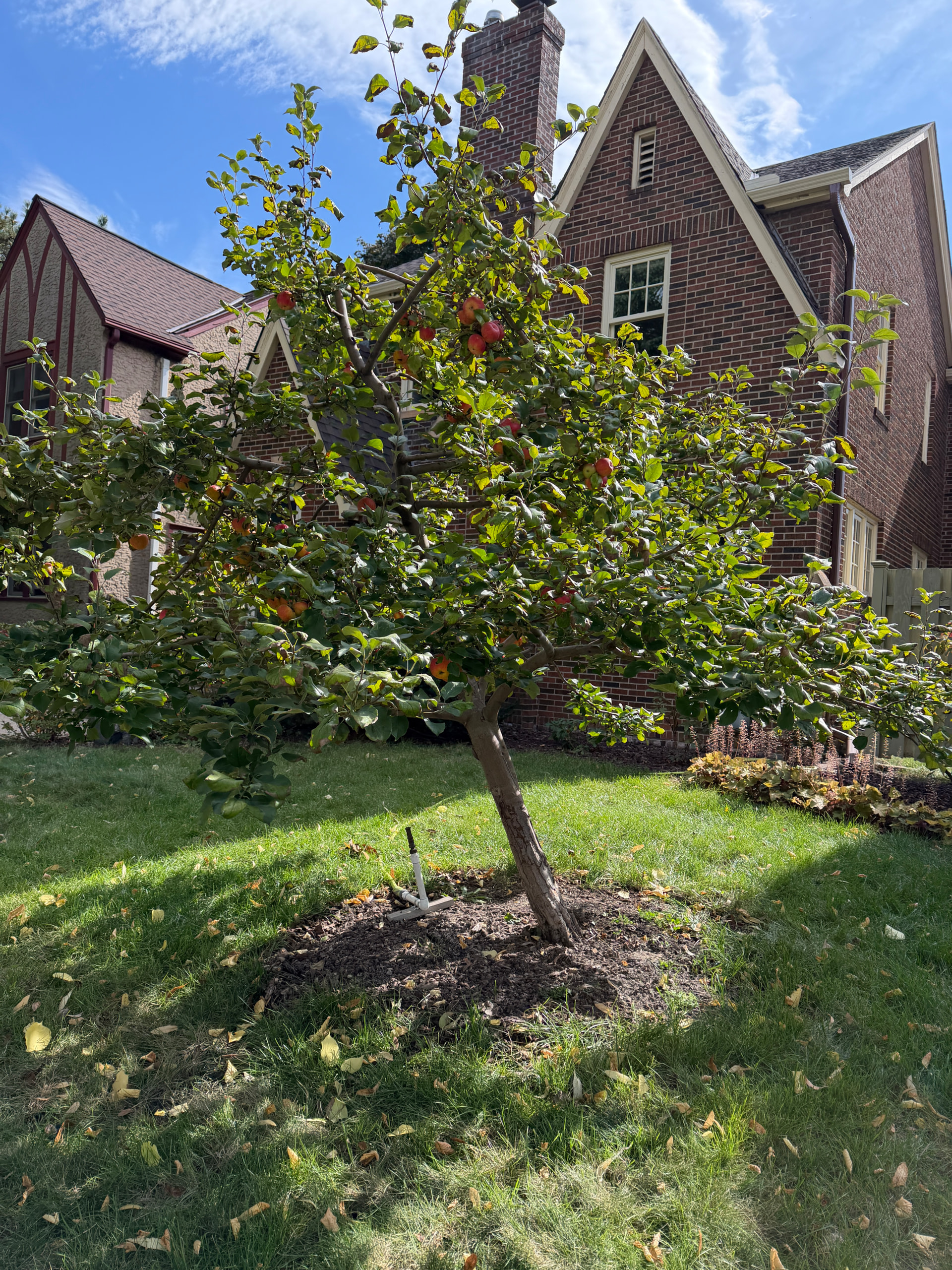
I happen to have one at my house that I’ve been thinking about replacing. Planted a Honeycrisp in the front yard 15 years ago - mostly as a decoration. Had it staked for 5 years and a few years after removing the t posts I get the classic m.7 lean over effect. It’s just too lazy for heavy clay soil.
I do use m.7 for particularly vigorous scion varieties like Karmijn de Sonnaville.
It is a particularly bad match for any Honeycrisp derivatives, William’s Pride, Baldwin or anything else prone to bitter pit or water core.
I’m currently trying b.10 and g.935 for honeycrisp and William’s Pride. Of course they have their own defects - nothing is perfect.
I’ve grew apples on M9 and 26 in west Texas and CA for 50 years. I was never disappointed. Trees were mostly 8-10 ft tall. I did move around a lot so never had a tree older than 21 years. Not sure I’ll even plant an apple in my new orchard at 4600 ft elevation in southern AZ. I won’t mind an apple that would ripen in Dec or January so might try that.
I’ve dealt with 4 varieties of trees growing on their own roots. A seedling, Stayman, Summer Banana, Lodi. The Lodi was 24" diameter at age 35. All except for the Stayman were crazy vigorous. Summer Banana suckers more than M111s.
Sometimes it’s the scion and not the rootstock that’s the problem.
I bet a Summer B rootstock would grow great in GA.
I’m amazed how clean the foliage is on my B9 sucker given it has seen zero spray. Same for a G41 that is growing without a graft. M111 rootstock seem to have a Glomerella or leaf afflictions all the time.
Several years ago, I helped plant a new cider orchard in Southern Oregon. We trialed 3 different rootstocks, M111, G210 and G890. The M111 were severely damaged by fire blight, the G210 less so, but there was very little fire blight on the G890 trees. They also have a nice growth habit, branch structure with little suckering. Going forward, any new trees are being grafted on G890.
For me and my 7’ trellised orchards i have kind of resorted to a give and take approach with what has been for me the most adaptable rootstock (to apple varieties) which is good old m26. I have tried a slew of others with mixed results. I grow most of my varieties on m26 and just space them within the row according to vigor. Most work on 12’ - 16’ spacing. For more vigorous varieties, Jonagold, Melrose, etc ive been using a lot of b9 the last several years, they are just so easy to have a never ending supply of from root suckers, and, maybe its just my imagination but the somewhat weepy habit of b9 seems to get expressed in the scion. Ive noticed this in Jonagold an N Spy. This might not be ideal for most but its a bonus for trellising. For the extreme of vigor trees, Ashmedes, Boskoop, etc i will go down to emla27 or g241. I do have a boskoop on m26 that i keep taking nexdoor trees out to let it spread. Its now 20’+ on each side. I dont really have enough years on g241 yet to give it a thumbs up but i have m27 trees 28 years old and going strong. Wonderful tamer for Gravenstein.