I live in a sheltered hollow that doesn’t encourage rapid evaporation of our heavy morning dew. I have noticed that this amplifies fungus and cracking issues because I manage many sites with better aspects for an orchard that are more easily managed for brown rot and black knot. When I bought this land I thought of the relative shelter from wind as an asset, and in the west it might be, but in the humid region, not so much.
O’Henry is very susceptible to bacterial spot. So not the best choice in some areas. I never tried it here. Lots of great peaches out there. I have a seedling of Indian Free. The fruit is ripe two weeks before Indian Free. I’m drying a couple dozen as I type. I love this plant as when fruit is perfectly ripe it drops. Well a few do, which tells me it’s harvest time. Ripeness confirmed with blanching as the skins all came off…I really like dried Indian Free. The dried fruit is gobbled up before Halloween no matter how many I have.
Right now I’m drying figs too, the dehydrator has been on for a month steady. I dried 90 figs before I loaded the trays with peaches. I still have about 20 peaches to dry, plus 50 more on Indian Free not ripe yet here.
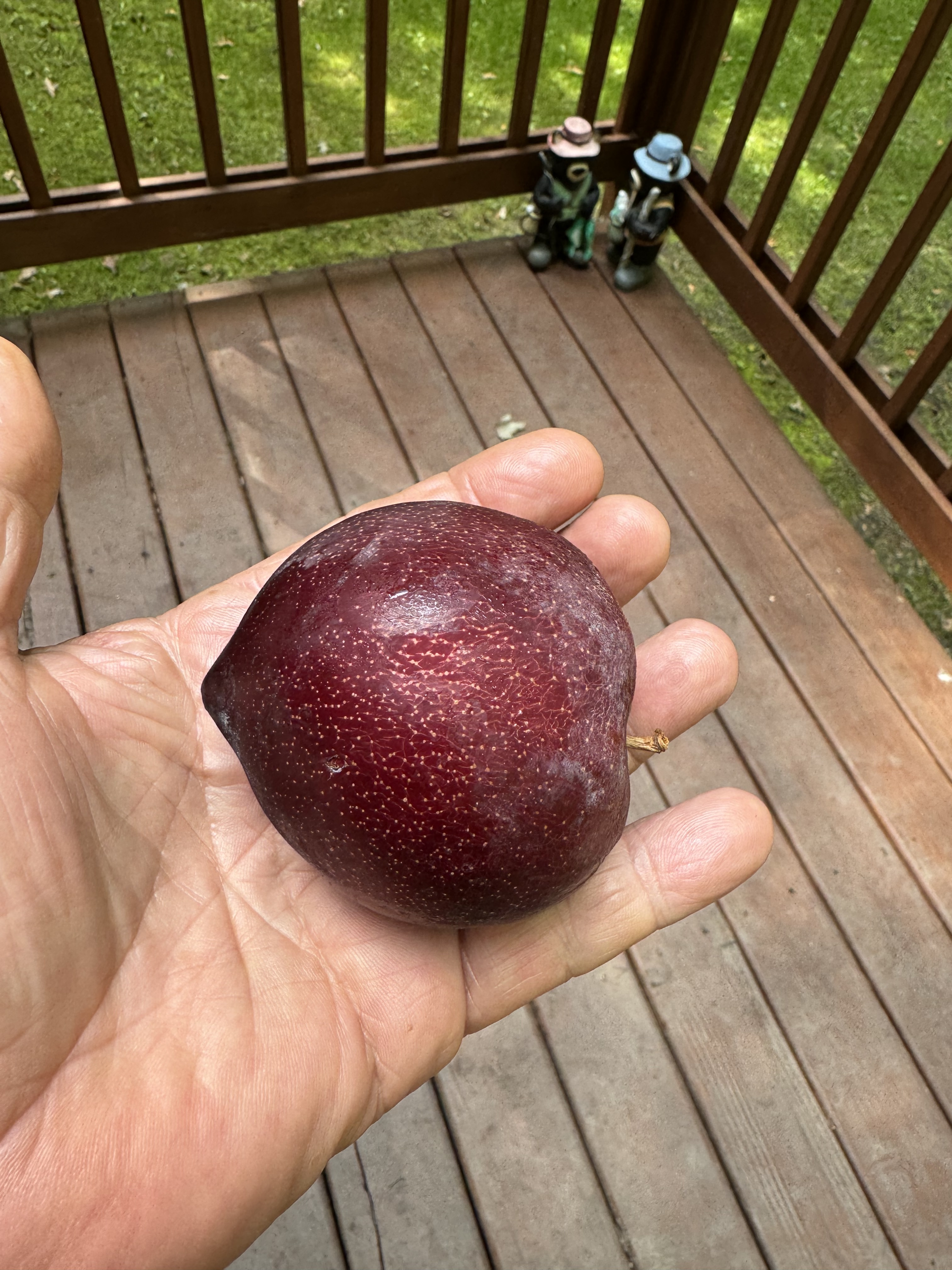
I’m also soon harvesting Flavor Finale pluots right now. I love it! Nice size fruit!!
2 Likes
Not in my experience and it has a history of being a commercial variety in Georgia, I believe- so it’s not like some modern CA bred variety. It is a bit cold tender where freezes have killed it that didn’t hurt other types. This is based on my own experience with it in downstate NY. I manage it in 3 different locations here and for about 15 years.
Mine either, but that’s because I never grew it. I mentioned it as every time I research bacterial spot O’Henry is the best example
From the article:
Incidence of bacterial
spot in 2002 on the highly susceptible cv. O’Henry
All gardening is local.
O’Henry peaches were developed by breeder Grant Merrill in Central California . The variety was believed to have been created from an open-pollinated seedling of Merrill bonanza peaches, possibly crossed with an unknown nectarine, and was released to commercial growers in 1968.
From:
O'Henry Peaches Information and Facts.
Good fruit grower calls O’Henry the poster child for bacterial spot.
Strategies for controlling bacterial spot - Good Fruit Grower.
1 Like
Yeah, you got me that time. I was riffing off mismemories. I knew it has been grown commercially in Georgia and N. Carolina and thought it was a much older variety than it is.
That said, I’ve grown CA varieties that here in NY are more magnets for bac spot, but in our climate and probably yours it isn’t usually the same problem it can be much further south. In its season it is an outstanding peach and I wouldn’t want people in my region to be discouraged from trying to grow it based on what happens to it further south. However all those charts and grafts do not explain where the infections occurred, was it a general assessment of commercial orchards in the region or simply derived from a single university test orchard, which would render the info woefully inadequate. I don’t see why commercial growers would have kept growing it for so long if it generally was such a sponge for BS.
I’m in a very good spot to get Bac S. and it really isn’t a big deal on any of the peaches I grow, It is certain Japanese plums that get hammered by it. This year even and especially Shiro was damaged- leaves and fruit. Other varieties like Ruby Queen and Satsuma were barely affected and produced excellent fruit, especially Ruby Queen.
I just tested a Victoria peach that was past ripe in the tree. Brix just over 15. Unfortunately, it was on one of my nursery trees, a scaffold that was a graft, so I missed picking it when it was firm. It was larger than any on my orchard tree and in a better location.
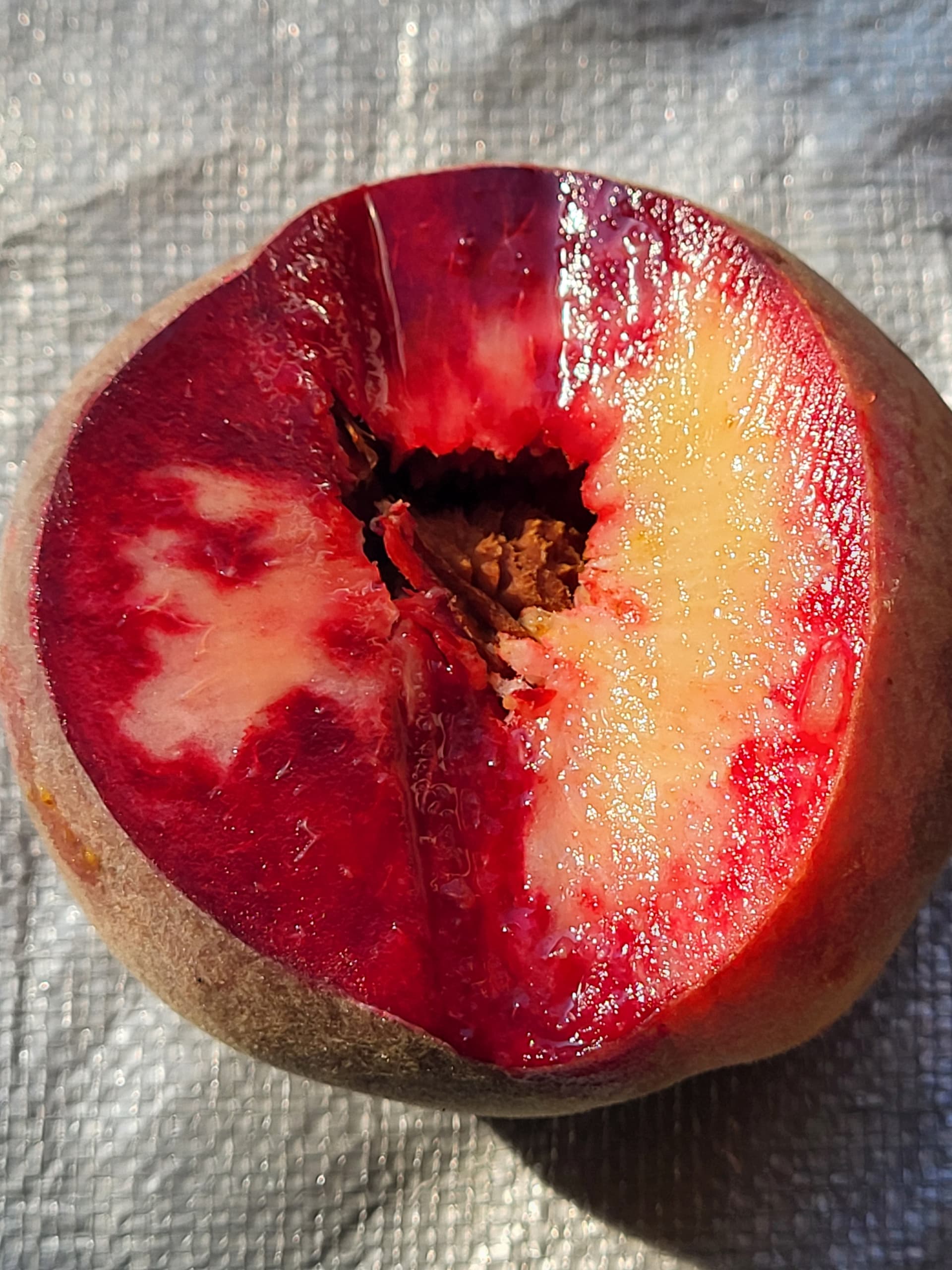
Here’s a photo my wife took of an open Indian Free I picked this season. This year most weren’t this red, some years there are peaches completely red from this variety.
4 Likes
Try making peach wine??
1 Like
1 Like