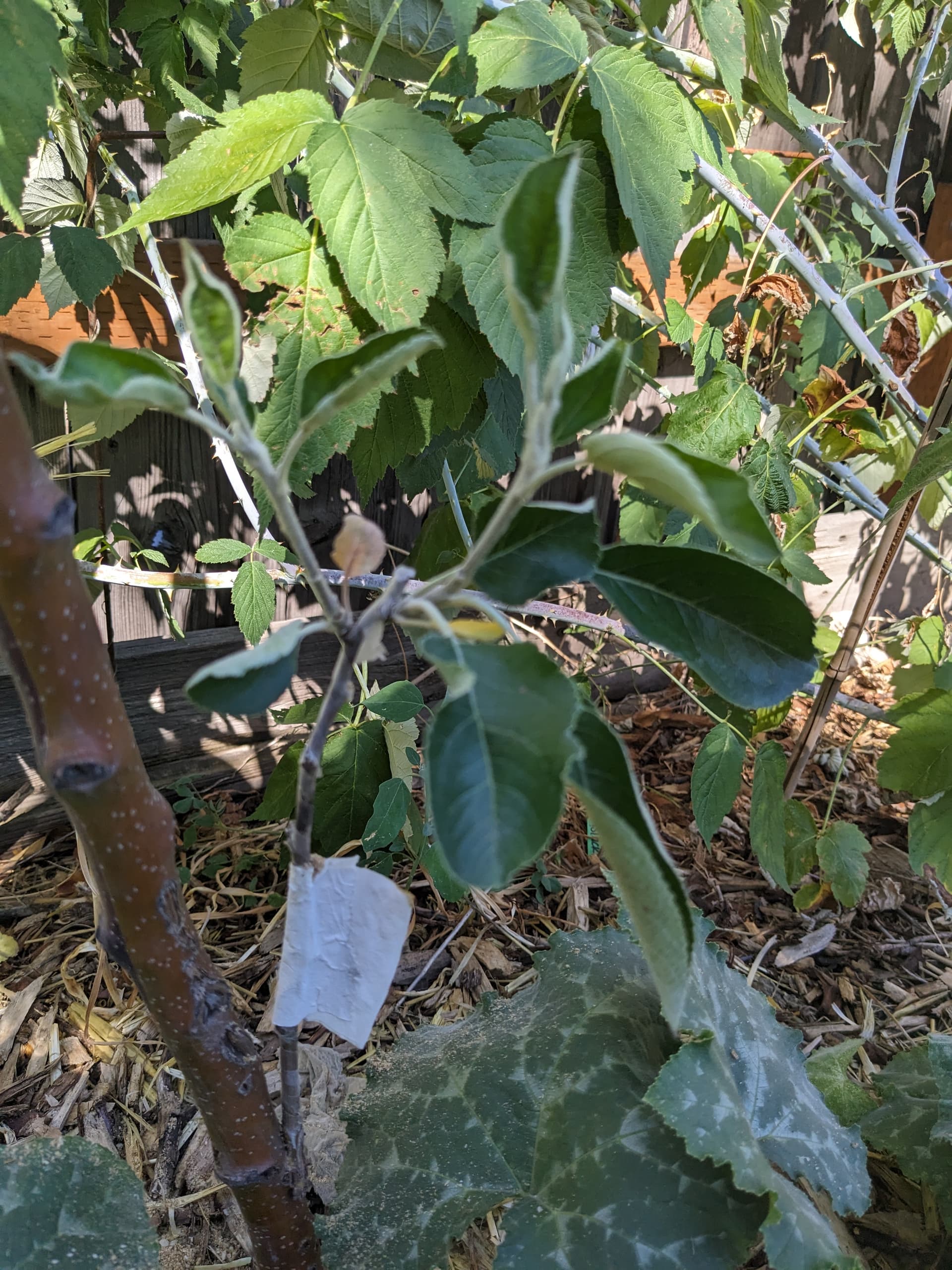
apple graft of Gideon on I think granny Smith. it’s still alive
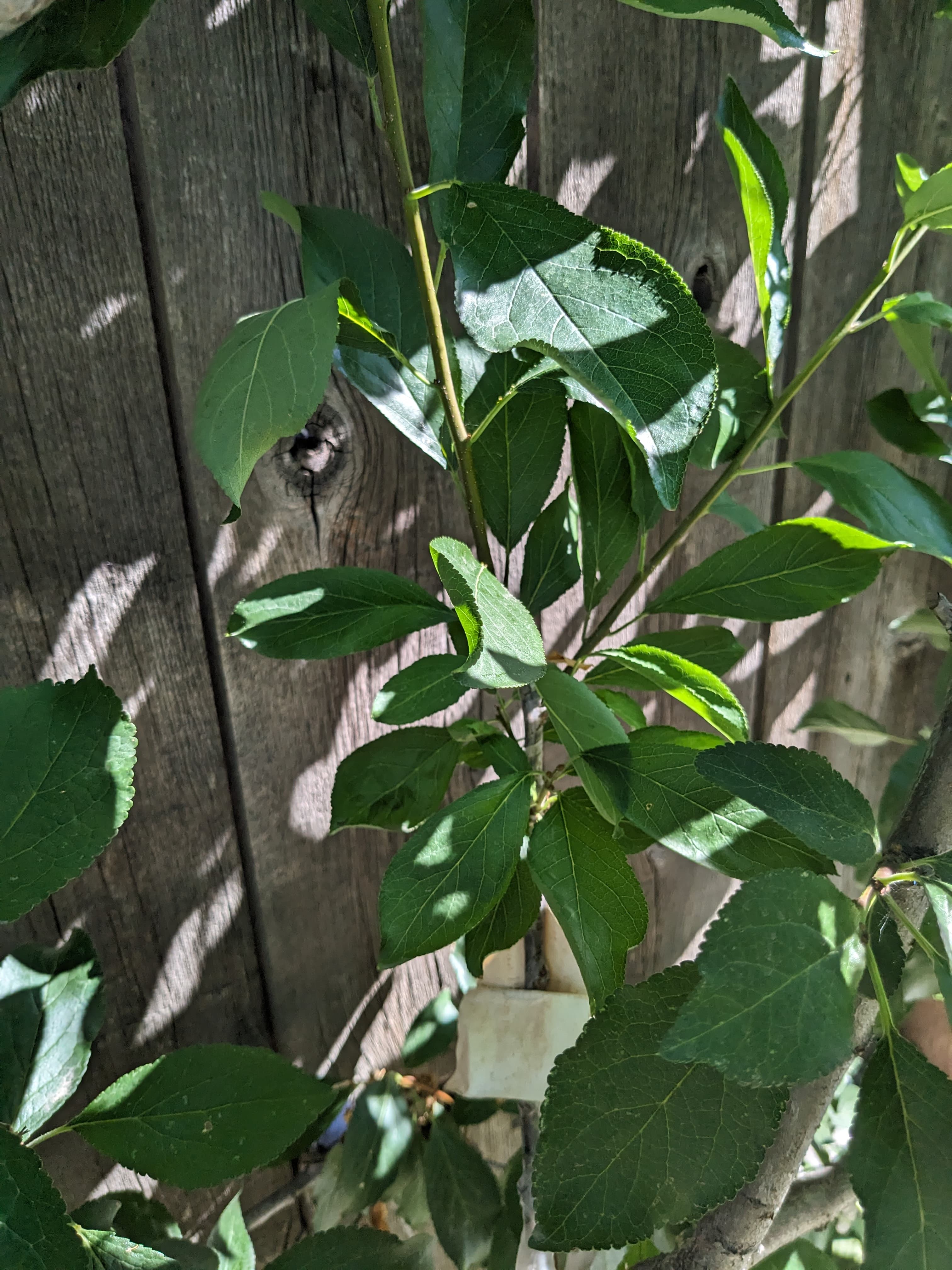
one of the plum grafts, toka on an unknown Italian plum. both the plum grafts took off, this one is 3 feet long now
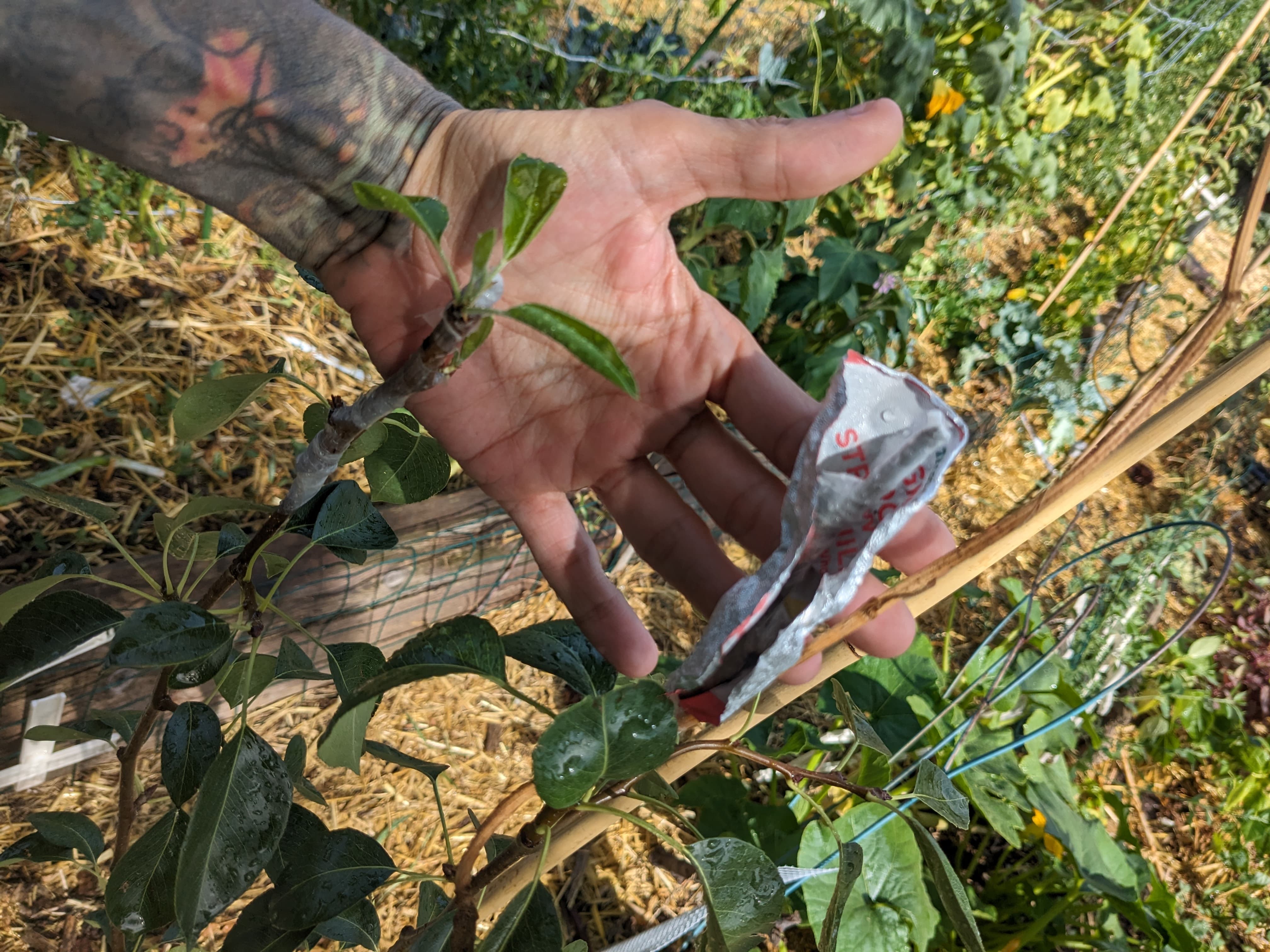
pears, early season harrow delight on seckel finally pushing, and a late season graft of little yellow, wrapped in foil.
2 Likes
I grafted Dixie Delight and a few others that broke off in the Spring of 2022 (back right side of tree). It grew like gangbusters then sort of stopped this year. In the Fall, I T-bud grafted Korean Giant (left), Ayers (center) and Plumblee (back side on left). Plumblee and Ayers have taken the “lead” with their fast growth. I grafted Harrow Sweet (right), Harvest Queen (right) 20th Century (back), and Drippin’ Honey (right). Don’t underestimate late season t-bud grafting for growth and it seems to me to perhaps need less support.
6 Likes
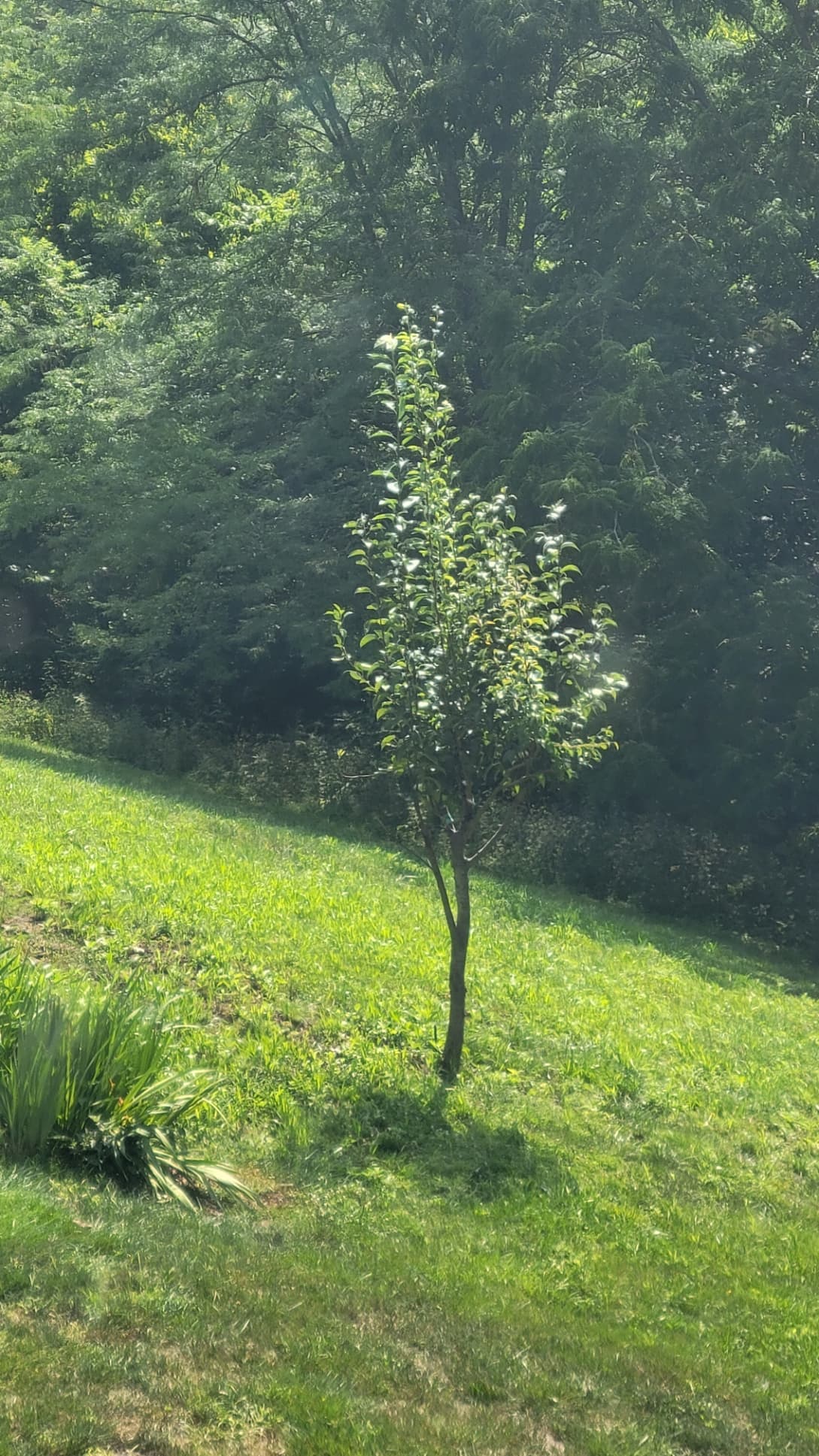
Ayers pear grafted March 30th now has over 8 feet of growth above the graft. It is big enough that there is a chance it could bloom and bear fruit next year.
Of the other pears I grafted, all have to be relocated this winter. I’m going to make a ring around the back of my house near the bottom of the hill.
Apple trees are still in 5 gallon containers. I’ll work out where to plant them this winter.
2 Likes
Stuff happens, right?
Yesterday I was standing next to my top-worked Prok tree, minding my own business, when I heard a loud crack. I looked to my right and saw this branch fall off a graft I made last year. I think half my prospective crop of first-ever H63A fruit ended up on the wood chip floor.
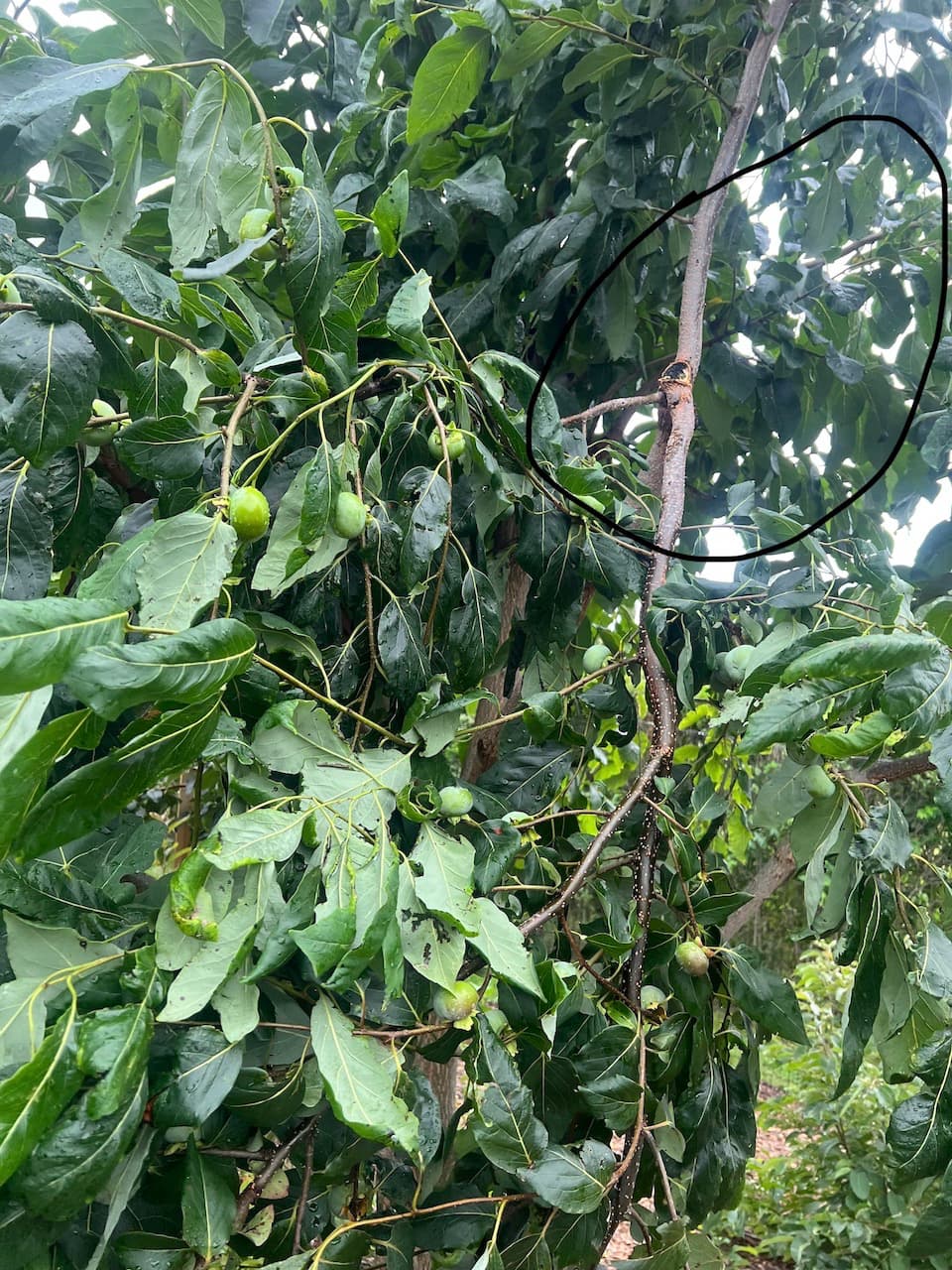
oh, bugger. Ive had that sort of thing happen on persimmons before. The wood is just SO brittle.
It doesn’t seem to have broken at the graft. It appears to have broken at the base of a branch that formed above the graft. It broke at the crotch.
I’ve used mostly bark grafts for these persimmons as the scions have been much smaller than the rootstock branches. They’ve held up pretty well. My only problem has been when the wind ripped off a big branch at the graft union in the summer immediately after the graft. I think this happened twice.
2 Likes
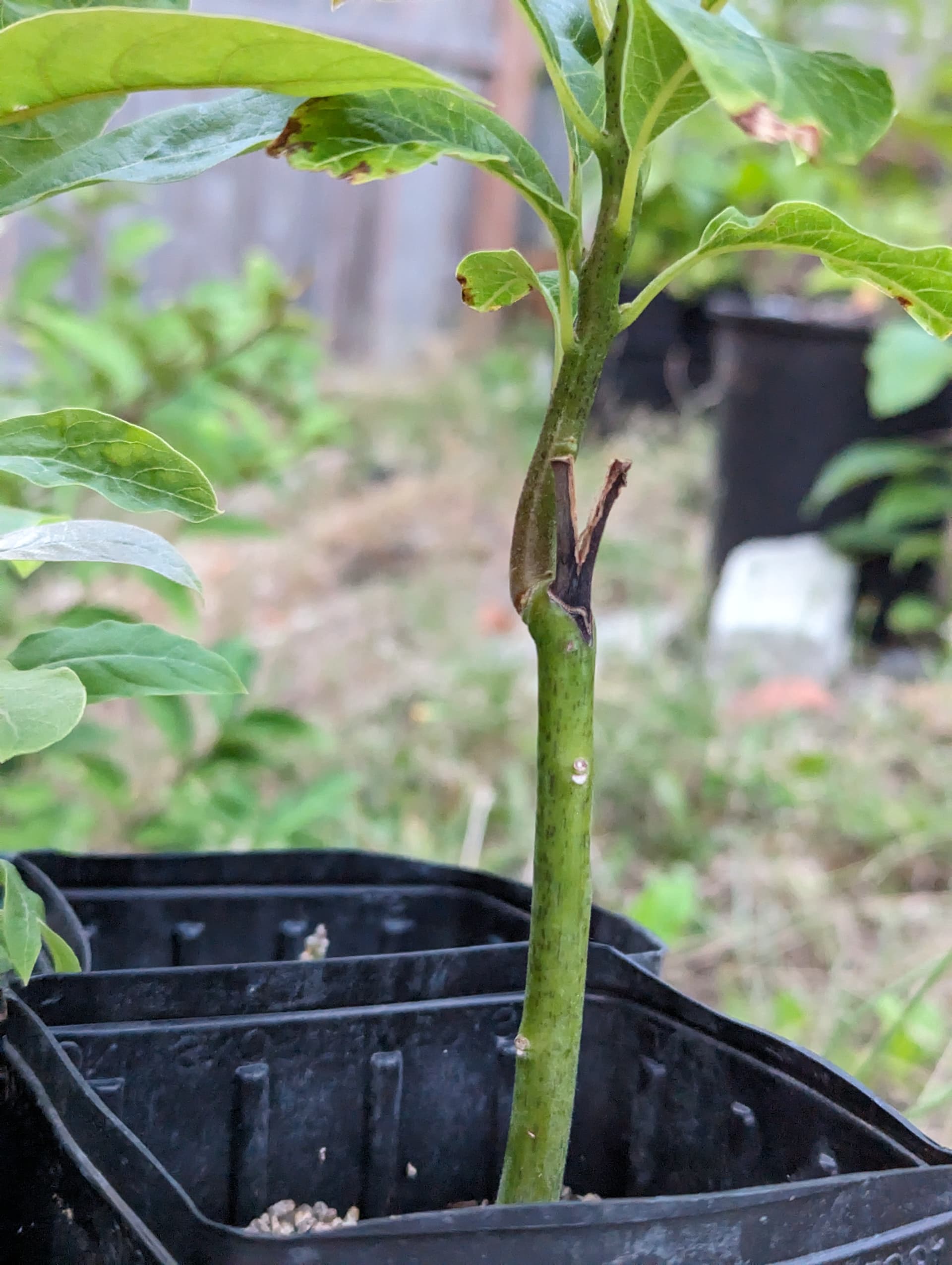
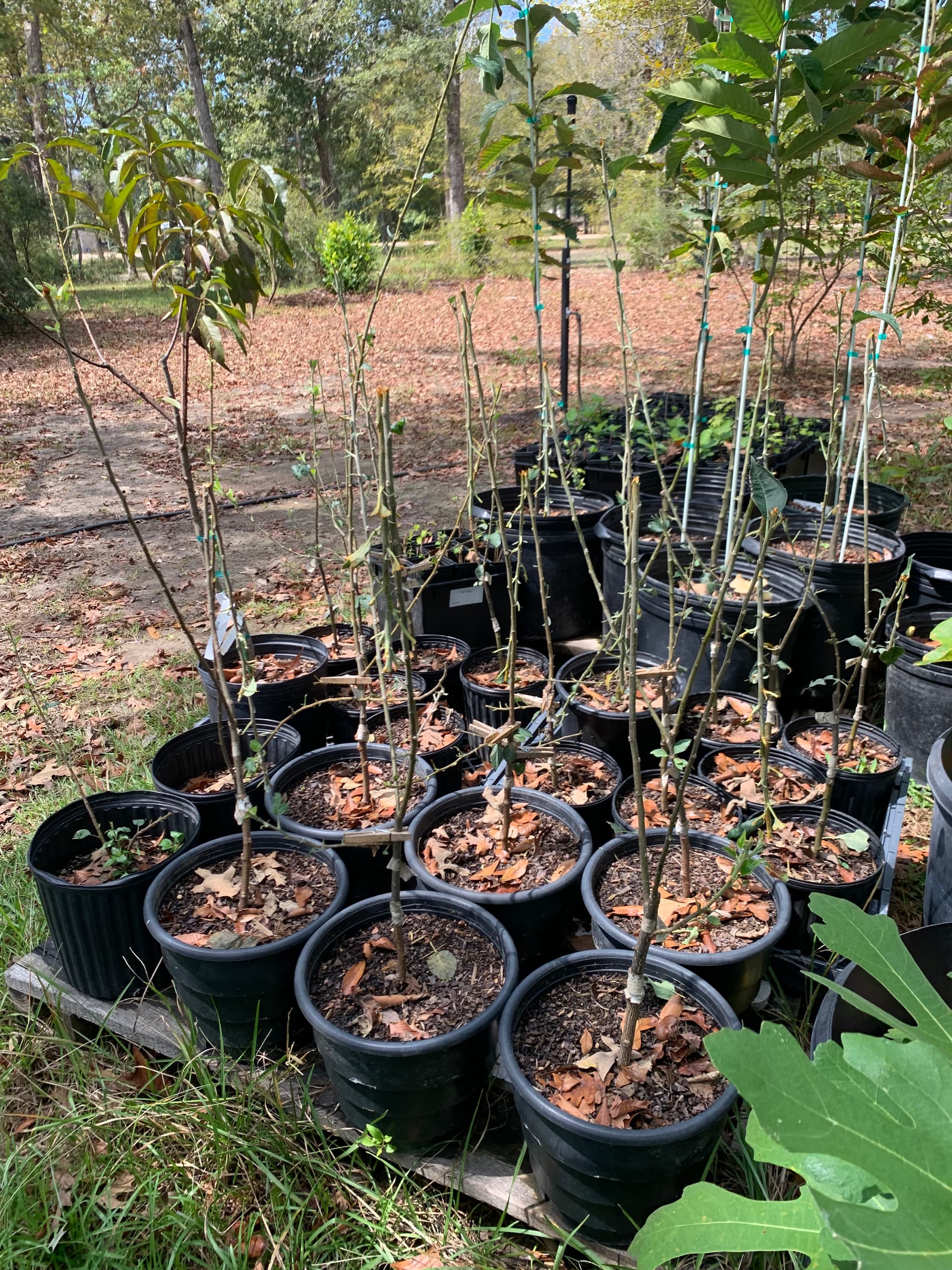
Is there a reason why I never seem to see the terminal bud in a scion?
For plums I can we why as the wood tends to be so thin it would be hard to work with the end of a branch.
For pears though the new growth is so much thicker from the get go.
I have a young 3 on 1 Asian pear that I will probably take scionwood from to graft and start an espalier, but I don’t want to remove too much of the variety as the tree only has 2 branches per variety. Taking just the last 4-5 inches with the terminal bud or so would be more ideal.
I would also think the terminal bud would be the first to push growth of the graft takes.
1 Like
Is there anyone here who has used bud grafting for espalier?
I saw a nice horizontal T espalier in a local nursery ($200+!) and saw they had bud grafted to get the positioning of the horizontal branches.
I thought that is a great idea because it’s not a sure thing that the rootstock can be trained to get the positioning of the laterals that you want to graft to.
So the question is how small of a rootstock can you bud graft to? Can you do it with scion of the same diameter?
You can’t do a T or inverted T cut on a smaller rootstock so you would simply cut out the same profile as the harvested bud. The rootstock needs to be at least as large a caliper as the scion.
Sounds like it would be some delicate work.
I’d probably put on 4 buds at each desired scaffold elevation, staggered, so I have a backup for each side.
1 Like
I get that once in awhile…but usually on second or third leaf trees.
I did a fair number of bud grafts on fan plum espaliers this summer. Just yesterday I did 8 bud grafts on a bi-cordon UFO cherry tree to encourage fruiting uprights at the right locations. I will notch above the buds early next year to encourage the buds I grafted to break dormancy. I only recently started the process of budding on my espalier trees, so I don’t know exactly how well the process will work. My bud grafts on my non-espaliered trees worked out very well last summer, so I’m pretty sure I’ll have at least equal success with my espalier trees (hopefully).
Good luck @Shibumi
1 Like
That’s great @tbg9b
Share some photos in the coming years.
What will be your timing on notching? Do you wait until you see bud swell elsewhere on the tree?
2 Likes
I found the earlier the better. Many of my buds started swelling in Jan this year, as our Jan &Feb were very warm. So I started doing a lot of notching in Jan & Feb. The year before I did my notching later and I didn’t have anywhere near the amount of success as this year.
I am in zone 9b PNW.
1 Like
I guess it’s a bit of a guess. I don’t know how long it takes for the notch to heal, but as long as it inhibits growth above the bud I guess it’s done it’s job.
Sadly my OHxF 87 I planted this spring is still smaller in caliper than even the last few inches of my asian pear growth from this year.
I can do a single variety graft further down the rootstock but I’m wondering if it’s even worth bothering trying to chip bud into such a small caliper rootstock like I want to.
Probably need to grow out the '87 another year and try on 2025 for my espalier.
1 Like
What I could do is graft what will become the top scaffold of the espalier next spring and use it as the trunk wood to graft lower scaffolding as it sizes up. Using chip budding.
It’s often you see developing espalier with the lower branches way ahead of the upper ones. Maybe this way gets me a more balanced tree in a few years.
1 Like
In apples and pears, the terminal bud is floral (actually, mixed).
Secondly, removing the apical bud stimulates those 2-3 lateral ones (vegetative) to activate.
Also, the best buds for grafting are somewhere around the middle.
1 Like
You only need one bud to grow in a successful scion. I was wondering if the terminal bud would have more success than a lateral.
And I wouldn’t have to worry about sealing it against moisture loss as much as a cut scion.
I do to see it being done extensively so…
1 Like
Yes, but the practice when grafting with a scion is to leave 2-3 buds for a replacement if something unwanted happens. Also, if grafted into the crown, growth from all lateral buds can be utilized (changing variety, for example).
They’re functionally different; lateral buds are, so to speak, more specialized for vegetative growth.
2 Likes
If I were to graft and include the terminal bud, I would of course include two laterals below.
I may not have much choice anyway this coming late winter as my rootstock is smaller than the new growth pear wood I was going to cut for the scions.
1 Like