2026 Grafting Thread

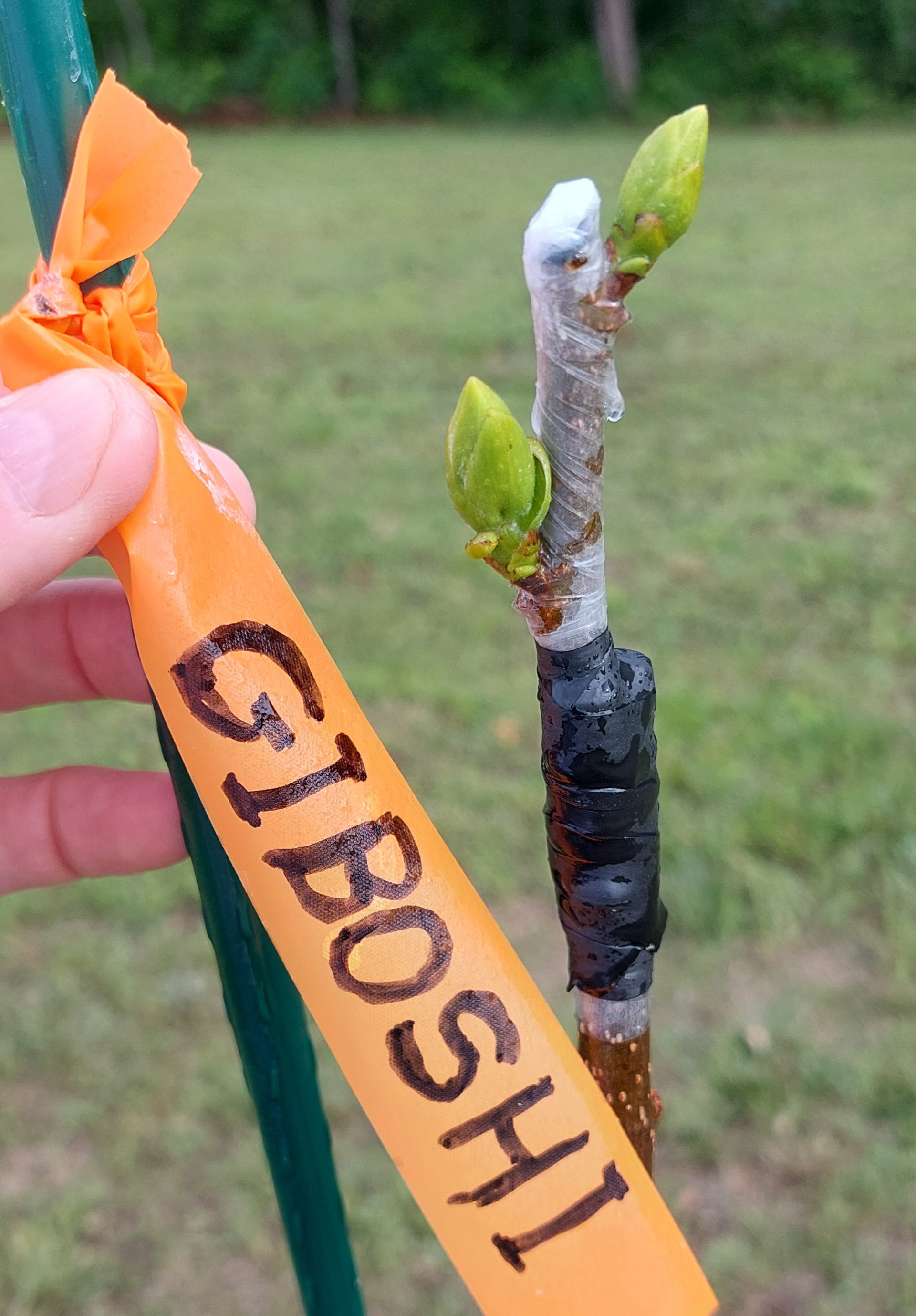
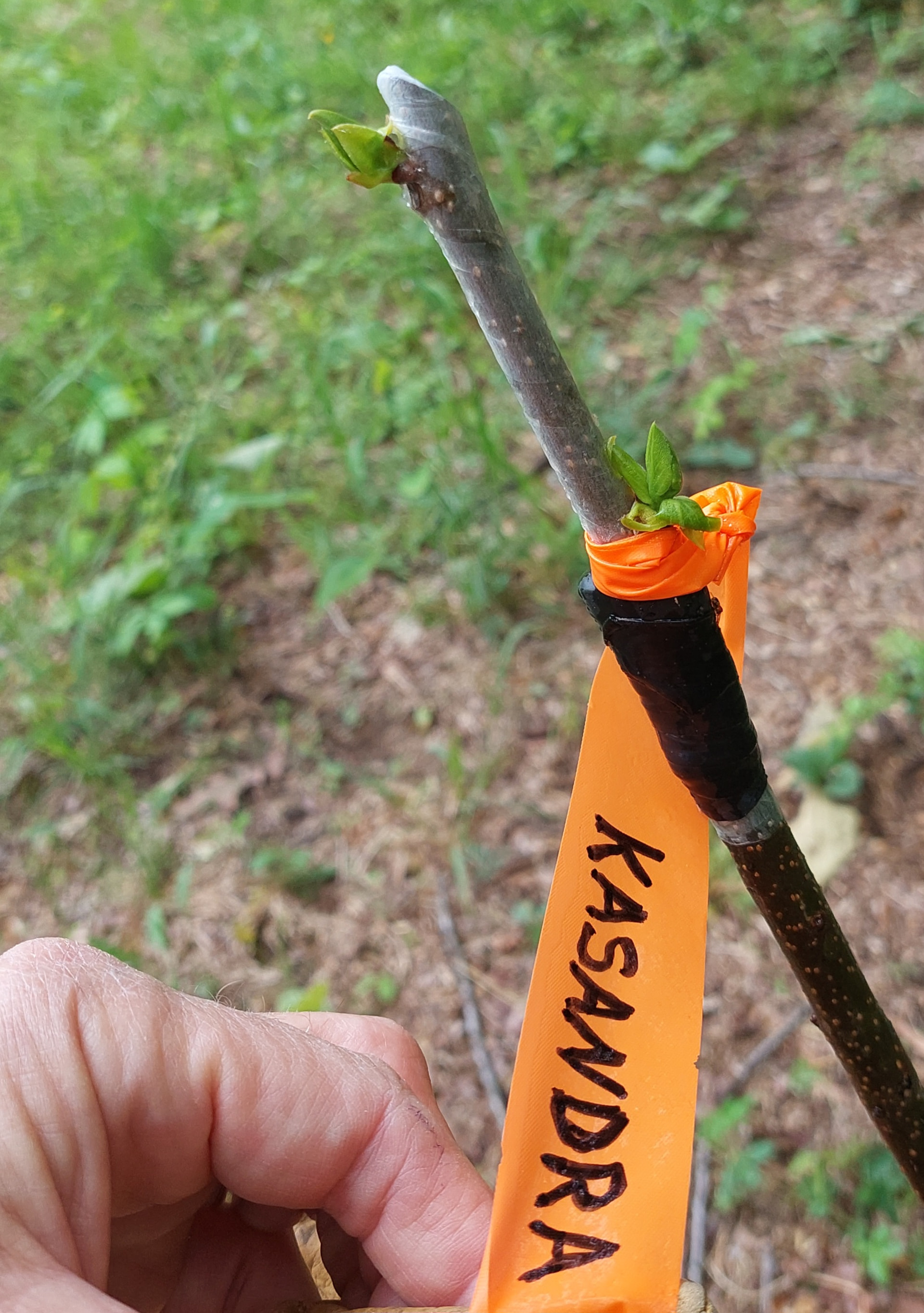
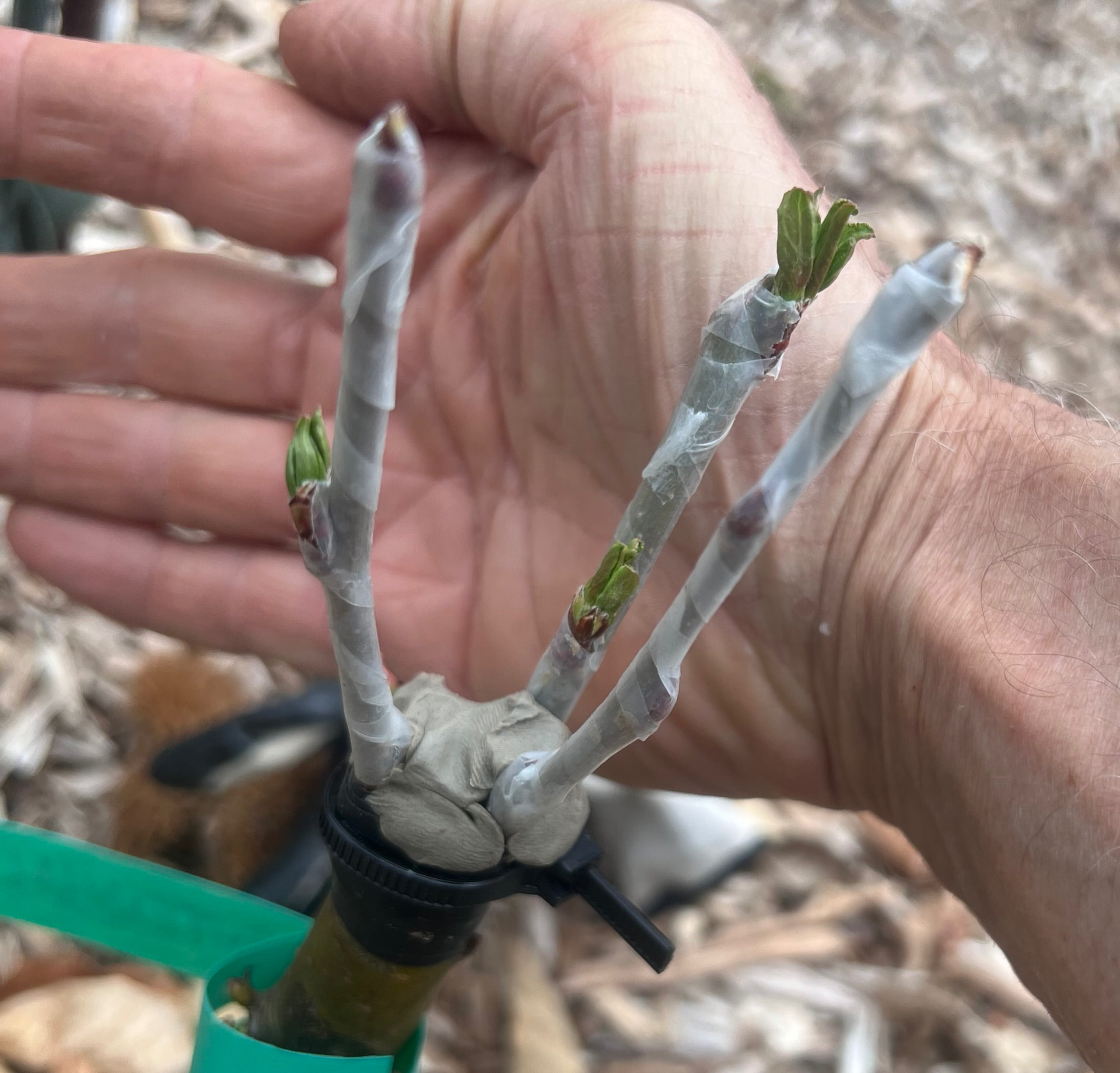
On the jsacadura bridge graft video I watched, he only used this, not parafilm, after nailing the bigger units in. I used this to secure the grafts and modeling clay (@IntrepidNewbie) to seal the tops against moisture, which someone else here had recommended.

I thought about double layering with parafilm on this (or a pear tree I grafted shortly thereafter), but I couldn’t figure out the logic — like, why you would put one on top of the other. Maybe, per @Boatwon, I should have put parafilm down first to keep it from sticking to the bark, and I don’t want it to degrade too quickly before the bridge grafts meld.

People use all kinds of materials for successful grafting. Whatever works for that person is fine.

There are several factors that contributing to successful grafting. Two keys things are:

  • covering the exposed area (that you cut) to avoid desiccation. It can be done with a strip of plastic, parafilm, Temflex, etc.
  • Wrapping the grafting union tightly. You won’t hurt the tree but the not-tight-enough wrapping of the grafting union will lead to grafting failure.

New members can use the search function (the looking glass symbol at the top right hand corner of the page) and type in “grafting”, “grafting apples”, “grafting peaches”, etc. Tons of threads will show up for you to read up.

2 Likes

This 3M Scotch 2242 works great.

There is no Temeflex to be found near me but I can get this 3M near me.

The key is that it is a “Rubber” splicing tape… not vinal.

This one works great.. great stretch, great hold.

I cover the graft union and scion in parafilm… and reinforce the graft union with the rubber tape. You can really pull it tight with the rubber tape.

TNHunter

4 Likes

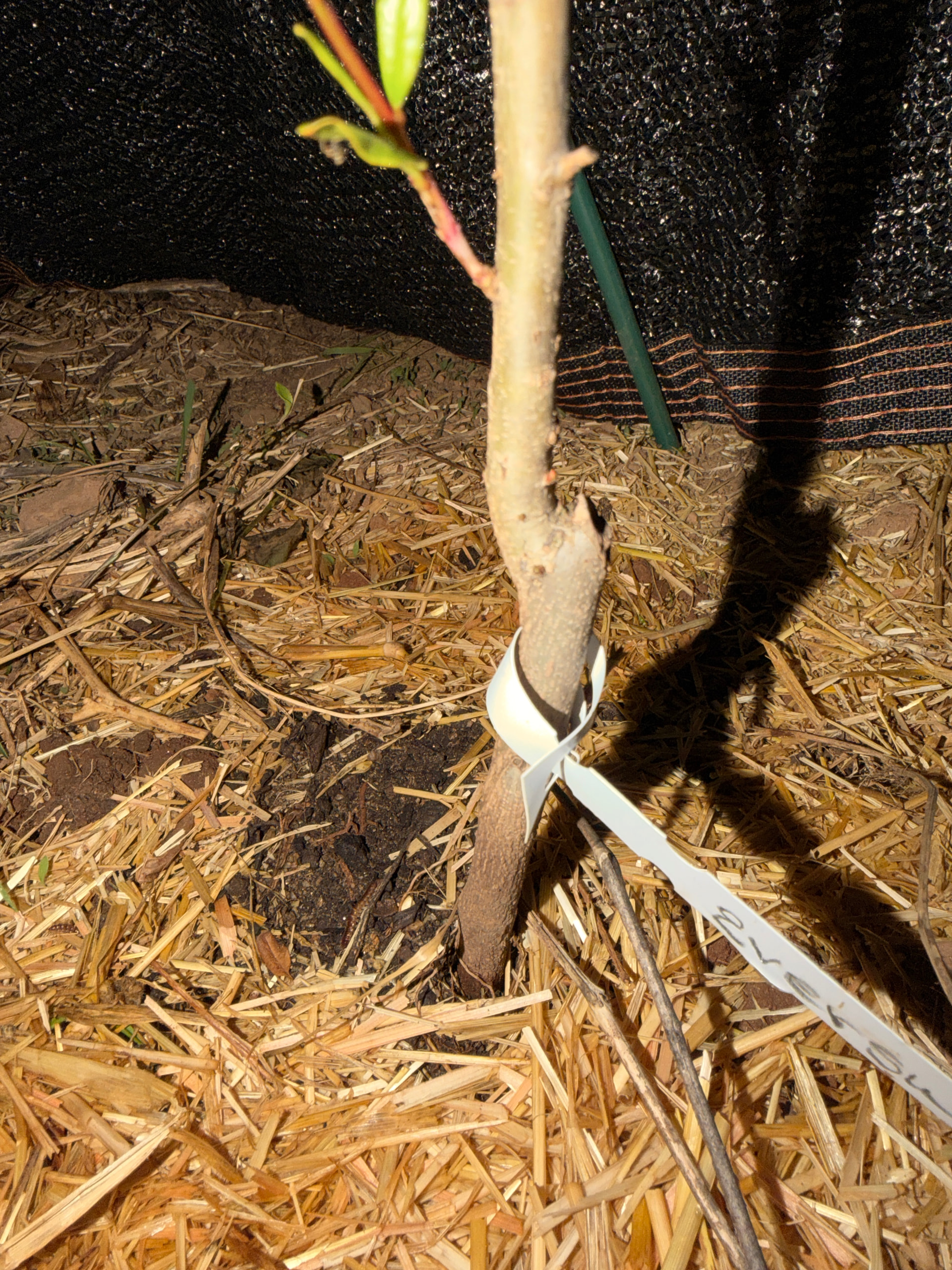
They responded back saying they were mistaken and it’s not grafted, going to go get a closer look in a bit, it is strange because it has a single stem then it’s cut and it’s growing from below there.

One graft died and one is still growing

3 Likes

My persimmon grafts are making good progress now despite some cooler than ideal weather.

I sprayed them with Seven spray this evening.

Psyllids often attack new persimmon graft growth here.. and can devistate it quickly.

Taking no chances.. spraying before I see damage this year.

TNHunter

2 Likes

i use white stretch bandage, the rolls of it, over graft unions

i used to order in bulk for work but it always came in boxes of black and white mixed, and i only ever used the black at the shop. I’ve got a big box of the stuff. it’s pretty cheap. it stretches and only sticks to itself. it falls off after a few months kind of. doesn’t shred.

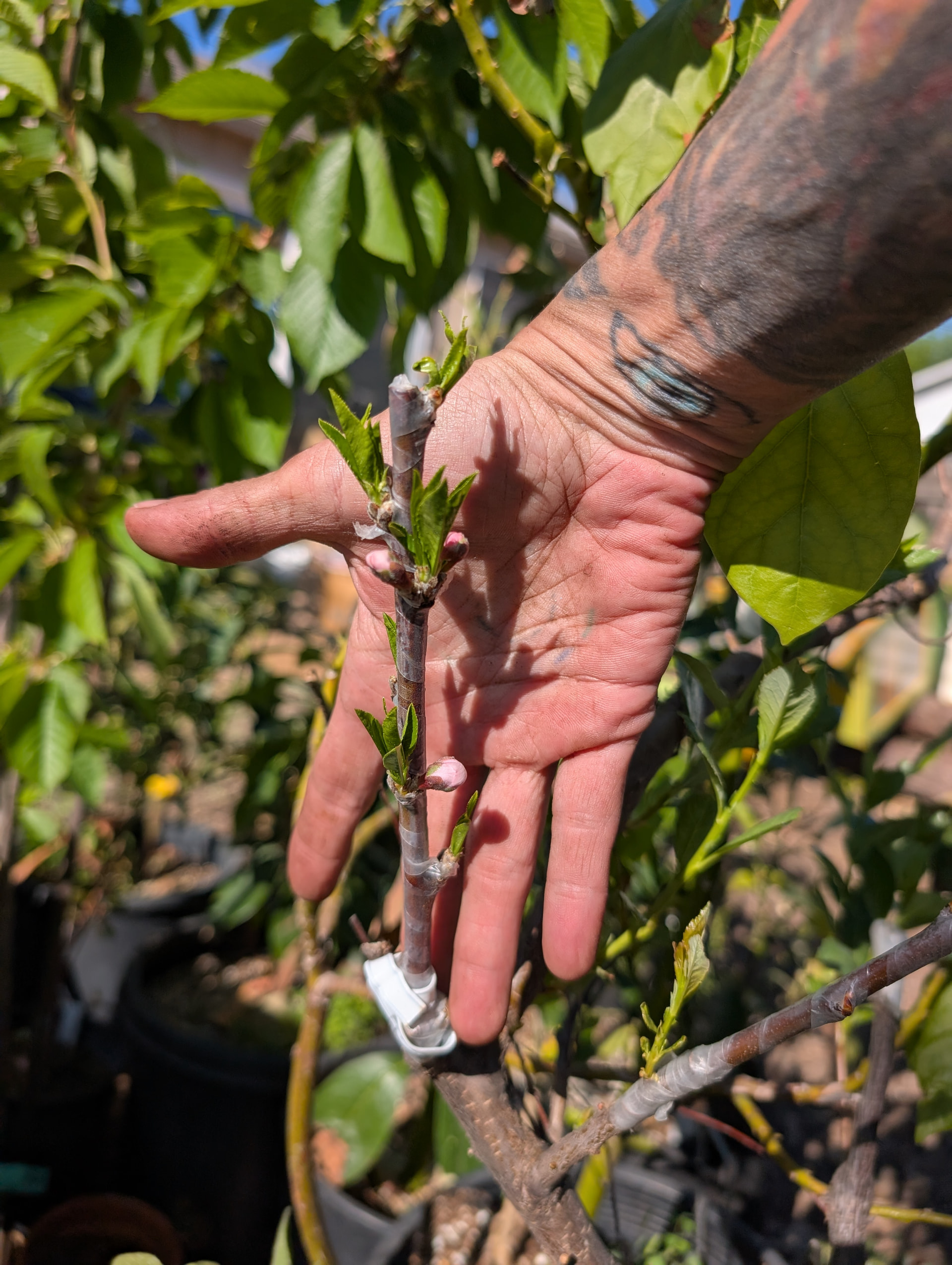
honey drop (?) nectarine on beseyi sand cherry. the toka looks iffy. these are going to be peach or nectarines or plums next year, I’m glad something has taken.

6 Likes

Now that I’ve taken a closer look and they mentioned it’s not grafted i assume its just a cutting and this is where the cutting ended and sprouted out a new trunk

2 Likes

The “rubber” tape is a interesting idea i may use for top working. For bench grafts and the very little top work I do do, I use a single zip tie over top of parafilm. I cut it off shortly after the graft callouses with side cutters. Birds and yard kitties are the main reason I mechaniclly secure grafts. But I’ve actually had scions broken above the graft before they calloused by a ball that grand daughters were playing with. I know this to be fact because they told me they did it and apologized for it.

1 Like

That’s funny. I have plenty of this stuff (also called Coban) just from work and just in case for my dogs but never thought to use it.

I usually just use parafilm. I had a bunch of early grafts fail due to desiccation, so now I wraps the whole Scion in parafilm.

Sometimes I use cable ties when the parafilm isn’t giving enough tension (often on smaller grafts).

Maybe I’ll use coban in the future.

3 Likes

i use Buddy tape or parafilm on the whole thing then put a few wraps of coban around the graft union to hold it tight. the white feels like it would help keep it from cooking in the sun

3 Likes

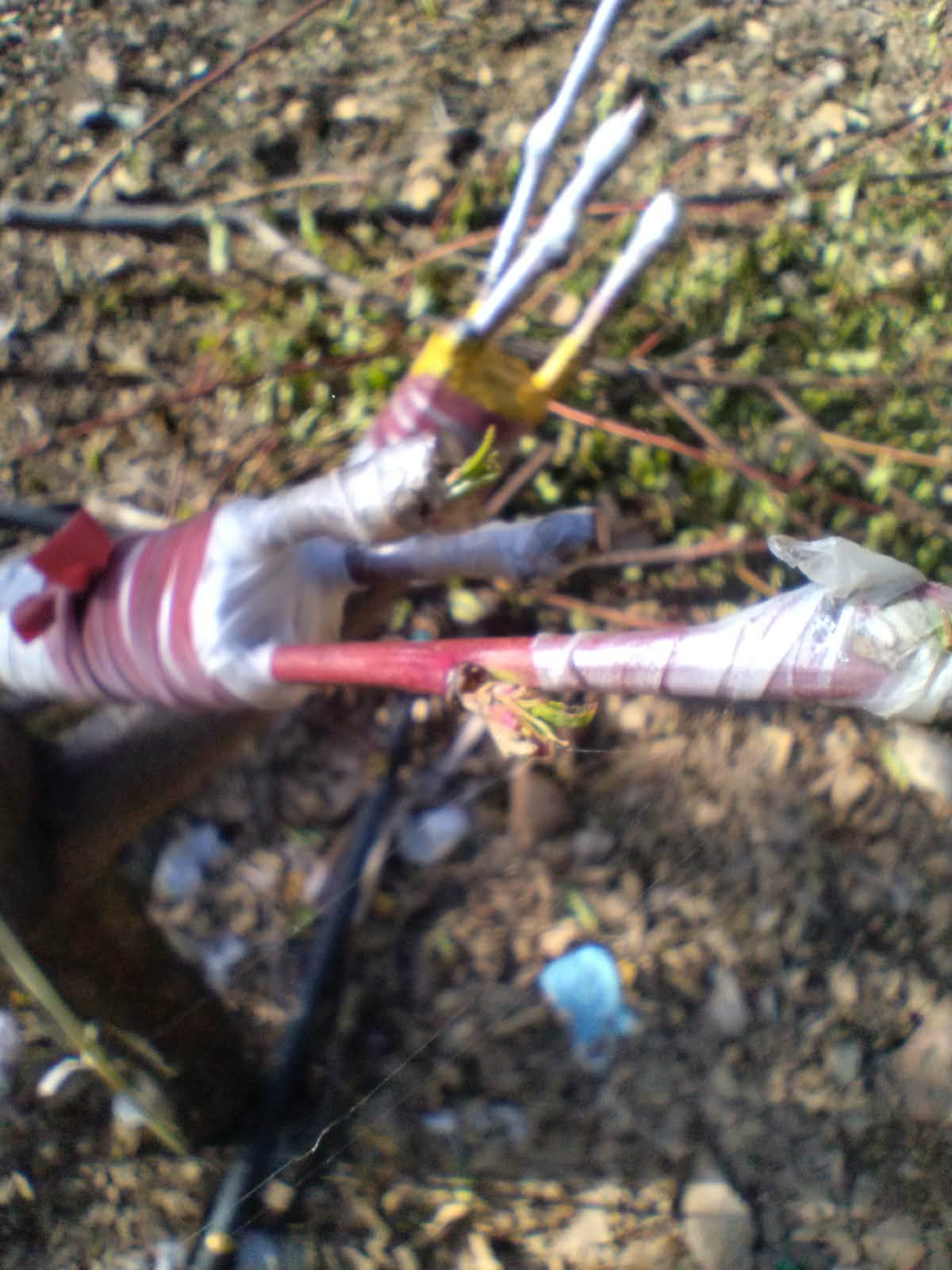
I don’t know, that is at my other place so I haven’t been able to check. However, I had a friend up there take an (albiet low quality) picture of some of the grafts two weeks ago (on 4/24) that looks hopeful.

The grafts on the trunk in the front was where it bled the most…. On the day I was leaving the bleeding had finally stopped, so I opened up all the grafts to clean them out and all the cambium and oxidized black. Didn’t have much time, but I vaguely recut a few to expose now green cambium and slapped it back together. At least in that photo, only the ones I did that for are showing signs of life, but who knows now. Fingers crossed I get more than that.

On your other question, I use buddy tape and wrap with “red grafting rubbers”.

4 Likes

Hi there,
I started grafting this year, but several trivial question have arisen. (And I am in Portugal).
I did whip and tongue in pluots in middle march (scions from a fellow forum member) and in diospyros (my own “coroa de rei” in D. lotus rootstocks). Pluots did well: 3/4 took and are growing fine. I redid the one I missed by chip budding a 1 week ago a dormant bud I kept in frigde. Diospyros I failed 3/3, although a friend of mine did 4 grafts of another variety and they all took (although 1 is being shy to develop). So, my general questions, not only for stone fruits and diospyros but also for apples and pears:

1- I did whip and tongue with 2 buds each. they developed both. Do you cut one? and if so, when (as soon as you are sure the other is fine? several weeks after? several months? next season?)

2-Do you always add a tutor to the new growth? My biggest one is already with 40cm (about 15in) and it is growing well week after week… besides it is not uprigth (photo below)

3-this year we have a lot of aphids around, so far i did not have any big infestation in my grafts, but do you usually spray your new grafts?

4- do you fertilize the new grafts? if so, when? how long after it start growing?

5- grafting/budding seasons. For what I have read, grafting is usually aplied in the early spring with dormant scions and budding in summer depending on the species of course. My question is: is there always a gap when you can not (is more difficult/ is not advised to) graft or can you graft from early spring to late summer/autumn non stop?

Thank you in advance.

1 Like

I mentioned elsewhere how deer and rabbits girdled a majority of my dwarf apple trees this winter.

Where possible, roughly 2 - 2 1/3 weeks ago, I used grafts to restart the trees. Most often, that involved coppicing the tree below the bark damage, then adding bark grafts around the perimeter of the trunk – just like the big pear illustrated above. Here are two examples:

First, Puget Spice. There are 8 bark grafts on a modest trunk. Most of them seem to be popping buds.

Next, Centennial. There are 3 bark grafts on a small trunk, much younger tree. All three are breaking bud.

6 Likes

@SamuelPatinha … your questions 1 and 3.

A few years back I grafted a scion of H63A American persimmon to one of my wild persimmon rootstock trees.

The rootstock was large and I did the whip/tounge graft at 40” high on the rootstock.

My scion had 2 buds and both grew well.

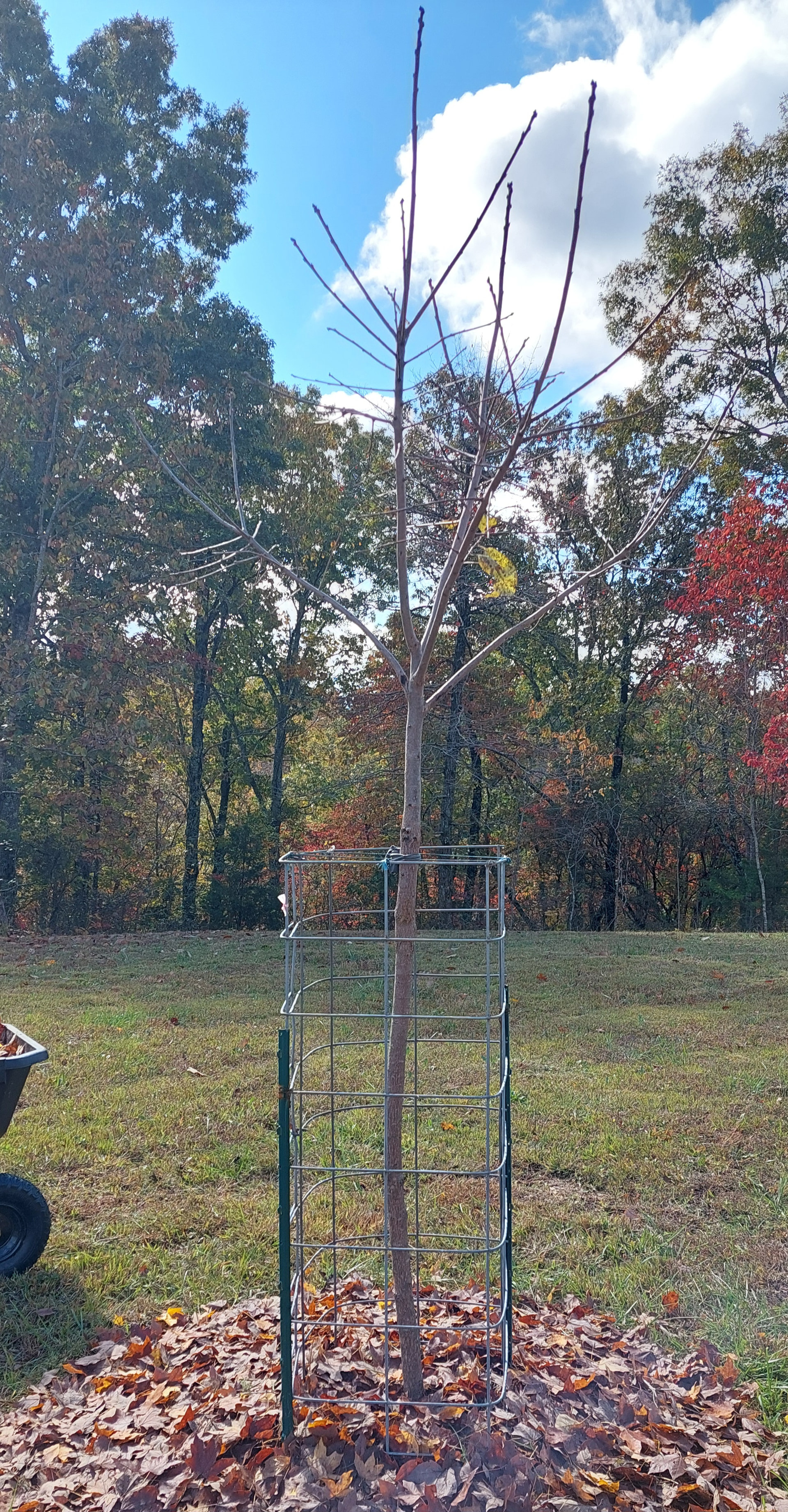
In my case… after about 16 inches of growth on each the growth from the top bud was looking dominant.. strong… so I chose it to be my central leader.. and I headed the growth from the lower bud back by about half the length.

The growth from the top bud grew well and made it to my desired height for scaffold branches. When it got to 54 inches I did a heading cut on the central leader… and maintained the lower support growth from that bottom bud.. keeping it short and simply in a support roll.

After I headed back the central leader… the buds below that heading cut then sent out a whirl of limbs.. that became the start of my scaffold branches and my new central leader.

At the end of the first growing season the top of it looked like above.

If you can get one to do that the first growing season.. ideal.

PS… in year 2 it ripened 7 fruit and ended up looking like below.

It is covered in blossoms and small fruit now here in year 3.

On your question 3.. on spraying new graft growth.

I have a pest here (Psyllids).. they are sap suckers and they love the new tender growth on grafts. If I dont notice them quickly and spray.. they can really wreck your new growth and cause the graft to fail.

Yesterday… I sprayed all 3 of my persimmon grafts with (Sevin) spray. The grafts are just starting to push new green growth… and I wanted to make sure the Psyllids are not launching an attack.

I have lost 3 or 4 persimmon grafts to Psyllid attacks over the last few years.

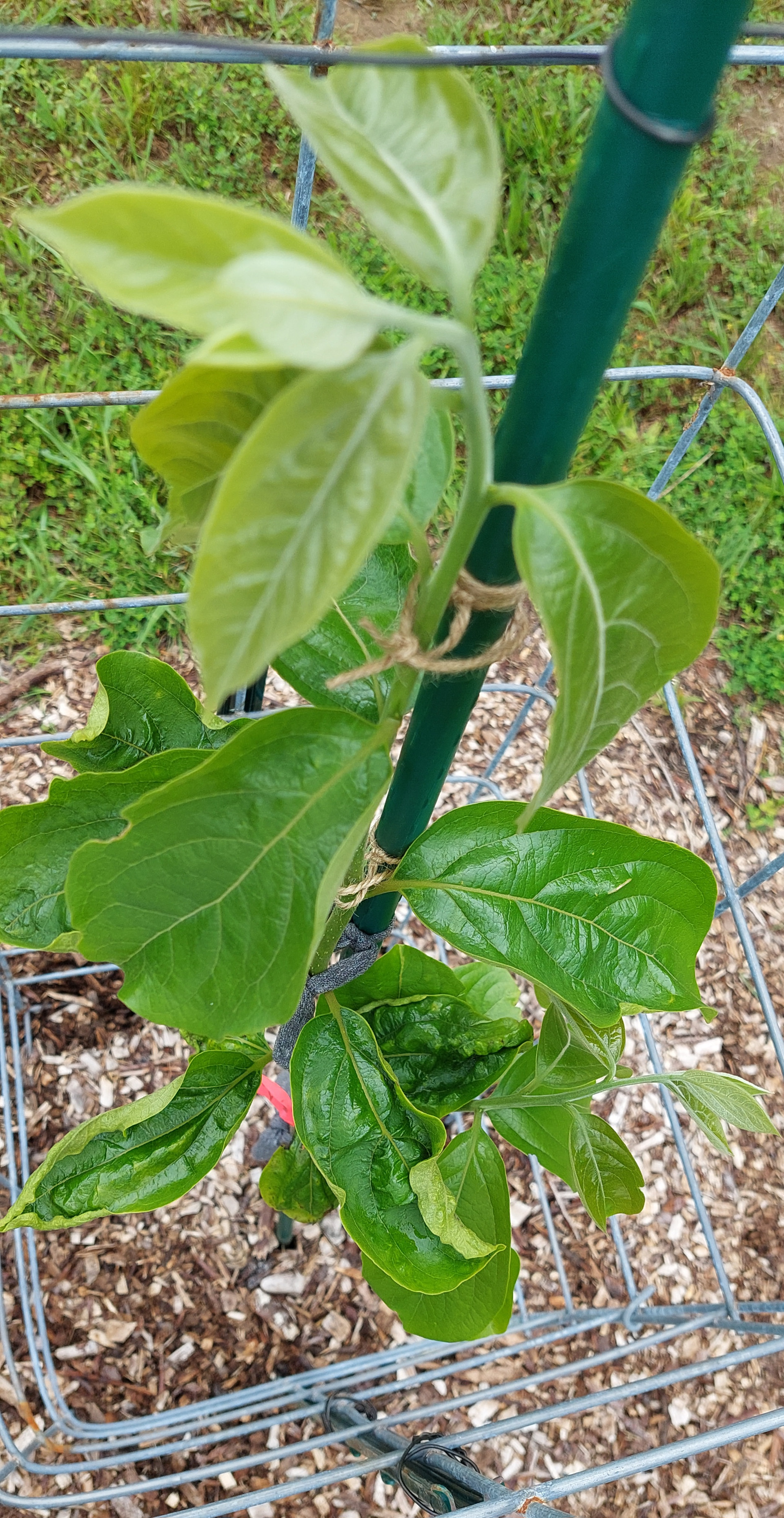
Psyllids as they attack that new growth.. they cause the leaves to curl up along the edge and get all disfigured.

That is a graft of Saijo that I did last spring and if you look at the lower leaves… see how messed up they are. Psyllid attack. I noticed the attack and sprayed them a couple times with (Sevin spray)… and wiped them out. After that the Saijo graft grew well the rest of the season.

TNHunter

4 Likes

This spring I purchased 10 M7 rootstock, on 3/16 I bench grafted 8 of them and put all 10, the 8 grafted and the two ungrafted, in a bucket of moist sawdust. On 4/1 I planted all ten, the eight I grafted all took and are growing but the two ungrafted rootstocks have shown no signs of growth. They still scratch green but no buds or anything. I want to field graft them but I am concerned that there is no signs of growth.

Isn’t this odd? Would it be OK to graft them? Should I wait until they start to grow?

2 Likes

Should I be removing leaves growing below graft (on the rootstock) for apple grafts?

The rootstock is approx 1/4” and is b.9, m.111, g.214 and g.210, in case that matters. I thought I should remove leaves, to direct growth to the scion, but @Gillium implied they did not for first 2 months (I assume for extra solar panels for energy).

@Chunky I am curious about this too I have a couple rootstocks I planted that haven’t leafed out. Meanwhile some I grafted are growing leaves below the graft (same rootstock). But maybe it’s just coincidence that the ones I planted without grafting aren’t leafing out.

2 Likes

That’s what I do. The theory is that you want the rootstock channeling water and nutrients to the graft, not its own buds.

my apple grafts still snoozin away. cherry and mulberry all seem to be up and goin

2 Likes

It’s been a month, right? IDK, I seem to get movement in roughly 2 or maybe 3 weeks.

I’ve got zero experience with cherries, but I know that mulberries can appear to wake up (e.g., buds popping) using only the energy stored in the scion itself. For example, you can get bud break and leaves after sticking scions into a glass of water – zero roots. So I think you want to see growth on a scion before concluding that a mulberry graft has taken.