Isn’t Zephyr a white nectarine? It tastes great.
2 Likes
I hope not to bore you all with these pictures. I’m trying to repair my girdled apples by bark grafting scions around the perimeters of the coppiced trees. So far so good. The process just seems miraculous to me, so I can’t help advertising it.
Here’s one apple that had been girdled less than foot above the ground. I grafted what looks like 7 scions from the girdled variety around the perimeter of its own stump. All 7 grafts appear to be growing. The art will be managing the growth of these scions to make a new tree.

8 Likes
Why so many scions? it only looks about 2" across. I’d think I’d put two and if both took, cut one way back in a year or two.
I’d do the same thing, a couple scions and cut back this winter. I have two apple trunks with grafts going right now, two shoots for this year but will probably trim to one for next year. I also did one last year and I still kept the second scion for now since it’s not shaded out yet but I’ll probably remove it this coming winter. I’ve done a bunch of these low grafts and in five years you’ll have trouble finding where the graft union is even with only one scion.
Closer to 3” but that’s beside the point.
When I’ve done similar in the past with just a few scions, the growth at the base of the scions didn’t completely cover the stump by the end of the season. Often it didn’t cover the whole perimeter, especially if some grafts failed.
My goal here was to establish numerous points of growth around the perimeter of the stump so that the entire perimeter could be covered this year, maybe even the entire surface. That would minimize the risk of rot in the old hardwood.
I can prune excess growth as needed. I could see no downside in growing lots of scions.
6 Likes
Sounds like a good experiment! Let us know how it goes!
1 Like
New to grafting here. Is the logic why waste a rootstock in the ground that is more developed than a purchased rootstock from a nursery, so graft to that (after removing the top scion) rather than starting over with a purchased scion?
If you have a very unproductive (and disease susceptible) tree, do you recommend grafting to that existing tree or cutting it off at the rootstock and graft at the rootstock?
I’ve got something similar going with a big pear tree, maybe 6" across with 16 grafts. I’ve posted some pics, will do more later as the scions grow.
2 Likes
Yes! The roots are all established and there is lots of stored energy there.
Also, I grafted high up on the trunk. I wanted to start high because of deer and other animals.
The trunk on these trees was not getting diseased- it was the whole rest of the foliage and fruit (apples and pears). One apple was a fungus magnet and would lose all its leaves and fruit would rot. Most of the pears were getting fireblight.
The apple Iwasnt worried about the trunk being diseased. For the pears, some other members convinced me it would be fine to graft the trunk of a non-fb resistant tree if it was old and didn’t have blight in the trunk already.
So far it’s good-only three years in for the apple. The pears with FB I did this year. I’d grafted some other pears high up in the past. And they did great and growing really well.
3 Likes
Getting roots established is huge. I’d almost always take an established rootstock and compatible scion over a tree that I need to transplant.
9 Likes
This year I tried out hot callus pipe grafting on very small BARE ROOT pawpaw rootstocks.
This is the size I was working with. I did modified Z graft, whip and tongue, and cleft grafts with scion size much larger than rootstock on almost all of them.
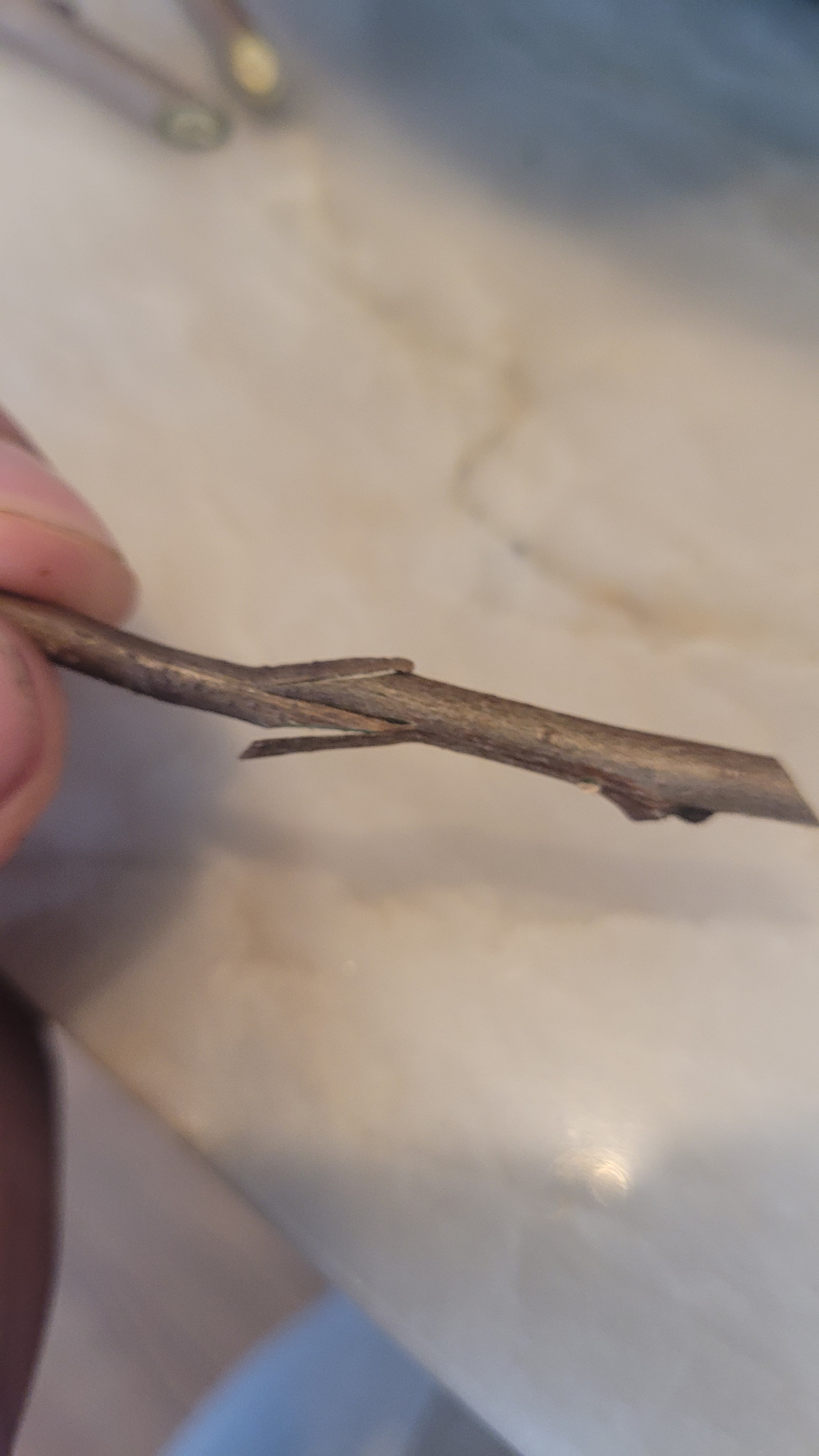
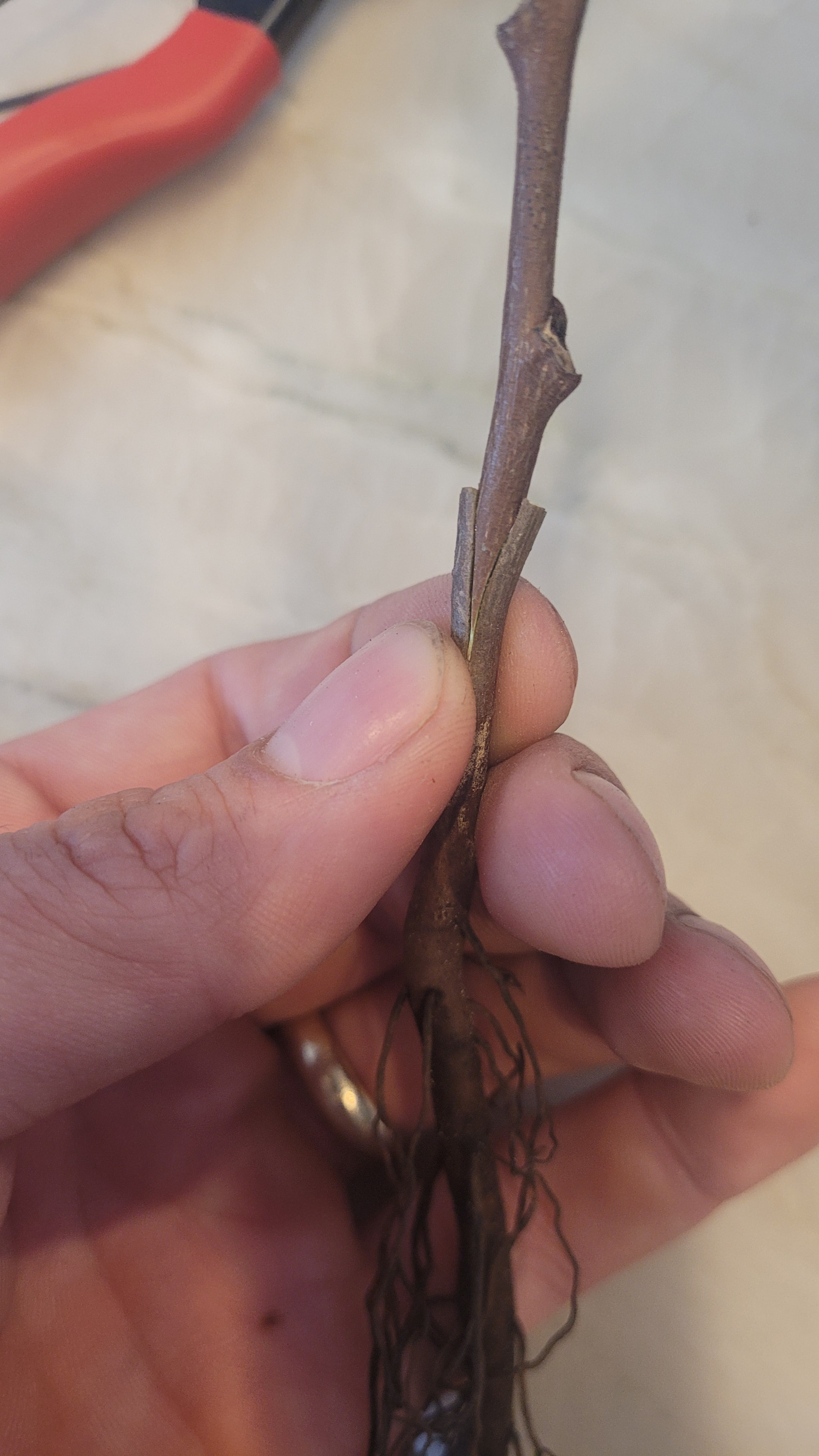
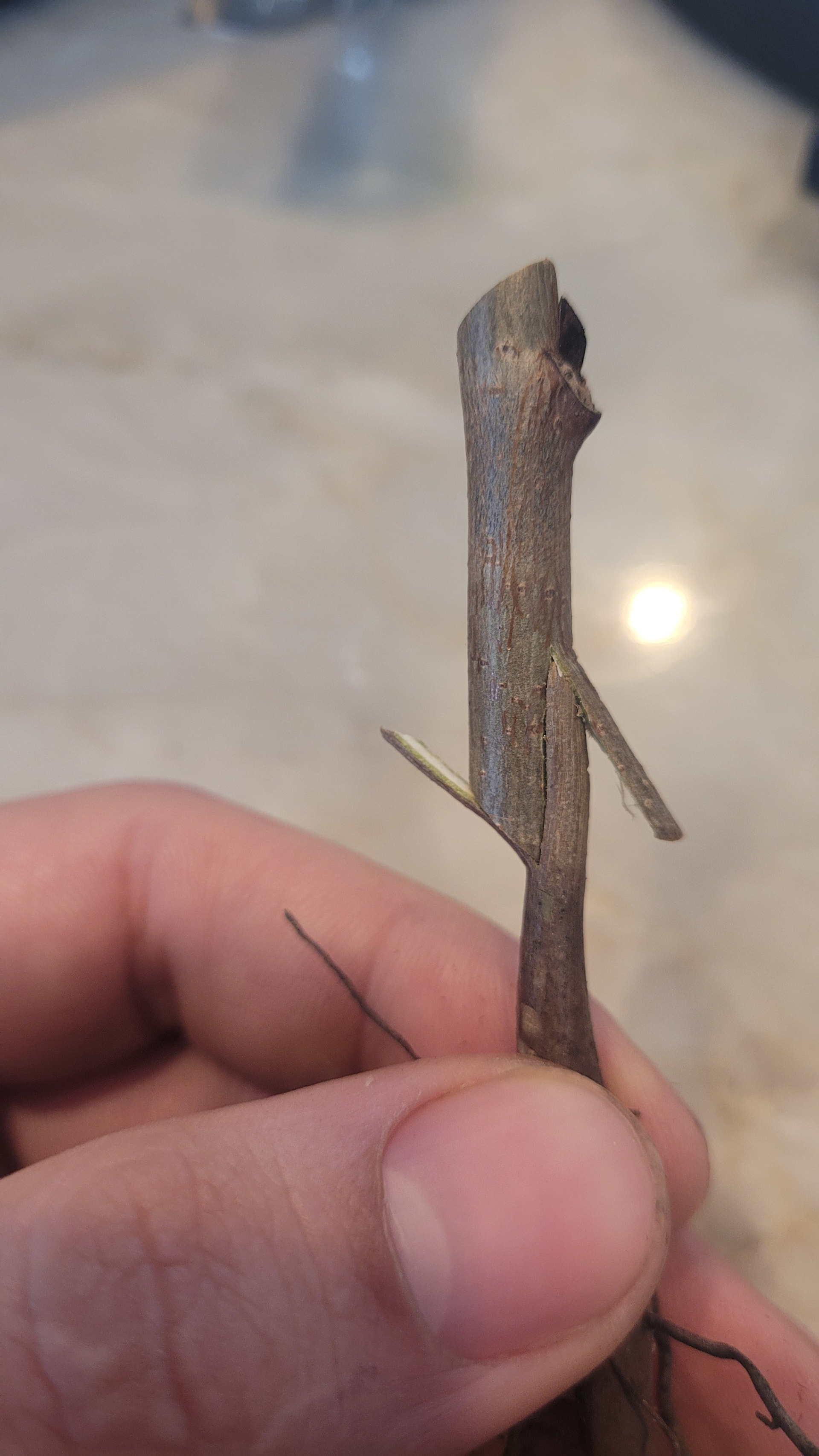
I used the heating cable linked in the DIY guide, but I did not attach it to a board. Instead, I duct taped a insulation tube cut in half directly onto it, then layered my grafts, then taped the other half on. This allowed for very dense spacing on the pipe, and 160 fit on about 6ft of length.

I then heeled in the roots in a shady spot for the 3-4 weeks. When I did the test batch inoors, I wrapped the roots in bags. In hindsight, indoor callousing could probably be done with the roots bundled together, several in one bag because individual bags was very annoying. Perhaps, even a tub or bin would work if you spiraled the cable inside and then all the roots could stay in a moist media.
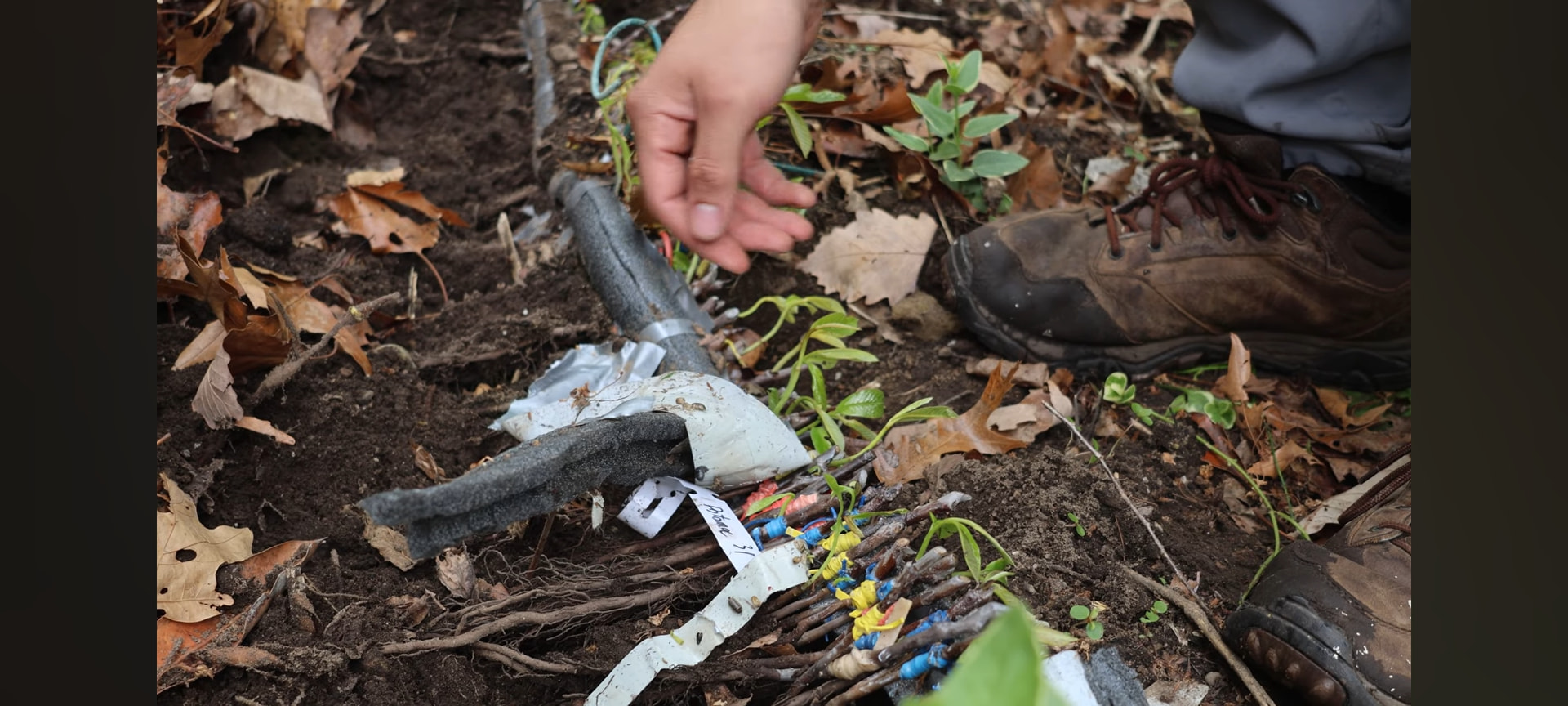
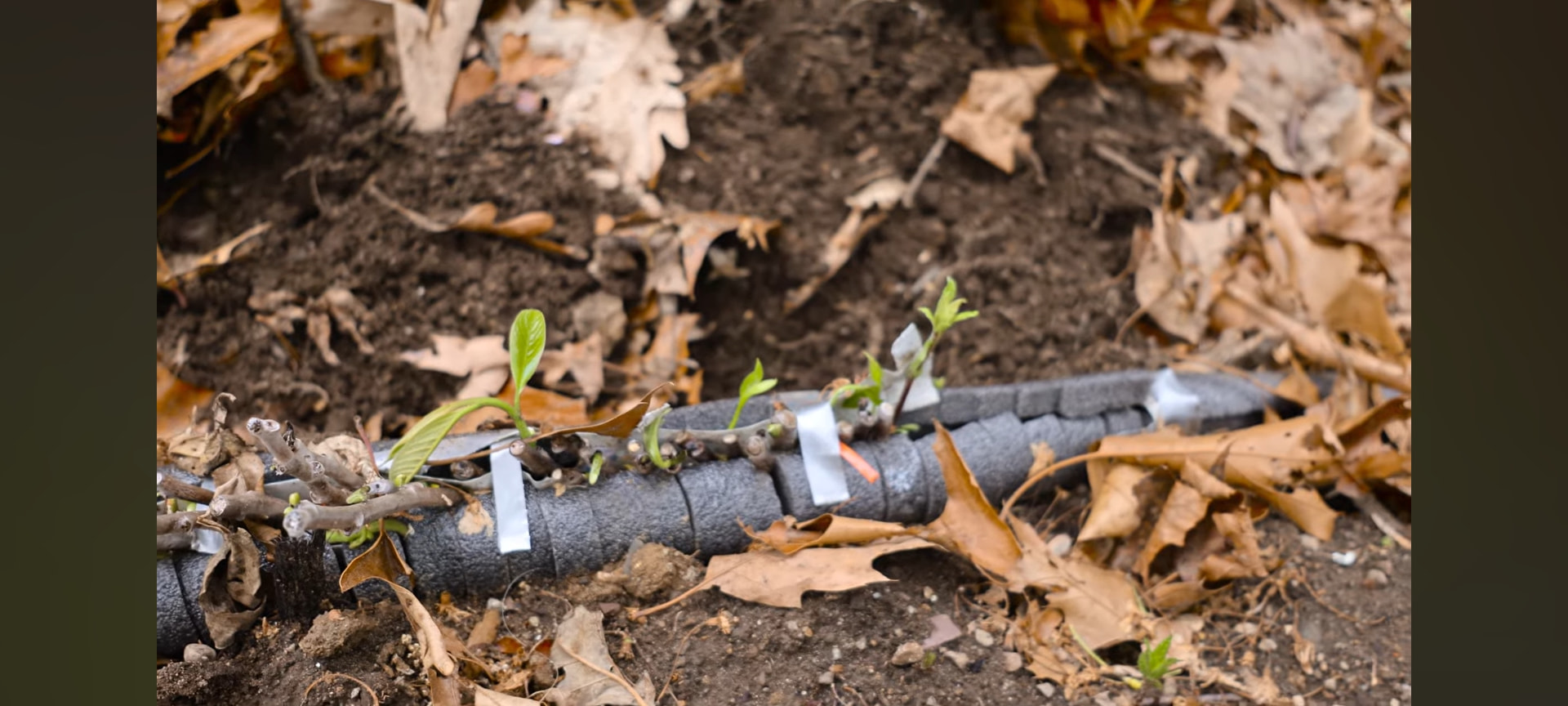
My counts gave me about an 80% success rate, as in the grafts that have grown to the point of definite success; other grafts may still push later. Only one root died. For whatever reason, potomac had the least success rate, but it was also the first one I put on the cable length, so it was closest to the heat switch, which may be a factor. Perhaps the cable was not warm or was too warm there.
I have them potted up now in treepots and a shade cloth.

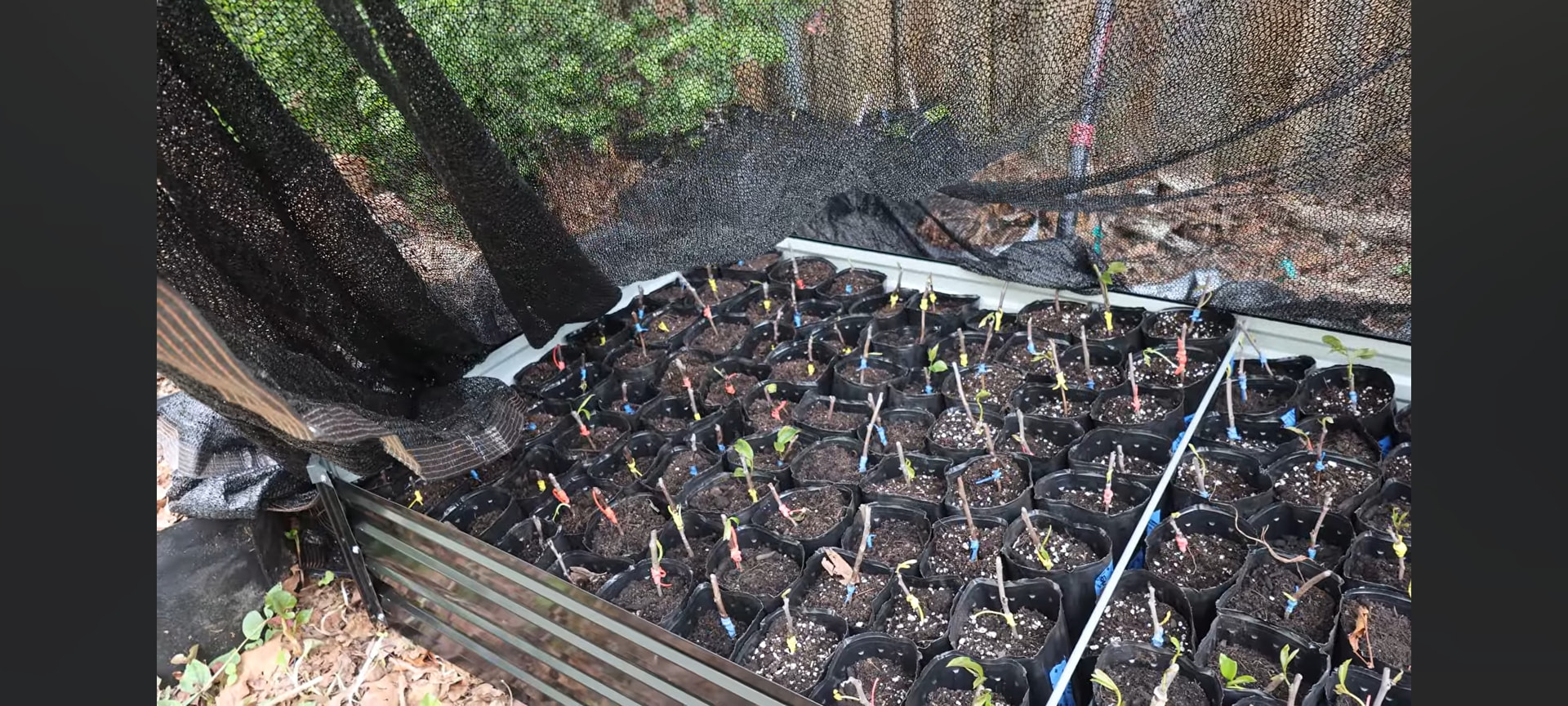
If they continue to live and grow, this post serves to show that very small bare root pawpaws can be grafted successfully with mismatched scion, and single buds under a hot callus.
20 Likes
Nice demo. Good info.
what was your temp for callus and time was 3 to 4 weeks
Thank you and that makes sense. I have two Fireside apples on M.7 that have not grown at all in the 18 months they been in the ground, where all my other scions on M.7 have thrived. I assumed part of the lack of growth to be due to things like these trees getting pretty bad frog eye leaf spot and CAR, but they haven’t even really put on any winter/spring growth before budding out.
So the heart of the question was really to determine if I should rip them out completely and replace with a bare root tree, graft all the way down at the rootstock, or graft waist high to the Fireside scion? Based on your and @benthegirl’s answer, I will try the latter next Spring.
If they’ve never grown they may not fit the category of “established rootstock”.
Temp was automated on the heating cable. I think it went up to 85
https://www.amazon.com/gp/aw/d/B01M4LWU7D?psc=1&ref=ppx_pop_mob_b_asin_title
The time reccomended by the studies is 3 weeks with the heat for callousing. Longer may cause the buds to wake up more, but I wasn’t concerned since the temps were above freezing for me.
I love that massive scion on that tiny stock! People are often afraid to try that but all you need is a cambium match on one side and you are good. One graft you can do in that case is an upside-down cleft graft: just like a cleft graft but the scion gets the cleft and the stock gets the V cut. All of these in a year or two will look like normal trunks.
7 Likes
Thanks for sharing this, very helpful for learning.
For this one, do you cut away the extra part of the rootstock and scion sticking out?

2 Likes
AC Harrow on Seckel doing well.
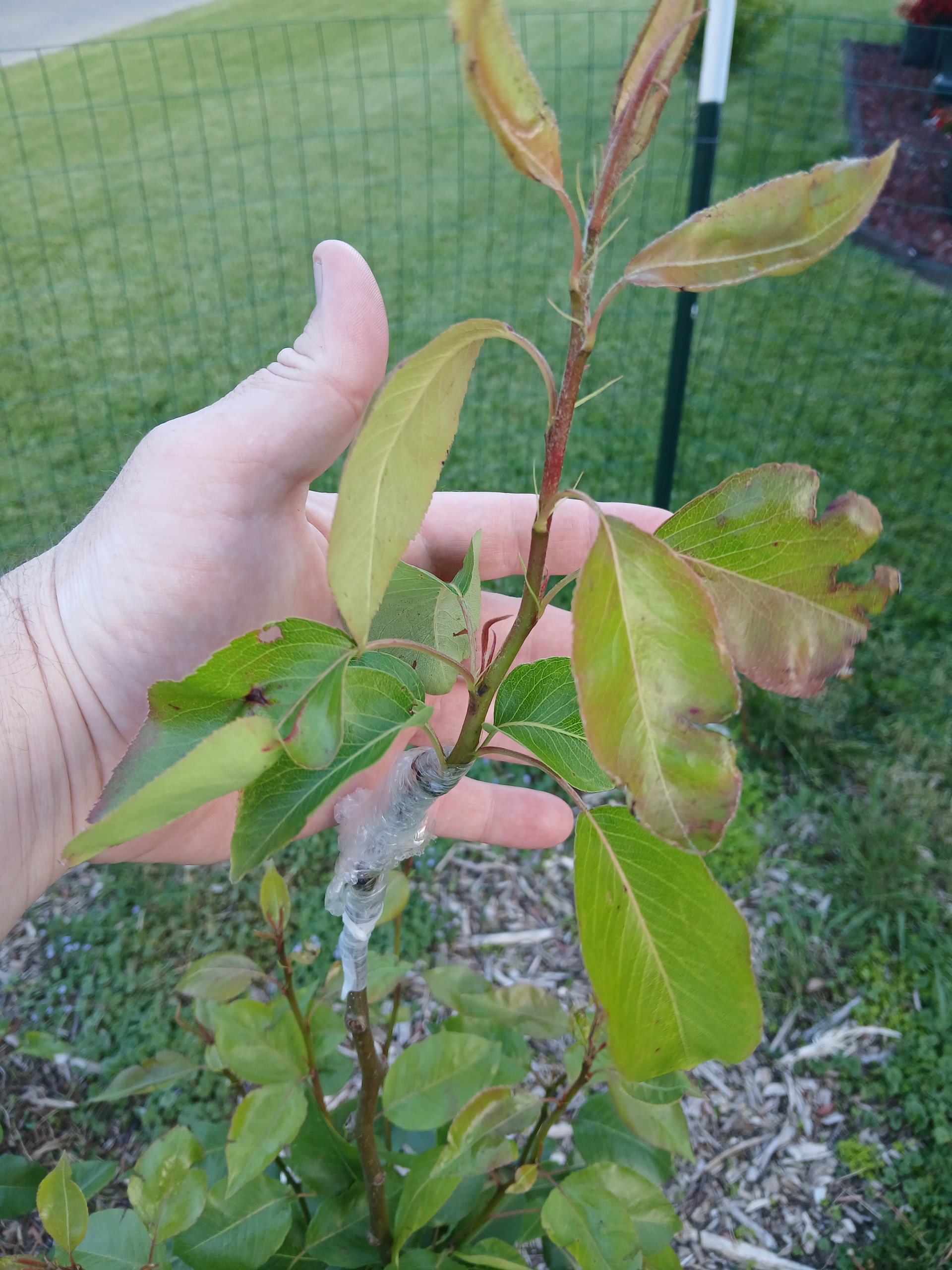
Bluebyrd Plum on Green gage.

I grafted 12 bluebyrd to the green gage branches and so far only one has failed. it was the only graft that wasnt at the very top of a branch.
Obilinaja on Myrobalan
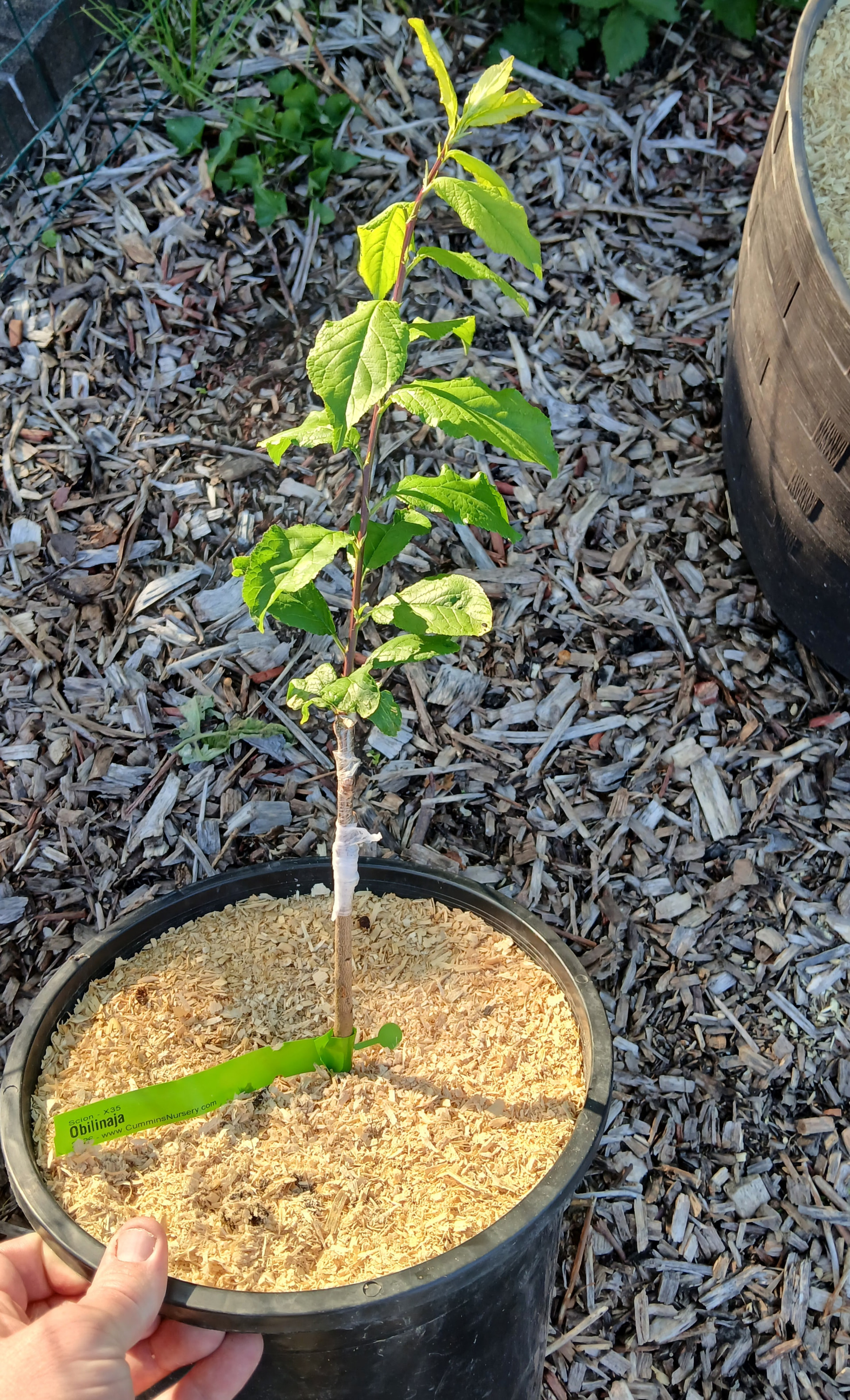
Obilinaja is the best growing plum so far, Toka started out the strongest but the growth plateaued and Obilinaja is winning now. Kenmore is the slowest growing on Myrobalan. but its graft was delayed a week. i only grafted bluebyrd to green gage so i cant compare that variety
4 Likes
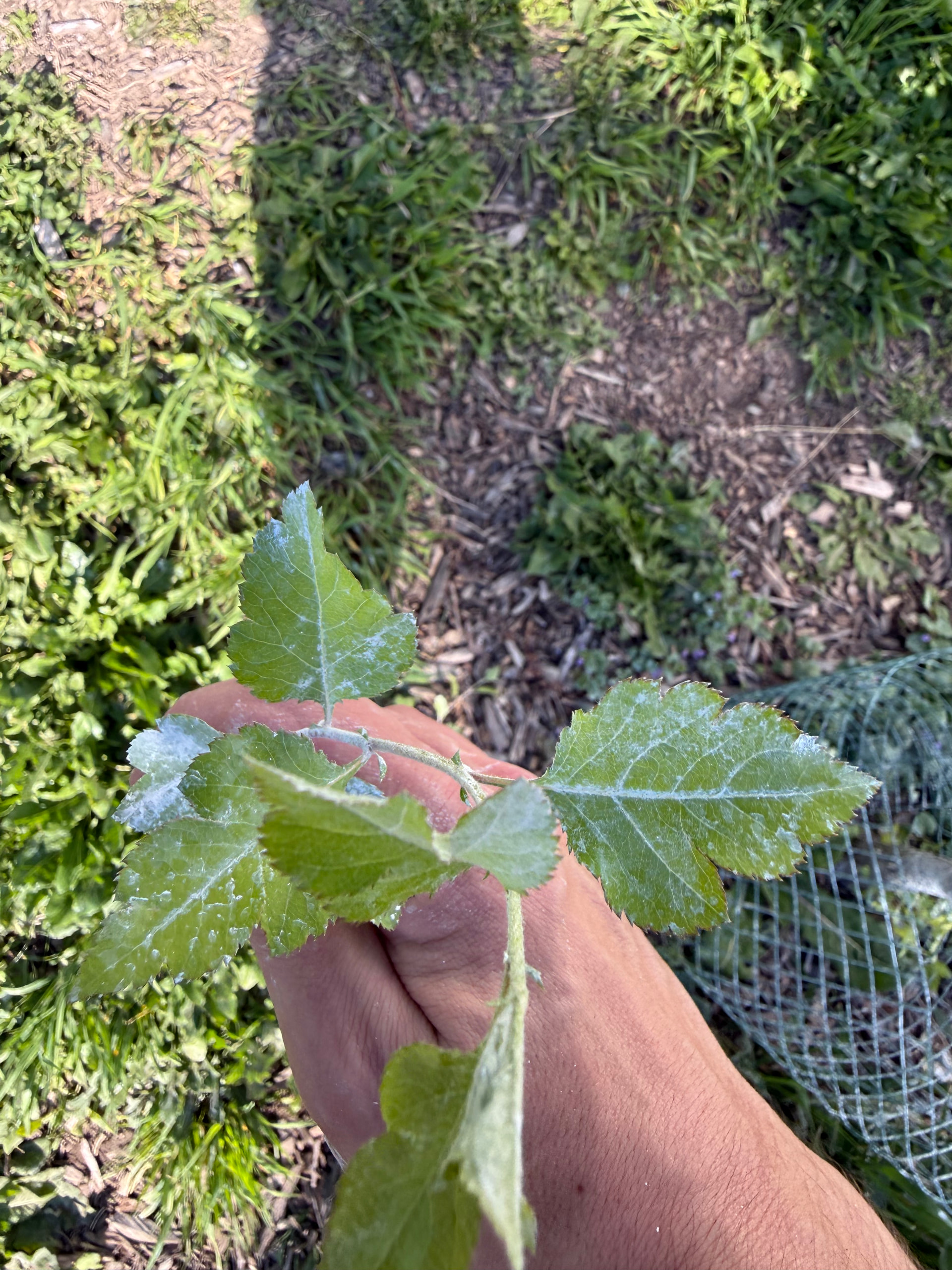
Can anyone guess what rootstock my shinsui Asian pear is on?
Precocious. It had fruit on it the year I bought it (2022). Already produce 15+ pounds of fruit a year since 2024. This year seems a bit lighter because I under thinned it last year but still plenty.
Doesn’t look like pear so maybe something else in the pome group ?
(The white is surround clay)
1 Like