Cut until I didn’t see brown in the scion. Here it is unwrapped. One side of the rootstock looks bad. Think I should cut it off before that black on the rootstock? I don’t care about the scion at this point I’m chalking this all up to a loss, so willing to try anything.
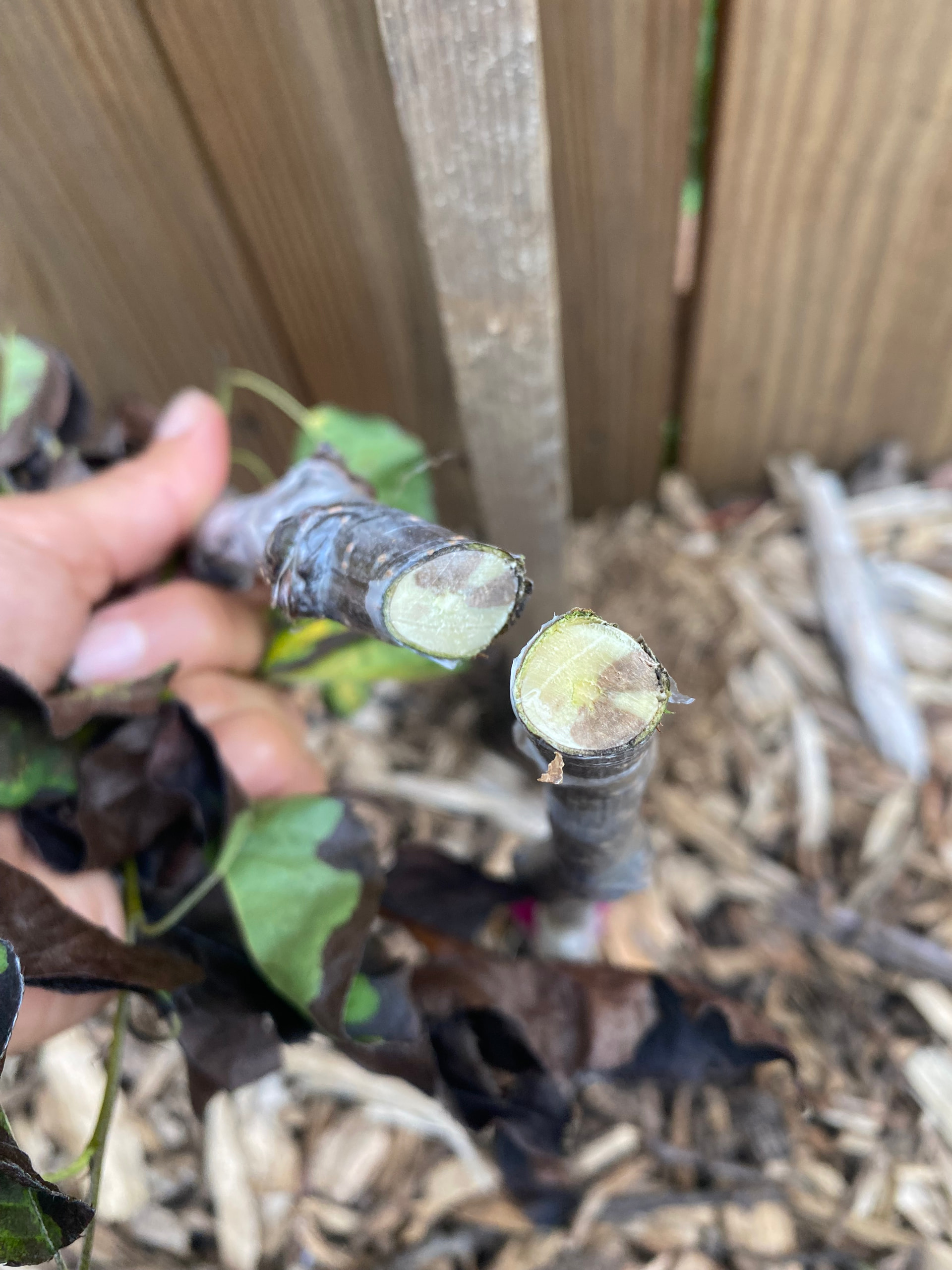
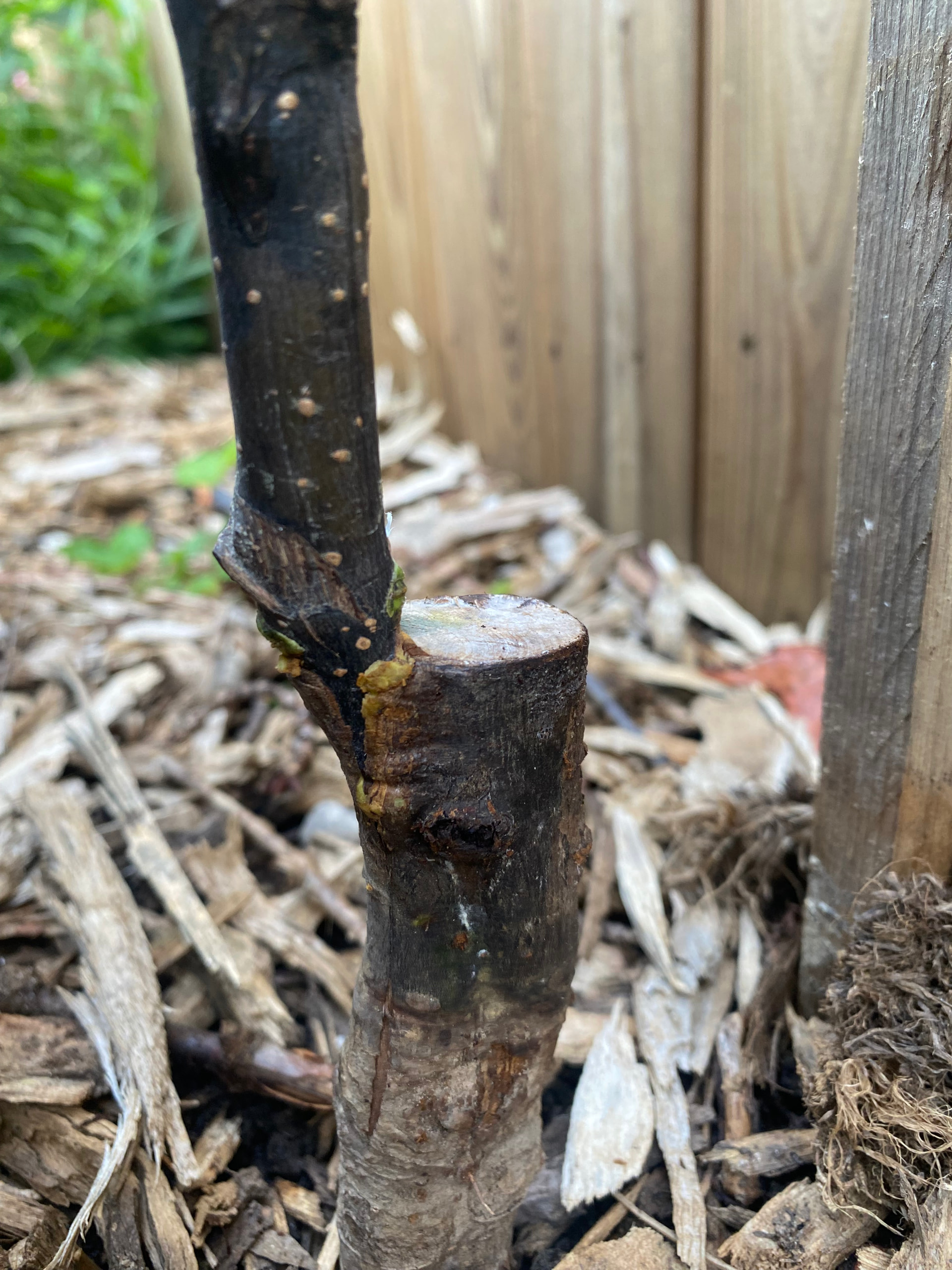
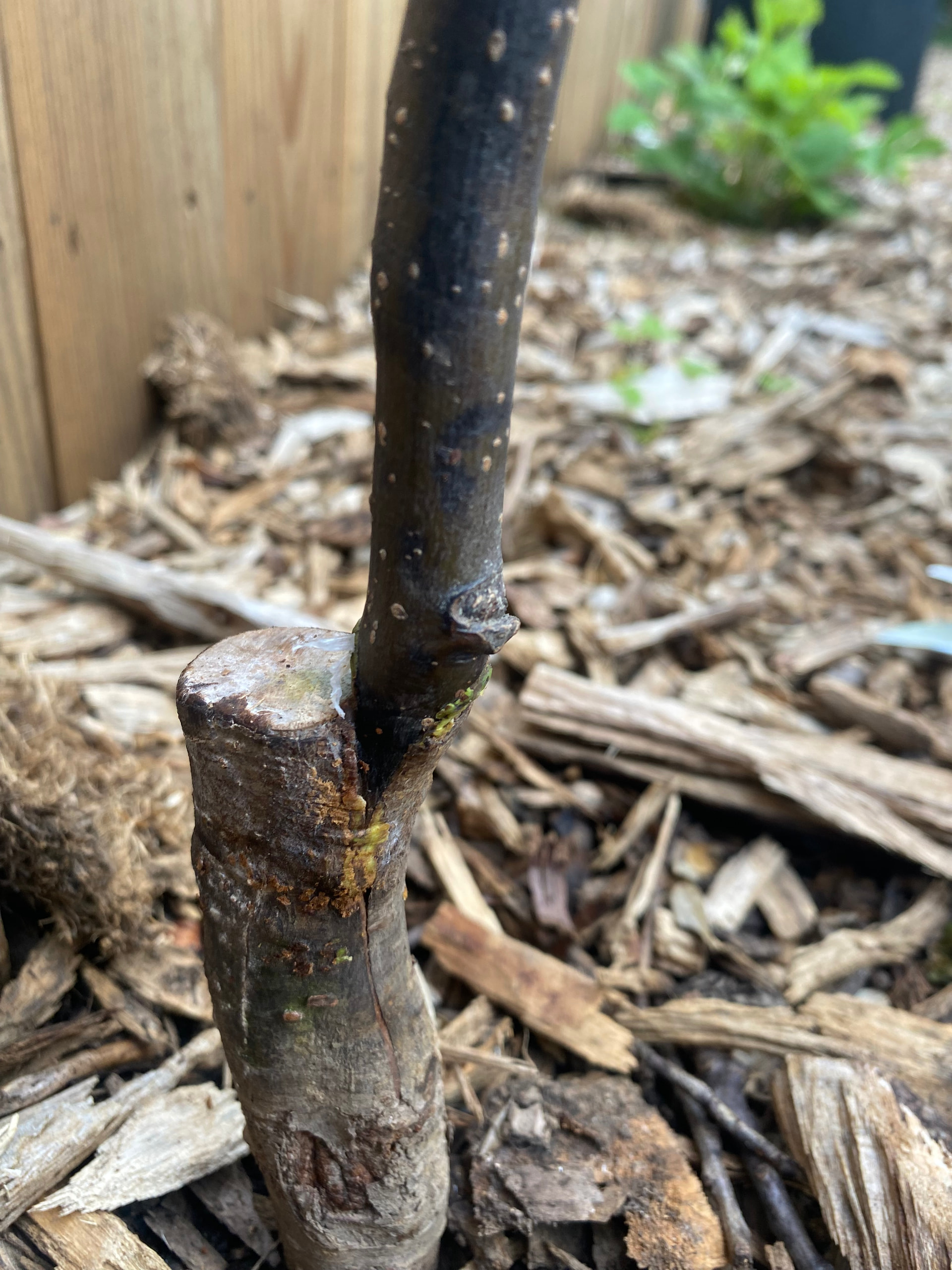
I’d keep going down until you find clean wood in the rootstock or until the scar in the rootstock at least, that could be brown for a different reason, so I’d say that’s good enough. Graft on the green side of course, and good luck, I hope it will live!
It probably doesn’t matter, but what is the rootstock?
OHxF97. Thanks for the advice
1 Like
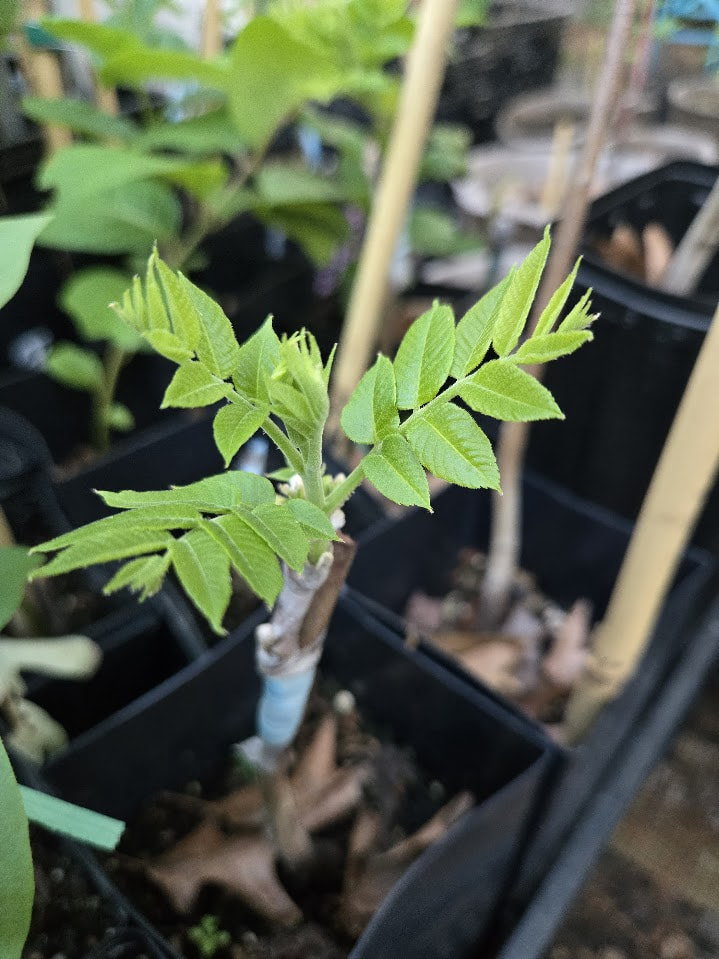
4 out of 6 walnut grafts have definitely taken! still some hope for the other two, but I’m good with that success rate if that’s all I get.
4 Likes
what kind of graft did you use and what varieties are they?
1 Like
My experience when the trunk has browning inside is that if you don’t keep cutting until it’s clear, you will have the entire trunk growing shelf mushrooms.
3 Likes
Thank you! I think the darkened area on one side of the rootstock was just wet. It looked normal when I went back to secure the remaining bit of scion.
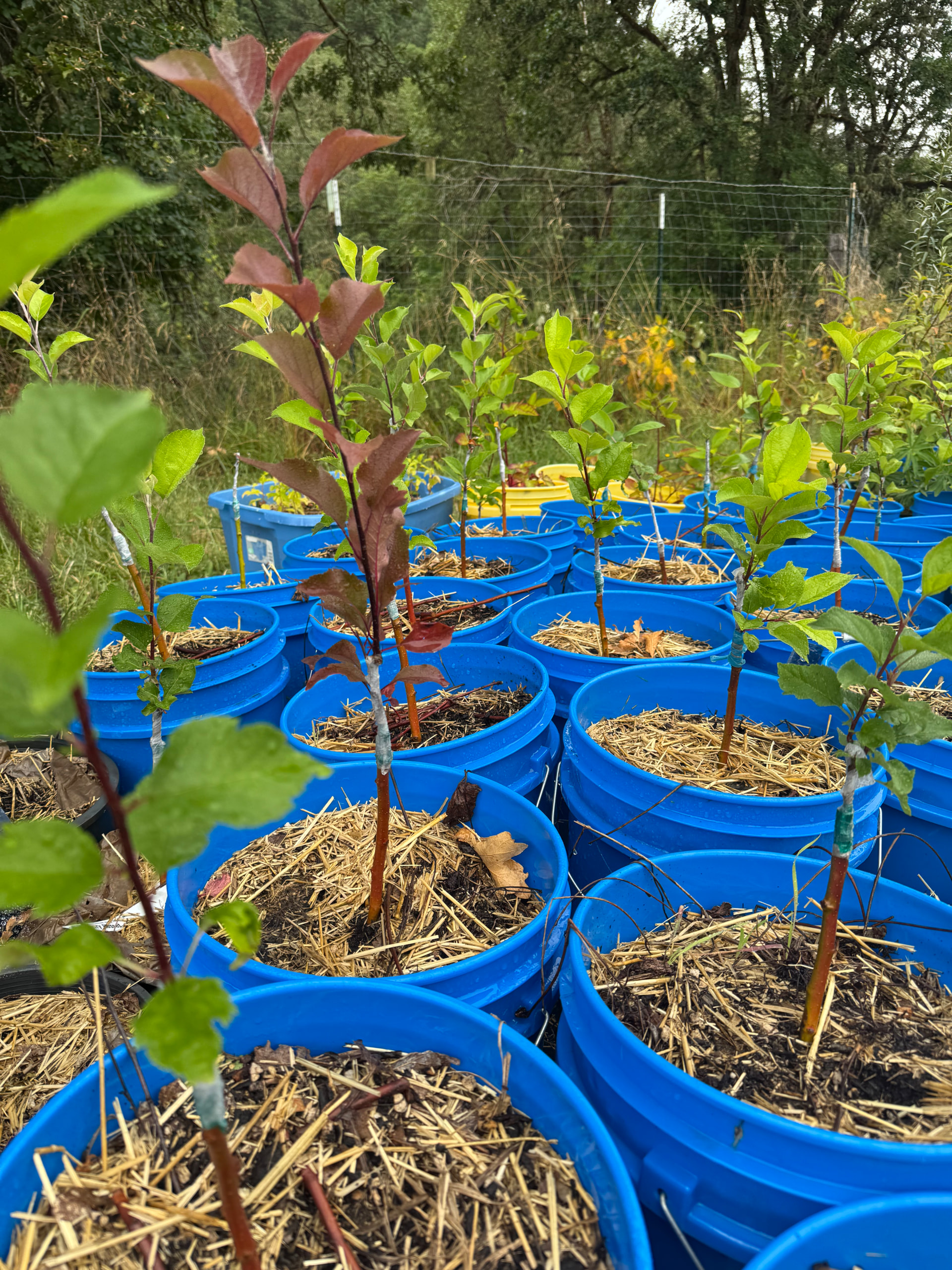
They are all Sparks 127, using a side cleft graft. Rootstock leaves were left on for 10 days, then rootstock was cut above graft union.
1 Like
That’s good for Asian pears, but the best are betulafolia and Callery pear, in debatable order, maybe even Manchurian pear for an extremely cold climate.
1 Like
I had 5 that looked like that a couple years back. Two flat out died - there was nothing to save. Three still had good roots, so I grafted onto them. The two on the hill that I cut way back put on good growth last year and still look good.
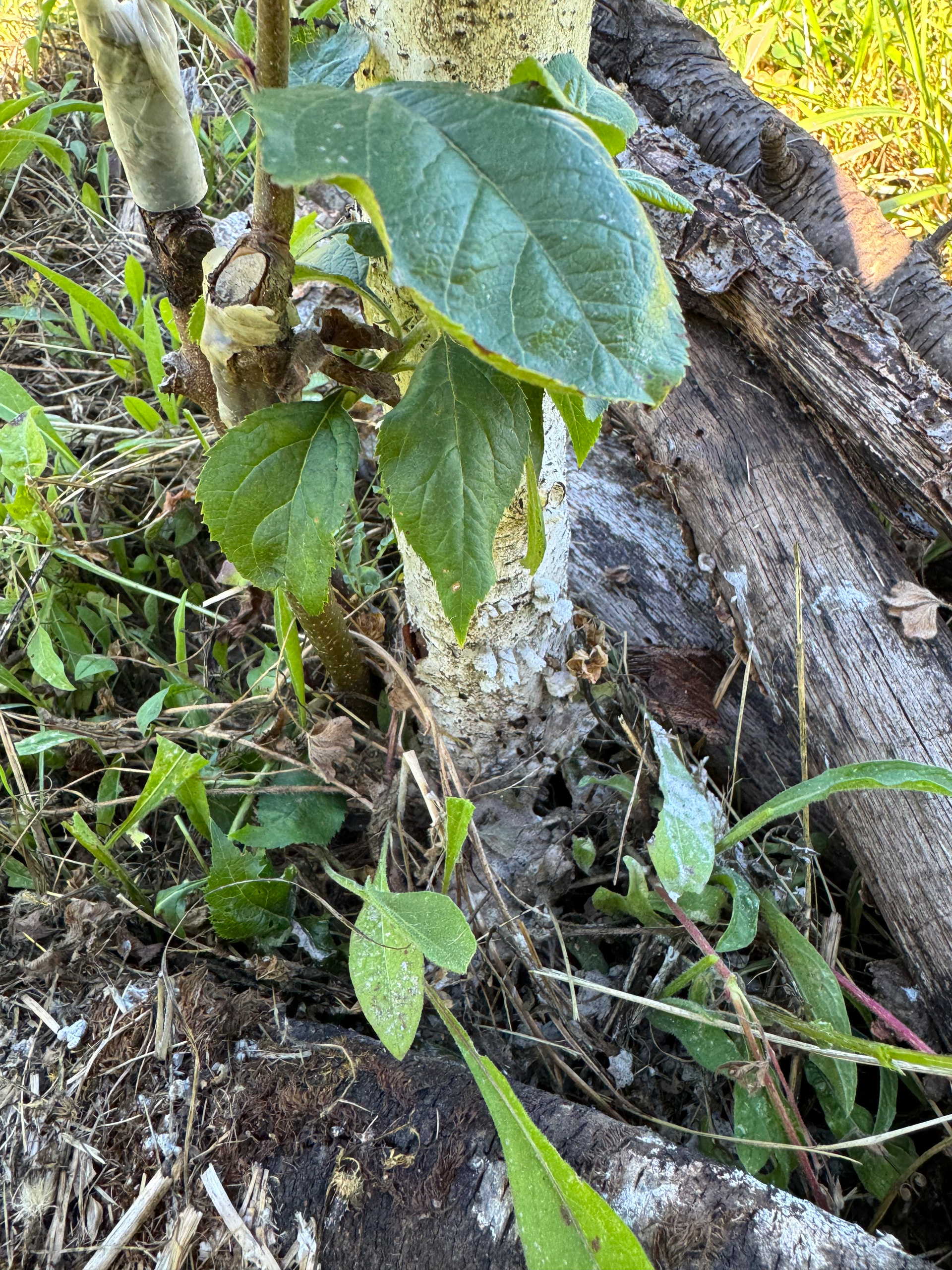
I meant to dig up and discard this one because I left too much of the trunk on. One side I grafted died and the other side looked puny. But the puny side sent up some nice growth and green leaves so I think I will cut the trunk back and let the growing side be the leader. Unfortunately since I planned to get rid of it I didn’t save the tag. I am 90% sure it’s Devonshire Crimson Queen on M111 but it might be M9.

4 Likes
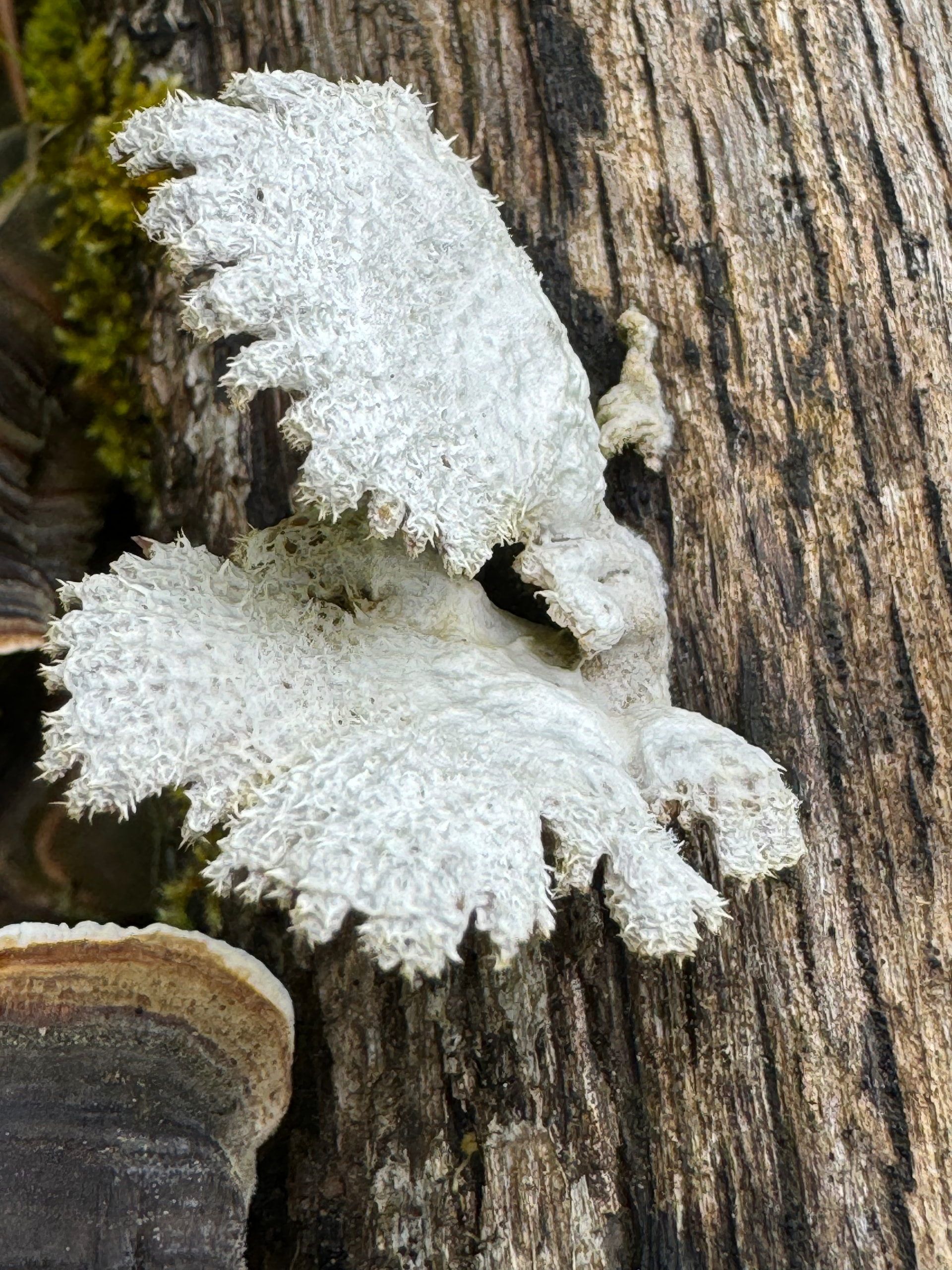
The close up is of turkey tail and I don’t-know-what lacy shelf fungus on one of the trees I discarded last year. It was an M7 with Enterprise grafted on top, about 7 years old.
1 Like
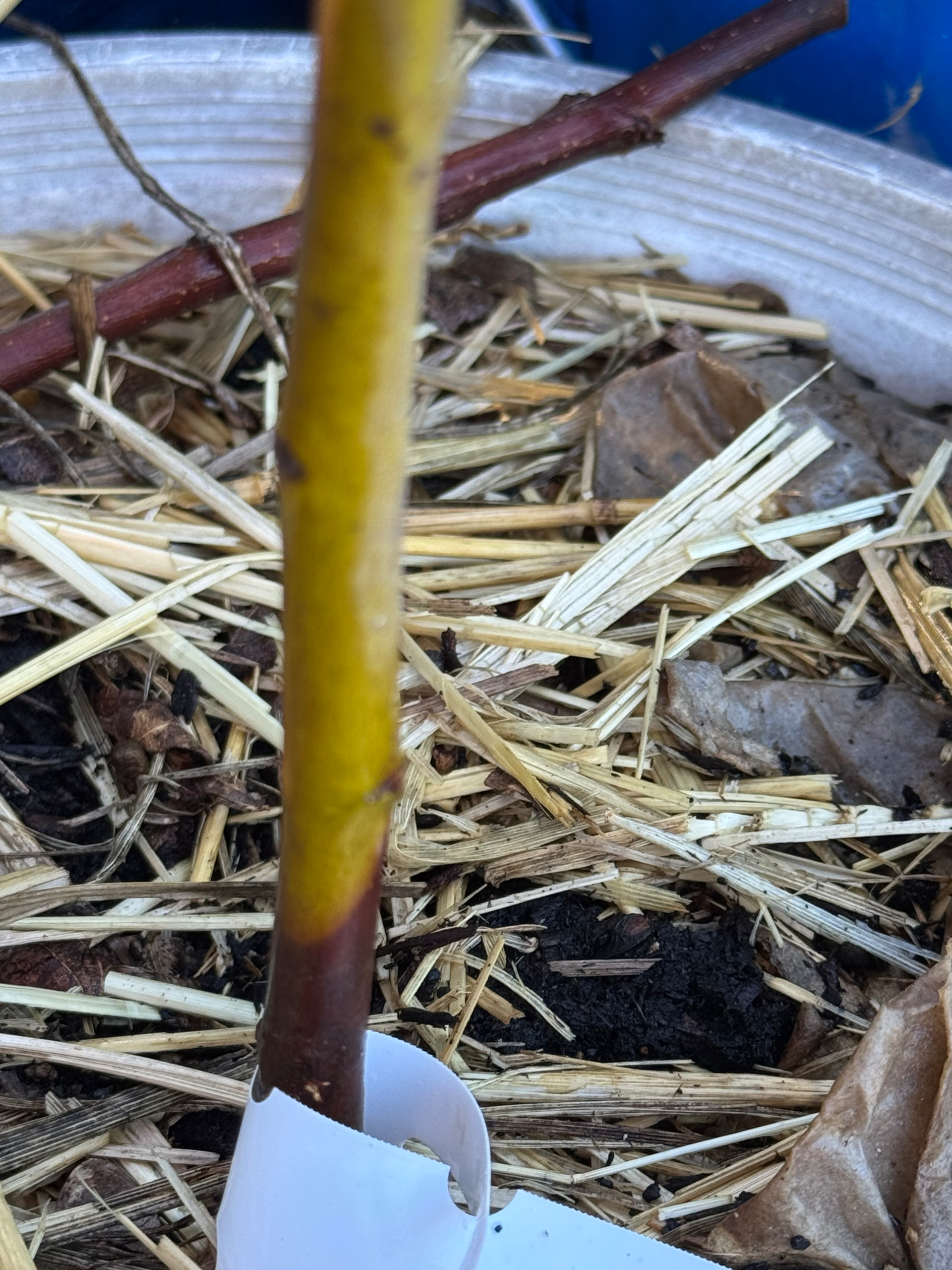
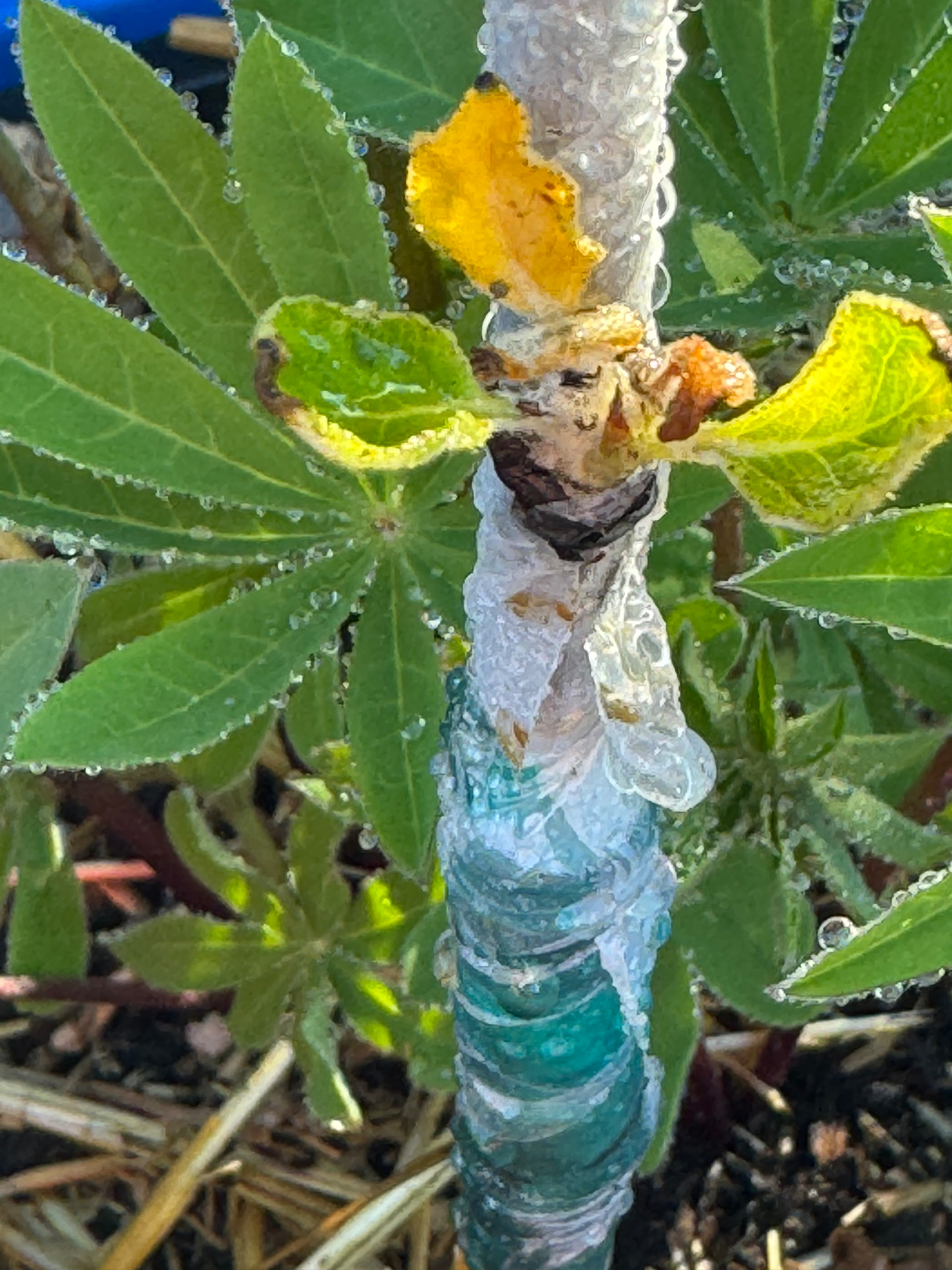
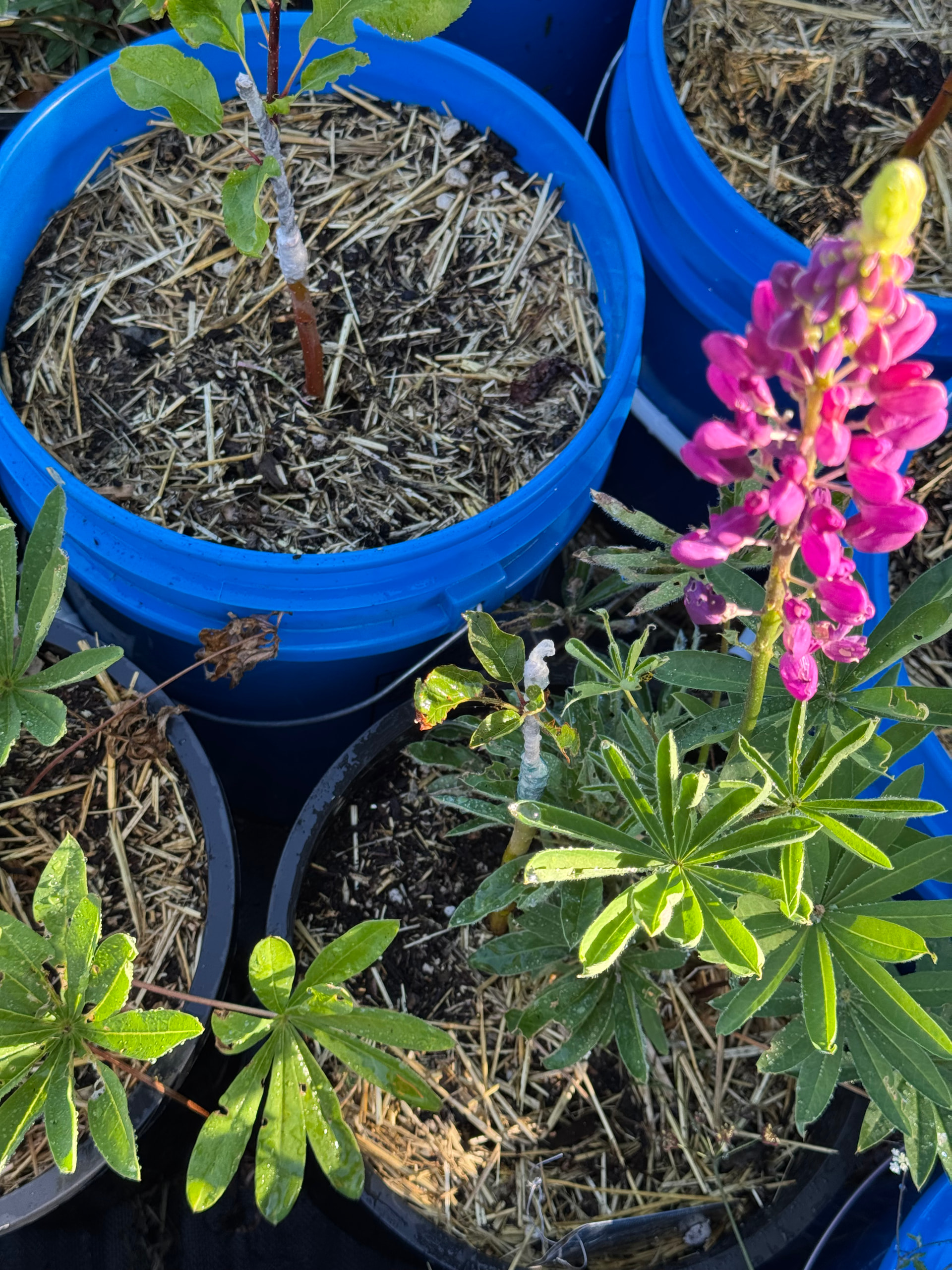
Here’s a little experiment from last month: I had 7 grafts that had just a smidgeon of leaf growth, which then dried up. Two had failed rootstock (they’re obvious, due to the blackening, so I didn’t plant anything with them. I planted 1 year old lupines with the other baby trees, for nitrogen and shade. Two have tiny new leaves and three have good regrowth. It probably helped that we had a spell of cooler weather and some unexpected rain. (I do water, but probably not enough.)
Also good - the rain bought us a little more time safe from fires, and since there were two multi-acre fires within 5 miles of me, I am feeling mighty relieved.
Pix in a minute, I hope, when internet cooperates.
2 Likes
I can’t find the thread I was going to post this in, it was about breeding, I think, but here goes:
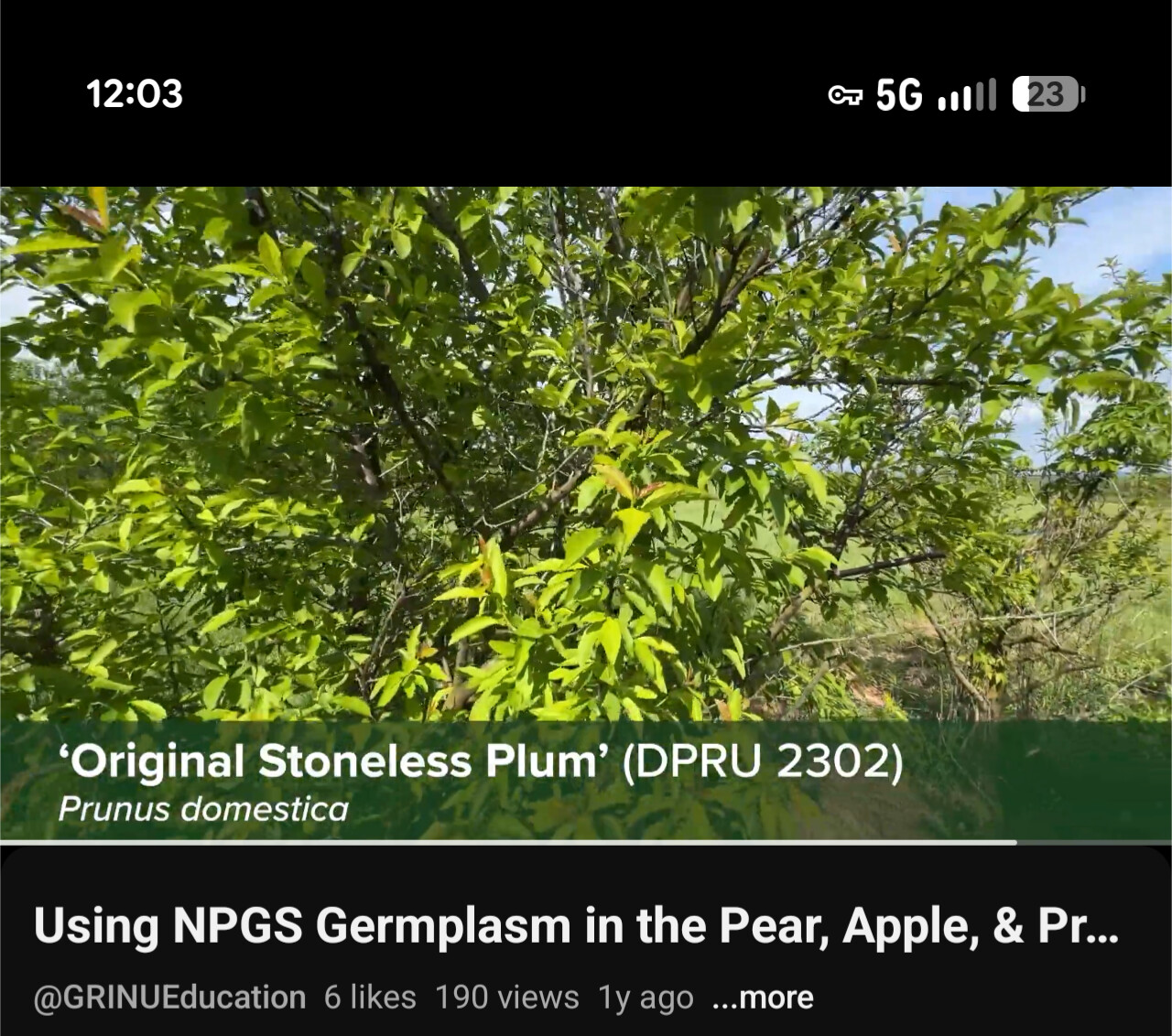
Has anyone, who gets an actual response to germplasm requests, tried requesting this yet? Euro plum with no pit? Could be very interesting to work with. Most are freestone to start with, but still.

1 Like
Neat lupine trick!
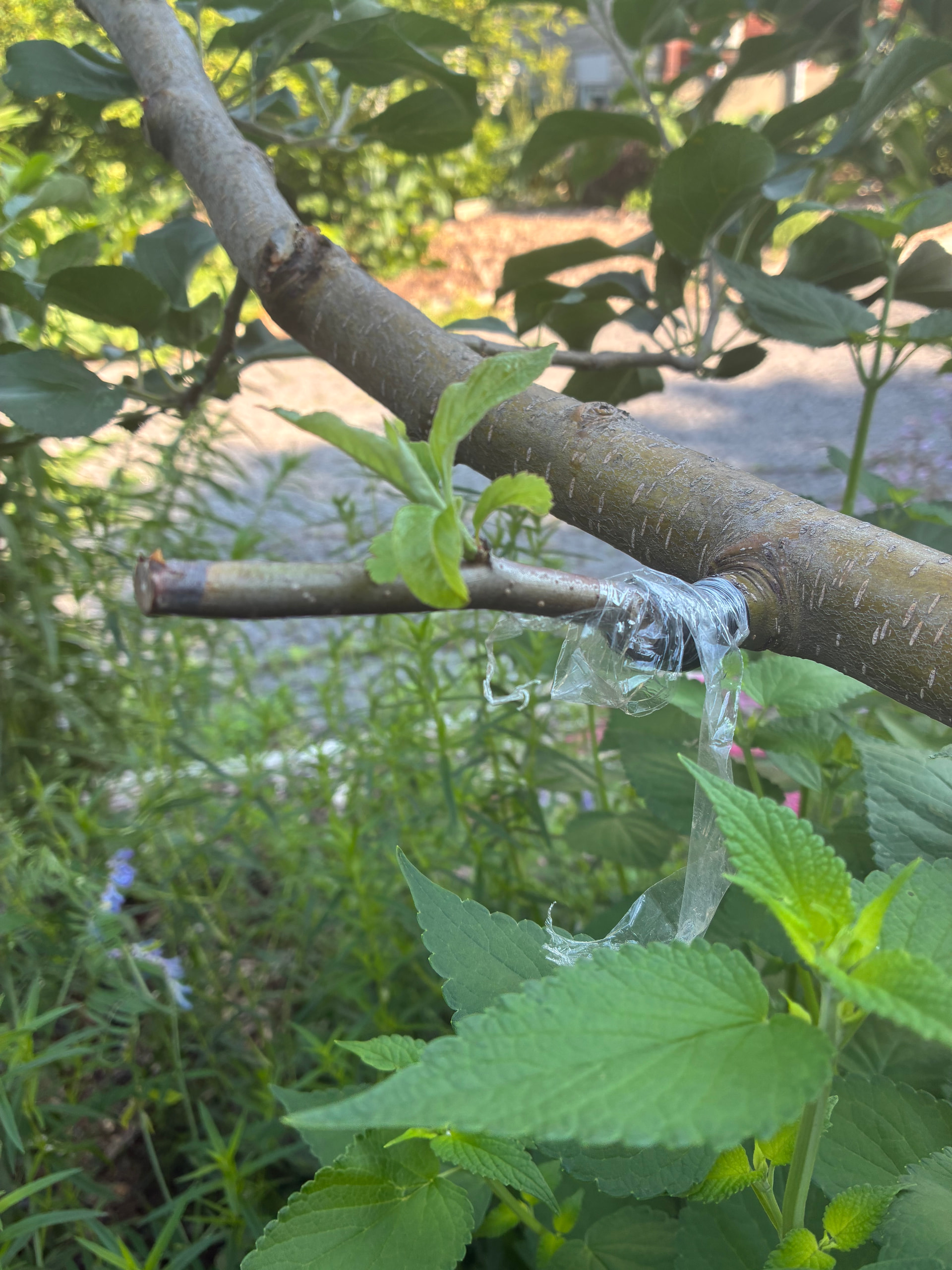
This little Rubaiyat graft did nothing for almost 2 months, then decided to finally push growth this week. The scion I got was a nice caliper, however there was only one viable bud. Stayed plump so I never gave up on it. Was quite tempted to re-graft with another less desired variety due to my assumption it had failed for some reason. All other successful grafts that were done the same day have well over 12 inches of growth.
4 Likes
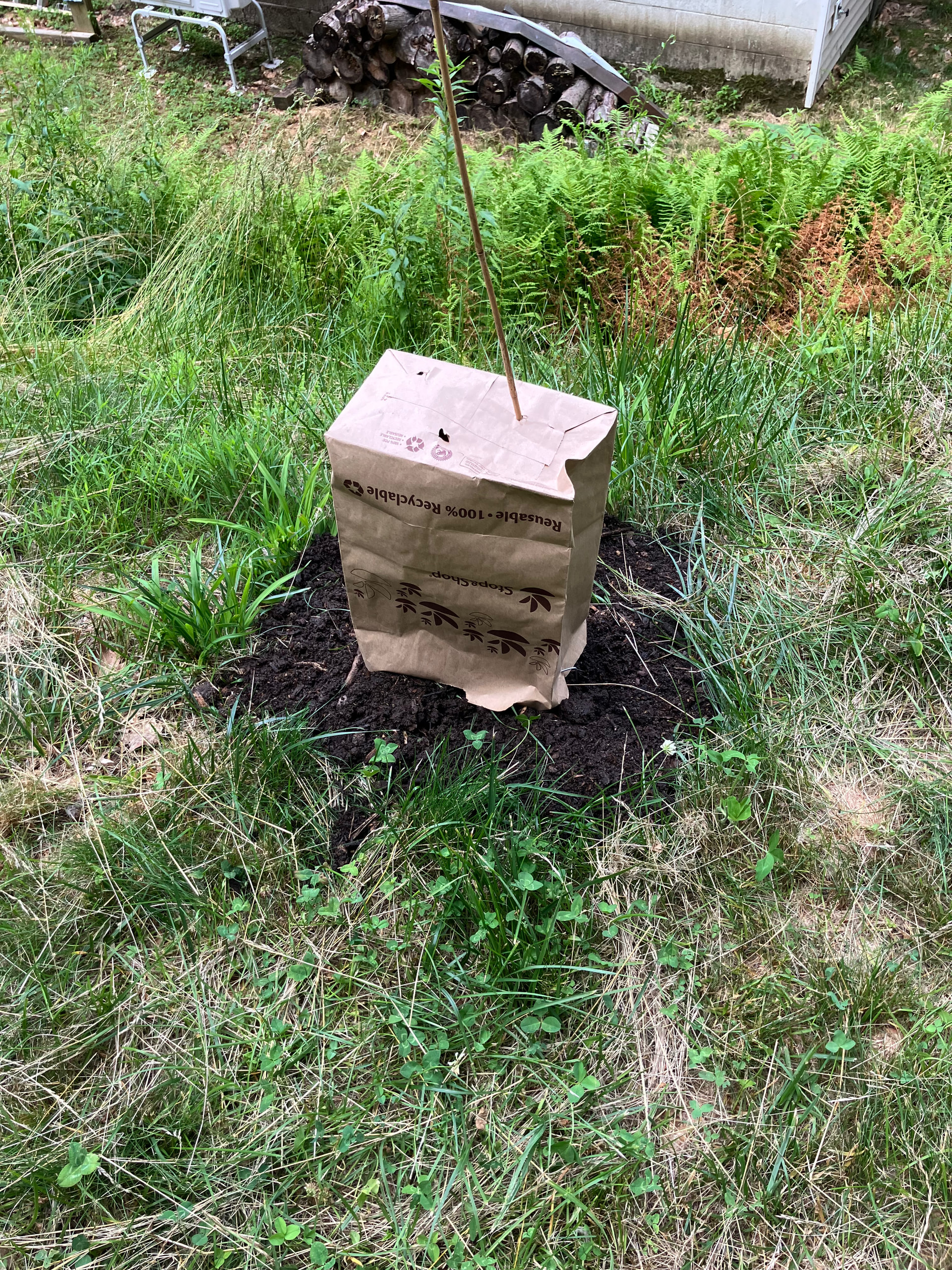
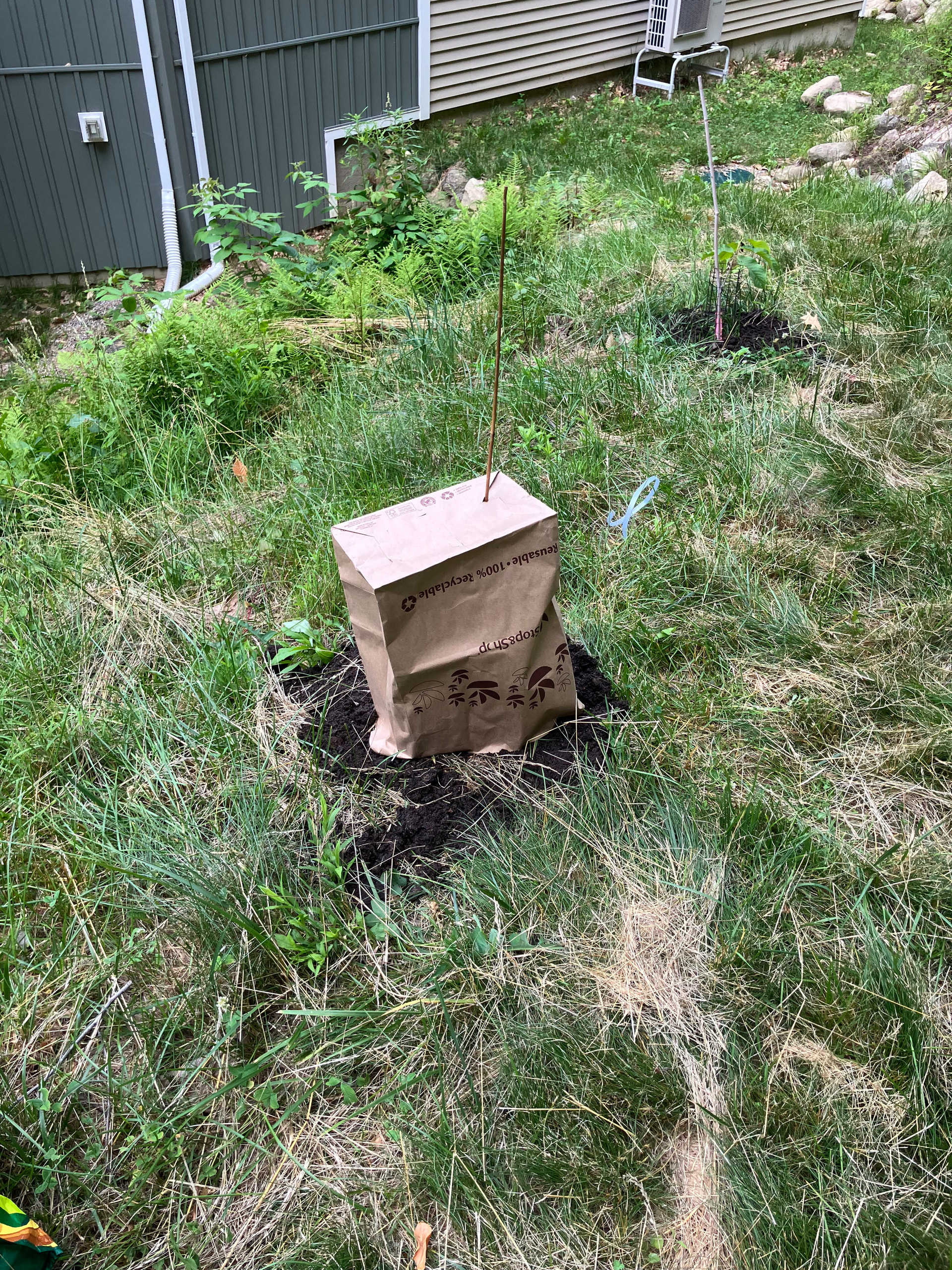
Field grafted some pawpaw today. Going to be very hot and sunny so I covered with a paper bag and punched holes in the top to try to ventilate but provide some shade
3 Likes
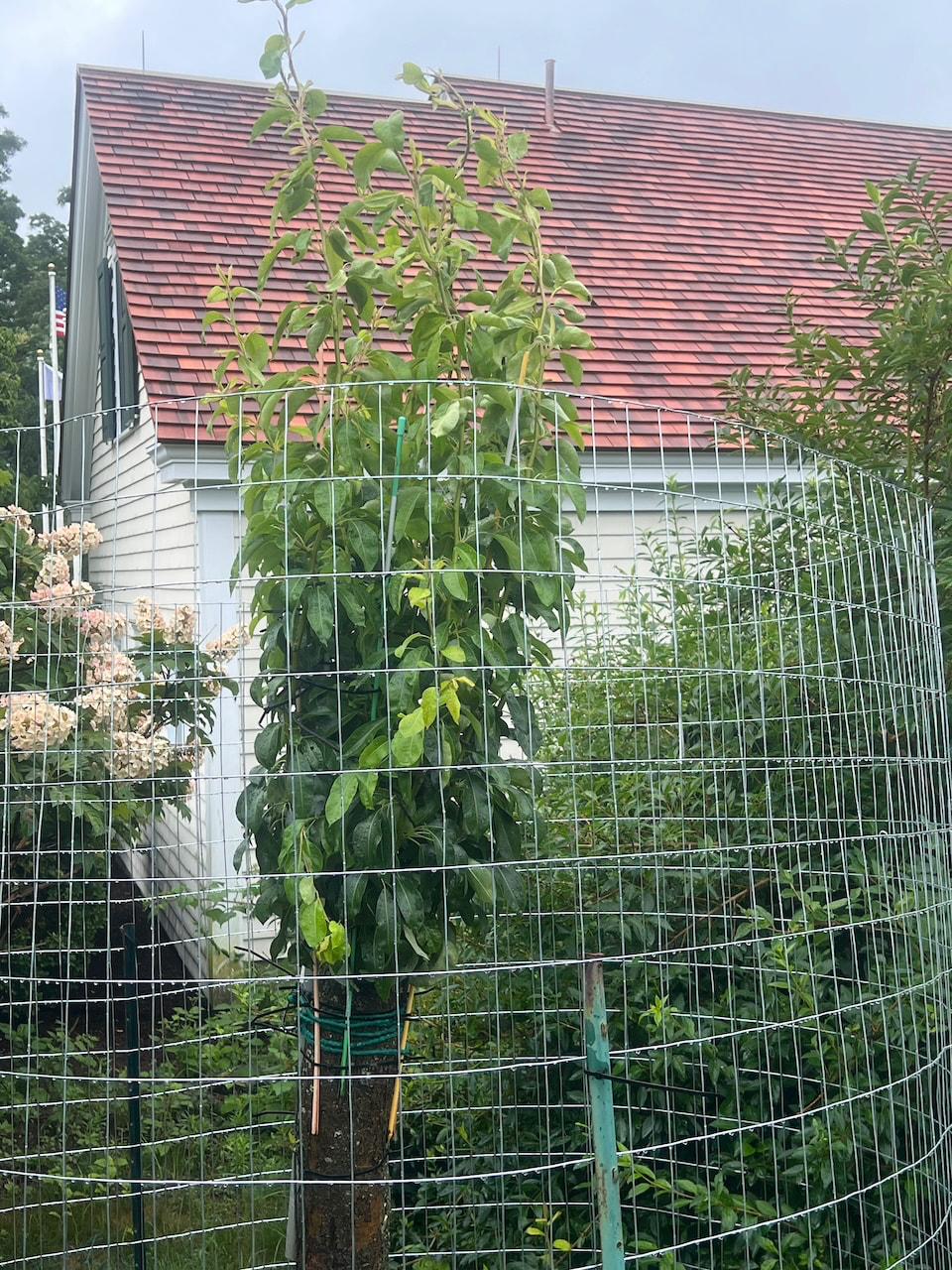
An update: All 16 bark grafts on my top-worked pear tree continue to grow. Some are approximately 5’ tall. I decided to remove the plastic fencing that I had used to support the growth. I replaced the fencing with individual (green and orange) stakes. Shoots are tied to the stakes.
I’ve lightly pruned horizontal branches, especially internal branches.
I’m hoping to support continued vertical growth, which should be accompanied by increasing thickness of the shoots and more expansion of tissue across the top of the trunk, for the entire growing season if possible. During late autumn / winter, once the new growth is well lignified, I’ll remove the supports and trim some of the growth.
6 Likes
I’m sorry for being a broken record, but low down internal branches could be your best friend for healing over your open cut on that trunk, the alternative is paint that open wood with the best possible sealant now and every year or two.
Also the vertical growth that you want to remove, hopefully you can leave a low down outward growing branch, then you can cut the vertical growth off and leave it growing out so that graft’s base keeps expanding to connect together with the next graft.
@Trav – I appreciate the effort but I’m skeptical that I can successfully cover the exposed trunk using low branches without creating a set of huge inclusions within the tree. Until proven otherwise, I’m still hoping that expansion of the growth of the shoots (a) around the perimeter, and then (b) across the middle of the trunk will do the job better. I’ll know better this autumn.
Yes I would intend to trim any culled shoots to low, outward-facing buds so that the graft could continue to grow, merging with neighboring grafts and expanding across the middle.
1 Like