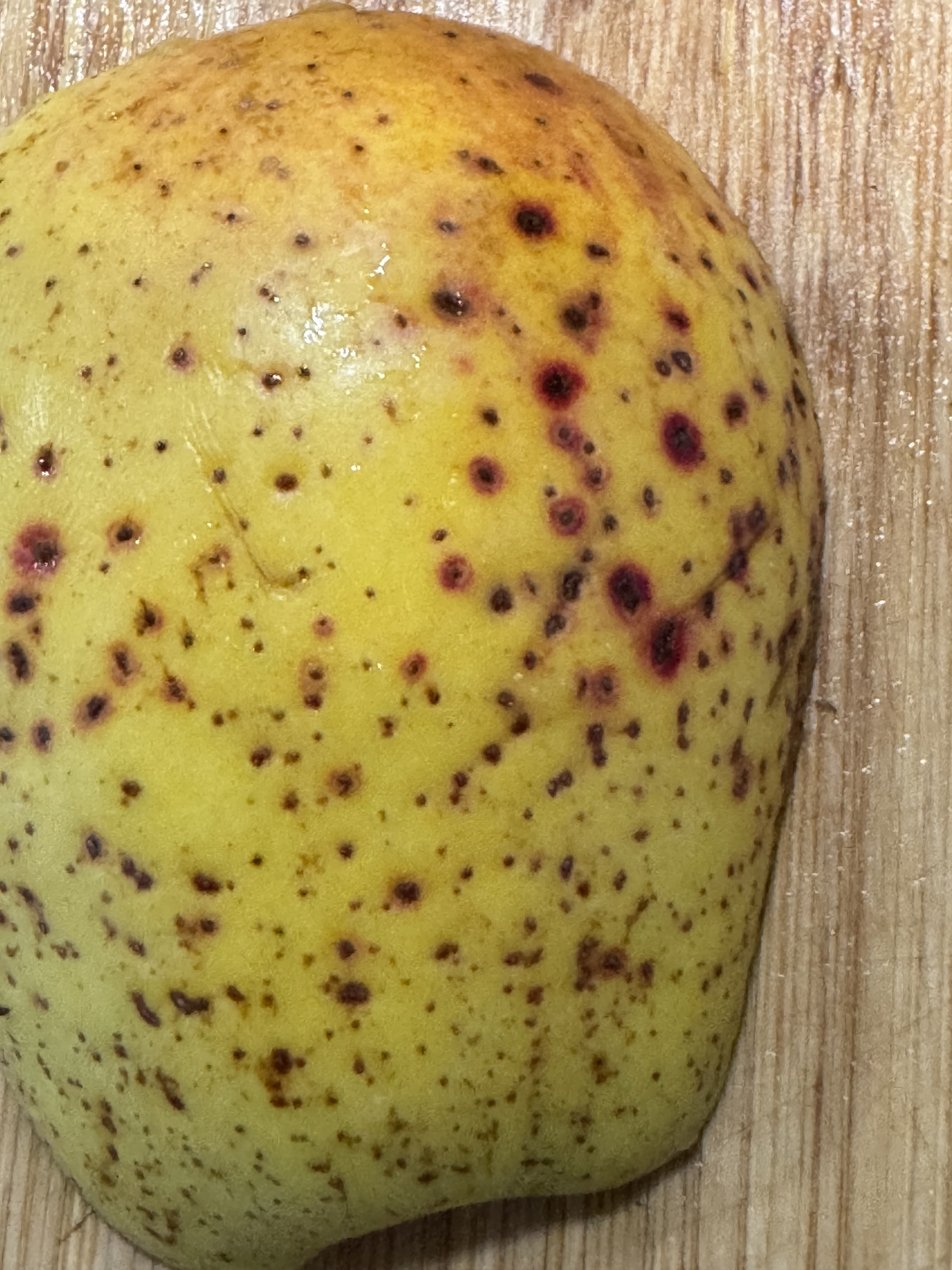
Here’s and ugly one! I never had a bitter pit probem before, and this year on 2 trees Hudson’s and Glockenapfel), showing up at picking time. The trees need more calcium.
1 Like
Yes, though I’m still a novice. I prepared by making mead for years until I perfected that skill. I generally make a dry, ~12% ABV mead from citrus, cranberry, or knotweed honey. It’s very good, if I do say so. Now I’m just figuring out how to adapt the method to apples.
I’ve got a small orchard of 16 semi-dwarf trees, most of which are potential cider apples, though the group includes Chestnut and Redfree which are probably more dessert varieties. Also, the Golden Russet blew over in a big rainstorm this summer and Franklin blew over last summer. So what’s left is Dabinette, Enterprise, Liberty, Roxbury Russet, White Jersey, Franklin (replacement tree), Redbyrd Bitter, Redfield, Winesap, Belle de Boskoop, Ashmead’s Kernal, Egremont Russet, Black Oxford. Some of these are very young trees so I have big crops on only a subset. There’s also a dwarf Otterson and the dwarf Hudson’s Golden Gem, among a few others.
[Separately I have a bunch of dwarf dessert and culinary apples. We had a great crop of Bramley’s Seedling this year.]
Meanwhile I’ve tried a half-dozen experimental, very tannic, wild finds from various sources but all have proven disease-prone so I’ve removed them. Also as noted, I’m unhappy with Dabinette and may top-work it. White Jersey is vigorous but has yet to prove that it can produce a good crop; it has one more year of probation. Finally, I may top-work the Redfree because it’s more a dessert apple and I have started a dwarf version elsewhere.
When replacing trees, I’m experimenting less now, leaning toward adding duplicates of varieties that already work. I’m planning to duplicate Franklin, Redbyrd Bitter, and Winesap as I replace new culls. [My semi-dwarf Franklin and RBB are still small but I managed to test them with crops from other dwarf trees. I tend to use dwarfs and grafts for experimentation.]
I guess I prefer a dry, tannic, aromatic / fruity cider. The best cider I ever drank was made in that style in France. But I’d gladly drink a dry, sharp, soft tannic white wine substitute. Maybe the former comes from Redbyrd Bitter and Franklin, both of which seem good stand-alone, along with Winesap, Enterprise, and Black Oxford after some tannic blending. Maybe the latter comes from the Ashmead’s Kernal, Rox Russet, Belle de Boskoop, Egremont Russet, and Liberty. I’m hoping to get a decent single-variety cider from Redfield / Otterson but also to use them for blending. Suggestions are welcome.
I’m really only in my second year actually making much cider. So far this year I’ve pressed ~2+ gallons of Redbyrd Bitter (all from a single dwarf tree) and I’m awaiting signs that the yeast is active. I’ve prepped a small amount of Ashmead’s from a youngish semi-dwarf for pressing today that may yield 1 gsllon; I like the taste a lot. I’ve got a huge crop of Rox Russet picked and waiting, which should give me ~5-6 gallons. There’s probably 1 gallon of Otterson sitting on a dwarf tree. And there are big crops of Winesap, Enterprise, and Redfield waiting. Finally, there’s some Puget Spice and Snout’s Perfect on dwarf trees for possible blending.
My biggest issues are (1) juggling all the balls as various varieties ripen at different times; and (2) figuring out good combinations. I’m going to try to ferment each variety separately then blend using taste tests.
Edit: Yeast are rocking!
5 Likes
The New Cider makers Handbook by Claude Jolicoeur is a great resource. With cider, as with wine, one aims primarily for a optimal balance of Brix to total acidity, which can be achieved by blending. You’ll need a hydrometer and a titration kit. Add tannic apples to taste.
1 Like
Its true I gave away all our apples, but Mr. Almighty provided more than I gave away.
Enough for our annual apple sauce
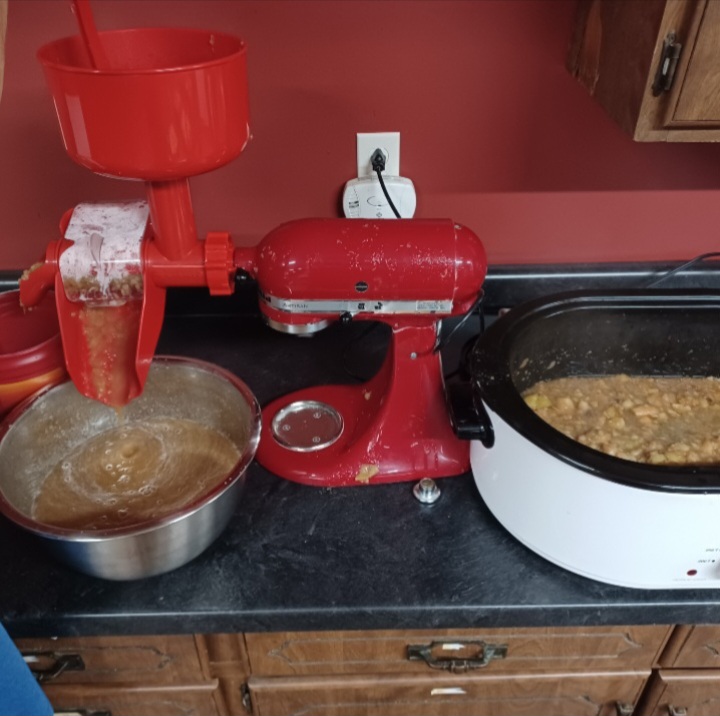
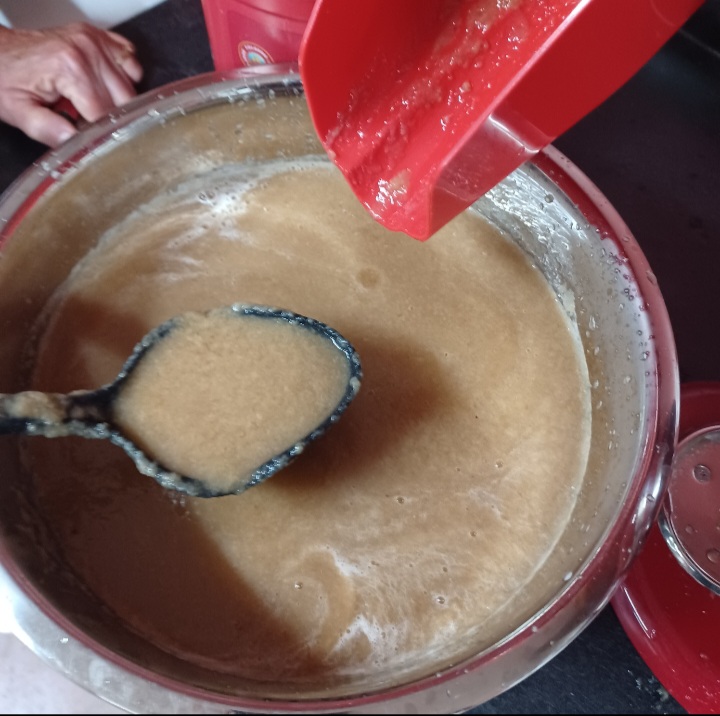
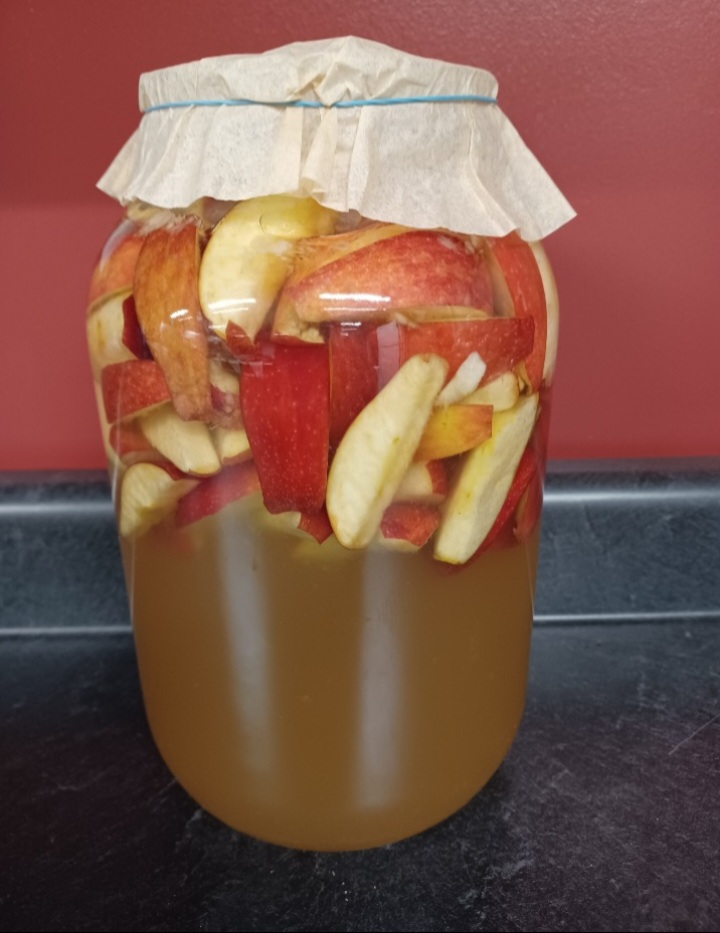
And enough for sweet cider  then continue ferment for apple cider vinegar.
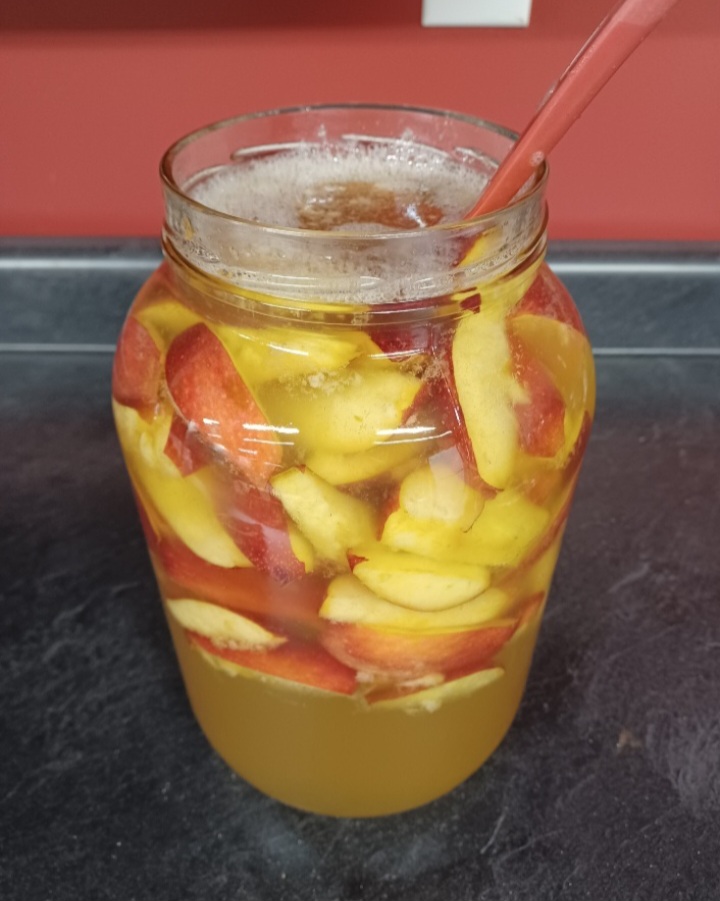
12 Likes
has anyone done the two in one whole method for apples with mature trees? curious how they handle the lean or do you need to post them for support. Id assume you would
1 Like
In the UK they plant 3 trees as tripods.
How does the lord deliver his apples? Hopefully not from on high in meteor fashion. Assuming a half lb apple of almost spherical shape theyd still have a terminal velocity of about 55mph.
3 Likes
yeah im just curious how they handle it when mature. also just curious to find pics. I think i found some online but not much
Not at all like manna 
1 Like
I’ve got a copy. I’ll take another look. But tell me – why does Brix matter for taste if I ferment all the sugar to ethanol? I typically end with a Specific Gravity close to 1.000, sometimes slightly lower.
For example, today I pressed some Ashmead’s Kernal. The Brix is 15.9. What do I do with that info?
You want to take measurements of Brix and total acidity before fermentation. Brix gives you an estimate of % alcohol after fermentation, TA does not change much during fermentation (unless you have malolactic fermentation). So, basically you are trying to balance alcohol content and acidity. The more alcohol, the higher TA. One normally aims for Brix/TA of 30 to 35 (TA in %, for cider one calculates it for malic acid). If you look at p 204 of the hand book, you have a specific gravity of 1.065 (corresponding to Brix 15.9), so for the ideal blend, you’d try to get TA to about 5 to 7g/ liter malic. TA of 5g/L would result in Brix/ TA of 32. If your TA is lower, then the resulting cider will likely taste flat. You could blend with sharp apples, or add malic acid. If TA is higher, then blend with bitter sweet apples, or use a yeast that partially ferments malic, or try to get a malolactic (bacterial) fermentation going towards the end of fermentation.
1 Like
Got it. This is a crystal clear explanation. Thanks.
@JesusisLordandChrist Would you please go over how you make your vinegar? I think I tried once, a long time ago and I can’t quite remember, but I was probably too nervous to try it!
I have accidently made kombucha vinegar though…
3 Likes
I never tried making cider, but I do enjoy a dry aromatic cider like you describe. I hate sweet ciders. I have had very good Porter’s Perfection single blend ciders.
Oh it’s pretty easy… its just a matter of time.
A couple of pointers For sucess though…
Make sure you use bottled spring water and pure organic cane sugar and non storebought apples. The cheap spring water gallon jugs at walmart work great. Not much of anything will ferment in tap water from the water department. Pure organic cane sugar works wonderful and atorebought apples have some weird coating on them.
In the doug and stacey video, stacey says stir daily, that means taste test daily to me. At about day 10, you’ll find you’ll have a wonderful sweet cider. I poured off the cider into a pan and boiled it and then refrigerated it and served it for thankgiving dinner, it was delicious😋. I immediately refilled with the jug with more orgainc cane sugar and bottled spring water and let it roll into apple cider vingar over the course of several months. Or you could just follow the video, skip the sweet cider and roll into apple cider vingar.
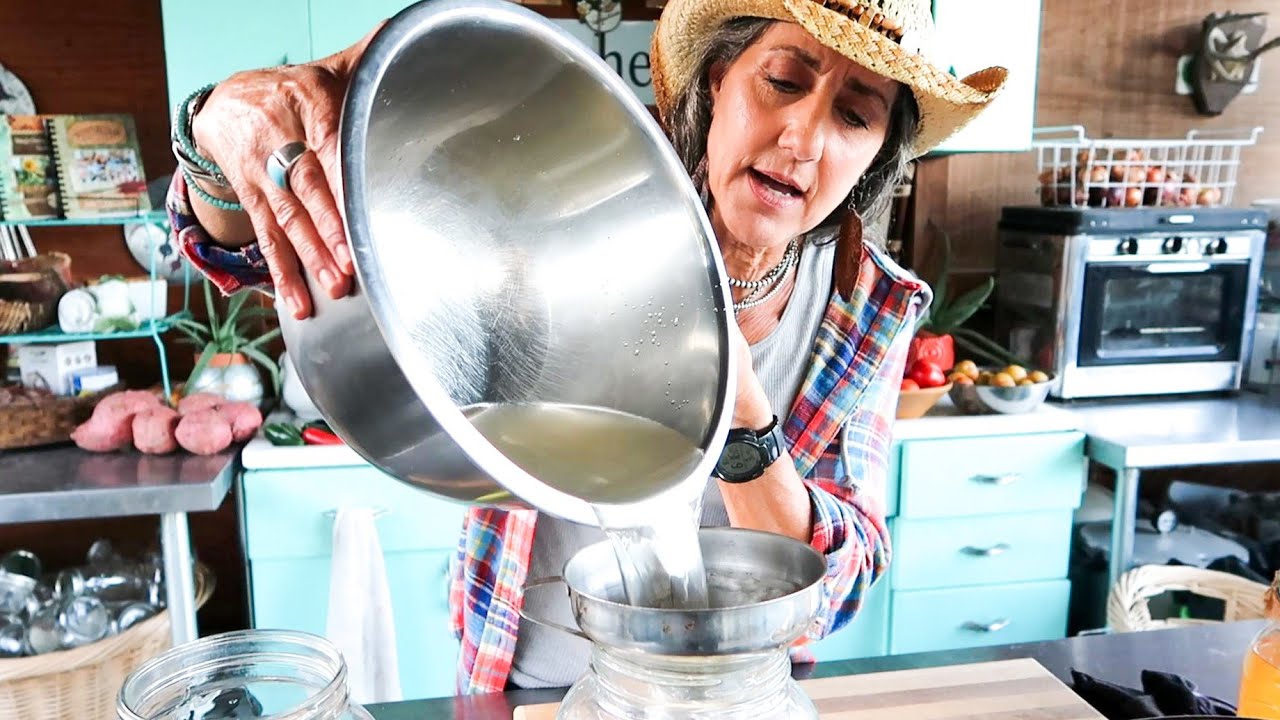
Here is a knock of “sit and forget” video also.
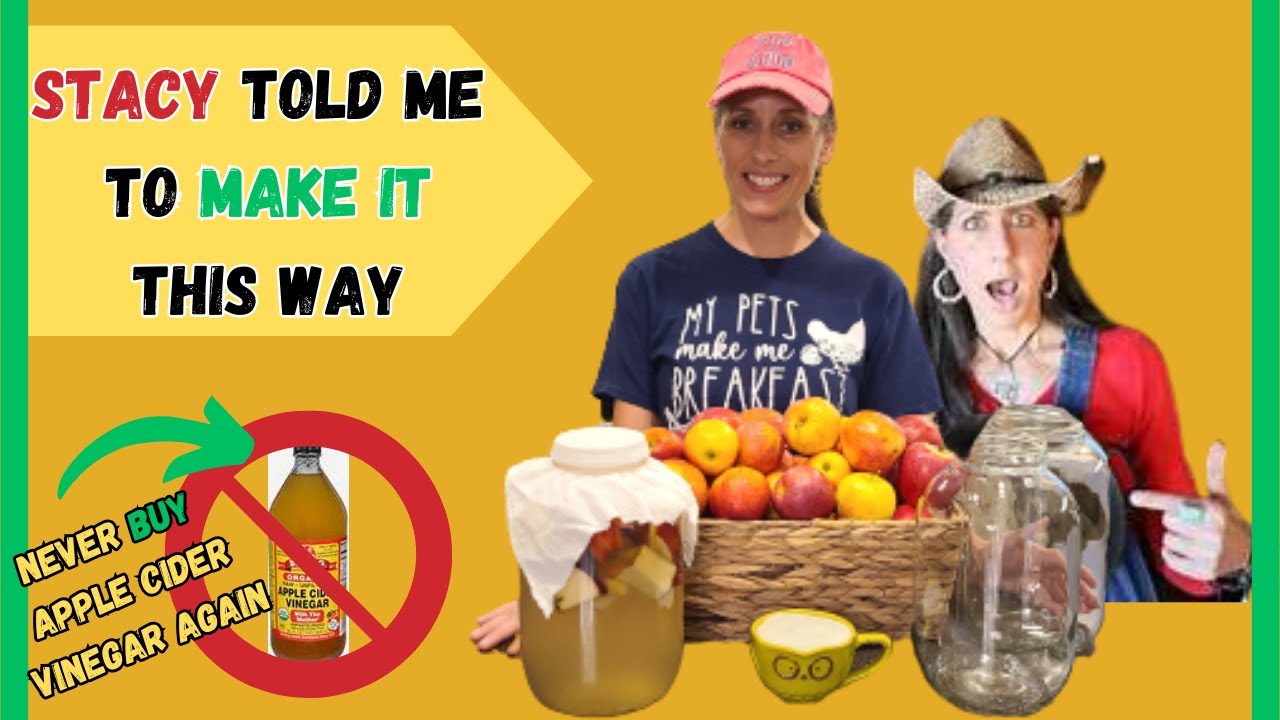
5 Likes
I definetly want some cider out of it!
Do you chop your apples more fine or big like the first video?
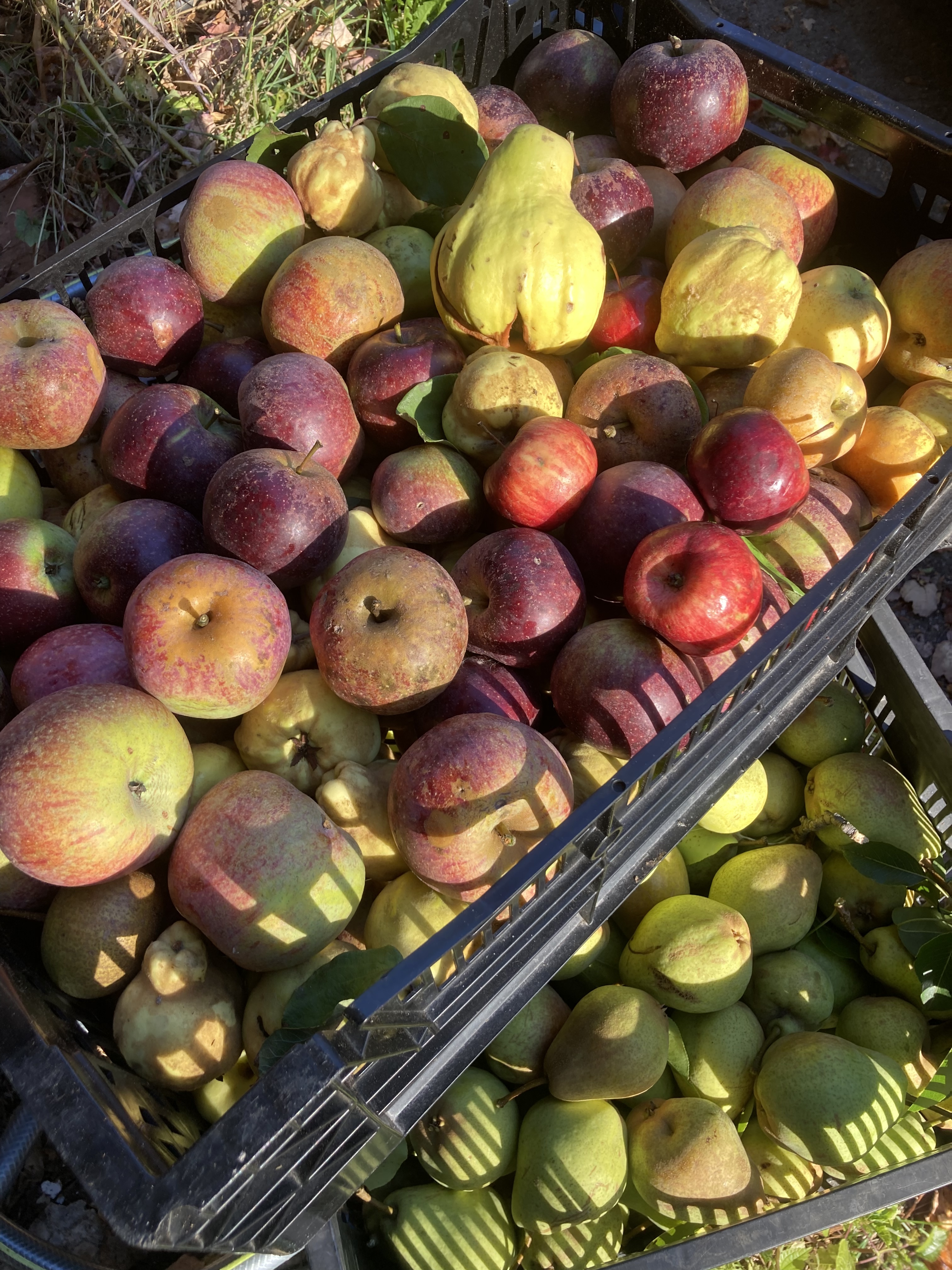
Used an apple slicer and gave the cores to the chickens. You can see the size of the slices in the gallon glass jug in photos i attached a couple.of posts up.
1 Like
I picked Roxbury Russet. What a productive (semi-dwarf) tree! I think I filled 11-12 5 gallon buckets.
Most of these will go to cider.

I think Otterson is next in line. Very abundant harvest from a dwarf tree. This is just a small fraction.
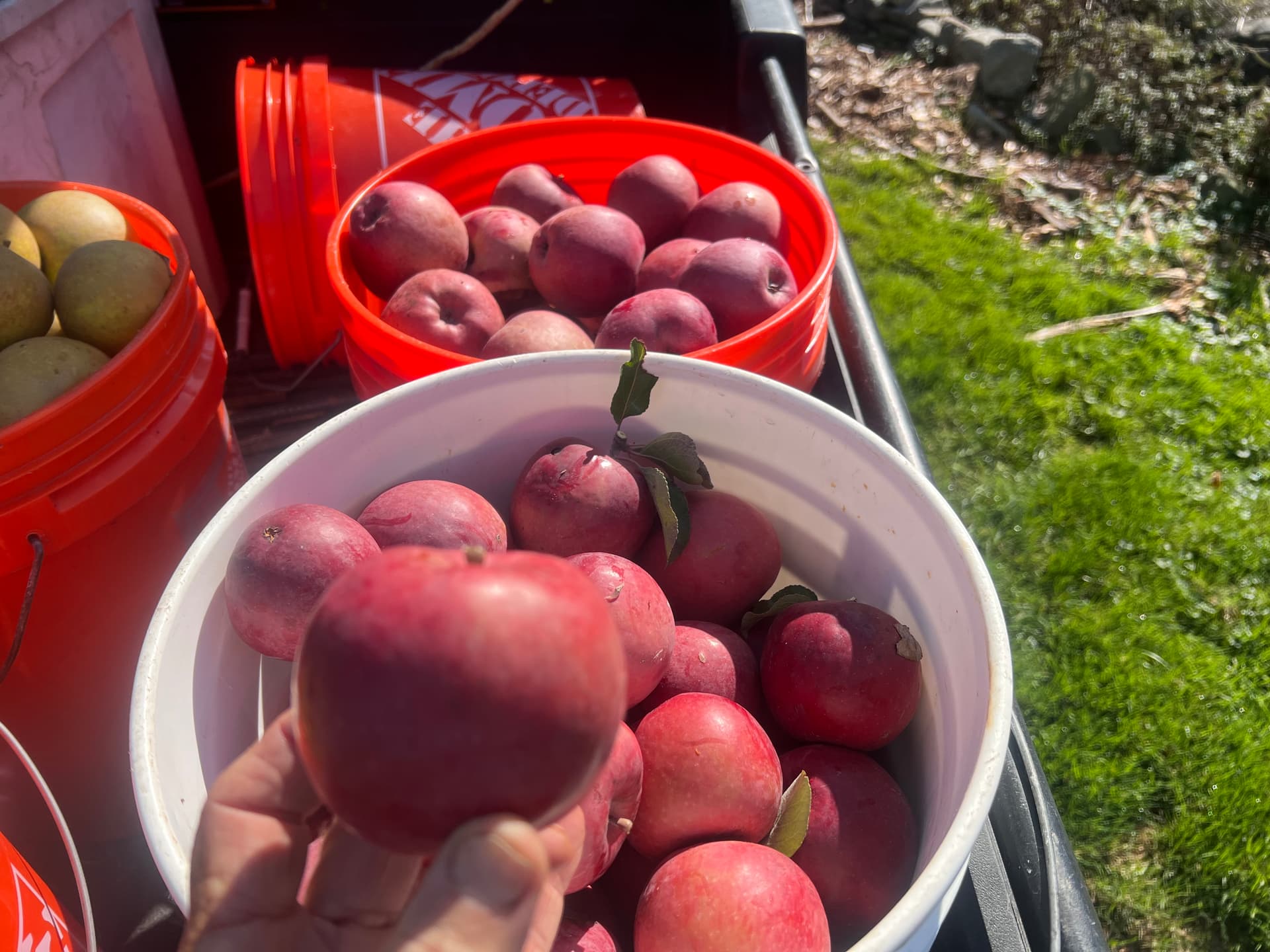
12 Likes
At my old work site on the campus is an old apple tree. The HOS panel decided it was Roxbury Russet.
My impression is that it produces loads of high quality fruit like pictured and I’m pretty sure it gets no fruit tree specific care by the landscaping crew.
It probably helps that there aren’t many fruit trees in the area.
3 Likes