I haven’t noticed any russeting from captan. That being said, it might be because I apply slightly below label rate. Cox’s Orange Pippin is very sensitive to captan and is the “canary in the coal mine” among my trees, since at mid label rate captan will burn small yellow dots on Cox’s which then leads to defoliation.
Label rate for 80WDG is 2.5–5.0 lb/A. 1 Tbsp per gallon is about the mid-label rate and works out to 3.13 lb/A, but this rate burned Cox’s so I pulled it back a little. Instead of 4 Tbsp in my 4 gallon backpack I’ve been adding 3 Tbsp instead which works out to 2.34 lb/A.
I also found the same thing with Gnarled Chapman: highly disease-prone and not very prolific. It had a very good flavor profile though. I’m using past tense because I top worked it this spring. @toad is further north so he has it a bit easier as far as heat/rot goes.
This year on the cider front I got quite a few Gilpin’s. They rotted a bit but not bad for a cider apple. They also have good tannins. Overall its looking to be up there with Harrison for me, more tannins than Harrison but less sugar/flavor.
Another cider apple I got a few of this year was Old Fertile, one of the Gnarly Pippins varieties. They are also looking promising but I didn’t get more than a couple. Again a bit of rot but most of the crop was OK. This was a horrible year for rot for me, too much heat later in the season did a number on lots of apple varieties.
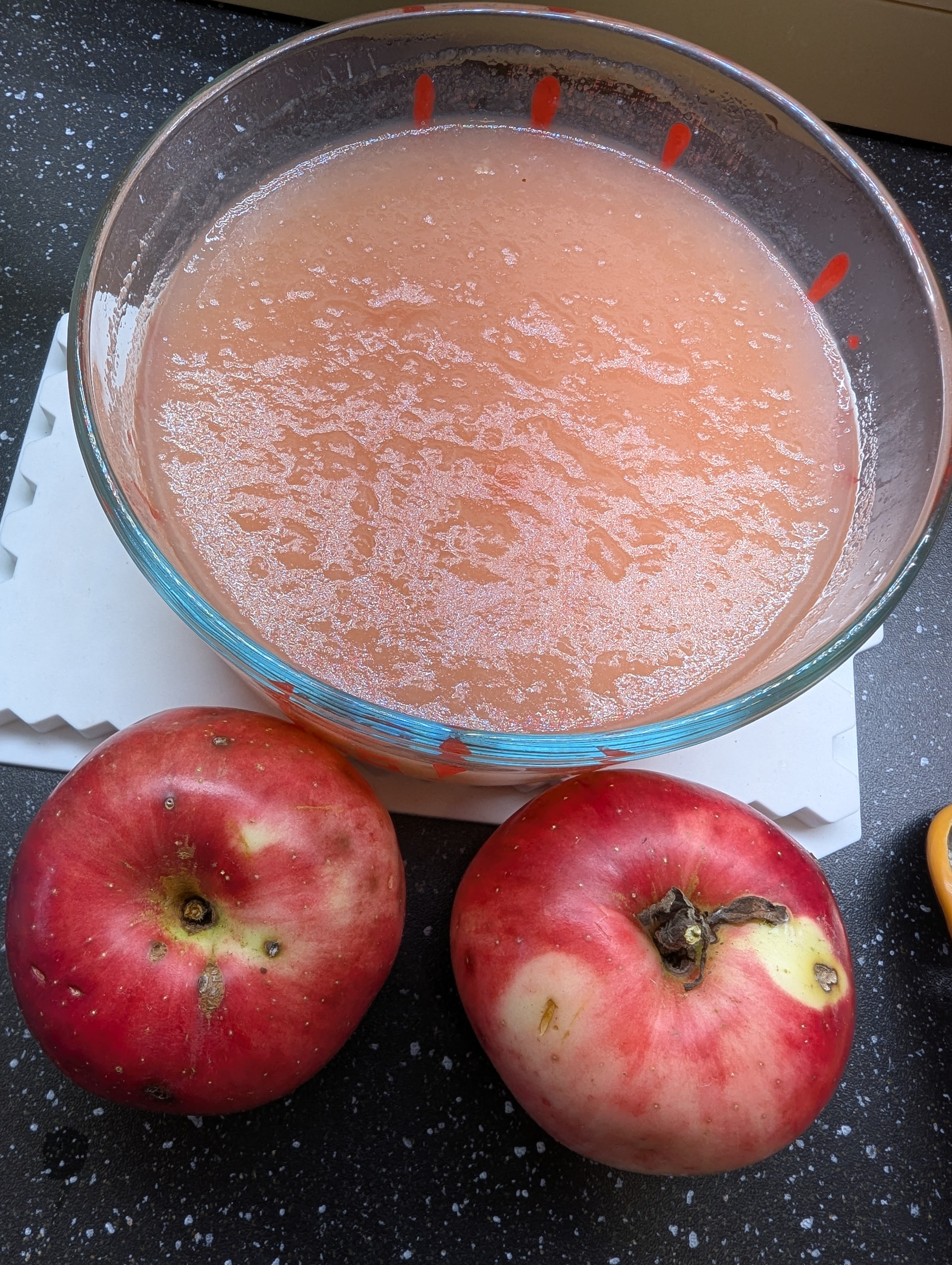
Beautifull juice, do you have to add km to keep the color? Is this going to be a batch of hard cider? It seems so easy growing apples up there! I am pulling some out of the orchard today that just get torn up with fire blight cancers, to be replaced with persimmons and pawpaws,
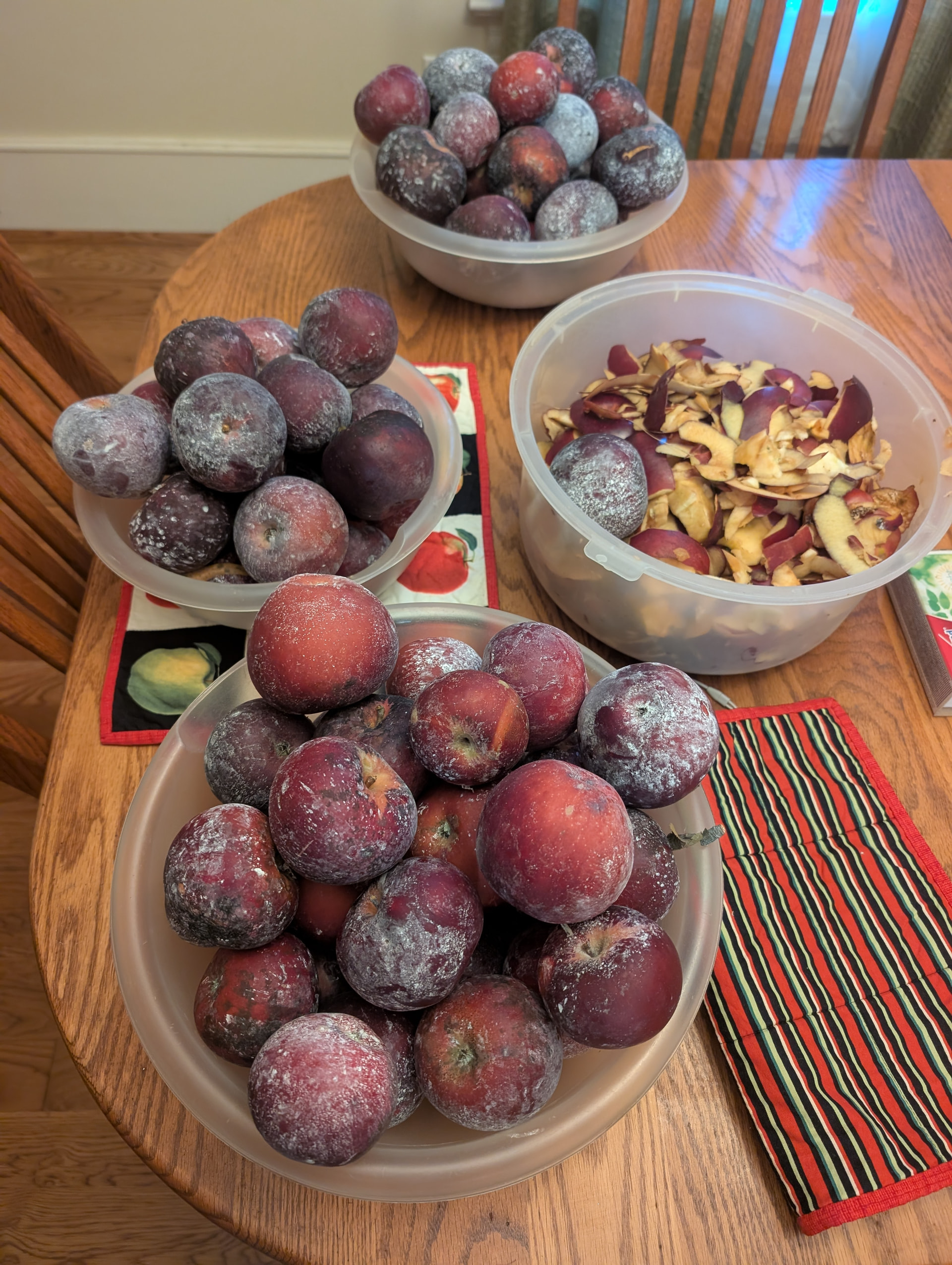
I used 2 gallons for sweet cider and ~7 gallons for hard cider. It’s fermenting now. Probably it’ll be blended but I will like to see how it tastes all by itself. My approach is ferment first, blend later to taste.
I don’t do anything specifically to maintain a color, but I do use KMB to control unwanted organisms. I zap the juice before pitching the yeast and after completing the fermentation.
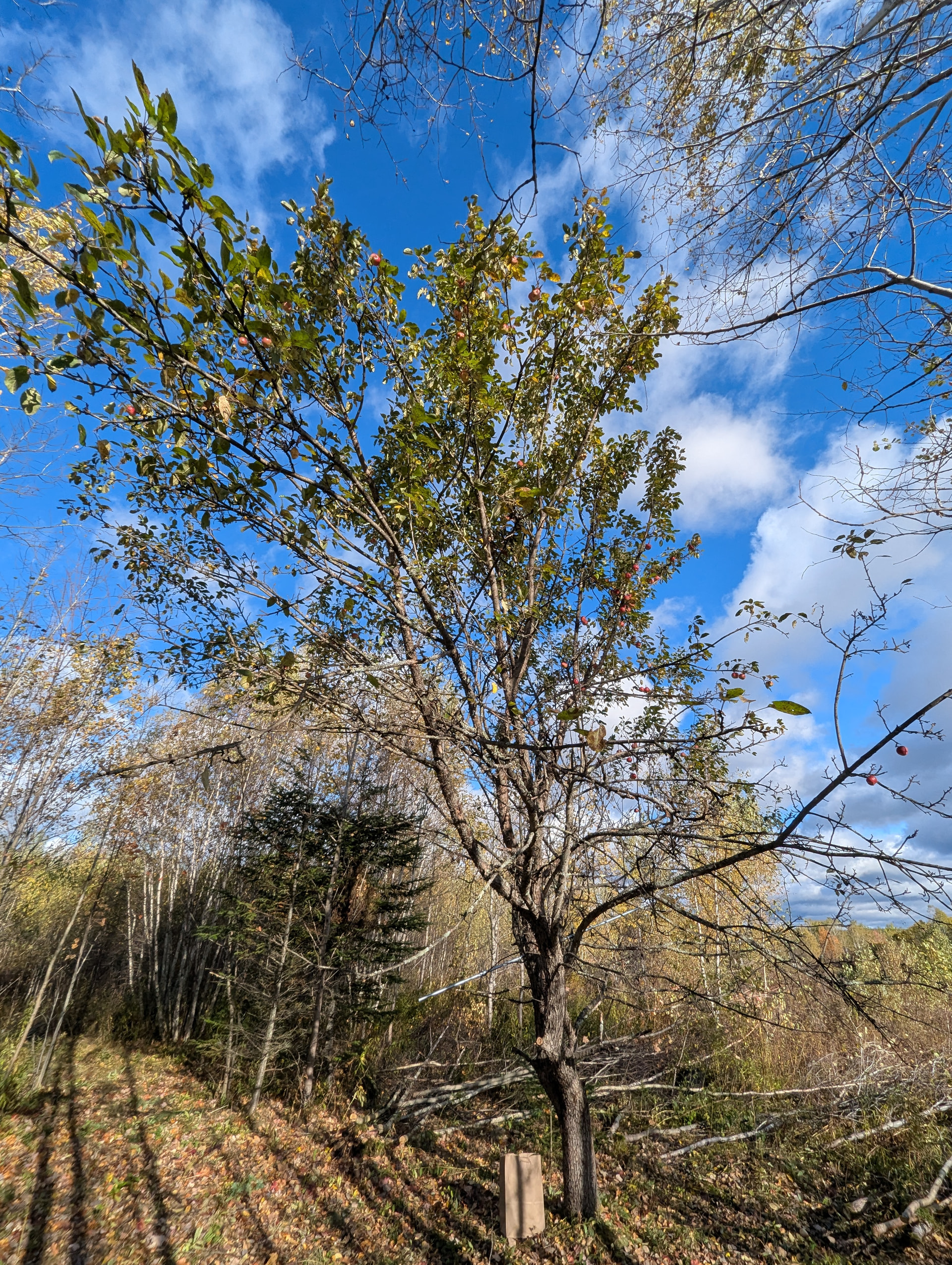
I wouldn’t say that apples are easy here, except maybe relative to elsewhere. They require more work than any other fruit I grow. For starters, I worked hard trying to select varieties that are resistant to the major apple diseases, and now I spray from April into September.
That said, it does seem easier here than there. I’ve completely avoided fireblight (fingers crossed) and scab. I seem to have controlled PC, apple maggot, coddling moth. My residual problems are various rusts, including CAR, and sometimes severe black rot, mainly now on Black Oxford.
But again, I’ve tried hard to use varieties that are disease resistant. I’ve ripped out roughly 1/4 of what I’ve planted for showing too much susceptibilty. [My comments on Gnarled Chapman above are an example. I like to experiment with “found” varieties but so far the only successes are Franklin and Redbyrd Bitter.]. I don’t want one tree acting as Typhoid Mary for the others.
Anyway, I’m really happy with my results this year. I’ve got big crops on most trees, and the fruit is flawless. Except Black Oxford.
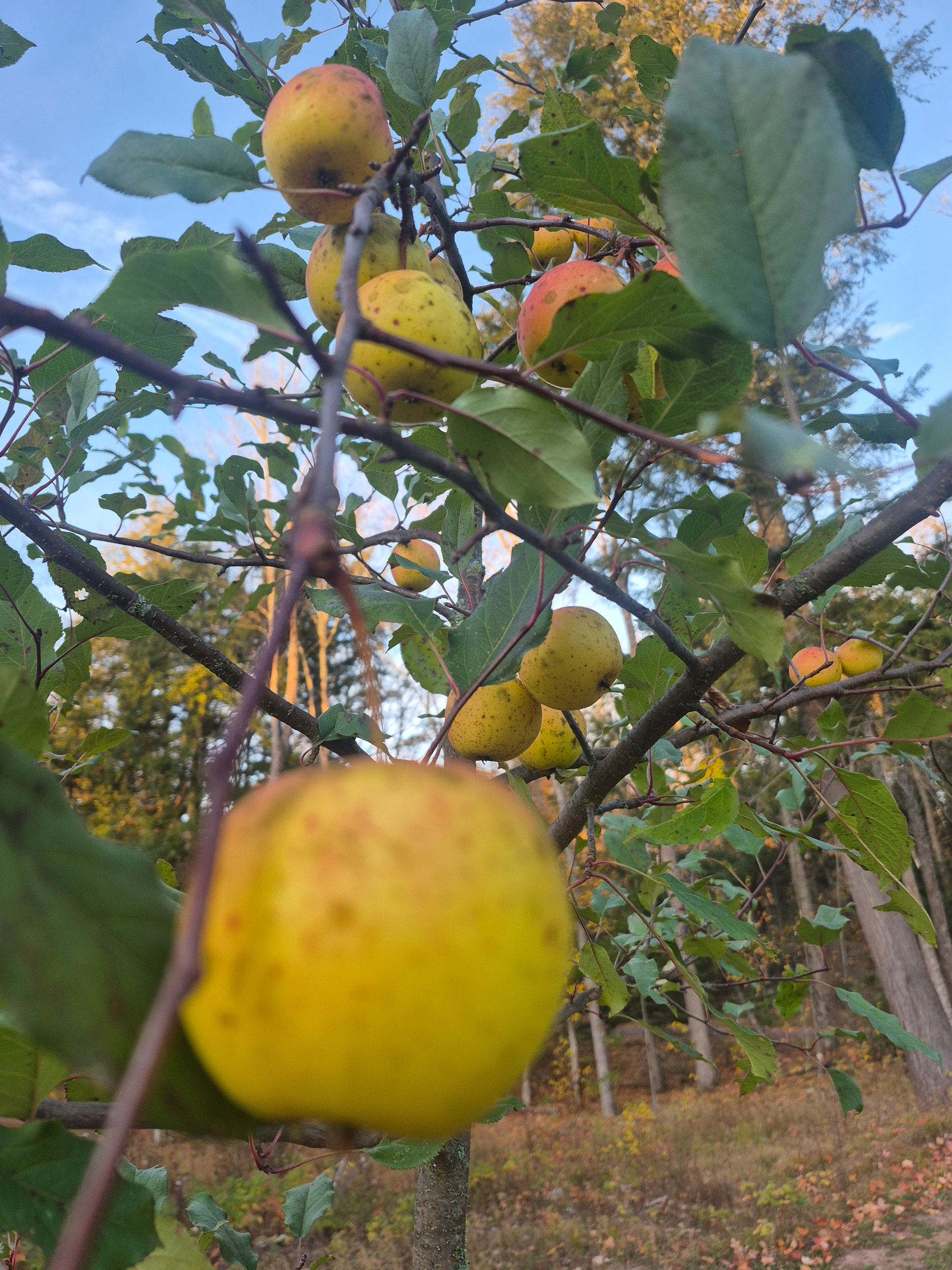
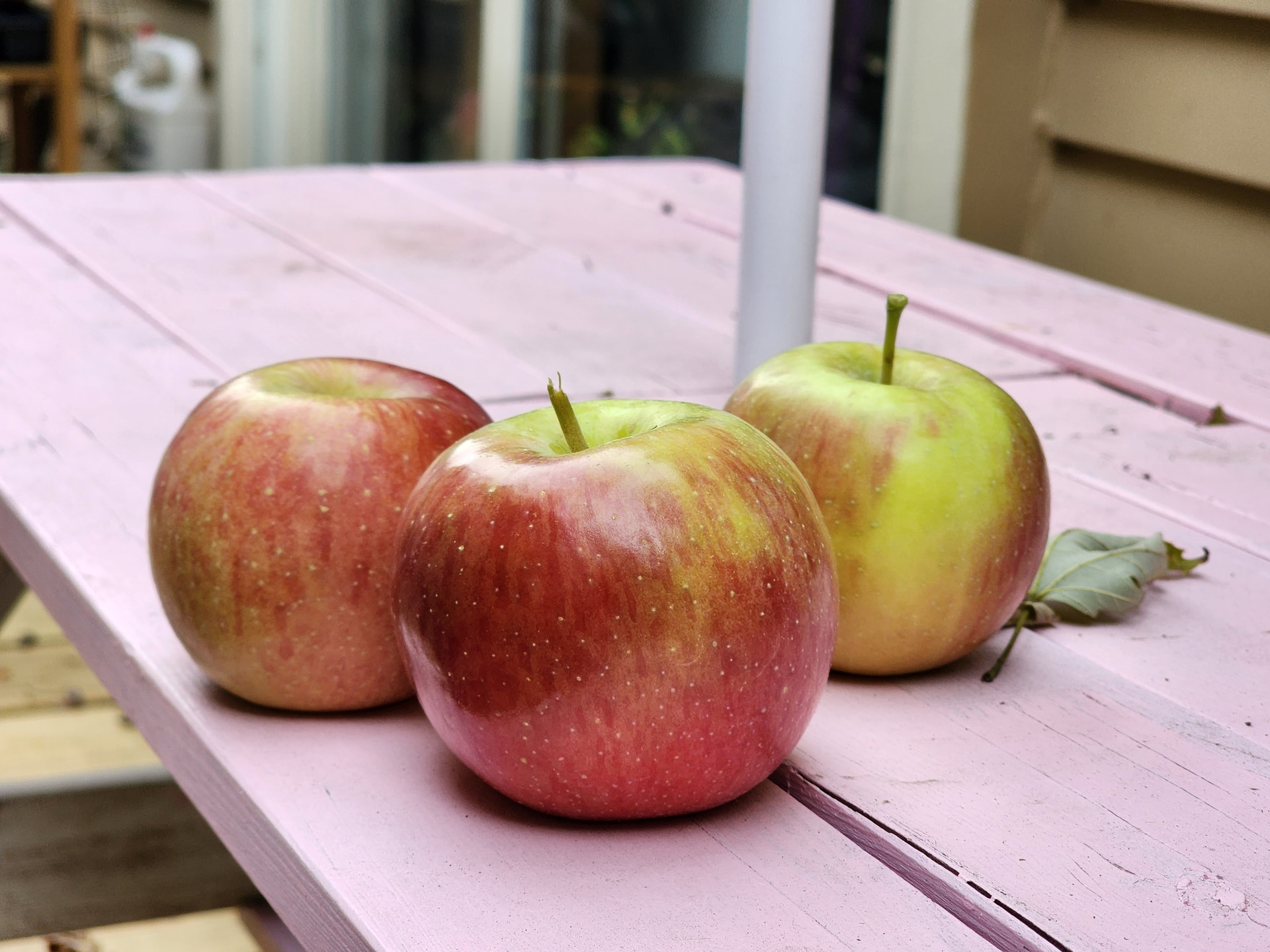
First year for this tree, was tagged Kerr, but i remember that I had suspected I swapped the tag when planting… It is some sort of cider apple. Just enough tannins, no bitterness, medium acid, fairly sweet. Might be able to make cider from it without blending. Tastes like pina colada. About 2”… but first year and we have been in a terrible drought all year, so may be impacted. Im thinking Bulmers Normand? Any thoughts?
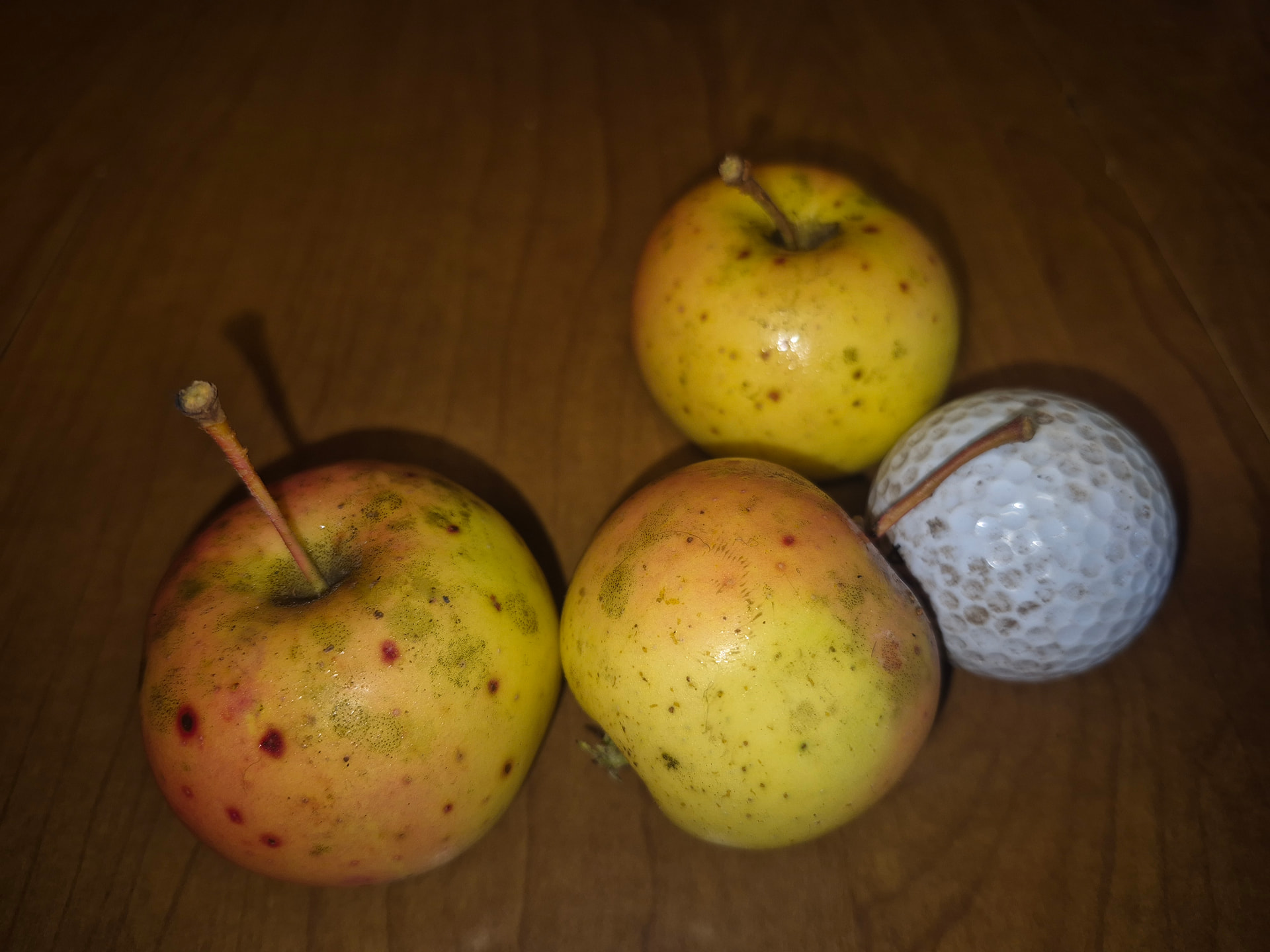
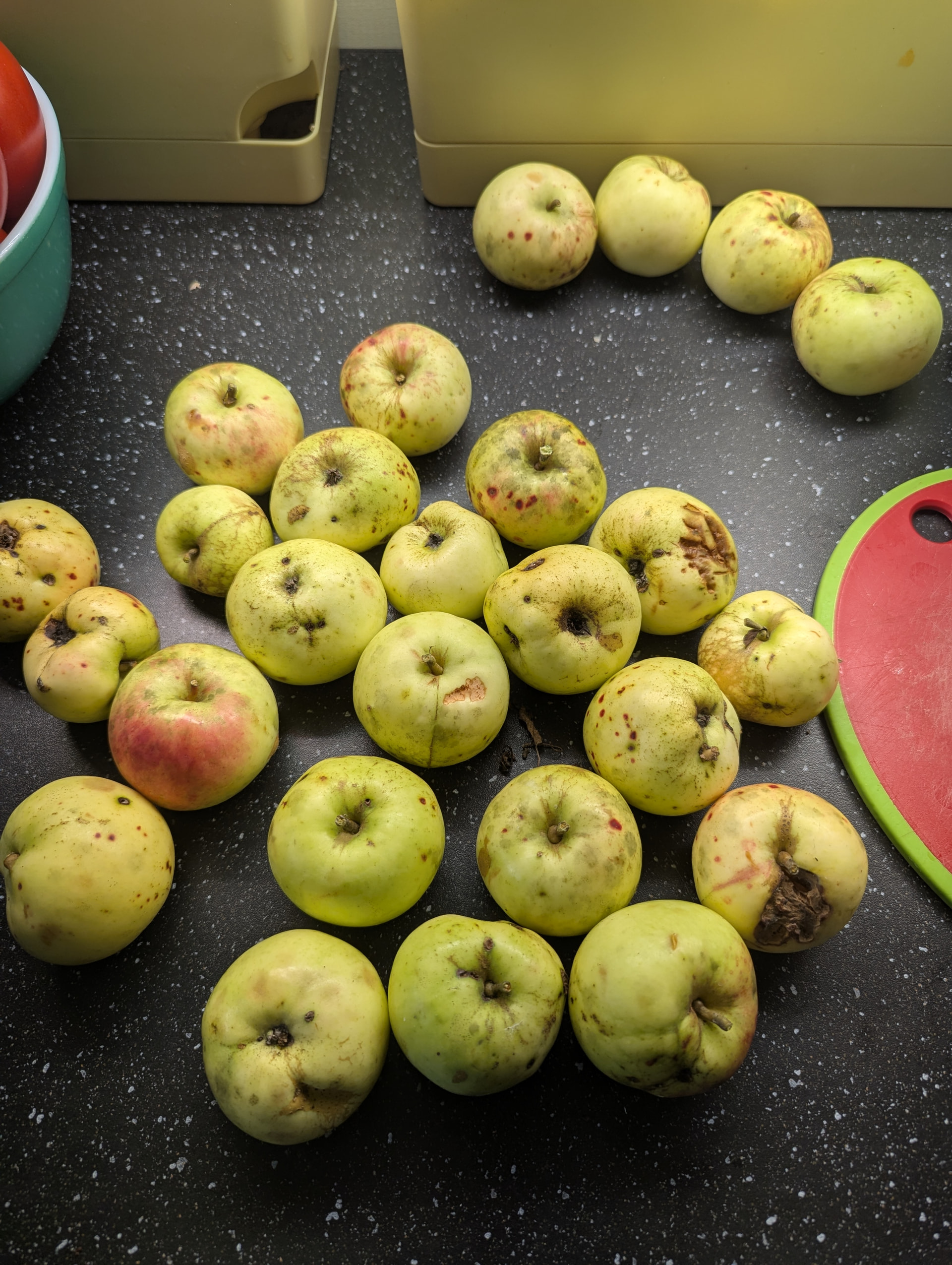
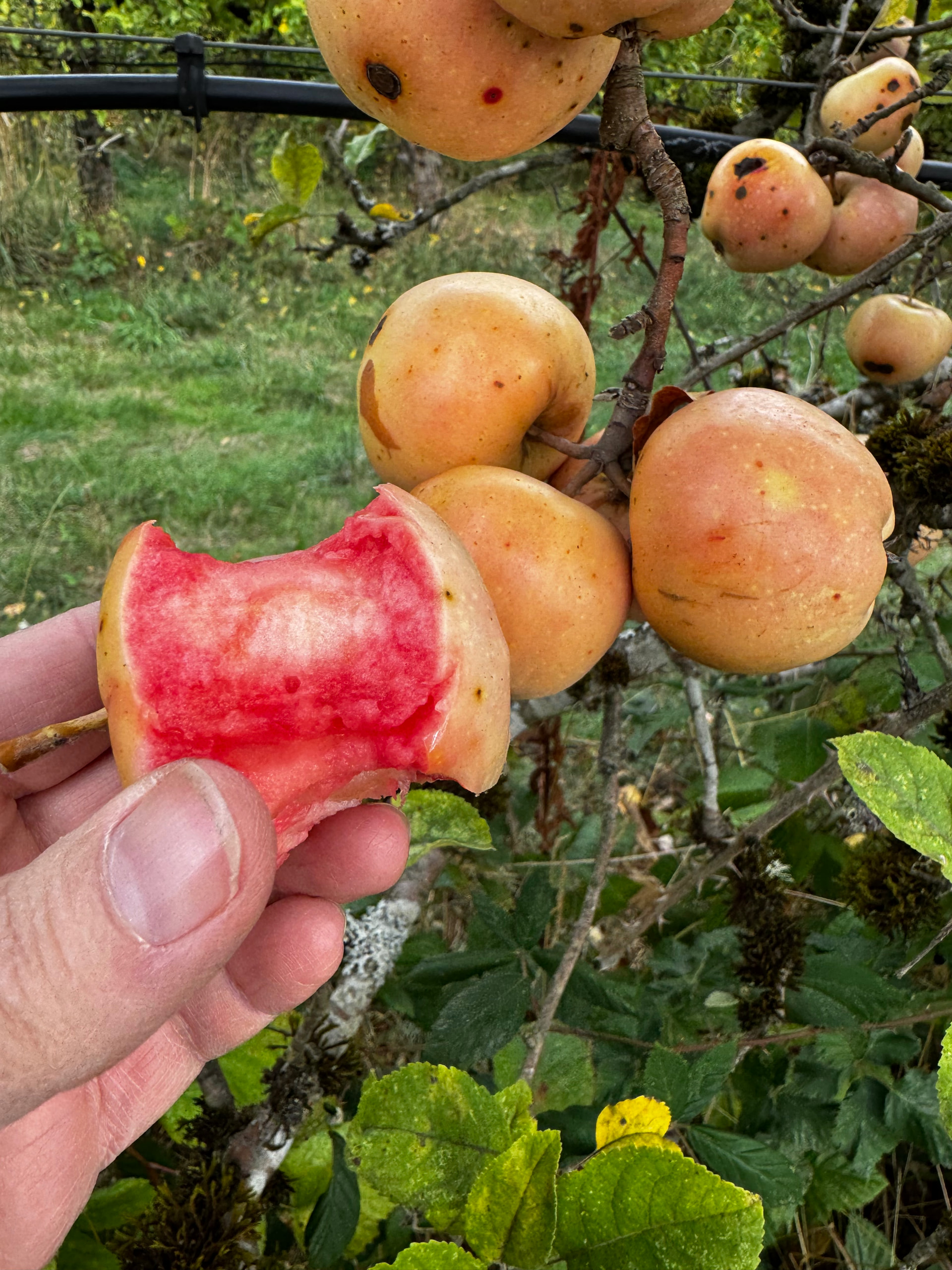
I’ve been scouting my farm for old apples and found a few delights. This one is delicious fresh: crisp, sweet, a little spice, white flesh, reasonable skin. Tastes like it would make a great cider, but turned into applesauce it has a flavor I cannot describe. Maybe I should have peeled them first. I don’t usually peel them, just mill later. I like how the area around the stem is so shallow on some of them. The red spots are curious too.
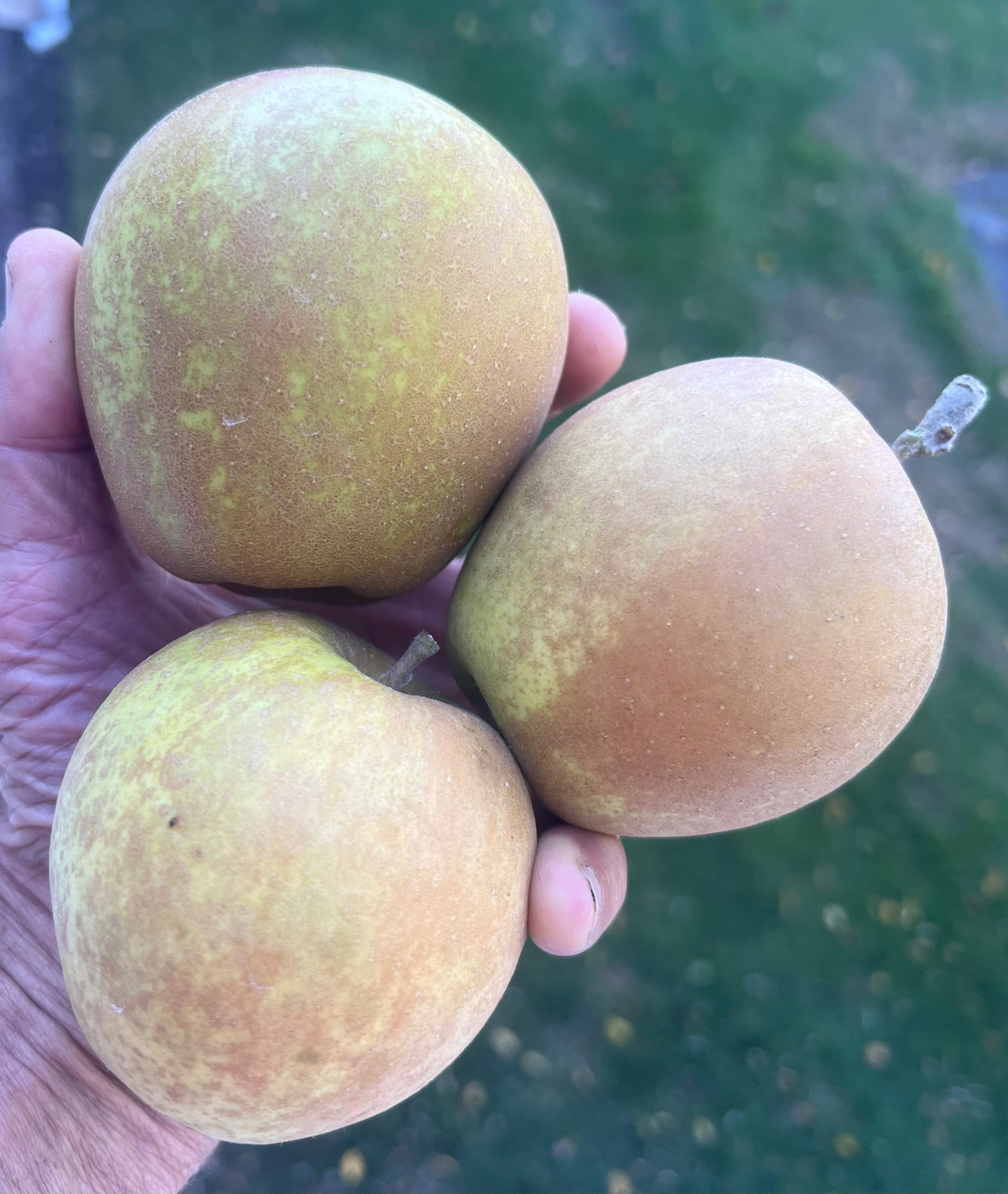
Another apple. This one is between firm and soft, mildy sweet, slightly tart, white flesh, shiny, rather bland. Spur-bearing. Looks amazing on the tree. Seems extremely prone to apple fly maggot. Fresh eating and applesauce are mid. Tree vigor looks good so probably a candidate for grafting over.
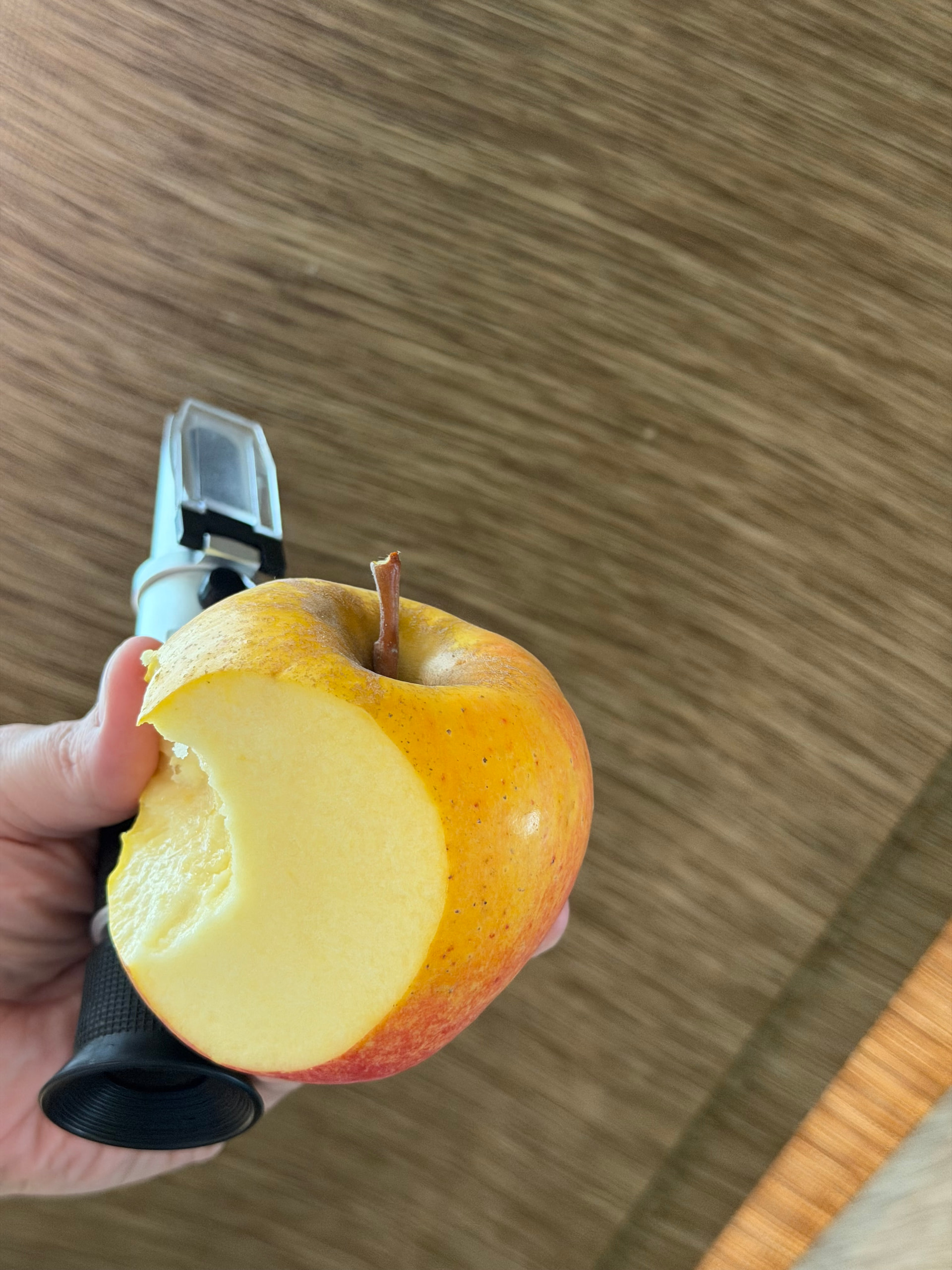
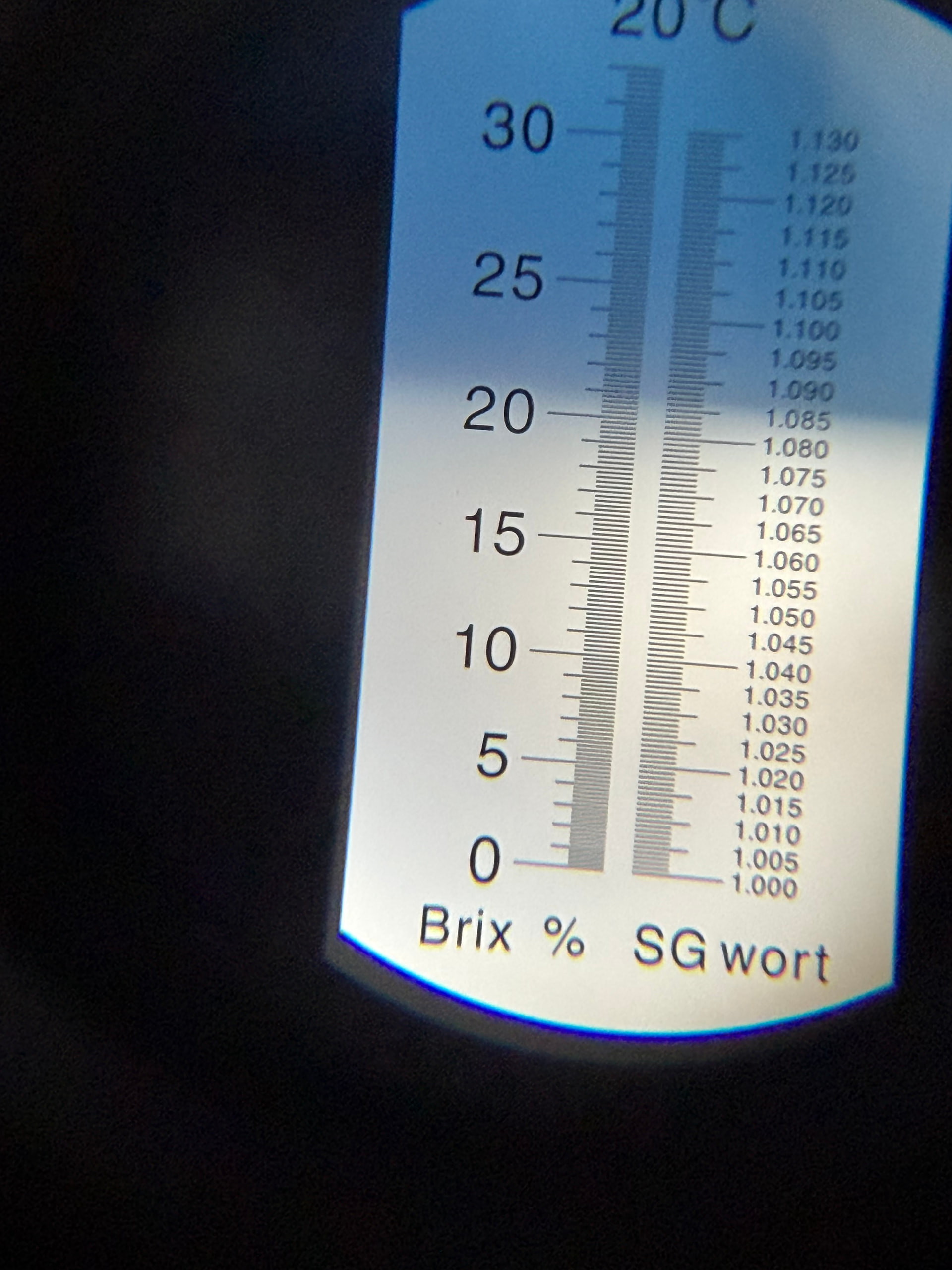
Went to a local U-pick and got a variety of apples. 2 pecks of various varieties and a full peck of Goldrush. When I got home and tested one, this is what I found.
2 bushels have dropped on their own with about 4 bushels left on the tree.
Ripening can be accelerated by simply leaving them in a bucket for a week or two. They will mellow very quickly and flavor up. They can also potentially rot.
This makes them available for fresh eating and easier processing. They are pretty damn good after some time resting at room temps.
The fresh droppers smell like stevia. They should smell like cherry extract or flavoring.
Much of what is said about this apple is dated. This not a super keeper in the south especially if stop drop sprays are not used.
I’ve been grabbing one or two fujis a week off my tree. It set really well this year for only having been in the ground 3 years. Probably set a few dozen after thinning them down. They get better every week and they’re starting to fall off without much effort. Not bad for a tree that a buck nearly destroyed in it’s first winter. Apples sure seem pretty resilient
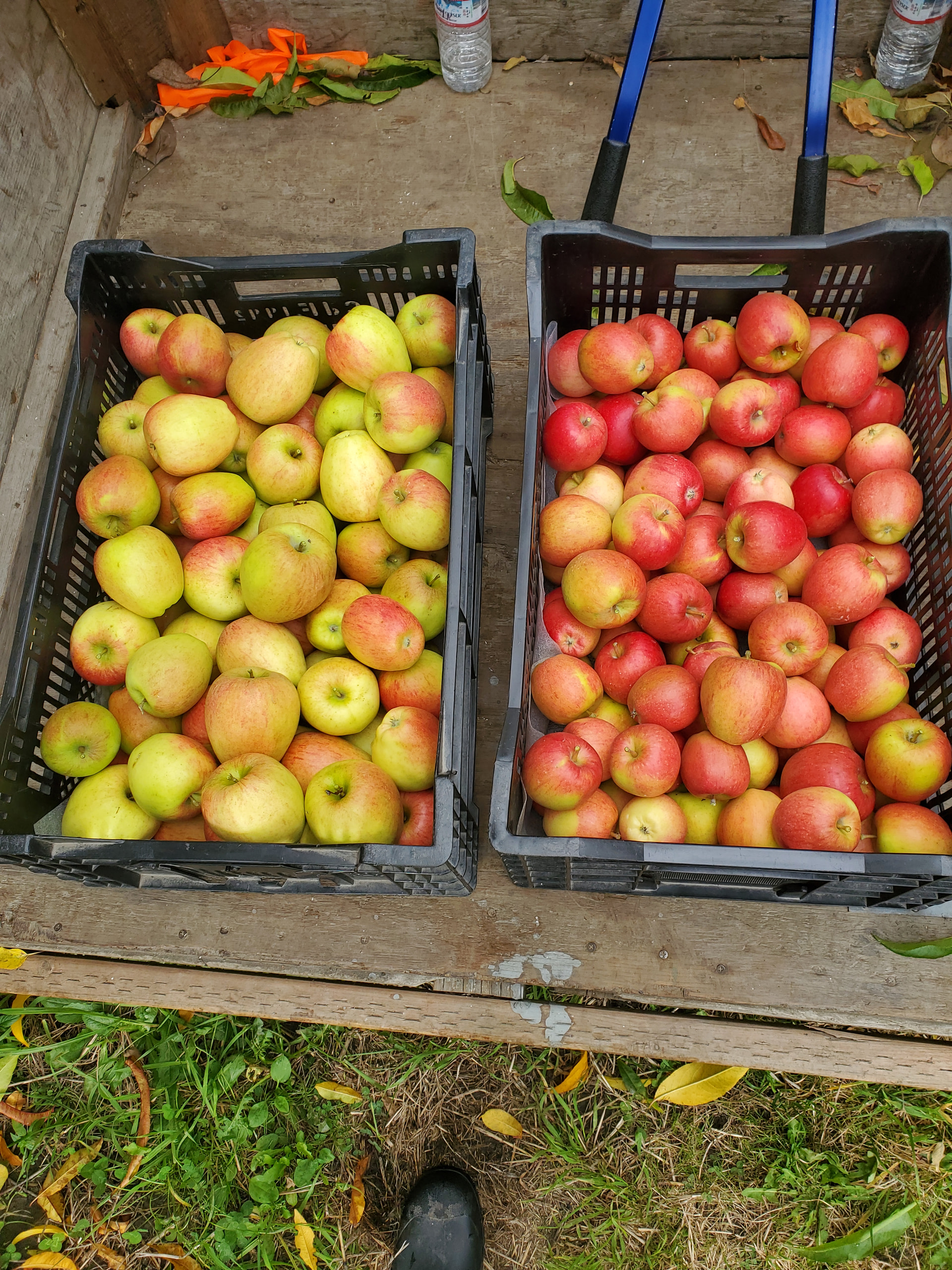
Just picked these two totes of Braeburn. I thought i would post this pic as the difference in fruit is striking. The tote on the left has larger but less colored fruit, tote on right, fruit is smaller, much more red. Both are typical hard as a rock texture, one on right has more punch of contrast sweet/tart.
They both are on trellis but left one is 26 years old, overgrown its spot, needs to be removed. Right one, same m26 rootstock but only 8 years old. Still filling its spot.
The left one was planted when my mesoclimate was much wetter during the growing season. Over the last 15 or so years my non irrigated orchards have suffered. The Braeburns on the right never got the chance for roots to find water so have been getting irrigated hit and miss.
Tried a Suncrisp from the U-Pick, and it was very tasty. There is some kind of tropical fruit type flavor I can’t quite identify. Not banana or pineapple/citrus. Came in at 15.5 Brix.
I also picked my surviving Porter’s Perfection, and the one I tasted came in at 15.4 Brix. Jonagold from the U-pick was 14.2 Brix.
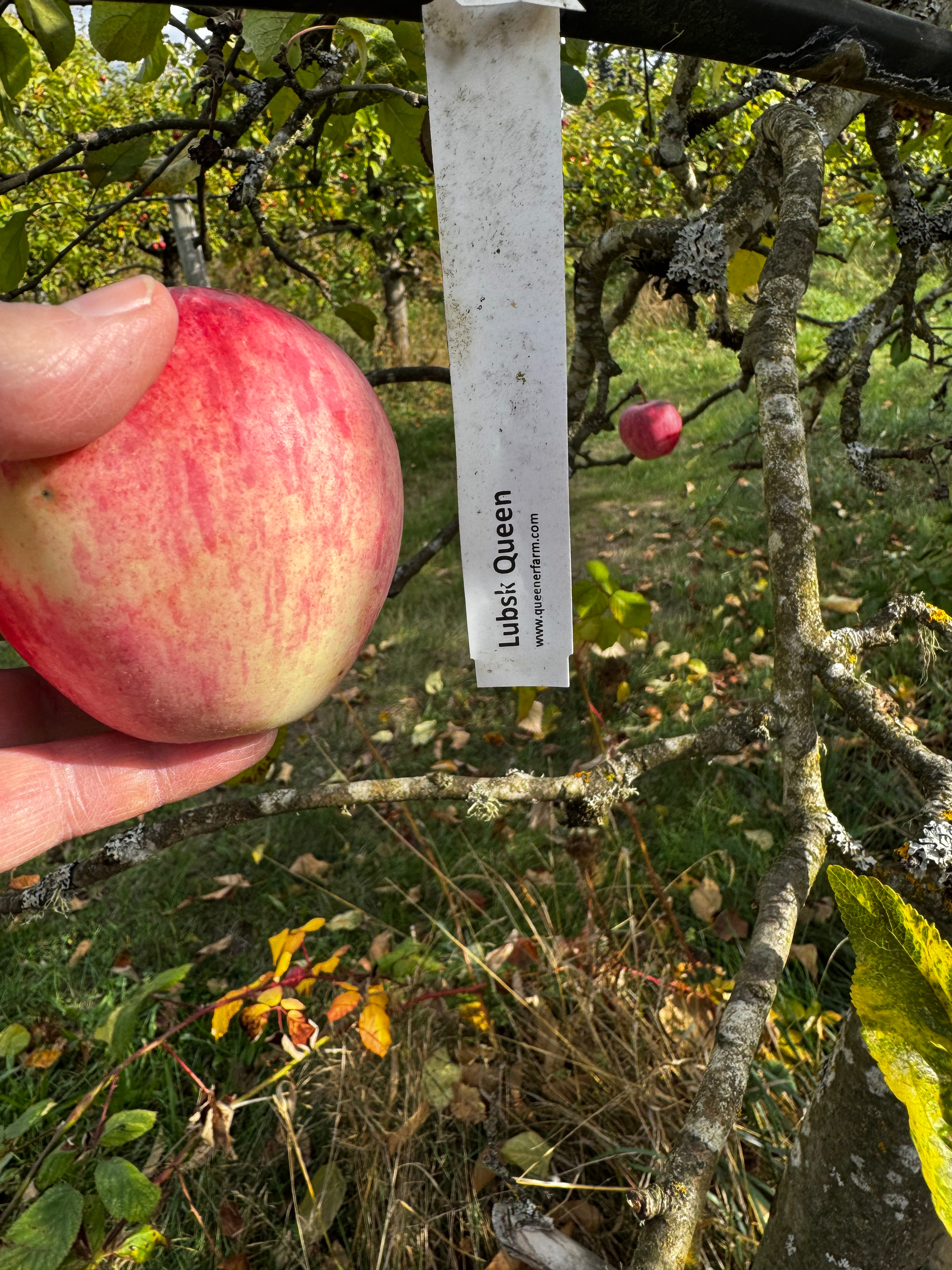
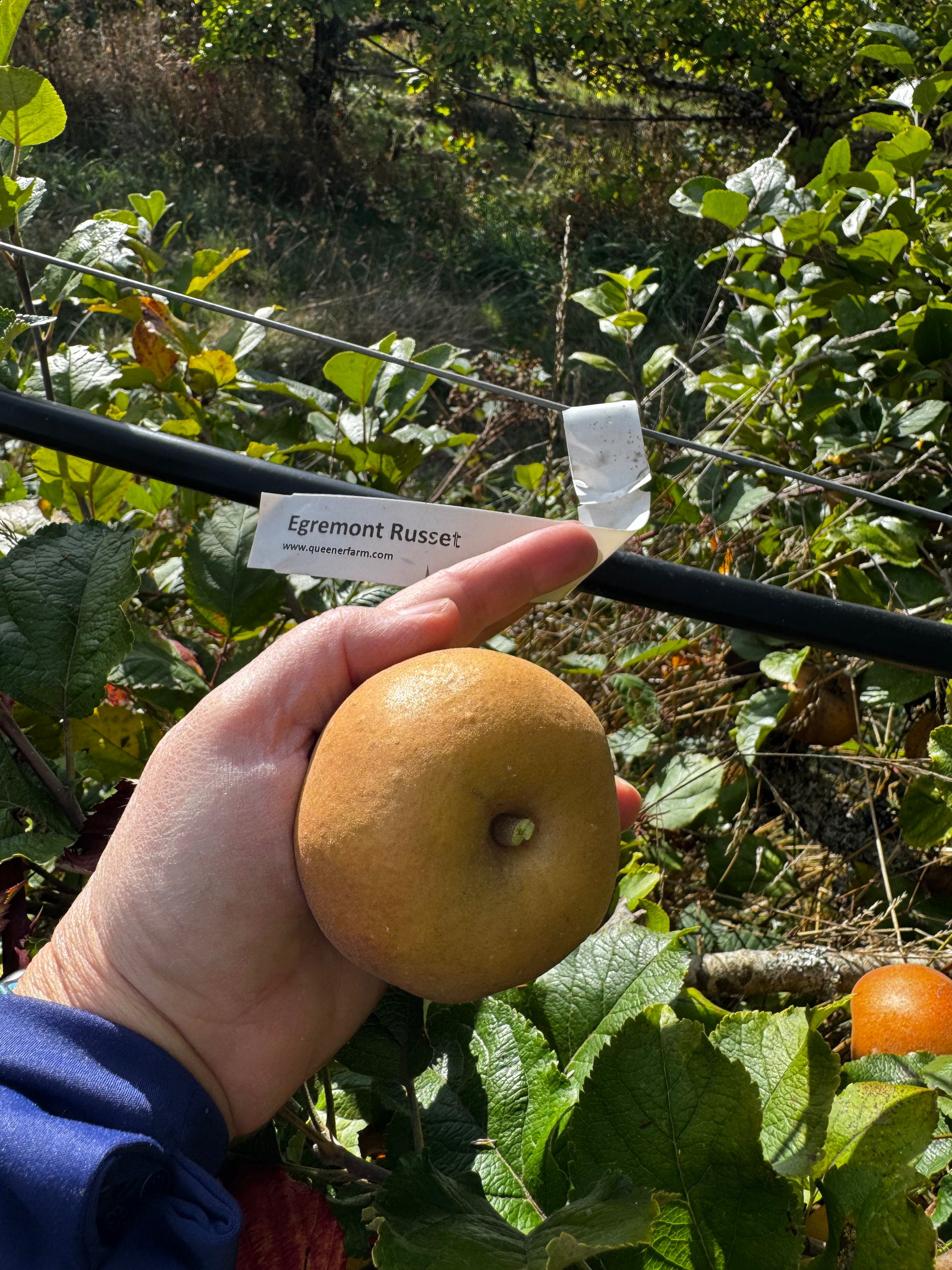
I went to Queener Orchard in Scio, Oregon today and they let me wander, which was nice. One of their young boys accompanied me and chatted up a storm. I saw 7 nutria race in front of me, each with an apple in its mouth. I was too stunned to whip out the phone for a picture.
The pink apples are Pink Pearl! I had no idea they would hang this long and turn more pink. I liked the ones I ate at home in September better, though. If you want pink Etter apples late, get a Pink Parfait!
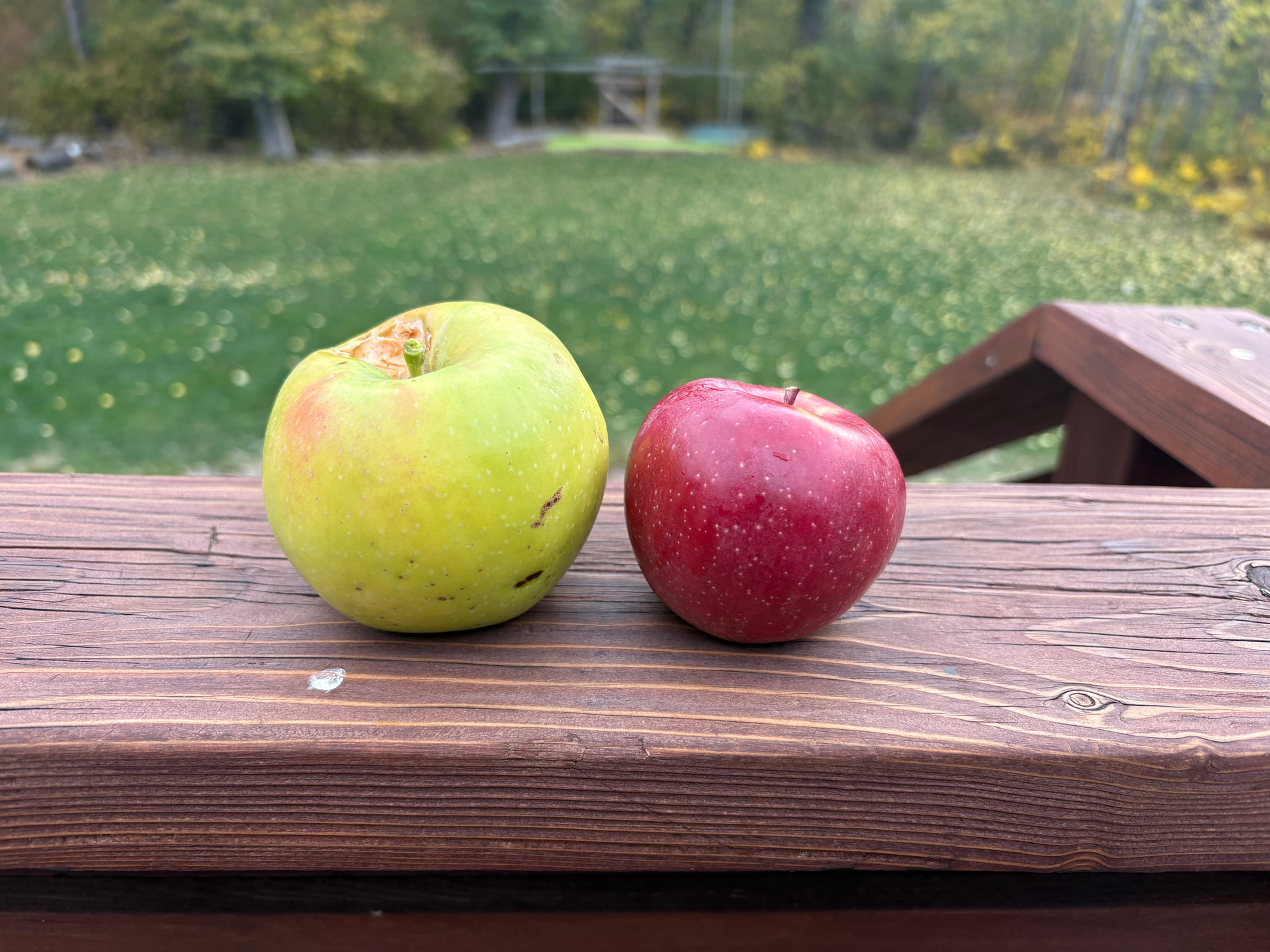
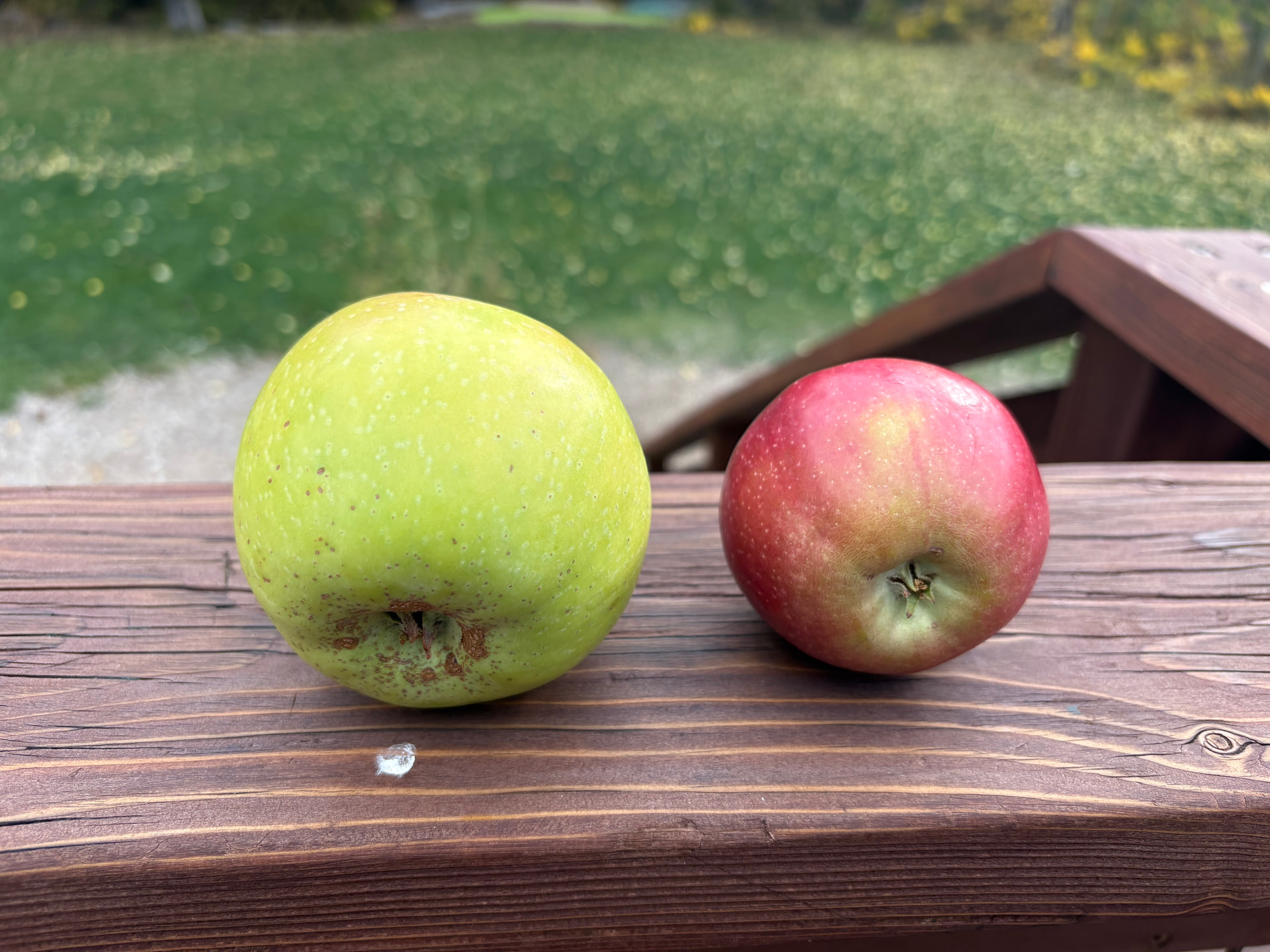
Did a small taste testing with some parents and students that were here for a school work day. On the left is Perry Russet, on the right is Waltana. I would have waited longer for the Perry, but the birds had started in on it. People liked Waltana, but they loved Perry Russet. Sweet with some tartness, fruity and sort of spicy flavors. The general comments were that it reminded people of apple pie, with some of the spices added. Everyone wanted more of the Perry – maybe next year I’ll get more than one!