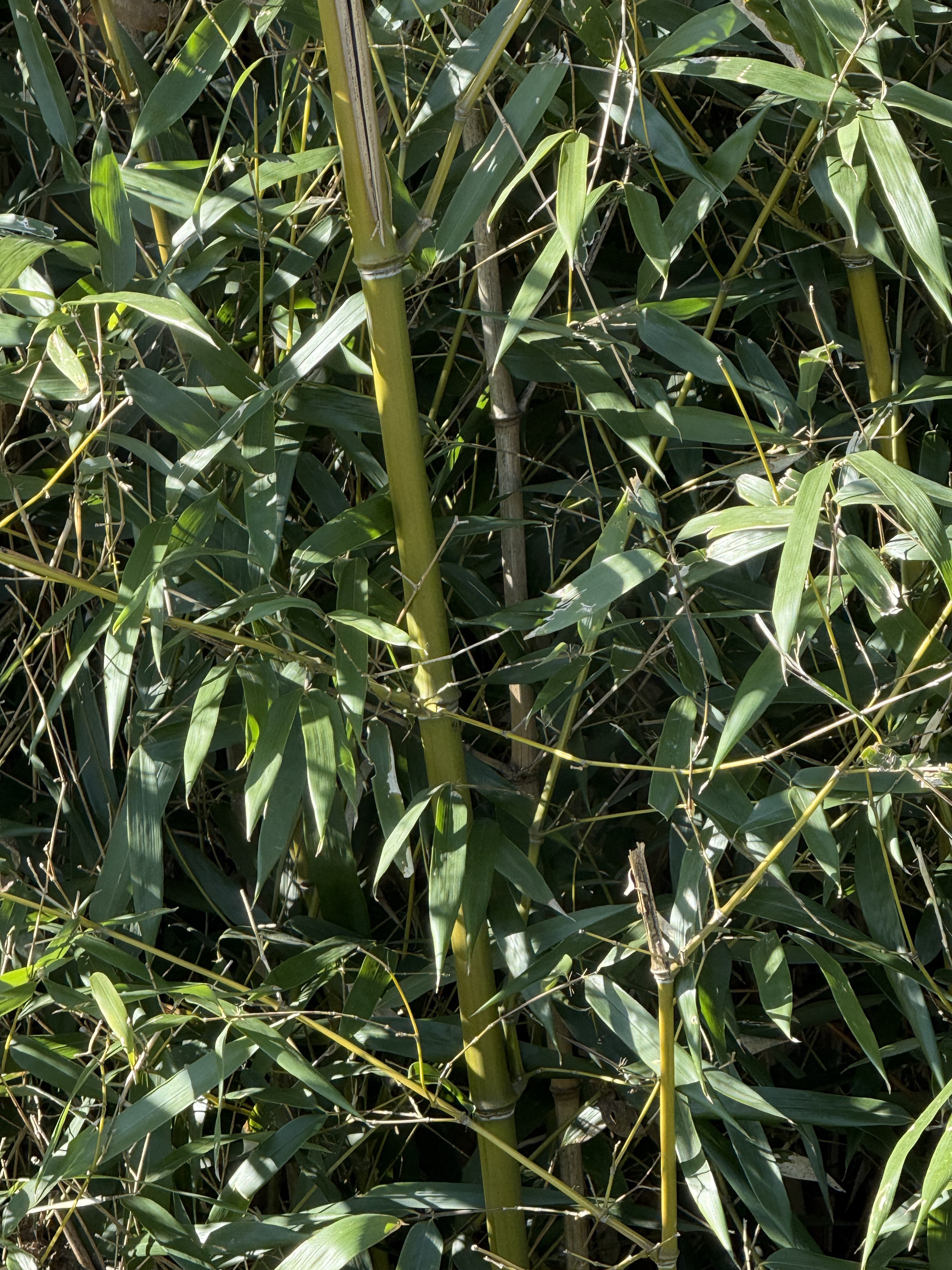
Here are a couple of photos I took of the grove. Looks like it suffered from some winter kill last year. Any idea what kind of bamboo this is.

y’all are crazy for planting runningbamboo in the ground to be honest LOL. I mean in the end its your choice i just cannot imagine that decision and i live in a little property where I could maybe manage it. In fact I think it might be illegal here.
3 Likes
Phyllostachys aurea is my read. but bamboos are a tough id for me.
1 Like
I’m working hard to control/eradicate several different kinds of bamboo my dad planted. It turned into an intergenerational problem. Don’t say you weren’t warned 
4 Likes
Probably what my children will be saying
2 Likes
Maybe P. Nuda. That’s what I have and when the shoots are old they look yellow green like that. The new ones are a darker green.
It is very very aggressive and invasive. I would not plant it on purpose. It took over an area and killed all the other plants. I have sort of contained it but I need a better trench on one side.
This patch I can’t kill off because there’s nothing else holding the dirt there now and I don’t have the funds to properly remove and then plant something competitive while holding the soil.
I had another patch that took me a lot of work to kill off.
I do eat shoots from mine in spring (and my friend’s mom comes to dig some up too). And most of my friends cut it for garden stakes. And a guy from the church comes and gets some for some holiday every year. And there’s still plenty….
2 Likes
Phyllostachys unfortunately are a seriously misunderstood plant.
In terms of invasiveness I find blackberry, japanese knotweed and small spreading bamboos like pleioblastus a much bigger nuisance because its much easier to spread small pieces of their rhizomes. A mature stand of phyllostachys will have almost exclusively thick rhizomes that are much harder to miss.
The important part is that phyllostachys effectively doesn’t spread itself by seed (the flowering interval is measured in decades to centuries and seedlings aren’t very competitive in the beginning…)
If you keep the physiology in mind removal can be made a lot easier. Phyllostachys has one primary shooting period - remove all the shoots and top growth right after this flush and you starve the rhizomes (takes a few years for large stands). Horror stories about pieces of rhizome growing after many years in ground only make sense if the person has failed to remove top growth somewhere.
I think the main issue with phyllostachys comes from thinking it will behave like a small shrub and planting it in a unsuitable location - especially close to buildings and other infrastructure. If you look at the biomass of well established groves it becomes obvious why things eventually escalate. It is comparable to stories where people have planted trees too close to their homes hoping against all odds and its genetic predisposition that it will remain small (e.g. giant redwood)
In any case, I fully understand why anyone would not want their neighbors to plant a phyllostachys. You have to trust them to know how to handle the plant and regularly maintain it, else the chances that it will eventually become an issue are quite high.
3 Likes
Whats a good clumping bamboo thats edible? Or are they all edible? Everytime I look it up, I just don’t get good info on taste or edibility. Bamboo shoots are delicious, so I would love a good source of them.
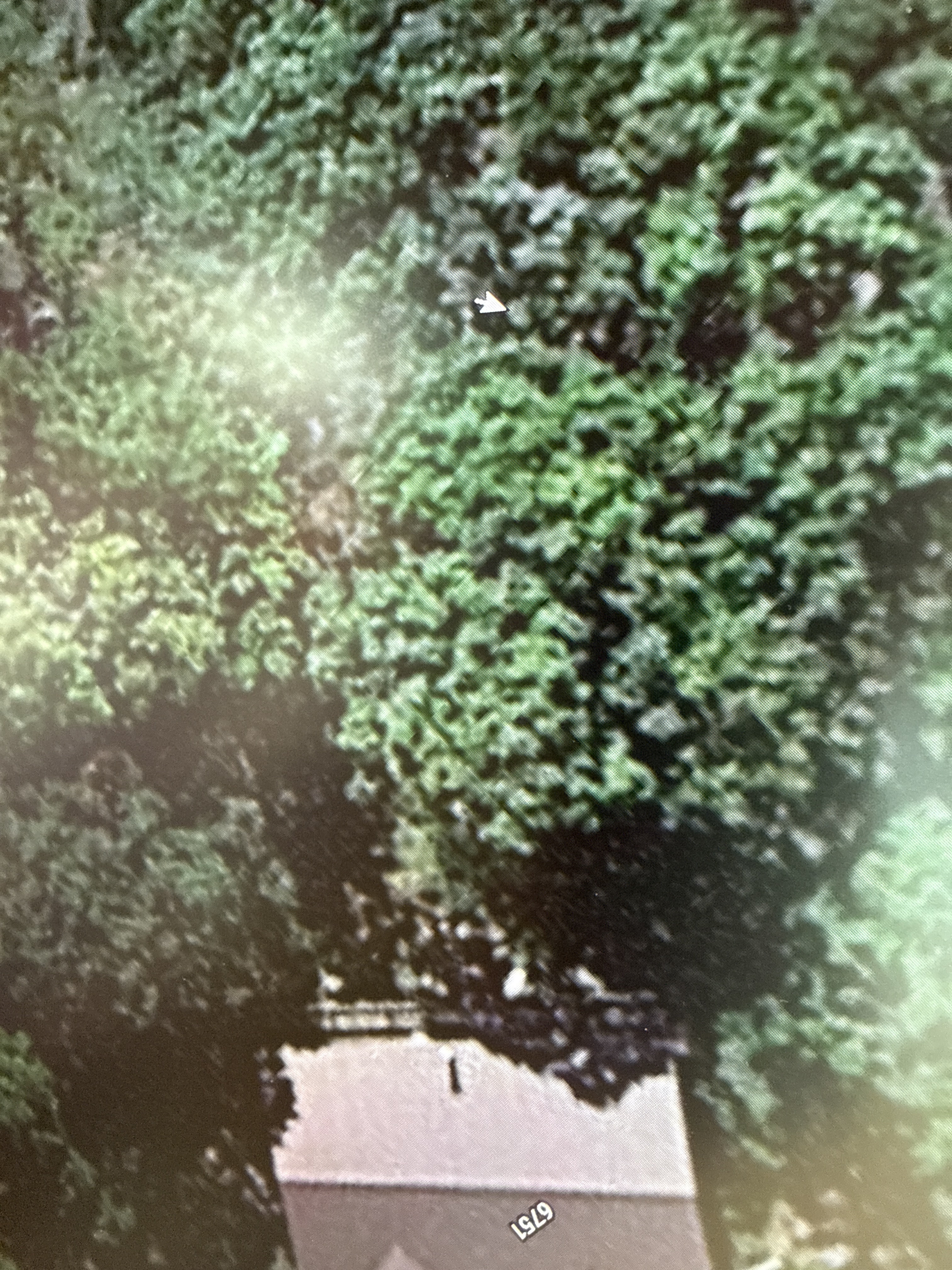
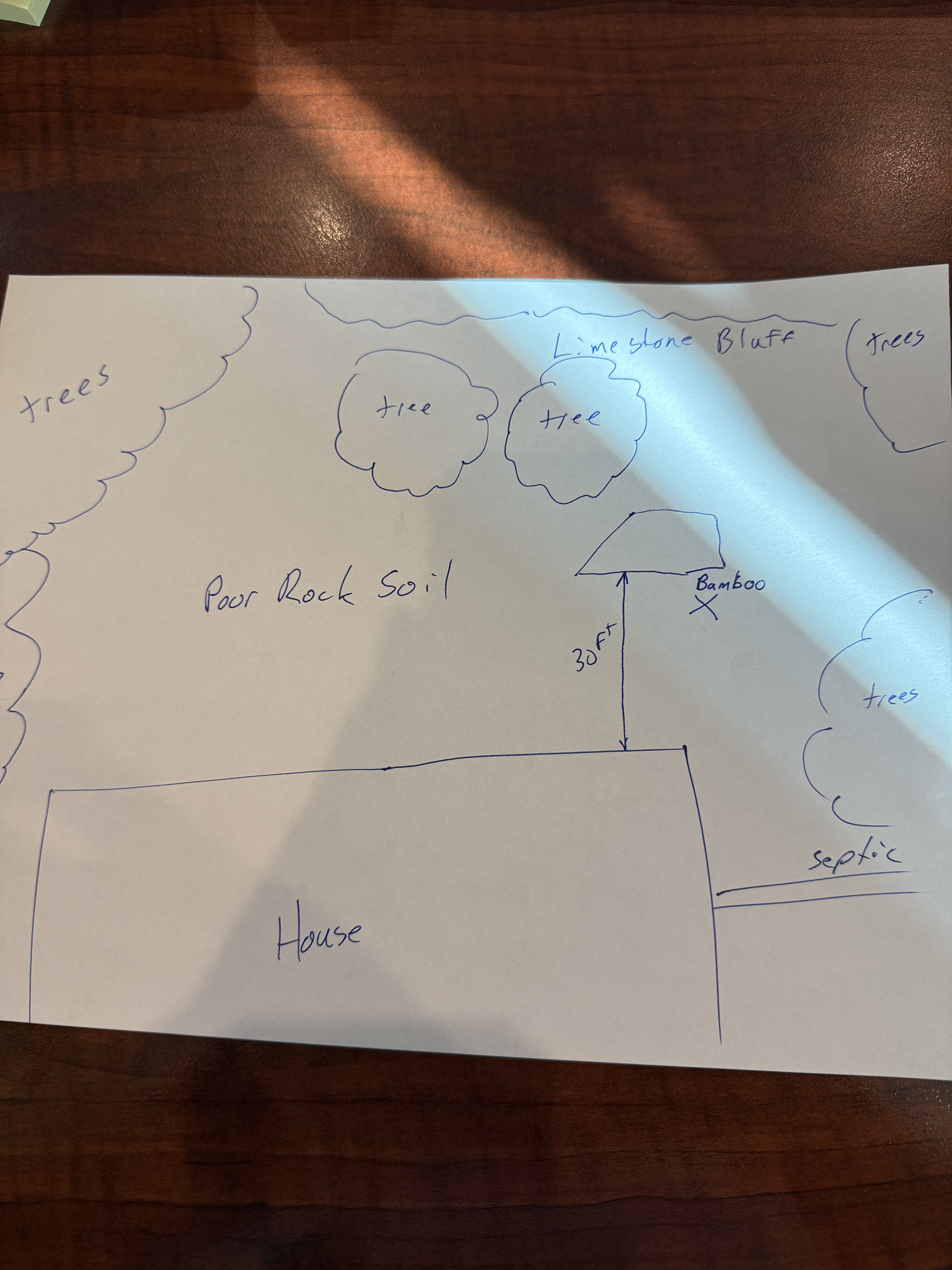
I was hoping I could maintain it in a ten by ten area. Below is a diagram of the back yard. Also a satellite image. It is pretty shady in the summer. The soil to the left of the bamboo is extremely poor, red clay and rock, it used to be a driveway before our house was built here. It would be easy to remove now, any thoughts are appreciated
I find the bamboo I’m trying to contain much harder to deal with than the one I tried to get rid of.
As far as I can tell, to contain running bamboo, you either need an open trench (which you still need to monitor), a trench with water, or a 3’ deep 60mil plastic barrier.
On two sides of mine I have a drainage ditch and on the other two sides I have no barrier. I monitor those two sides with no barrier. Anytime a culm pops up I cut it down.
The culms pop up mostly 5’-10’ away but occasionally I see one that’s more like 25’ away. They mostly come up in spring over about a month (when I have a million other things to do) but also sometimes in Fall.
I plan to put a trench on the sides without one, but there is a long list of work to do and this keeps getting shoved aside for other things…
3 Likes
I would put it as far away from that septic line as possible.
2 Likes
I would be careful assuming poor soil will prevent rhizomes seeking a better spot.
Some years ago I was lucky enough to visit shunan zhuhai in china. It is the bamboo sea that is featured e.g in the movie crouching tiger hidden dragon. The place was absolutely magnificent and I hiked around a lot. The soil there is a red clay soil as well, though I cant say much about how rich it is.
From own experience I would say rhizomes will also try to move through poor soil, especially if there are other factors that would encourage them. The competition with the trees could lead them to move towards your house, even if it looks to be the north side of the building.
You can contain phyllostachys with a barrier but it has to be the right kind. HDPE, at least 2mm thick, at least 1m (some say 80cm is fine but I have seen examples where they went underneath - usually rhizomes are really shallow if not confined, like mostly around a foot deep. When you confine the growth with barriers or have obstacles the rhizomes can dive deeper. Though unless you are planting something like bashania fargesii 1m should be ok. The barrier also needs to be properly spliced/closed, either with aluminium rails or if you have the tools possibly by heat welding it together.
A barrier is costly and a lot of effort. I’d install it if I absolutely wanted a bamboo close to a house and see it as a long term investment. Also, it should be fairly big in area, like aim for 10m^2 upwards. Especially in very confined places the bamboo will form an impenetrable ball of rhizomes and have very little soil available, leading to a slow decline unless you remove sections from time to time.
Your reasoning with the forest slowing down growth is something i can confirm. I know of a few groves that make very little progress because they are fully shaded by large trees. On the other hand the plant will look spindly and won’t reach its full potential.
In your situation its a tough call. I mean the issues will likely be several years away before the plant has accumulated enough biomass to really take off and become a nuisance. If you have the mechanical means (i.e. a tractor) to drag a narrow but reasonably deep plough once per year across a line to cut all rhizomes it may allow you to keep it contained.
For perspective: all my recent bamboo plantings are next to forest edges with at least 30m of plain meadow / fruit trees as a buffer.
Edit I see that you are in z6. That can be pushing the limits for many bamboos if you have short deep freezes so the options are a bit limited. Some of the fargesias (they are clumping) can be also very hardy and tolerate shade, though they’ll look more like big bushes unless you thin them out a lot. I think fargesia demissa ‘gerry’ has a more open habit
1 Like
Thank you for going into detail, I really appreciate it.
About a decade ago I planted phyllostachys nigra in my yard here in SE Michigan. I sank a deep Rubbermaid kind of bin in the ground, filled the bottom 6 or so inches with sharp gravel and made sure the top 3 inches (of the bin) were above the ground. I kept clear the top of the bin, cutting back any rhizomes that tried to jump out. It grew very well for a couple years and we had a bad winter and it kind of struggled along for the next couple before finally succumbing to the inevitable and dying.
Now granted I’m probably at the northernmost place in the US where this plant could conceivably survive in the ground.
I have a variegated, running ground cover bamboo (mature height less than 12 inches) in the ground in a shady area and it has been well behaved for about 15 years.
I do closely monitor my yard and the plants in it, but bamboo has not proven to be anywhere near as annoying as bindweed or creeping Charlie in my experience.
2 Likes
I have a nigra henon that survives in ground in the chicken run every winter. I don’t think regular nigra would have a chance here.
2 Likes