I have to second the idea of a forum for the fruit nerds, but don’t think that your posts are lost in a blizzard. I have been here just long enough to recognize the folks I really need to pay attention to, though I sometimes get a kick out of some of the less focused things that come up. I also tend to speculate about new ideas or information that doesn’t quite match the accepted explanations. For instance the extreme weather I see more often means that I can’t always count on the usual patterns for my region. I don’t have nearly enough time to read as much as I would like, so I suppose it would be more productive to get to the facts more quickly.
3 Likes
Interesting discussion, especially the discussion about fire blight, I had no idea what it was. I did notice a several branches on my yellow delicious dying, and some of the small apples with dark stuff on them. It appears I have a full blown case for FB, I am located in NW Ohio, granted different locale than you, but interested to know what you have found effective. ChatGPt suggested Regalia Biofungicide, Serenade and Double Nickle 55. Have found your approach effective in my small orchard. Thanks, Cliff
FB hasn’t been a big enough problem in my region to do anything beyond cutting back blighted shoots and cankers during dry hot spells. I only really learn to manage pests that are especially problematic to the orchards I manage, and that is quite enough and keeps getting worse.
thanks, will start with cutting back, amen to “keeps getting worse”. Seems like something different every year. I value your observations.
Im going to say it again because it is my philosophy when growing fruit. Why are you going to do what you’re planning to do regarding growing fruit? If you’re spraying, why are you doing it? If you’re pruning, why are you doing it? Do you understand the pros and cons of what you are doing? Is your goal to get fruit? Is your goal to reduce height? Is your goal to reduce disease.
4 Likes
All the above when pruning fully grown bearing trees. Before that, it is to bring them to the best form as bearing trees ASAP.
I started spraying the tips and especially grafts of juvenile E. plums yesterday as their growing tips are being stunted by leaf hoppers, Just using a hand sprayer and only spraying the tips. Let them stunt new growth on my bearing trees, that will keep light on existing leaves that are feeding fruit. Same deal with aphids.
I control OFM on peaches the same way, once shoots start flagging, using relatively tiny amounts of insecticide to get huge results. A commercial grower would likely use 100X as much pesticide to get the same results. They don’t usually use hand sprayers. With mist blowers you get the entire tree dripping wet.
If I stop OFM during the tip flagging stage on peaches, they almost never end up inside of my fruit.
3 Likes
That comment is directed to anyone. Another words i have no reason to spray at the moment so i dont spray. You answered my question by saying why you spray. Many times people may follow you because they know you grow great fruit. That does not mean everyone needs to do the same things. I once asked someone why they sprayed but they had no answer because they had no problem. If you have a problem pruning or spraying, etc, may be needed.
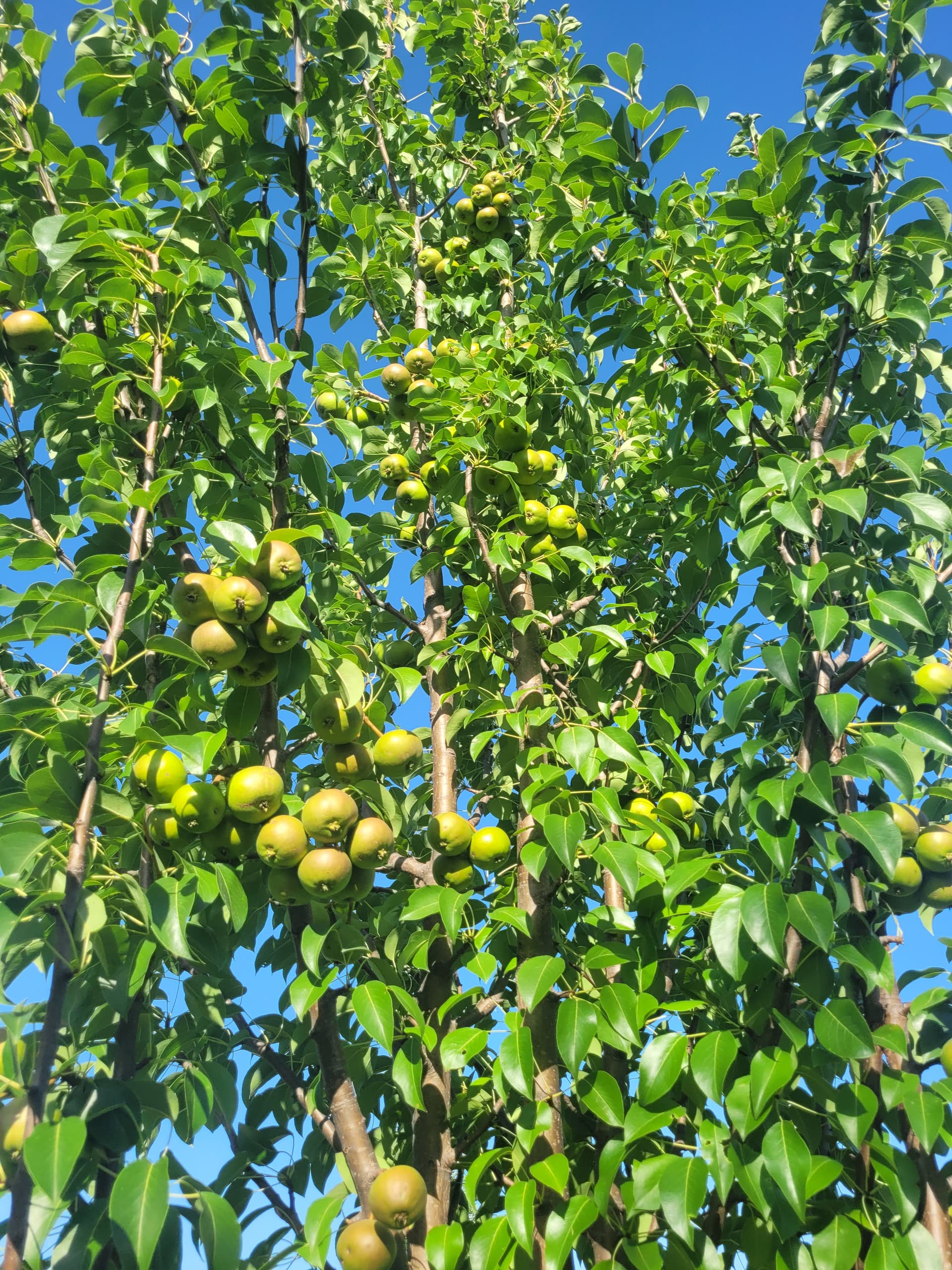
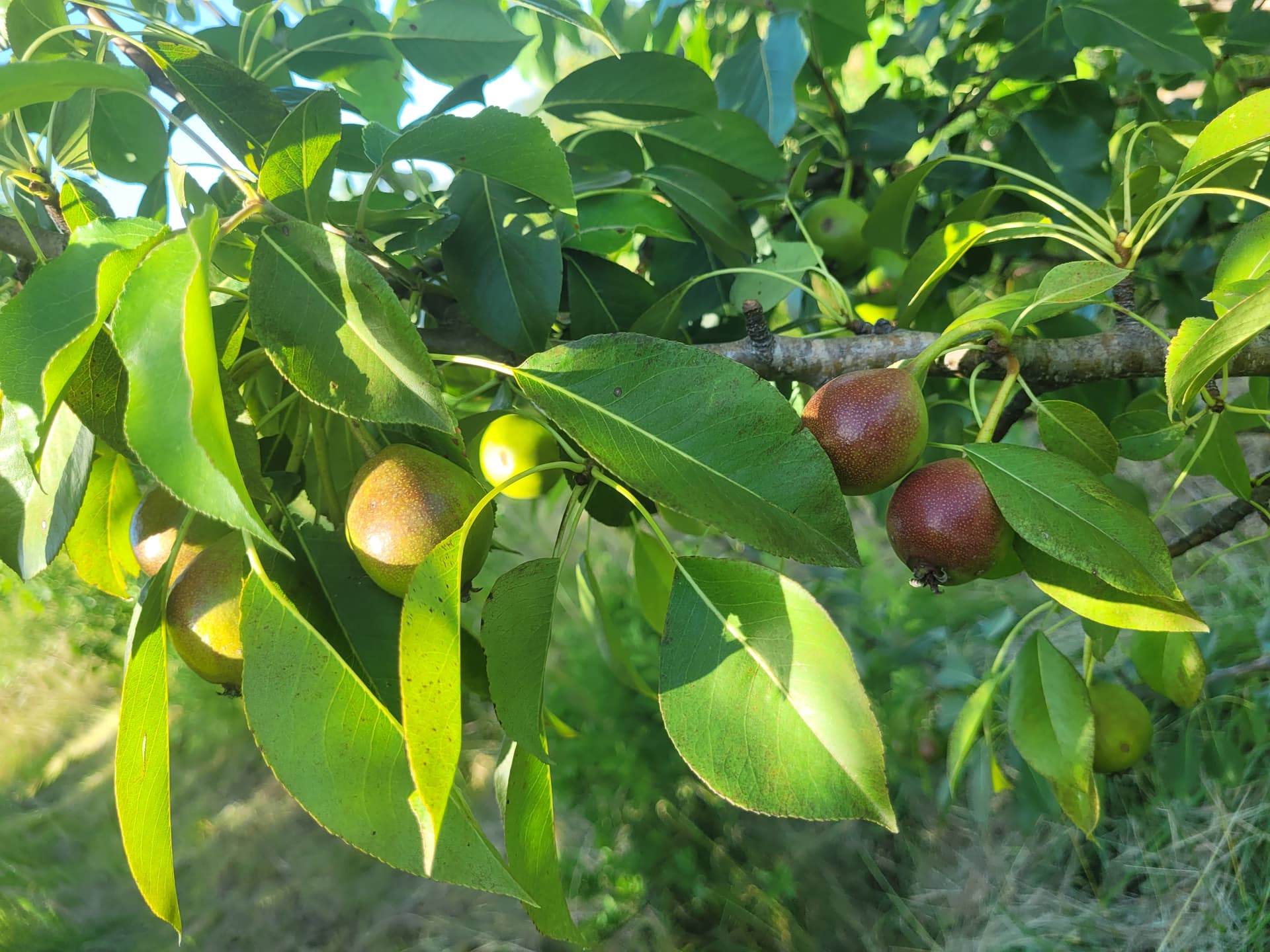
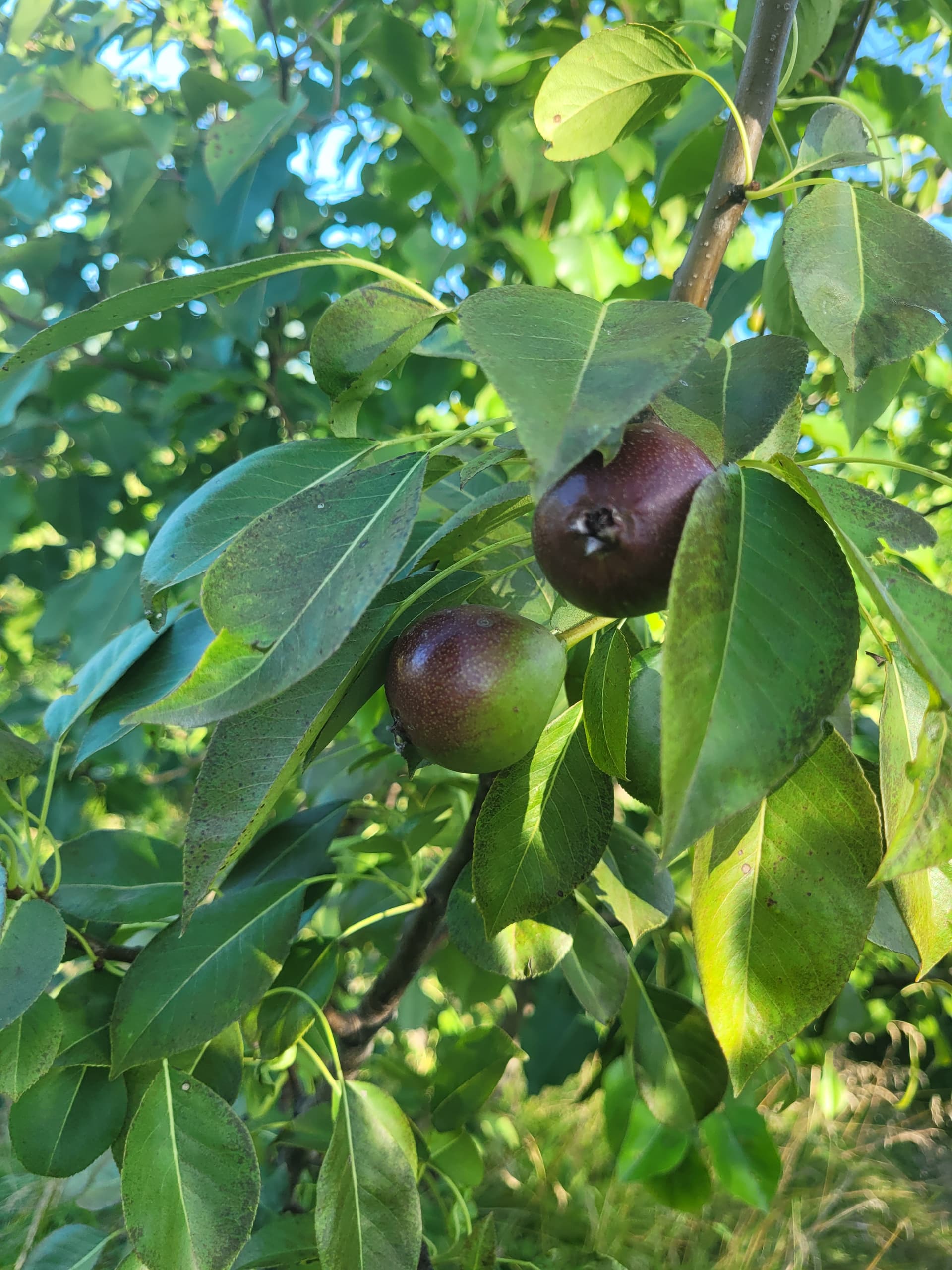
Most people prune off their next years pears, spray for problems they dont have , and eventually remove a non productive tree. No tree responds worse to pruning than a young pear. It invigorates apples and can old pears also. The thing is mostly pears go into vegetative mode and stop producing fruit if they are over pruned. Many people fertilize and prune in the same week. Nitrogen makes trees grow it makes no sense to me to use N and not PK and then prune 2 weeks later. Pruning also causes diseases like fireblight in pears. Why not do it after the trees are dormant unless they are young recently grafted trees?
1 Like
Commercial guidelines even manage to cover the issue of discouraging pears from vigorous growth, mostly because of fire blight.
For me, in some contexts, it makes perfect sense. First you stimulate growth then you guide it. As far as P and K, most trees can draw adequate P from existing soil, something the literature has never caught up to, probably due to research of trees grown in sterile soil without mycorrhizal relationships. K is sometimes overabundant for trees that receive a wood chip mulch, even if the soil doesn’t already have adequate amounts of it. All these things can be site specific. I think it’s more than possible that in midwestern prairie soils, where trees don’t normally grow, the mycorrhizal fungus specific to trees may be absent, so P deficiency becomes a potential problem if soil isn’t inoocuated.
Consider that in my nursery I always have about 100 pear trees growing, and they’ve never shown a single blight strike, nor have any of my orchard pears. I don’t have a lot of Boscs or other FB sensitive varieties, but still, in about 35 years of growing here in S. New York state, not a single strike, although Cornell literature suggests it is rampant in my region. But all their info comes from the realm of commercial production- the more pear trees you have in one place the more likely FB will become a problem.
For me, vigorous growth of young nursery pear trees is the goal so I can sell them without having to nurse them for 7 or 8 years, so quick release N is my friend.
3 Likes
The difference a region makes is never more obvious than when i speak with you. Fireblight here is controlled at the moment but i had a battle with it last year. Nitrogen is to fireblight what gasoline is to a fire.
3 Likes
Even in the same region there can be a lot of variability, sometimes seemingly beyond explanation. I’ve lost a couple of pear trees at other sites and seen plenty of strikes- it just doesn’t tend to be lethal here or persistent season to season. Sites where FB appears are often very close to those where it doesn’t.
This is the kind of thing you only learn by managing multiple orchards, or hearing it from someone who does.
3 Likes