…and then plant a tree in it.
1 Like
The way people are producing biochar is exactly the same as historical production of charcoal except that when people made charcoal they aimed for large chunks of hardwood.
With biochar, it seems like people put any kind of thing, including manure and chaff. They aim for small pieces.
I assume we’re not talking about charcoal briquettes like you’d put in the bbq because I have no idea how they make those.
Everything I read said to charge it- but I guess everything I read was about crop production meant for commercial farmers. So that would mean you’d have your fields growing stuff soon after.
My understanding is that the combustion is imperfect and the breakdown of the leftover material sucks nitrogen.
Currently, I’ve got two big trash cans full- and the cans have a drain hole. I’ll probably pour some 4x dilute liquid fertilizer over it a couple times and let it hang out in the cans for a month, just to cover my bases.
1 Like
There’s probably a tiny bit of soil nitrogen that’s getting used by microbes breaking down leftover carbohydrates, starches, and cellulose that is leftover after combustion and pyrolysis, but it’s going to be a vanishingly small amount.
The main thing is that a large fraction of soil solutes are getting physically and chemically captured by the charcoal.
As far as comparisons go, adding charcoal to soil is much less like adding wood chips or straw (which do tie up nitrogen through decomposition) and more like adding a great big pile of sand, or a fairly big pile of washed clay. You’re adding a huge amount of mineral substrate, in this case a huge amount measured by surface area, chemical activity, and pore space rather than by weight or volume. Whatever nutrients are soluble in the soil are going to mostly be tied up for a while because of all that new substrate. But then the regular processes of soil chemistry and biology will get to work and the normal cycle of mineralization and demineralization of soil nutrients will return. Adding fertilizer to “charge” things is a good idea if you’re going to be applying to established plants or will soon be planting in the soil you add the charcoal to. Otherwise, it’s not actually necessary, more of a ritual or common misconception.
As far as how charcoal ties up soluble nutrients, initially anyway, the answer is, it’s very complex. The added surface area and pore space physically capture stuff and it takes time for things to return to an equilibrium. But a big part of it is just all the chemical bonding that can take place. I’ll work up from sand to give you a feel for it. It’s super-interesting stuff and it’s extremely easy to go overboard because it gets into lots of different domains really quickly, but I like it so here we go:
Sand is an almost entirely crystalline material
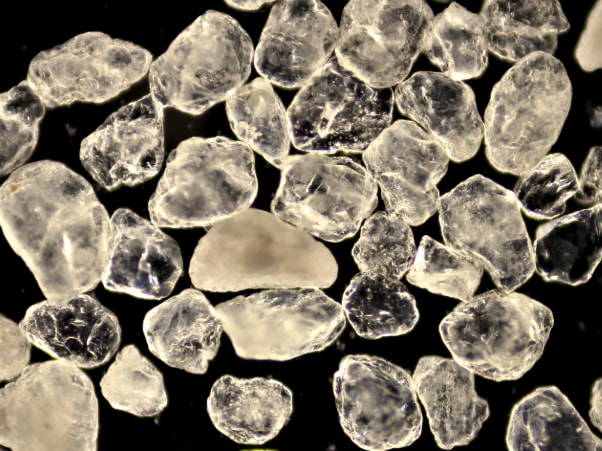
Which chemically is just this huge lattice of basically inert material like this:
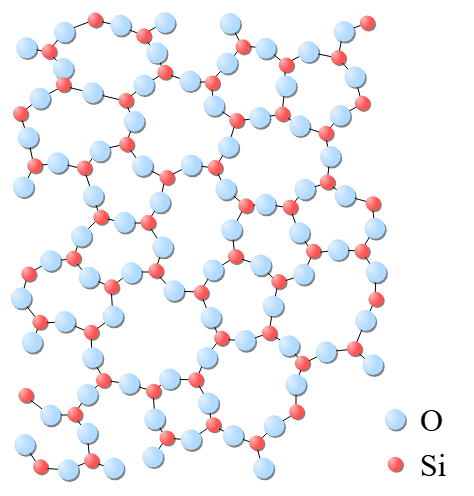
The covalent bonds between the oxygen and silicone are quite strong and it’s extremely hard to peel off any electrons or donate any electrons, and the crystalline lattice structure is monolithic and basically has nowhere for smaller chemicals to get trapped or for water to pool in. And then the massive particle size means that there’s also just not much space between the soil particles for salty, nutrient-carying water to cling and you mostly get air instead which, as you likely know, isn’t very nutrient rich.
This is clay
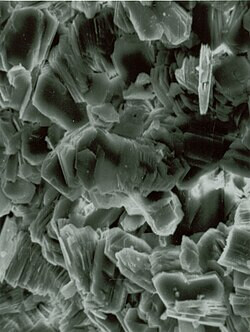
Chemically, there’s a bunch of different kinds of clay, but in general you have lots of stuff like this

Where the repeating structures tend to be 2D and often even non-crystalline (no dominant repeating structure) with different charges exposed at different places and lots of polar hydroxyl groups where bonding can happen. And all those crevices provide physical entrapment and are good spots for water to hand out. Then the much smaller particle size means that water will cling much better and there will be less air and hence more soluble soil nutrients. There’s just way, way more going on physically and chemically compared the the big, shiny, inert sand crystals.
Here’s charcoal
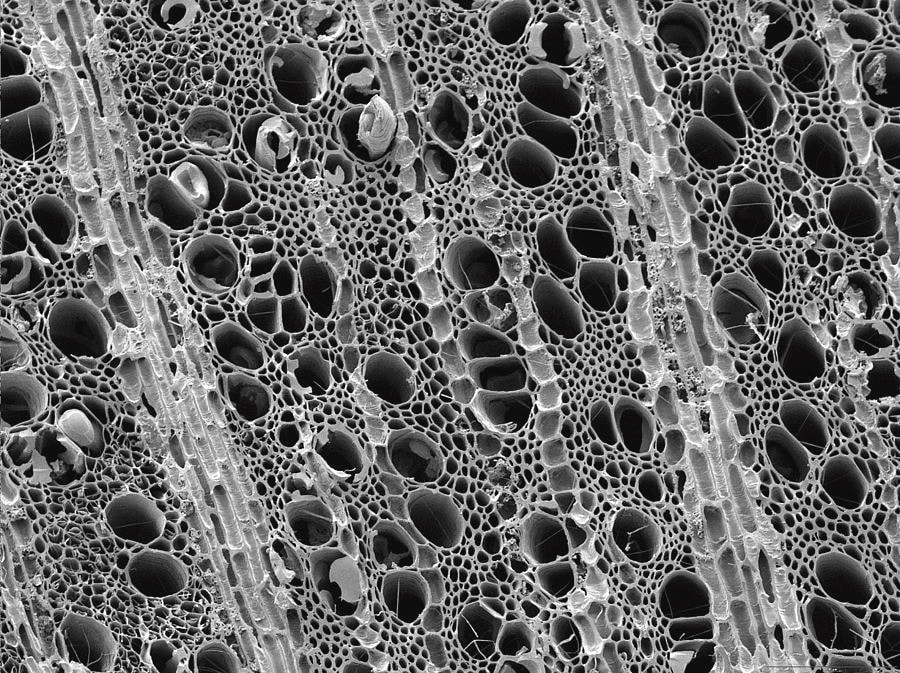

And chemically, charcoal is really wild. A lot depends on the temperature it’s made at, but in general you get a plethora
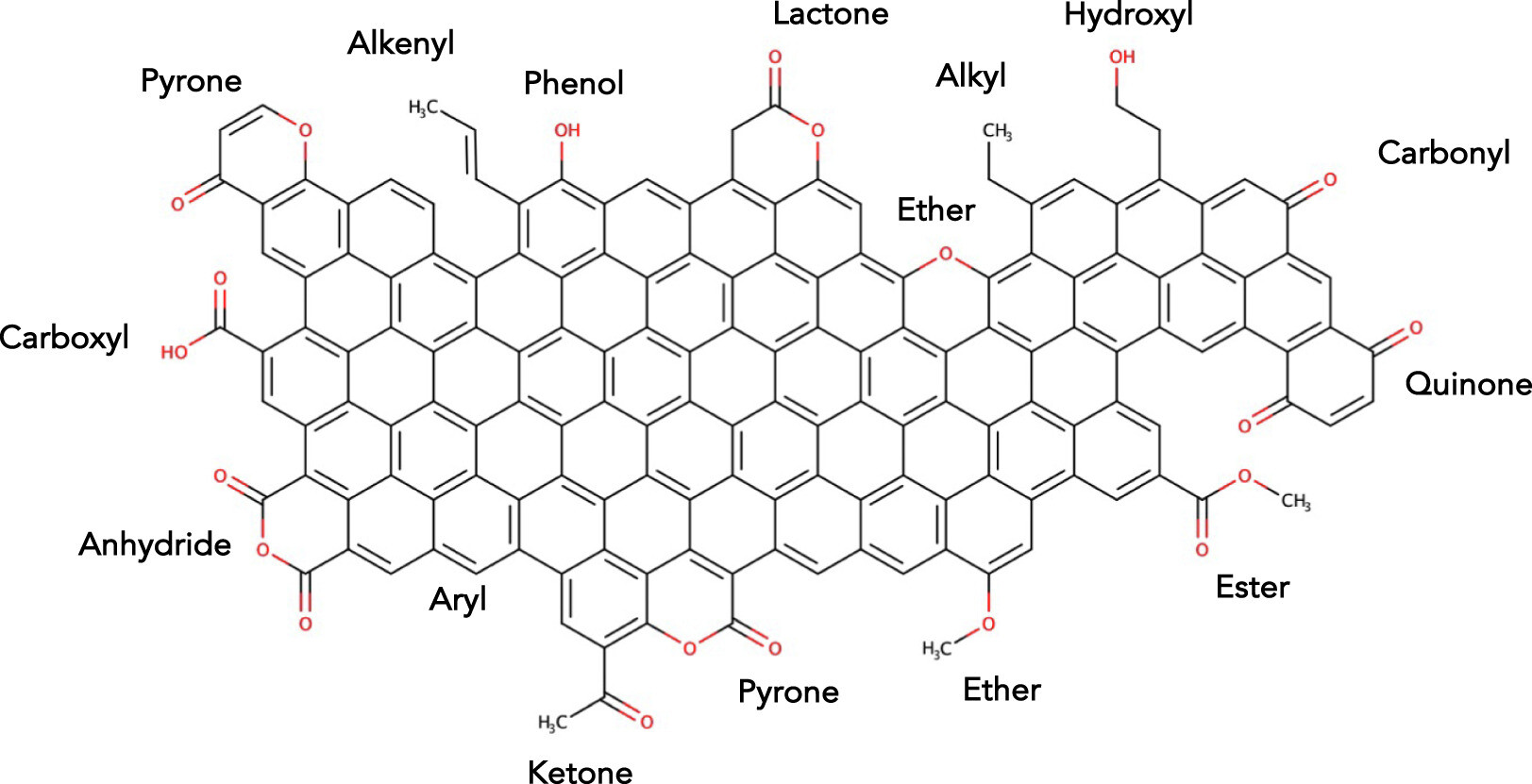
of different functional groups.
This recent paper describes in all in detail and what I’ll be pulling from for the next bit:
https://www.sciencedirect.com/science/article/pii/S2666386424003059#bib2
All of those functional groups have different chemistries and different binding affinities, so nutrients not attracted to one will be attracted to some other. Then you have the wild physical characteristics which honestly put clay to shame in terms of porosity and surface area while also having excellent rigidity compared to the flaky sheets formed by most clay minerals which goes a long way towards preventing excessive compaction. Overall it’s just really incredible as a substrate. Over time it does lose some of that as fragile pore spaces get crushed, less stable functional groups break down, condensation reactions occur etc. One of the significant losses also comes as the different carbon species lose functional groups and convert to more coal-like minerals, trending loosely speaking towards highly impure graphene, a chemical which is exceptionally stable, very nearly inert, and has very little porosity and the same compaction issue as clay since it forms soft, highly planer lattices.
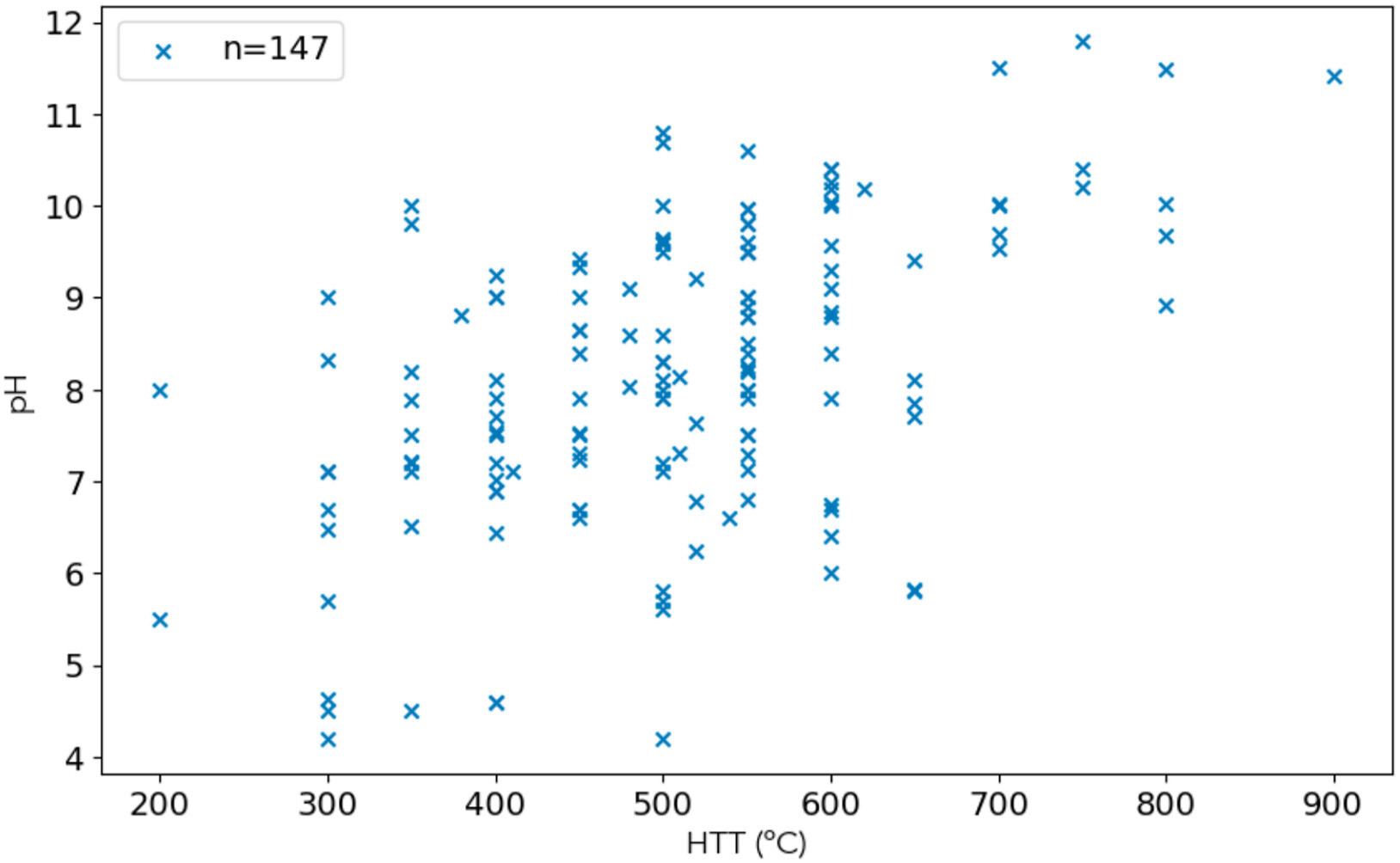
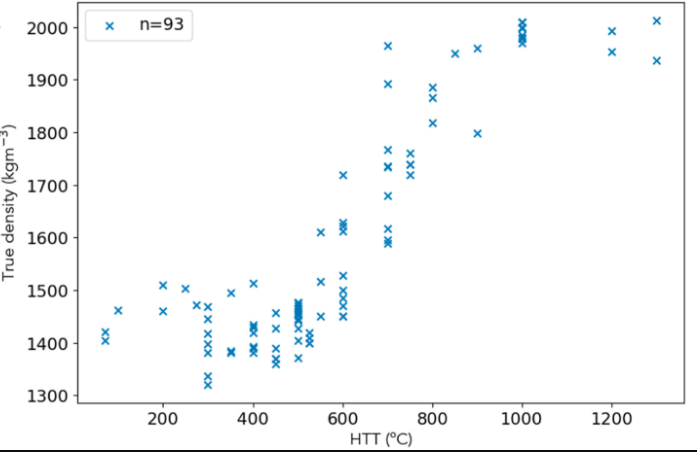
Which is why I’d strongly encourage anyone making “biochar” to avoid high temperatures because it just makes everything worse. High temperature charcoal is more alkaline, denser, less chemically active, and contains far more graphene and graphene like carbon species.
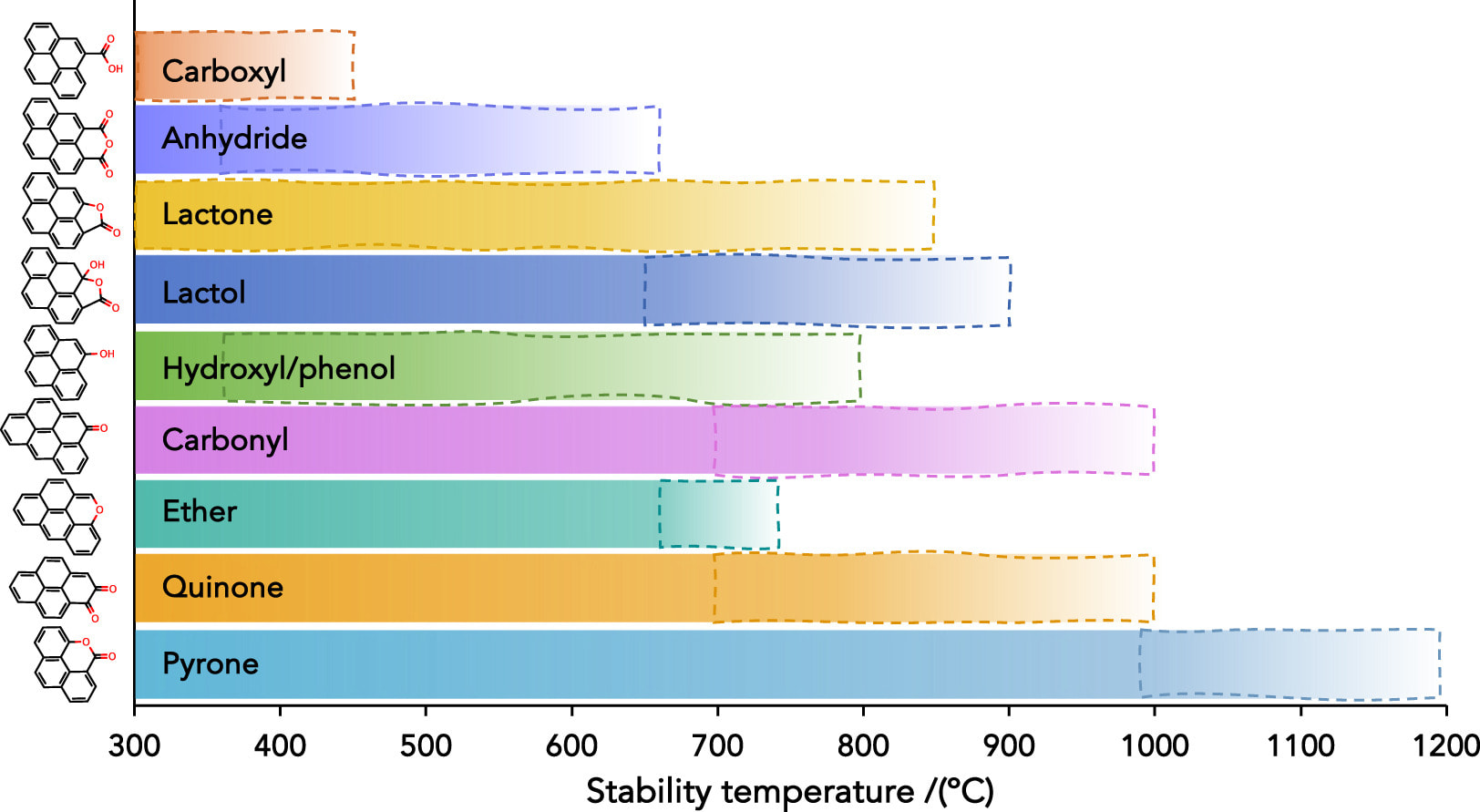
Functional groups decline by temperature, with acidic functional groups going first, which combined with the production of ash makes charcoal more and more alkaline the hotter it gets.
Density shows a very sudden increase after a threshold temperature is reached
Here’s a graphic explaining increasing graphene like carbon based on temperature
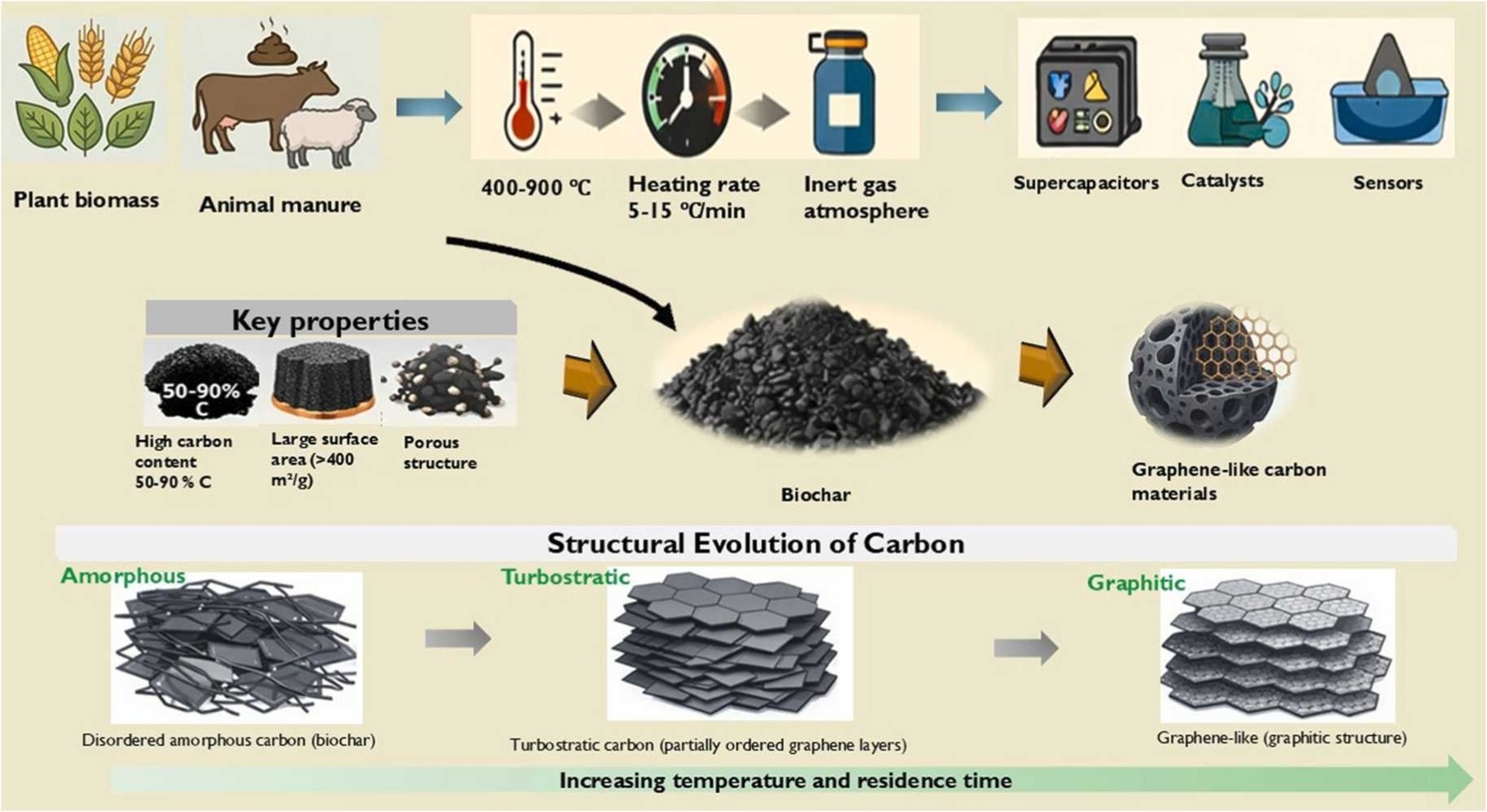
From this paper https://www.sciencedirect.com/science/article/abs/pii/S2213343726016593
Which is part of why this:
Is particularly unfortunate advice. Lower-temperature charcoal is more chemically active, less dense, not as alkaline, and is just a way better soil additive than a super caustic version of pencil lead, which is what high temperature charcoal basically turns into.
John, I hope you don’t mind me picking on you for a bit, because I’d really like to make my next point clear: Biochar and charcoal are the same thing.
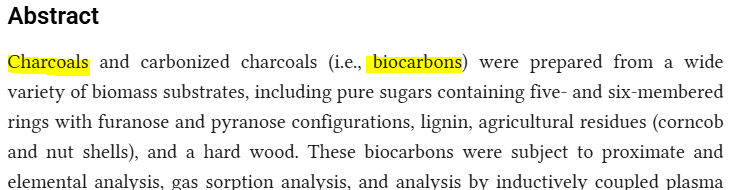
https://pubs.acs.org/iecred/article-abstract/46/18/5954/3472102/Do-All-Carbonized-Charcoals-Have-the-Same-Chemical?redirectedFrom=fulltext
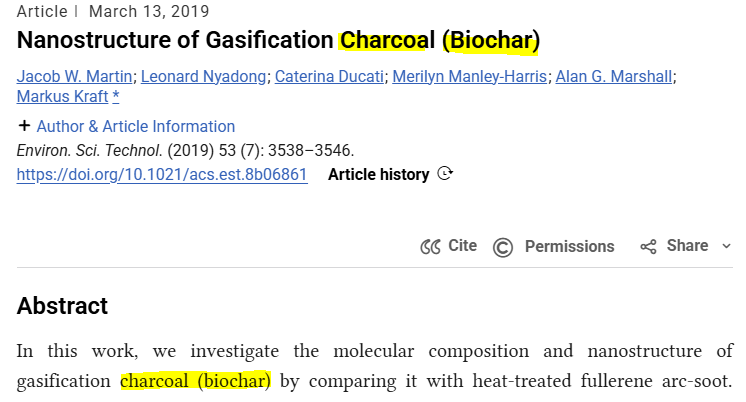
https://pubs.acs.org/esthag/article-abstract/53/7/3538/498320/Nanostructure-of-Gasification-Charcoal-Biochar?redirectedFrom=fulltext
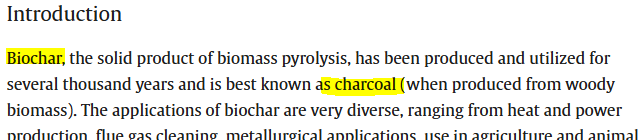
https://www.sciencedirect.com/science/article/abs/pii/S0016236117316216
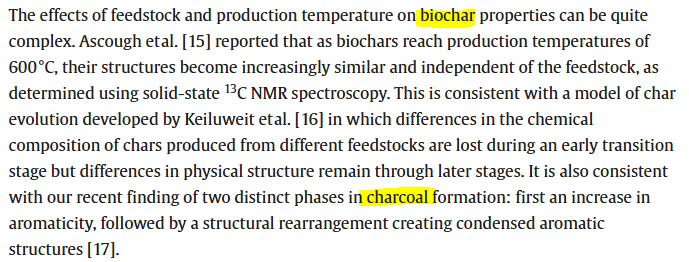
https://www.sciencedirect.com/science/article/abs/pii/S0961953413004637
To the extent to which there is any meaningful difference, it’s that charcoal usually refers to material made from woody biomass at higher temperatures whereas biochar is a bit less specific. But that difference is mostly informal and contextual.
10 Likes
This is a very informative post. Thanks for taking the time.
You suggest that the benefits of biochar decline over time. Yet biochar-rich terra preta in South America is supposedly still richer than native soil, hundreds or thousands of years after the biochar was added. Doesn’t that suggest that some of the benefits are durable, at least under certain conditions?
I also wonder whether it would be less effective in soil that gets worked (i.e., rototiller) because it would destroy the porous structure over time.
4 Likes
@a_Vivaldi I have been reading a lot on this subject and I really appreciate your in-depth post. And for that matter your years-old post about the growing medium at Juniper Level Gardens in NC has been eye opening and I was lucky enough to have an expanded shale manufacturer near me.
2 Likes
To be clear, a decline could still result in a soil superior to the native soil, just not as good as it once was. I would assume the pottery shards also are doing a good bit of good work too and at least for porosity might be a bit more durable.
Also, I’ve never found studies to the effect, but I’d imagine after some rapid chemical and mechanical weathering in the first few years the decline is probably quite slow, more along geological than historical timelines. That’s just a guess though.
Lastly, better than the surrounding soil ain’t saying much in the Amazon. Those old tropical rainforest clay soils are really, really, really bad.
I’m personally a huge fan of charcoal and other durable (compared to organic matter) soil amendments. I’ve too many more important projects, but at some point I’m planning to do some large scale charcoal amendment tests with various degrees of craziness. I’d like to know, for example, how high a fraction of the soil you can go before erosion becomes a problem, and at high amendment fractions, how much can you increase the depth of oxygen penetration? Similarly, provided some external drainage, can you effectively lower the water table over a large area? Things like that which I believe aren’t well studied yet. To me this would be extremely useful since while the fertility boost probably hits a limit pretty quickly, increasing the depth of the active root zone would be a game changer, at least in my climate and region. In say a silvicultural context, to many one example, that would be very useful. And even if that doesn’t play out but I just get exceptional drainage, that’d still be a boon to me since a lot of the plants I’m interested in are either phytophthera vulnerable, hate wet feet, or come from dry winter climates and have poor winter hardiness when wet.
2 Likes
Thanks!
It was their permatill that first got me interested in this whole subject and the idea of highly modified soils. They are definitely pioneers when it comes to a lot of things, especially in my region. I still need to make it out there one day and see all their stuff…
That paper that I linked is one of the best I’ve read on the subject of charcoal specifically. I haven’t gotten around to reading their follow up paper but I plan to, as well as more of their references, some of those papers look quite interesting.
3 Likes
@a_Vivaldi thanks for that deep dive.
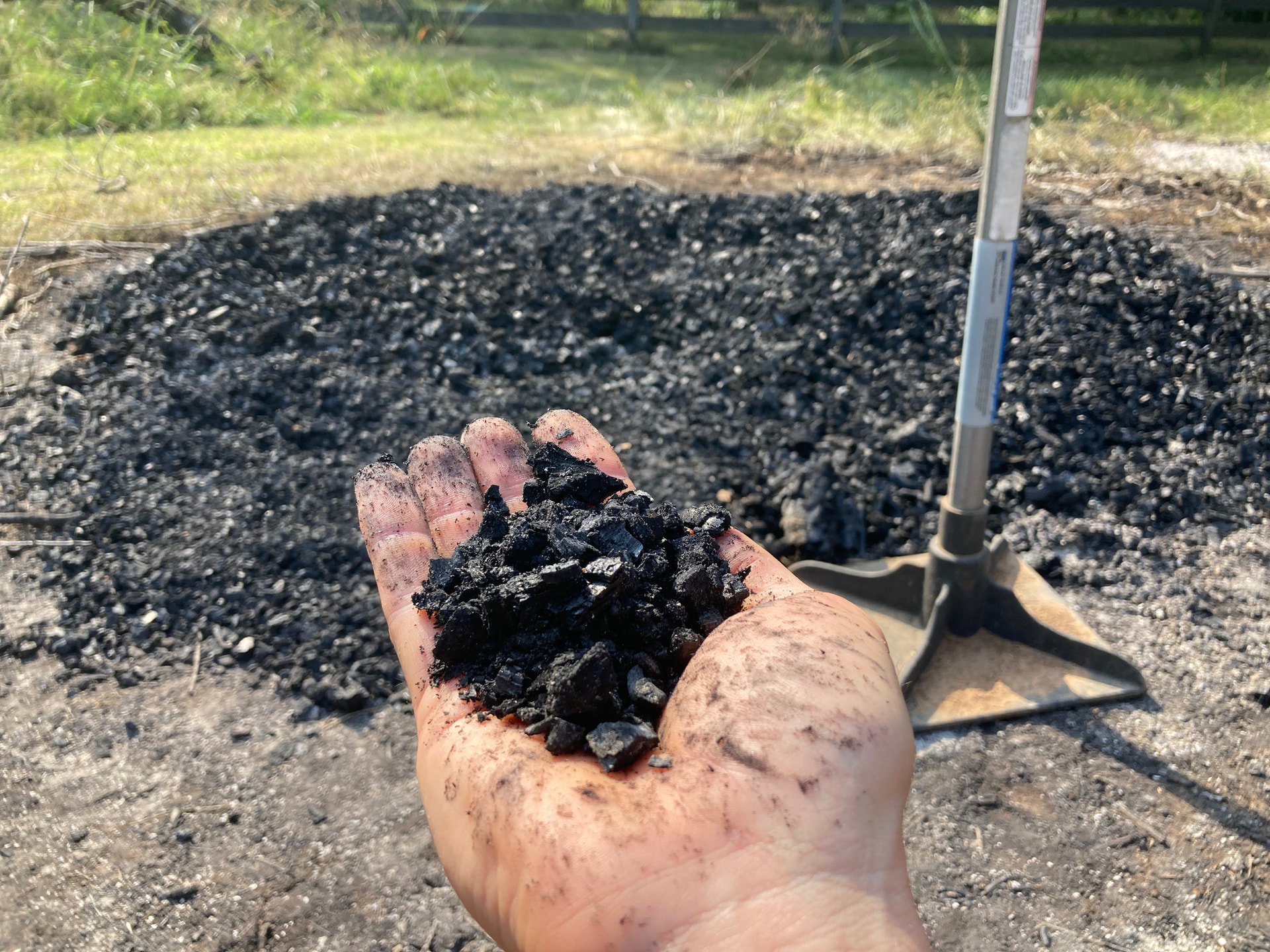
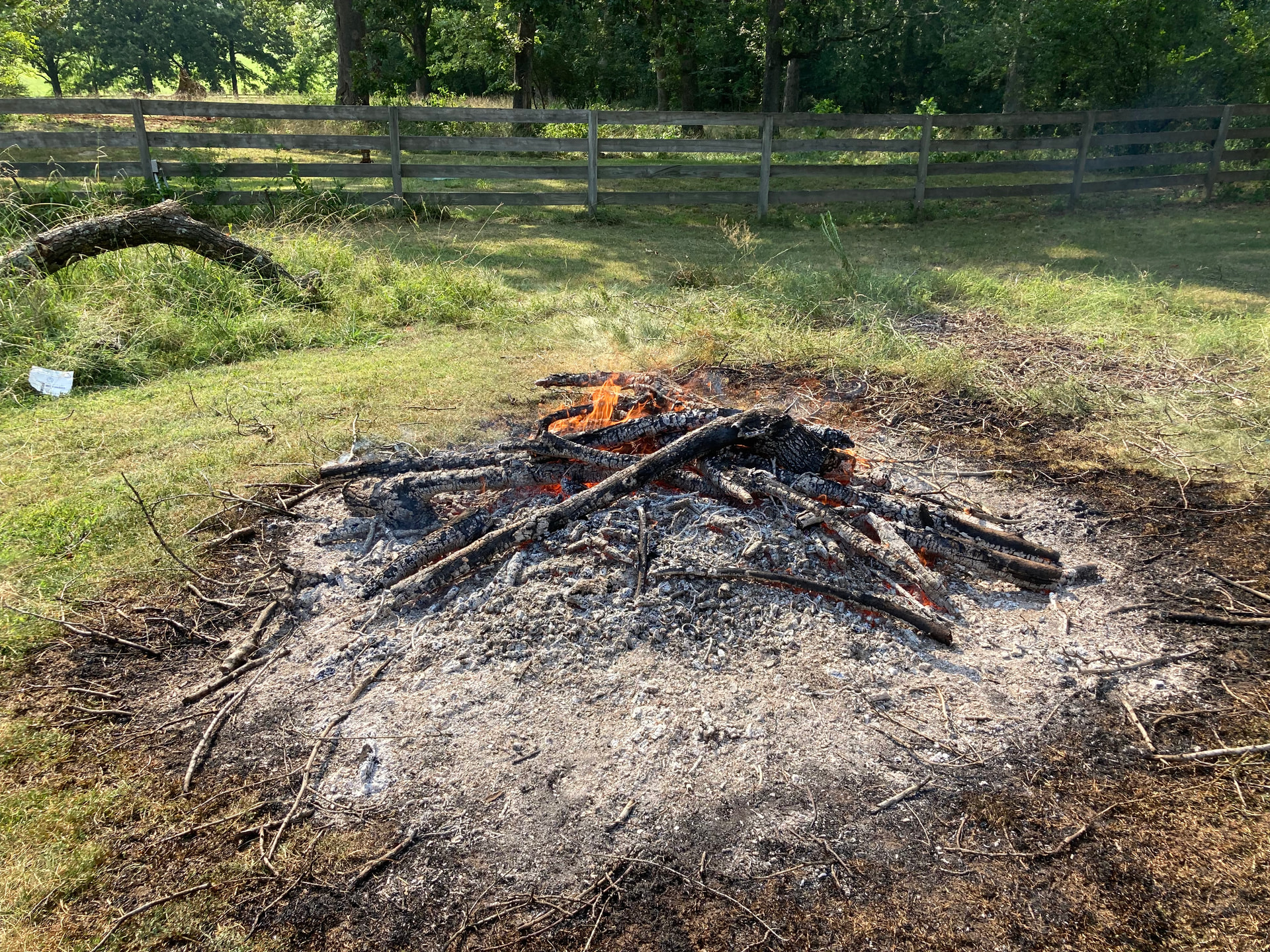
To me theory is only as good as it helps me practically. I am not going to build perfect process machinery to make optimal biochar. I don’t even have a tractor to dig pits with. But I do have brush piles and a water hose. So I do what I can and I just hope that I can rinse out enough of the alkaline ash that the resulting biochar is net beneficial to my hobby. My last batch was too alkaline and it gave my tomatoes hardcore calcium deficiency. Next time I’ll proof/soak the biochar in a barrel with nutrients and vinegar added to neutralize. Sound good enough?
1 Like
That would probably work, the case I’ve been making is mostly that it’s probably more effort than necessary. Just dumped on the ground will probably take about the same time to get the pH down. A barrel has the disadvantage of not draining so you won’t be leeching many of the alkaline salts. L
Nice looking stuff though! It’s a pity it’s so much work to make.
2 Likes
It’s only marginally more effort than burning the brush pile!
1 Like
This is great info!
I’m definitely feeling this because I made mine by accident when I burnt a brush pile that would have been burned anyways.
I doubt my humidity damp wood in a not super huge pile was getting to those really hot temps, but also I have no way of knowing.
I already have alkaline soil so I do a lot of testing with pH paper. It’s pretty cheap and easy to get and you can be more confident about what you’re adding.
I also have various acids on hand (sulfuric, citric, vinegar). Depending on how much I need to bring pH down. The citric is the best most of the time and you can get it in grocery stores with the canning supplies. The sulfuric is good when you have a lot of water (for large scale irrigation, pools, hot tubs) but it’s a pain in the neck because it’s dangerous.
My trash can that I’ve got mine in has a drain hole in the bottom so I can rinse off some of the ash. I’ve actually gone so far as to collect the runoff so it doesn’t end up completely destroying the soil in that spot and washing into the ground.
However, now I have a giant tupperware with lye in it… . so gotta figure out what to do with that.
1 Like
Paper Street Soap Company!
2 Likes
One of which that has been inspired by reading over various papers on using charcoal for purification and pollution removal is the idea of adding various extra chemicals to the stock before or after pyrolysis.
Clay, lime, sulfur, iron oxides, even water all substantially alter the chemistry and physics of the final product and can change what happens at what temperatures as well.
Clay minerals in particular might be a useful addition in pretty much in all situations.
Some of the relevant papers:
After pyrolysis
https://www.researchgate.net/publication/355514105_Interactions_between_biochar_and_clay_minerals_in_changing_biochar_carbon_stability
Before
A Vivaldi,
Obviously, you have a lot of knowledge about chemistry. The International Biochar Initiative defines biochar as char used for agricultural purposes. Charcoal is wood that is burned on the outside, but still has wood on the inside. It’s bought so you can burn it.
That is not what you want for using biochar in your garden. You want the wood to be burned so it’s close to just carbon. Then stopped. That’s what biochar is. If you drench it with cold water at exactly that time, it puffs out. That’s called activation. It makes the biochar better for the garden.
You said don’t make biochar at high temperatures, but also don’t make biochar at low temperatures. Very confusing. You list alkalinity as a downside of making biochar the way I do. We have very acidic soils here. Adding alkalinity is a good thing for us.
If you’re not going to use your land for gardening for several years, you don’t need to inoculate the biochar. I agree, but is it still biochar? Doesn’t sound like it’s being used for agriculture or gardening. I don’t have acreage and I don’t have lots of land to sit around for a long time without being used. I always inoculate. It’s so easy to do in my situation.
If someone is making lots of biochar in the trench method, say, inoculation is pretty difficult. It makes sense that they might not want to inoculate. Doesn’t mean it isn’t helpful, just logistically difficult in that case.
I enjoy reading and learning from people in different situations, soils and purposes. Our situations may be different enough that how we deal with biochar would optimally be different in our cases.
Thanks,
John S
PDX OR
That’s a huge difference!
John S
PDX OR