I don’t have any extras. Osage orange grow pretty quickly and easily from seed if you’re willing to find some and go that route.
I would not give a che Tree to my worst enemy. They are invasive here… sprouting up 30ft from the mother tree… The fruit also is not worth eating in my opinion. Maybe there are better tasting types out there. I really don’t remember where mine came from… but hopefully you guys grafting on Osage orange will stop the suckering problem Im having… Zone 8B SC USA
3 Likes
Mine sounds like yours. I got mine from Edible Landscaping a long time ago. It finally “ripens” fruit, but they are mildly sweet (no seeds) and the mouth feel is not pleasant. Small spur branches are like thorns.
It took 6-7 years before even holding fruit. This year looks like a bountiful fruit year, but unless it impresses me, I may remove about 1/2 of it when dormant. I havent’ had a problem with suckers as it is grafted, thought the last 2 years, the Osage orange has been pushing long straight (and thorny) shoots from the base of the graft.
It’s a novelty for me at this point, not a really worthwhile fruit.
2 Likes
I have had my Origional CHE (California dreaming seedless) since early spring 2020.
It is grafted to osage orange.
And.. another that I grafted to OO… that is I think in year 3 now.
Not one root sucker has ever developed.
I have a nice strawberry bed under the larger one.
TNHunter
3 Likes
Try grafting a male branch to your che. It’ll give the fruits seeds, but might improve the flavor dramatically. Che are related to figs, and from what I understand, fig flavor is utterly transformed by pollination by a male.
Another possibility is that you may have picked them too early. Che have an unpleasant, vegetable-like taste when they’re not ripe enough. The second best che I’ve ever had was quite soft, like a ripe American persimmon. The best che I’ve ever had was a pollinated Darrow che from Cliff England’s orchard.
3 Likes
Agree with @laurareiff on CHE flavor and ripeness.
With figs waiting 2 or 3 days for peak ripeness makes a big difference in flavor.
It is the same with CHE. You have to wait until they are ready ripe.
They will turn red and look ripe several days before they are perfectly ripe.
When they are perfectly ripe they will darken in red color some and soften up quite a bit.
I give every one the finger tip squeeze test before picking.
Often a really ripe CHE fruit.. when you squeeze it a little.. some juice will squirt out on your finger tips.
Definately ready at that point.
TNHunter
5 Likes
Not all Che are parthenocarpic.
1 Like
Interesting! Which varieties require pollination?
1 Like
I’m talking more about che in their native form, and you are thinking of seedless females like darrow, those edible landscaping grows or norris that Cliff England rescued. The ones that we call varities are the genetic anomalies that are parthenocarpic. The normal che fruit trees in China are both female and male. Cliff at @KYnuttrees at some point may have time to tell us more about the unusual norris variety he found in the abandoned test orchard in Tennessee.
As a side note @alan many years ago told me the temperature and climate factor when dealing with parthenocarpic fruit such as Bartlett pears in California are not parthenocarpic at other locations outside California. I ofcourse researched che suspecting the same was true. The hypothesis I have is that in colder climates seedless Che fruit will always drop and never will they produce fruit. I know many will disagree with me and I expect that but the experts don’t disagree with me which means seedless Che are not an option in colder climates
“Cudrania, ‘Norris’ female Che Chinese Melonberry
$ 30
Cudrania tricuspidata** ‘Norris’**
Name in Chinese and pin yin: 柘 zhe
Variety description: This under appreciated fruit is a relative of mulberry and fig, and is native to central China. In addition to being grown for its fruit, traditionally Che leaves were used as a secondary food source for silk worms. Trees bear a prolific crop of maroon-red, 1/2" fruit. Ripe fruit have a sweet flavor which is often compared to that of a fig with notes of watermelon.
This female selection is said to bear seedless fruit in the absence of a pollinator. This may be true in areas with warm summers, but we have found that this tree only produces fruit when it is pollinated. PLANTING A MALE POLLINATOR TREE OR GRAFTING A MALE BRANCH ONTO AN EXISTING TREE IS RECOMMENDED for zones 6 and below.
We graft our Che onto Osage orange (Maclura pomifera) rootstock so that as the plant matures it will develop less of a bush and more of a standard tree form. Young plants have small thorns.
This cultivar was discovered by nurseryman Cliff England growing in an orchard of unusual fruit trees planted in the 1930s on the site of the TVA’s Norris Dam in northern Tennessee.
We grow several different varieties of che trees. See our full selection here.
Site requirements: Full sun location. Che will grow in a range of soil types provided that the roots stay evenly moist throughout the heat of the summer. Deep, well drained loam is ideal.
Size at maturity: 10-30’ tall, up to 25’ wide, depending on pruning. Keep it pruned for a smaller size. Very fast growing.
Hardiness: USDA zones 5b-9. There are some reports of Che growing in USDA zone 5. Cooler climates may have insufficient summer heat to fully ripen the fruit.
Pollination: This cultivar was advertised to us as being self-fruitful and thus seedless. Experience has shown, that at least in our cold USDA zone 6 climate, this tree needs a male pollinator for the fruit to fully ripen.
Pests and Diseases: None observed. Birds will eat the fruit if you are late to harvest and deer may browse both the fruit and foliage. We protect young trees with a circle of wire mesh to keep the deer away.”
“Mandarin Melon Berry
4.90 out of 5 stars
$5.00
Maclura tricuspidata (syn. Cudrania tricuspidata)
The Mandarin Melon Berry is a plant with many names including Che, Chinese Mulberry, Cudrang, and Silkworm Thorn. A close relative to Mulberries and Figs, Che is a cold-hardy, compact, and ornamental tree that produces a high-quality fruit. Looking much like some kind of giant raspberry on a tree, Che is actually most closely related to the Osage Orange native to the midwestern United States. However, unlike the common Osage Orange, Che is edible and delicious.
Native to the highlands of the Himalayas of China and Nepal, Che is an extremely cold hardy and winter deciduous plant. When grown from seed or from cuttings and on their own roots, Che grows to become a large shrub reaching just six feet in height and width. However when grafted to Osage Orange rootstock, as our plants are, Che trees can eventually reach up to twenty feet in height.
While Che has both male and female plants in nature, the plants we offer for sale are a self-fertile female selection, so only one plant is needed for fruit set. Our seeds available will naturally produce both male and female plants, so if you plan on growing these from seed, plan on planting multiple seedlings to guarantee fruit production.
Cold hardy to USDA zones 5a and above, or to -20 degrees Fahrenheit.”
@FarmGirl-Z6A discussed propagation in this thread.
Scientific name
Maclura tricuspidata (Carr.) Bur.
Common names
Che, Chinese che, Chinese mulberry, cudrang, mandarin melonberry, silkworm thorn, and, derivation unknown, storehousebush in English, and in China, tcho sang (wild mulberry), tsa, tse-tsang (thorny mulberry), cha-shu, poh-hsi, shih, nu-che 4
Synonyms
Cudrania tricuspidata Bur. ex Lavallee; C. triloba Hance; Cudranus triloba Hance; Morus integrifolia Lév. & Vaniot; Vanieria tricuspidata (Carr.) Hu; V. triloba (Hance) Satake 7
Relatives
Breadfruit (Artocarpus altilis), jackfruit (A. heterophyllus), fig (Ficus spp.), mulberry (Morus spp.), African breadfruit (Treculis africana) 1
Family
Moraceae (mulbery family)
Origin
Native from the Shantung and Kiangson Provinces of China to the Nepalese sub-Himalayas 5
USDA hardiness zones
5-9; also grows well into subtropical regions 4
Uses
Food; landscape ornamental; bonsai 11
Height
25 ft (7.6 m) to rarely 60 ft (18.3 m); female trees larger than males 5
Spread
25 ft (7.6 m) after 30 years 11
Plant habit
Broad, spreading bush or small tree; suckers are produced at the base of the plant; with age develops a spreading flattened top 4
Growth rate
Slow to moderate depending on location 11
Longevity
At least 40 years 11
Trunk/bark/branches
Immature wood thorny; branchlets slightly ridged, glabrous; bark ripples with deep furrows 4,10
Pruning requirement
Prune only in winter when the plant is dormant; trees fruit on the current year’s wood 2,11
Leaves
Evergreen in warm regions; alternate; pale yellowish-green; trilobate; frequently unlobed 5,11
Flowers
Dioecious, male and female flowers on different plants, green, pea-sized 5
Fruit
Aggregate fruit; knotty; ripens to red or maroon-red; juicy, rich flesh; 3-6 small brown edible seeds 5
Season
July-Sept.
Light requirement
Will grow more vigorously and produce more fruit in full sun 2
Soil tolerances
Prefers sandy, mildly acidic soil, but will tolerate a wide range of soil types 3
pH preference
6.1-6.5; tolerates pH 6.6-7.8 11
Drought tolerance
Tolerant
Flood tolerance
Trees do not tolerate flooding 2
Aerosol salt tolerance
Unknown
Soil salt tolerance
Unknown
Cold tolerance
- 20 °F (-28 °C) 1
Plant spacing
Grafted trees should be planted on 20 ft (6.1) centers 2
Invasive potential *
None reported
Pest resistance
Appears to be free of pests and diseases 2
Known hazard
Fruit stains like mulberries 5
Terminal branches may be armed with sharp thorns 3
Reading Material
Information, California Rare Fruit Growers
Melonberry, Just Fruits and Exotics nursery
Che: Chewy Dolloops of Maroon Sweetness, Uncommon Fruits for Every Garden pdf
Che, Eat The Weeds
Fruit of the Month: Che, California Rare Fruit Growers
Origin
This species is native to China and East Asia. It is widely distributed in southern Europe and other warm temperate regions of the globe.
Che (Cudrania tricuspidata) was introduced to France in 1862, England in 1872 and to the United States about 1909. 5
Description
Although it has not yet achieved the popularity it deserves, the che is well suited to dooryard planting in north and central Florida. This small tree is easy to grow, cold hardy, drought resistand and produces a berrylike fruit in great abundance. The flavor is mild, sweet and delicious. No significant faults are associated with the che, apart from sharp thorns and the tendency of some juvenile trees to form suckers around the base. 3
The deciduous trees can eventually grow to about 25 ft. in height, but often remains a broad, spreading bush or small tree if not otherwise trained when they are young. Immature wood is thorny but loses its thorns as it matures. Female trees are larger and more robust than male trees. 1
| Video:4: 27 |
| Che fruit v1 |
Leaves
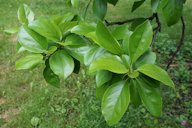
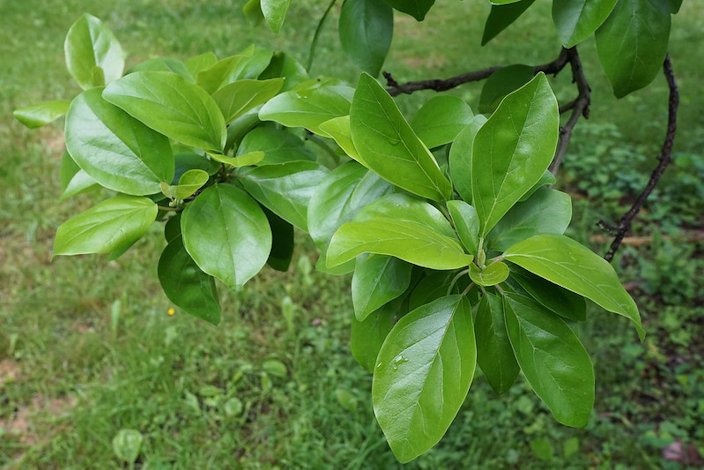
Leaves alternate, resemble mulberry but smaller, thinner, pale yellowish-green, trilobate, with central lobe sometimes twice as long as the lateral lobes, frequently unlobed . 5
Flowers
The che is dioecious, with male and female flowers on different plants. Appearing in June, both types of flowers are green and pea-sized. The male flowers turn yellow as the pollen ripens and is released, while the wind-pollinated female flowers develop many small stigmas over the surface of the immature fruit. Male plants occasionally have a few female flowers which will set frui t. 1
Pollination
No fruit is produced by the male but without his flowers the female won’t fruit. The male will cause seeds to be produced in the fruit of any female melonberry variety within pollination range. If you have a female melonberry that isn’t producing well or drops all its fruit, and you don’t mind seeds in the fruit, then plant a male melonberry within 15-20 ft of the female. 2
For some cultivars, females produce seedless fruit without pollination (parthenocarpy). If growing a seedless female tree, a male tree must not be present or the fruit will be excessively seed y. 11
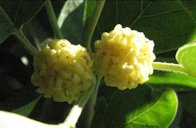
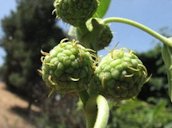
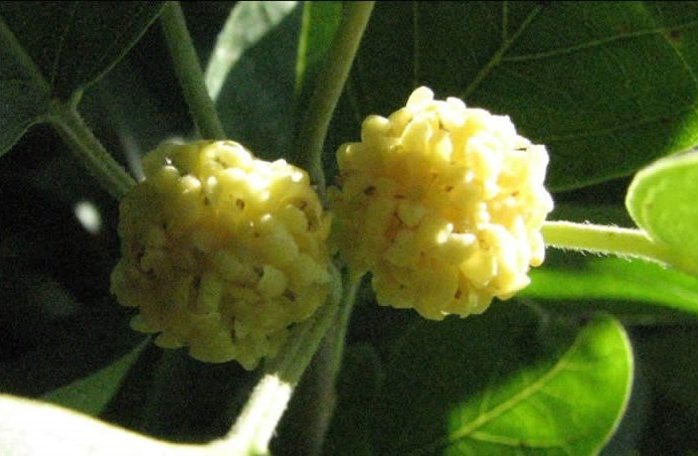
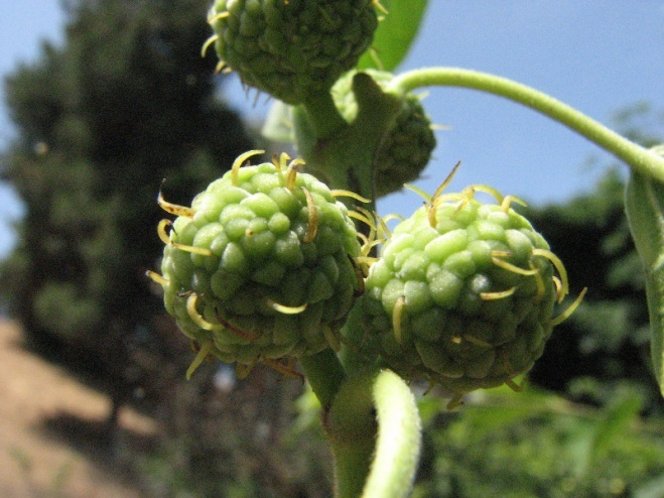
Fig. 4. Male flowers turn yellow as the pollen ripens and is released
Fig. 5. Female flowers develop many small stigmas over the surface of the immature fruit
Fruit
Like the related mulberry, the che fruit is not a berry but a collective fruit, in appearance somewhat like a round mulberry crossed with a lychee, 1 to 2 inches in diameter. The ripe fruits are an attractive red or maroon-red color with a juicy, rich red flesh inside and 3 to 6 small brown seeds per fruit. The flavor is quite unlike the vinous quality of better mulberries. While still firm they are almost tasteless, but when fully soft ripe they develop a watermelon-like flavor that can be quite delicious. The sugar content is similar to that of a ripe fig. In colder areas with early leaf drop the bright red fruit are an attractive sight dangling from smooth, leafless branches. 1
Although che fruits ripen late in the growing season, be patient with their harvest because they are tasteless until softened and dead ripe. Do not expect the fruits to drop into your hands at that time; each che has to be plucked individually (a case for parthenocarpy). Likewise, do not expect to pick the fruits all at once, because they have a long ripening season, a month or m ore. 4
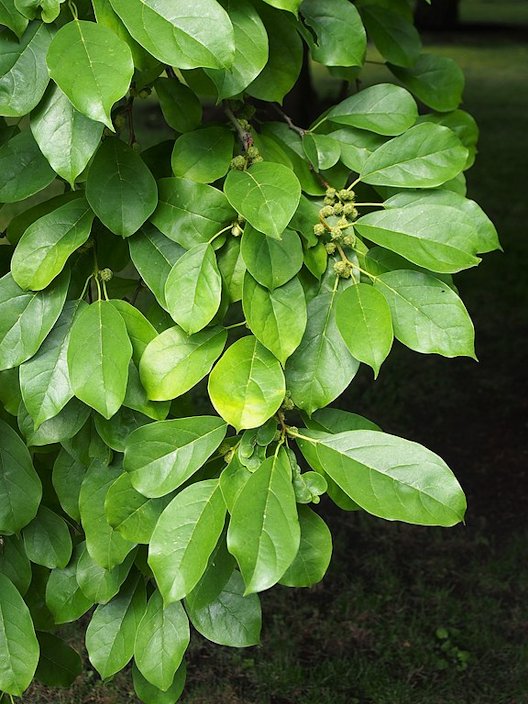
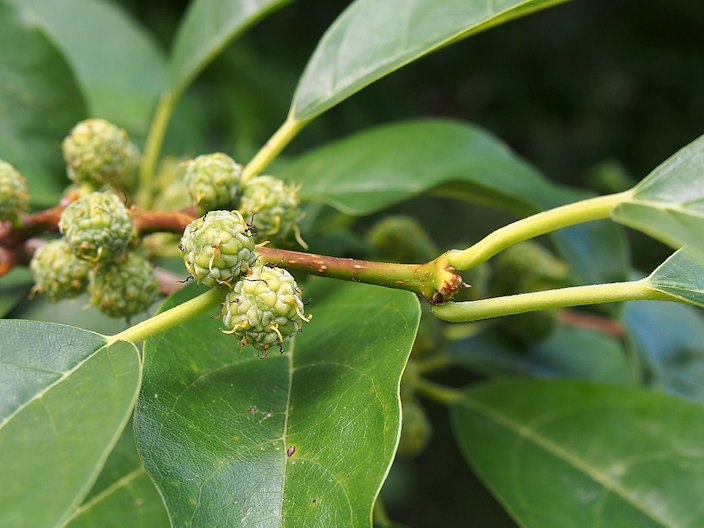
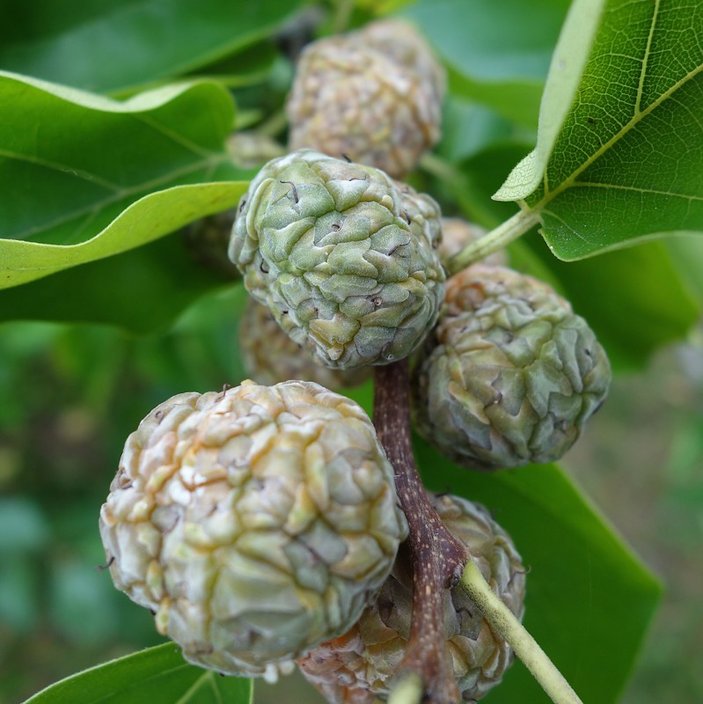
Fig. 11,12. M. tricuspidata (syn. Cudrania tricuspidata, Cudrang), fruiting tree cultivated in Wrocław University Botanical Garden, Wrocław, Poland
Varieties
Cultivars of Note: ‘Darrow Melon Berry’ female, seedless, cantaloupe to papaya flavor, USDA zones 5-10. ‘Norris Mandarin Melon Berry’ female, seedless, watermelon flavor with fig overtones, more vigorous, USDA zones 5-9. 11
Harvesting
The fruit are ripe when soft and darkening with age, possibly tinged black (Fig. 8). Ripe fruit can be removed from a stem with a gentle pull. If a hard tug is required, the fruit is not ripe. The stem does not bleed white sap when the fruit is picked fully ripe. Fruit ripen on the tree individually, not all at once, and do not ripen further once picked. One female tree can produce up to 400 pounds of fruit. It takes 5 months for the fruit to ripen. 11
The fruit can be kept refrigerated unwashed for several weeks in a covered conta iner. 11
Propagation
The che is readily grown from seed, although the plants can take up to 10 years to bear. Seeds should be sown as soon as extracted from the fruit. The plants are often propagated from softwood cuttings taken in midsummer and treated with rooting hormone. The che is also easily grafted to Osage orange rootstock using either a cleft or whip-and-tongue graft. 1
Osage orange is used as a rootstock because che on its own roots can sucker badly. Osage orange as a rootstock for che gives you a plant that is more easily trained as a standard, single-trunked shrub or small tree. 6
Both male and female trees can fruit, she more than he while the grafted seedless fruits the most. 5
Years before fruiting: ten years from seed, 2-3 years if gr afted. 11
Planting
Because space is usually limited, savvy gardeners have planted the male and female che in the same hole. The male is kept pruned to about ¼ of the total canopy for adequate pollination and best fruit production. 2
Plant away from walks, drives or patio, as fallen fruit stains porous surfaces. Terminal branches may be armed with sharp thorns. 3
Pruning
Trees fruit on the current year’s wood. Prune heavily in winter to encourage new growth for best fruit production. Remove approximately half the branches formed the previous year and head back remaining shoots by about half. If the male and female have been planted together, keep the male to about 25% of the total canopy. This may entail addition summer pruning of the male. The trees can be allowed to reach full height or kept smaller for ease of harvest. 2
Fertilizing
The type of fertilizer you choose may be chemical or organic. Make sure that the fertilizer contains iron, zinc, manganese, magnesium, molybdenum, copper and boron. These minor elements are very important to plants and most soils are low in these elements. Spread the fertilizer evenly under the entire canopy of the plant avoiding a 5-inch area around the trunk. Water or rake in. For Zones 8a-10, fertilize 3 times each year in February, May and late July/early August. For plants further north (Zones 6-7), fertilize 2 times each year in March and June/July. Never fertilize after August (July in Zones 6-7) as this will promote new growth late in the year which will be subject to free ze damage. 2
Irrigation
The first year is a critical time for the establishment of a new tree. Water thoroughly twice a week on light soils and once a week on clay soils. Soak the entire root system deeply – this usually takes 40-50 minutes. Mandarin Melonberry should receive at least 1 inch of water each week for best growth and fruit production. Water regularly, especially during dry periods. Fruit may drop prematurely if insufficiently irrigated during dry spells. 2
Food Uses
Use fresh in fruit salad or eat out of hand. They can be eaten raw o r cooked. 2,11
| Video:3:32 | |
| Che tree, C . tricuspidata v2 |
Other Uses
The plants have been valued by the Chinese for their leaves, as feed for silkworms. Although the silk produced from them was said to produce lute strings with a particularly clear sound, their leaves were used only to supplement mulberry leaves as feed, perhaps because thorny stems make picking them more difficult. 4
The bark fibers are used for making paper, and the bark is u sed medicinally. 10
General
Incidentally an intergeneric hybrid exist between the Che (Cudrania tricuspidata) and the Osage Orange (Maclura pomifera) called Macludrania hybrida. Mostly from France they were planted in the US National Arboretum in 1960 and have large orange-like fruit and no thorns. Other than that planting the hybrid seems to have been largely ignored by everyone. 5
The Che is a favored tree of for bonsai. 5
The Tanzhe Temple west of Beijing, China, is nam ed for this tree. 8
Bibliography
1 “Che.” California Rare Fruit Growers, 1997, crfg.org. Accessed 4 Jan. 2014.
2 Gilbert, Brandy Cowley. “Melonberry.” Just Fruits and Exotics nursery, justfruitsandexotics.com. Accessed 5 Jan. 2015.
3 Boning, Charles R. Florida’s Best Fruiting Plants- Native and Exotic Trees, Shrubs, and Vines. Sarasota, Pineapple Press, 2006.
4 Reich, Lee. “Che: Chewy Dollops of Maroon Sweetness.” Uncommon Fruits for Every Garden, 2004, leereich.com. Accessed 7 Jan. 2015.
5 Deane, Green. “Che.” Eat the Weeds and other things, too, www.eattheweeds.com. Accessed 14 Jan. 2015.
6 Del Hota, Tom. “Fruit of the Month, Che.” California Rare Fruit Growers, Dec. 2012 Newsletter, crfg.org. Accessed 17 Jan. 2016.
7 “Cudrania tricuspidata synonyms.” Global Biodiversity Information Facility, gbif.org. Accessed 15 May 2017.
8 “Maclura tricuspidata.” Wikipedia, wikipedia.org. Accessed 15 May 2017.
9 dself65. “Che (mandarin melon berry) Cudrania tricuspidata.” Top Tropicals, tropicalfruitforum.com. Accessed 15 May 2017.
10 “Maclura tricuspidata Carrière.” Flora of China, Maclura tricuspidata in Flora of China @ efloras.org. Accessed 9 Apr. 2022.
11 “Growing Mandarin Melon Berry, Che: Maclura tricuspidata.” Garden Oracle, Apr. 2020, Growing Mandarin Melon Berry / Che: Maclura tricuspidata. Accessed 9 Apr. 2022.
Videos
v1 “Che (Zhe) Fruit.” Figaholics, 8 Oct. 2020, (CC0), www.youtube.com/watch?v=mjgXfVKJEnQ. Accessed 9 Apr. 2022.
v2 “Che.” Future Of Flavor, (CC0), YouTube_5_AAeS41sg. Accessed 10 Apr. 2022.
Photographs
Fig. 1Arb O’Retum. “Cudrania tricuspidata.” Flickr, 6 Nov. 2021, (CC BY-NC-SA 2.0), www.flickr.com/photos/123413440@N05/51661279277. Accessed 9 Apr. 2022.
Fig. 2“Cudrania tricuspidata.” Plant Image Library, 8 June 2017, Flickr, (CC BY-SA 2.0), www.flickr.com/photos/138014579@N08/35143130686. Accessed 9 Apr. 2022.
Fig. 3“Cudrania tricuspidata.” Plant Image Library, 8 June 2017, Flickr, (CC BY-SA 2.0), www.flickr.com/photos/138014579@N08/35143130736. Accessed 9 Apr. 2022.
Fig. 4,5Gilbert, Brandy Cowley. “Melonberry.” Just Fruits and Exotics nursery, justfruitsandexotics.com. Accessed 5 Jan. 2015.
Fig. 6“Cudrania tricuspidata.” Plant Image Library, 6 Oct. 2017, Flickr, (CC BY-SA 2.0), www.flickr.com/photos/138014579@N08/37484748476. Accessed 9 Apr. 2022.
Fig. 7“Cudrania tricuspidata.” Plant Image Library, 6 Oct. 2017, Flickr, (CC BY-SA 2.0), www.flickr.com/photos/138014579@N08/37484748616. Accessed 9 Apr. 2022.
Fig. 8“Cudrania tricuspidata.” Plant Image Library, 7 Nov. 2017, Flickr, (CC BY-SA 2.0), www.flickr.com/photos/138014579@N08/26470315569. Accessed 9 Apr. 2022.
Fig. 9 Chaoyue, Zhao. “Silkworm Thorn, Maclura tricuspidata, Shandong, China.” iNaturalist, Research Grade, 10 Sept. 2020, (CC BY-NC 4.0), www.inaturalist.org/observations/59107502. Accessed 9 Apr. 2022.
Fig. 10 Arb O’Retum. “Cudrania tricuspidata.” Flickr, 2013, (CC BY-NC-SA 2.0), flickr.com. Accessed 15 May 2017.
Fig. 11Kwiecień, Agnieszka. “Maclura tricuspidata (syn. Cudrania tricuspidata, Cudrang), fruiting tree cultivated in Wrocław University Botanical Garden, Wrocław, Poland.” Wikimedia Commons, 18 July 2020, (CC BY-SA 4.0), commons.wikimedia.org/wiki/Category:Maclura_tricuspidata#/media/File:Maclura_tricuspidata_syn._Cudrania_tricuspidata_2020-07-18_01.jpg. Accessed 9 Apr. 2022.
Fig. 12Kwiecień, Agnieszka. “Maclura tricuspidata (syn. Cudrania tricuspidata, Cudrang), fruiting tree cultivated in Wrocław University Botanical Garden, Wrocław, Poland.” Wikimedia Commons, 18 July 2020, (CC BY-SA 4.0), commons.wikimedia.org/wiki/File:Maclura_tricuspidata_syn._Cudrania_tricuspidata_2020-07-18_03.jpg. Accessed 9 Apr. 2022.
Fig. 13Arb O’Retum. “Cudrania tricuspidata.” Flickr, 22 Oct. 2013, (CC BY-NC-SA 2.0), www.flickr.com/photos/123413440@N05/17951961863. Accessed 9 Apr. 2022.
Fig. 14 Arb O’Retum. “Cudrania tricuspidata.” Wikimedia Commons, 2015, flickr.com. (CC BY-NC-SA 2.0). Accessed 15 May 2017.
Fig. 15 SKas. “Maclura tricuspidata tree.” Wikimedia Commons, 2008, (CC BY-SA 3.0), commons.wikimedia.org. Accessed 15 May 2017.
Fig. 16 “Cudrania tricuspidata.” Plant Image Library, 6 Oct. 2017, Flickr, (CC BY-SA 2.0), www.flickr.com/photos/138014579@N08/37484747836. Accessed 9 Apr. 2022.
Fig. 17“Cudrania tricuspidata.” Plant Image Library, 6 Oct. 2017, Flickr, (CC BY-SA 2.0), www.flickr.com/photos/138014579@N08/37484748726. Accessed 9 Apr. 2022.
Fig. 18 Severinghaus, Steven. “Silkworm Bark. Cudrania tricuspidata by the stream at the Brooklyn Botanic Garden.” Flickr, 2012, (CC BY-NC-SA 2.0), www.flickr.com. Accessed 15 May 2017.
Fig. 19“Cudrania tricuspidata.” Plant Image Library, 6 Oct. 2017, Flickr, (CC BY-SA 2.0), www.flickr.com/photos/138014579@N08/37484747496. Accessed 9 Apr. 2022.
Fig. 20 Gilbert, Brandy Cowley. “Melonberry.” Just Fruits and Exotics nursery, justfruitsandexotics.com. Accessed 5 Jan. 2015.
* UF/IFAS Assessment of Non-native Plants in Florida’s Natural Areas
** Information provided is not intended to be used as a guide for treatment of medical conditions.
3 Likes
Quite a few sources have stated that could be true. One of the members on here lives north and said they have not gotten much fruit from theirs. Could be something similar to jujube. Only certain varieties like the east coast. So the che could be by the variety which ones like to fruit in the north.
2 Likes
I cannot prove it yet and I have a lot of research to do. I think.most would agree we should have more than 4 varities and the precious little information we have thus far. Peo0le have already told me they have known about them for 20-30 years and they learned more reading the info I posted than they have in the entirety of that time. These nurseries that grow these know the information. They are not encouraged by anyone to share information with the general public. I have a seedling male and I’m already planning crosses.
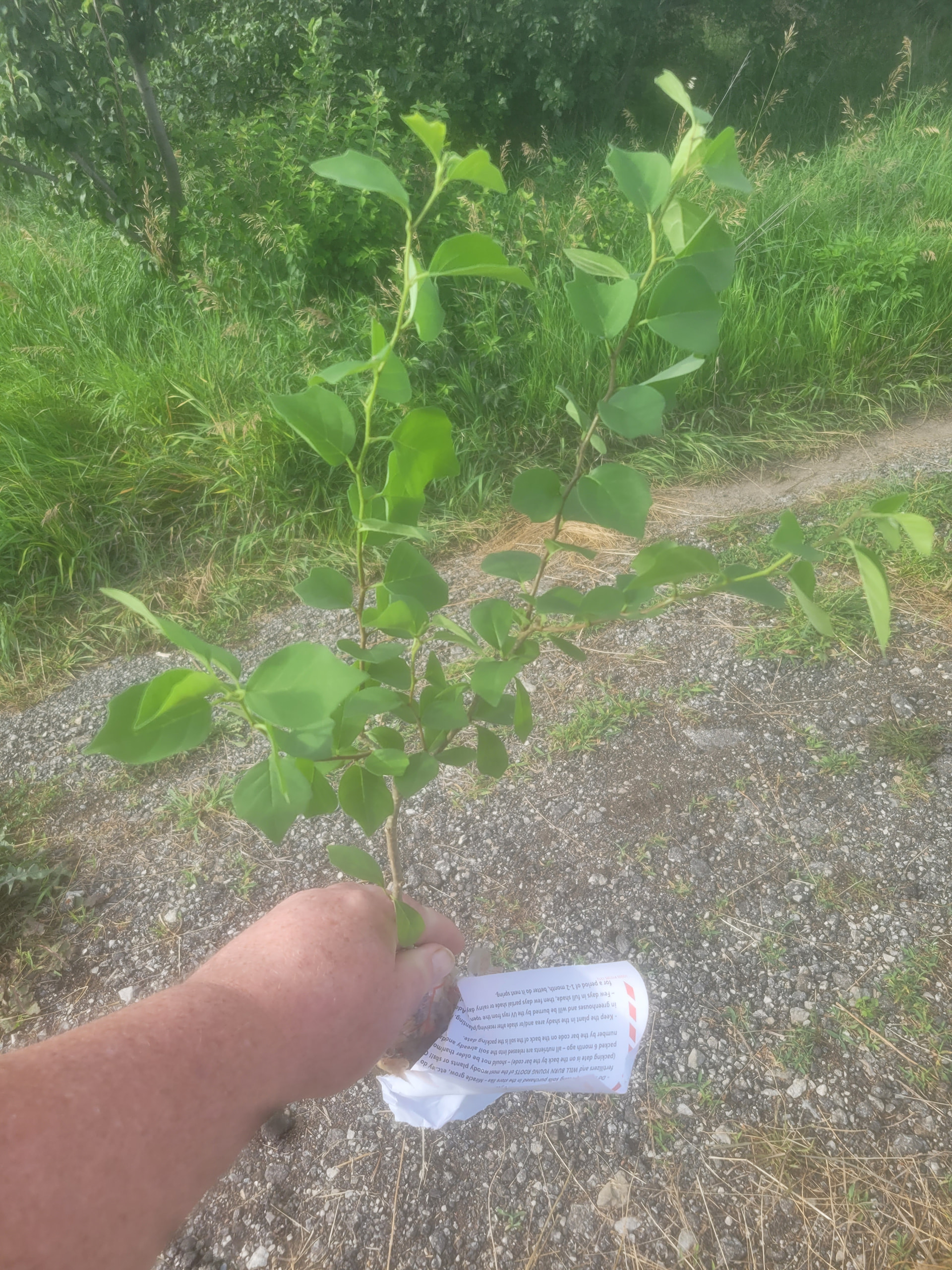
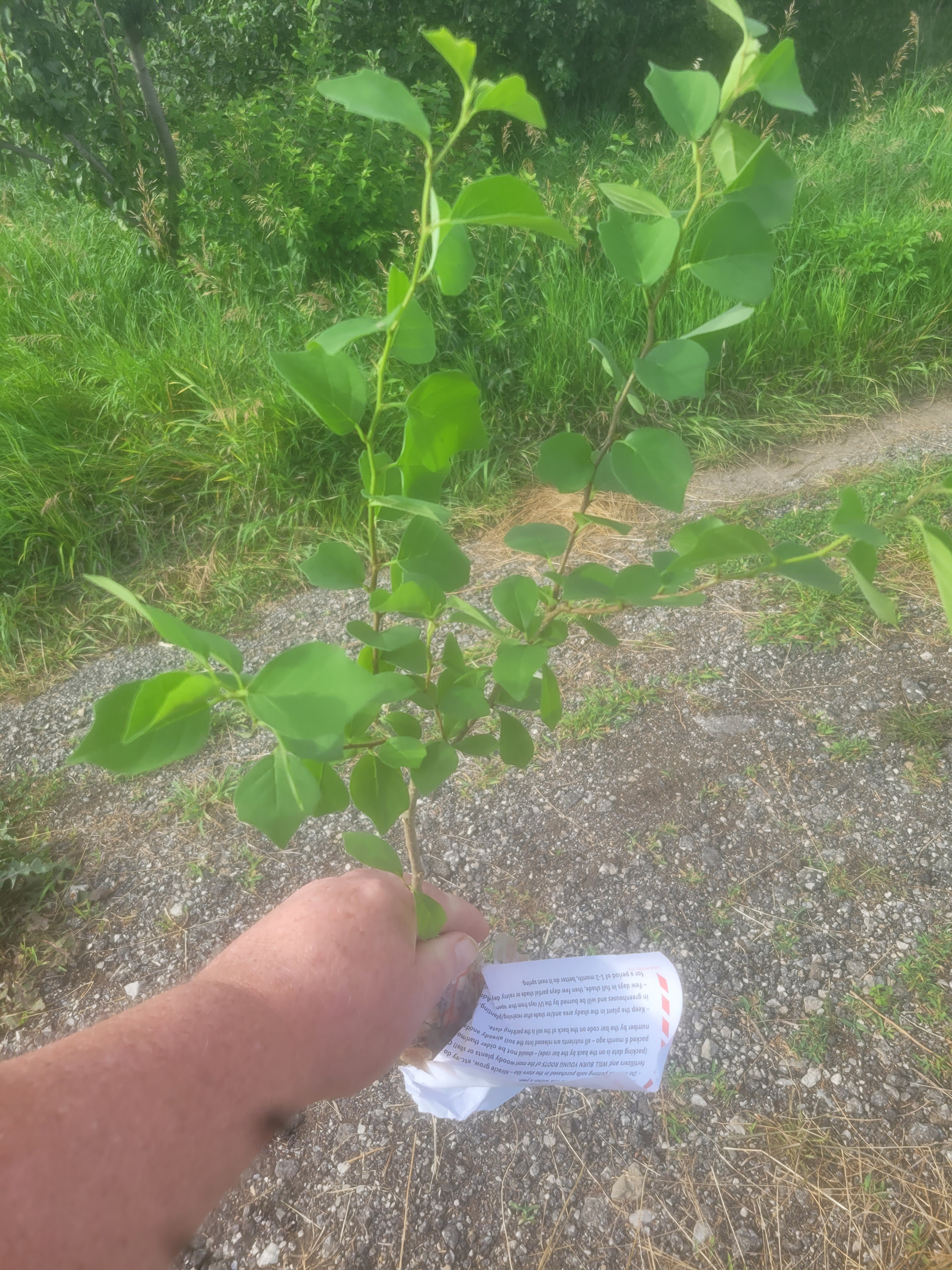
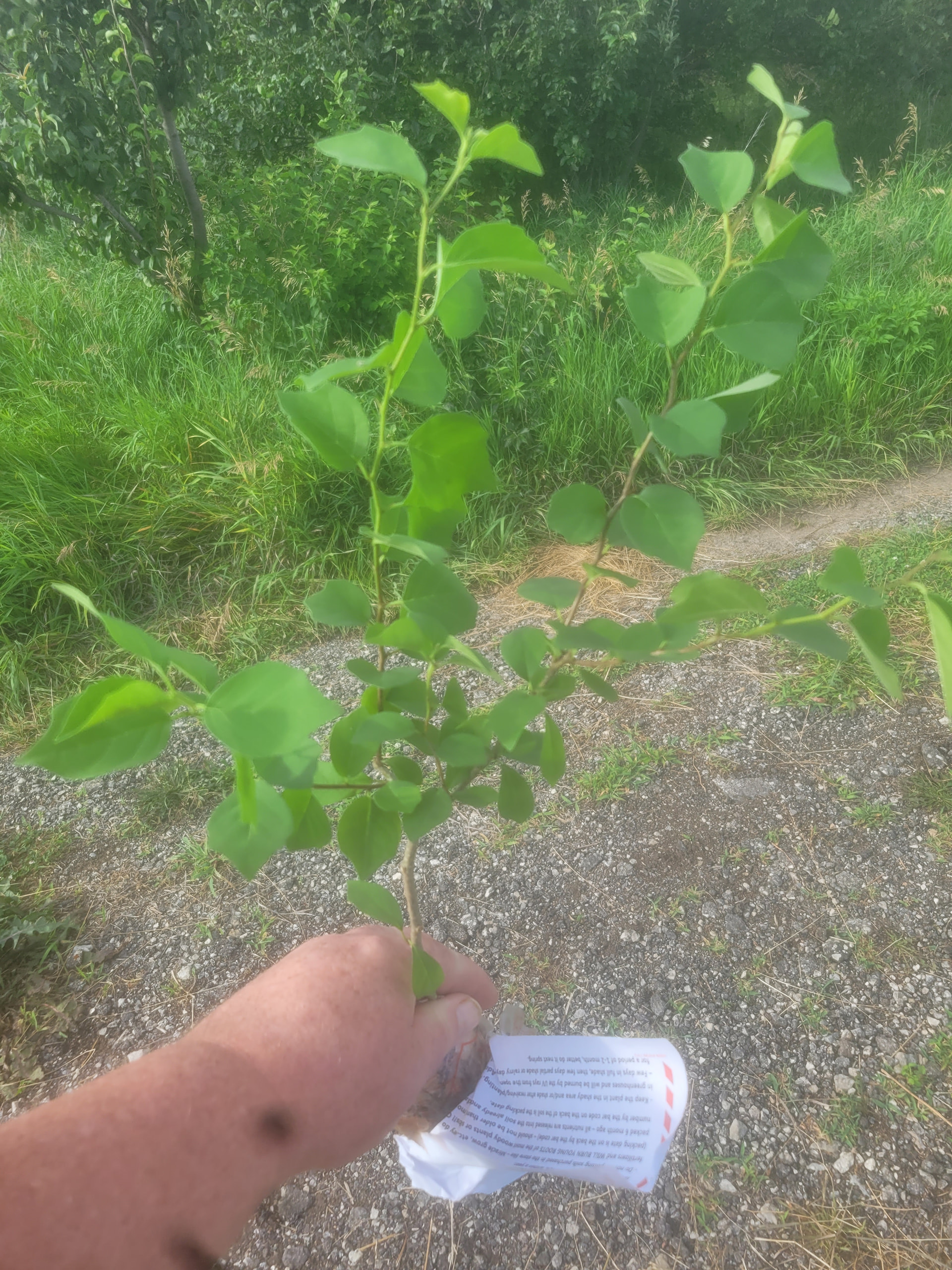
1 Like
I think you will have better luck from the seed mass planting than you will from crossing with that male. The seeds have random males and random crosses. That one male restricts you to it.
When you get a tree fruiting you can take cuttings from your new creations to graft to it and short cut the long fruiting wait time.
2 Likes
I’m inclined to agree I have a load of seeds also.
I was looking at my che grafts today.
I think this is below the graft on the Osage Orange side…
Does Osage Orange have thorns?
Thought only Che (bad varieties) have thorns?
I think I noticed the one that has thinner more oval leaves has thorns, and the more rounder leaves do not. I assume the oval leaves are osage orange, but maybe I’m wrong.
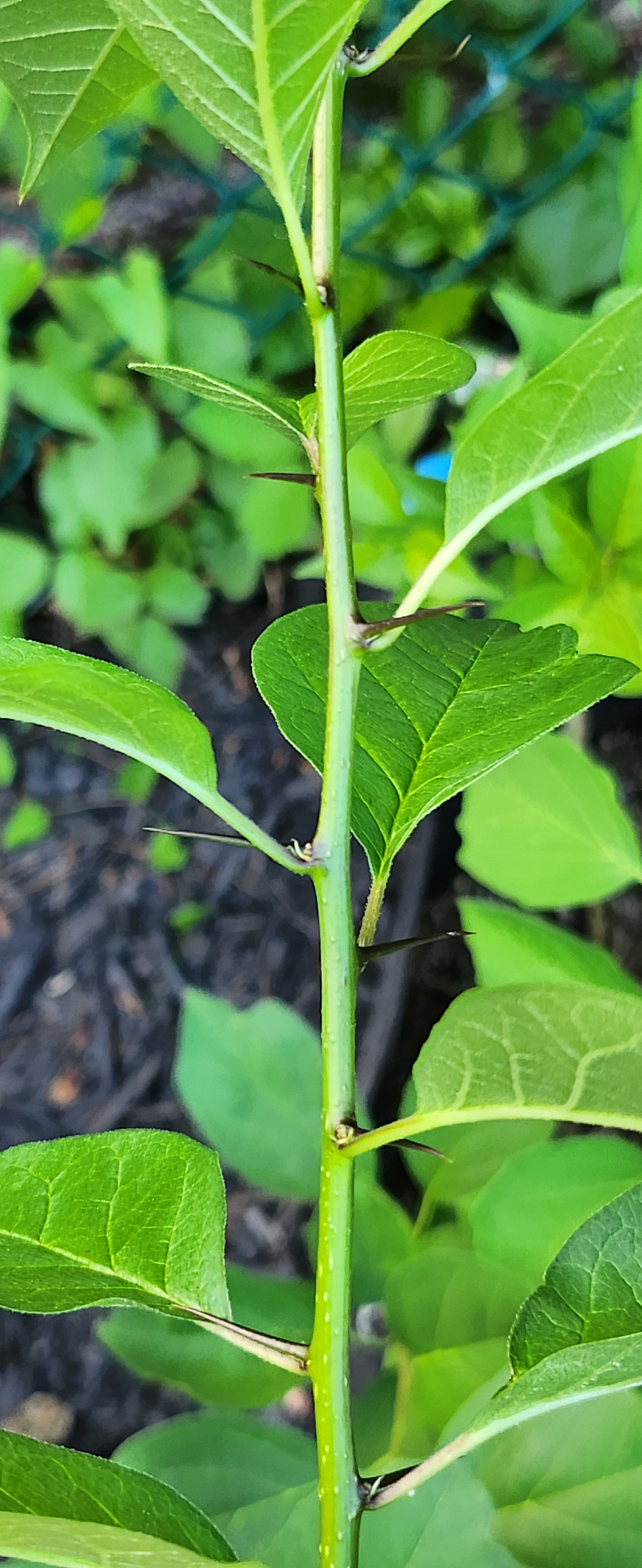
2 Likes
They all have thorns but yes those look wicked. Osage orange can be thorny or thornless. Notice post #16 I made in this thread Che, mulberry, osage orange, fig grafting I’m holding Osage orange scions. Tonys reply below was post #17.
Clark,
Wow! Those mean looking thorns will make Us bleed. I probably use a nail clipper to clip off those thorns before doing any bark grafts.
Tony