i have heard that the osage orange rootstock stops the natural suckering of the che
1 Like
the one i tasted at charles’ west place tasted EXACTLY like a muskmelon. which was good.
Anyone growing these in zone 7
1 Like
Trev is in Z7. They are plenty cold hardy enough, you just need enough heat units to ripen the fruit, HK #2 and #3 ripen earlier than California dreamin if you’re worried you won’t be able to ripen it as well as Trev. Oregon exotics is later than California dreamin so I wouldn’t try that variety
1 Like
Found this interesting take on Che tree today. Interestingly, he has the EL seedless variety rated as the “standard.” He is growing California dreaming as well. As usual, it will probably take some experimentation to really know.
1 Like
Most people are not saying the EL tree is not good tasting (some do though). The gripe is it takes a long time to start fruiting. The three that most people say are good are EL, Norris, and CD (I have those, but haven’t fruited yet). I’m sure there are more, that’s just the ones most people say are good.
1 Like
You’re right. One other big thing is the EL appears to drop its fruit often before fully ripe, for some over 10 years of this behavior. That’s my hold up with it. I live in VA and it was discovered in Ivy, VA so I might give it a go but I’m 1500k higher elevation than Ivy.
1 Like
They are hardy to Z7, what would your elevation change?
I think most reports of bad taste are people not adequately letting the tree mature and passing judgement too soon
2 Likes
My California Dreaming seedless CHE was started spring 2020..
In year 2… it set some fruit.. it turned a little red then all dropped. In year 3… it set fruit and about half of that dropped and the rest ripened. At that point it tasted good.. ripe watermelon/raspberry flavor.
Long hot season here in southern TN zone 7B.
Every year since then the fruit flavor, quantity and size has improved. This year nice improvement in size and the fruit started dropping when ripe.
The last two years the flavor has deepened.. gotten richer.. it is much more like a rich berry fig flavor now.
That is how my timeline for development/maturity have gone.
In 3 4 5 years will it be even better.. I bet it will.
TNHunter
2 Likes
Do you fertilize your tree at all? Really want to size mine up
1 Like
@Rootedwithmark.. I give most of my fruit trees some organic fertilizer early spring.. like treetone or garden tone.
This year I did not fertilize persimmons apples or pears… but I did fertilize everything else.
I did give all my fruit trees mulch.. including maple leaves, grass clippings, wood chips.. and chop and drop from comfrey and walking onions.
I was hoping to minimize fruit drop on persimmons and fireblight on apples and pears.
TNHunter
Thanks! But yeah I learned the hard way with fertilizing my apple tree since it died of fireblight! I’ll stay the course with fertilizing Che
1 Like
I picked it up just as a side item to go with something else I bought. It was only like 10 bucks, so I couldn’t go wrong. I’m at the north end of Va.
2 Likes
I think this was a question to the whole group, but the way it hits my notifications looks like it could have been to me, so I’ll give what little I can…
My experience with OO is limited to about 4 plants and the cuttings I have grown from them. Those all had significant thorns, but are/were all small. My two in ground have great roots, but were supposed to be Che, reverting to OO after the grafts were unintentionally removed. The current state is vicious. A lot of things have stronger defense while young, and a lot of things will grow more defense when recovering from trauma. I do not intend to find out if the thorns thin with age as they’ll be Che again next year. This pair originated as a struggling graft from England’s Orchard. It was the year Cliff was recovering and he hadn’t gotten to his own repair yet and didn’t seem inclined to at the time, so I got a good deal and some scion as backup. I keep it through one winter in a pot and the graft union ultimately failed the next. My re-graft was successful, as were grafts on the second year roostocks, and the cutting during that adventure thrives on its own in ground, but well, my keystone caper in the post above ensued, as did the potting soil misstep, so I’m left with the two well-armed in-ground O.O.
I found them to grow fairly readily from cuttings, but the soil mix I grew both my potted ones and those cuttings in held too much water and I sacrificed the lot to root rot by not realizing it in time. The thorns on this batch were still right hazardous, but shorter and softer. I had trimmed them off when I pruned them, so the focus on creating roots or having had specific assault on the thorns may have affected them. They may simply have had different genetics. I bought them to be rootstock and received them too small to really graft on the first year.
In short, my experience is rather narrow and I find them variable in the threat level of the thorns, but have never seen a thornless Osage. I have found them easy to root and to graft, with no latex leak on small whips. But I have found them easy to kill with poor pot maintenance and to break with being trapped under a direct hit by a runaway tractor that had to be dragged back over/off of a young graft, followed by an embarrassing exposure to hedge clippers after an emergency regraft seemed to have salvaged the day. It had put out impressive growth prior to the tractor incident and seemed to be recovering with more cautious growth before I butchered it again. In ground, with proper drainage, they truly want to live around here. I have seen no suckering from it yet, but I’ll be surprise if I don’t see it send up a shoot next spring at some distance from the one that has seemed to have a target on it.
1 Like
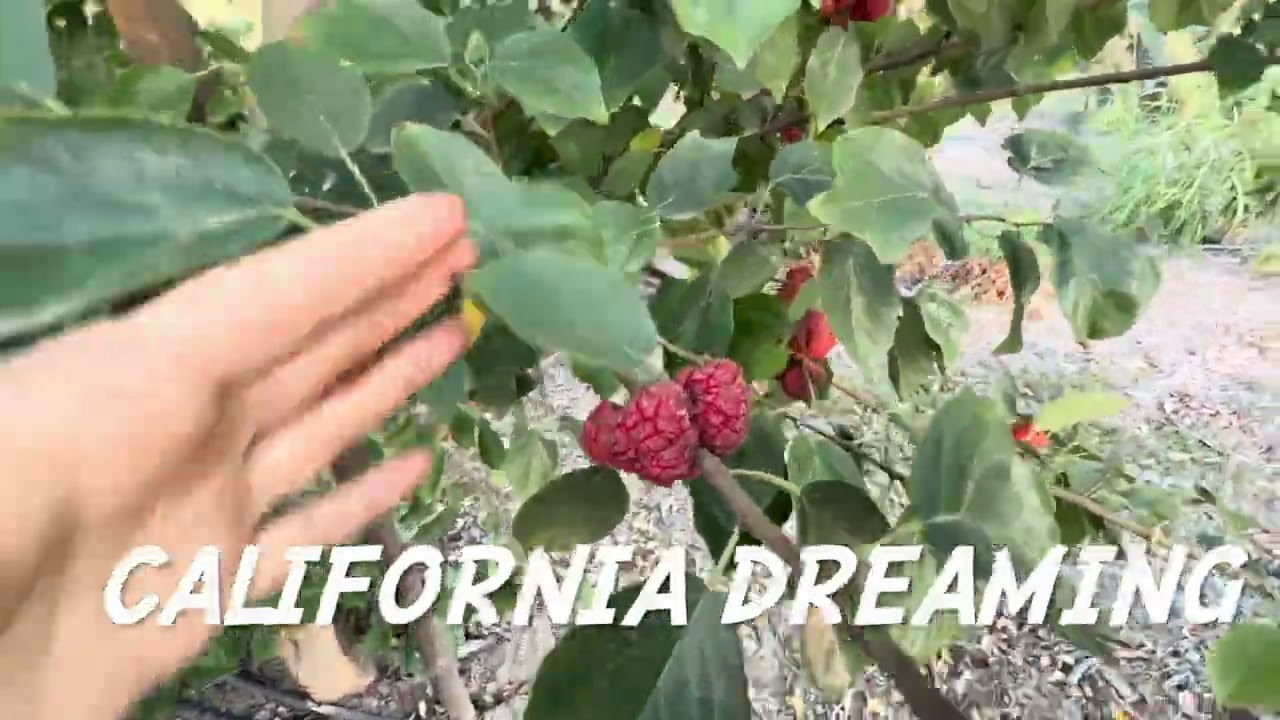
marta posted a good video of trying different che berries in her orchard, she has one of the largest collections of cultivars I am aware of. hers are seeded though, but she says it improves the fruit
2 Likes
I have a hard time understanding her.
I could hear her crunching the seeds in her seeded fruit.
I do not have a male here and my California Dreaming seedless CHE is seedless.
I don’t agree that having a male and seeded fruit makes them better.
It does make them produce larger fruits.. but those large hard crunchy seeds are a turn off for me.
Mine are complete seedless with a texture similar to a strawberry.
TNHunter
3 Likes
Che is an interesting plant because it looks exotic but can still handle a surprisingly broad range of conditions. I’d give it full sun, well-drained soil, and enough room for the mature spread. Young plants may be slow at first, so patience is part of the deal. If anyone has grown it in a colder climate, I’d be curious to hear how it handled winter and whether hand pollination was needed.