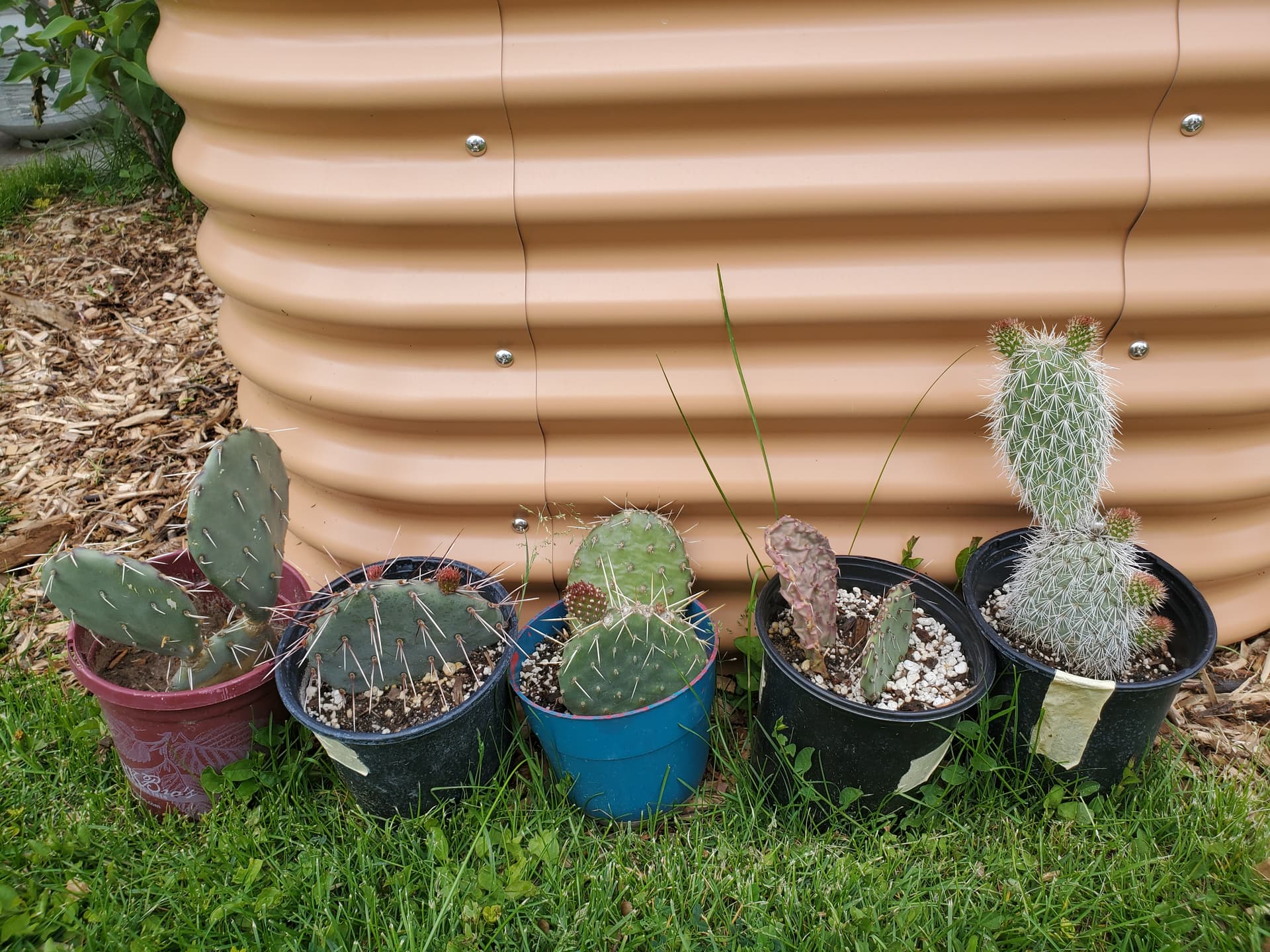
Let’s see. For Echinocereus I selected viridiflorus, reichenbachii, fendleri, engelmanii, and chloranthus. I also currently have a triglochidiatus growing from the last time I started seeds. For Escobaria, I have missouriensis, but sneedii and vivipara are also supposed to be good bets. Pediocactus simpsonii is supposed to be extra hardy, but it needs cold stratification which I didn’t feel like dealing with this time.
There are also a lot of Opuntias and Cylindropuntias that are cold hardy; these tend to be more forgiving of wet conditions.
My general strategy is to pick collections from farther north (for cold tolerance) and east (moisture) in their ranges, or from higher elevations. A lot of these are hardier than their current ranges would suggest. The big trick is keeping them relatively dry in the winter. Wet feet is a bigger problem than cold, so you need excellent drainage. Some of the more sensitive species really benefit from something to keep the rain and snow off in the winter.
Basically, you can set them up like alpines. A 1:1:1 mixture of builders sand, pea gravel and native soil is usually a good start. Put it in a raised bed at least 6" high, but more is better. A 1-2"mulch of gravel is also a good idea. When you plant, make sure it’s plenty warm. Do not water them in and keep them dry for at least a few days to allow any wounds to heal over.
One more thing. If you find yourself in Northampton, MA, Smith College has (or at least had) cactus growing outdoors on the south side of the conservatory and in some of the alpine beds
i hadnt noticed that, but Ill be sure to look next time. Its been several years since Ive been, but its been a favorite spot to go, especially in the depths of winter. Nothing like sitting under a 20 ft tall cacao tree in new england around February
I’ve tucked all the cactus into wooden frames which will go up against the house for winter under some straw. I don’t want them to spread in the yard so much, but want them to make it to spring. all the pads I’ve gotten have rooted well, one even filled a gallon pot from a tiny pad. hoping for nopales to eat next year if not fruit.
I have Desert Dream and Desert Glow in an unheated greenhouse. After a week of subfreezing temps part of Desert Dream has goo-ified. Desert Glow is looking ok (left part in the following picture).
We had some real cold weather for the first time in years, I think it hit -6F. My Desert Dream and Desert Glow are all totally dead. Oh well, I tried! Other cacti are all looking good, at least.
Next experiment for hardy cacti edibility will be ‘Ellisiana’, supposedly pretty hardy and good for nopales.
I’m in northern Utah, zone 5b / 6a. I have several different prickly pears (many unknown). Opuntia Phaeacantha, hybrid Phaeacantha x engelmanii, and pina Colada (might be dead). I’m looking for a taste test guide for cold hardy opuntia. What’s the best tasting? I’ve read through the thread and there’s so much knowledge. Thoughts on:
Desert glow
Desert dream
Mesa sky
Barr’s dwarf
Any that I missed?
Thanks,
Joe
Desert Glow and Desert Dream are simply not hardy for me here in zone 7b, and I’ve given up on them after two years of having propagations of them die in the ground. I have Mesa Sky, and it survived outside last year, but it’s not big enough yet to bear fruit.
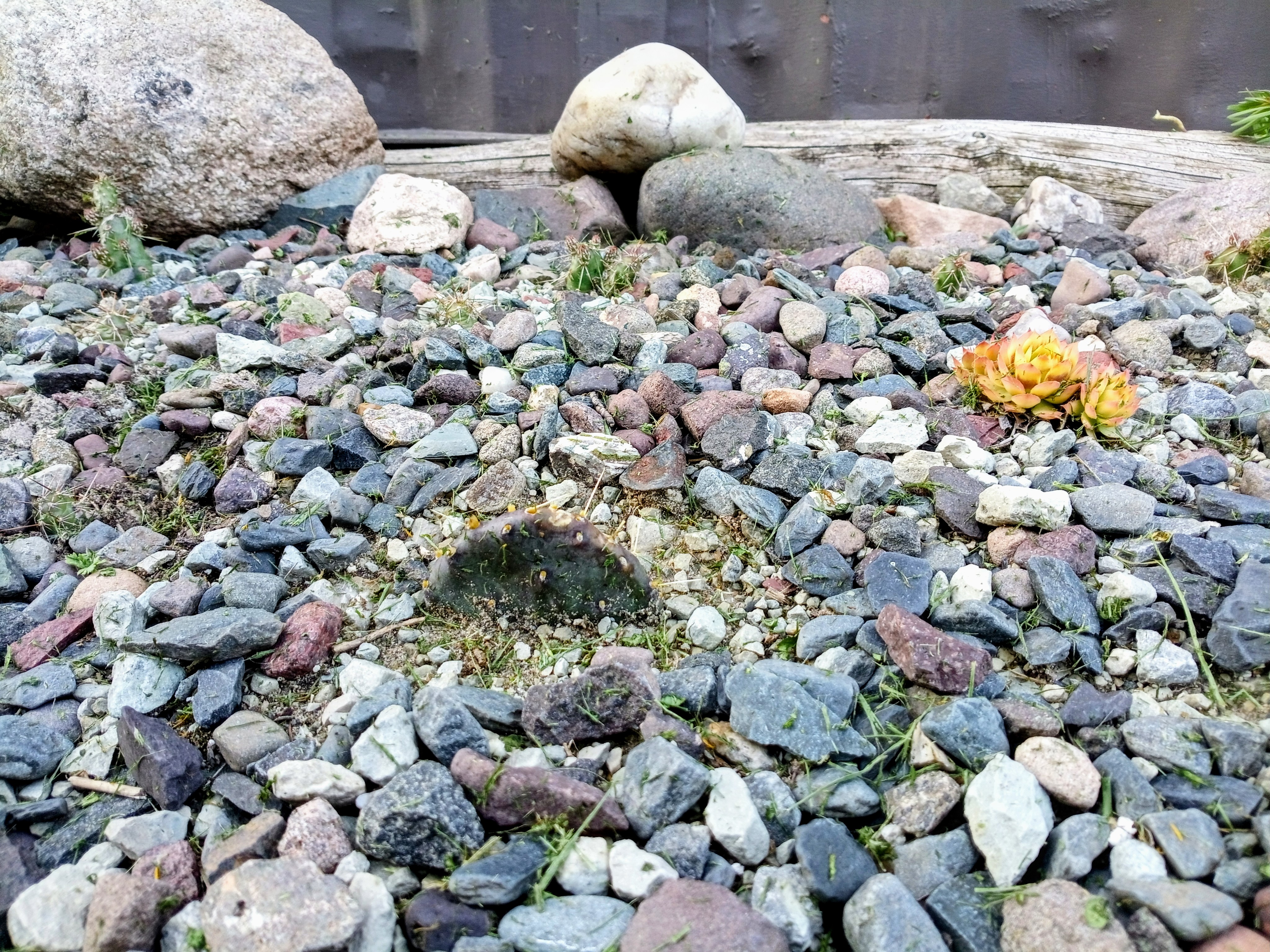
The cutting in the front is Opuntia humifusa ‘Ohio’, from Cold Hardy Cactus.I got it this spring. Unfortunately, the base got a rot, so I cut the top and planted it. The Hen&Chicks is Gold Nugget. The cactus in the back are Opuntia fragillis from Prairie Moon Nursery. I planted them last year. O. fragillis is the only cactus native to the Upper Peninsula.
viridiflorus and chloranthus are not the most vigro cactus.
they are quit samll and grow not fast. but the flower smell good.
when i visit germany i seen they grow fendleri preerty well.
fruit look yummy too. too bad E.fendleri won;t flower in taiwan. i think it must be the lack of cold winter or something.i only have this issue with Echinocereus ssp.and not other cactus.
reichenbachii is the most promising cactus in my opinion because it is the most widely distributed species and therefore likely to have greater adaptability.
FYI, these species are strictly self-sterile. You will need two different clones to produce fruit, or attempt interspecific breeding if you’re feeling adventurous.
Glad to hear people growing prickly pear and cactus pads in the PNW. It has been on my list for quite a while! Anyone in the PNW willing to trade for a pad or two I can start?