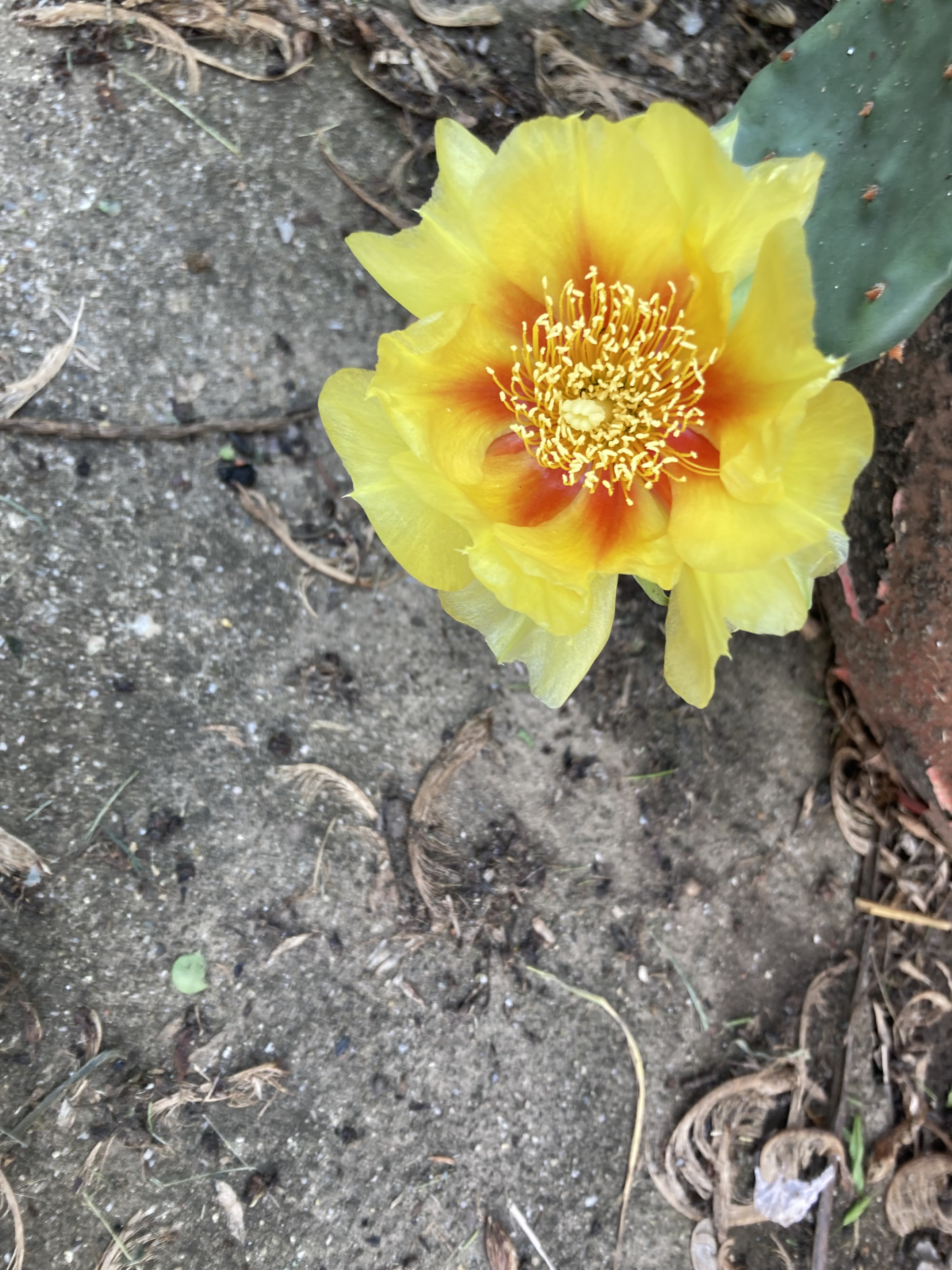
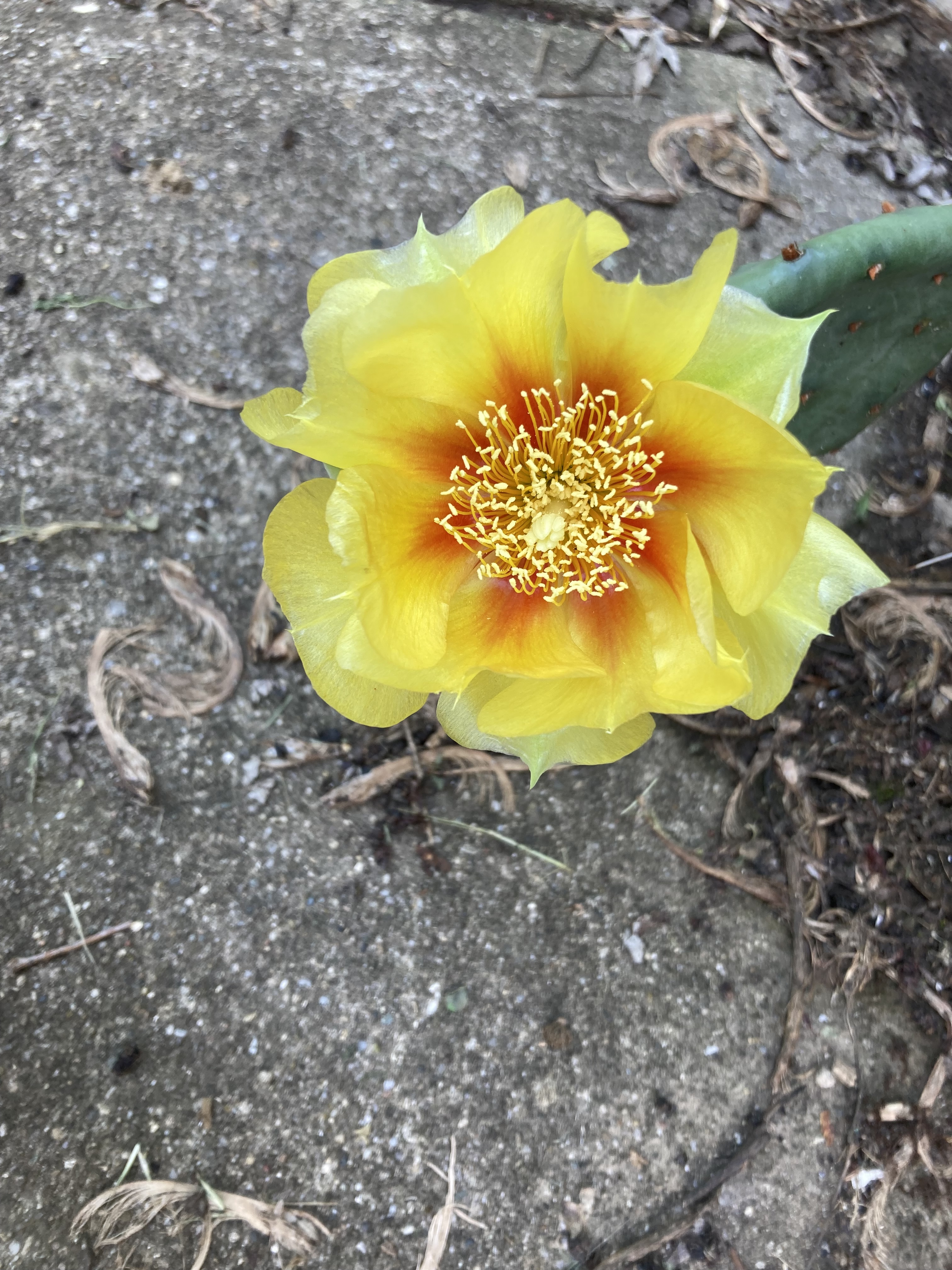
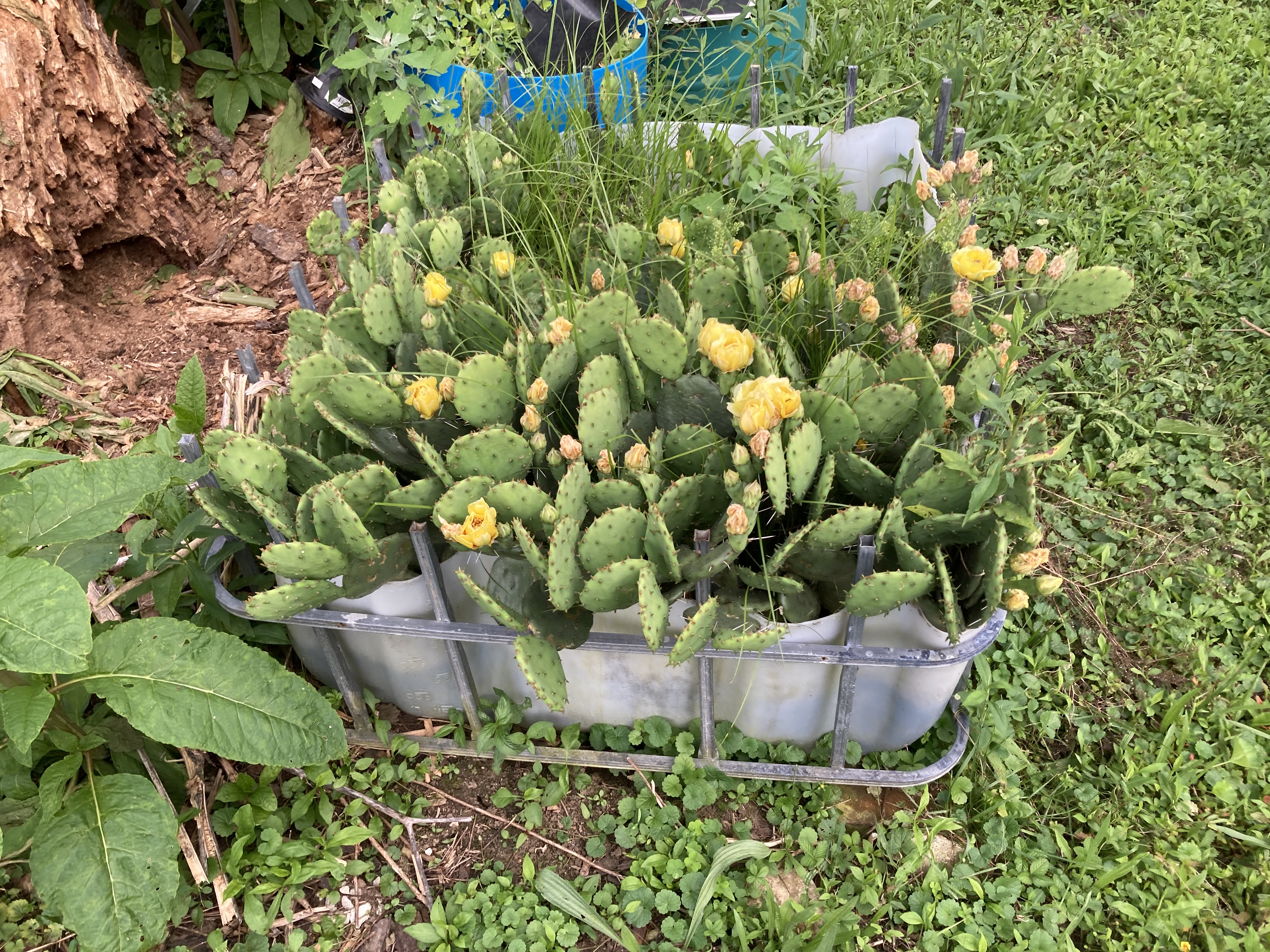
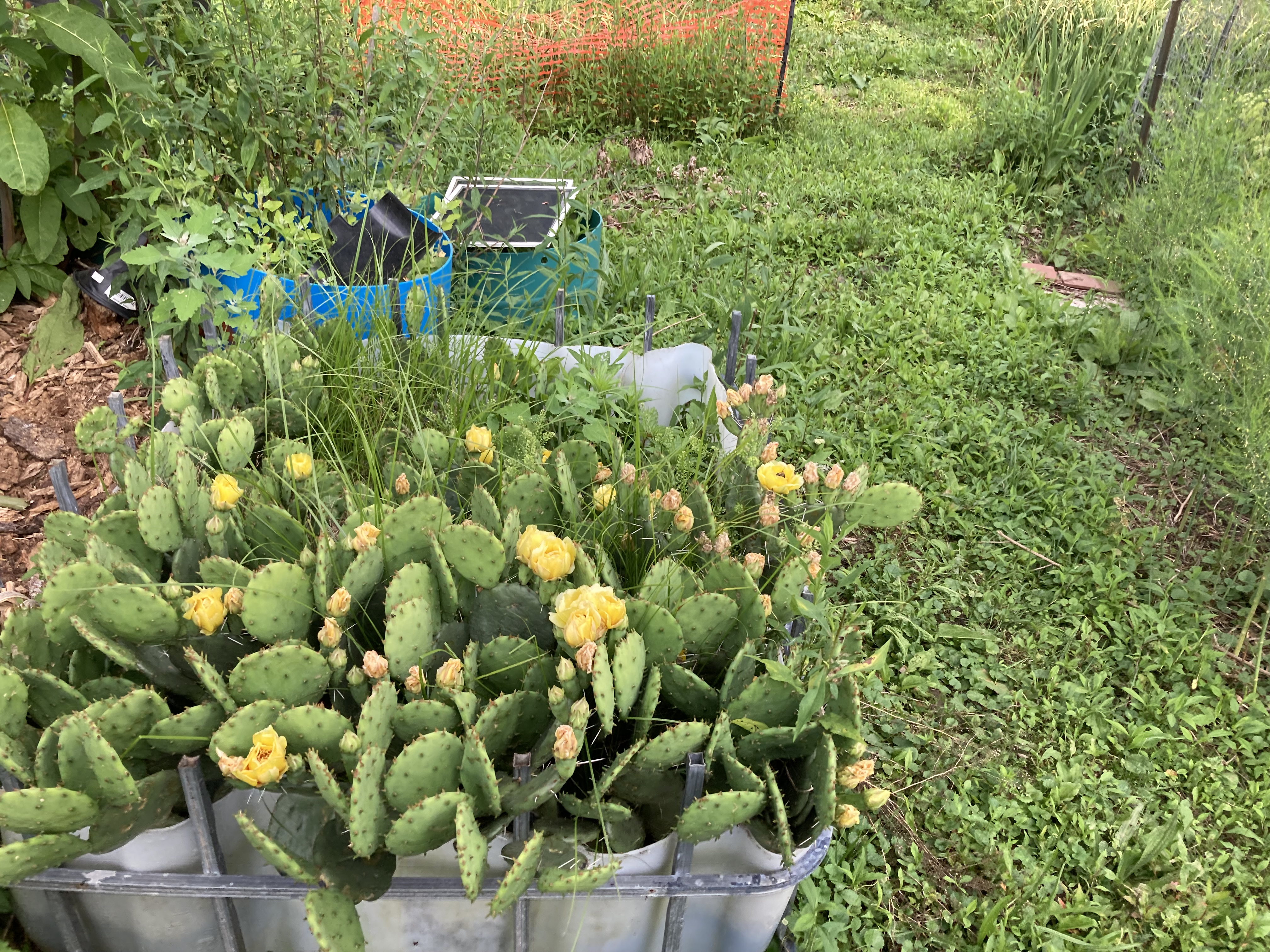
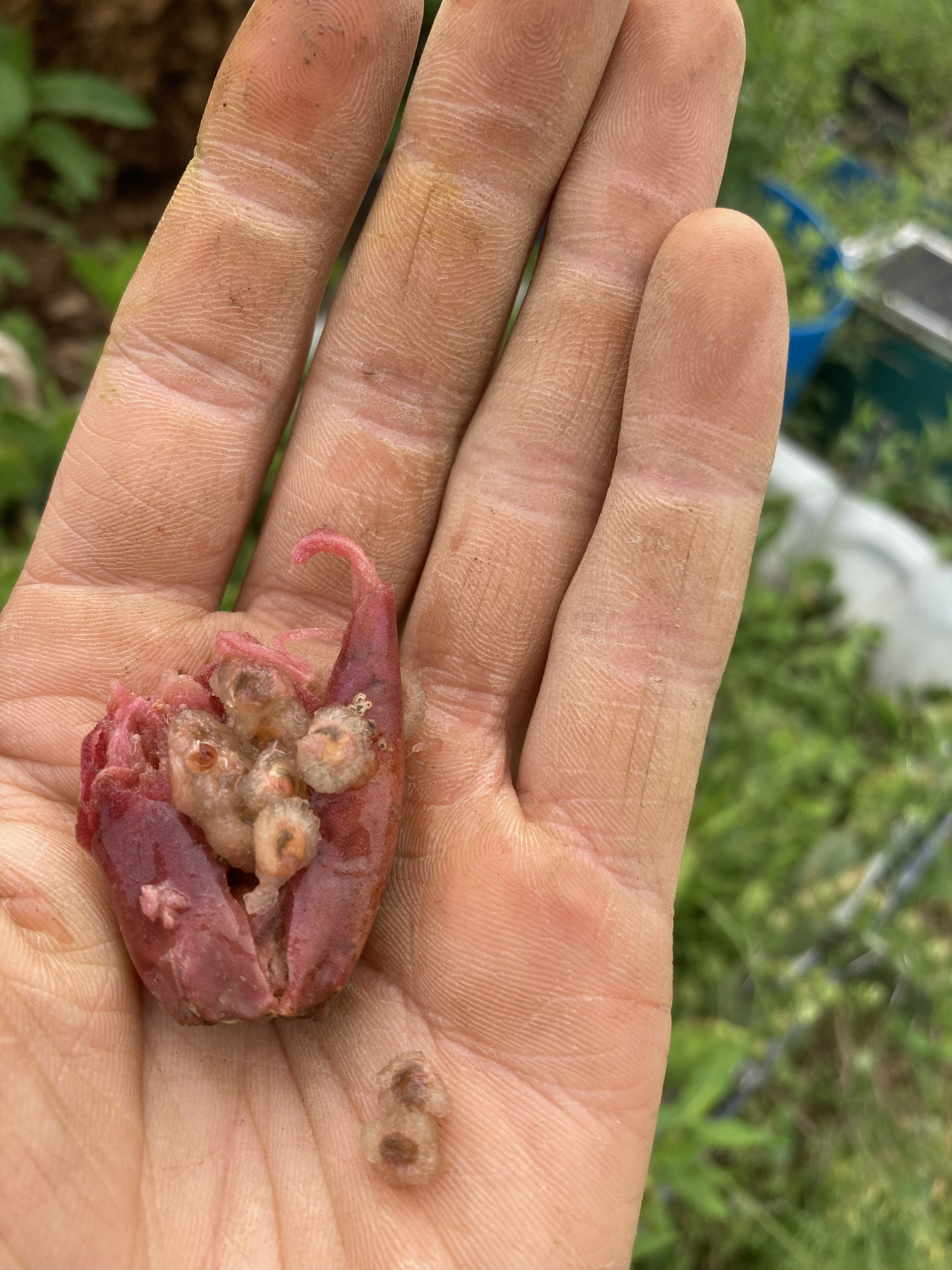
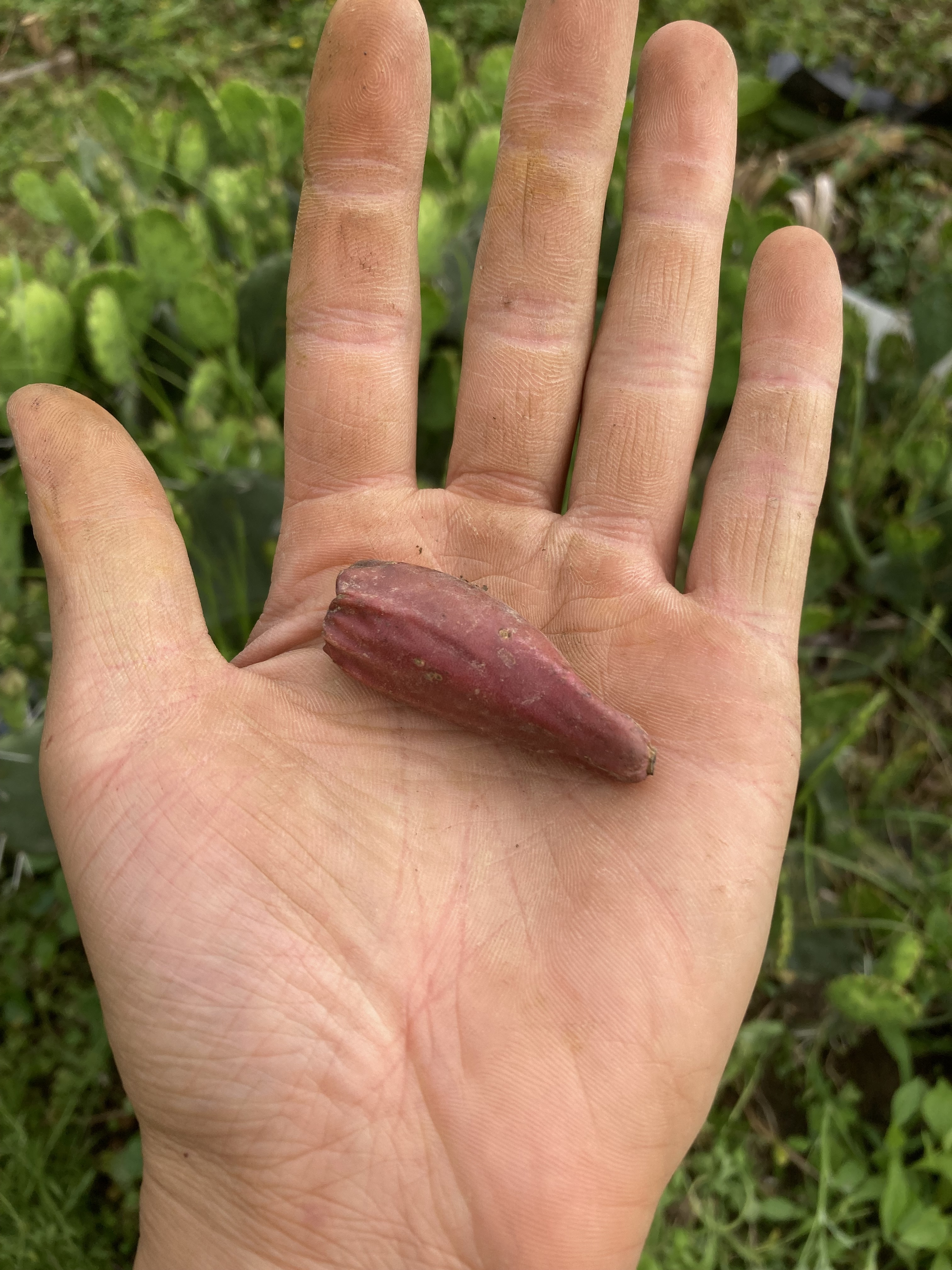
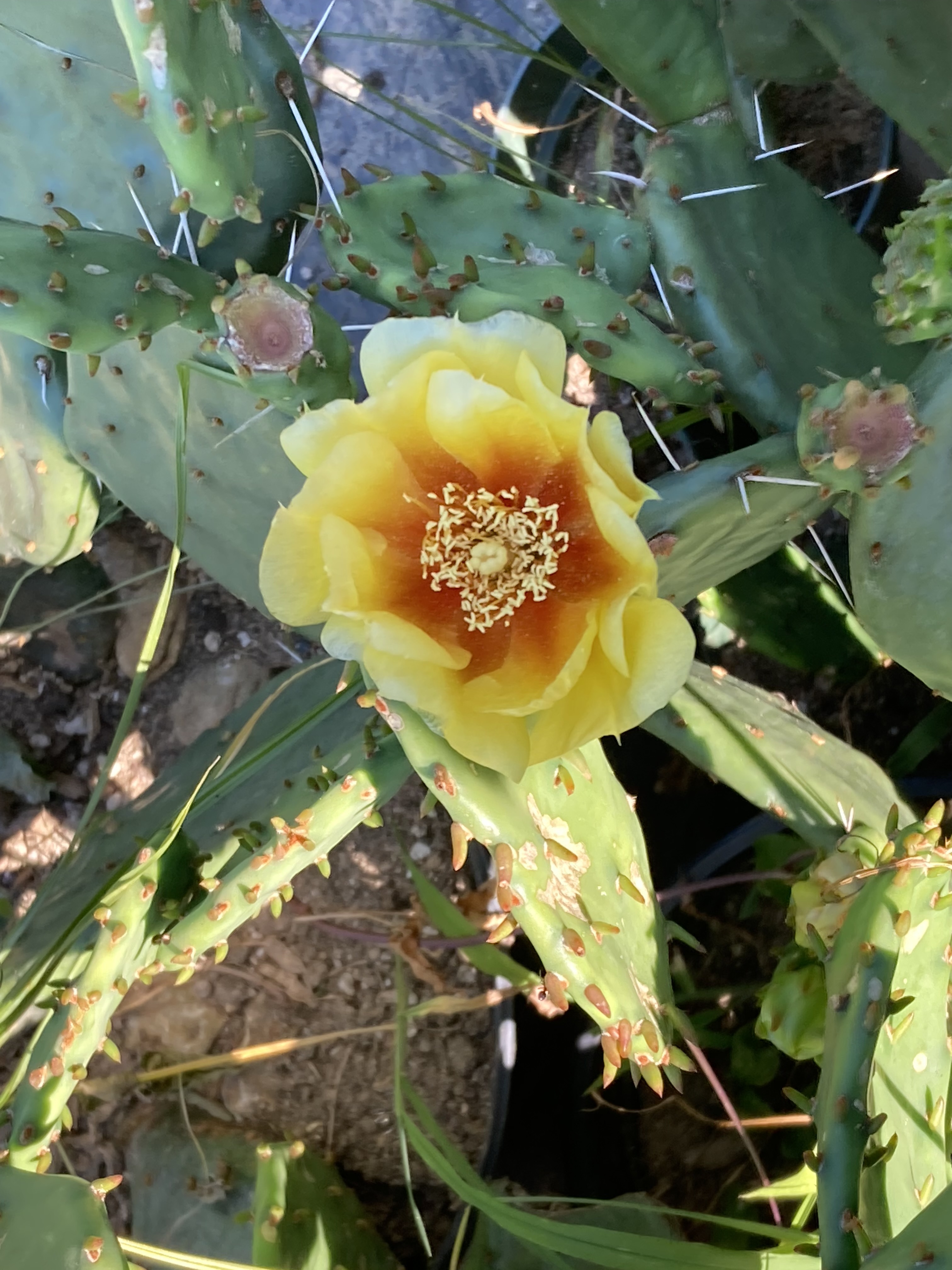
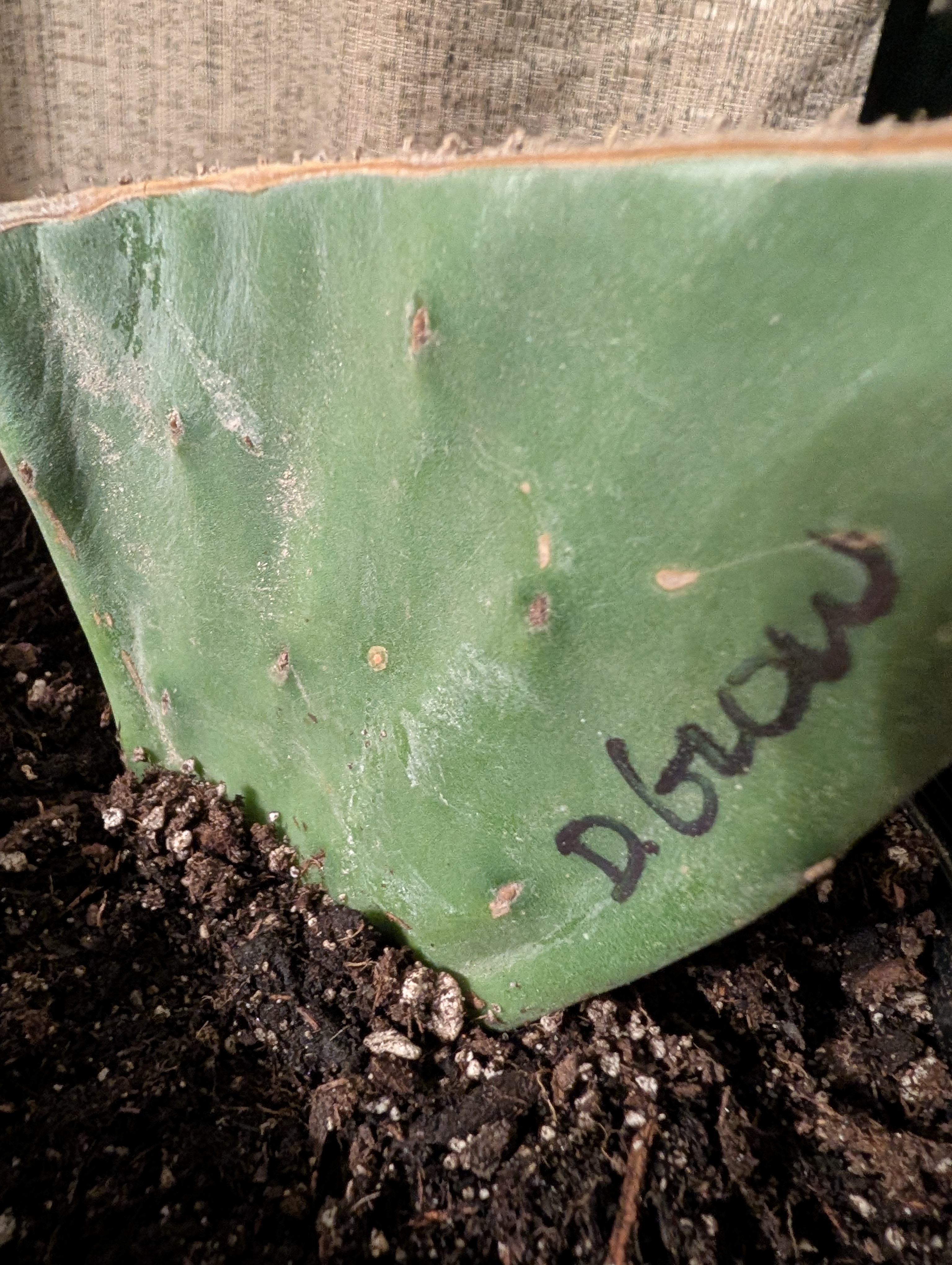
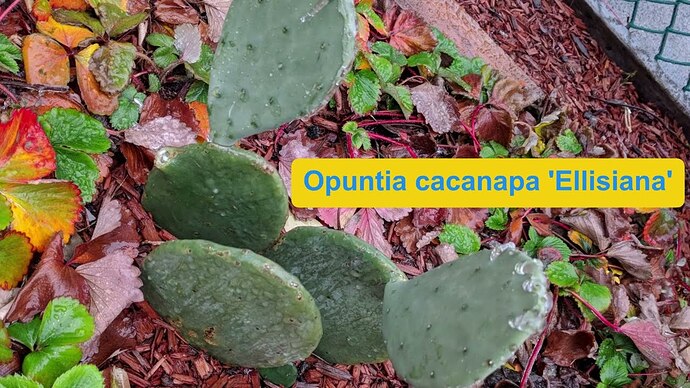
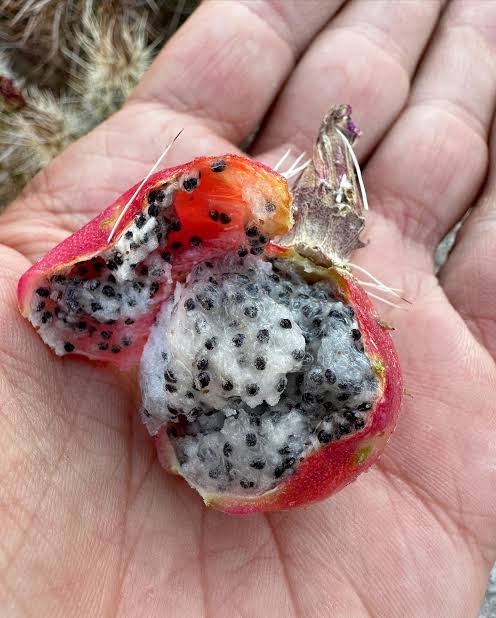
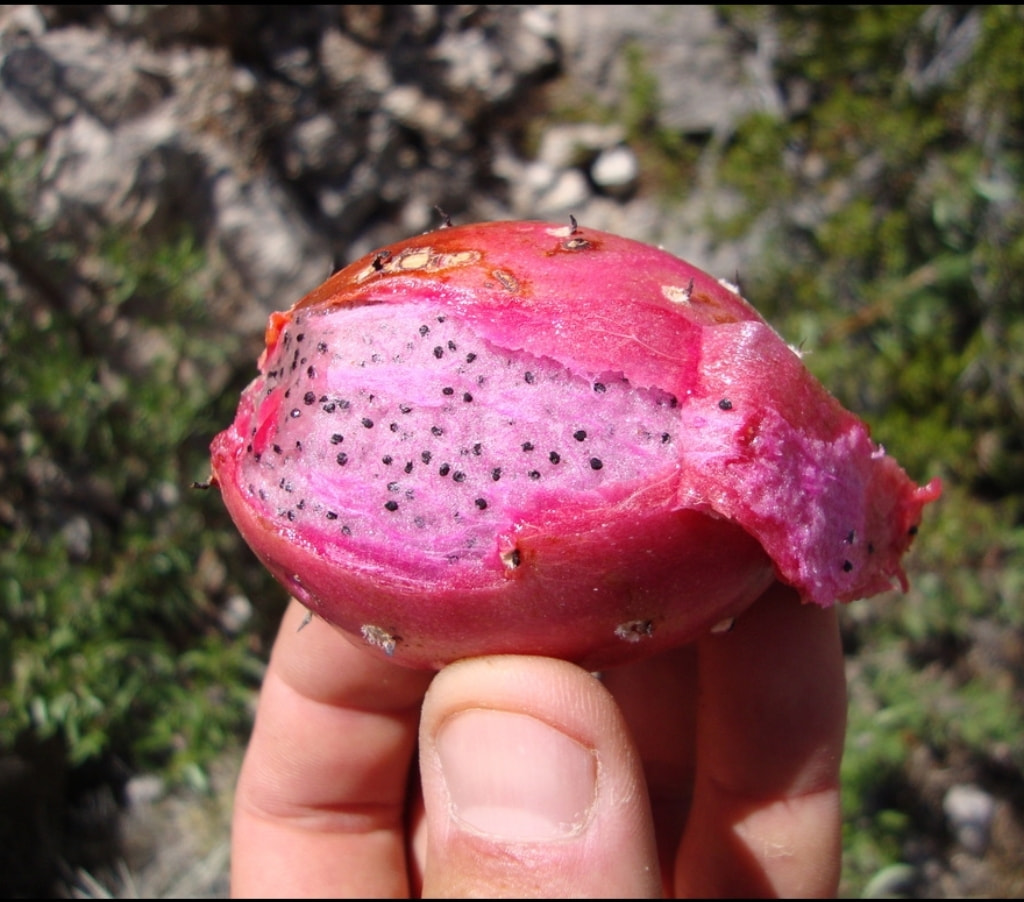
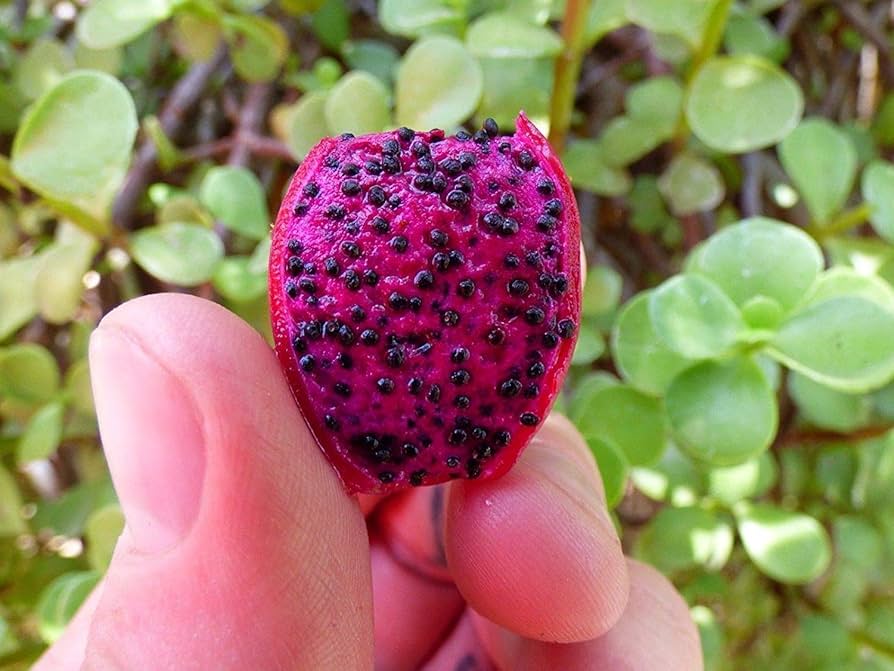
A short photo album of my cactus.
Some of these cactus grow in soggy conditions part of the year with no dieback. I don’t water them even in extreme drought and grow fine. Note that they take about 2/3 years for them to flower from cutting.
If anyone is interested in so pads or seeds, I’m selling them for $3 per fruit (20-50 seeds) or per pad. You pay shipping ($13)
I find they’ll root from any node in contact with the media. I used to stick pads in like this, but I switched over to just laying them flat and pressing them in for good contact. When one of the nodes sprouted, the backside was generally rooted in.
To reinforce psa’s reply, the first time I got some unrooted pads I stuck them in the ground like that, and all four rotted. I later read it’s best to just lay them flat. I have since done this several times with pads that broke off the plant, and they root every time. So I’d suggest just laying them flat as well, based on my limited experience. It makes sense - in the wild, cactus pads do not fall off and insert themselves into the soil. It makes sense that they’re adapted to root from the flat side.
@JoeLoveless fyi you can click on the name of a poster, and in most cases they will have put in their profile the zone they are in, and sometimes the region/city as well. This is voluntary so not everyone has added it. But Ethan has.
I have had prickly pear survive on the concrete under the side facet. It just build its own grasslike mat of roots and captured debris like it wanted to be there.
Im in zone 6a/6b. They are some type of opuntia humifusa with a red interior flower instead of pure yellow. The fruit flavor is extremely nice, it’s a nice mix of tropical fruity flavor but is very slimy. I’ve had some that where less slimy and more juicy but most aren’t like that.
I should note that these are very rot, humidity, and weather resistant. I’ve had these sitting in standing water for months at a time with no issues. I’ve never had problems with early blooms / buds getting zapped by frost, or extreme drought and heat. I’ve had them shrivel up mid summer only to re-inflate when a good rain came.
I’m not sure if it was the same species, but I think RareFruitsNJ on YT had a video with two Optunia species grafted together. The one deflated in the cold and looked like what I was pretty sure “dead cactus” looks like while the rootstock didn’t, and later came back and was fine. I had no idea they did that. It was very dramatic.
I do eat the pads. I eat the fruit when I get it. Unfortunately, the last couple of years, the guys dumping wood chips have covered the cactus, so it has hampered their growth. I’m looking forward to them growing well enough to do both. They help with blood sugar.
Echinocereus is one cactus I’d love to see someone (or maybe a group project) do some breeding, with goals of cold hardiness, thornlessness, rot resistance (don’t know if it’d even be a issue), and fruit qualities.
A good start for thornlessness and cold hardiness would be this one- EC005: Echinocereus mojavensis v. inermis COLD HARDY CACTUS – COLDHARDYCACTUS
The common ones have white flesh, but there are others that have pink and magenta fruit. Also some have big fruit.
Echinocereus fendleri fruit are said to normally be pink or magenta colored flesh, so that’s probably what those are.
I would do the breeding myself, but there are way too many breeding projects I want to do, just it’s to much for one person to do as a hobby.
I’d be happy to try some breeding. I’ve never done it before so I could use some guidance. So far I have 4 species of Echinocereus, about 15 of each:
Reichenbachii
Coccineus
Fendleri
Stramineus
I’m in zone 5/6 so the stramineus will have to be protected from what I’ve seen. The best fruit is apparently stramineus. They are around 9 months old and will be planted out in May. From what I’ve read, I’m at least 2 years out from fruiting.
Are these your pictures? I’d love to hear your experience with the different fruits.
Well, the breeding is mostly just collecting storeing and labeling pollen, then emasculate the flowers you want to cross before they fully naturally open, then brush the pollen onto the stigma, mark the fruit on what it was crossed with, collect the seeds when the fruit ripens, grow the seeds, and after they grow some start your thinning of anything inferior to what is desired e.g. thorniness, vigor, cold hardiness, precocity, fruit qualities, and fruit production. More to it than that, but that mostly sums up all that is involved. Also with the stramineus, it might be possible none (or it could be just fine) of the crosses between it and the cold hardy ones will be cold hardy, so you may need to keep the f1 hybrids protected from the cold and cross the f1 with other f1s or backcross them to the cold hardy one(s) and then test the f2 generation for their cold hardiness.
You look like you’ll have a very good starting selection to select from, but I would say that cold hardy thornless one, I have a link to above, would be a good one to add to the mix. If I eventually do end up getting it or any others myself I’ll gladly send starts of them.
No, they aren’t my pictures, they are ones I pulled off from different places on the web, but they are definitely from echinocereus cactus. I was looking up different cacti for edible qualities and that genus stood out as having very desirable extremes of different traits within it, that if they all could be combined together, that would be a very desirable fruiting plant for even non plant enthusiasts.