Claypool noted that H-118 was the most fungal susceptible so you might watch for that. IIRC, he had some testing done at the university. I haven’t heard of any complaints about that, and you might be fine. Not sure if high humidity aggravated it or not.
1 Like
That was Harbin’s complaint.
1 Like
I should have saved the article. I only made a note of its findings so I could remind myself of it.
In the OP, Jerry Lehman is reported to have recommended Claypool’s I-115, which is Juhl x Garretson. That would make it a sibling of H-55A, OGW’s Prairie Dawn. Does anybody grow it? Any opinions? Thx.
1 Like
Darren from brambleberry has stated on Facebook that it is his earliest persimmon. Also noted it has “thick flesh.”
2 Likes
I tried that one in Mid August at Cliffs a few years ago and that was the first time I had enjoyed a persimmon cultivar. Really opened my eyes to how good an american persimmon can be. Before that I had several not so good persimmon experiences.

5 Likes
H-118 black specks are not fungal. Precipitated tannins are the main cause. They do not affect the taste but the fruit looks “dirty”.
3 Likes
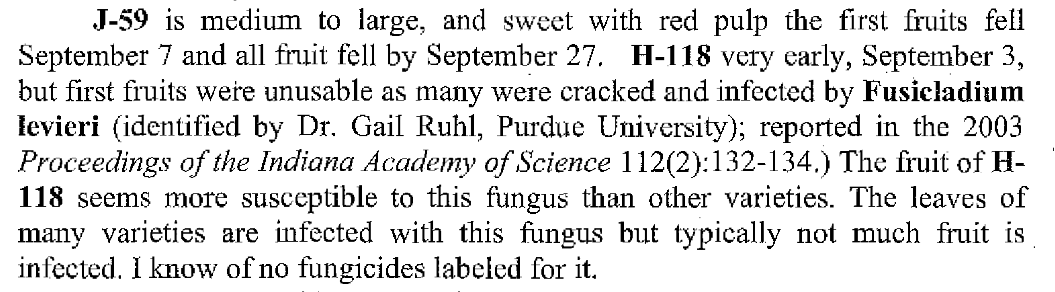
Any idea how far away I’d have to plant Early Golden to keep it from pollinating my other varieties?
Two states over? Joking of course, but I have a couple of American persimmons in my yard and they are always seeded even though I have no idea where any tree with male flowers is near me. So the trees are at least a few hundred feet from them if I’ve somehow not noticed them and probably much further. Most fruit are fully seeded, so they are getting well pollinated. I understand from bee people that persimmons are very attractive to bees.
Unless you have a very large property I doubt you could plant it far enough away. On the other hand, Early Golden doesn’t reliable make male flowers and I don’t know how many male flowers they’ll make when fully grown, so maybe it wouldn’t be as bad as having a regular male tree near yours.
2 Likes
@snowflake – Thanks. I wonder if there might not be two different issues, both capable of producing black spots. In any case, H-118 gets such great reviews from some growers that the affliction with black spots may depend on some environmental factors. For example, maybe the fungal infection is secondary to the cracking, which may depend on water, heat, or other factors. Those contributing factors may differ here.
On the other hand, if the fruit also gets spots due to precipitated tannins (as Harbin states), but it is only a cosmetic issue, I can live with it.
I’m committed to try H-118 (i.e., I’ve completed some successful grafts and planted one tree). So I’ll just have to see how it performs here.
2 Likes
I love H-118. I don’t notice black spots on mine and I don’t have fungal issues, but I live in the West.
John S
PDX OR
5 Likes
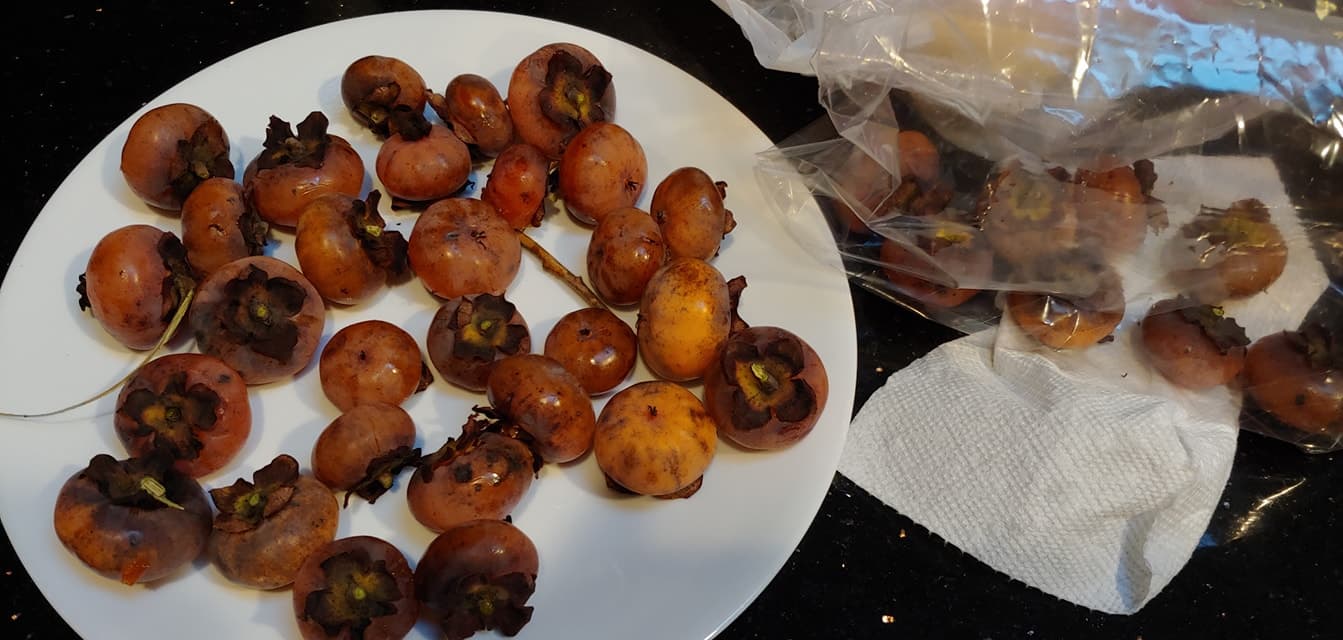
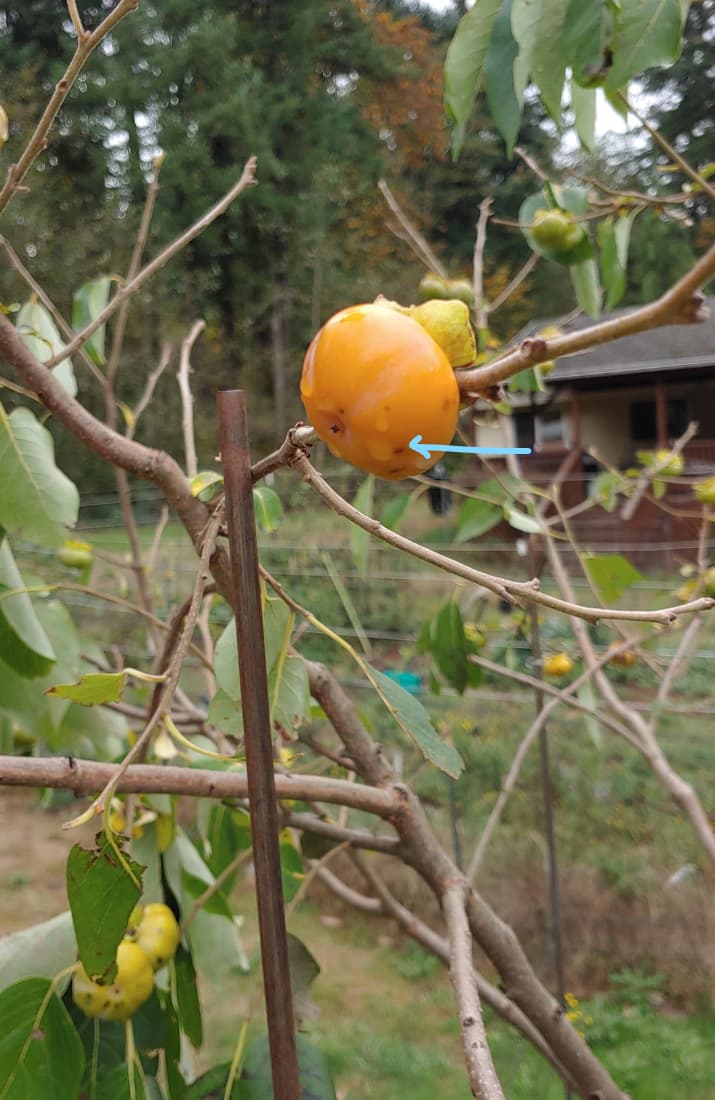
I think I get occassional black spots in some H118. But it will be one or two in a fruit and not in most - as I vaguely recall.
Here are some kind of beaten up ones from 2019. I think we had wind or hail storms or something:
and 2020:
5 Likes
Thanks. That seems like superficial cosmetic damage, not fungus. I can live with it, I think.
2 Likes