11/15. I finished the irrigation today. Each of those risers receives a 12x manifold for 1/8" tubing as the need arises. Down at the far end I’ve dialed in our Plinia collection plus a few pineapples.

8 Likes
Yesterday I finished an upgrade to our irrigation controllers. We needed to add 4 more zones potted fig specimens. Each fig zone services 72 to 96 pots. All the fig zones are now on the third controller from the left. The other controllers are servicing in-ground and patio plants, typically 4 to 5 plants per zone. The watering frequency is once per week - except for timely occurrences of at least 1/4 inch of rain, or a brutal summer heat wave of 3 or more days.

11 Likes
Welcome Back Richard. I Had no idea this thread existed!
2 Likes
Leaf buds have begun popping open on our fig collection, signalling the time to spray for eriophyid mites.
For this task, I used a 32 fl.oz. hose-end Dial-N-Spray. I filled it about 1/3 with water and added 1 cup of Thiolux water-disbursable elemental sulfur. Next I screwed the top on and shook it sideways. Afterwards I took off the top and added more water until reaching the 32 oz. mark, then put the top back on and set the spray rate to 3 fl.oz. per gallon. This results in a final application rate of 1.5 Tbsp of Thiolux per gallon.
As I went about spraying, I shook the container to keep the sulfur from sinking to the bottom and inhibiting uptake. You’ll notice if this happens: the spray changes from a milky color to clear.
Overall I filled the Dial-N-Spray twice, covering our 10’x10’ in ground VdB tree, the repository collection of 634 potted trees, and our row of 5 blackberry plants.
4 Likes
A flagged fig parade!
Today I gathered up the 121 Female and Caprifig cultivars I’m retaining.Next step: clear out the remainder.

8 Likes

Nice work. I spy Angelito is definitely a keeper for me.
Sometimes I would use calipers to gauge scion to rootstock sizes. My machinist friend got a kick out of that.
3 Likes
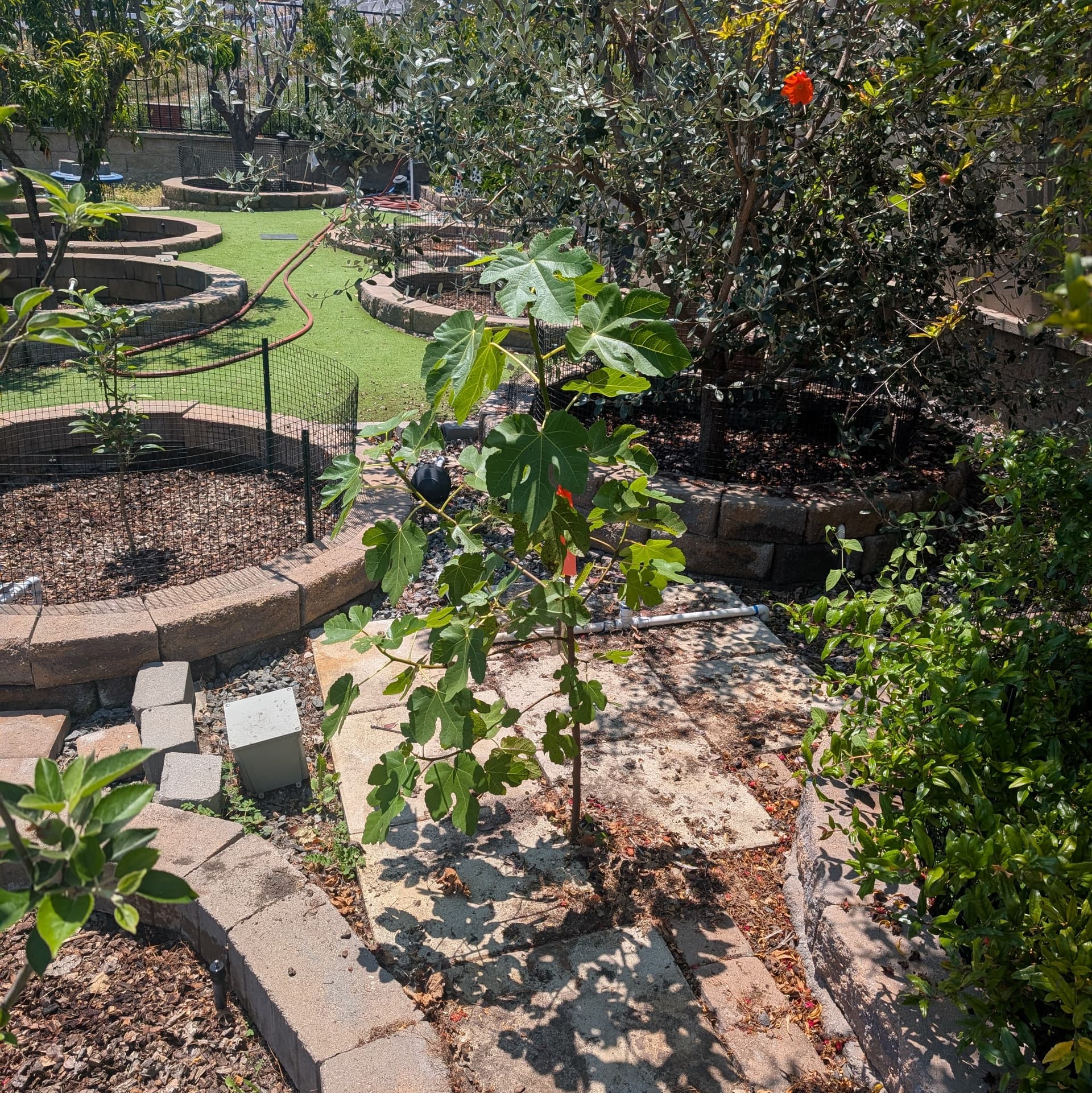
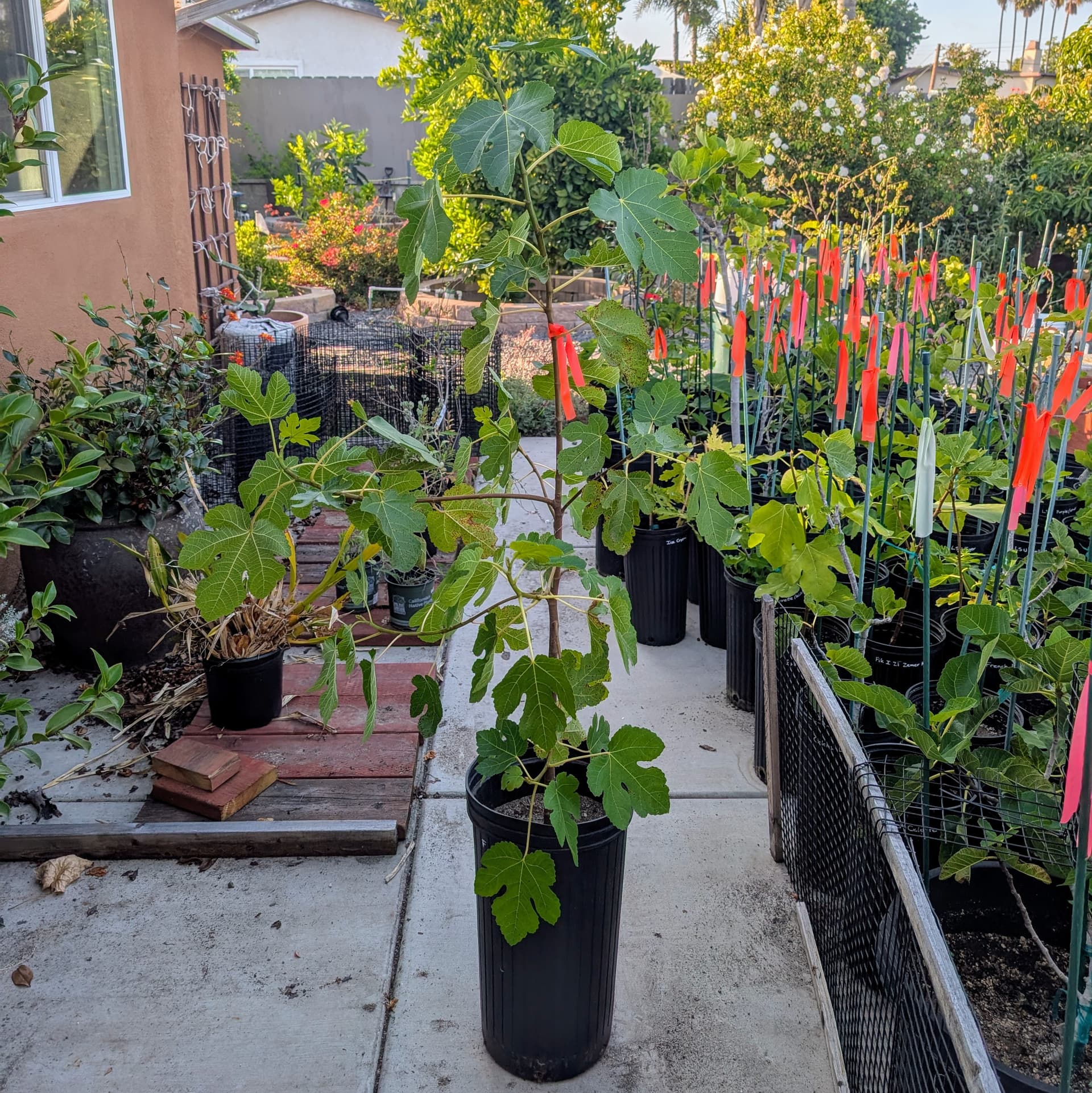
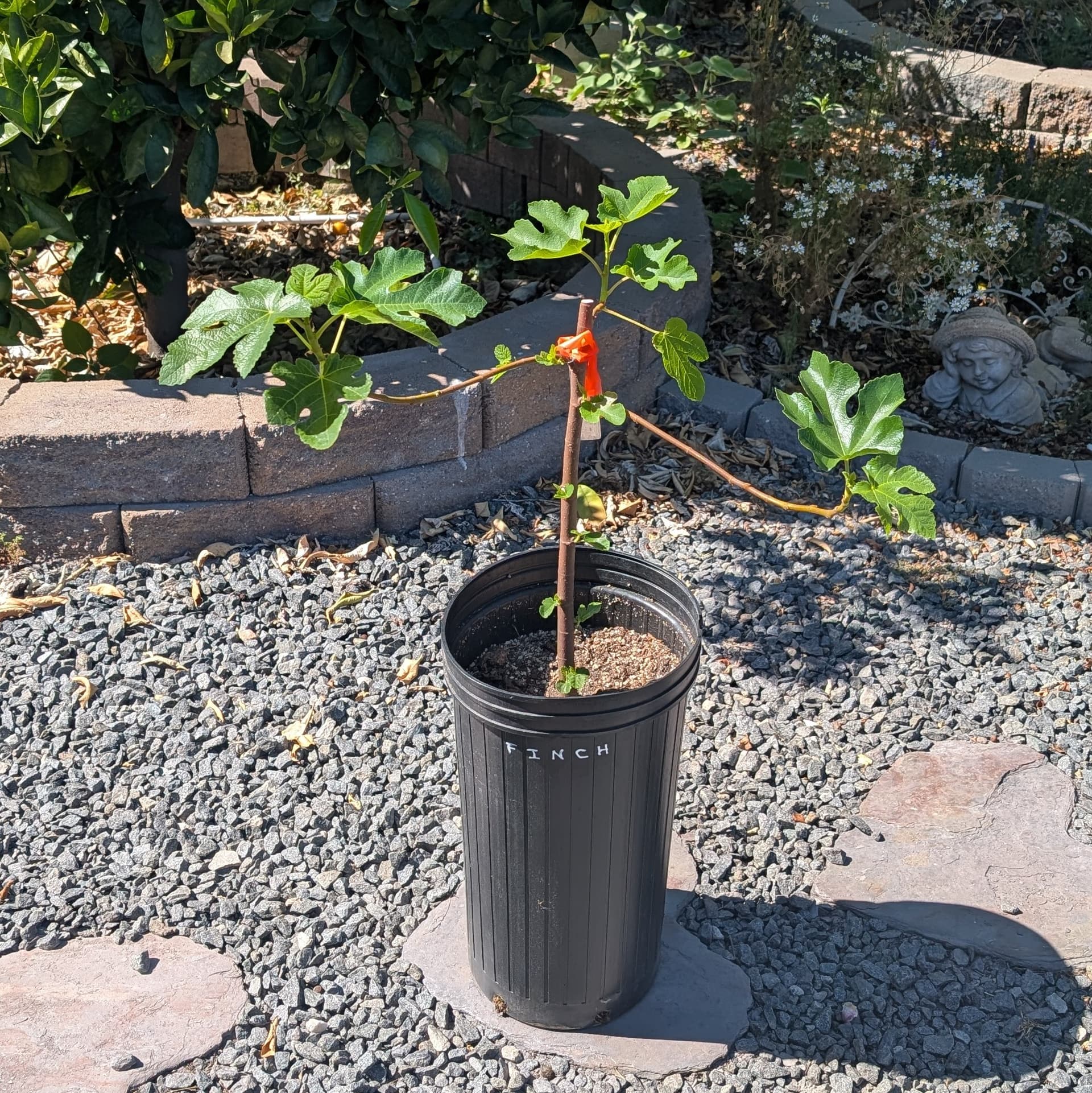
I have a two year old seedling that sprouted in a garden bed. I’ve named it ‘Finch’, based the probable vector. This Spring it tested negative for stamens. Whether it is Smyrna or Common remains to be seen. Today I transplanted it from the garden into a 20" tree pot.
12 Likes
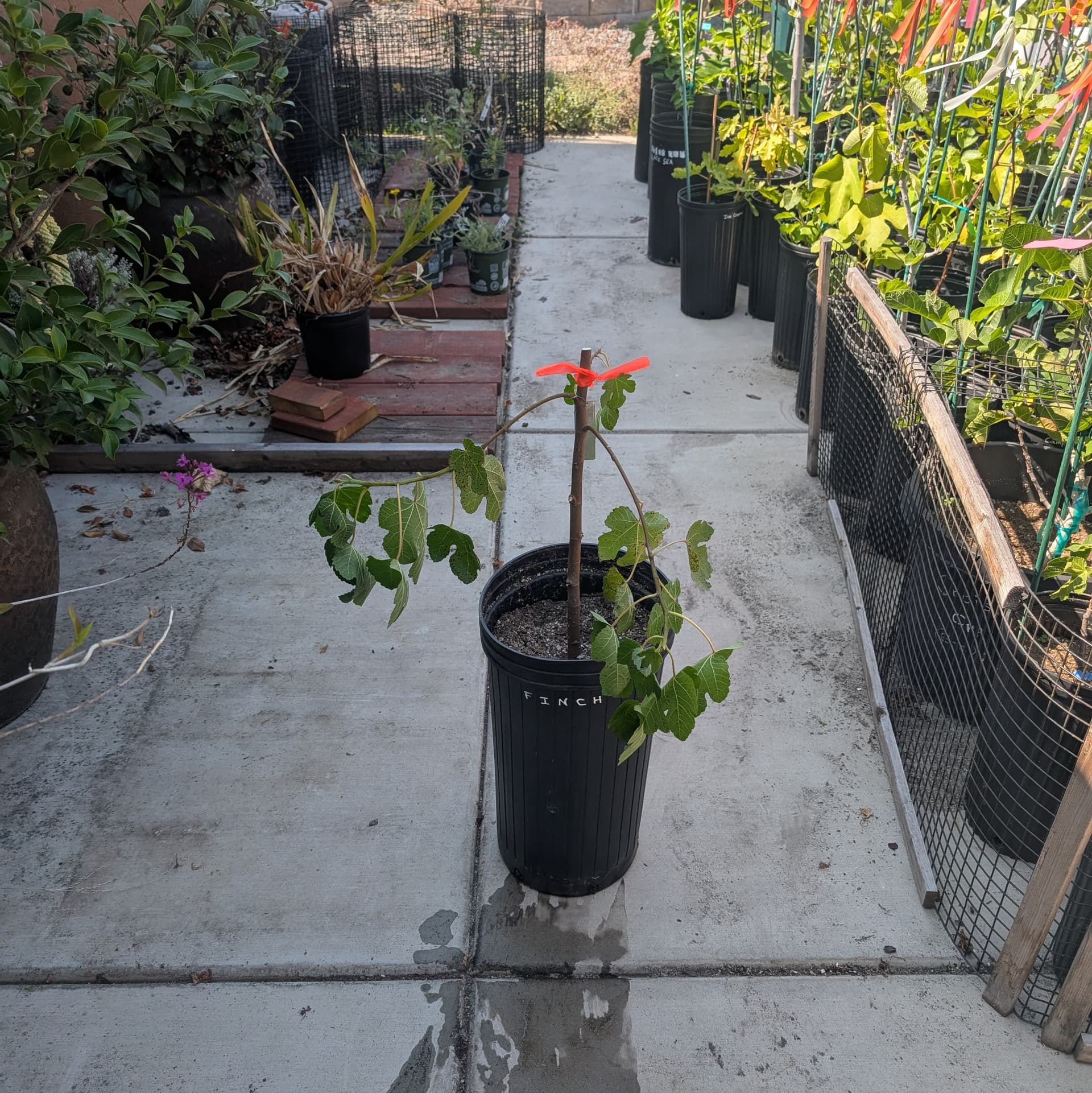
7/12/2025.
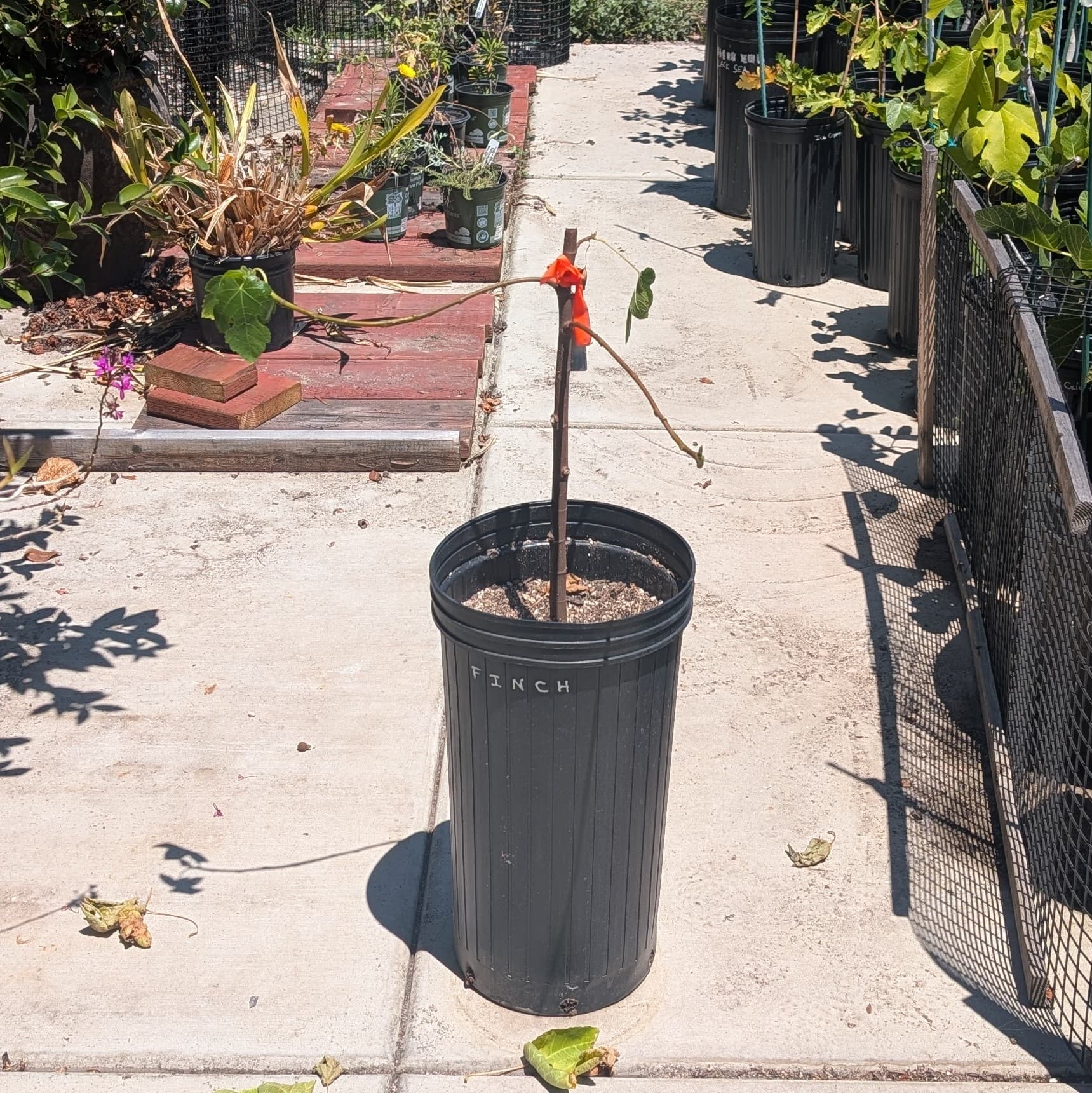
Here’s an update on ‘Finch’. Most of the original leaves have dropped, but the few remaining are doing fine. New leaves are emerging from the ends of the three laterals. New laterals are expected on the trunk.
4 Likes
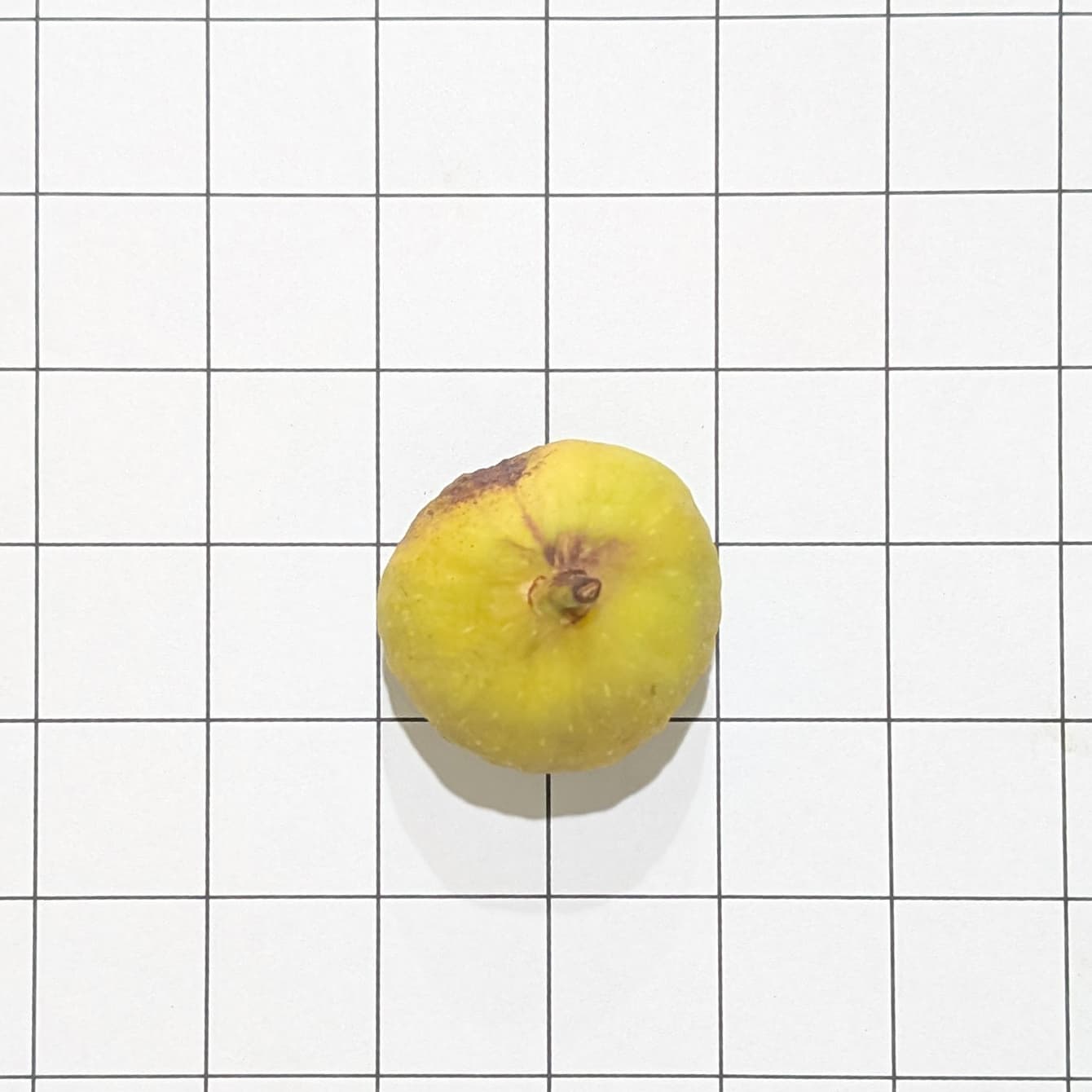
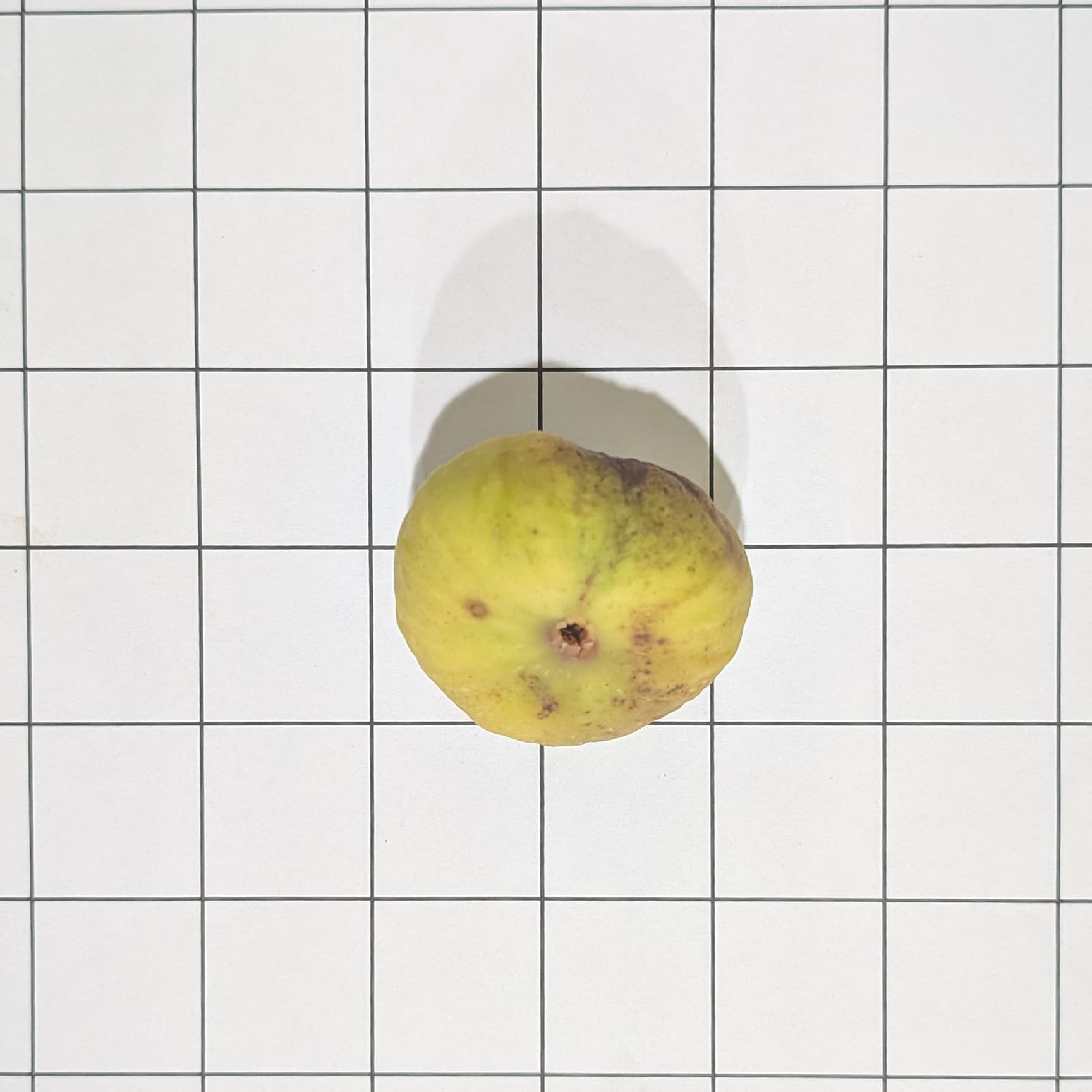
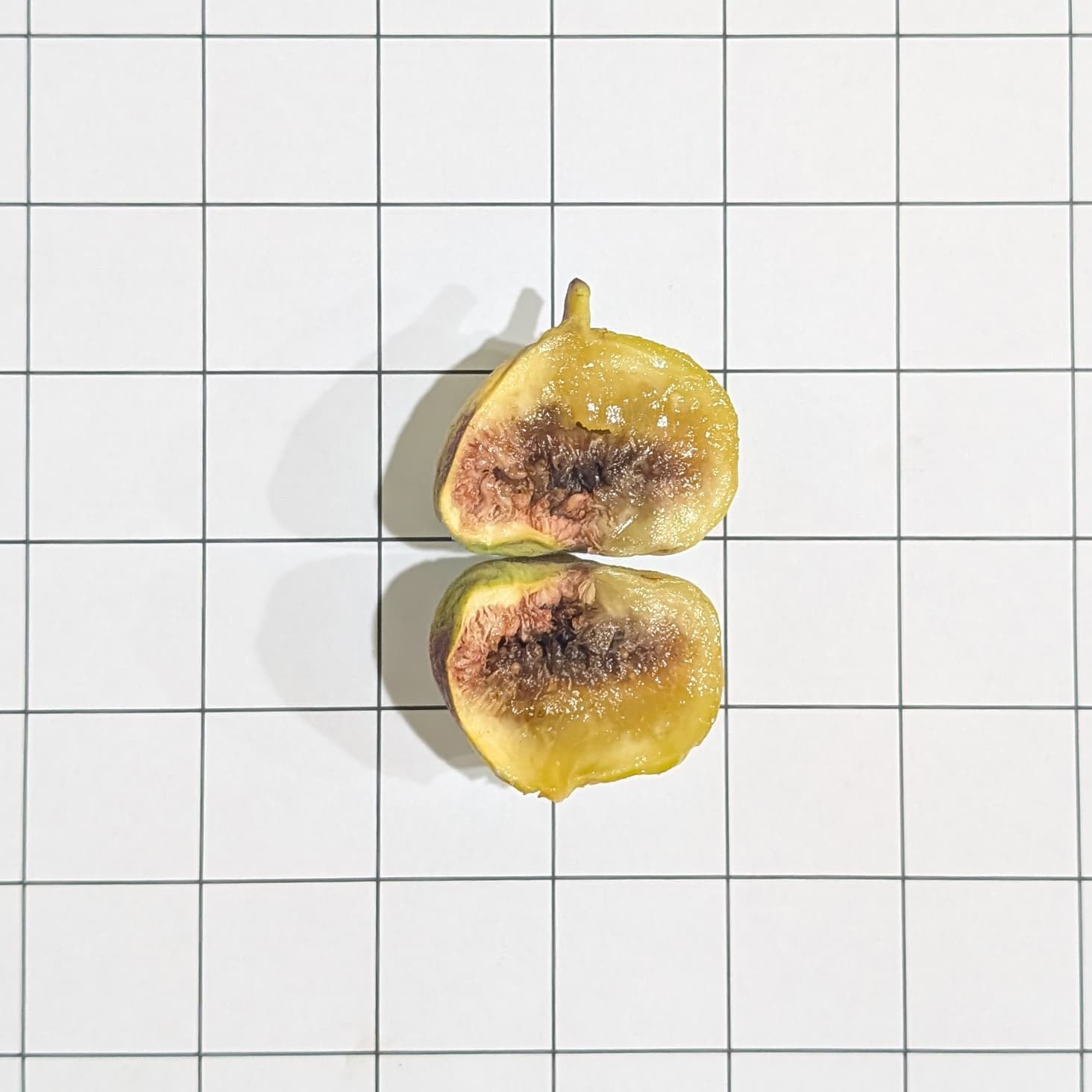
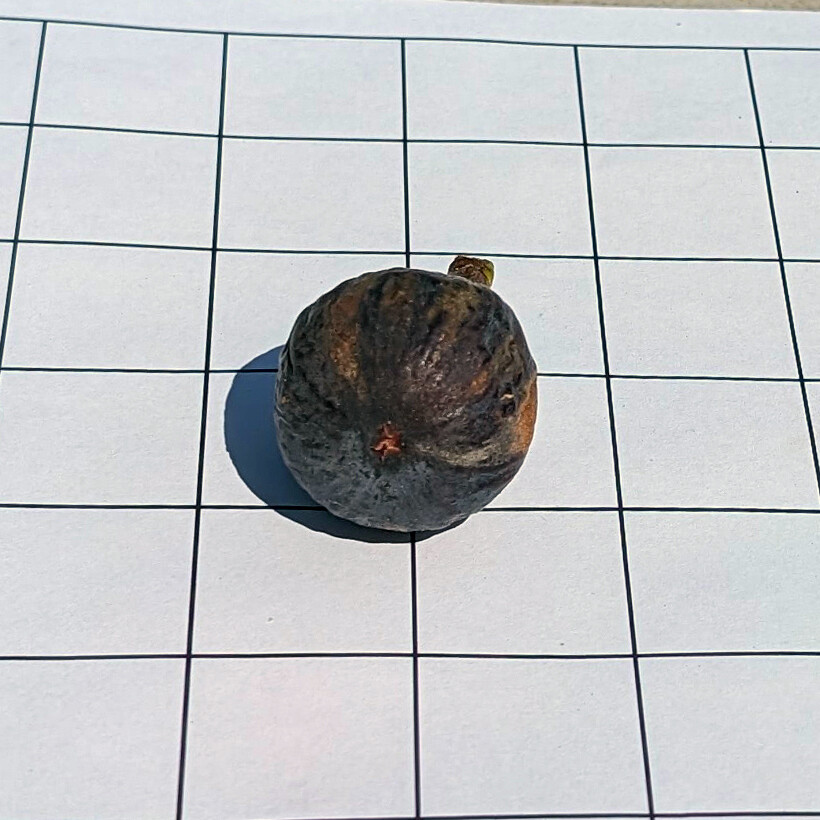
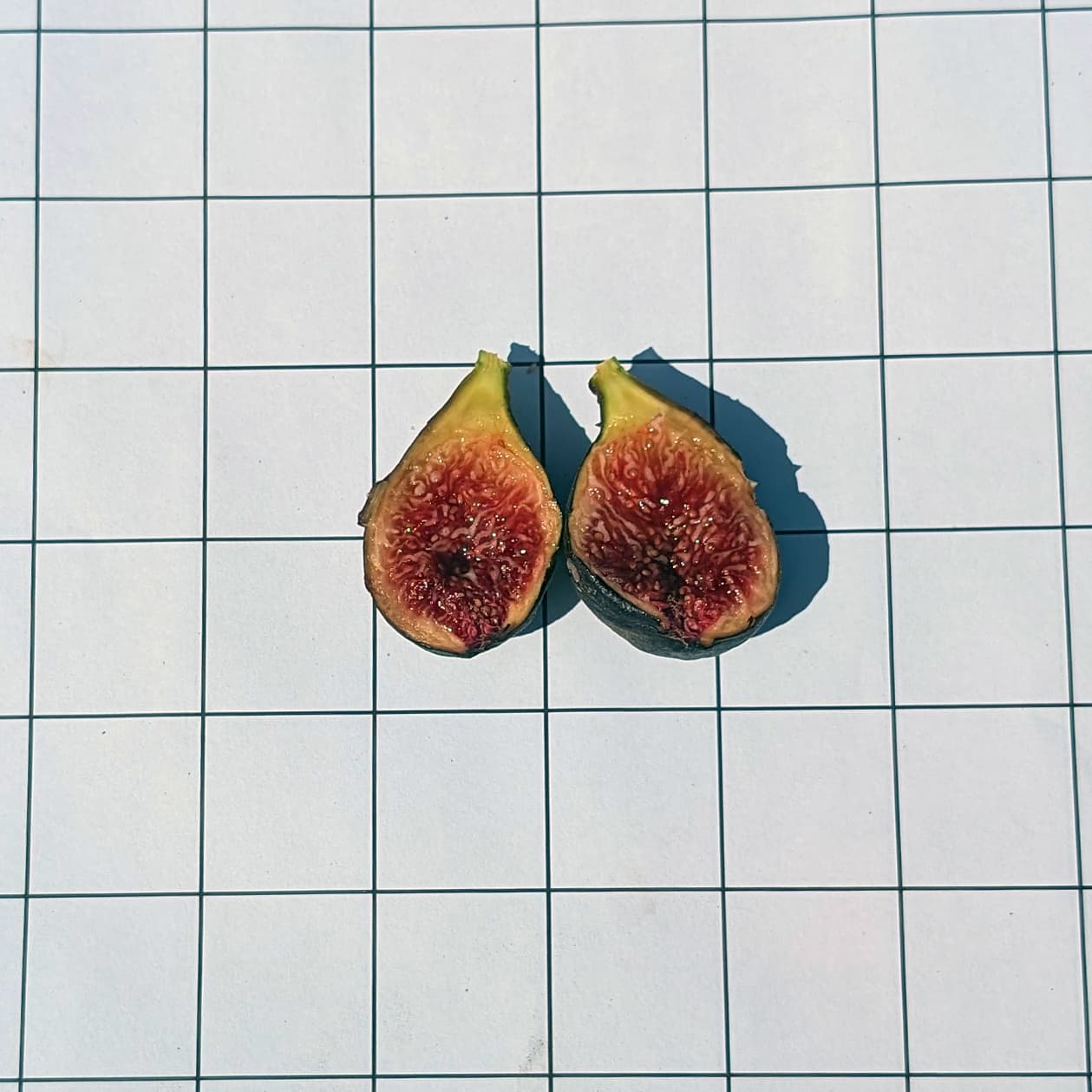
Ripe, caprified main crop fig from Croisic-Type. Notice the flower-encapsulated seeds in the final image.
5 Likes
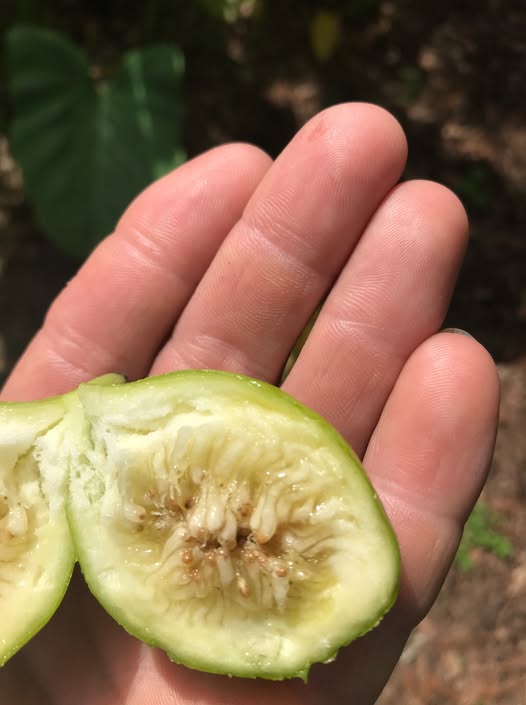
Interesting? This is a photo of mine.
3 Likes
Looks good. Better that the ones I’ve seen at a few different orchard’s large trees. Is this the one that only puts out about 25% of an edible crop? Is that the second crop? How is the flavor?
8 Likes
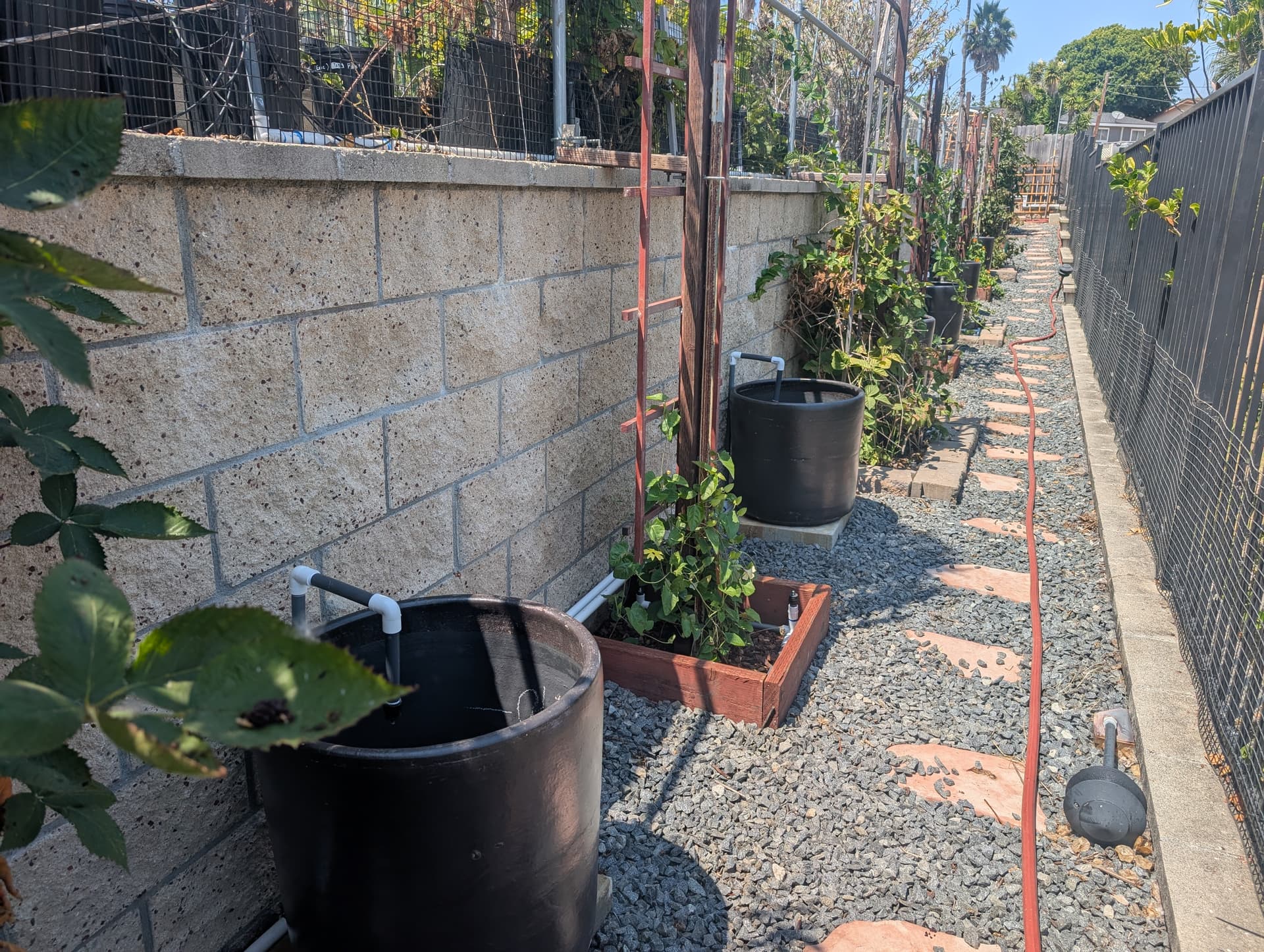
2025/8/22.
Finished installing automated irrigation to six clockvine planters and ten 23 gallon pots for Caprifigs.
7 Likes
How can you tell whether it’s caprified or not?
@Mcjuj
Experience with figs and B. psenes.
1 Like
Does the fruit look any different after caprification?