 way back up there, i told myself I’d eventually find the discourse!
2 Likes
I am one of the unfortunate who got bamboozled by the marseille/tena mix-up. I have had the Tena for years, yet still has not produced figs like all of my others varieties. But I think it might be getting close.
Are they tasty at all? The leaves look cool if nothing else.
1 Like
I dont think they were being misleading. They either didnt know or had it mixed up. I now have VdB, Olympian, and Brown Turkey. Its different enough from those.
Your logic that it must be a common variety is probably sound. Thank you.
3 Likes
Tena is good for drying in arid climates, otherwise it’s pretty unexciting
2 Likes
If you were blindfolded could you tell the difference between Italian-258 (AKA? Genovese Nero) and a top Adriatic like White Madeira #!? Strawberry in both, right? Difference in texture not important to me, just taste.
I’m zone 8a Texas.
Ok well I have a dehydrator, so I guess this will be my dried fig variety…if and when it chooses to fruit/flower. The tree is quite aesthetic though. So I’ll keep it around.
Thanks for letting me know!
1 Like
Larger, older trees can be earlier than newly planted ones, especially if you live somewhere where they’re regularly dying back in winter.
Given where you are, you’re probably short on heat. Black plastic mulch looks awful but it could help get the trees going in the spring and finish up ripening in the fall. If your plants are small you could also use poly-tunnels to give them a head start.
Just reducing the amount of winter damage helps too. A whole bunch of mulch piled up around the trunks in early winter might could do the trick–even just growing back from buds on a stump versus growing back from the roots will speed things up.
Generous fertilization early in the season helps too, paradoxically. Again, the whole idea is just getting the plants sized up enough so they start producing figs. After a top-killing winter, most figs are going to need to be a few feet tall again before they set fruit.
Lastly, Hardy Chicago isn’t an especially early variety. It reliably sets fruit even after being killed to the ground and it’s decently hardy, but otherwise it’s not actually that great for cold areas with short seasons. Celeste is a lot earlier and about as cold hardy (just might not be quite as reliable in setting fruit after bad winters, but only a bit). LSU Purple is fairly early as well and extremely vigorous which helps. RdB is the earliest, but it’s a bad splitter. I’ve found Atreano is also pretty early, but I’m not sure yet about how well it fruits after hard winters. Smith is pretty early and exceptionally good tasting, but it’s below average for hardiness. Others can probably chime in with more info about good varieties.
5 Likes
Thanks. I have a Celeste that I just noticed is barely starting to set fruit. Part of why I ask is that the owner of the fig said it may be because they pinch the terminal buds off to make them fruit sooner. Wasn’t sure if that was a common or proven practice, but figured y’all would have thoughts!
There’s a lively debate among growers as to whether this works. My own experience – including experiments – suggests that pinching doesn’t help. But some people report a small benefit. From what I can tell, pinching has this modest benefit when the tree has other issues, e.g. growth is bushy and leaves may shade each other.
Otherwise, I know from growing trees indoors under lights that fruit set depends on temperature. Above 75 F, pretty much all varieties will set fruit in roughly 35 days after bud break. At 68-70 F, there’s a range – some set fruit quickly in roughly 35 days, others set fruit more slowly in 40-45 days.
Separately, fruit set seems to depend on sunlight. A tree that is poorly pruned so that leaves / branches are cluttered, shading each other, tends to fruit reluctantly. For good fruiting, prune well so that sunlight hits every leaf.
3 Likes
this is florea in a low cordon experiment up against the south side of the house. ill be happy if i can get 3 to 4 laterals on each cordon. probably nothing substantial by this seasons end:
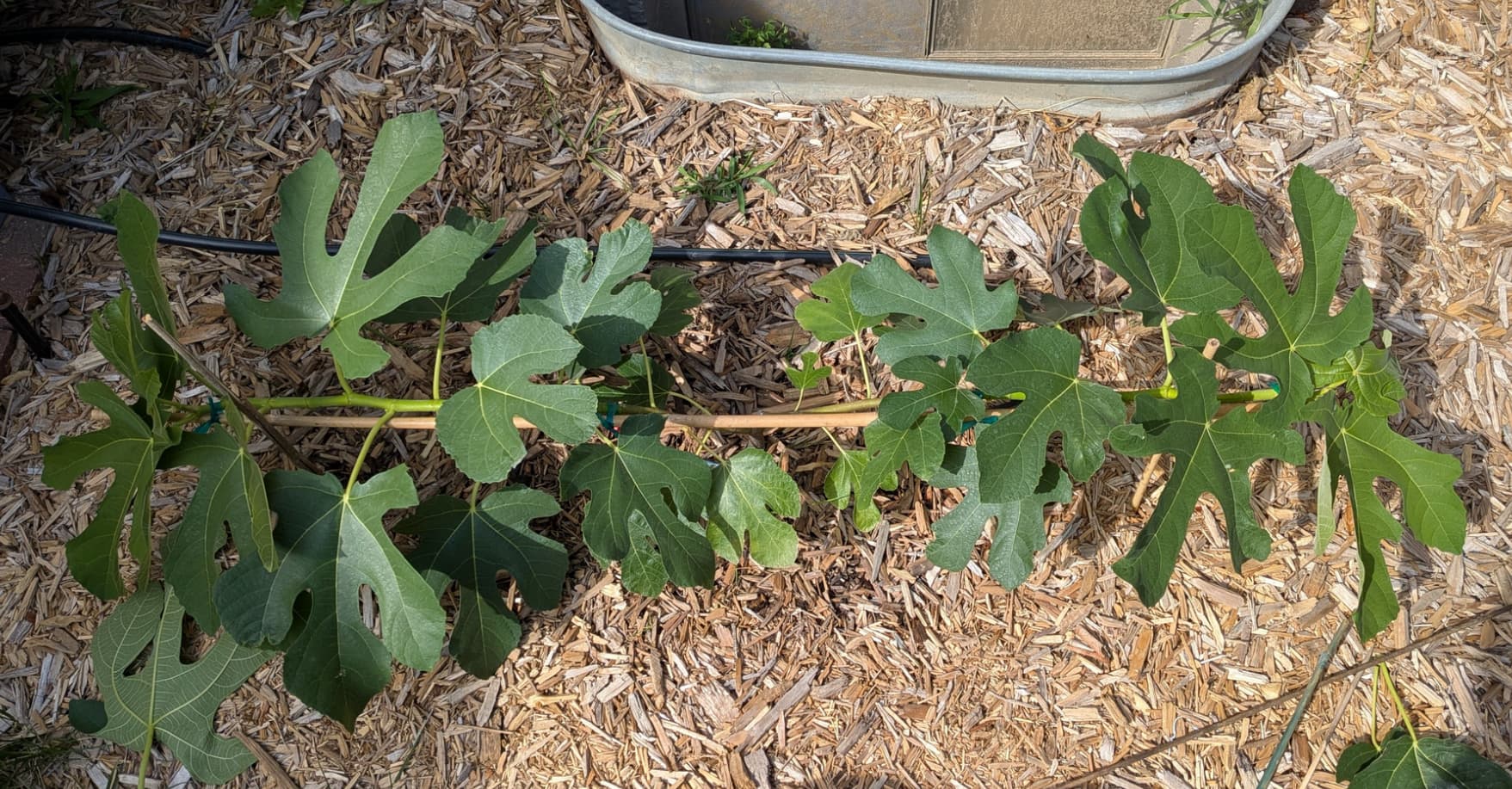
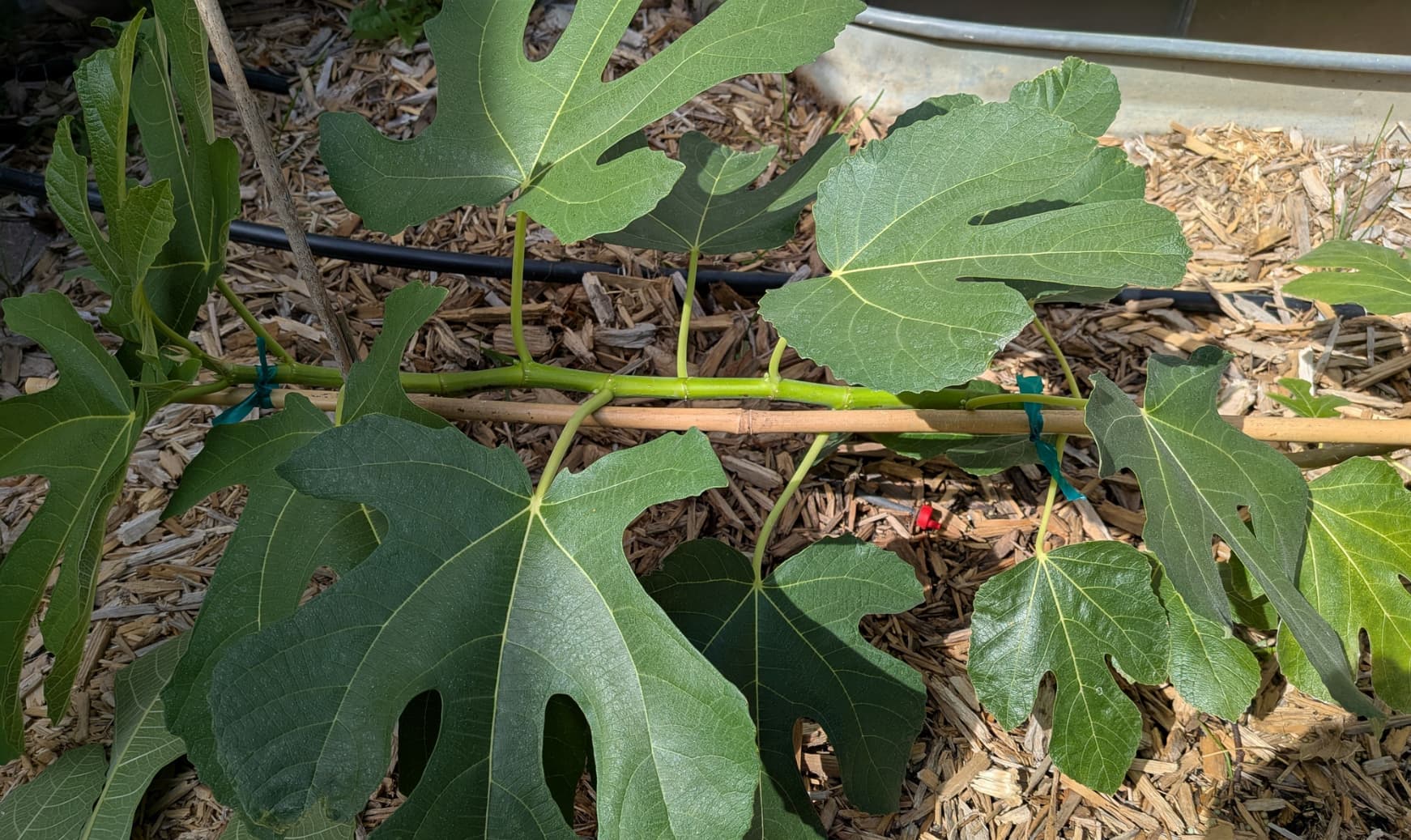
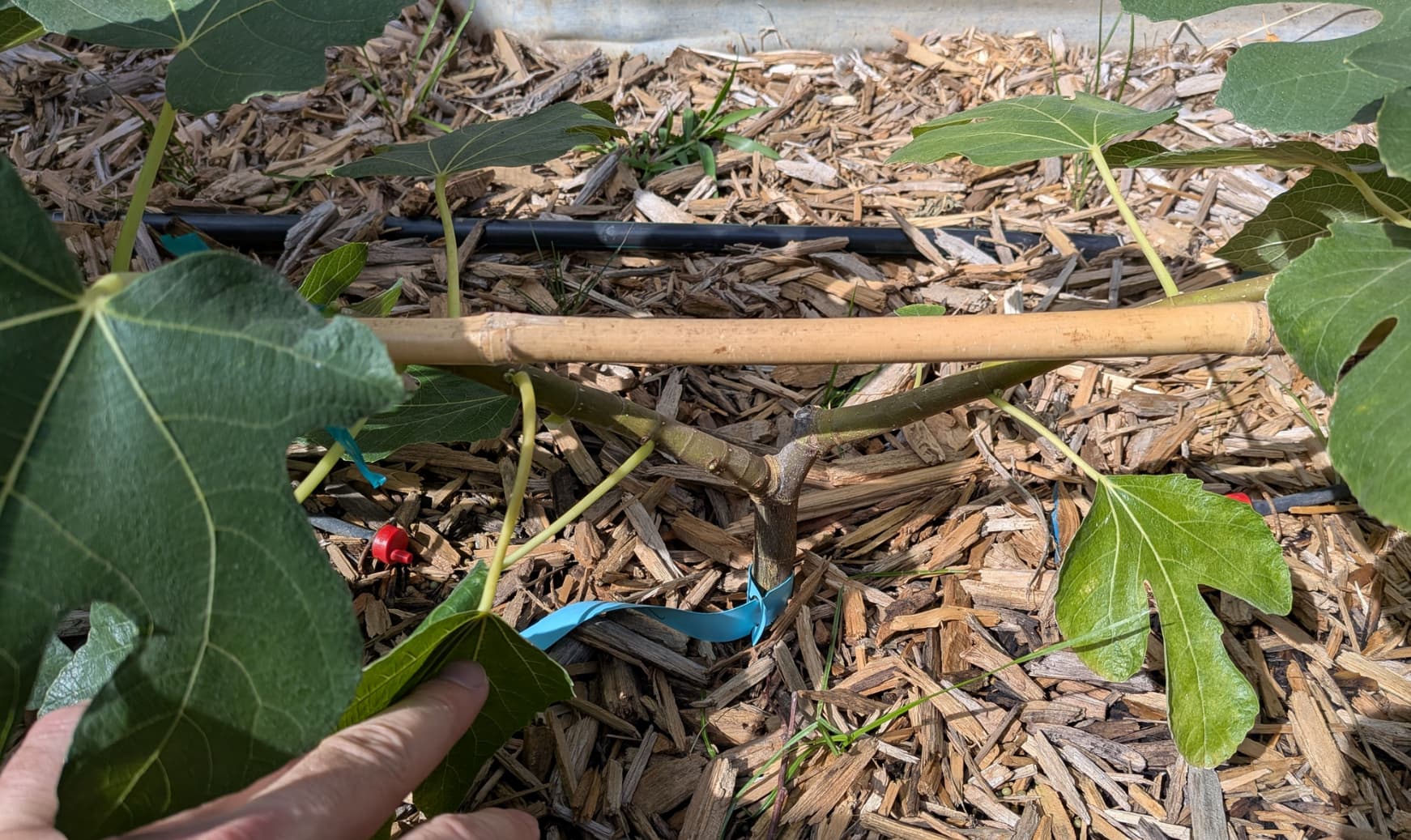
not sure how im going to cover it for the winter yet. cardboard, tarp, mulch or leaves  have a couple others next to it that im going to grow bush style but cut it way back and cover as well.
7 Likes
You’ll get the verticals that you want next year. So far so good.
Your biggest risk over the winter may not be cold but voles. When you have a long trunk close to the ground underneath a cover that preserves warmth, it’s like bedroom and kitchen all in one for rodents.
I tried something similar many years ago. When I took the covers off the trees, there was precious little bark left. I had to coppice the trees and start over.
So PLEASE think seriously about how you will protect all that tasty young bark from voles.
3 Likes
not sure we have voles but mice for sure. i guess well find out. these cordons might be 6" from the ground. maybe adding some mothballs would help 
was thinking about stringing some incandescent bulbs around the cordons no matter how i pack it up for winter. toss in a temp/humidity sensor to monitor how things are going and flip them on when in danger.
1 Like
Mothballs are useless. When I took the covers off my ruined fig trees, the smell of mothballs was intense. No matter.
3 Likes
There is a big difference in taste between those two IME.
3 Likes
I am about as far from a fig expert as you can get. I couldn’t tell one fig variety from another by a leaf or the fig if my life depended on it . I love to eat them and I love fig preserves. One reason for my ignorance is, I’ve never been exposed, but to only one variety Celeste. I live here in Baton Rouge. I find it interesting that LSU fig varieties LSU purple (1991) and LSU Gold (2001) are not only hard to find here and expensive but in general are not very popular in Baton Rouge
So I was kind of shocked to read all the posts about them in different areas of the country.
I started to get one next last year to try when I needed another replacement, but changed my mind.
Most people here, grew up eating Celeste figs out of their grandmas and grandpa‘s fig tree, and yes, getting fig poisoning. So most people locally feel like I do why try a different variety when Celeste has worked well for over 100 years.
1 Like
What’s that?
For sure. Celeste has been incredibly dominant in the South. Not without reason, it’s about as reliable a fig for the South as can be. But if it’s the only thing someone’s ever growth, then tasting a fig from a different flavor group can be mind-blowing.
With the LSU figs, so far my favorite for flavor is LSU Scott’s Black. “LSU” Strawberry is also excellent, but it’s not an official LSU fig. Looks like I’ll get to try LSU Tiger this year.
And then they get their first taste of a fully-ripe premium fig, and it suddenly all makes sense 
3 Likes
I was just looking it up and I’m wondering if @Bdav is referring to anything other than phytophotodermatitis from fig tree sap.
2 Likes
This is how my addiction started too. Before then, i was meh to figs.
1 Like
My side yard is too narrow for full-size fig trees so I decided to train a few into cordons. The most advanced one is this Col de Dame Gris. Here it is over the last few months:

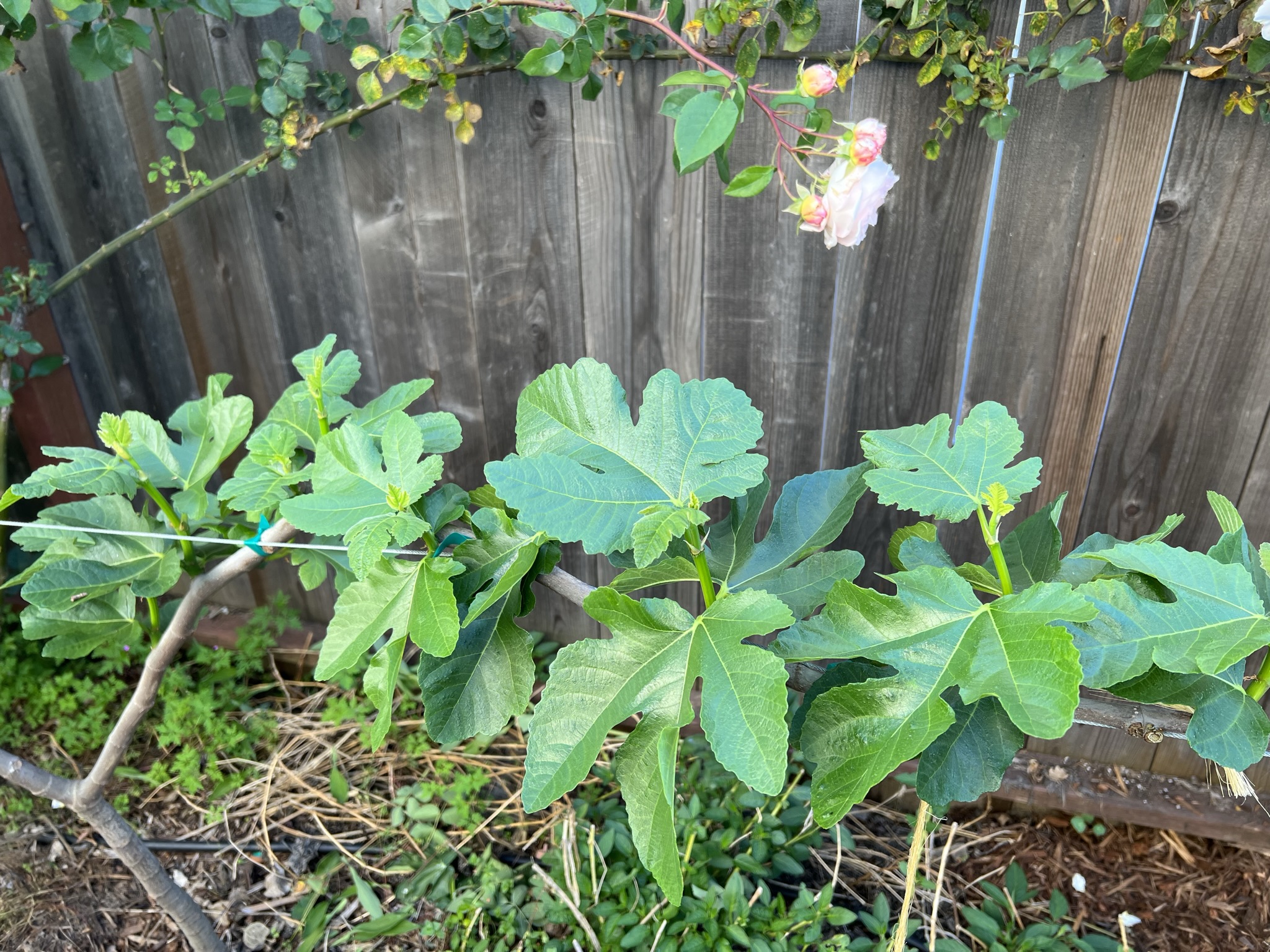
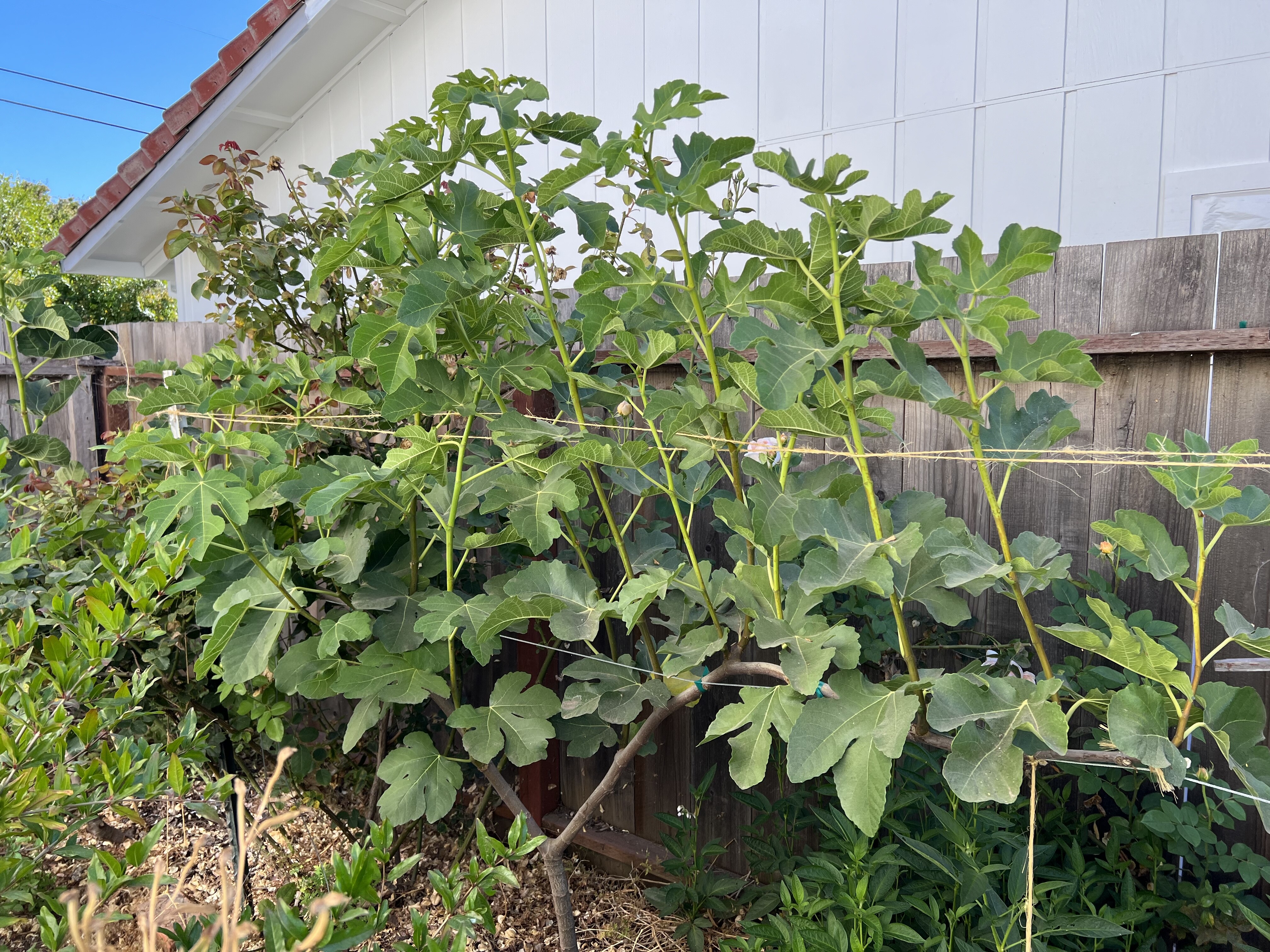
The rose behind the left cordon flopped over earlier this year, so the shoots on the left cordon are a little stunted compared to the right side.
Planted this as a rooted cutting in 2023. No fruit last year despite a good 3 feet of growth. Good development of the verticals this year, but still no fruit. The Col de Dame Blanc nearby that is growing as a standard tree is loaded.
6 Likes
I would love to have heard my Grandma try to pronounce phytophotodermatitis. I know that is the medical term and as I got older I learned it was from the sap. However, all I know when I was a kid was “boy stay out of that fig tree and eating all those figs you going to get fig poisoning”
3 Likes