I know that in old times, they used fires in the orchards, and kept them all night long. The idea was to produce as much smoke as possible - that was what protected the blooms, not actual heat. I witnessed it as a child in apple orchard in Moscow suburb.
1 Like
I’m not very good at poetry either, but here are a few more stanzas - using mostly your words.
I met a man that had a orchard in Ohio
This was in gently rolling terrain .
We talked about frost protection
And couldn’t stop beating out our brains
He would take his bales of hay
Stack them on the ground
Stand tall upon them
And curse his trees with a frown
Fire and water he would impart
A top the middle of the hay
He would stand penitent before his Maker
Then kneel and pray
His mind would smolder
Looking at the hay-made shelf
Standing in a mental fog
I’ve been there me-self.
3 Likes
Well I just sprayed the first of two planned sprays today
at 35 degrees. We’ve had very heavy rains and tornado
conditions Sunday night, but thankfully no damage. But I
just did a thorough inspection of my trees and could hardly
find any fruitlets inside the shuck splits. I’m wondering if the
weather zapped everything. I’ve had lots of pollinators for the
past two weeks, and I’ve seen lots of fruitlets. Although I’m
still planning on the second spray, I’ve decided to nix the idea
of the space heaters. The tornado conditions may have done me
in, even before the freeze. Very Discouraging. I think I might take
a tranquilizer and go back to bed.
2 Likes
Ouch. I’m sorry Ray. Such a bummer man. Did you have cold weather before this - while some of your crop was in bloom?
If it hasn’t frozen hard there are still fruit on the trees. You can see them with enough magnification. The fact that the fruitlets are that small indicates that they will be pretty freeze tolerant.
It took three 22F freezes this spring to take out the early bloomers. And they still might have a few fruit.
Keep your head up. Chances are you’ll have a crop.
Same here Ray. I just checked my trees and it looks as I probably lost most of my early (in particular Arctic Star) Nects. We had a low of around 27 degrees last night and conditions were right enough to do me in.
I have been researching Smudge Pots and Air Blowers. I have not gotten very far. With Smudge Pots they only protect when inversion occurs? No protection against regular low temperatures?
Do they make air blowers for smaller orchards, any way to simulate the effect of an air blower on a smaller scale?
Our temps have been in the high 70’s, until today.
I worked on a farm for a while where they grew strawberrys.
They had a large portable irrigation system. Pumping from a pond 4" pump on a large tractor.3" portable aluminum pipe, we could make it rain on 3-5 acres
We would set this up in the strawberry fields befor bloom .
We used the windshield of a truck as our thermometer ,getting up throughout the night, to check for frost on the windshield .
When frost was on the windshield ,we started the pump.
I remember playing in the sprinklers at 3am. Using a small propane torch to remove ice from some of the sprinklers.
Wet and cold job!
Long nights to keep everything working.
We would let it run until the ice on the windshield started to melt.
Often was an inch or so of ice over the whole field.
Amazingly this usually saved the crop.
2 Likes
Spud, if you are talking about wind machines, they have to be really big (and tall) to mix the air during the inversion.
If you are talking about something which blows warm air, like a heater. I’ve only seen information on those for large orchards (driving the heater up and down the rows).
One year (I think it was the same year I started this thread) I rented three salamander/torpedo heaters and drove up and down the orchard aisles from about 3 a.m. on to try to keep the trees warm.
I think if you had a small planting, you could rent some salamander heaters at a the local rent shop and run them in your orchard. They put out a lot of heat (like 200,000 btu) but go through a lot of kerosene. I can’t remember how much kerosene I used, but I don’t think it was more than 20 gallons for all three heaters.
I once looked into smudge pots. You can use diesel fuel in those, which is cheaper. They are actually pretty effective, but you have to space them fairly close to one another, so it takes a lot of them. For me it would be expensive to buy all of them, take a lot of fuel to keep them going all night. Then there is the storage issue.
For a small planting though, it might be just the thing. A lot more efficient than a salamander heater.
Ray, I don’t want to pester you with questions, so of course you don’t have to answer if you don’t want to.
You mentioned there is no fruit in the shuck. Are the blooms just falling off after petal fall? Is there just no ovary or style in the shuck?
I have 15 year old forced air kerosene heater from Mr. Heater that is supposed to burn “kerosene 1 and 2, diesel 1 and 2, home heating oil and JP-8.” JP-8 must be expensive… unless it free. 
How do you estimate the number of Smudge Pots you need? I have not found anything so far on the internet regarding this. I assume each one would cover x amount of sq ft.
I had an old salamander heater once which I think recommended kerosene, which is what I used.
When I rented the three torpedo heaters a few years ago, the instructions on the heater said diesel could be used, or kerosene. But the people I rented from insisted I use kerosene because they said diesel eventually clogs up the fuel jets. I didn’t argue with them. To encourage people to use kerosene in their heaters, they sold the kerosene at their cost. Maybe some heaters are more prone to clogging than others?
I looked for the article I read a few years ago and can’t find it. It was a pretty thorough article. The only thing I’ve been able to find is an article put out in the 70s. It doesn’t give very concrete numbers. Only say from 0 to 100 smudge pots per acre. I think at the time I figured 50 per acre would work for me (although like I said I never bought any because of the issues I mentioned). That would be roughly one per every 800 sq.ft.
There are different kinds too. The double burner kind is the most efficient. A few years ago I looked for a source and found a source made in China.
Here is the 70s article I found.
https://research.wsulibs.wsu.edu/xmlui/bitstream/handle/2376/9355/eb0634_1978.pdf?sequence=1&
Here’s a youtube vid of a guy lighting one.
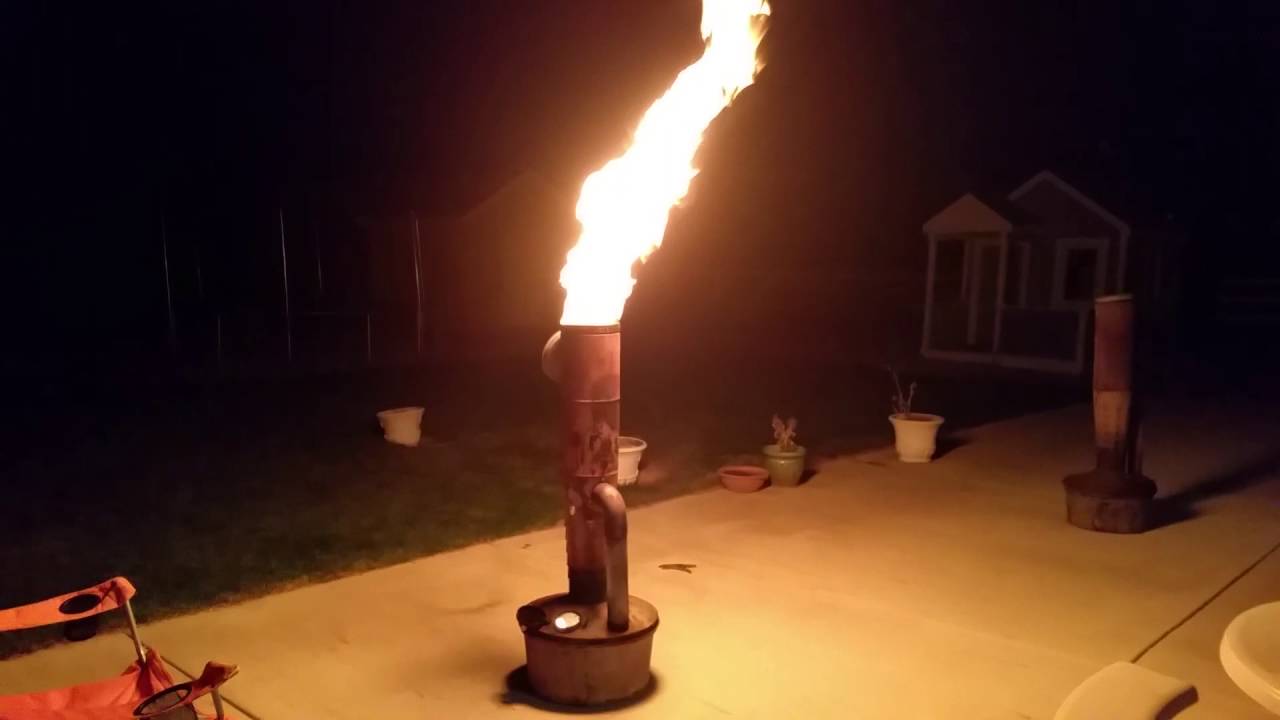
2 Likes
Here’s some smudge pots on ebay. This one has sold 3 out of 5 available in the last 24hrs. My guess is that other people want to protect their fruit trees this time of year.
Here’s a guy who has hundreds of them in CA. Wants $135 a piece plus you pay shipping, or local pickup.
If you bought enough, you could probably arrange a reasonable amount for the shipping.
No problem Mark. The petals are still there, but the
fruitlets or whatever you want to call them, that were
inside are now gone. Every tree is like that. I’ve never
seen anything like it. There is no freeze damage, and
we’ve had no freezing temps, until what’s going to
happen tonight.
That’s really strange. I’ve come across some “hollow” flowers before (no ovary, no style) but they’ve been fairly rare. I’d say not even one per tree. Most of the time, as you know, the ovary just shrivels and dies (from cold) but it’s still there.
I’ve no idea what could make whole trees have missing flower parts. If at some point you choose to call Clemson (I think you’ve called them before) about this, please let me know what they say. I’d be interested in the answer to this mystery.
Guess I am doing somewhat of a controlled KDL study this year. Got down to 23 last night and they are predicting a low of 22 tonight at my place. In looking back at our discussion last year, my peach trees were at about these same growth stage as now - half the trees in various stages of bloom. Last year had about the same conditions, maybe 1 or 2 degrees warmer for 2 nights and sprayed KDL on the trees as directed. This time no KDL. Will report back in a few days with the results.
Thanks Chris for taking the time to look at that.
The thing is though, it may not tell you what is really going on. When I was up in MI a few months ago, one of the presenters talked a lot about frost damage to peaches.
They are really doing a lot of research on that right now. It turns out, that critical temp chart we always use (the one from MSU) which tells us how much damage to expect at different temps isn’t any too accurate. There are significant other factors involved which can vary the temps quite a bit. Length of time and dew point (which is affected by humidity) can move those critical temps quite a bit.
I’d love for someone who has several mature trees of the same variety) spray half the trees with KDL and the other half not. Ideally a decent sample size would be helpful.
I was going to do that at some point cause I had some KDL left over. But with the lack of any peer reviewed research supporting KDL for frost protection, and my own experiences, last summer I just decided to dump the rest of what I had of KDL into the spray tank when I was spraying for insects, to just use the KDL as a foliar feeding (potassium is sometimes used as a foliar feed)
There are people other than Ray who swear by it, but I’ve just not seen any peer reviewed research to support it, along with some fruit specialists who say cyro-protectants don’t work. One of the presenters mentioned this again at the MI Fruit Conference a few months ago.
I think if there was any peer reviewed research which showed KDL as effective (and it has been tested) that would be a pretty big endorsement and it would be all over Agro-K’s website.
Here Dr. Michela Centinari explains the conundrum of KDL in a nutshell
" Testing the cryo-protectant properties of KDL
KDL (potassium dextrose lactose; Agro-K corporation, Minneapolis, MN, USA) is a potassium based fertilizer. According to the manufacturer’s literature, spraying KDL shortly before a frost event (24-48 hours) would increase the potassium and sugar levels within the plant and reduce the frost injury on young vine tissue. Although attractive to growers, there is not scientific literature that supports the effectiveness of this product in preventing/reducing frost damage. Numerous grower testimonials are available, but growers usually do not leave an ‘untreated’ control area where the material is not applied, which is critical in order to evaluate the efficacy of KDL as cryo-protectant.
A large scale study coordinated by Tim Martinson (Cornell University) and in collaboration with the Agro-K company (KDL manufacturer) has been set up this spring to evaluate the effect of KDL at several vineyard sites located in NY and PA. Penn State is a collaborating university that is helping to work with six commercial growers that agreed to participate in the study in addition to the Penn State LERGREC in North East, PA."
She did in fact test KDL that spring, 2015 and this is the abstract to her research
“Field studies were conducted in 2014 and 2015 on Vitis vinifera cvs. Lemberger and Riesling and on interspecific hybrid cvs. Noiret and Traminette to evaluate the effectiveness of two sprayable products for reducing postbudburst freeze damage without impacting grape production, fruit composition, wine chemistry, or sensory perception. The treatments consisted of a) one application of a vegetable oil-based adjuvant (Amigo) during the dormant season to delay budburst and reduce the chance of frost damage; and b) application of a potassium fertilizer (KDL) within 24 hrs before a predicted frost event to increase plant freeze resistance. Amigo oil application significantly delayed budburst in Lemberger and Riesling in both years (six to 11 days), but the delay was less pronounced in Noiret and Traminette (two to four days). A frost event (minimum temperature -3°C) occurred in late spring 2015 in the Noiret and Traminette vineyard. At that time, the percentage of buds that had reached budburst was no longer lower in the Amigo oil-treated vines than other treatments. Neither Amigo oil nor KDL reduced freeze damage and crop loss in the hybrid cultivars. The lower osmotic potential of Noiret KDL-treated leaves compared to the control did not translate into increased freeze resistance under our experimental conditions. The delay in budburst in Amigo oil-treated vines did not impact fruit composition at harvest in any of the cultivars tested or the sensory perception of Riesling wines. Amigo oil applied at 10% concentration caused, however, phytotoxic effects (i.e., reduced cluster weight and bud survival). Further studies are needed before Amigo oil can be recommended as a frost-avoidance strategy. © 2018 by the American Society for Enology and Viticulture. All rights reserved.”
1 Like
The ag industry is over run with snake oil, miracle cures, and yield enhancers. Almost none of them work at all much less as promoted. One time I even did a replicated and randomized field test with methanol as a foliar spray. It was supposed to greatly increase yield and sugar in sugarbeet. The unusual thing was that it was promoted by a retired and respected plant scientist. So it was widely tested. None of the claims proved true. I’d expect KLD falls in the same group. They are banking on the fact that fruit crops often or even usually survive a freeze better than expected. So spray it on, get a crop, and presto it worked. If the crop freezes out, well it just got way too cold.
It’s very much akin to the health food industry.
5 Likes
1 Like