Predators are probably not the only reason for your lower squirrel population. Even here in areas where there is lots of meadow between trees and forest, squirrel fruit predation tends to be much lower. Squirrels are reluctant to go far from the security of trees and only seem to do so here when they are starving, at which point they keep moving until they are either dead or find food. A population boom followed by low forest mast is a repeating theme that leads to problem years with squirrels.
Last winter brought the greatest crash after the greatest boom since I’ve lived here. There is still a dearth of squirrels and chipmunks and even the bird population of fruit eating birds crashed and has not returned. Meanwhile, chestnuts and acorns lay on the ground with only the chestnuts being eaten, and by deer and not rodents.
I can’t be sure if the issue is only winter starvation from last winter. Also where there are bird feeders seed and nut eating vermin thrive. Even if the vermin can’t reach the feeders the birds knock to the ground about as much as they eat. I hate bird feeders- please don’t feed the wildlife!
I plant for my birds and bees. Flowers look better than bird feeders anyway, although they don’t always get birds through winters. Someone should study and come up with a planting formula that accomplishes that.
There is russeting due to cold and russeting due to variety there is a world of difference. This apple is meant to be russeted because that’s its genetics
Back to Harrow sweet its my opinion it’s not meant to have russeting because only occasionally are mine like that which I believe is due to the cool spring when the fruitlets are forming. Not all harrow sweet are like that. If not from the cold then it could be from a chemical you spray. Copper and others have been linked to russeting. https://www.ag.ndsu.edu/drappletree/fruit-external-signs-and-symptoms/russeting
" Management and other important facts
Russeting may be caused by a number of different conditions including extended periods of high humidity, cool temperatures during early apple development, the application of copper-based and other caustic pesticides, and powdery mildew infections.
Choose to plant apple cultivars that are less susceptible to russeting.
Prune the tree to open the canopy and accelerate drying of the fruit.
Be cautious in applying pesticides that are formulated as emulsifiable concentrates; wettable powder formulations are less likely to cause russeting.
Avoid excessive application of nitrogen-based fertilizers."
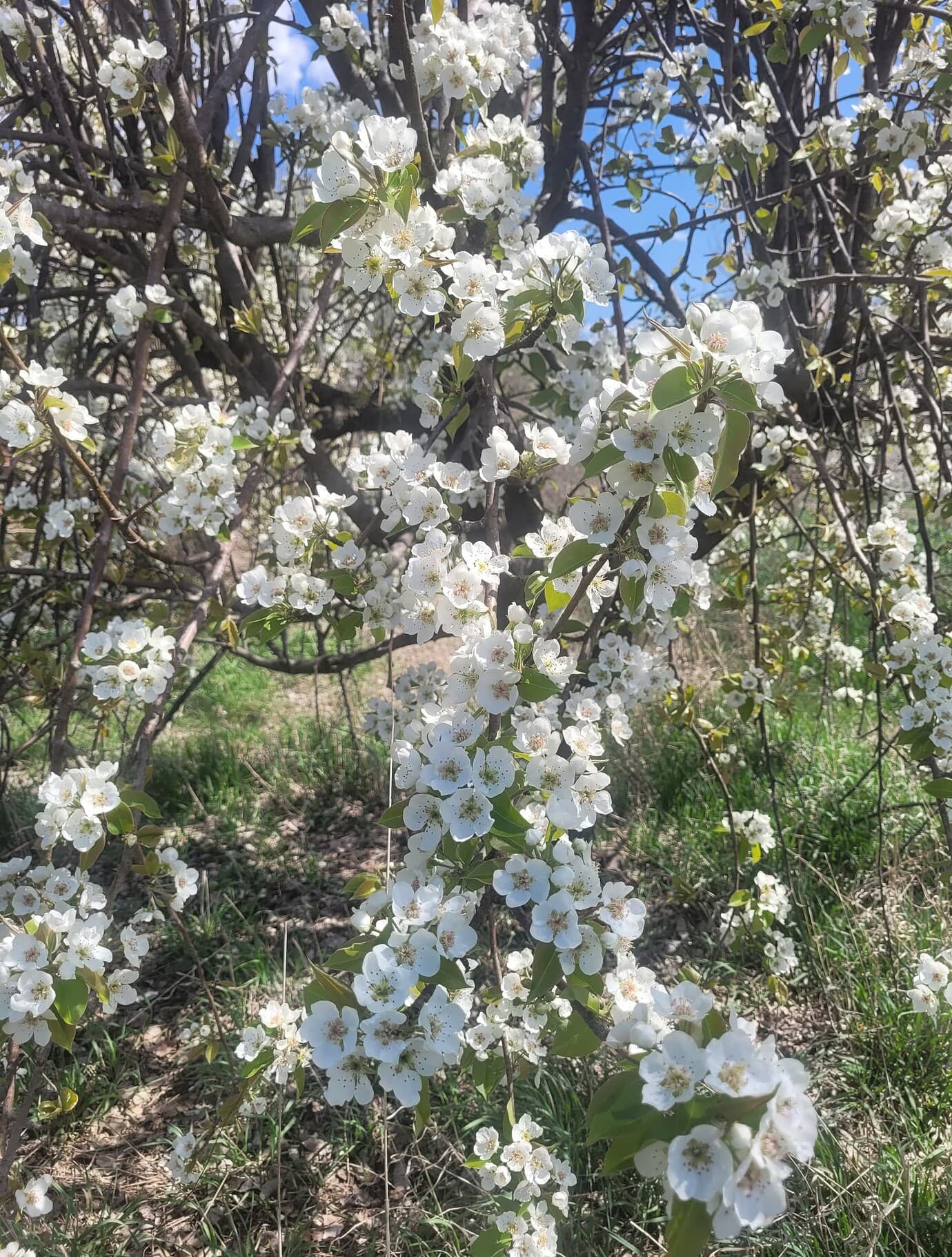
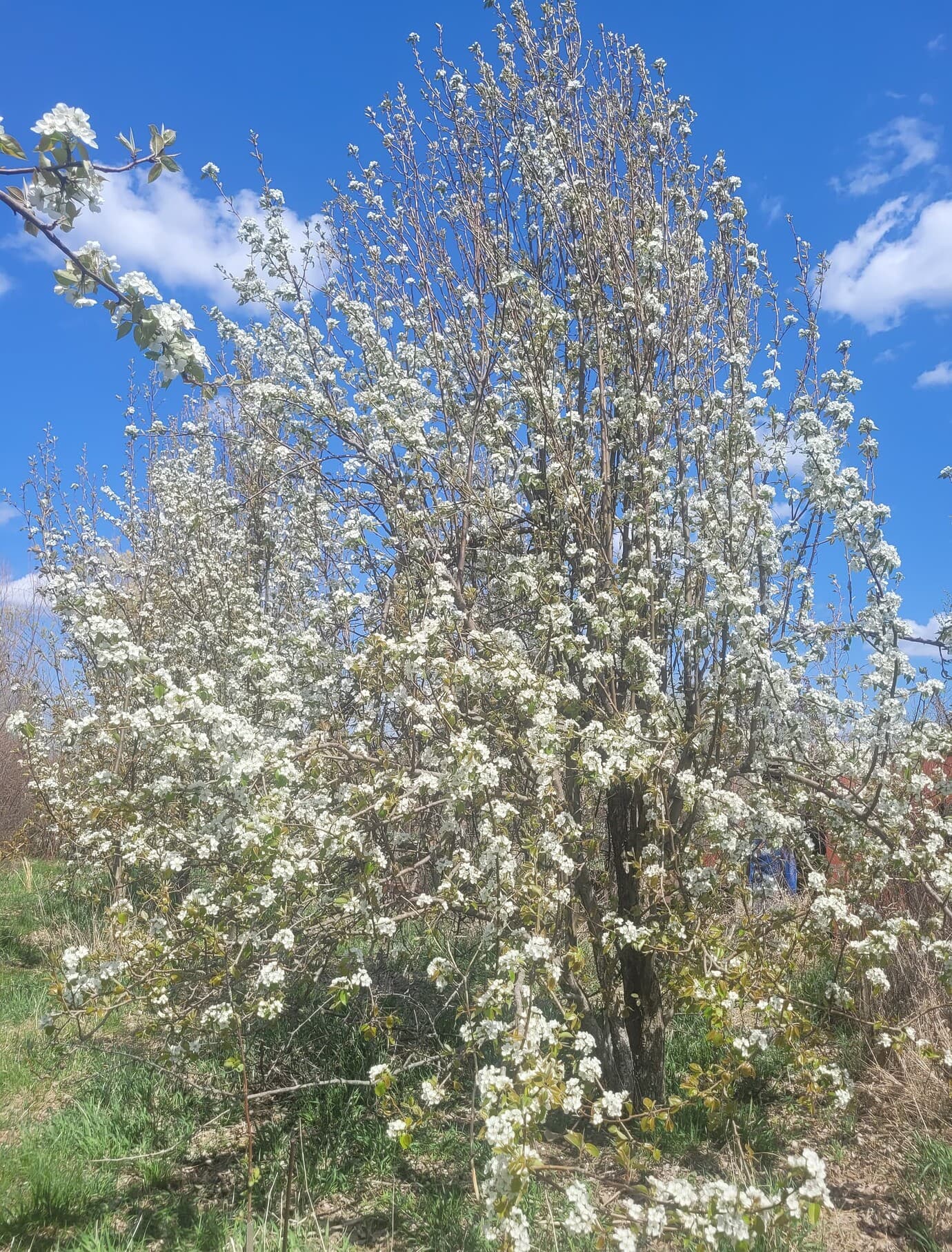
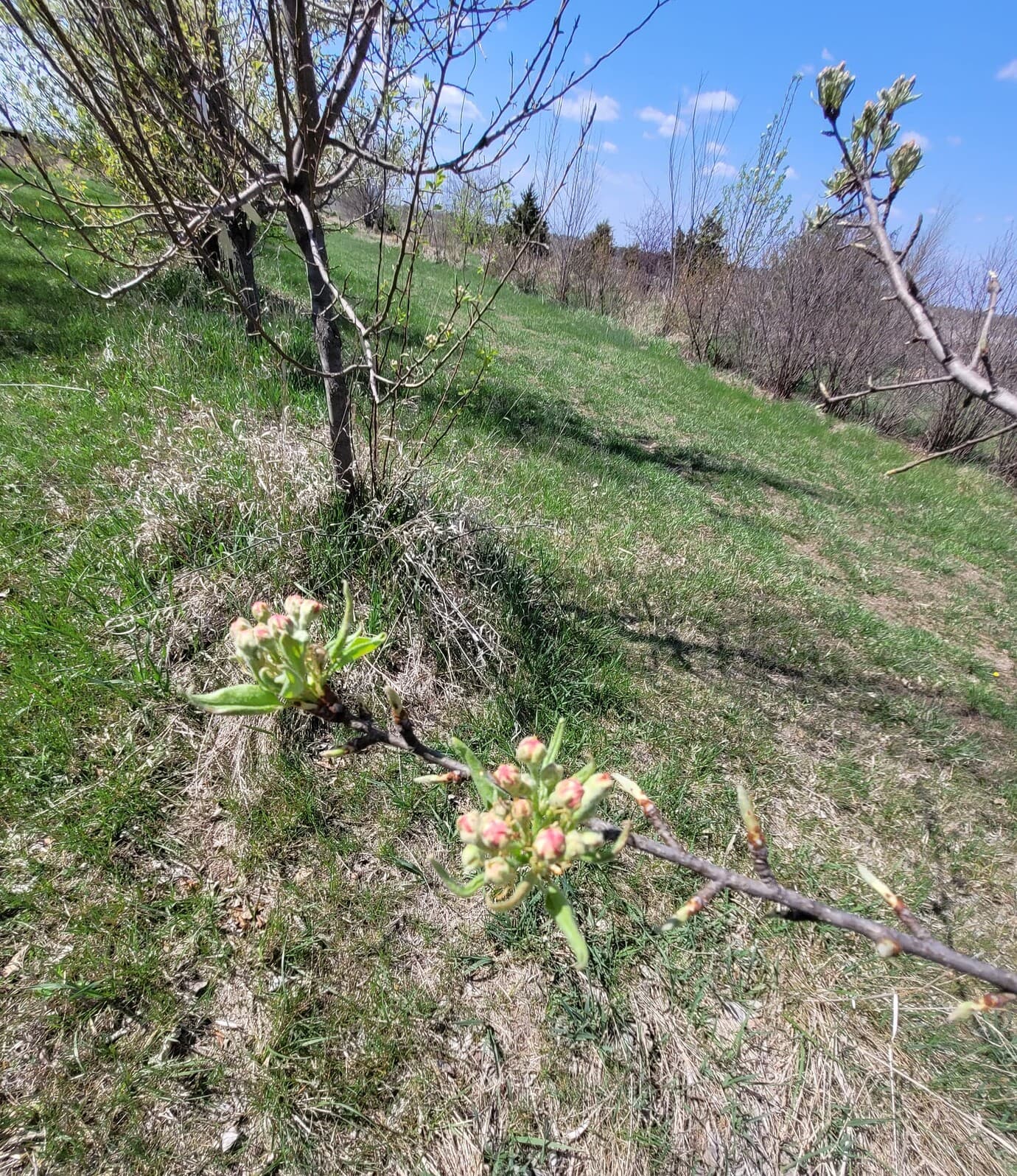
My “Harrow Sweet” flowers prolifically but does not produce fruit.
Background: Currently I have abundant fruit on 2 Harrow Delights, 2 Improved Kieffers, Magness and Warren. So there’s some pollination going on, despite Magness and Warren being sterile.
Problem: I have a large tree sold to me by Grandpa’s in 2016 as Harrow Sweet on OHxF 97. As noted, it blooms prolifically but does not set fruit. The nearest possible pollinators are Kieffer, roughly 35-40 yards away, and Harrow Delight, roughly 70-80 yards away. I have two working hypotheses as to the issue:
Poor pollination. Maybe there’s an issue with timing or distance, even though everything else in the yard is holding fruit. I was thinking of grafting some pollinators.
Misindentification. Maybe the graft died and I’ve been growing a big rootstock tree.
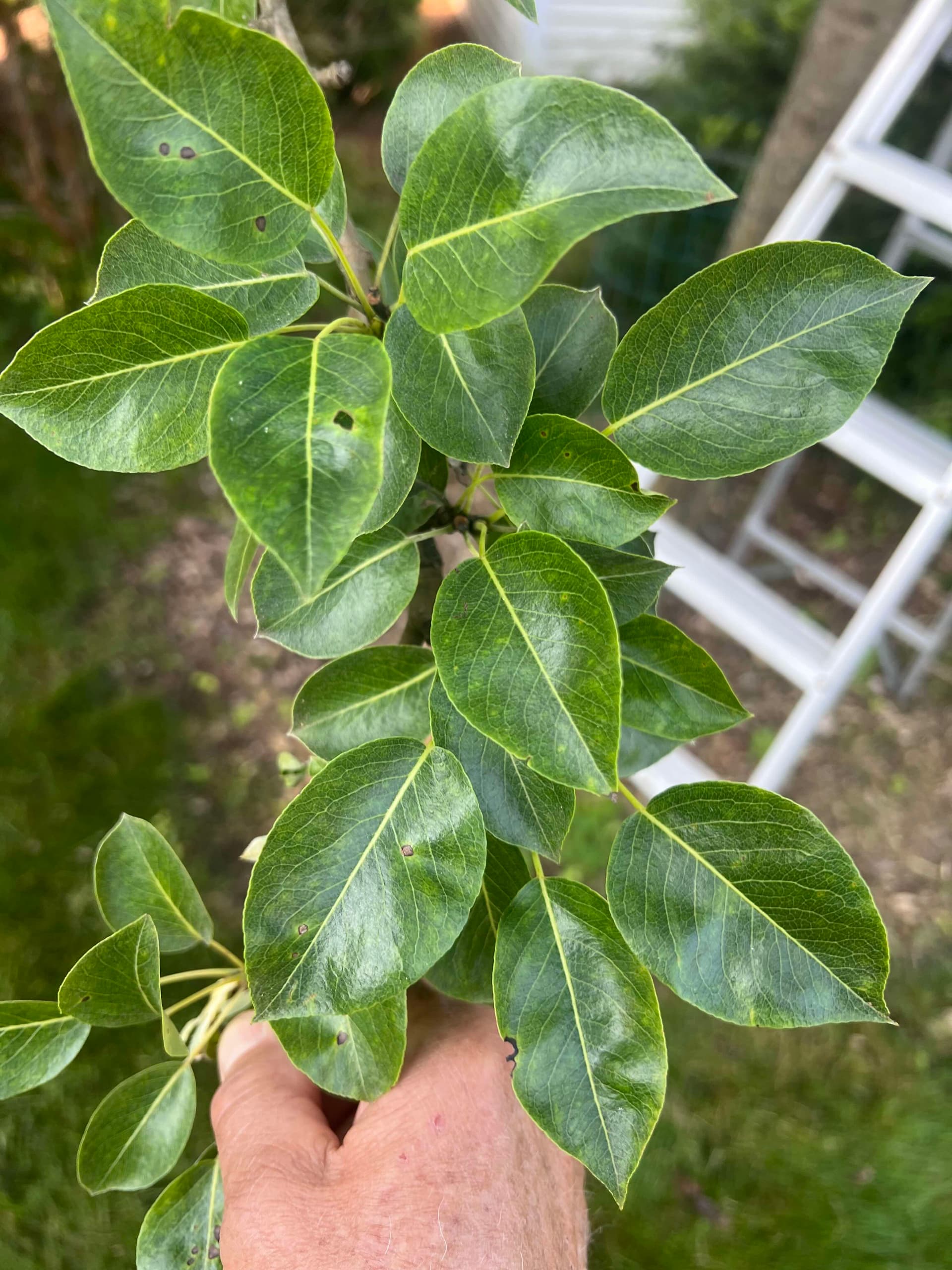
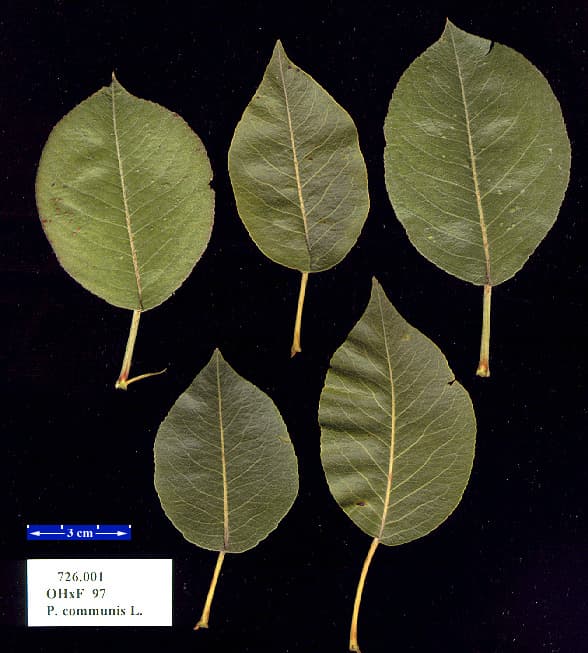
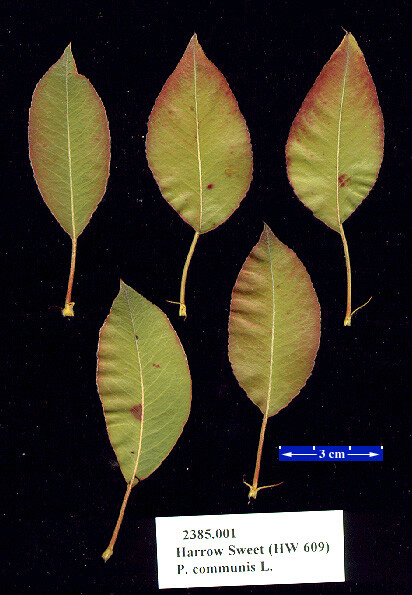
Frustrated, I pulled up this thread and noticed the foliage in various pictures. What was apparent to me immediately was that the leaves on my “Harrow Sweet” are not even slightly serrated, whereas the leaves in these pictures are visibly serrated. It seems that the leaves on my tree are also shorter than the leaves on pictured Harrow Sweet (see picture below). So I’m leaning to the conclusion that I’ve grown a big OHxF 97 tree. FWIW, the branches emerging from the central leader are distinctively vertical, which I’ve read is characteristic of Harrow Sweet but also OHxF 97.
Opinions? Does anyone know what an established OHxF 97 tree looks like?
Time for some top-working, I think. Do I have to worry that by cutting down the top of the existing tree, I’ll remove what accidentally proved to be a good pollinator for the others?
Most pears seem to grow upright and vertical so I don’t think that helps. It looks more like the OHxF 97 in those pictures…
However, your trees are kind of far apart, so you’ll have to ask someone else if that’s TOO FAR. I was told 100 feet was the furthest you should plant a pollinator and yours are further - but I don’t have actual experience backing this up.
Also, my understanding is that most of the euro pears will pollinate each other as long as they’re not blooming very early or late. However, Magness apparently pollinates nothing.
Some pears are sterile meaning they don’t produce viable pollen. Some pears are parthenocarpic meaning they fruit regardless of pollination. Other pears are more or less normal producing both pollen and viable ovules that form into fruit.
If you have a large population of pollinators in the area, distance between trees does not matter so long as bees can fly from one to the other. I would still try to keep pollen compatible trees within 30 feet of each other because it means pollen will be rapidly and readily spread.
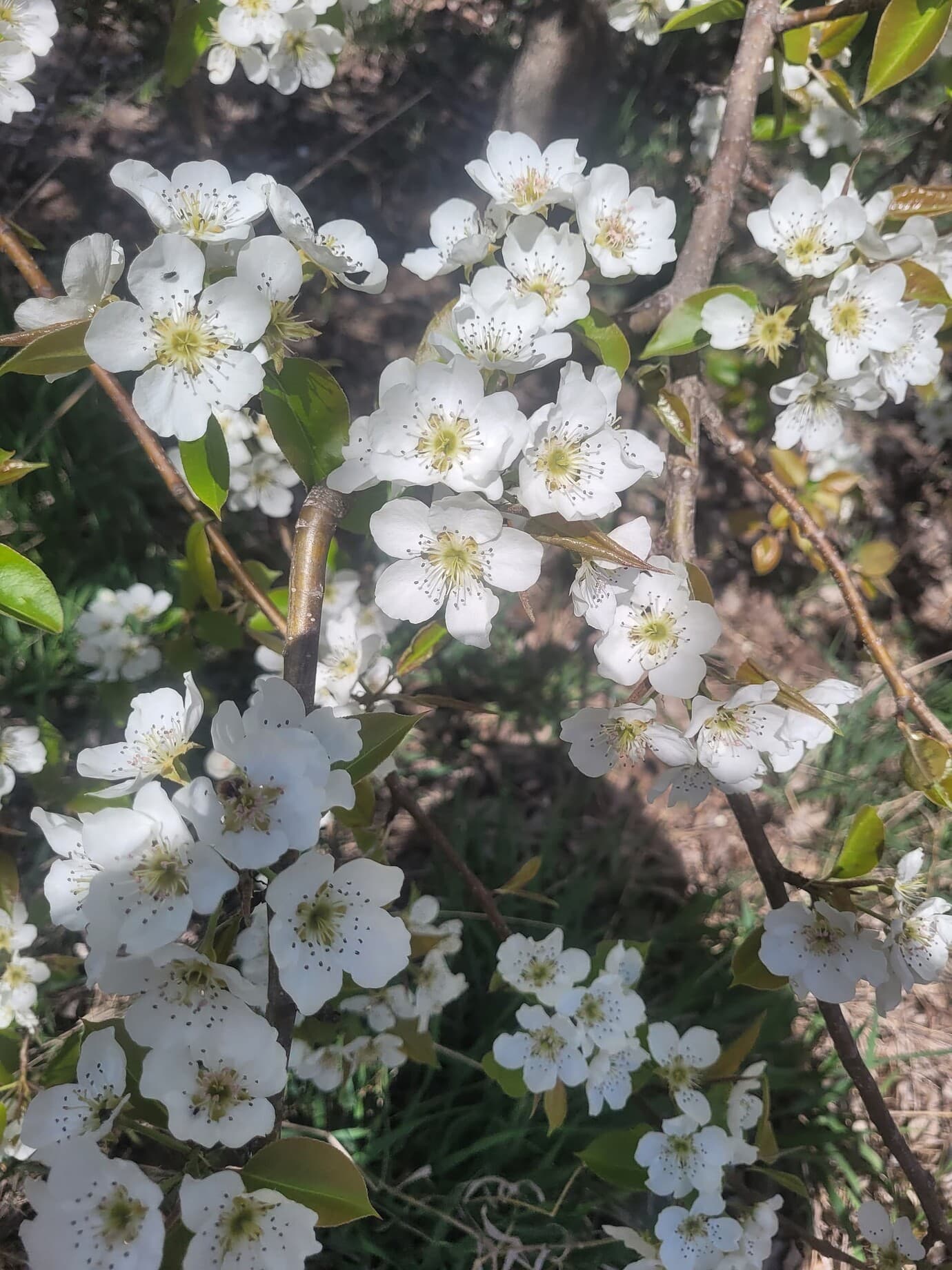
@jrd51 harrow sweet produces peears the first year for me normally. I agree it is not harrow sweet. These are what harrow sweet really look like Harrow sweet pears aka HW609 . Their blossoms are white with pink stripes like peppermint candy. Just much less red.
@benthegirl@Fusion_power@clarkinks – Thanks all! I think I have my answer: My tree is not Harrow Sweet. It appears to be the rootstock OHxF 97. I still want Harrow Sweet, so I’m planning to top-work the OHxF 97 next year by bark grafting Harrow Sweet. As I want to ensure a nearby pollinator, I’m thinking that I may also graft Potomac and possibly Moonglow. But I have lots of time to think about it.
This is how different pear blossoms are. I can definately tell the difference in harrow peears and others. They open white with a little red in them. Notice the difference below. The bottom photo are harrow sweet pears.
Haha, I was expecting you to say, “Yep, that’s what a pear from the rootstock OHXF 97 looks like. Case closed!”
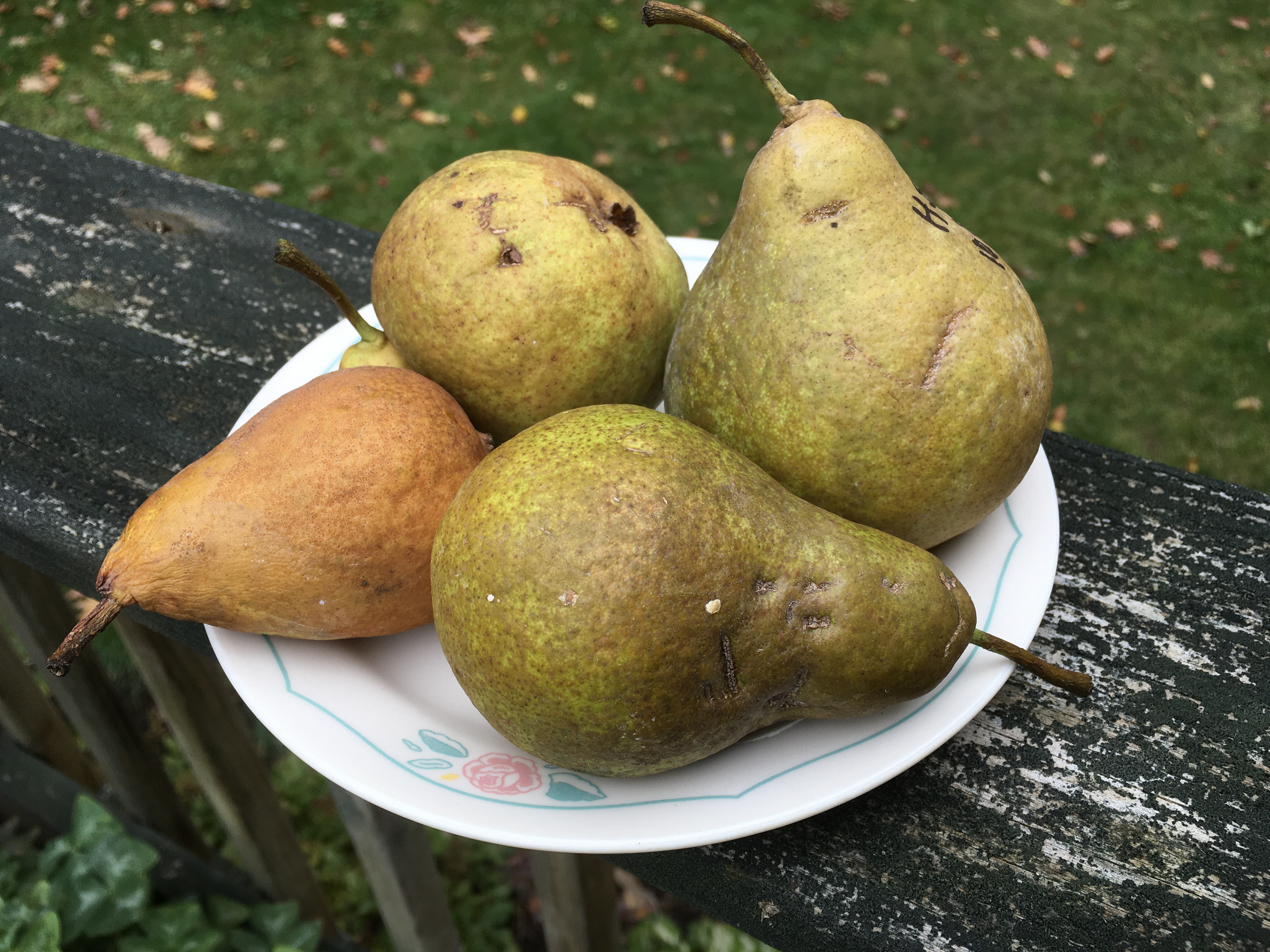
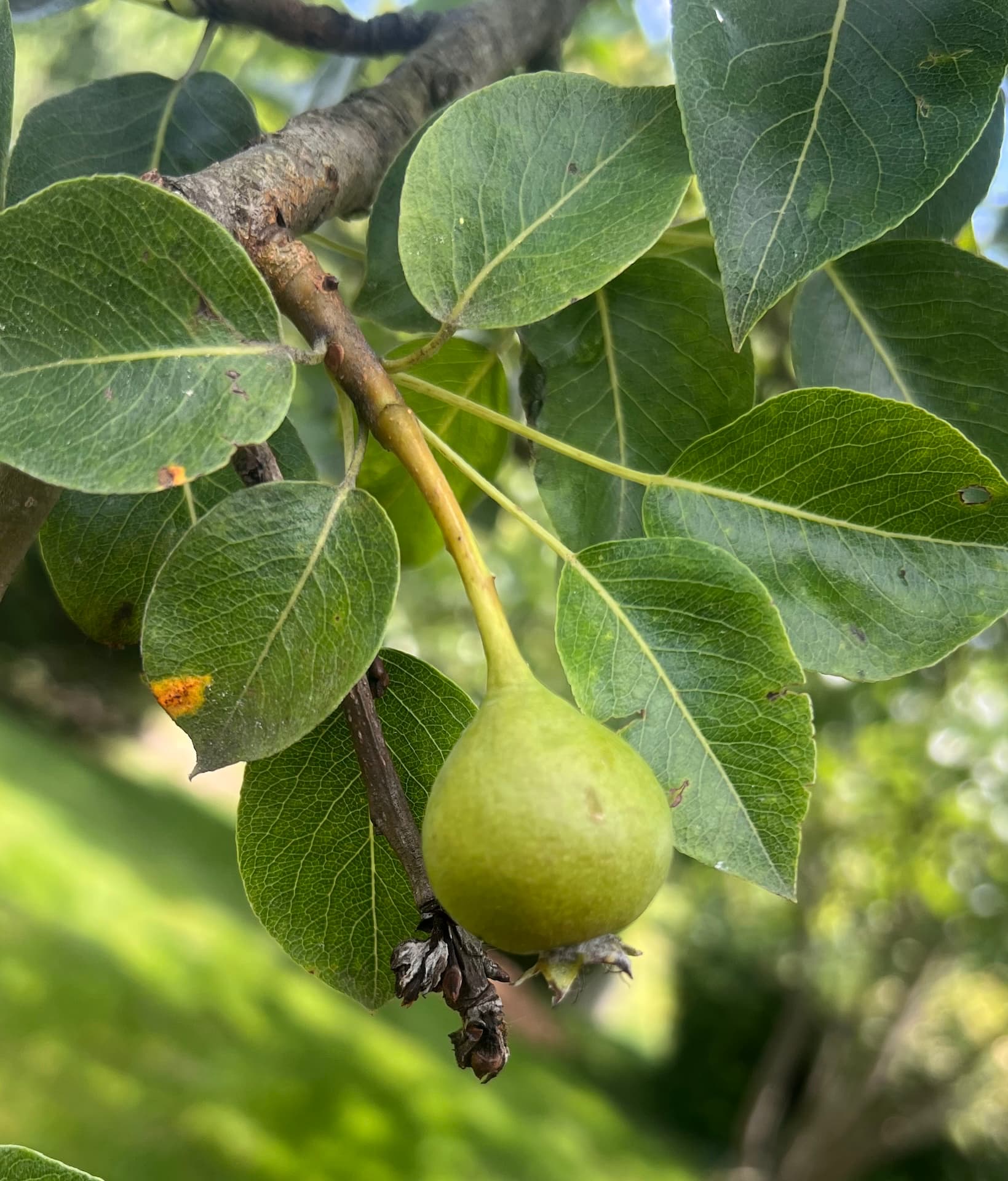
FWIW, it doesn’t look like the fruit on Harrow Delight. And it seems to have much less of a neck than the fruit on the tree pictured above. Do you think it will develop into a typical Harrow Sweet fruit? Thx.
Different pears look different in different areas. I dont necessarily think it is a bad tasting pear no matter what it is. If it is a rootstock pear keep in mind ohxf is really old home x bartlett. Lets wait and see what it tastes like. I can take you some more harrow pear photos. Many types dont look that different.
Yep, will do. For all I know, there are a few more hidden in the branches. After all, the tree is 20’ tall and I can see only the bottom few branches. So we’ll see what I get.
You make a great point about the ancestry of OH x F 97. If the Old Home x Bartlett tastes good, then. maybe when I topwork the tree I’ll leave a few rootstock branches.