A tiny scratch can do it, or a big scratch from a lawnmower
As far as I know rootstock susceptibility and cultivar susceptibility are independent except “resistant” rootstock is not immune, so blight can still travel down the cultivar into the rootstock that can either wall it off or succumb. When blight is active it can be in the air, or carried by bees from flower to flower. When it’s in the air (it has a preferred temperature and humidity range) it can infect pruning cuts or hail wounds in bark or rapidly growing young tissue from excess fertilizer or too aggressive winter pruning causing rank re-growth.
My approach: resistant cultivar and rootstock; wide tree spacing for air/sun; keep tree calm (vs growing like crazy) by limiting or avoiding fertilizer, doing major limb pruning in summer (not winter) when temps are 85 degrees minimum (blight inactive in high 80’s and above). Removing sap by summer pruning calms down tree growth, making it less vulnerable to blight; prune open the tree interior (throw a cat through the tree rule of thumb). Pruning in winter just invigorates the tree because you’re not removing sap that spends the winter in the roots, so the next Spring 100% of the sap comes roaring up from the roots to feed only 75% of original tree (if you winter pruned 25%), causing turbo-charged growth that you want to avoid.
1 Like
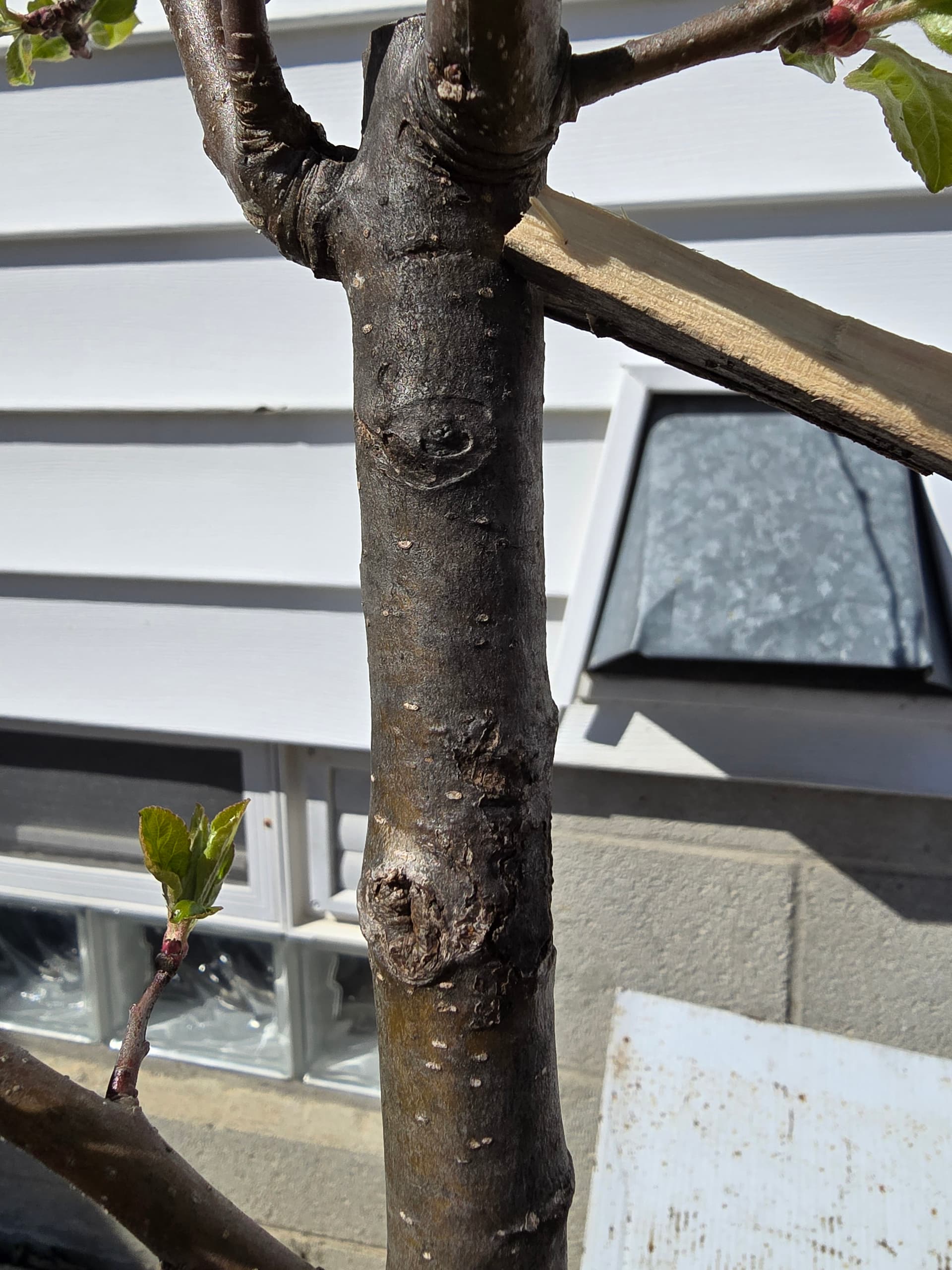
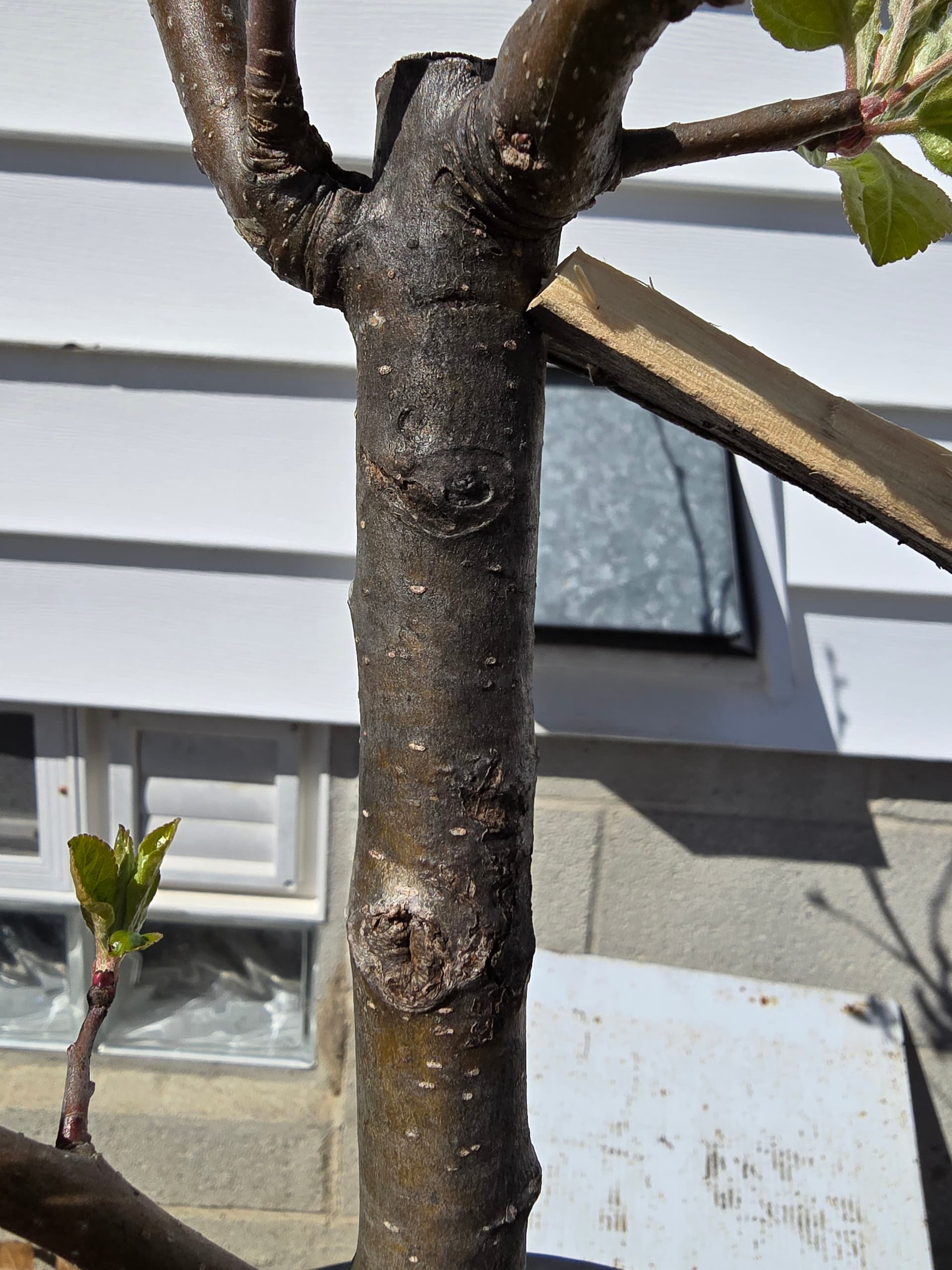
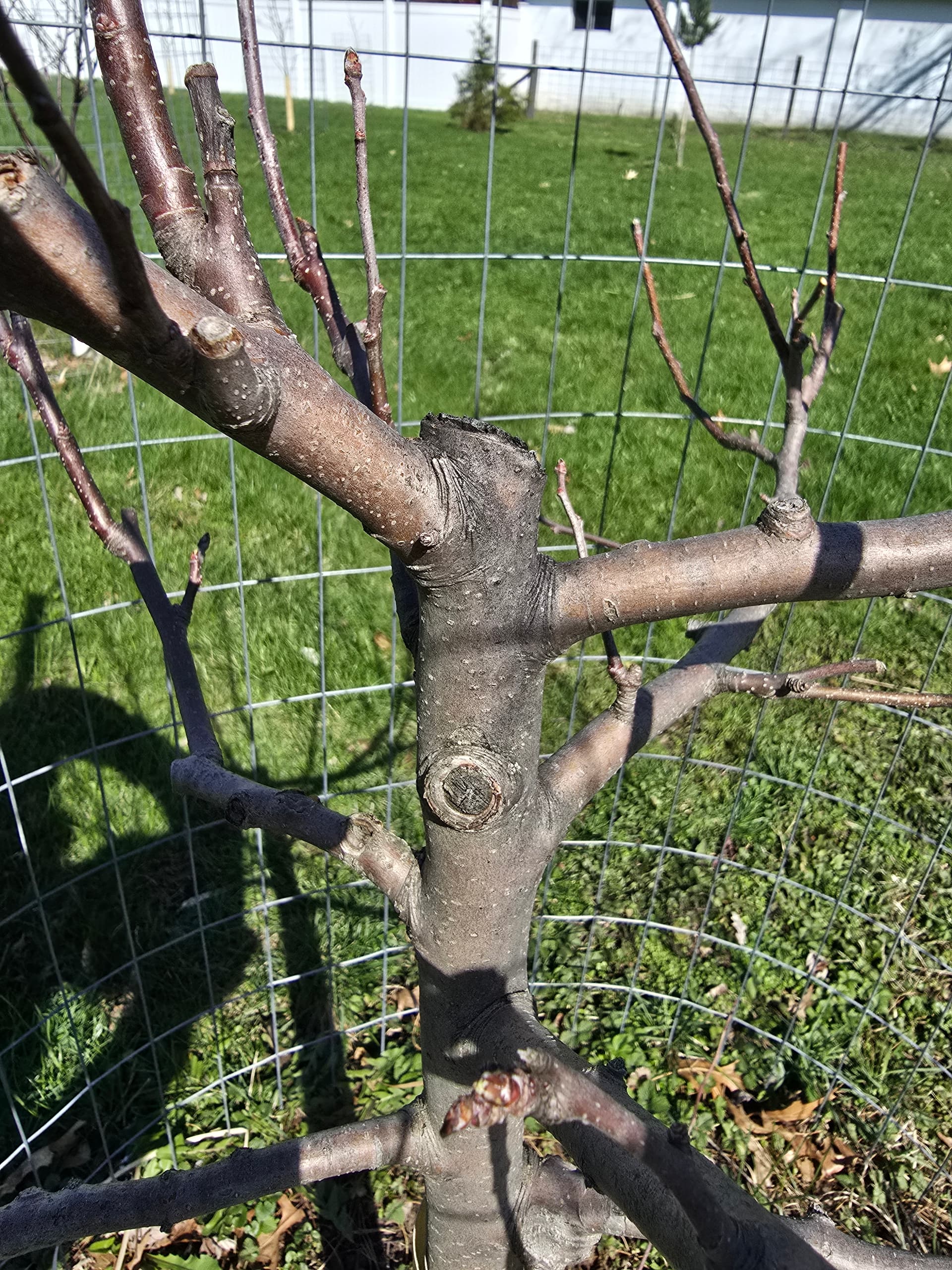
Could fireblight be mistaken for sunburn on a young tree trunk? I have a Yel. Delicious that is two years old that I cut the leader from and I just noticed it has a sort of sooty appearance where I made the cut. I thought it was sunscald from me exposing the interior and then the deer defoliated it twice before I could cage it so it just sat and baked last summer.
Ill take pictures later. @hambone I appreciate all the wisdom you’ve passed on Steve. Idk if you remember your pruning advice, but I pruned my Pink Lady to your suggestions and it looks beautiful! I’ll snap a picture of her too. I think it will have a great looking form this year after some good growth.
I must admit I find myself awfully discouraged about this fireblight/rootstock issue, but I really wanna try to just work with what I have for now. They’ve already shipped my Liberty on M26 and Raintree is so hard to contact I’m not sure they will cancel my Williams Pride and Dayton on M26.
1 Like
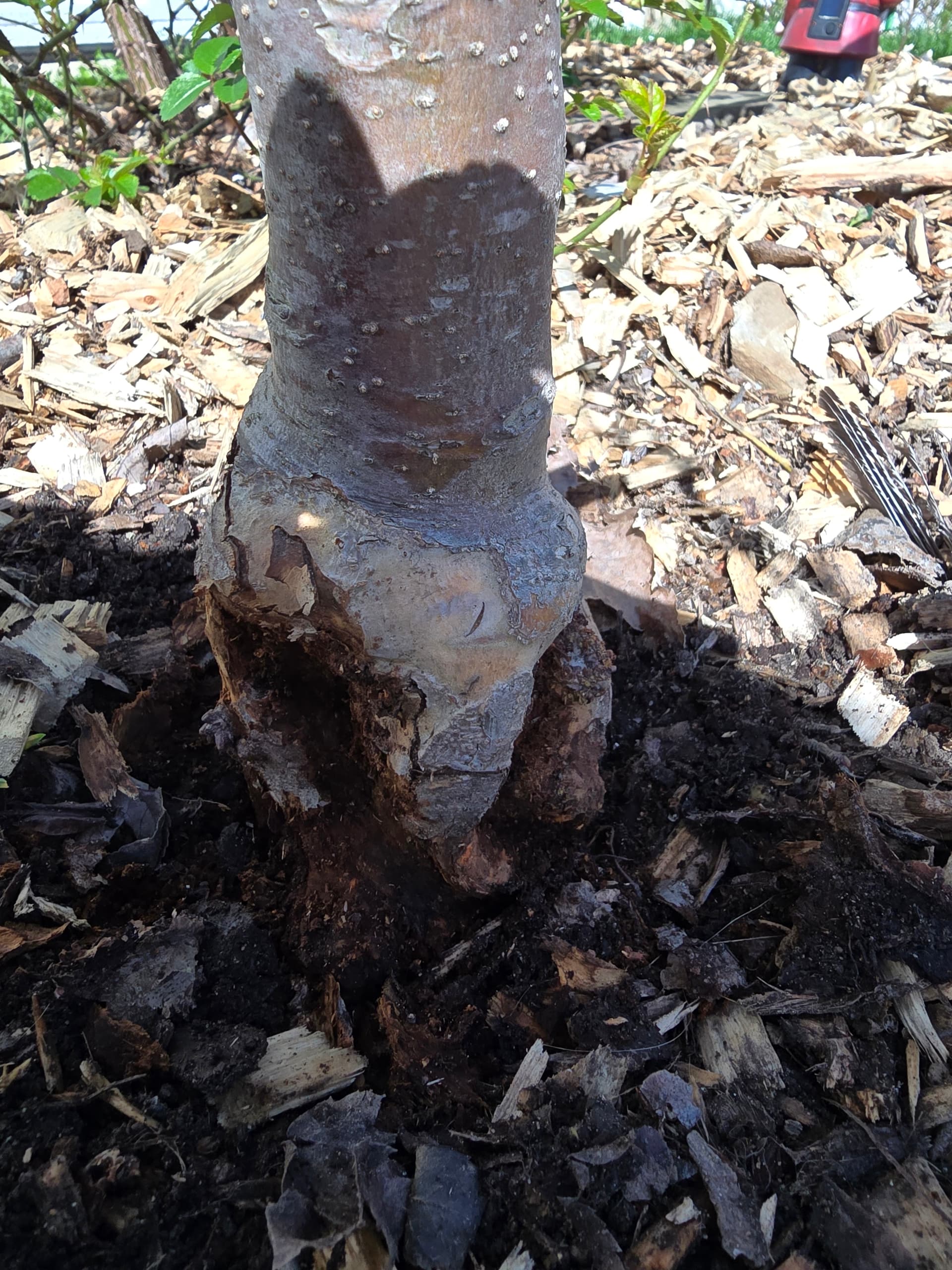
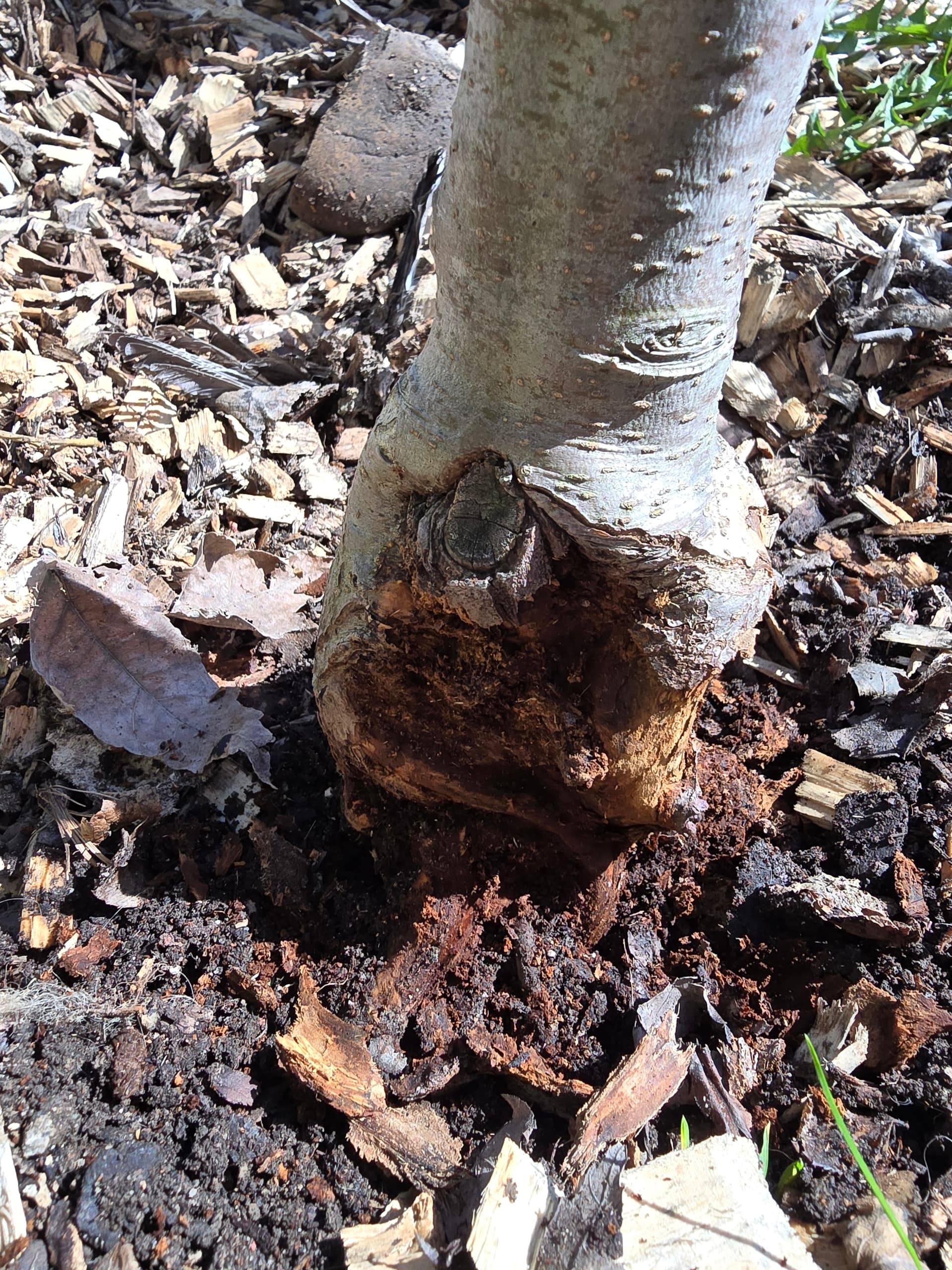
Well to my dismay I found my columnar apple has what appears to be crown rot. Here are some pictures of that as well as the sooty Yellow Delicious. I have a tiny “step over” Pink Lady that has the same thing going on too.
Anybody care to confirm sunscald or fireblight on the sooty trees?
I’m fairly certain about the crown rot. I dug into the rotten wood and hardly found a live vein of tissue. The tree is breaking dormancy but I would assume it’s likely going to die quickly eh?
1 Like
I did not find Jonagold to be more of a problem than other apples with the PNW disease pressure. Gala was the apple that was always getting powdery mildew, and fireblight was not a big issue.
The crowns of the fruit trees & bushes I have planted are mounded to assist drainage. I am hoping this will prevent any crown rot in my trees. The Contender peach, bush cherries, brambles, and blueberries are all in raised beds. Clay soil can be brutal if you do not have enough of a gradient to prevent pooling. I have some Geneva 969 rootstock if you need to replant. You just need some healthy scion to graft.
I have some Granny Smith and Goldrush scion I am planning to graft after the deep freeze is over. It looks like they gave us another night of 26/27 F weather.
2 Likes
@nil What’s the caliper on the G969 you’ve got, Justin?
My North Pole column apple that’s got the crown rot I would like to save but it’s starting to break dormancy. Probably too late to cut it and graft right?
All my other scion in storage I don’t think I want a whole tree of… I’d have to think on that.
How much are you looking to get for rootstock?
I may actually want to harvest scion from the Liberty on M26 I ordered. I don’t think I want to plant that tree on M26, but it’s already coming so not much else I can do I think.
Does anyone think this sooty appearance on my tree trunks is fireblight or sunburn? I’m leading toward sunburn as I did not have any ‘strikes’ on growth last year and they look healthy otherwise but I don’t want to take any chances.
The caliper is ~ 5/16 ‘’. I have 2 in individual containers & 3 in a bed beneath the peach tree that I bought last year, and another 5 in a tub that just arrived this year. If you can find any buds on your tree that have not woke up, they should graft fine.
I understand buying a tree just for the scion. I did not want Citation rootstock on my Emerald Drop pluot. I bought it to graft to Sugar Pearls apricot, assuming it wakes up.
I also bought a tree primarily for the Mustang rootstock attached to it. I will graft Toka plum to Hollywood plum and experiment with the rootstock.
When I was having canker issues in PNW, I painted the tree trunks with white primer to seal them in. It prevented future canker and allowed all of the damage to heal up. It won’t help anything under the bark. Infected tissues must be dealt with before painting.
So you think that black sooty appearance is canker? Like a bacterial disease?
I’d come and buy a couple of your rootstocks if you’re interested in selling. I don’t want to let my North Pole die and I don’t want Liberty on M26 after witnessing the destruction that crown rot poses.
Not sure what the sooty stuff is. I would scrub the bark with soap & water and then make a small experimental cut to see what it looks like underneath. Definitely check under any patches of bark that look rough/broken. If there is crown rot, it could be phytophthora.
1 Like
The crown rot is on a different tree. I’m thinking it’s sunburn or sooty mold perhaps. I get it on my roses, but never seen it on something else. I’ll cut into the bark though and check. If it’s canker or phytopthera I would assume it would be discolored and necrotic, right?
Seriously though, if you want to sell two root stocks let me know. No worries if you don’t, I just maybe misunderstood you mentioning them.
If it is collar rot you need to dig up the tree and not compost it. Let the sun dry up the soil that the tree was planted in.
Use Geneva or Polish P series rootstocks
Both of which strongly resist rots.
G.969 is a great choice.
1 Like
@dannytoro1 Thanks for the suggestion. There were lots of burr knots on the graft union, it was almost like a cube with burr knots on all four sides. The knots were all rotted when I dug them out with a butter knife last night. I can’t say whether is fungal rot like phytopthera or not, but there is some living tissue remaining. Does that tell you anything? Is it unusual for burr knots to start rotting? It would seem to me they would be a great place for moisture to accumulate and cause a problem.
Sure, I will sell you 2. I got them for $5 each.
1 Like
Okay I’ll PM you later on and we can figure something out. Thanks man.
Also, painting the trunks and scaffolds with drywall primer looks cool and seals them in against a number of diseases.
1 Like
That’s certainly my experience in southern Oregon about B9 runting and wilting in hot weather. I’m also experiencing a LOT of anthracnose. It’s by far my biggest challenge. I had fireblight 2 years in a row, about 5 years ago, and none since. Now it’s all anthracnose and bacterial canker.
1 Like
Anthracnose is very endemic here. Non-resistant veggies will do very poorly if they live to crop. Our Bartlett Pear seems to get it badly every year,