Sure you can. I run one right alongside my elephant breeding project. 


1 Like
Beaver and Pequea Manor both are f1 bitternut x shagbark hybrids and both look just like large bitternuts, but without any astringency. It makes me wonder how many hybrids are out there right under our noses but just look like bitternuts. There’s a few trees I need to start tasting and examining the buds. I think looking at the buds is a fairly clear way to tell whether a “bitternut” is actually a hybrid, as pure bitternuts will have that characteristic long, thin, golden bud, but the hybrids are always different.
Lucky, I wonder ahout the nuts Guy sampled. Sounds like he really knew his hickories, but to yhe untrained eye, red hickory aka “sweet pignut” looks very much like bitternut (aka originally named “pignut”) but it’s sweet. Buds bark and shell thickness of course are a giveaway but otherwise quite similar.
1 Like
Found this today. Sadly, nope.
Tasted 7 or 8 others from my collection bags as well.
Nope, nope, nope, nope, nope, nope, and nope. BLECH!
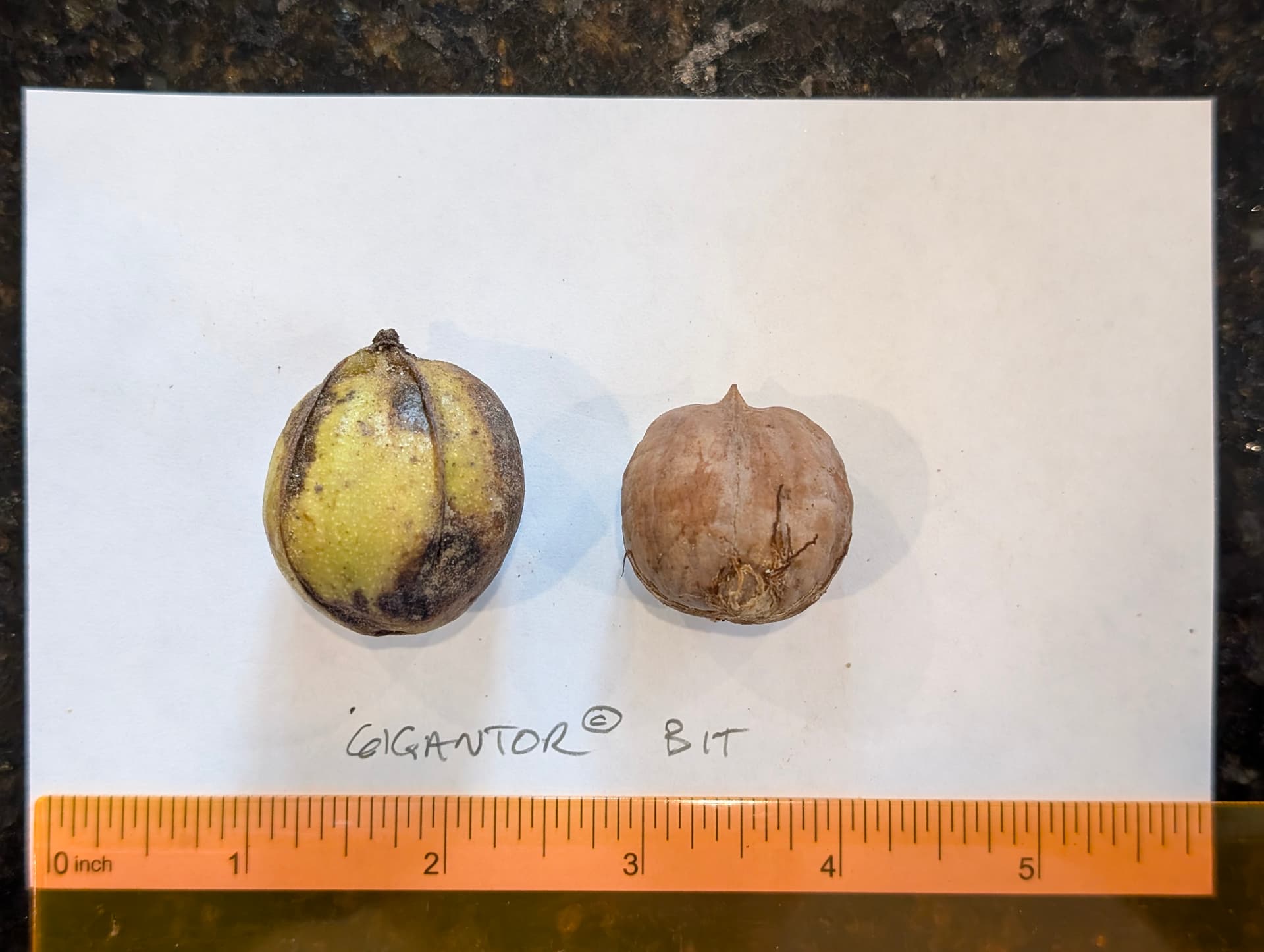
I split shag and mocker with a knife and hammer… then cut the nut meat out with diagonal cutting pliers.


That is the results with shagbark hickory.
Not bad, mostly nice quarters of nut meat.


That is mocker nut… noticably thicker shells… and the nut meat is more difficult to get out… it is crammed into smaller slits in the nut cavity… and when you do get it out it is a bit more shredded.
TNHunter
1 Like
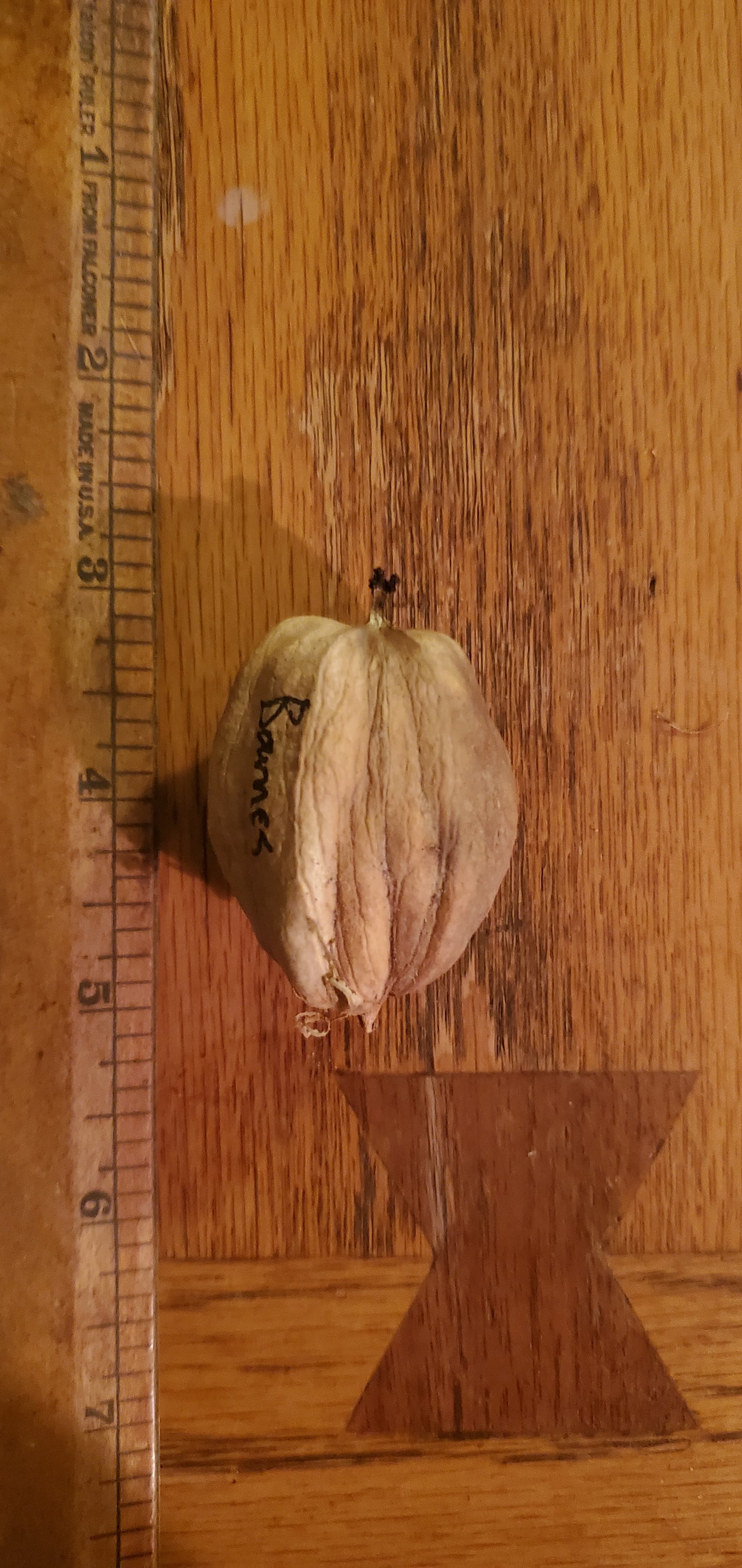

Here’s a look at Barnes mockernut. I was able to find 2 or 3 nuts today under the tree. It’s been a shy bearer ever since I first noticed it about 2-3 years ago.
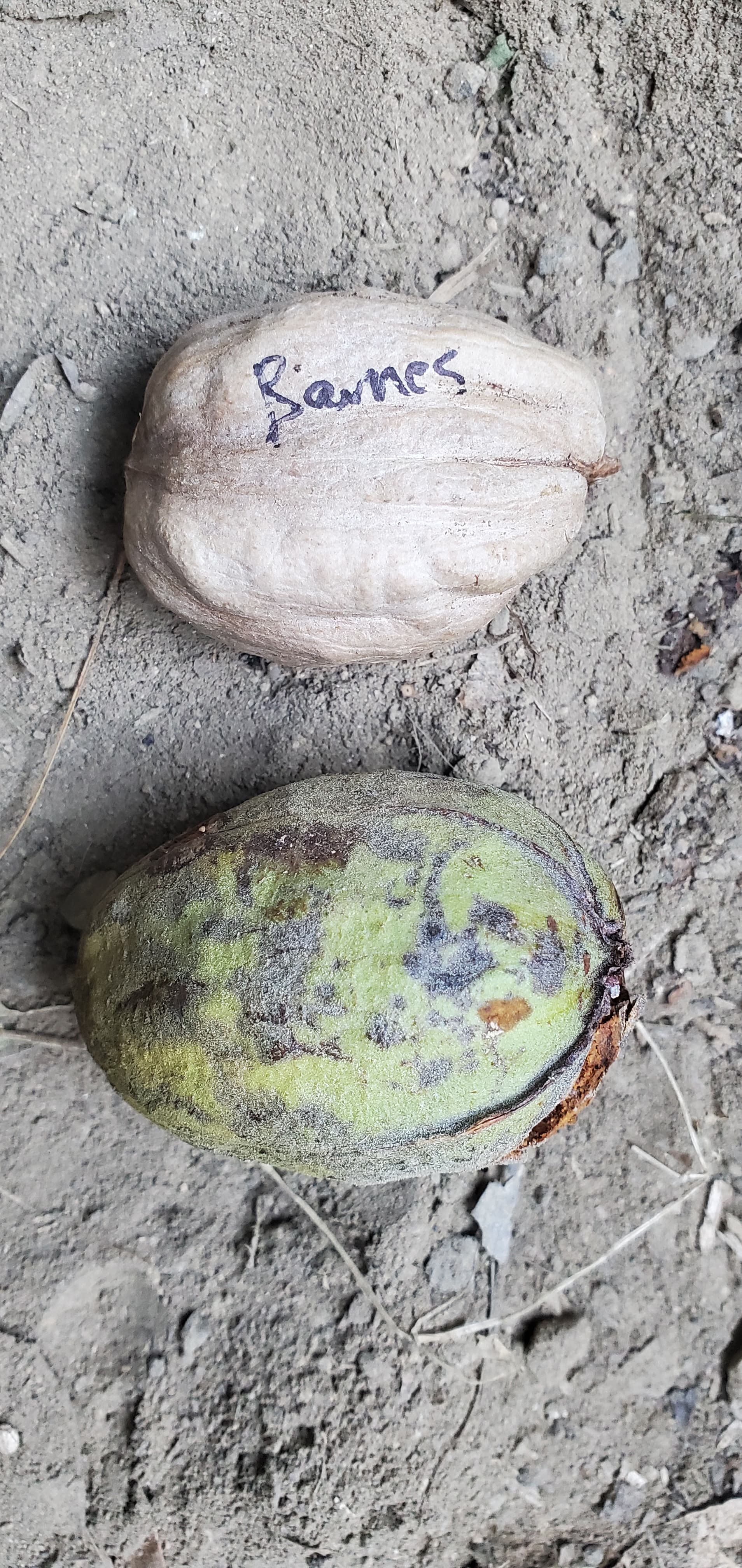
I was disappointed to find this nut empty, but wow! look at that shell and cavity. I honestly have no idea what’s going on here. This is so exceptional for a mockernut I’m struggling to understand how this could be possible except through hybridization.
I’m curious about pollination too. Can mockernut be self-pollinating?
2 Likes
Shy bearing and failure to form a kernel is typical of hybrids in hickory. Are you certain that is a mockernut? Are the leaves typically pilose? Asking because the nut shape is very atypical for a mockernut.
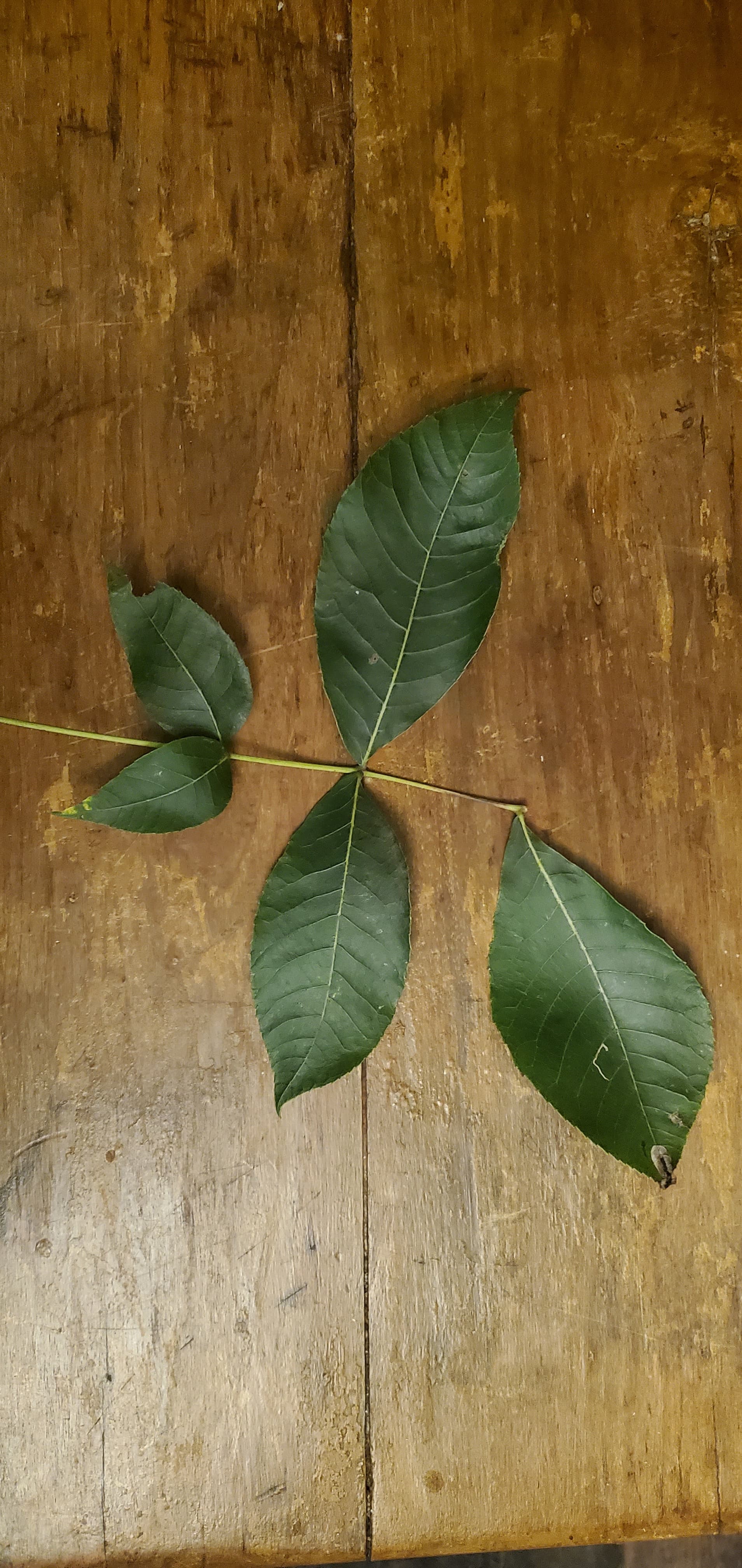
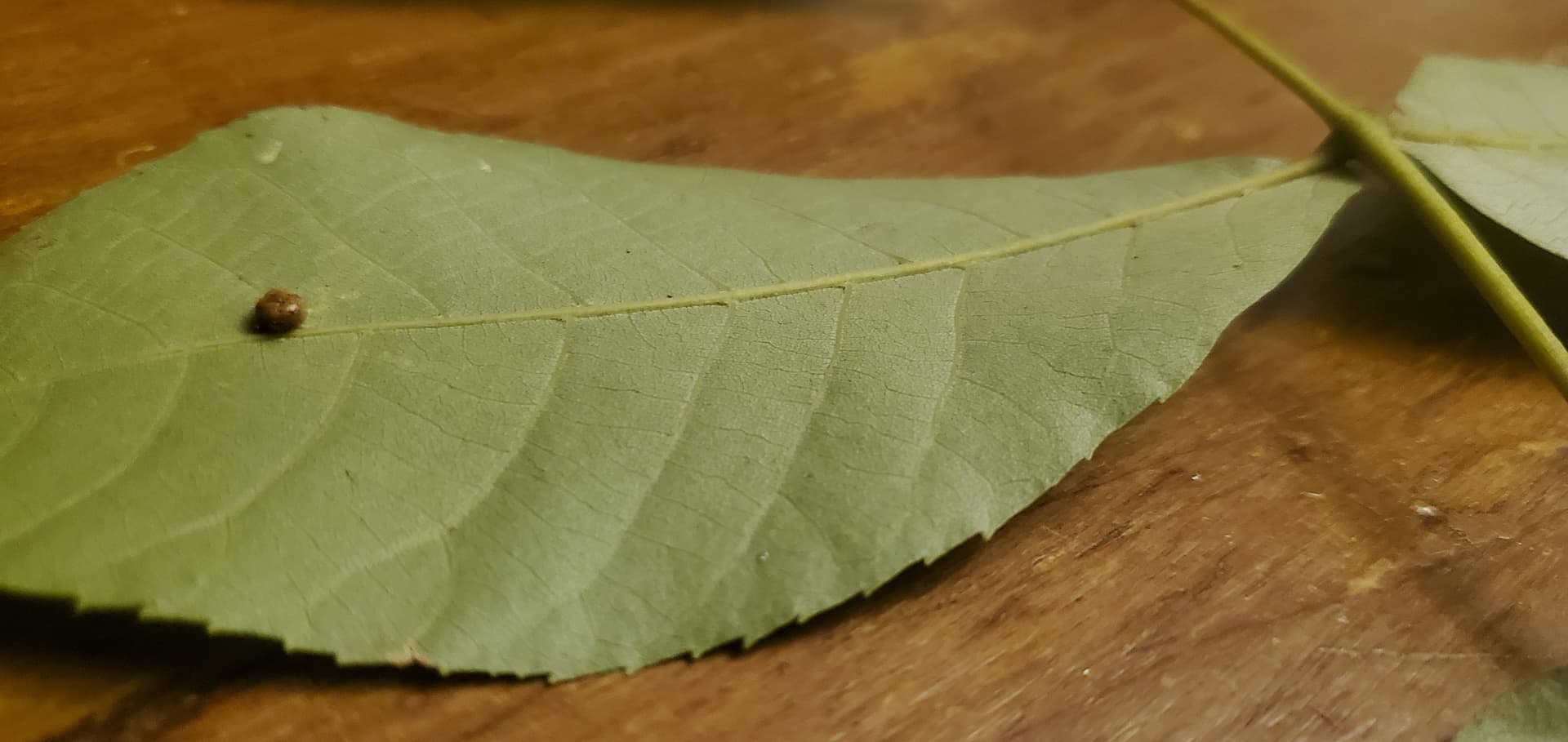
That is true. It could also be lack of pollination from nearby compatible hickory, and/or issues with the rootstock. This is grafted onto pecan, which has outgrown the overstock. The bark on this mockernut is dark and blocky, looking somewhat like persimmon bark. The leaves are typically in 7s, and look rather like mockernut leaves do. I checked underneath for hairiness and these are not very hairy. Buds are typical mockernut buds however.
Here’s a pic of the leaf and underside. I took off two leaflets for genotyping, but otherwise this would have been with 7 leaflets. You can find more Barnes photos here:
https://drive.google.com/drive/folders/1VVSiYRrwzpNkldaxsFMokmN-PBGIURXU
1 Like
Tentatively, not a mockernut… or at least, not pure mockernut. Did you get results back from the DNA test? Just me looking and not at all an expert, but I would guess that is about 10% pecan if not more. Pecan is 32 chromosome and mockernut 64 which suggests hybrids would be very unlikely. Also, those leaves do not suggest tetraploid or hexaploid genetics. They look more like standard diploid.
Now I’m curious, do the husks have wings? Because the one defining trait of apocarya is that the husk sutures have wings where true carya - with the single exception of nutmeg hickory - do not.
1 Like
This selection hasn’t been genotyped yet. The nut husks do not have wings on the sutures but are fuzzy, green, and woody, and simple and round just like mockernut husks typically are.
I suppose pecan x mockernut may be theoretically possible but seems to me so unlikely that I won’t believe it until I see it in the DNA.
Are you saying mockernut can come in diploid and tetraploid forms? I thought they were all tetraploid. How are you saying the leaves suggest diploid?
1 Like
Mockernut leaves tend to be rounded, feel slightly thicker due to the pilosity, with a different level of jagged sawtooth, plus the bud differences. 32 chromosome species leaves tend to be slightly thinner, more lanceolate, very little if any pilosity, and different bud shape. The bark on your tree IMO is a significant difference but is still within the range for mockernut.
2 Likes
This might be an interesting and somewhat relevant read for me anyway and maybe others (My genetics knowledge is VERY rusty) - The emerging importance of cross-ploidy hybridisation and introgression https://onlinelibrary.wiley.com/share/NXCBKVMT6AAWJUUPTKKX?target=10.1111/mec.17315
“The importance of such (cross-ploidy hybridization) events is not to be underestimated; for example, cross-ploidy hybridisation has led to some very recently originated plant species, which are now models for the study of polyploid speciation (Vallejo-Marin & Hiscock, 2016), and also to the origin of some of our most important crop plants, including wheat, sweet potato, sugar cane, and oilseed rape (Matsuoka, 2011; Wang et al., 2023; Yang et al., 2017; Zhang et al., 2018). Nonetheless, the frequency of cross-ploidy (or interploidy) hybridisation in the wild is a neglected topic with information scattered through the literature. Here, we bring this information together and consider its biological significance.”
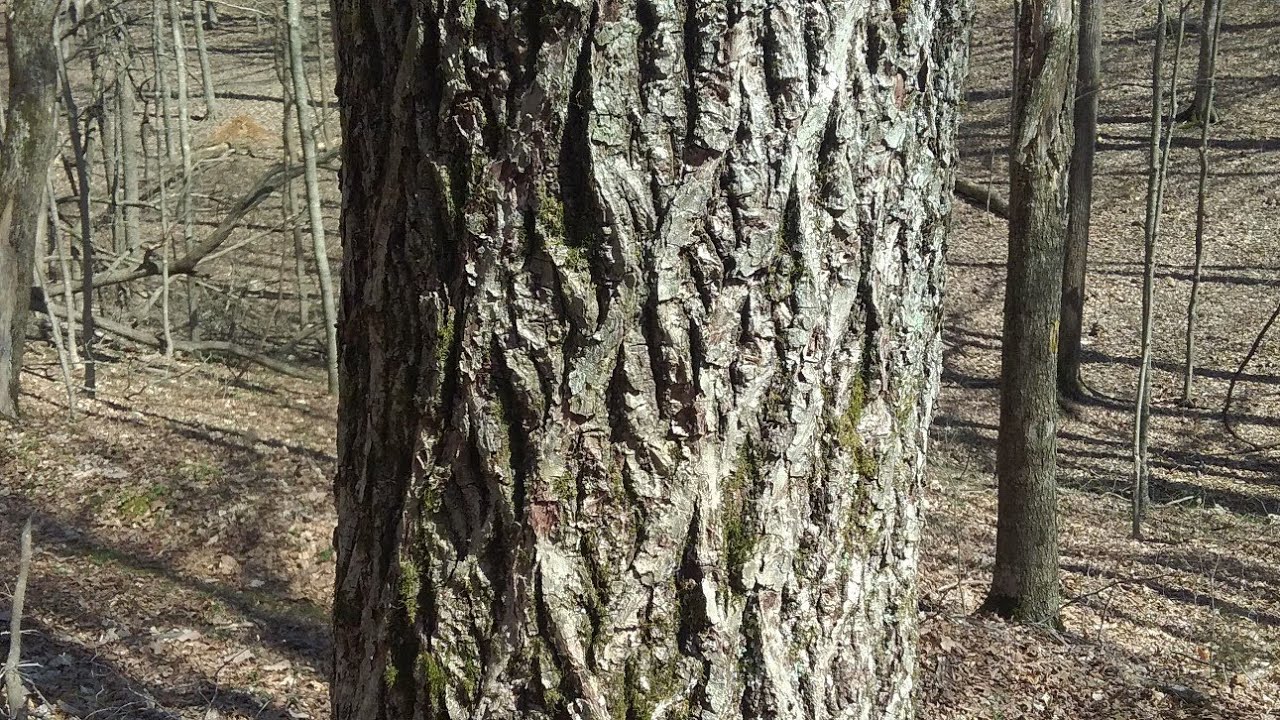
Mockernut hickory here… has bark ridges that crisscross… giving a diamond shape in the bark.
The nut shells are VERY thick.
I broke a cast iron nut cracker trying to crack one.
TNHunter
1 Like
" The direction of introgression in cross-ploidy hybrids is overwhelmingly towards the higher ploidy parent (Table 1). This is unsurprising as the union of an unreduced 2n = 2x gamete of a diploid and a reduced n = 2x gamete of a tetraploid provides a direct pathway for introgression in this direction, whereas the alternative direction is a two-step process via the triploid bridge (Baduel et al., 2018; Stebbins, 1971). As such, only two plant studies and one animal study report the opposite scenario (Aconitum and Euphrasia , Neobatrachus ; Sutkowska et al., 2017; Yeo, 1956)…"
So (if I’m correctly understanding what I’m reading), the theoretical potential diploid-tetraploid hybridization frequency is directly proportional to the frequency of unreduced gamete production in the diploid parent, which, according to the paper, falls in the .1 - 2% range per individual (with some rare cases of higher production frequencies). That’s far from a 1-in-a-million probability, and should mean mocker tetra-diploid hybrids are likely (though not common) out there in the wild.
That bark… I would have walked past that tree and never thought ‘mockernut’; heck, I might not have even thought ‘hickory’.
That said, as best I can recall, the scions you’ve sent to me in the past sure looked like mockernut…(I’ve still had no success grafting it on pecan… looking forward to trying it on mockernut understock)
By the way, based on the numbers above, manual tetraploid pollenation using diploid pollen might actually yield a relatively good number of viable hybrid seeds, given that hundreds and potentially thousands of pollen grains (depending on stigma surface area) might be introduced manually, vs. the usual wind-borne route.
You may be right about Barnes being a mockernut x pecan hybrid. Here’s a picture of the husk, showing clear wings along the sutures. I was wrong about their lack. You’ll notice also how thin the husks are.
4 Likes
That is an amazing nut! I agree, this is not mockernut. Yes, it is almost certainly an early generation hybrid with something, not sure what. You might send that picture to Warren Chatwin and see what he thinks. It might be worth doing DNA tests and maybe should be in the repository.
Where was the original tree found?
I’m curious about flavor of that Barnes nut.
IMO,mockernut has the best flavor of all the hickories, but most are so hard to crack, and yield so little kernel - in tiny little fragments, at that - that they’re not worth the effort for modern man.
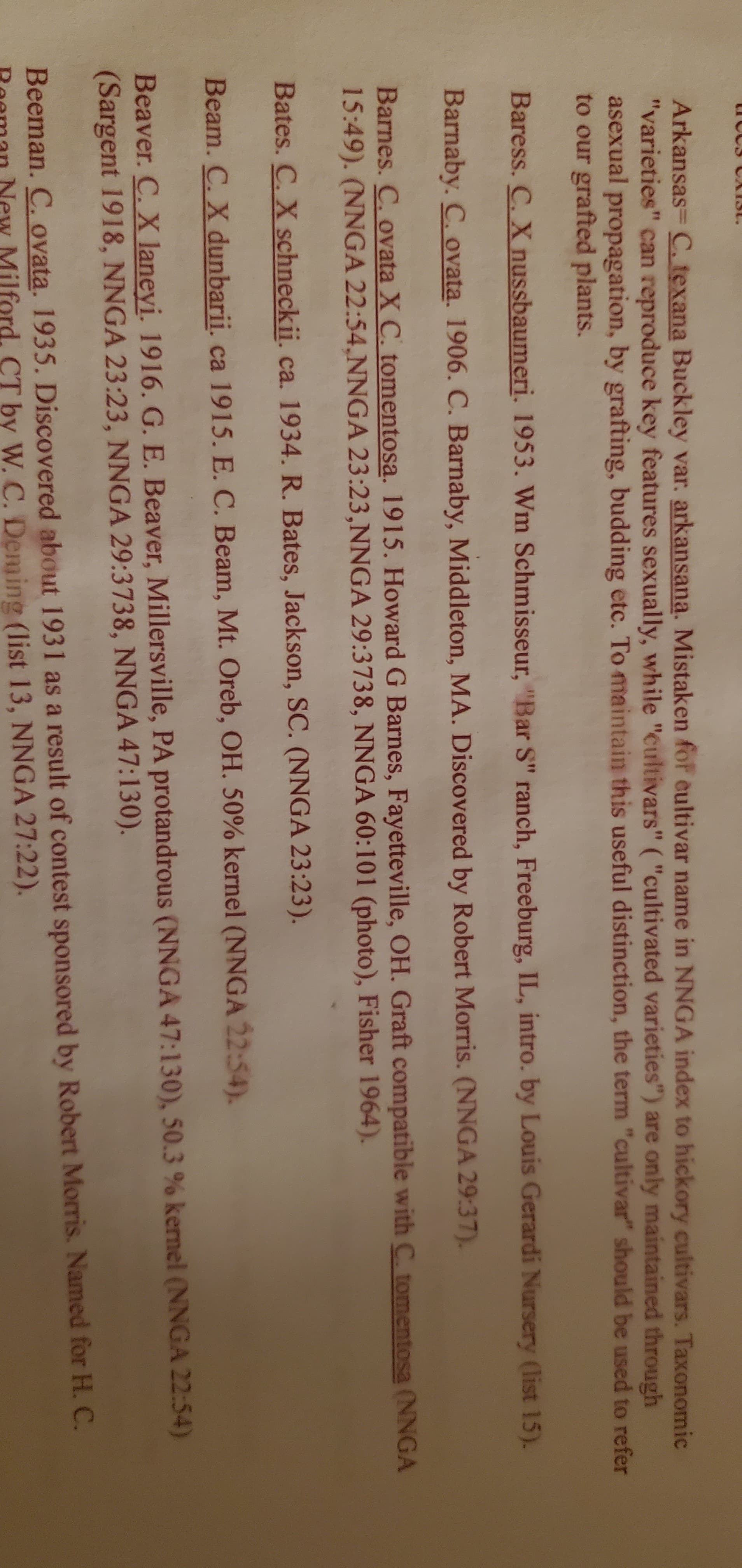
I have collected leaf samples to send to Warren. According to Grauke’s Cultivars of Hickory list (which doesn’t seem to be online anymore since his retirement – fortunately I had printed it out), Barnes is a shagbark x mockernut hybrid, found/introduced 1915, Howard G. Barnes, Fayetteville, Ohio. Etter curiously listed it among his shagbark varieties, which I find confusing as he would have known it’s clear differences.
As for shagbark x mockernut, or pecan x mockernut, I would guess Grauke is letting the literature lead in this species guess, rather than giving his own opinion on the matter. I don’t even know if he had a physical reference. I feel like pecan x mockernut makes better sense.
Warren’s genotyping will clear this up.
1 Like
I can give a really good counter argument that this is not ovata X tomentosa. It has wings. For the nuts to have wings infers a cross with apocarya which means pecan, bitternut, water hickory, Mexican hickory, or very remote possibility of nutmeg hickory. We can eliminate water hickory and Mexican hickory given origin in Ohio and given shape of the nuts. That leaves pecan, bitternut, and nutmeg hickory. Bitternut produces round hybrids which Barnes is not. This leaves pecan and nutmeg hickory. Since nutmeg hickory is not known in Ohio, that leaves pecan. Please note, I’m still not convinced this is a hybrid with mockernut, but the traits suggest it is. It would be very interesting to find out what ploidy level it has. If 64, it is a bridge into the 64X species. If 48, it is 3X and a real oddity in the world of carya. If 32, there is some weird business going on. I just checked my USDA repository list of varieties and don’t see Barnes in it.
1 Like