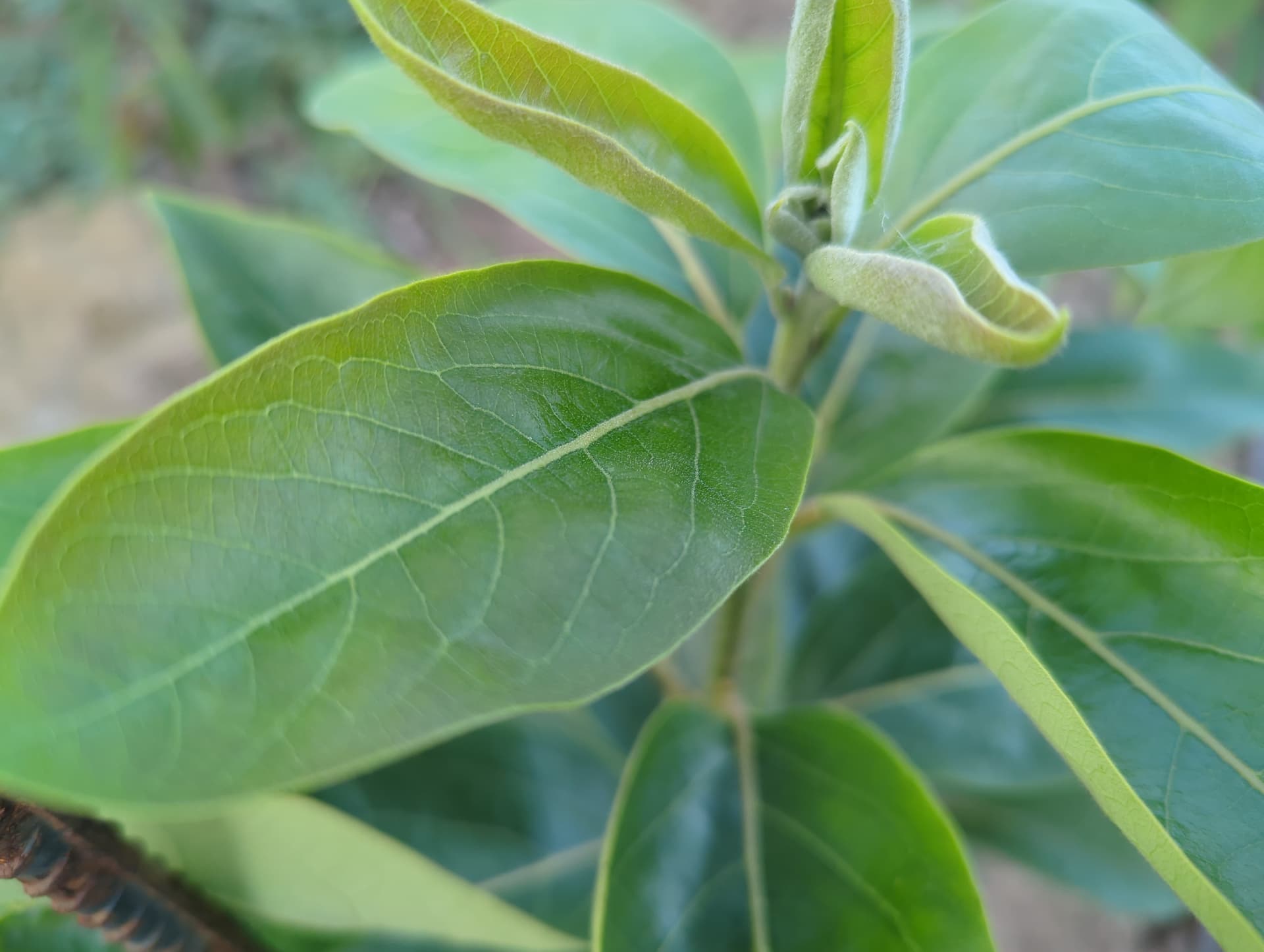
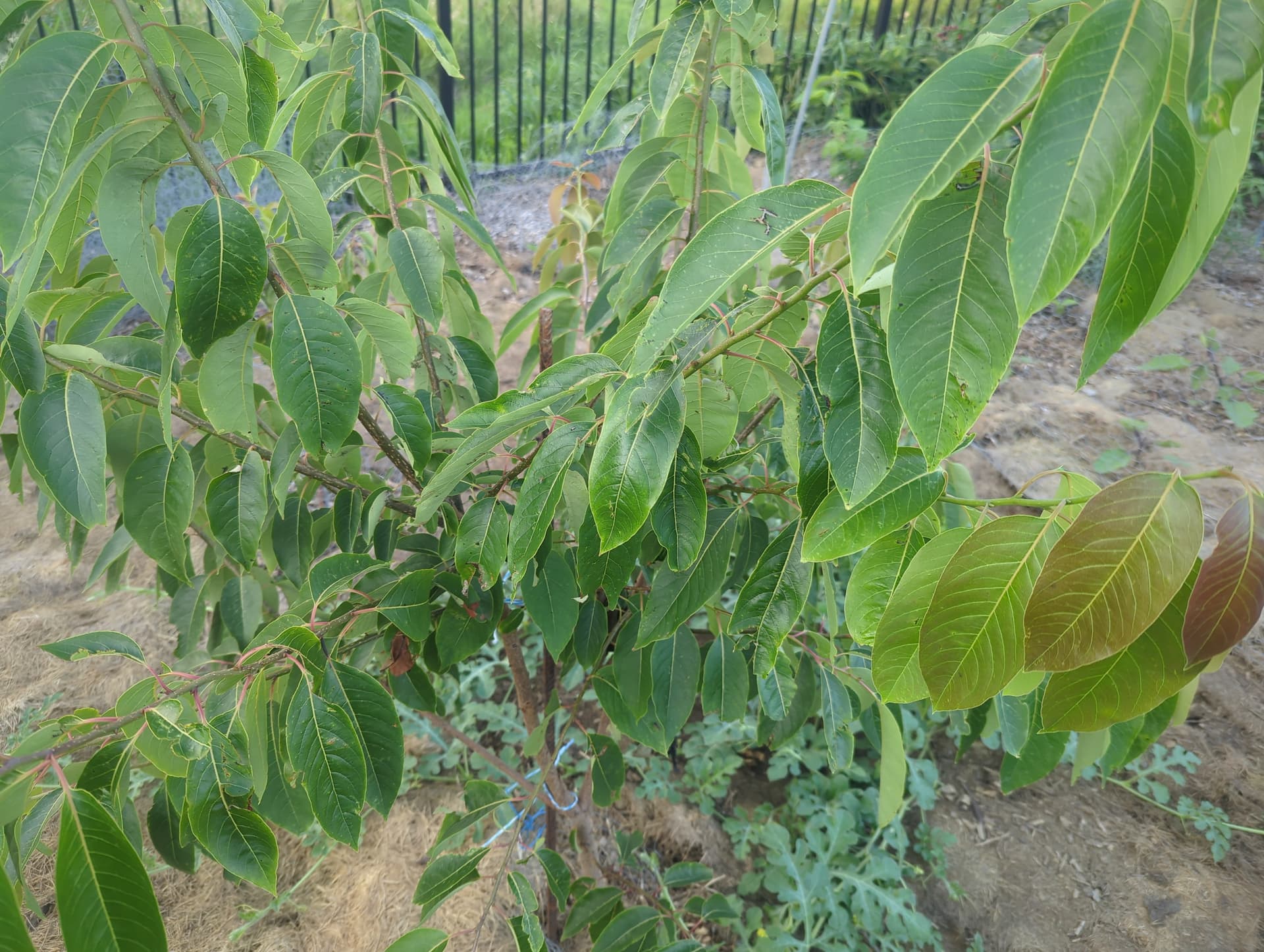
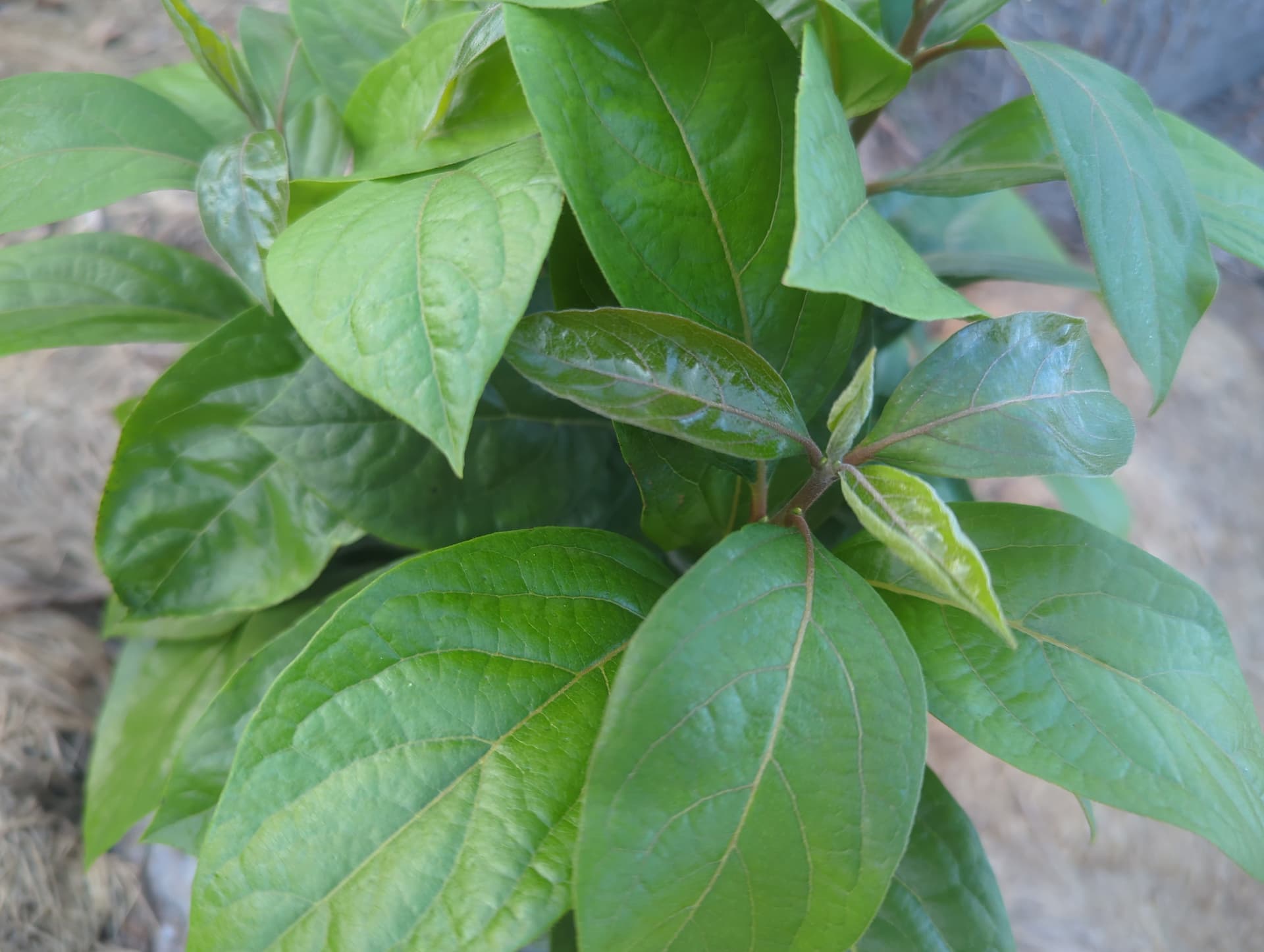
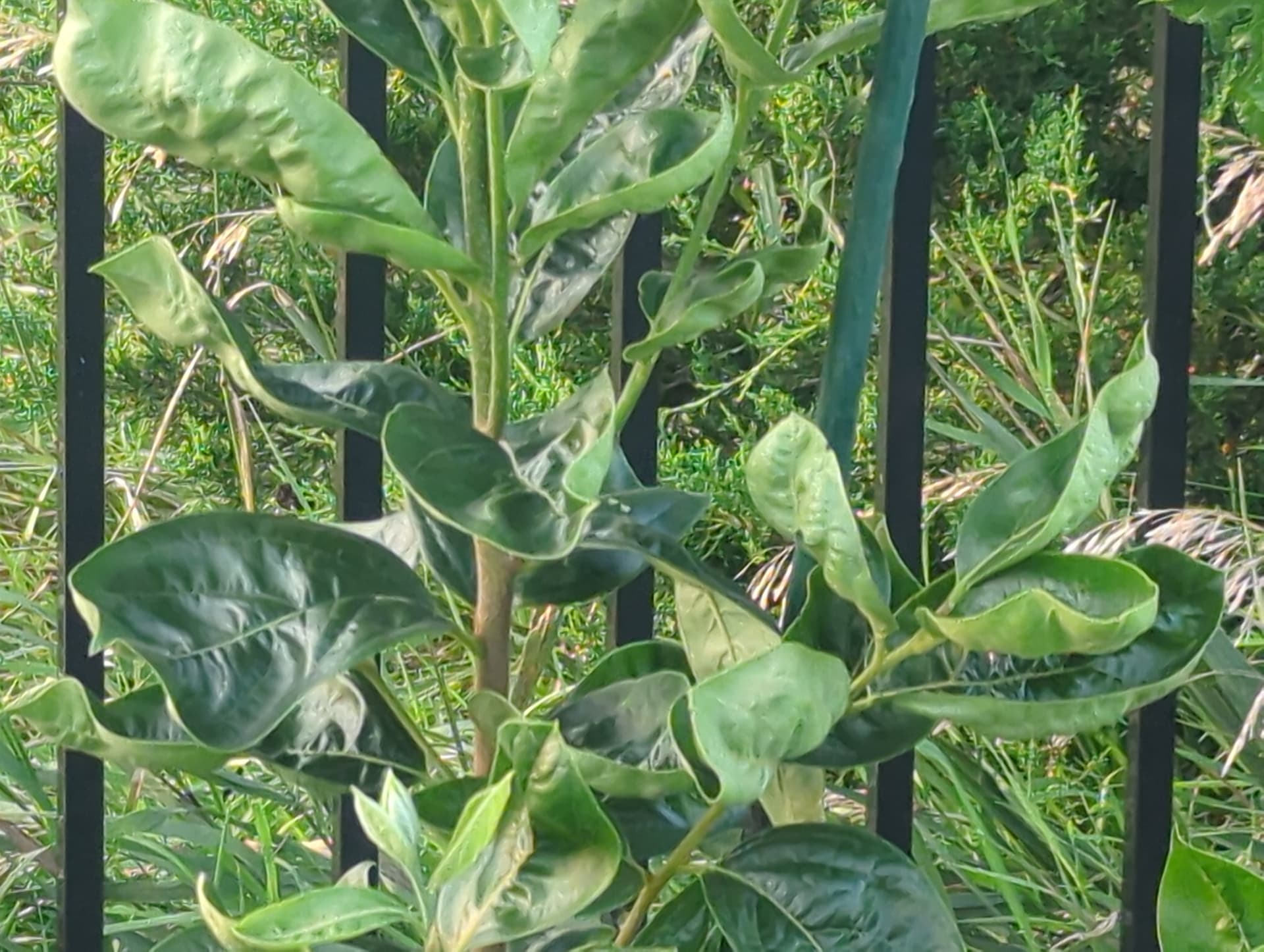
Your elongated white spots on the lateral branch does looking like Alexander photo. I believed We have a correct DS from Dax and Timothy Lane. Unfortunate that no ones have the scion of DS from @Harbin . He got the real DS since he started this post.
i think last year i got Dar S. from @hobilus (where was your source from?).
and this year i think i got a free ones from Tim and also maybe from NorthOrchard on figbid who maybe is @SMC_zone6 here.
Steven, just curious where was your source?
Unfortunately i didnt label them both sources separately.
To the best of my knowledge, Mine came from a Ukranian guy (in Ukraine) named Yehven. I acquired them from another collector who purchased them. No idea the process or provenance, but I also wound up with several mulberry varieties through the same channels and they seem like the cultivars they were described as.
Mine came from Tim. I’m going to wait to see how this whole thing shakes out. I have a few different varieties Tim sent me, most of which are holding onto their fruit this year. I think we’ll all know a lot more once we’ve all got fruit photos (and fruit taste tests) to share.
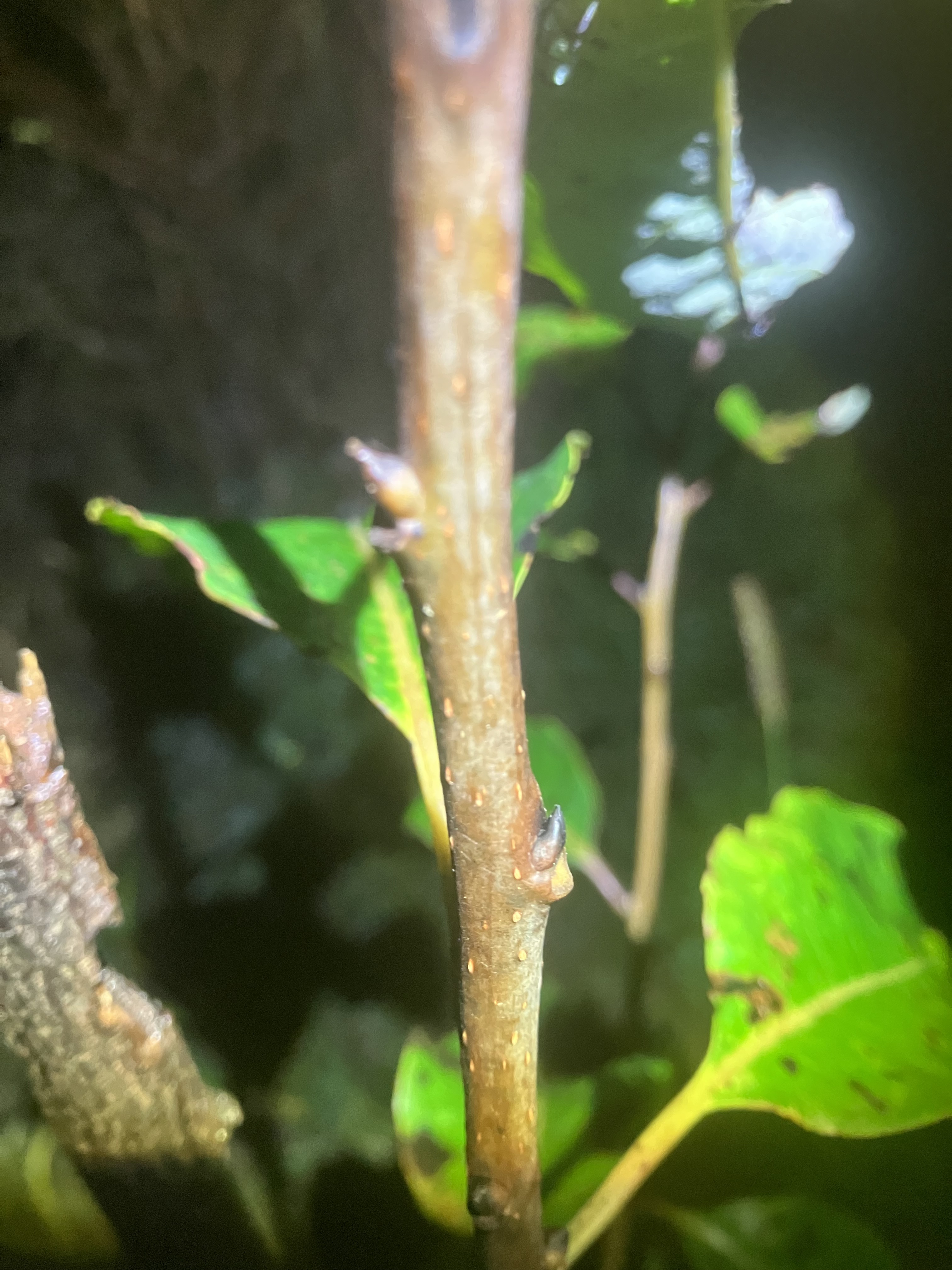
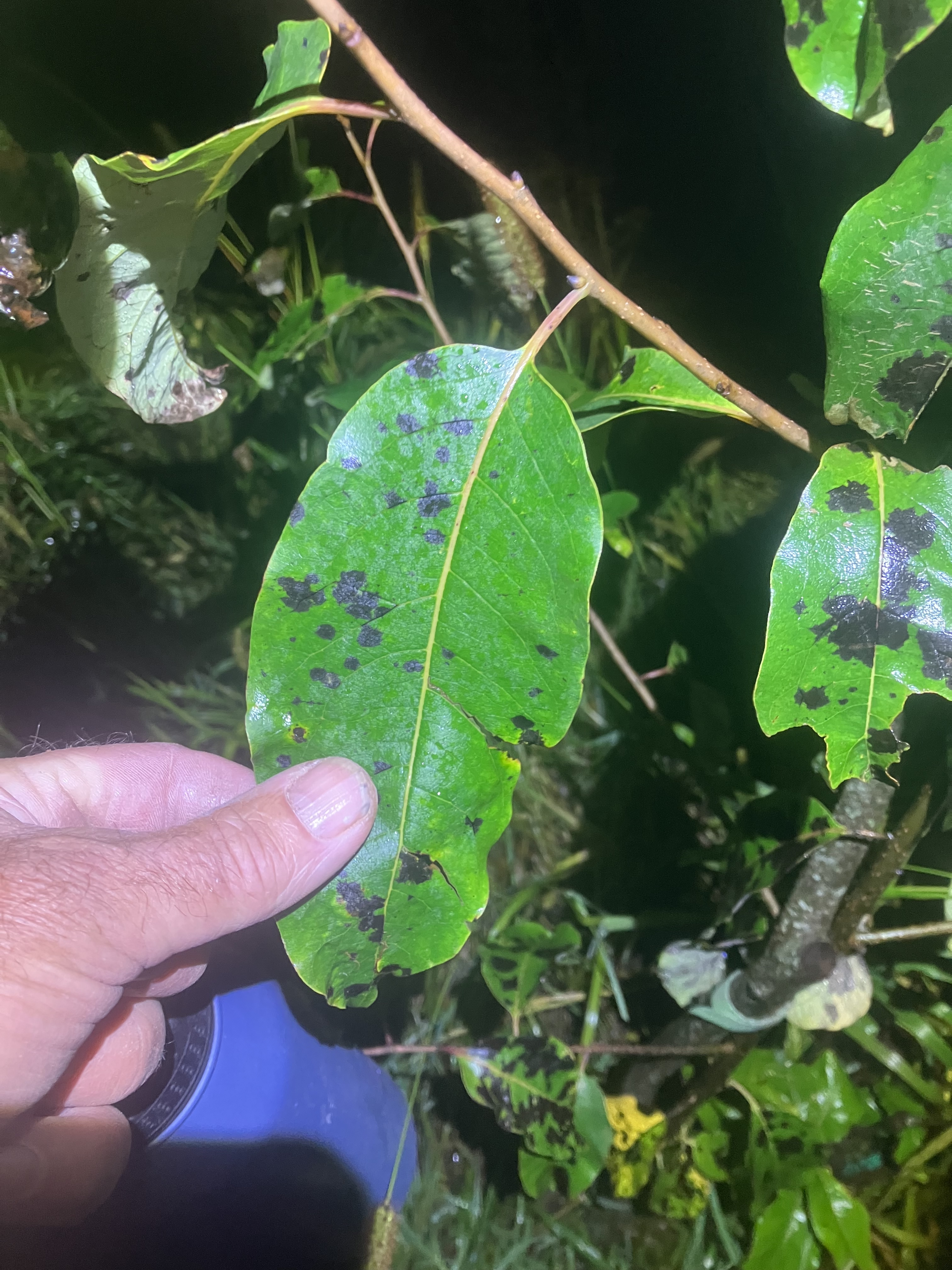
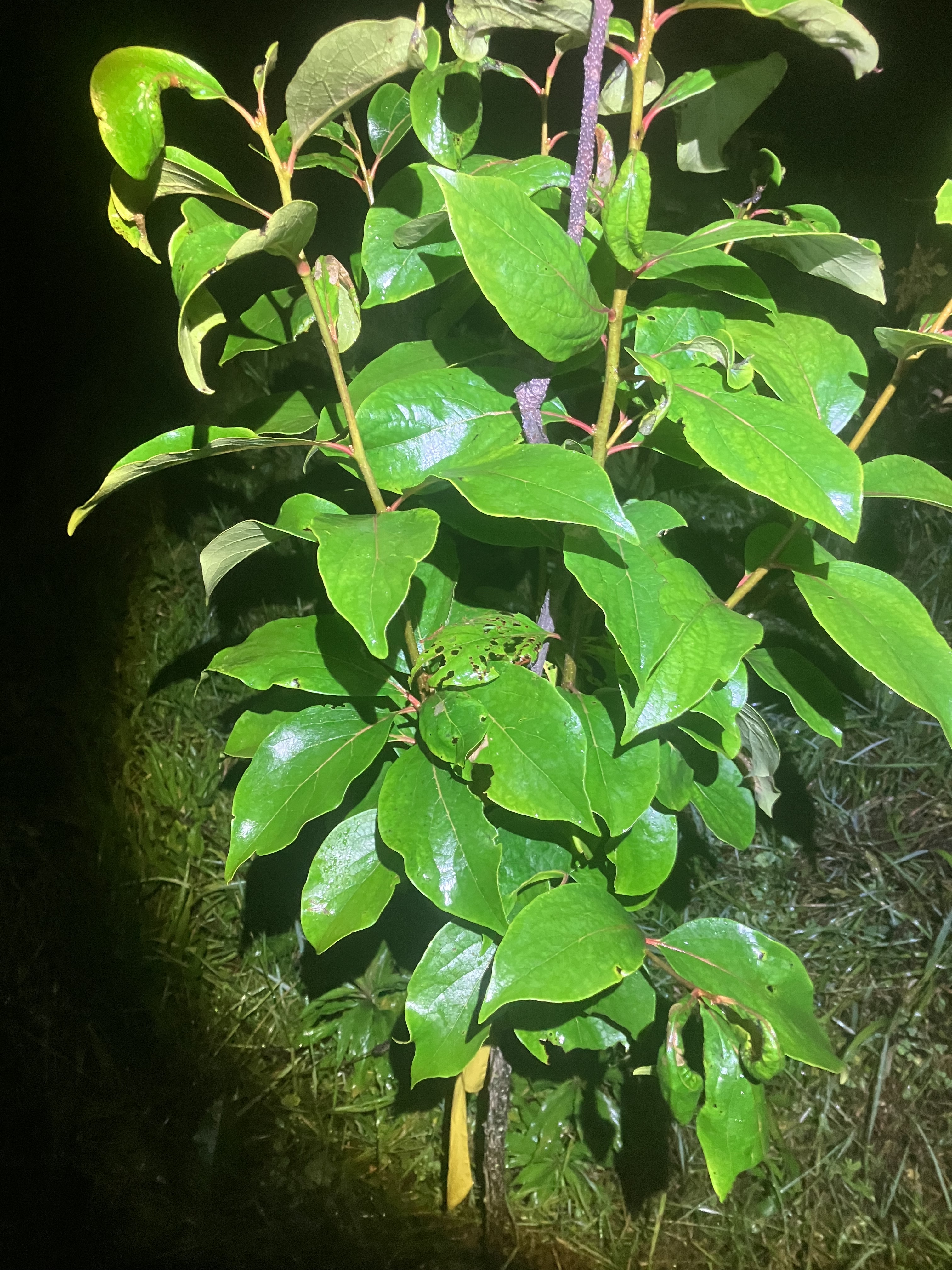
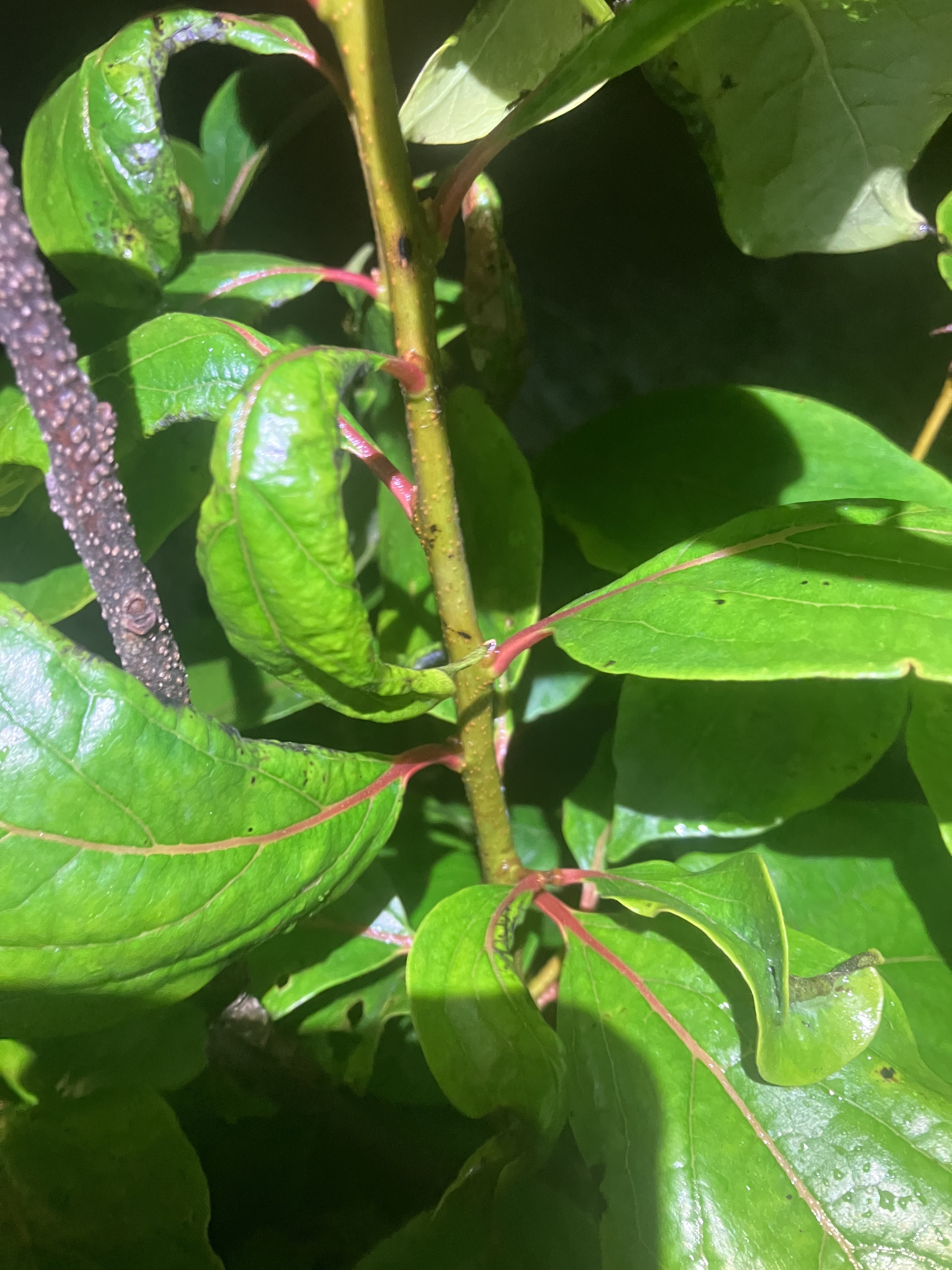
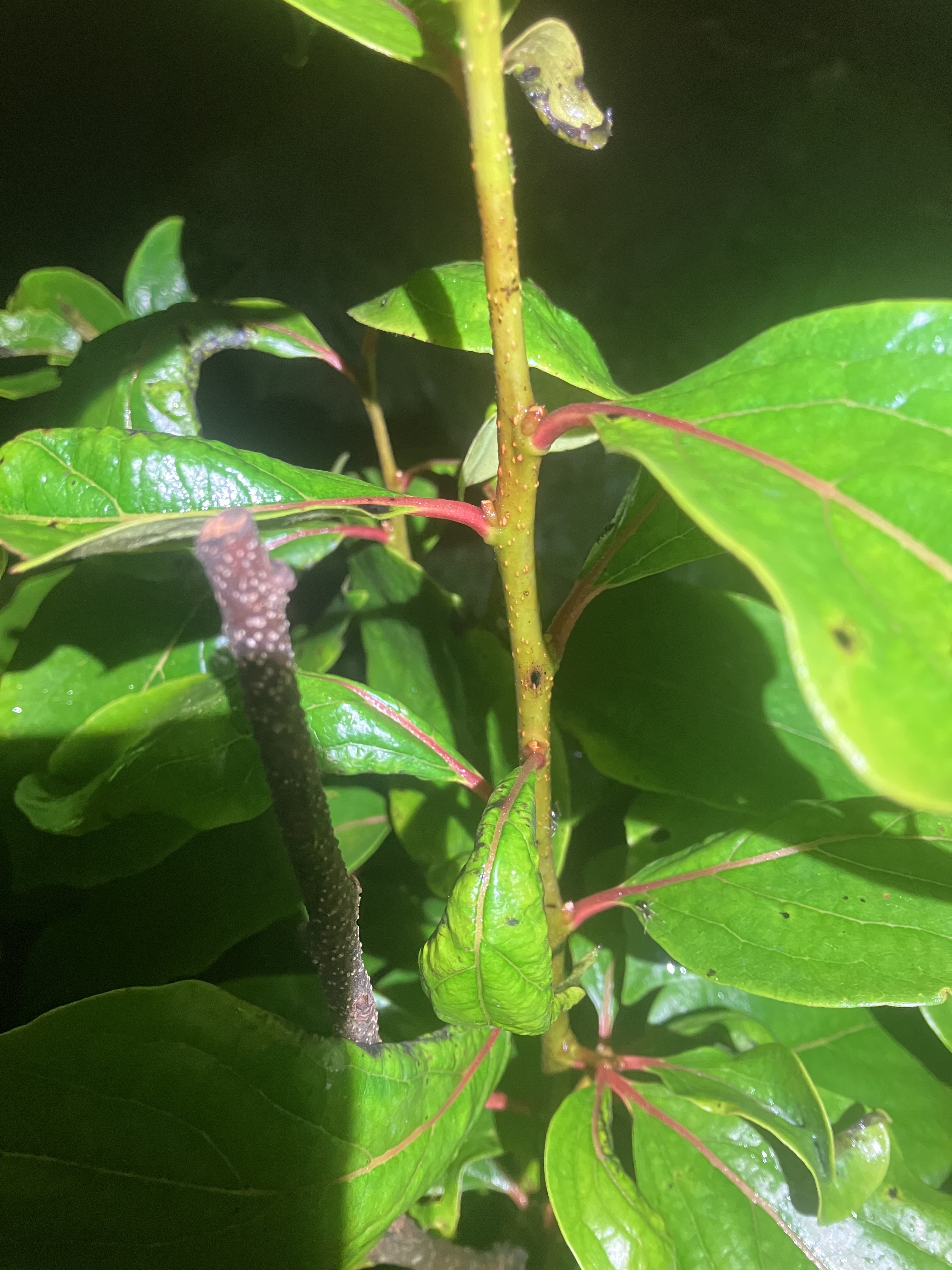
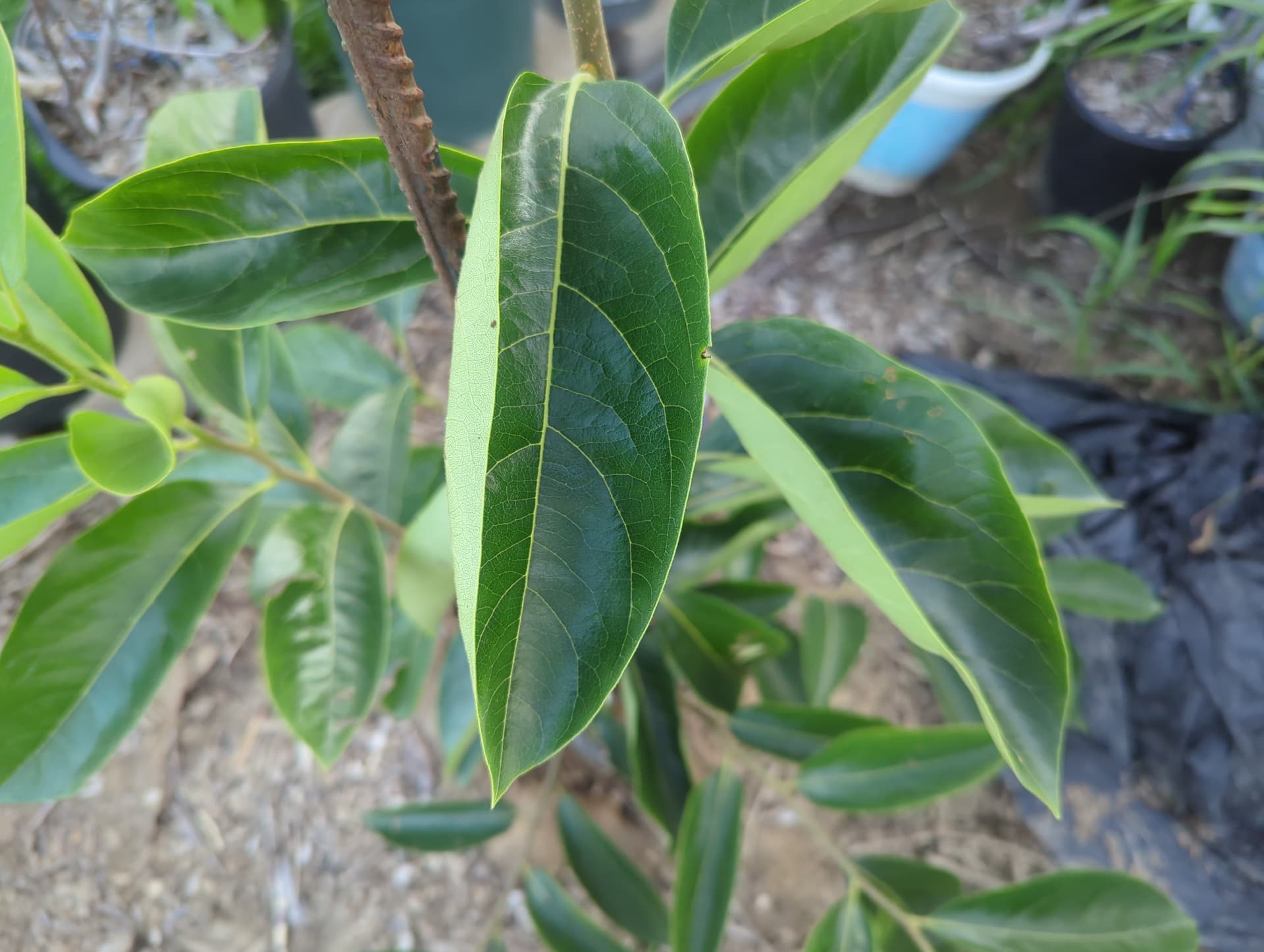
some not fabulous night pics of my purported dar sofiyivky from a couple of years ago. both it and bozhyj dar, which came from the same source, look obviously hybrid to my eye. leaves are much more glossy and slightly leathery compared to virginia. Young bark is greenish and more warty that virginia.
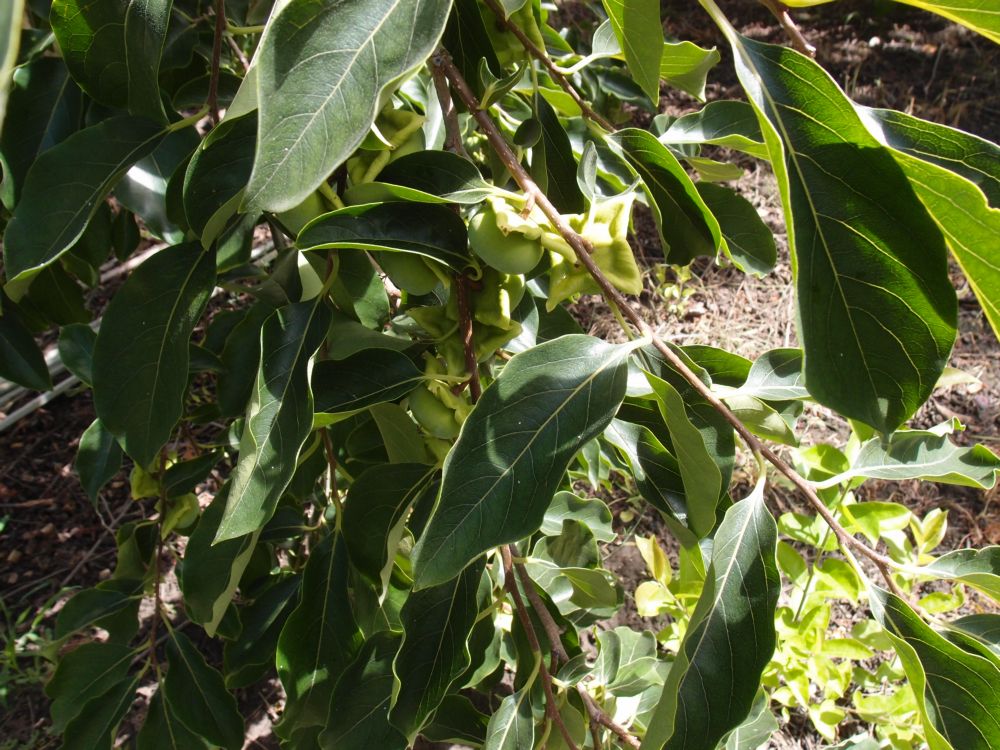
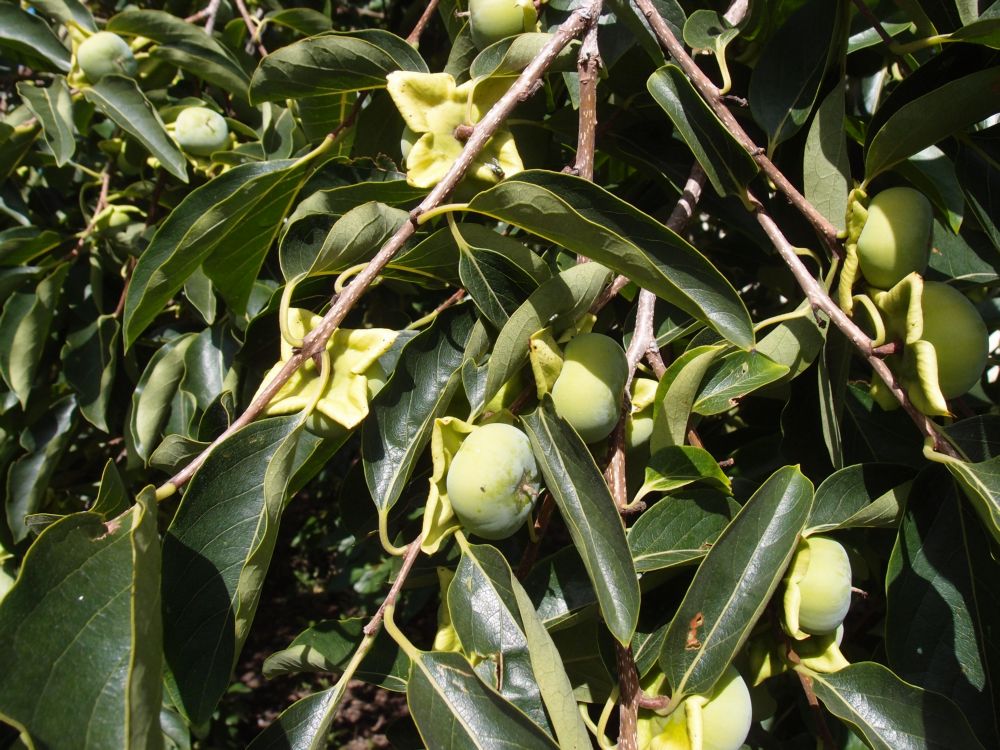
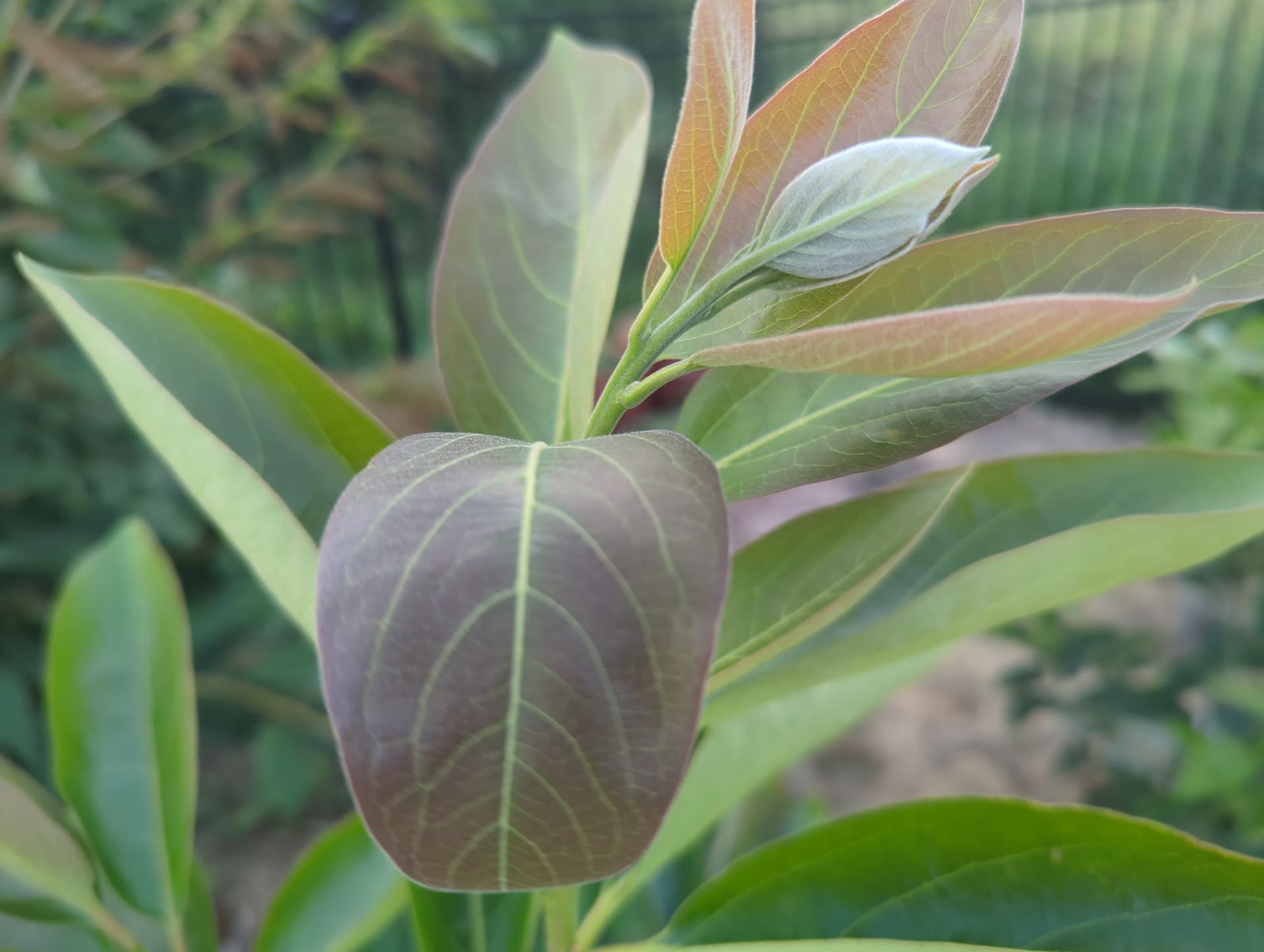
No bronze leaves and no red leaf stalks on DS (see photos).
Note the typical prominent star-shaped calyx lobes on the fruits.
Most of the above posted photos is pure D.virginiana.
I would preface what i say by first saying i know very little about Dar Sofiyivky. The one comment i wanted to make is about the red leaves and that those are no deal breaker. I point this out because i grow lots of things like pears or peaches and even persimmons that may have some red leaves while other peoples may not due to my soil and weather. My advice stops there. Everything in nature follows rules of their surroundings. A bass in one pond will have minimum striping and a light color and in another pond the sibling will be heavily striped. Trees use soil and water nutrients and take in sunshine through photosynthesis. Green chlorophyll is very expensive for a plant to make and during certain times like fall the plant absorbs that green chlorophyll and stores it for later. The pigment in the leaves means only that persons tree may have a little stress and the tree is short or storing a bit of chlorophyll.
I recall my leaves last year looking like what @harbin posted. Of course, I don’t seem to have taken any photos? I’m not 100% sure, but I believe mine came via the Dax route.
This year, it only grew a bunch of short shoots with tiny leaves. I think it resented being planted in ground. Either way, I’m probably at least two years out from fruit for confirmation.
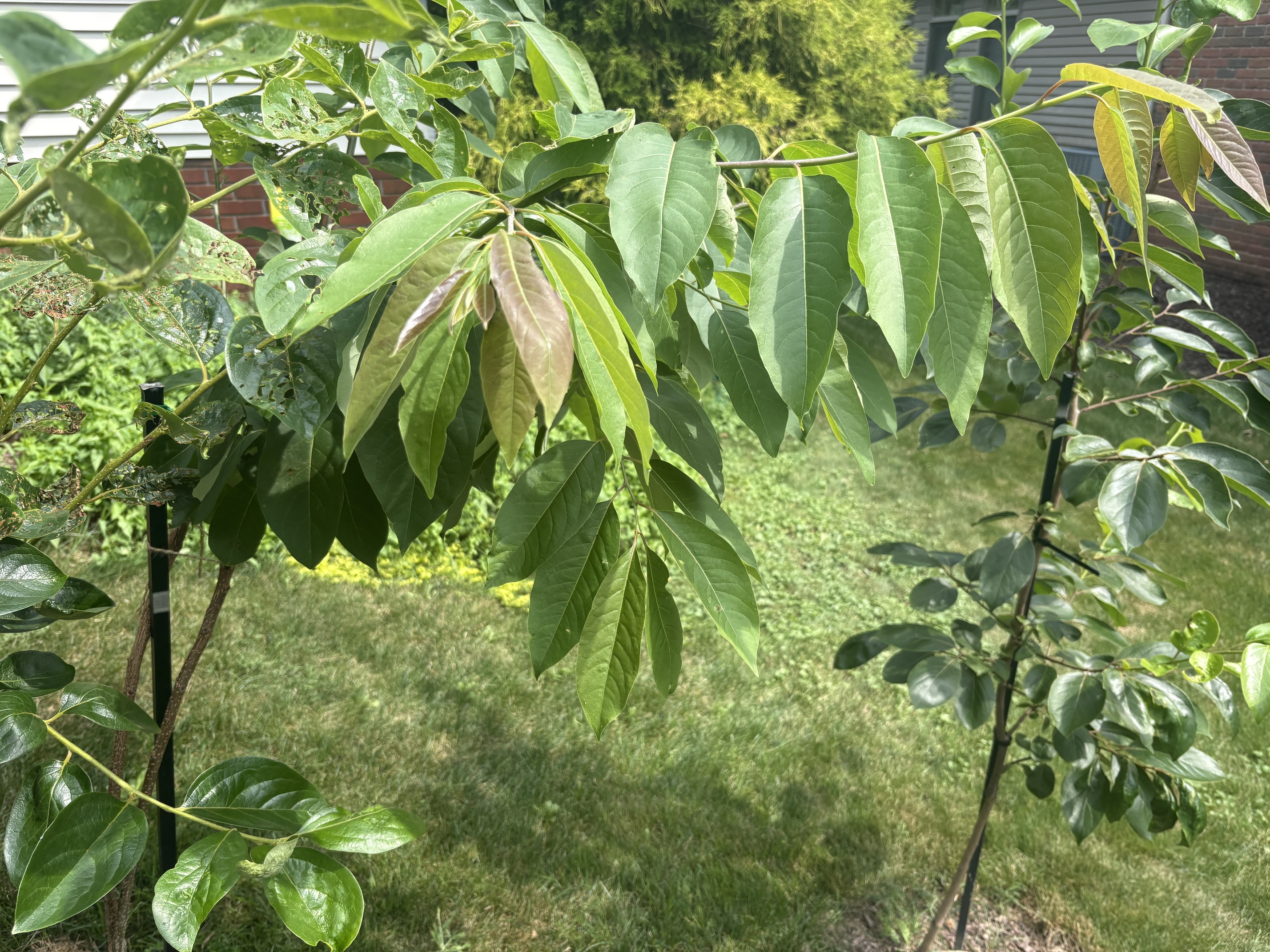
So this is not the real ds (center)? Disappointing. I grafted it to dv seedling in my front yard to generate scions for next year. Ikkj is on left and rosseyanka is on right.
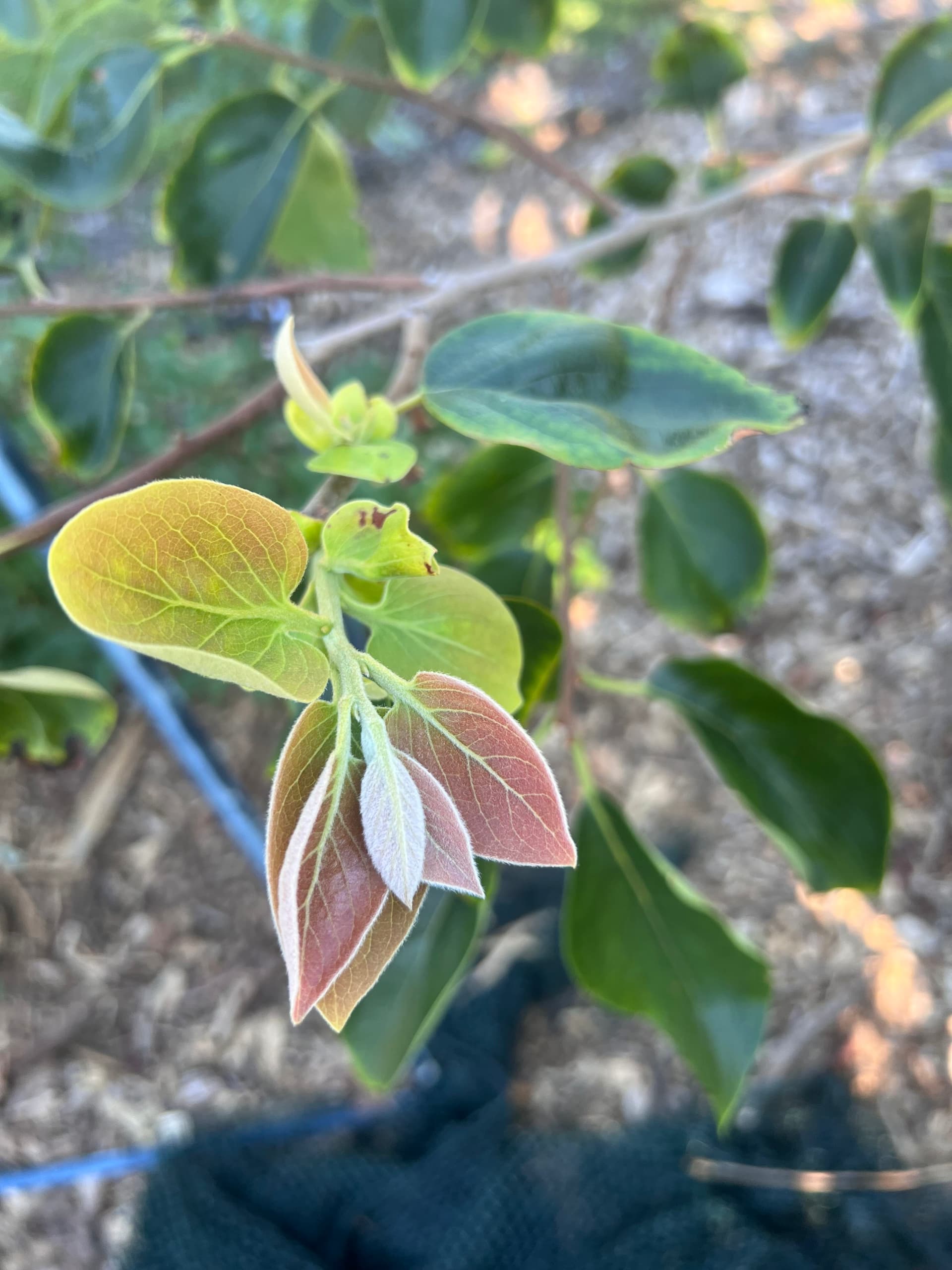
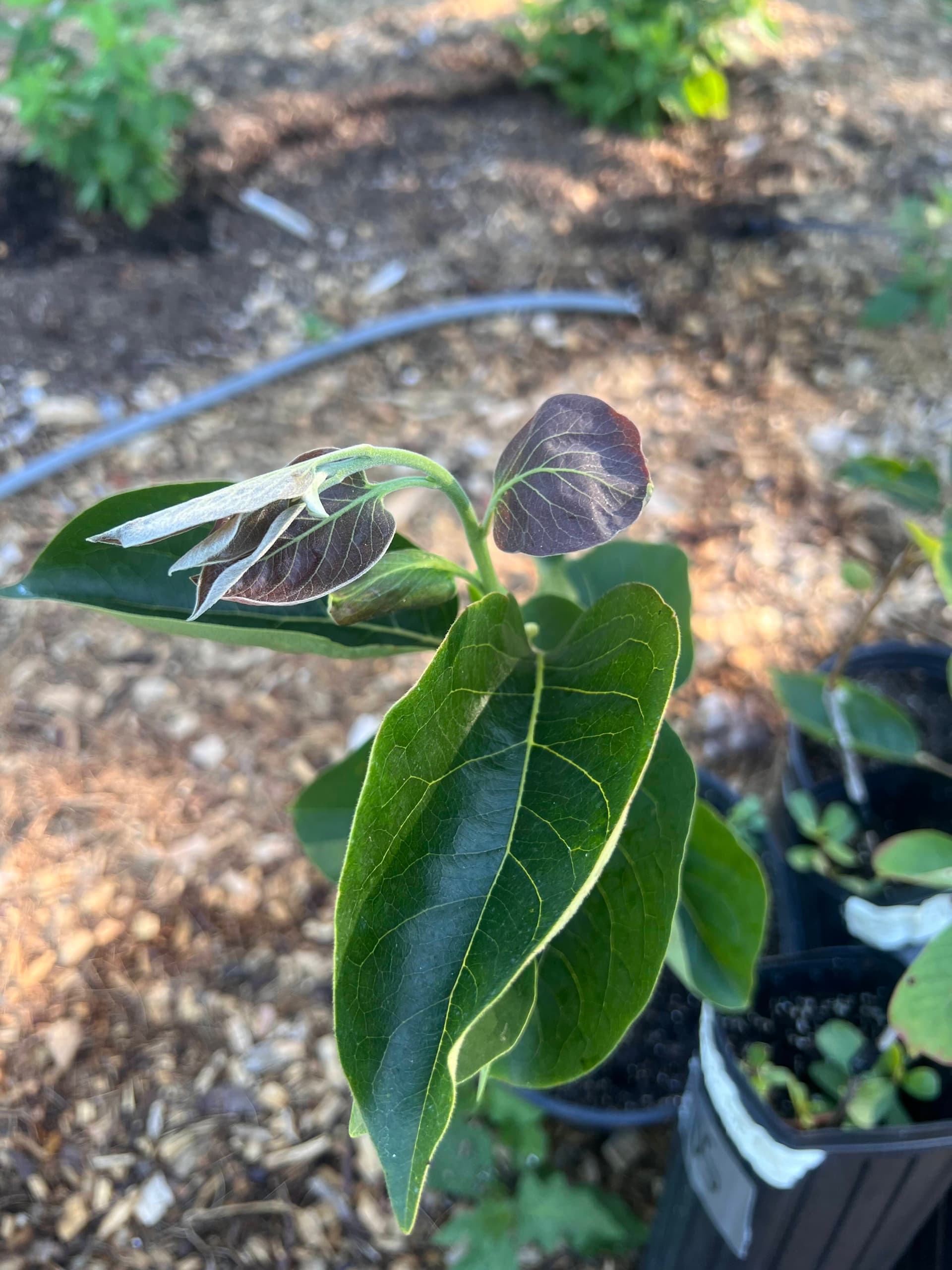
My two cents on the “red leaves” issue. I haven’t done an exhaustive, well-documented study, but I think I get reddish leaves on new growth on all my supposed hybrids. Or at least most of them. Here’re pictures taken today of the three hybrid varieties that have any new growth anywhere currently.
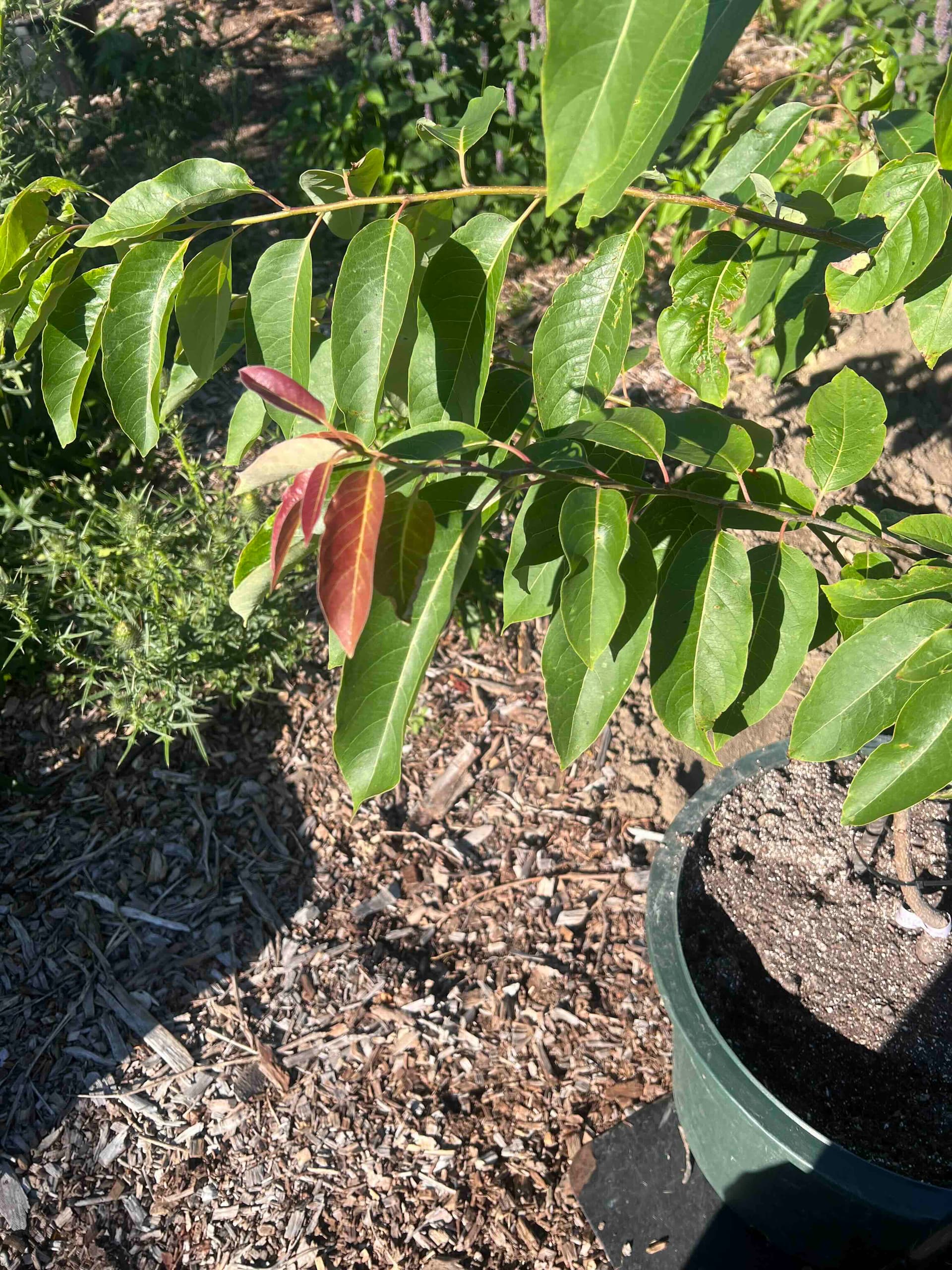
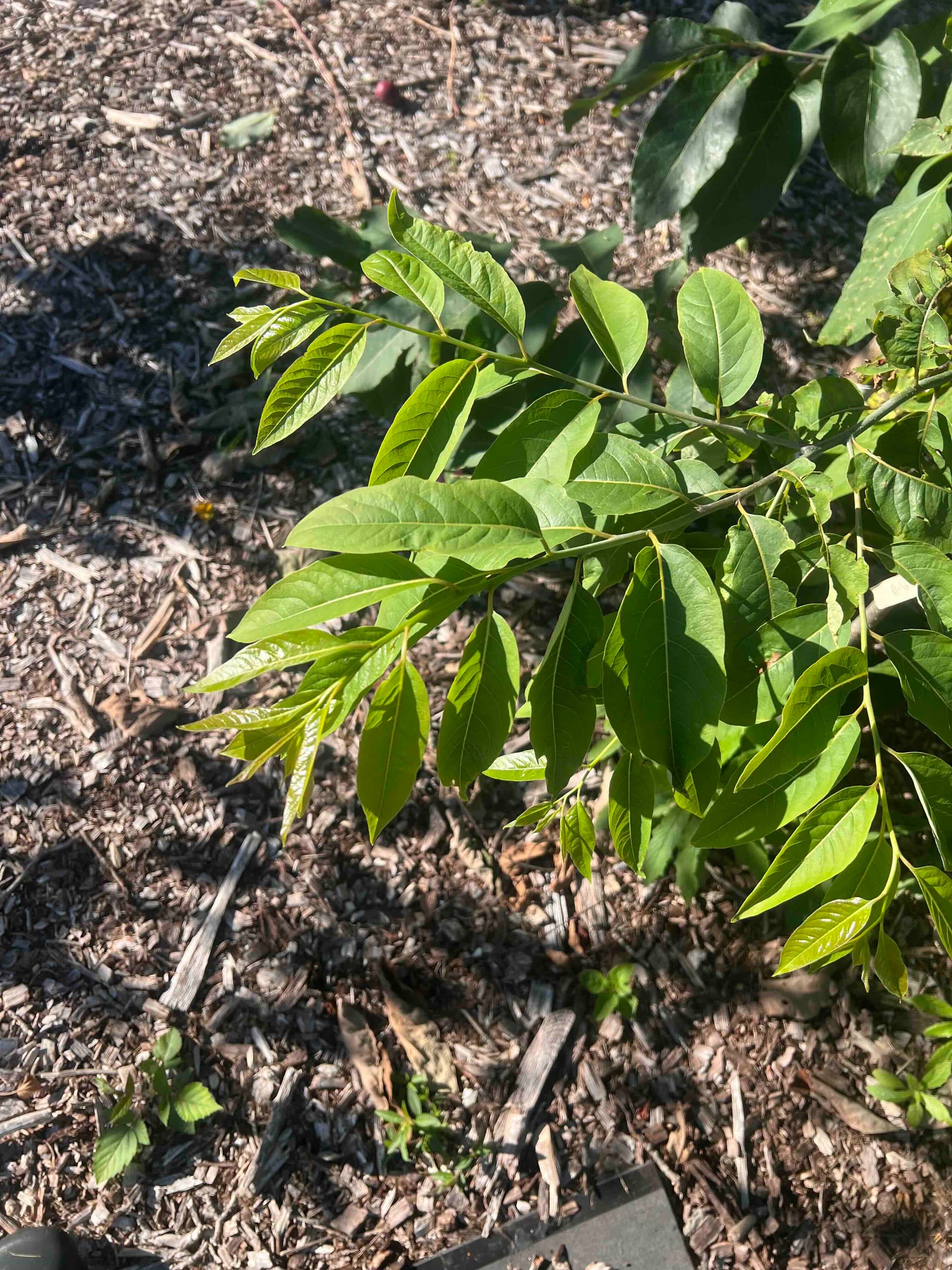
Dar Sofievki, a tree purchased from Buzz last summer. Deep red. This one is in a pot but about to be planted in the ground.
Dar Sofievki, grafted this spring using a scion from the same tree. Hints of red. The rootstock is a DV root sucker, so the roots are in the ground. The contrast between #1 and #2 shows a range of possible outcomes.
JT-02, tree grafted here in 2021 to bare root seedling DV rootstock and planted 2022. Red. This is planted in the ground.
Chuchupaka, graft executed this spring using purchased scion. Very deep red / purple. This was grafted to bare root DV seedling rootstock; it’s still in a pot.
I also have an established Kasandra planted in 2017 and a young Nikita’s Gift grafted here a year ago. Both are healthy but neither is showing a growth spurt right now.
JT-02 is 50% DV. My understanding is that both Chuchupaka and Dar Sofievki are >50% DV. So it doesn’t surprise me that they display red leaves on new growth, assuming my DS is correctly labeled.
On the other hand, as I understand it, Kassandra and Nikita’s Gift are 25% DV. That doesn’t preclude red leaves but seems to lower the odds.
It’s not the leaf color alone that’s making me think there is a pure D. virginiana going around as DS. There’s just a complete lack of anything identifiably kaki at all. I suppose it’s possible for a mostly D. virginiana hybrid to have few visible kaki characteristics, but the ones @Harbin and @AlexanderZmerzliy seem to show some kaki characteristics in the leaves that are lacking in the other purported DS.
My Kassandra does not produce red leaves, but my NG does.
As mentioned by others, I think the presence or absence of ‘red new growth’ means nothing. Super common in persimmon and many other trees. A third of my persimmon trees have some red new growth right now. Sometimes they do it, sometimes they don’t.
What is supposed to be special about the lenticels? Numerous elongated white lenticels - looks exactly like all my other DV persimmon…?
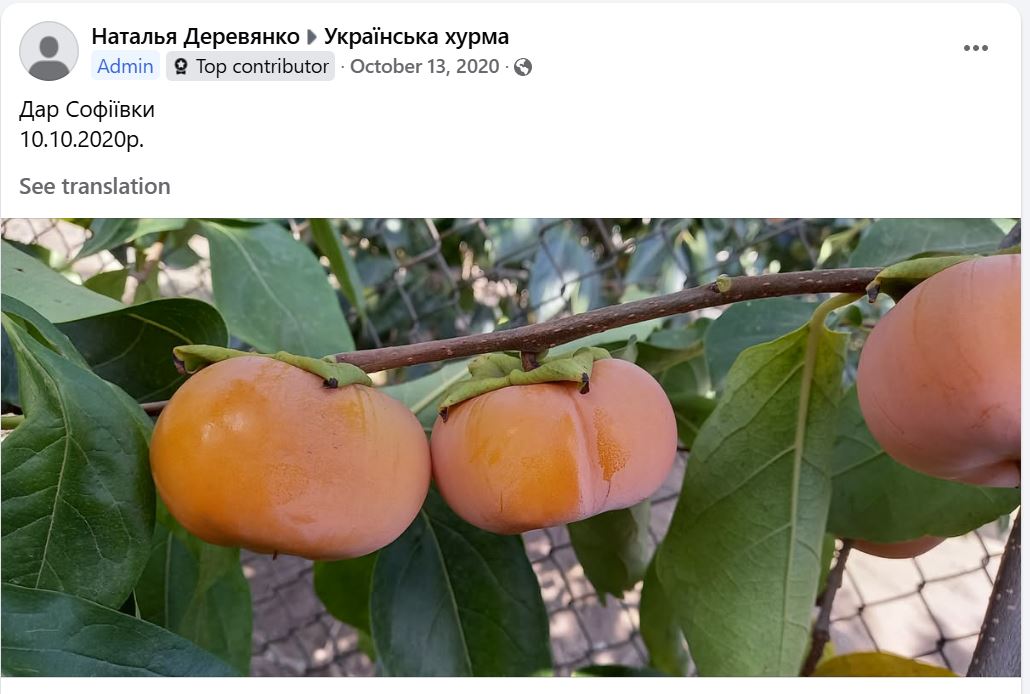
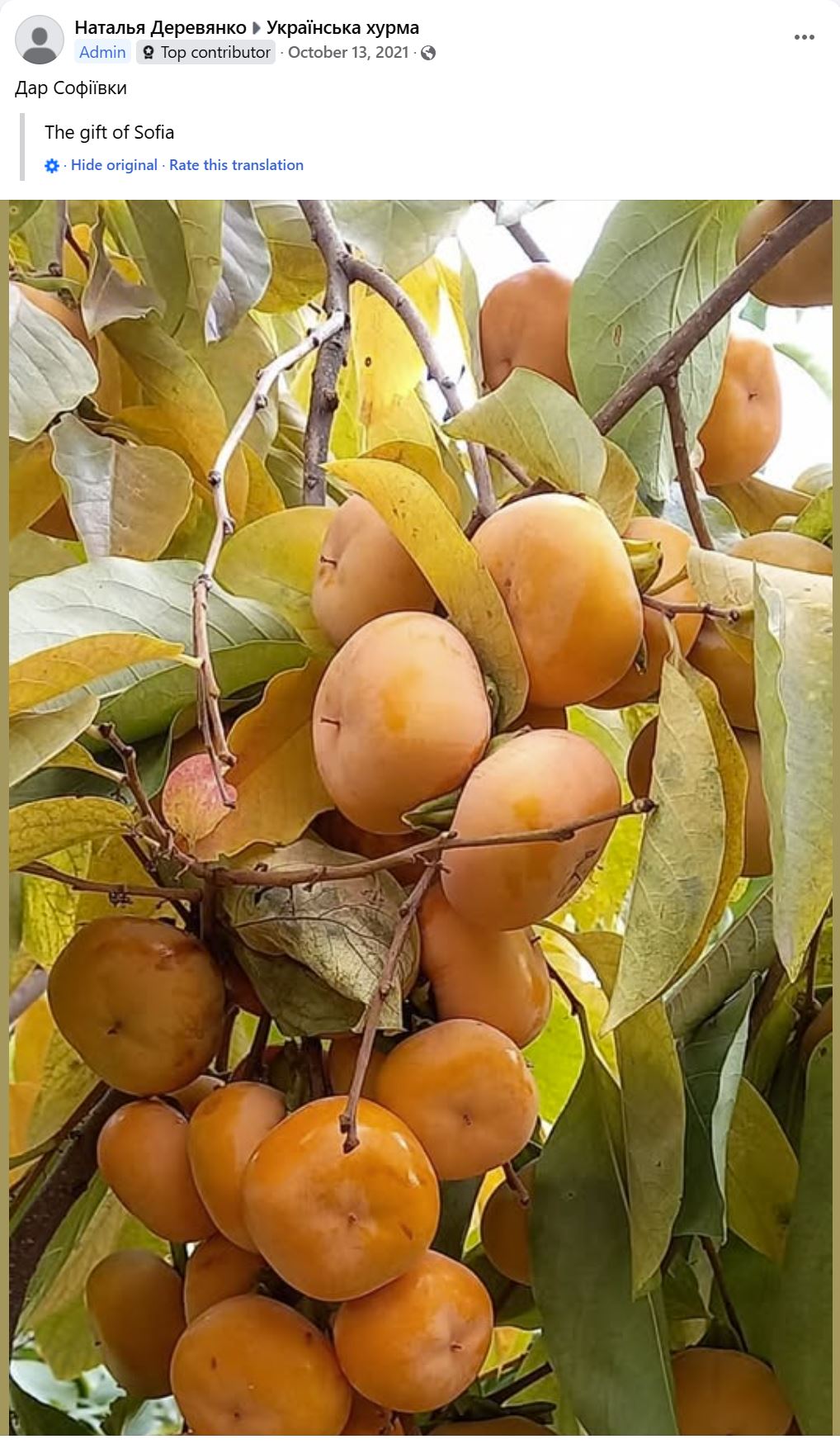
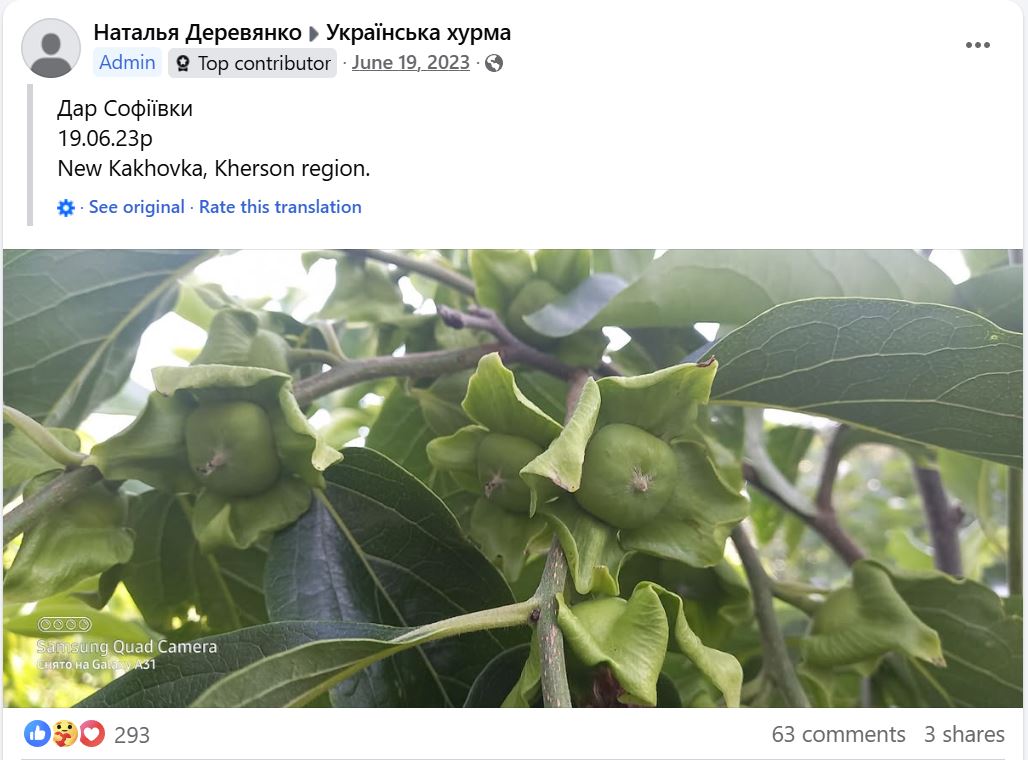
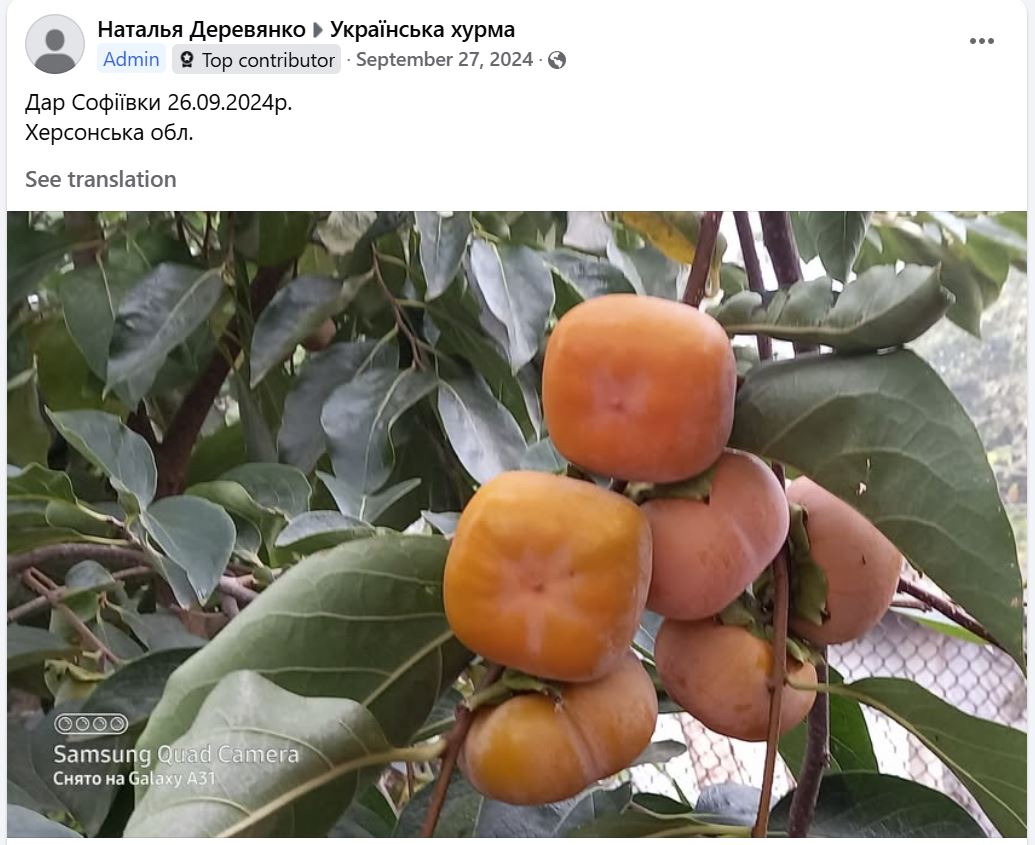
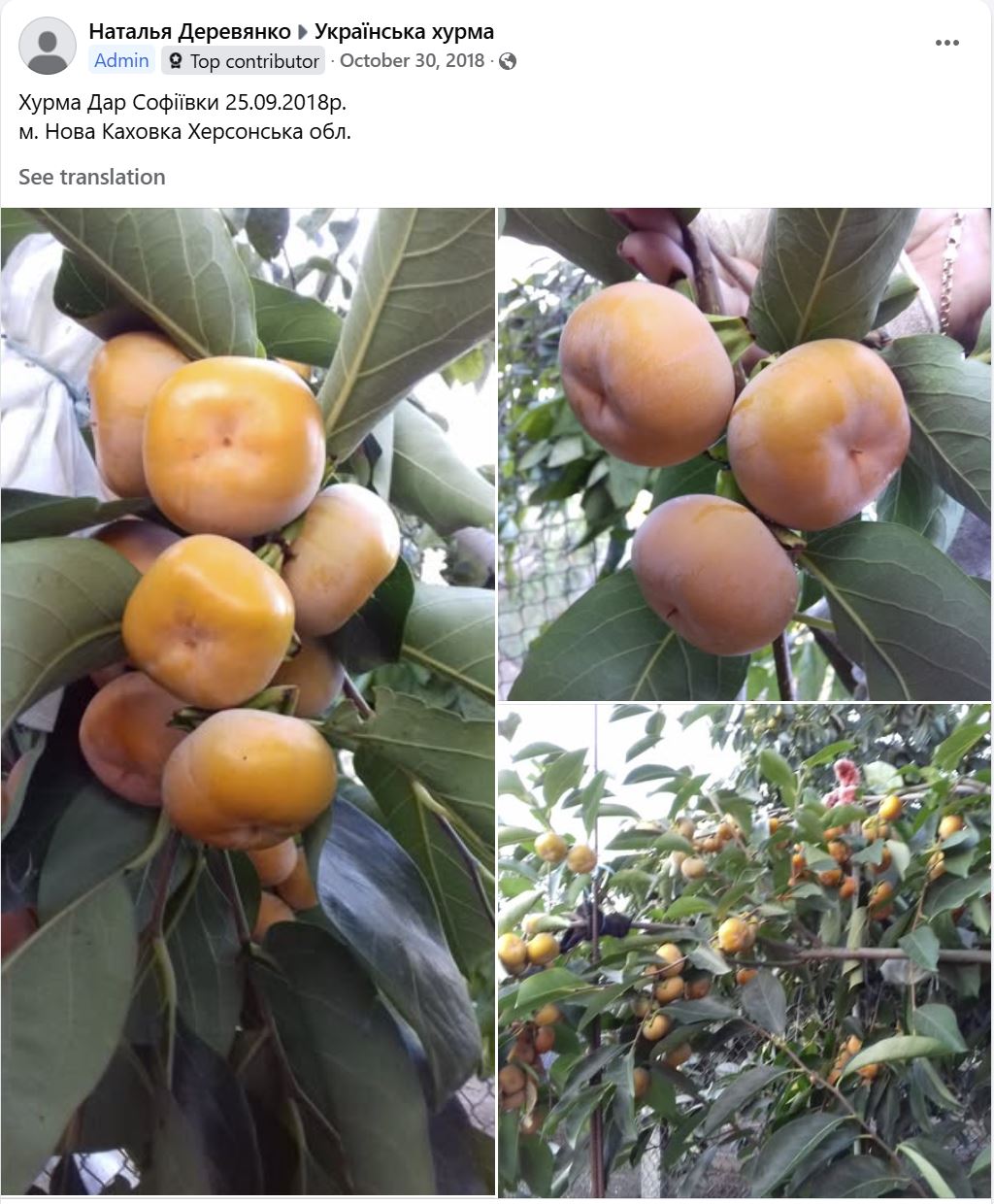
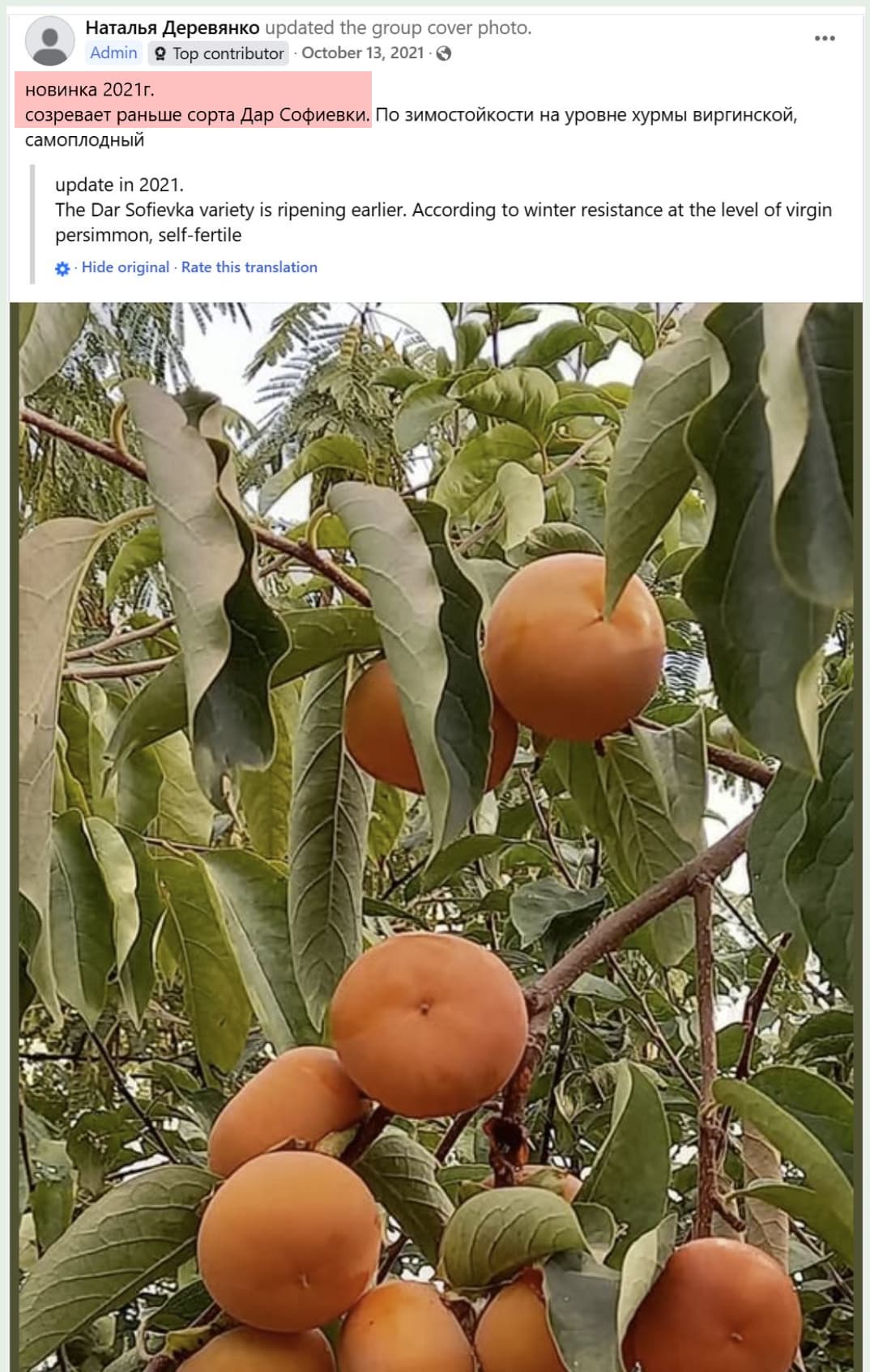
I pulled down every photo of Dar Sofiyivky that was directly posted by Natalia Derevyanko in the Ukrainian Persimmon Facebook group. She is one of the Dar Sofiyivky breeders (I’m unsure of the relation to Vasil).
Personally, I see a lot of DV to the shape/outline/length of the leaves. Perhaps a hint of kaki in the thickness/leatheryness and occasional hint of quilting? Tough to tell using photos.
@speedengineer
Thanks for sharing!
One correction for photo #3, it shows round persimmon fruits - it’s not Dar Sofiyivky.
Original FB text should be translated as:
NEW for 2021! It ripens earlier than Dar Sofiyivky. Winter hardiness same as DV. Self-fertile.
Not in D. kaki, though. Or D. lotos for the matter. I have yet to see a kaki with any anthocyanin in the young leaves, though there is a massive amount of kaki genetic diversity in China that we don’t have here.
Perhaps it’s because I am much more familiar with D. kaki than D. virginiana, but in all the photos of the “true” DS I have seen, the kaki characteristics are very clear. Characteristics that are lacking in some of the DS posted by members here.
The proof is in the pudding, as they say, so speculation without fruit to verify identity is apt to be fraught. I don’t know if my dar sofiviyki is the real mccoy, it may well not be. but I WOULD say its appearance IS distinctive compared to the many virginiana varieties I grow. The leaf shape, sheen, and fleshy/leathery appearance are what stands out to me.
And these traits are more pronounced on the purported Bozhyj Dar that I received from the same source. It is QUITE distinct in leaf form. Next to a virginiana, it almost looks ericaceous, or a maybe more myrtle-ish, like some of the Eugenias Ive grown out. And the 1st yr wood on the Bozhyj Dar is also quite distinct. Its bright green, even after lignifying and growing lots of lenticels. Tender growth of virginiana is green for a very short time, then its bark becomes brown. My pics are from Sept 19, FWIW, so not spring flush by any stretch.
These things are hard to evaluate in photos due to lighting and other factors, but it’s noticeable to me when viewing the trees in the field. I have other hybrids- chuchupaka, rosseyanka, jt-02, and more- so I feel comfortable with what hybrid traits would look like. & I think my reputed Dar Sofiyivki displays them.