@taylor_prime
I suspect the layers will intertwine, creating tedious twice-annual maintenance.
1 Like
It’s true, they can be invasive. Some varieties more then others. When you dig them in the fall you need to get them all. Probably not the best idea.
There are some varieties (mostly dwarf ones) that don’t spread near as much as the standard ones.
If you are planning on using non-fruiting shurbs as well, I vote for arborvitae. They are typically inexpensive as liners and grow FAST. Our local soil and water conservation sells them each spring, very reasonably priced.
1 Like
We have elderberry, and they make a great privacy hedge. In about 2 years’ time, they grew over 8 feet tall and 6-7 feet deep. The green looks nice, and the flowers are beautiful when they all start coming in.
There was a half-dead juniper bush before we planted this. We wanted a hedge to shield that side of the house and offer a bit of privacy. I can honestly say I don’t regret it one bit.
5 Likes
I vote haskaps because I love haskaps and some can get pretty big! They also really help with workout recovery and muscle pain. Plant two varieties. Someone in Calgary has a nice privacy hedge; sculpted and everything. Delightful. As for serviceberry, you’ve got eastern (Amelanchier canadensis) and western (Amelanchier alnifolia). I’m really mostly familiar with Saskatoon berries, which is what the western are called where I am from. A ‘Regent’ might be good for a hedge, given its habit.
Have you given thought to something espalier-esque as well, for a pomme? That might be quite the feat. Sounds fun.
1 Like
Tomatoes
3 Likes
Pineapple guava does great in most of California. 9a you can do hardier citrus like kumquats, satsumas.
2 Likes
@JesusisLordandChrist tomato hedge lmao y’all not even taking the question seriously anymore
2 Likes
Well; you could use Wild Galapagos Tomatoes and have a 2 foot tall hedge.
2 Likes
I mean if you’re going to till it up anyways why not a row of annual vegetables?
1 Like
But the seeds are extremely poisonous, so don’t plant it if you have kids or kid visitors. Kids have been killed by eating those berries.
2 Likes
Yeah only the red fleshy bit is edible, the seeds are very poisonous I should have mentioned that. Added that to my original post
I used a row of Regent serviceberries next to the sidewalk. Behind them, I planted a row of asparagus, behind them I planted other trees and bushes. It’s about 150’, so I put a black metal arbor in the middle for ease of getting from sidewalk to inner property. It was important to me that it look friendly, and I planted pink roses on the arbor. The Regent serviceberries work well, except they do sucker and run a bit. I have the asparagus behind them, so that the woodiness of the Regents help support the ferny growth of the asparagus. I’m still harvesting it, but the season will wrap up shortly. When it ferns out, It can reach 8’ high. When it turns golden, I can cut it, but you can leave it until spring if desired. Will you need privacy in the winter months? Just a side note, the serviceberries are glorious when in bloom and also as the fruit is ripening: the berries ripen at different times so there will be green, black, blue and pink all at the same time.
I would second the suggestion of goumis, and depending on whether you’re concerned about sewer lines or water to the house, A Gerardi Mulberry is lovely too. Bush cherries are lovely, but can look a little straggly as the season wears on. Aronia is beautiful, with white flowers in the spring, black berries in the fall and stunning red color, too. They are extremely good for you, too. You could even have a few Medlar trees to punctuate the corners. Cornelian cherry is lovely and well-behaved. They are covered in yellow flowers in the spring, but then have wonderful red or yellow fruit. They are in the dogwood family. Some things cost more than others. Depending on how long you’re willing to wait, you could plant the serviceberries, and then harvest off of the suckers to more than double your plants. I was able to plant strawberries as a ground cover and that has worked really well–another plant that sends runners where you can multiply the number of plants very rapidly.
I live on a state highway, and people are constantly walking by, often with there dogs. If the dogs pee on the serviceberries, it will hit below the level I pick from. The lower ones I leave for the birds. I’m usually bent over picking and they don’t even see me; if I am standing, the planting offers enough of a sense of privacy that I don’t feel exposed. I wear some pretty ratty looking clothing when I’m out in the garden and I don’t ever feel like I’m on display. I can talk with neighbors, and be standing behind a bush!
It would seem friendlier to not have a giant plants right by where people passing would be. Mine is southern exposure, so it made it quite easy for me to start lower by the sidewalk and increase height as it goes back to the northern edges. I have perennial flowers planted between the serviceberries both to bring in pollinators and to make it a little more colorful. I have lots of trees toward the north side of the garden including figs, cherries, apples, persimmons, paw paws and they have fruit bushes in between like hascaps, gooseberries, jostaberries, currants of all colors, lingonberries and rhubarb. It has really filled in, and I always feel like I’m playing a game of Twister when picking the strawberries!
I will mention how my garden has grown from barely more than sticks to something that is lush and dense. Following the curve from the arbor, I placed a bench. About two years ago, I was tidying up and I found a hyperdermic needle beside the bench. Fortunately, it didn’t stick me, but I say this to warn you that there are two sides to the coin of privacy. I immediately ordered some solar sensor lights that I placed on my front porch, a tree and the gate which separates the front yard from the back.
If you’re intersted, I can try to remember how to add pictures so that you can see it in practice.
1 Like
Evergreen huckleberry would work nicely in this situation. It grows taller in shade. It does do better in acid soil.
This isn’t exactly a hedge and because it’s deciduous it’s not as functional in the winter. But this is what is up around my wife’s currently defunct flower garden.
The first pic is what it looks like from the outside in. In this picture it’s all apple trees but I also have pear and plum going around the perimeter of the garden.

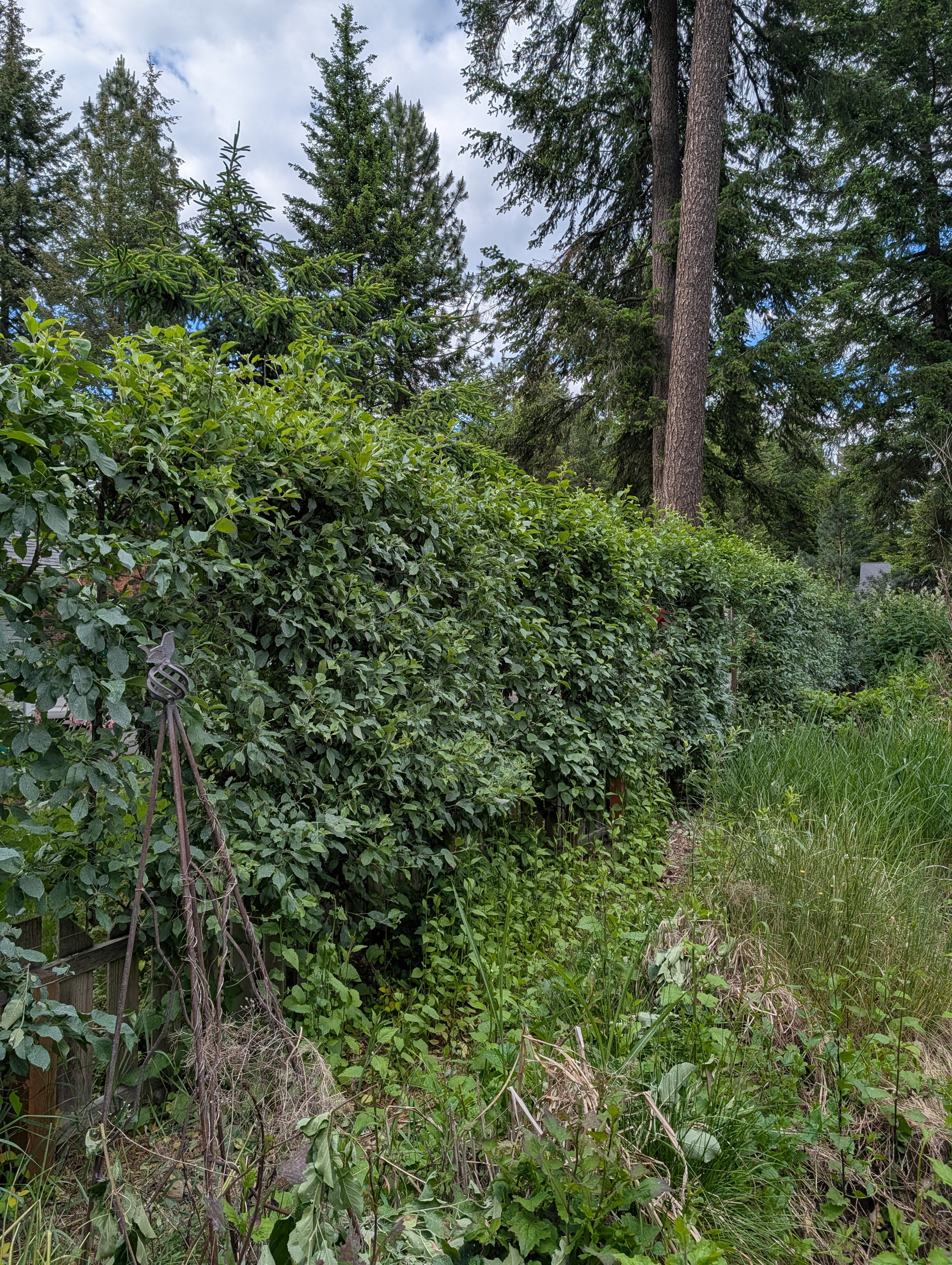
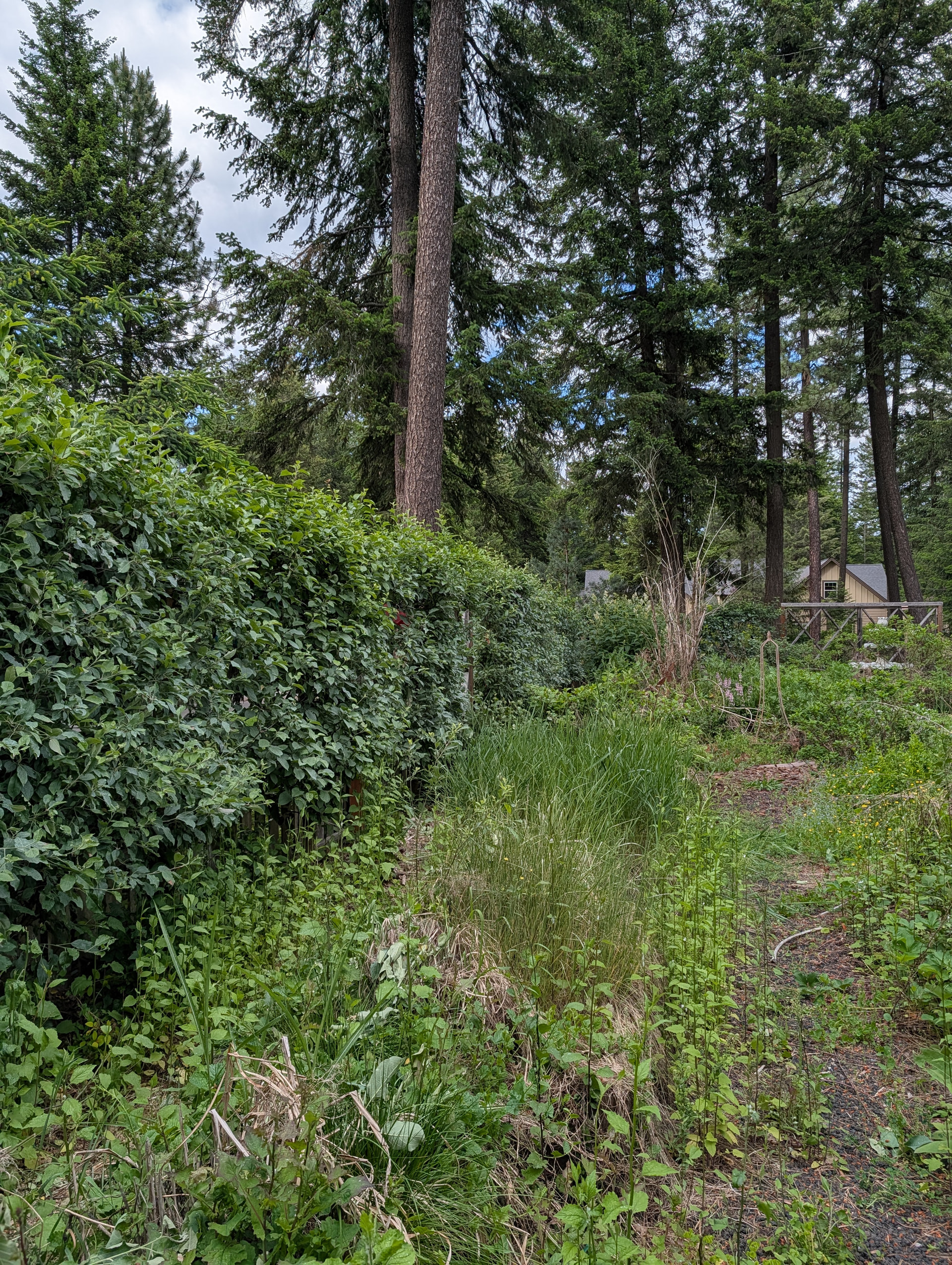
3 Likes
I’m going to be a little less traditional than most here. Thomasville Citrangequat would be my choice. Thomasville Citrangequat Trees for Sale - MadisonCitrusNursery.com – Madison Citrus Nursery
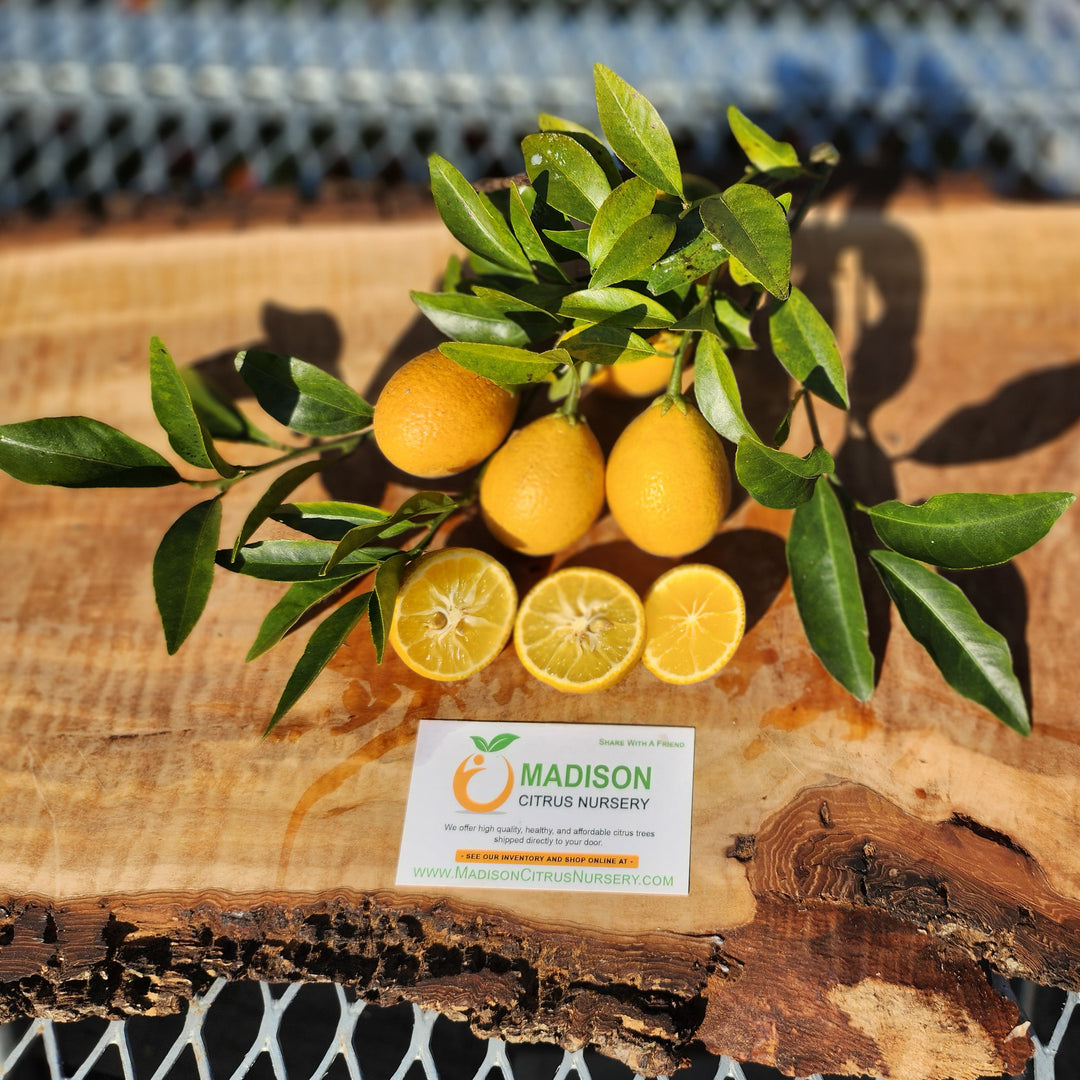
Thomasville citrangequat is a complex hybrid involving a citrange (Sweet orange x Trifoliate orange) and a kumquat. It was developed by the United States Department of Agriculture in the early 20th century as an attempt to combine the hardiness of the citrange with the delayed dormancy of a kumquat. It was named for Thomasville, GA, where it first fruited. Several different citranges were developed, but of these, Thomasville is the most widely grown and best tasting. Thomasville citrangequat makes a small tree to 15-20 feet. Juvenile leaves are frequently Trifoliate, but mature plants produce unifoliate leaves. Like its kumquat parent, Thomasville citrangequat is a repeat bloomer, and mature plants will frequently produce two (or more) crops in a single season. The fruit are the shape and size of a hen’s egg. They turn yellow in late fall. Left on the tree, the fruit eventually turn bright orange. Although it does not have commercial potential, Thomasville citrangequat makes prodigious crops of fruit that have a variety of home uses. Due to its kumquat ancestry, the entire fruit can be used, peel and all. In late summer, when the fruit are still green, Thomasville citrangequat fruit can be used as a lime. In fall, the fruit can be used as a lemon or used to make an excellent marmalade. Left on the tree, the fruit becomes edible out of hand by late winter, tasting like a common sweet orange. Thomasville citrangequat is an excellent cold-hardy citrus for anyone who wants to grow highly ornamental, useful fruit with very little effort.
-
Mature Tree Height: 15-20 feet
-
Ripens: Fall/Winter
-
Hardiness: 5F *
-
Tastes Like: Lemon/Lime early to Sweet Orange later in season
Our trees are grafted with mature buds so our trees will fruit quicker.
* Hardiness temperatures are approximate, and indicate where fully dormant, mature trees may experience significant damage. This cross has been.around a long time and there are better choices proably Hardy Citrus: Thomasville Citrangequat
1 Like