Rich guy? No, I get by OK, but it is in the Rustbelt not in Boston or L.A… That is funny, I thought the same thing about the guy here with 15 houses growing figs at them all. Whether he is rich or not, I could never grow anything like he does. Animals would shred EVERYTHING!
It is not just rabbit’s, bub. We got coons, possum, ground hogs, birds, squirrels and deer. The reason I’m not that experienced with low level animal protection is, I don’t fool with twigs. All my trees are 6 to 8 feet tall when I plant them. They are small animal proof immediately, with the exception of squirrels. I just need trunk protectors and deer cages. Other than that, every single tree needs a $50 deer cage to live long enuf to grow into a deer proof tree in the Rustbelt, bub. And what I’ve found is low lying trees will need similar protection for the small animals. I’m keeping my fingers crossed they don’t go after my pawpaws. I could not get decent size pawpaw trees. Just big twigs.
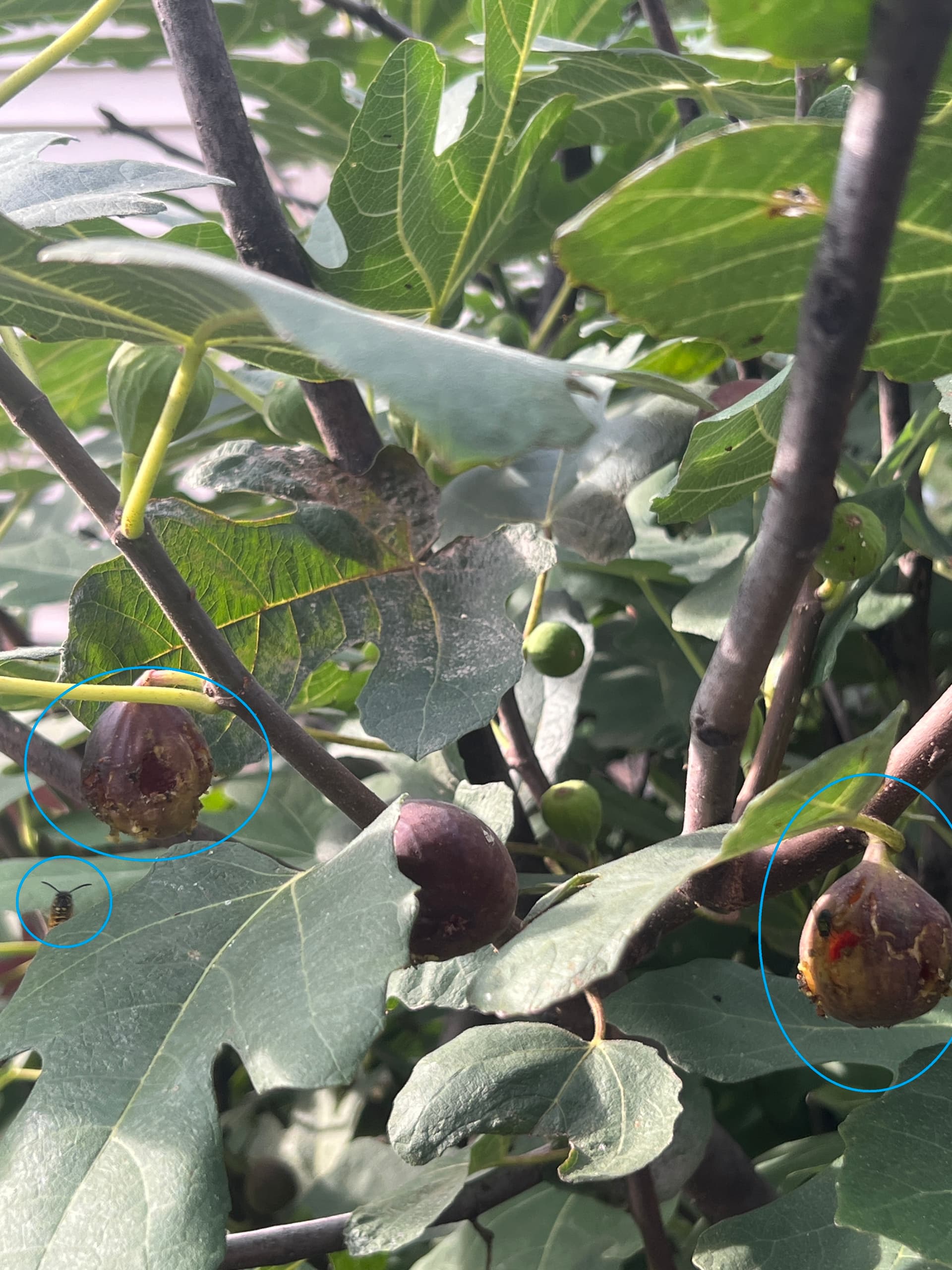
Amen. Don’t forget small rodents such as mice, chipmunks, and especially voles. Voles will burrow to get to roots. And they’ll strip the bark off a fig tree. Also birds, which will eat or at least damage the fruit. And bugs. We had 5" of rain last week, which caused many of my figs to blow up. That opened the door for hornets and bees.
I used to have a very large fig collection like 70 pots with lots of varieties
until last Winter. I moved all them in the green house and when the temperature drops down to -18F the heater breaker got tripped and the the next day all of them froze out. I was heartbroken and started over with a four pots of early ripen varieties from @kinghat I probably root more cuttings of the variety that I have to make some duplicates for insurance.
For me, it’s vole not mole. Moles eat grubs. Voles eat vegetation, including fig bark.
Ants – I don’t have a major ant problem. When I have ants around the house, I spread some boric acid powder. A tiny amount is lethal to ants. If I had a problem outdoors, I’d drop some powder around the anthills.
Yellow jackets – I don’t have a problem currently but yellow jackets were a horrible problem in the past. I use bait stations with either meat (e.g., wet cat food) or fruit (e.g., orange juice) laced with boric acid or some similar slowly lethal poison. Workers pick up a chunk, bring it back to the hive, feed and kill the queen. Over time, this removes active hives in the area.
This year, I manually removed a football-sized nest from an apple tree. It was a species of hornet but not yellow jackets; possibly bald-faced.
Note that yellow jackets eat honey bees. It occurred to me that my success suppressing yellow jackets MAY have opened the door for honey bees to attack my figs. I have thousands of bees on the figs, something I’ve never seen before. There have been active bee hives within 200 yards for 5 years.
I’ve been having a lot of trouble with both of these and fruit flies. Especially with open-eye figs, or figs that get split apart at the least bit of rain. Maybe they need rain protection more than they need winter protection…
It’s also occurred to me that part of the problem is letting the foliage get too thick. Fruit flies really like shady conditions and letting the bush get too bushy encourages them. It would probably also help more figs ripen earlier if I thinned out the shoots by half.
Borax and boric acid are two different chemicals but they seem similar as pesticides.
I do/did not want to kill honeybees so if I think they might be nearby, I’ll try to avoid sugary mixes. I don’t have an ant problem but if I did I’d probably just scatter some boric acid near the nests. In the house, I spread it on the floor then sweep it into the edges and corners. It seem to be extremely effective.
So for hornets, including yellow jackets, I use a meat-based mix. Sometimes I mix the boric acid with wet meat-based cat food. Sometimes I spread boric acid over the surface of bloody scraps left over from butchering a deer or some ground venison that is well past its “sell by” date. :).
It’s interesting to me if you’ve managed to do that in the UP, while there are other testimonials in this thread of figs dying completely in zone 6. Are you in one of the areas that gets multiple feet of snow in the winter? I wonder if the insulating effect keeps the roots alive, or maybe it’s the reliably cold temperatures rather than the occasional polar vortex shocking the plants. Where I live our average winter temperature is not much below freezing, but we also often have a week or two when it hits -15 F.
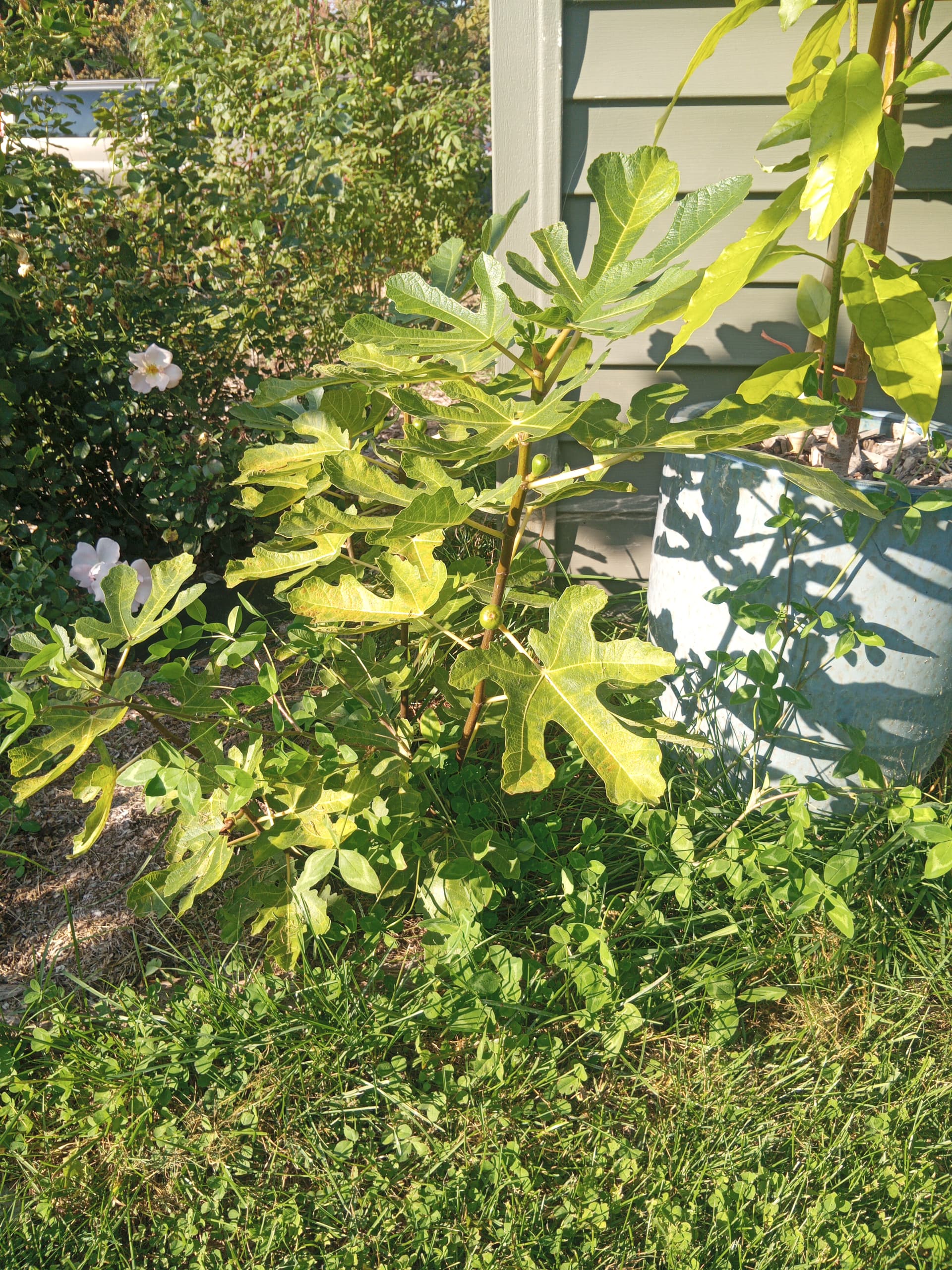
It hasn’t been in ground for long. I planted it in the ground this spring after it was breaking dormancy. I do have some sort of supposed “brown turkey” fig that’s been in the ground for over a year, pictured above. It went through 21 below this winter. But it has not been as pampered as the Chicago hardy. That I grew in a pot for 3 years to size it up before planting it out. Figs can survive up here under all the snow, and I plant them next to buildings where the snow piles up especially deep. I do so on the south side so they get extra heat in the summer. Where the light fluffy lake effect snow piles up the ground often doesn’t freeze much. I have seen globe artichokes and gladiolus over winter here before.
Whether it’ll work for long-term survival, I have no idea…
Chicago hardy and the small one is Florea planted this spring. I got tired of messing around with pots. Just keeping my sons avocado tree, and my bonsai American Beech. Everything else in pots went into the ground this spring.
I’m guessing it’s just snow cover – I think 6 may almost be more difficult than 4b or 5a, since 4b has consistent snow cover and we often do during the coldest parts of the year in 5a. Last year we had a dry winter with no snow cover during our low of -10 or -12, not as cold as many years, but I found much more winter kill on my berries.
It’s a good idea. I’ll probably bury them under a pile of leaves like I do the persimmon grafts. I’m always a little concerned with voles when it comes to hay.