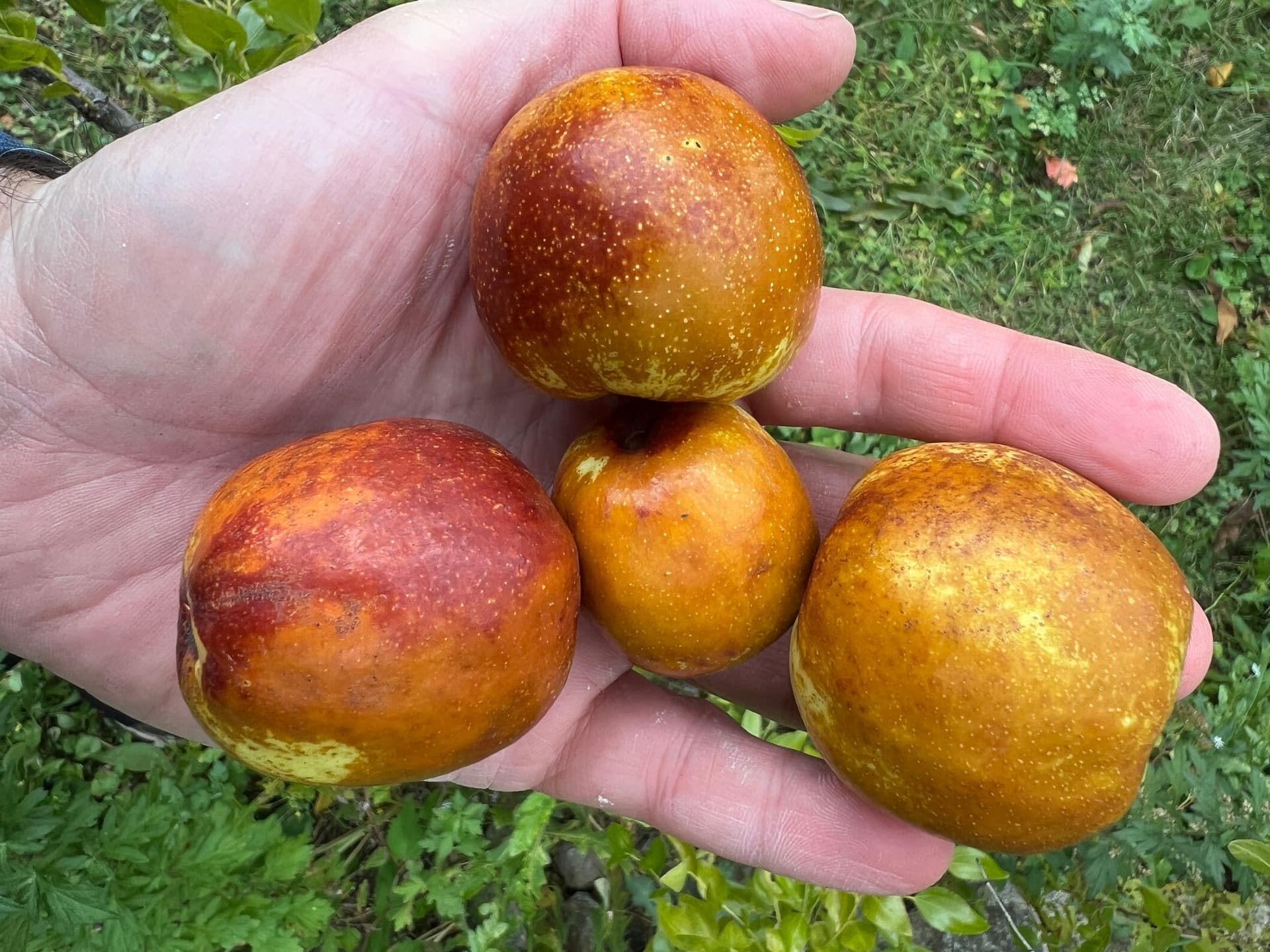
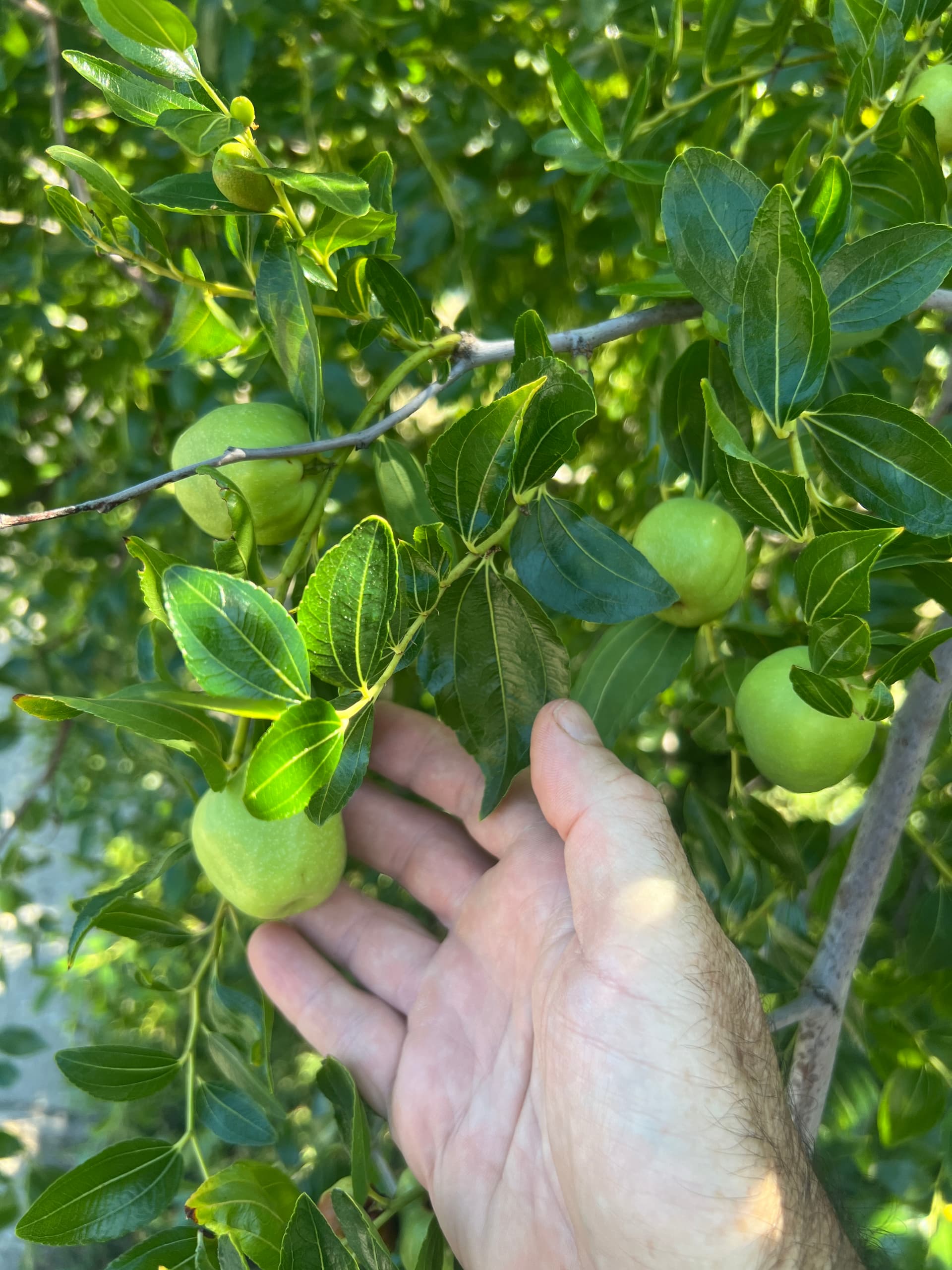
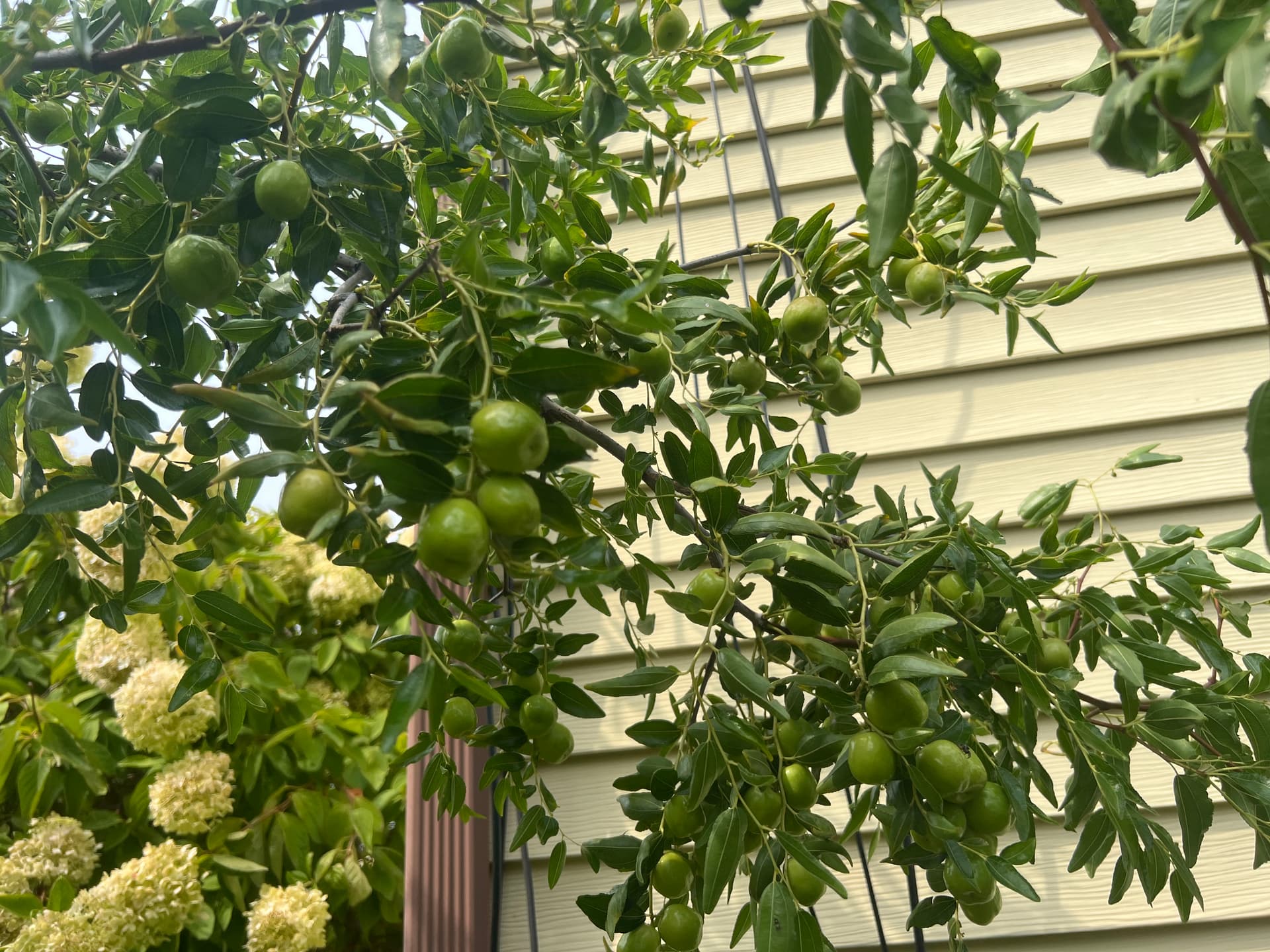
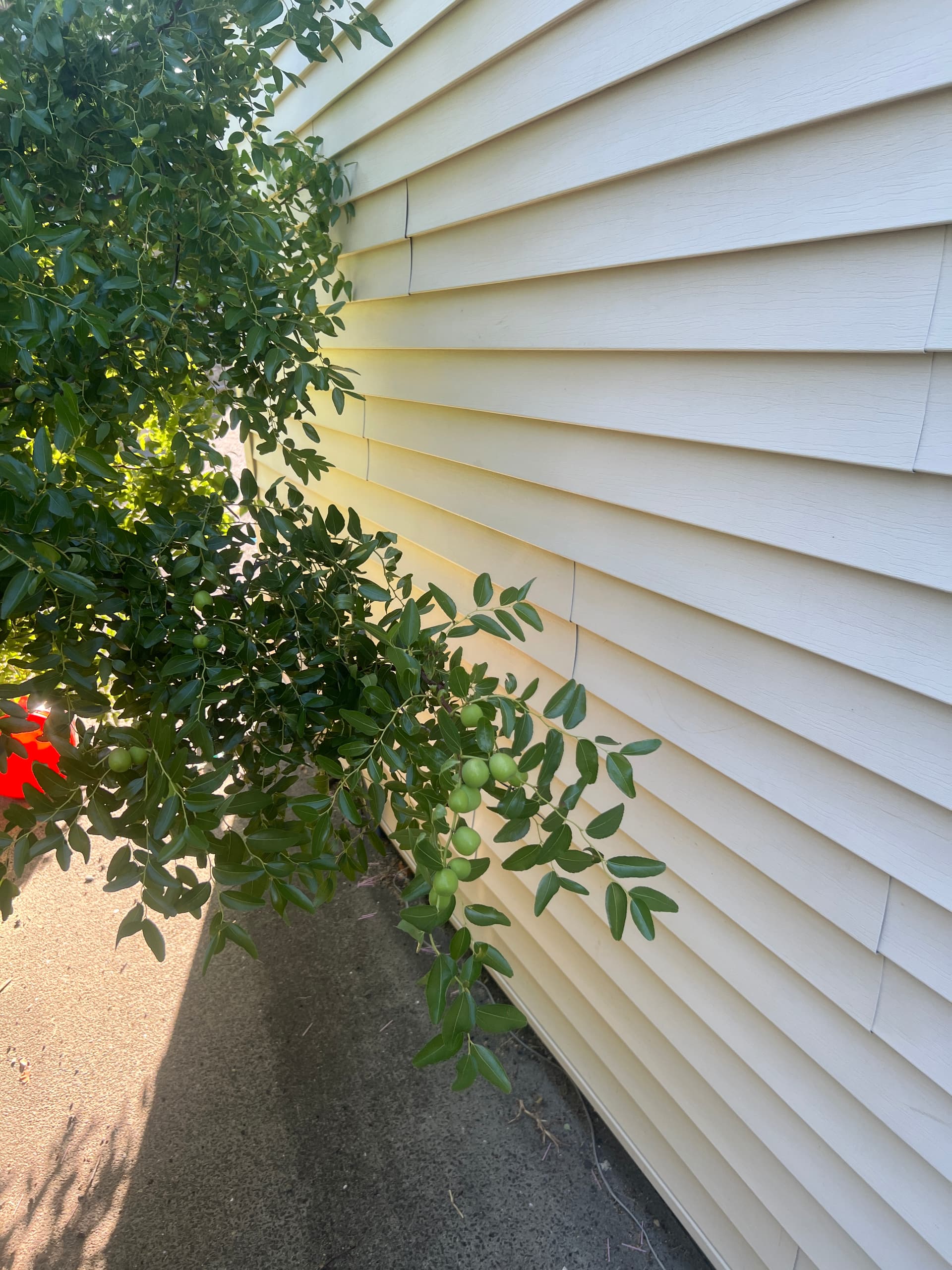
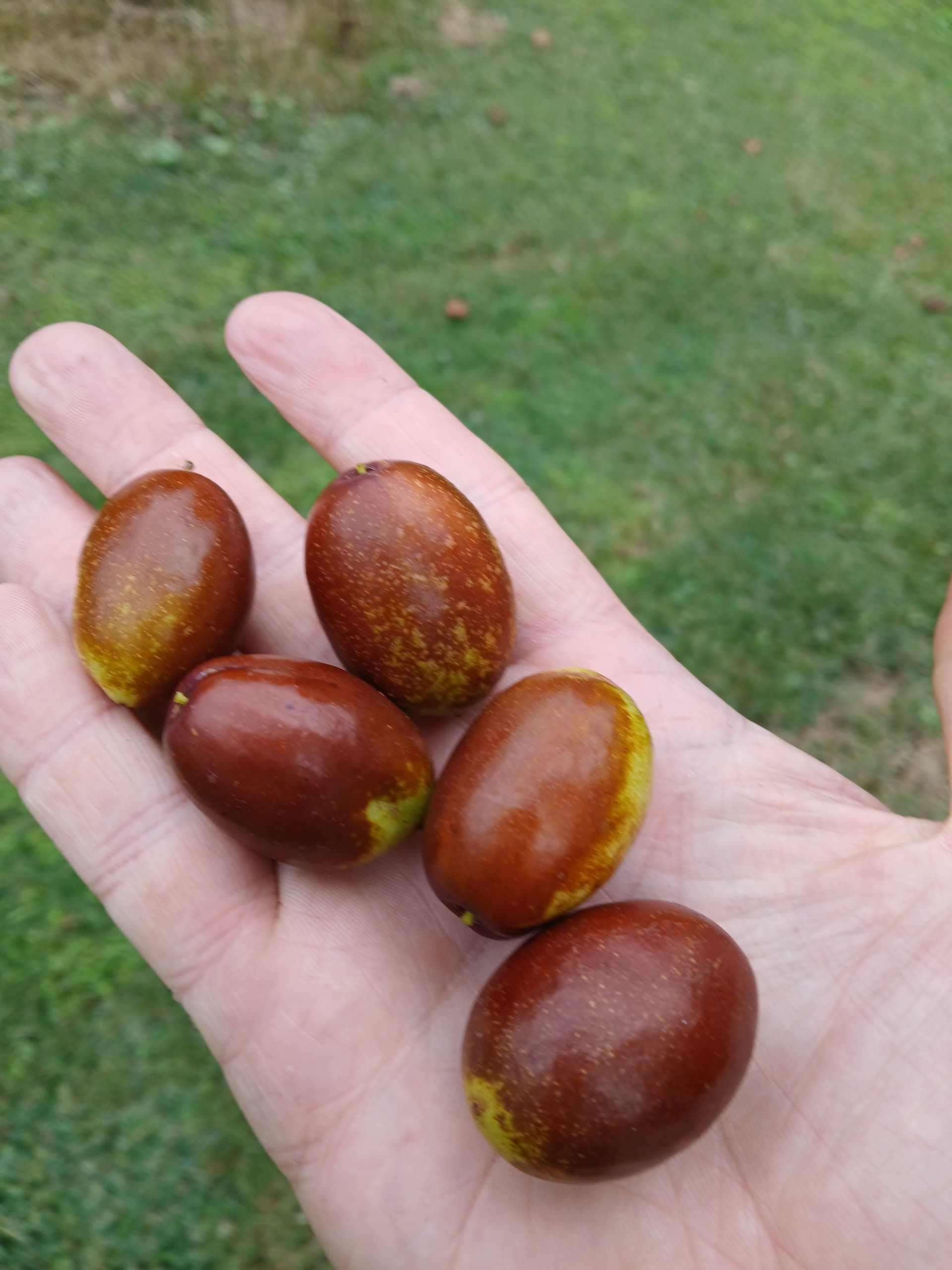
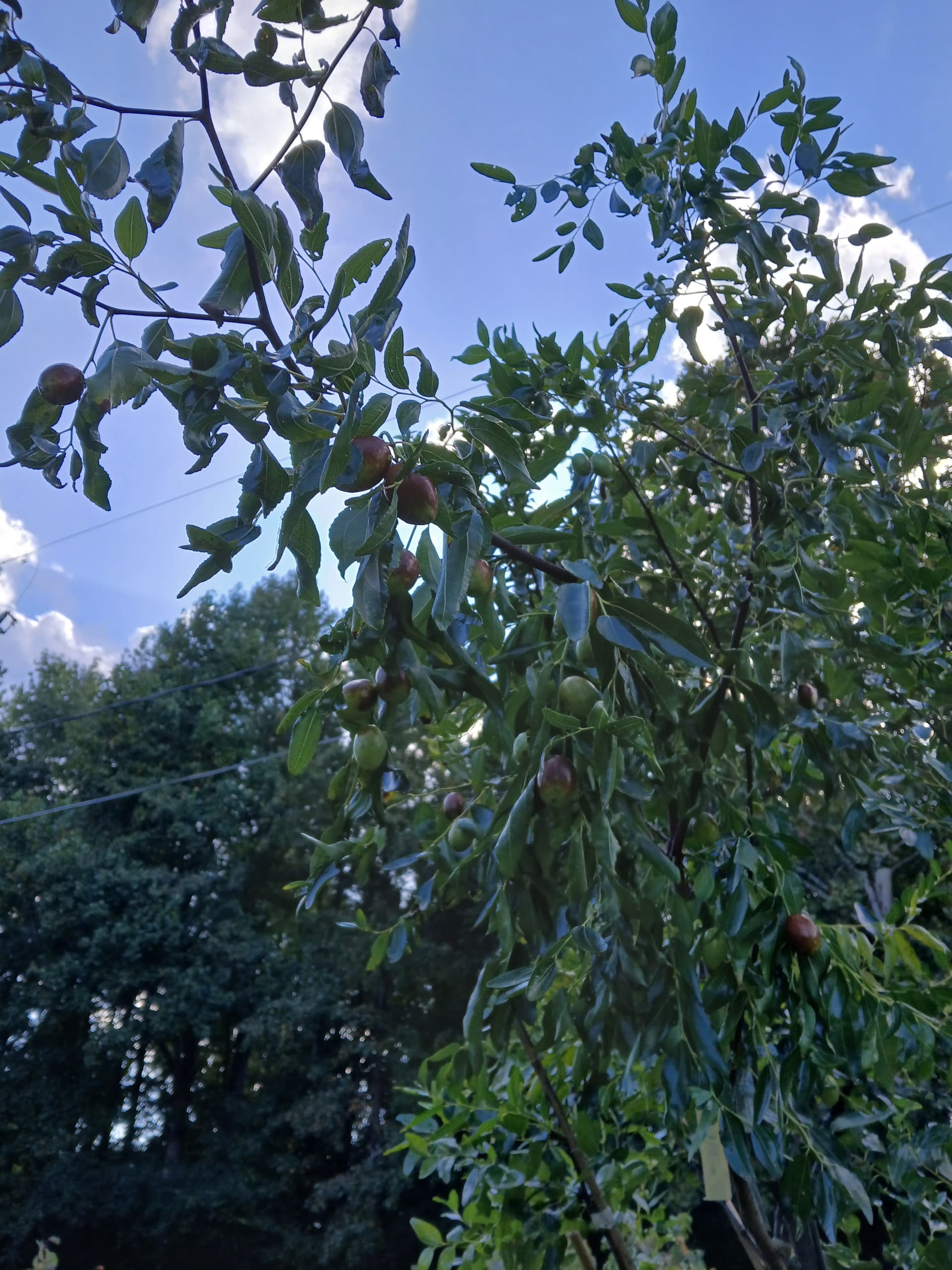
Grafted last year from Sophia scion on GF. First time fruited now. Hopefully it hold on to the 5 fruits so I can compare to the regular HJ in October.
Tony
Grafted last year from Sophia scion on GF. First time fruited now. Hopefully it hold on to the 5 fruits so I can compare to the regular HJ in October.
Tony
trying to do a little research and checking availability, are you referring to Dong Zao or Shan Dong or another? England’s list both of the first two but not Sandia
Tried my first Li of a tree and it was very styrofoam like. It’s the first year of the tree. I’m hoping it gets better…
I ask Grok AI to develop a table comparing the cultivars I am interested in
| Cultivar | Yield | Plant Vigor | Cold Hardiness | Taste for Fresh Eating | Harvest Time |
|---|---|---|---|---|---|
| Orange Beauty | Medium to High (productive, though not quantified) | Moderate, upright, relatively compact | Zone 5-10 (-20°F) | Sweet, tasty, but may be bland in first-year grafts (no Brix data) | Early to mid-season (August-September) |
| Porterville | Medium (inferred, similar to Chico) | Moderate, bushy, spiny (inferred from similar cultivars) | Zone 5-10 (-20°F, assumed) | Good for fresh eating, sweet, pumpkin-like shape (no Brix data) | Mid-season (September) |
| So | Medium to High (productive, precocious) | Moderate, contorted branching, dwarf tendency | Zone 5-10 (-20°F) | Sweet-tart, crisp, apple-like (no Brix data) | Early to mid-season (August-September) |
| Bok Jo | High (very productive, precocious) | Vigorous, large leaves, productive in varied climates | Zone 5-10 (-20°F) | Sweet, crisp, good for fresh eating (no Brix data) | Early to mid-season (August-September) |
| SI Hong | High (very productive, chunky fruit) | Vigorous, upright, requires annual pruning | Zone 5-10 (-20°F, assumed) | Sweet, excellent for fresh eating (no Brix data) | Mid-season (September) |
| Autumn Beauty | Medium to High (3-5 kg/tree in young trees) | Compact, moderate to weak vigor, upright | Zone 5-10 (-20°F) | Spicy, apple-like, crisp, very sweet (28.9-32.3° Brix) | Early (early September in NM, mid-September in northern areas) |
| Dae Sol Jo | Medium to High (productive, inferred from web sources) | Moderate, upright (inferred from similar cultivars) | Zone 5-10 (-20°F, assumed) | Sweet, crisp, good for fresh eating (no Brix data) | Mid to late-season (September-October) |
| Winter Delight | Medium (30+ lbs mature trees, but late ripening) | Compact, moderate vigor, cold-hardy | Zone 5-10 (-20°F) | Sweet, crisp, large egg-shaped (no Brix data) | Late (October) |
| Chico | Medium (2-4 kg/tree in young trees) | Spreading, bushy, spiny, plenty of branches | Zone 5-10 (-20°F) | Tart-sweet, fine texture, apple-like (26.2-32.5° Brix) | Mid-season (September) |
| Xu Zhou | High (very productive in young trees) | Vigorous, productive in varied climates | Zone 5-10 (-20°F, assumed) | Sweet, good for fresh eating (no Brix data) | Mid to late-season (September-October) |
| Dong Zao | Medium (12-24 g/fruit, not precocious without intervention) | Midsize, bushy, plenty of branches | Zone 7+ (-10°F) | Top-quality, crisp, juicy, melting texture (30-36° Brix) | Late (October) |
| How did it do? Any input/corrections? |
I think it will depend on what part of the country you are in. In CA or the sunny SW, the answers will be very different.
For me, I would rank productivity as follows:
Great:
Xu Zhou
Bok Jo
OK:
So
Dong*
Dae Sol Jo **
Poor:
Autumn Beauty
Sihong
Chico
Orange Beauty
No idea:
Porterville
Winter Delight
This year’s weather has lead to poor production for many jujubes. The “poor” group breaks down as follows:
Autumn Beauty- 3 trees. One with none, the other 2 with 3-5 fruit
Sihong- 2 trees and a graft. Handful of fruit on the trees and a lot on the graft (maybe it isn’t precocious, but can eventually get productive)
Chico- 2 trees and a graft. 1 tree has none, the other has <5. The graft has a light crop of fruit, other than the part which was girdled, which has a decent set.
Orange Beauty- 4-5 grafts, some pretty big. I don’t think there is any fruit this year.
*- When I graft Dong/Sandia onto a mature tree it does reasonably well. But when I plant a Dong tree, it takes forever to fruit. In fact I don’t know if I’ve gotten any from them, while the grafts (taken from those trees) have been productive for a number of years.
**- Recent genetic tests have shown that Dae Sol Jo is either identical or virtually identical to Li. I have a graft of Dae Sol Jo and while I found it a bit better than Li, it could be mostly dependent on the situation the tree was in, rather than being inherently different from Li.
I don’t have any zone hardiness info, as I’m growing them in zone 6b/7a which should be enough for all Chinese jujubes (not for Indian ones).
If you want more in-depth, I have a big comparison here:
Dong Zao. “Zao” means jujube in Chinese, so it can be tacked onto most cultivars. “Dong” actually means “Winter” in Chinese.
Sandia is a variant of Dong which is supposed to be slightly (maybe a week) earlier to ripen.
Could be underwatered or it could just be that the young tree doesn’t have enough roots to make use of the water in the ground.
Of course, even on an older, well-watered tree, Li is only an average cultivar for fresh eating. Honey Jar, Sugar Cane, Black Sea, Dong, etc are all much better.
Thanks for your response. Can it also be that my Li was just beginning to brown up? It only had a few brown specs near the stem.
I hope they turn out ok because I got 3 Li… Then I also have a HJ, a So, and a Sugarcane which I plan to let get to full size, so those should be good I’m hoping
Have you mulch the base of that jujube tree and give it some nitrogen this year. All my jujube trees loved the fresh grass clippings every other week from my lawn mowing and they also loved the water from my lawn sprinklers M-W-F 35 minutes per zone X 12 zones.
Tony
Urea in April, yes. Mulch, no.
Forgot about grass clipping. Wouldn’t it become a packed mat?
No. Water, sun, worms,and microbes will break down the grass clippings pretty quickly and that will feed the tree with natural nitrogen tand also conserve water from evaporation. I had about 10 inches thick of grass clippings in a 3 feet ring around my 10 years a
HJ that I transplanted from my old house.
Tony
I’ve been very disappointed with Li. Large fruit, but very bland and a little soft when green/yellow. I thought it would improve with letting the fruit ripen on the tree, but the quality of the ripe dry brown fruit still not up to par. I was hoping for better because I’ve tried store bought dried jujube of similar shape and size which was fantastic. Is there another cultivar that produces similar shape/size fruit as Li but better? I have Redlands growing but it’s only been a few months in ground. Not sure if that will be any better.
It may not be exactly the same, but should be pretty similar to Li:
From her post:
Based on jujube genotyping data with SNP markers, a group of cultivars had identical DNA sequences with Li which includes Li, Shanxi Li, Li (2), Redland, Dabailing, Daguazao, Allentown 2, Dae Sol Jo, Sang Wang, Tae Sang Wang, and Wang Dae Chu. It does not mean all those cultivars were identical but they are genetically similar and could be identical or mutations with minor differences.
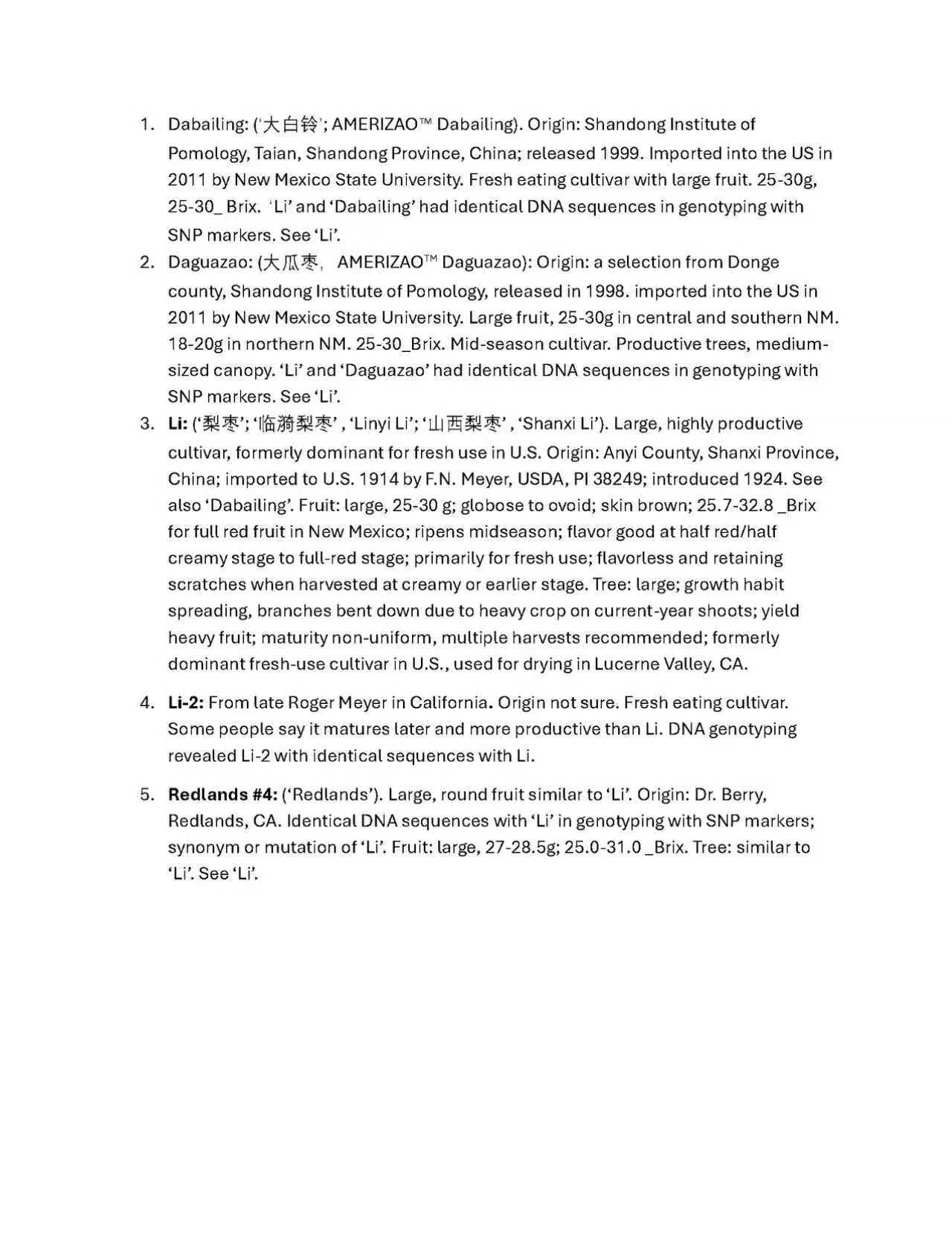
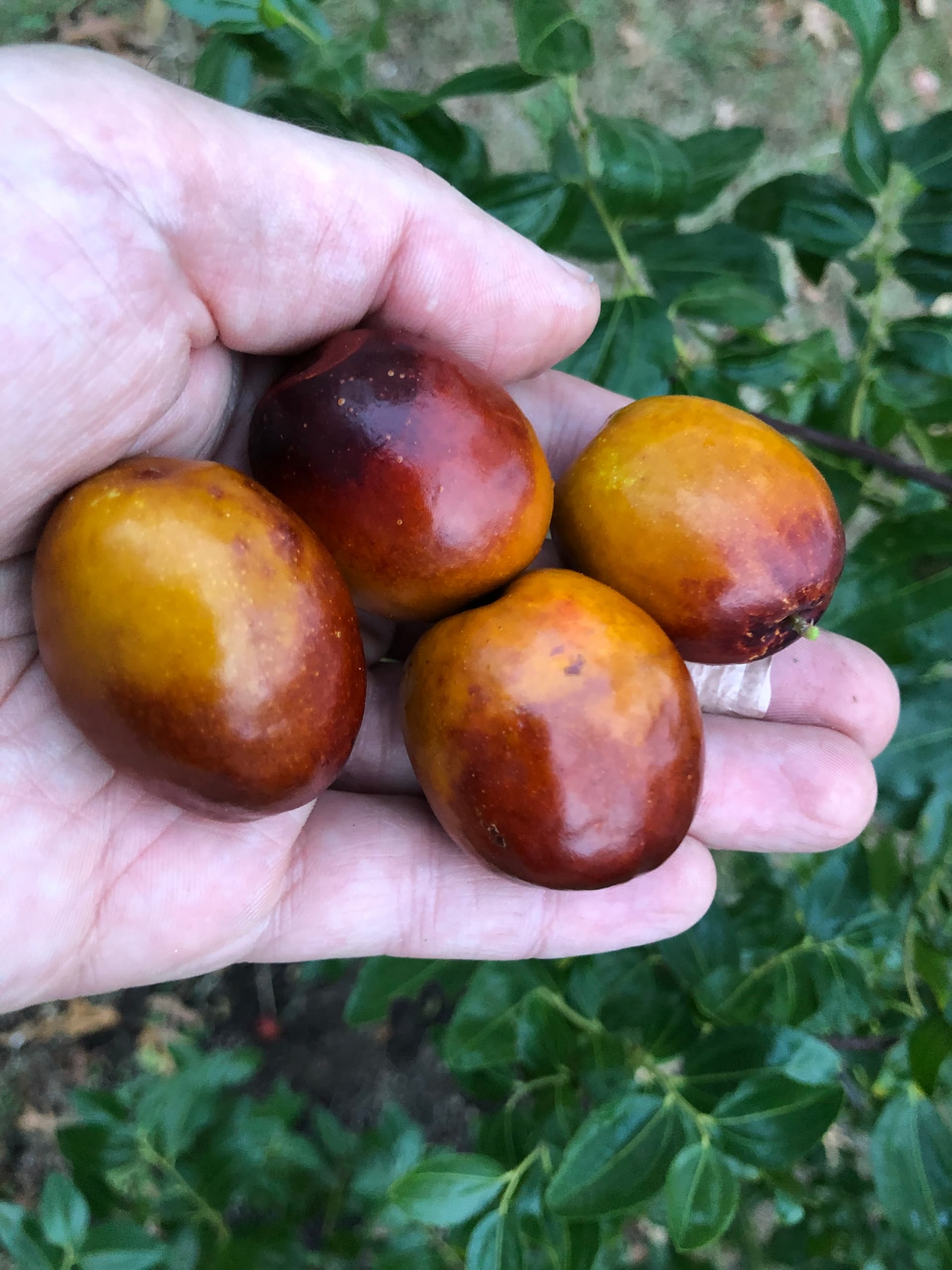
When you say “dry ripe”, do you mean you let them shrivel? If so, I think you tried them both too early and too late. Here’s a pic of how they should be picked (IMO).
Somewhere between here:
And here:
And if they don’t have enough water, they can be soft or have poor texture. Even grown well, I’m not especially impressed with Li. But finding a better jujube with a large size isn’t easy, as most of the large cultivars are synonyms (or close) to Li.
There are two that I like better, but neither is a great producer either. Sihong can produce well on an established tree, but isn’t very precocious. It has an OK texture, probably not much better than Li. But Sihong has good flavor and makes great dried fruits. Though I only sampled them one time (from Raf), as I normally just eat mine fresh.
Sihong:
Here’s what Sihong looked like earlier today, about 1-1.5 months from being ripe:
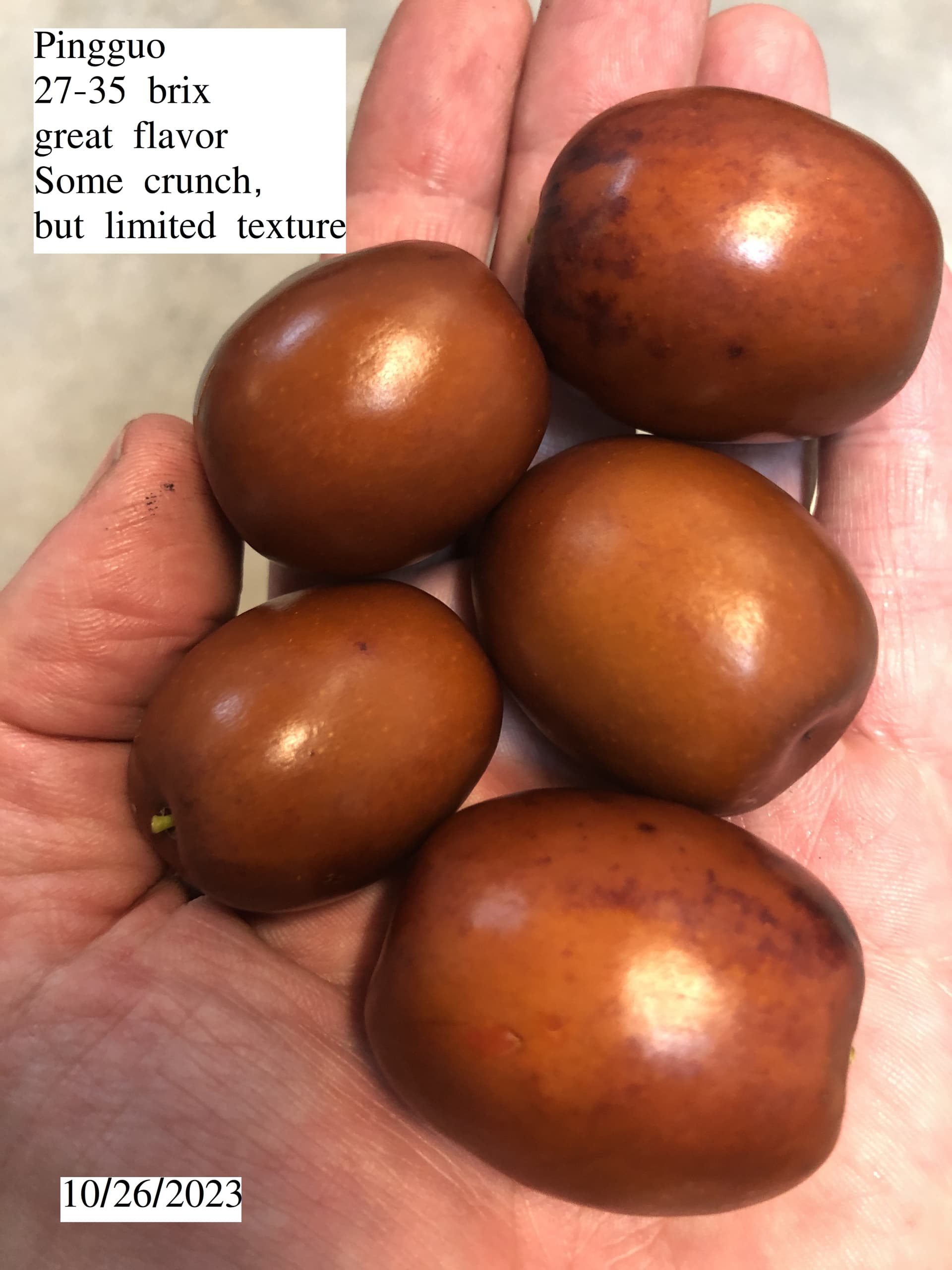
Apple/Pinggou is another large cultivar I like. It is even less productive, but the fruit it does make is very good. Not super crisp like Honey Jar/Sugar Cane, but enough crunch to be good, along with very good flavor.
Apple/Pinggou:
Thanks for this information. Sounds like Redlands is basically going to be Li. I appreciate your mention of the pingguo variety- this is new to me…sounds like a good large cultivar.
Yes, I prefer the flavor of jujube when shriveled. Honey jar at that stage was great. Also the store bought jujube (that look like Li) are shriveled but are less dry and more chewy- I wonder if they are dried a certain way. Water may have something to do with it. I use drip and we’ve had a lot of heat lately. I’ve compensated by daily watering, but still. Honey jar and sugar cane are on same drip and fruit is excellent.
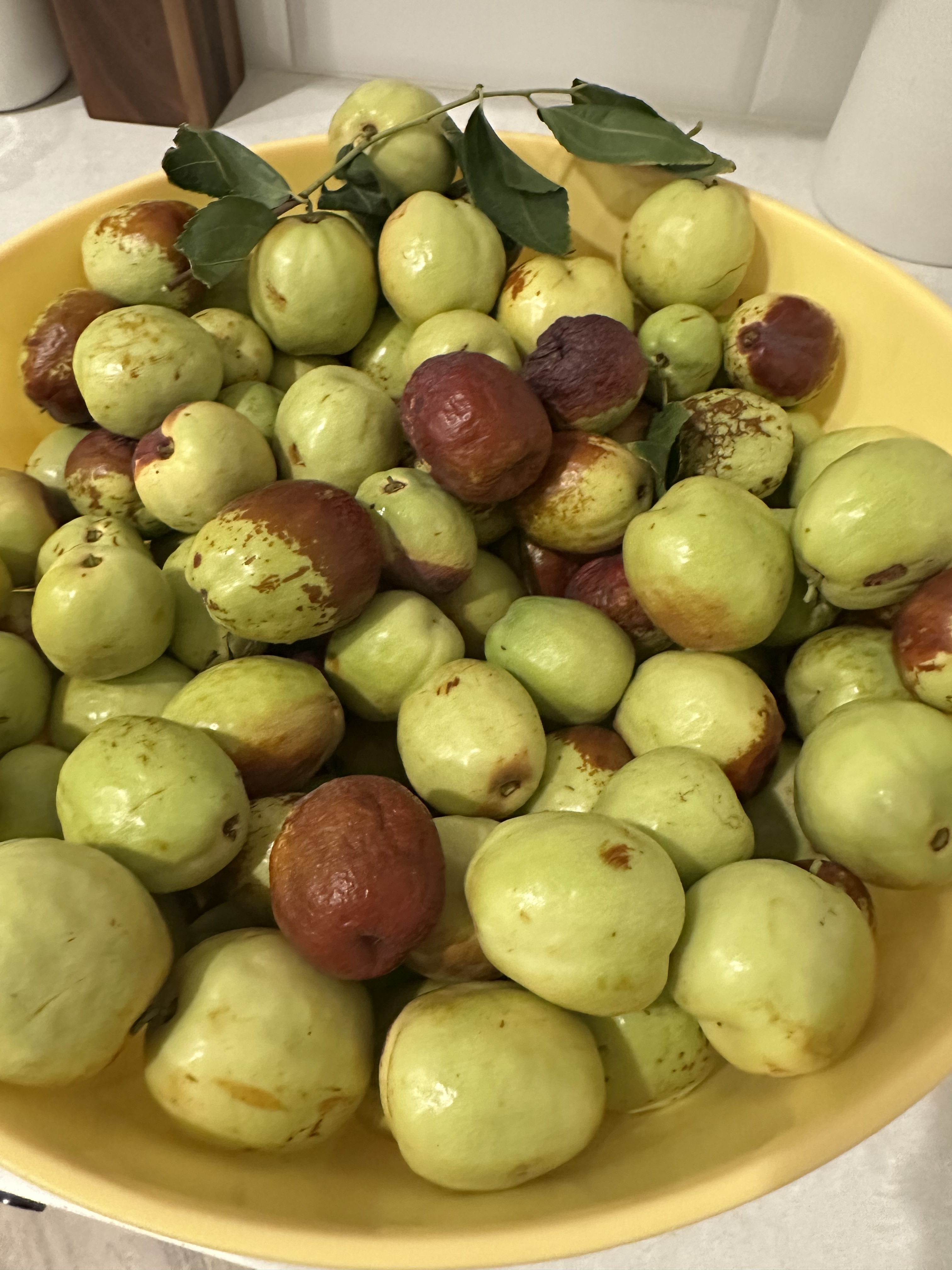
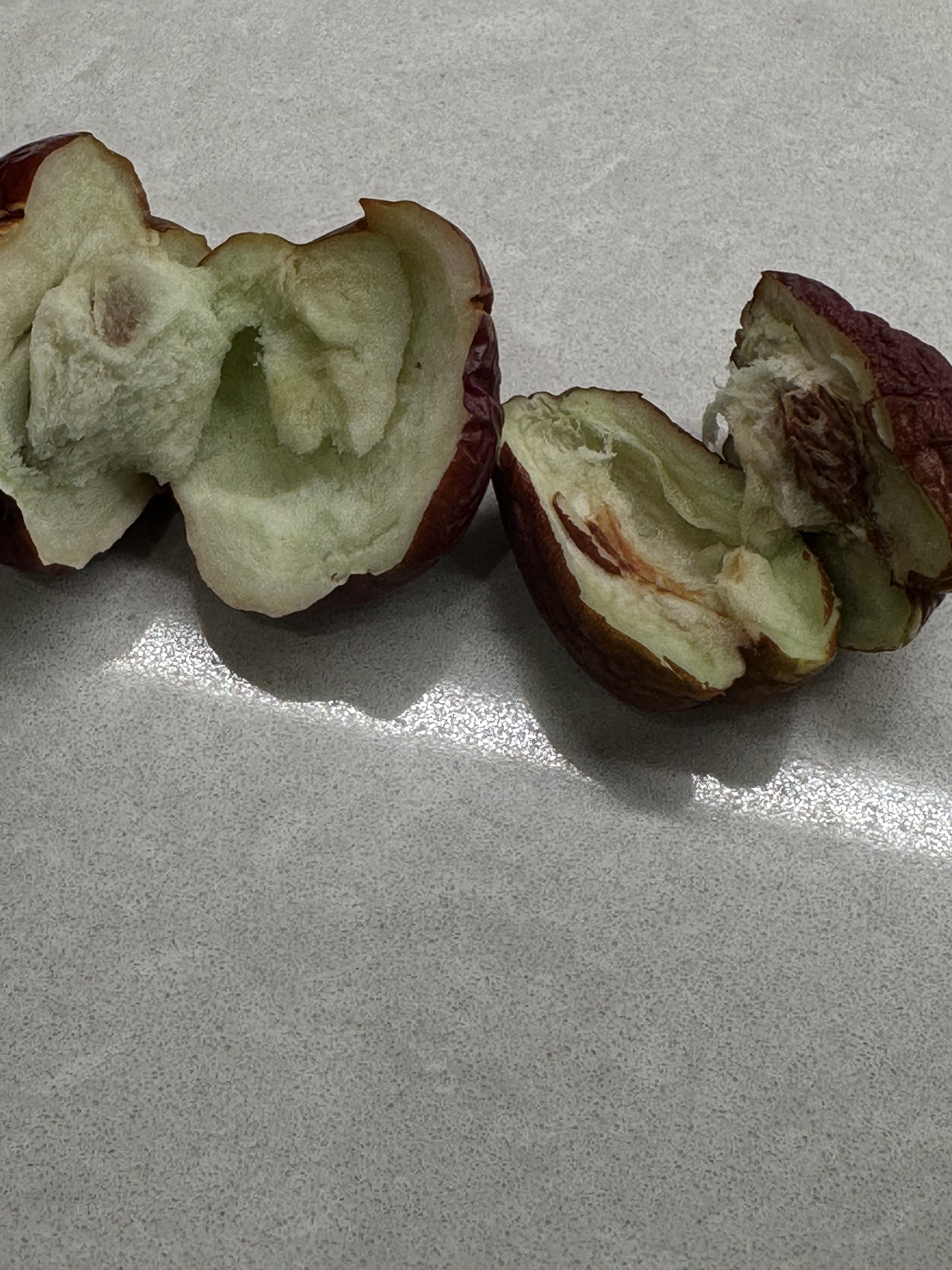
These fell off the tree with the wind gusts today. Even the shriveled ones are still green on the inside so they probably need longer on the tree. I’m assuming they’re not going to ripen any more on the counter.
The Li in your pic aren’t dried, but half dried. Are they the first fruit of the season? Sometimes I get a few early fruit which shrivel and don’t really have full sugars.
Regardless, I wouldn’t expect them to develop more sugars. They look to be picked too early. If they dropped on their own, then maybe the tree is having an issue? Maybe not enough water from the drip irrigation? I’ve heard it is better to water more deeply, but less often.
I think the Sihong I had from Raf were at about that stage of drying. Though I’ve read that they are good fully dried as well.
Good to know. I’ll let them hang for longer to get them to fully ripen and sweeten up.
The more I see, the more I question if there was a temperature component as well. In the past, I’ve noted that the South side (ie more sun exposed) part of the trees tend to have more fruit. But this year, I’ve seen a couple instances where trees with light sets have a branch with heavy sets on the branches next to a nearby building. I’m not sure if it is a matter of reflected light from the building or if those branches were warmer early in the season, maybe building up degree-days or something like that.
Here are a couple examples where branches on the North (and near a building) have the highest concentration of fruit on a tree.
Honey Jar:
So:
Maybe one of these years I need to setup a little transparent tent over a jujube and see if it makes it produce more than the trees around it…
I grafted Ant Admire to a transplanted jujube rootsucker, and it took and grew vigorously but stubbornly refused to fruit over a span of 5 or 6 years. The few fruit that did develop dropped before ripening. I decided to topwork most of the tree this past spring, but I left two Ant Admire branches ungrafted. This fall they have born about 2 dozen fruit that have good texture and flavor. Have any of you experienced this with jujubes where significant pruning (which I did through grafting over all but two branches) has promoted fruit production?
I have one branch of ant admire. I rather like it.
Me too, now that I finally tasted it!
I grafted an Ant Admire to a So a few years ago. It has never fruited,