Jujubes- Our New Adventure

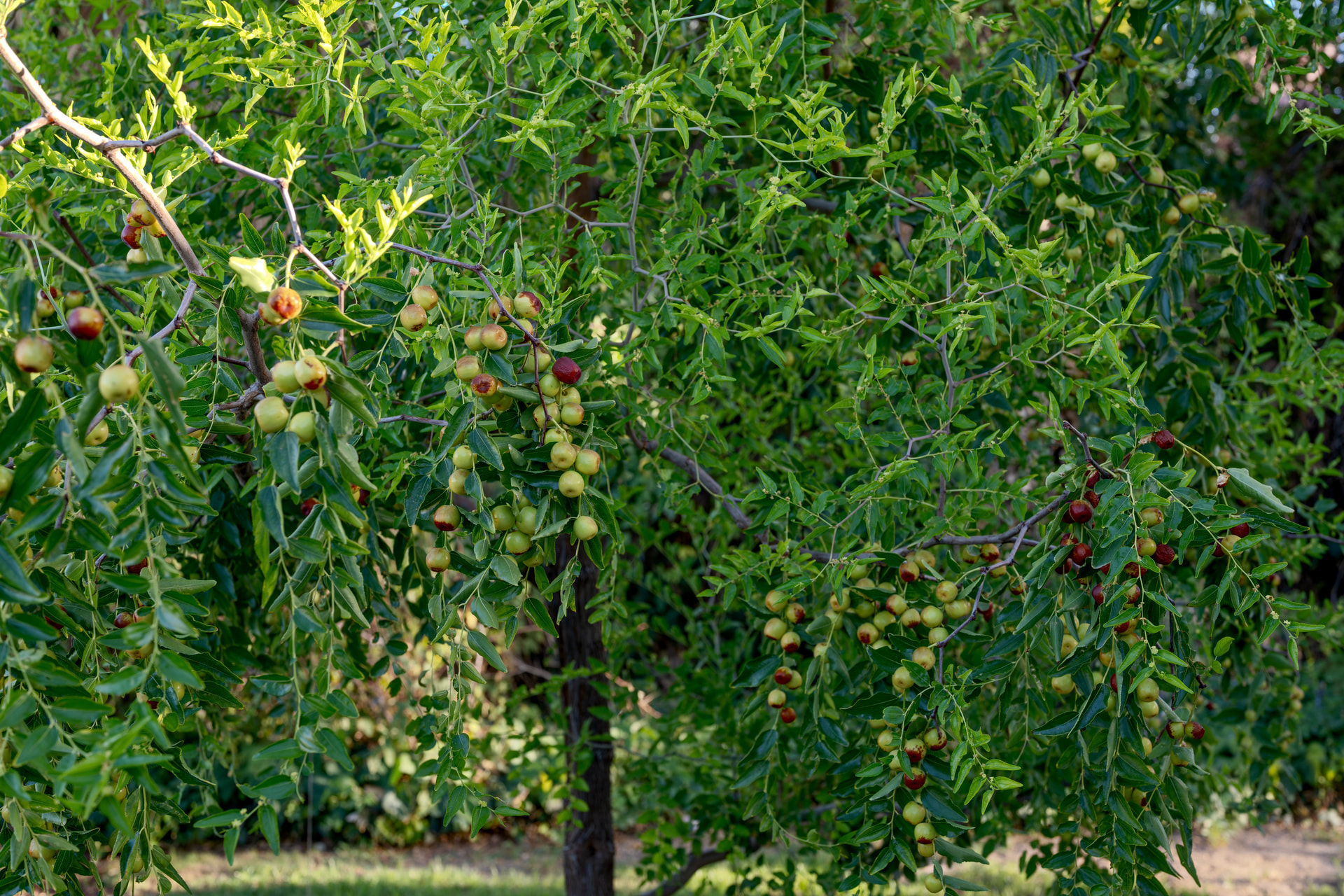
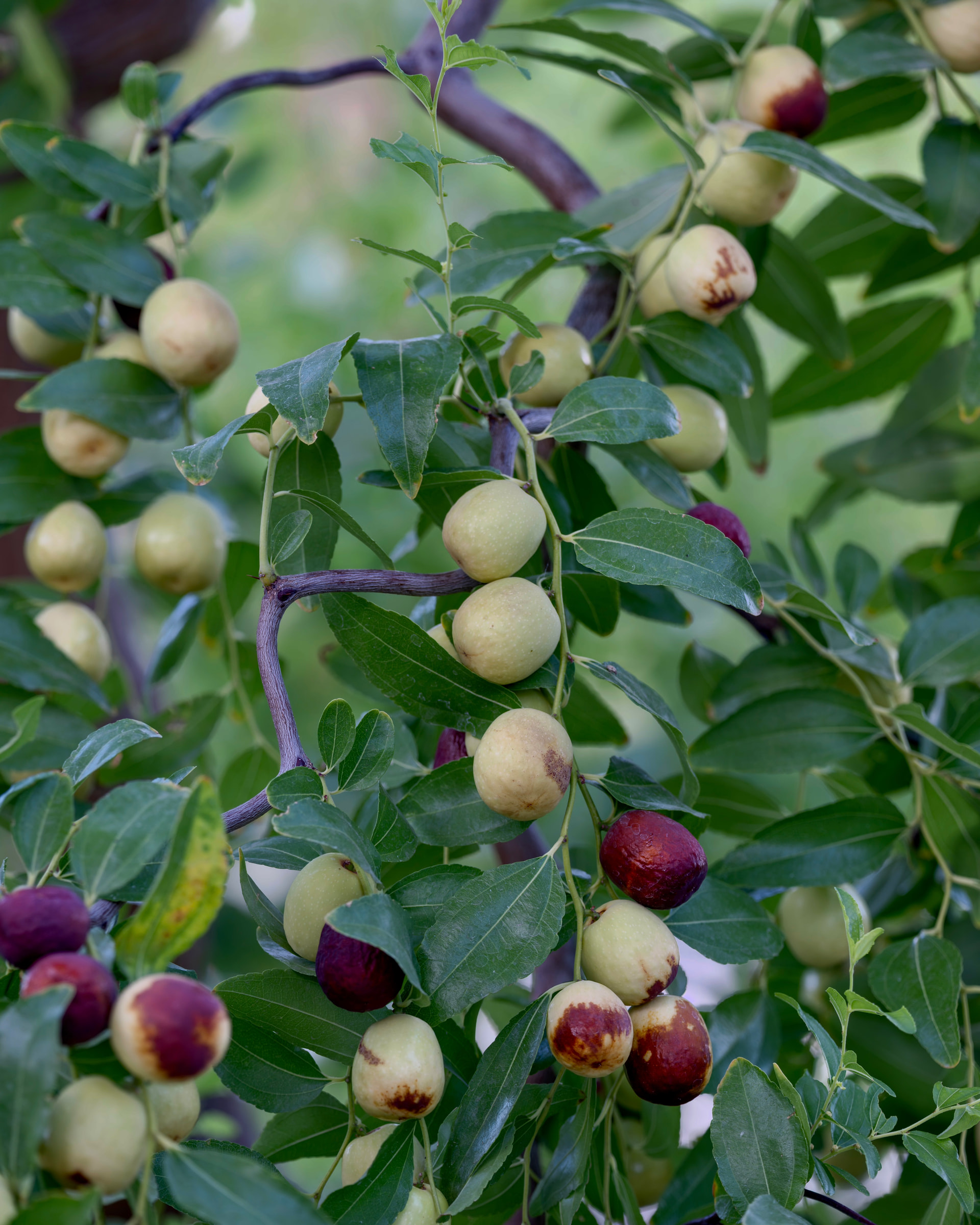
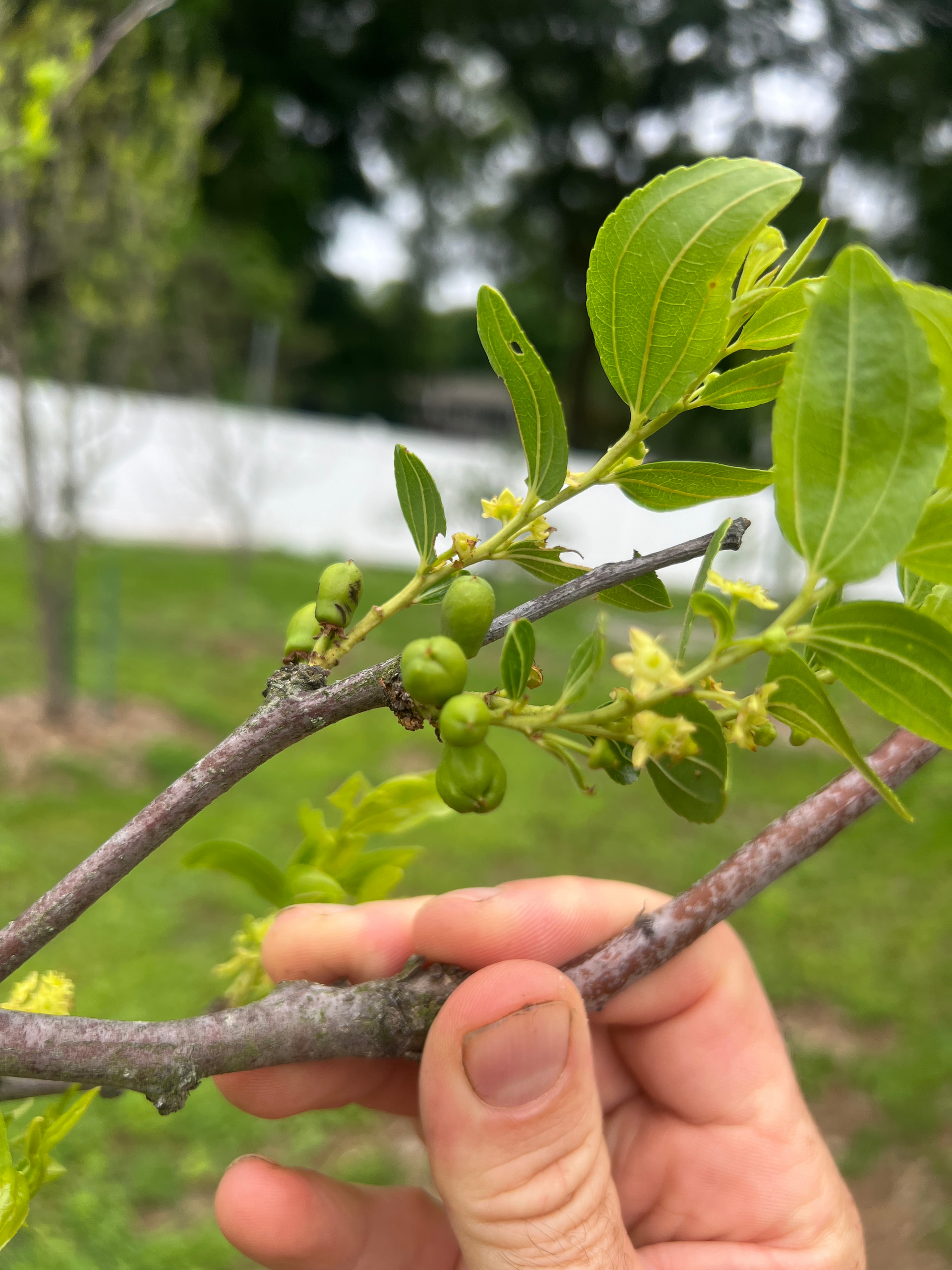
Here are some pics of the recently transplanted Shanxi Li. There looks to be way more fruit on there than the tree can hold, especially given how few leaves there are.

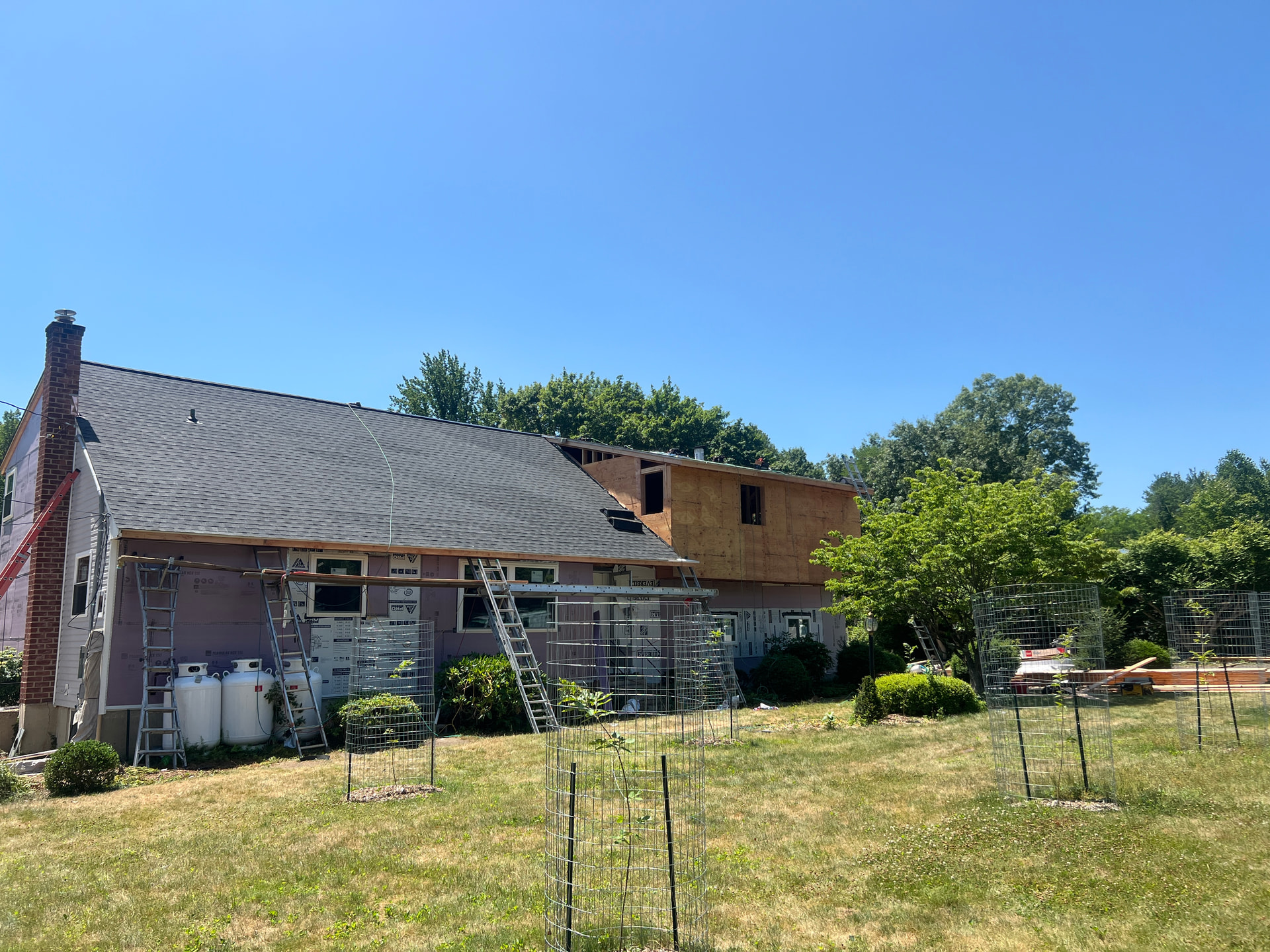
I haven’t seen any in there yet, but there is pretty high deer pressure in the neighborhood. In the front yard I’ve put mesh around each tree. This is the North side of the house, so the front yard is all chestnuts and mulberries, trees that can get taller.

I am a bit worried that the deer will eventually jump the fence. It is only a 6’, something I’ve heard they can get over. So, I’m in progress of building a 2nd interior fence/trellis for muscadine and kiwi, about 4-5 feet inside the outer vinyl fence. My understanding is that deer won’t jump if the landing area isn’t clear.

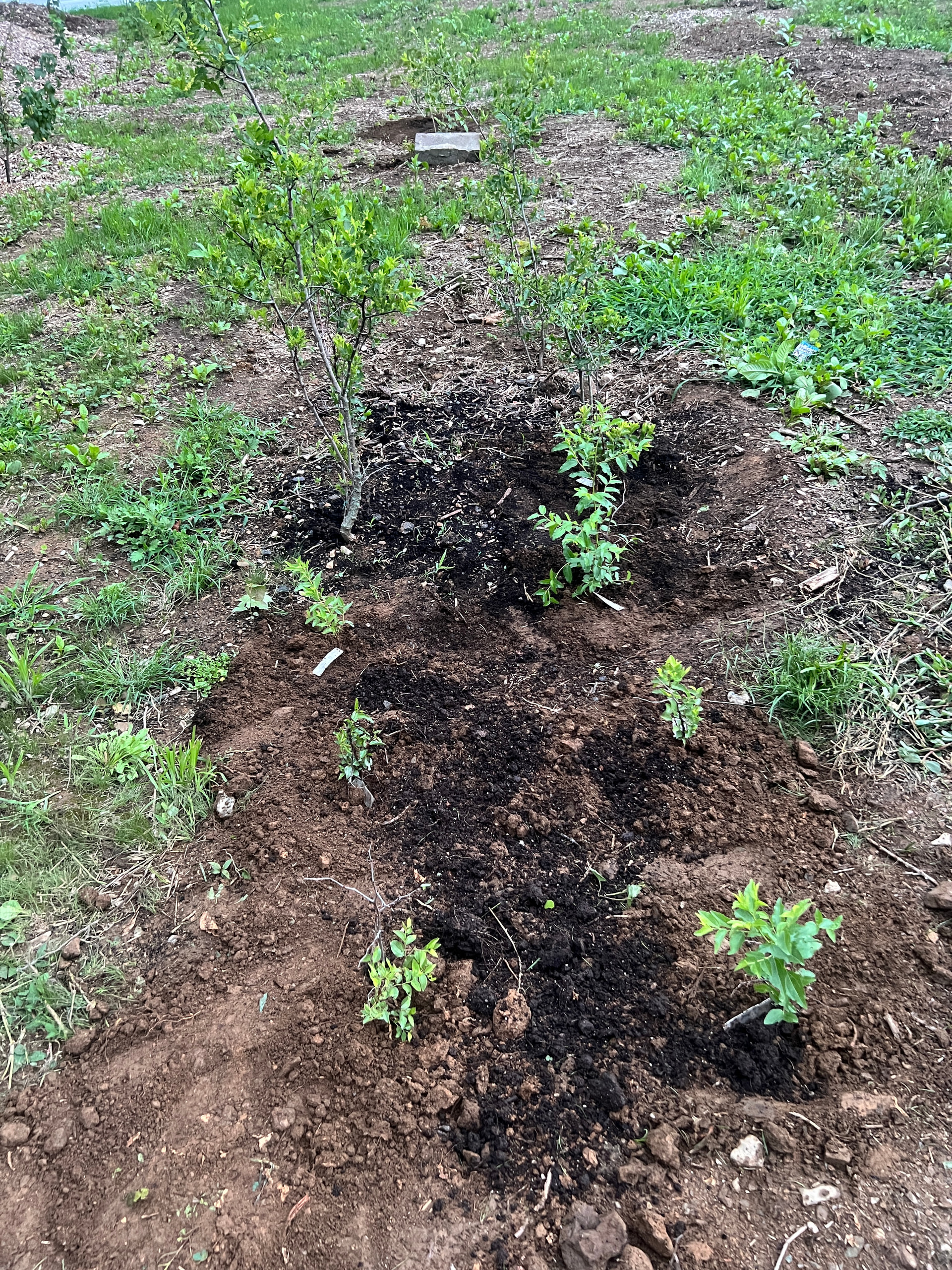
It is cooler and cloudy/raining this week (last week was 95+F), so I decided to transplant more from my current yard. I moved a bunch of leeks for my wife, raspberries, and 7 seedling jujubes.

I want to move as much as possible. Once I get each area cleared at my current house, it is a lot easier to mow/clear things. Right now, this is the area I’m working on…

5 Likes

Hi, is Confetti cultivar the same as Tsukerkovyi (Ukrainian cultivar), I think it’s also known as Konfetnyi (russian).

@Harbin may be better able to answer that question

Yes, I think the description from OGW included that name.

1 Like

@BobVance my second leaf Fucui Honey is beyond loaded and I ate my first few today. Best jujube I’ve ever tasted for sure but you put it in your top 10 so I knew it would be really good. Crunchy, juicy and sweeter than my friends GA866 I haven’t tried as many as you of course to compare.
I also have a large Sugarcane right next to it I’m sure they cross pollinated that’s also loaded. The Sugarcane is staring to ripen now with brown blushing at the tops. Seems kind of early but I’m not complaining. Also the sugarcane is still flowering but the FH stopped probably because it was fruit overload.

Our Honey Jar fruit is already done and we enjoyed a little over dozen or so of them this first year. My GA866 and Sugar Cane did not keep any fruit. I have maybe a dozen between the Li and Langs that are not yet ripe.

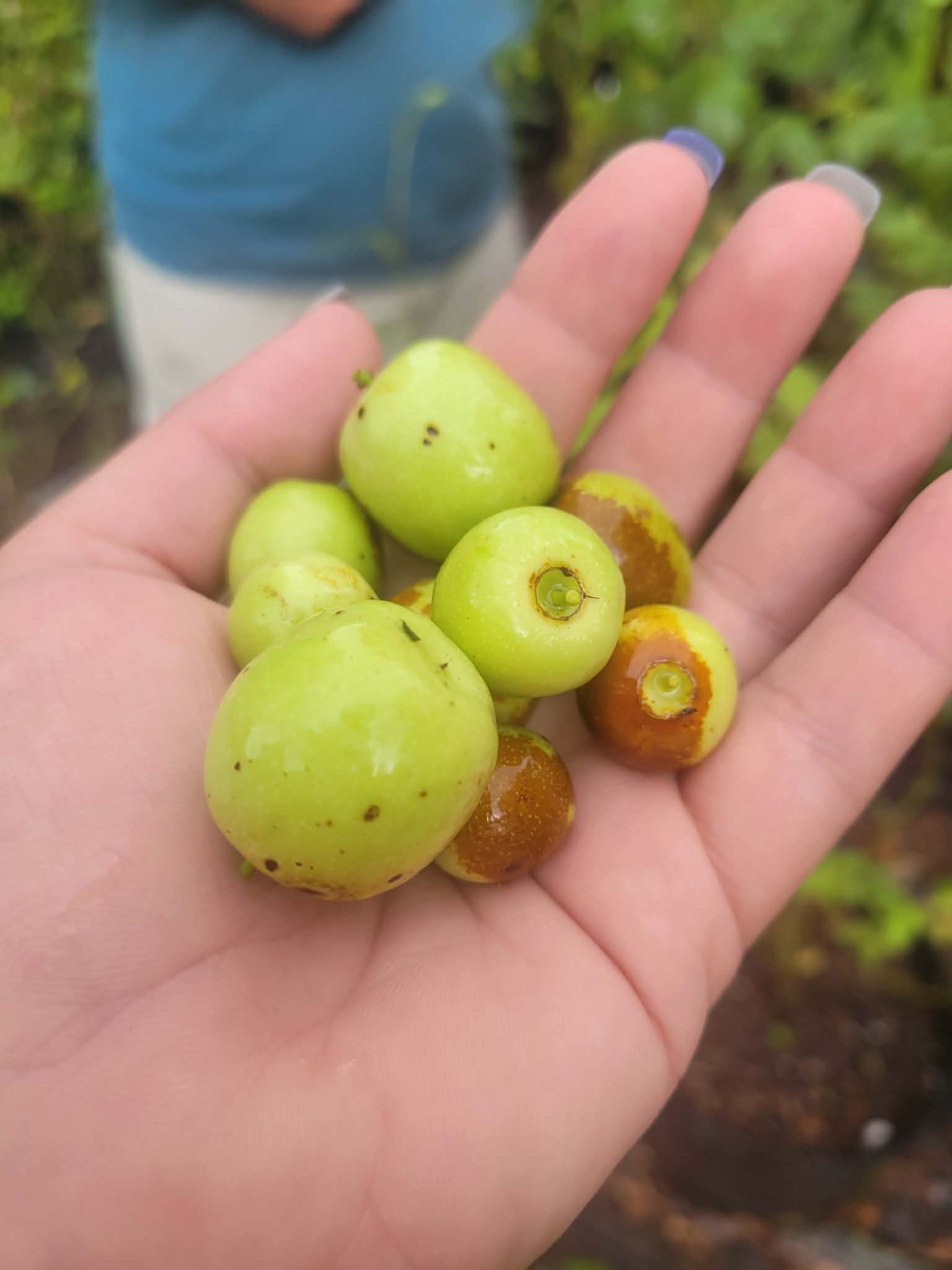
Family taste response on the Honey Jars - interesting. Good. Good in small doses. Nice to snack on. Would be nice to snack on while picking and gathering other fruit (lol). One thing interesting to me that is a testament to the sweetness of the Honey Jar fruit - I had an ant infestation over the course of a day and a half, and they would literally get into a fruit and eat the inside out of it and leave nothing but the seed in a hollowed out, ripened paper like shell. They were like tiny little paper lantern seed pods with the seeds loose inside of them. Only the ones the ants had gotten into.

1 Like

Did you let any HJ turned more brown than in your pic? I usually won’t pick HJ until they are at least 40-50% brown.

Yes. That handful was just the only picture I had. I went to various amounts of brown (including all the way brown/redish). For me I think the green with slight bits of brown had the best taste and crunch texture.

Maybe it is a climate thing, but I prefer at least half brown. Honey Jar keeps it’s texture here very well. To get soft, you’d need to leave them for a while beyond the 100% brown mark. But maybe the hot temps you have in FL make them soften quicker.

One other thing to keep in mind is that sometimes the first few fruits I get from a tree (especially young ones) have sup-par texture, so matter what level of color they have. If your total crop is a bit over a dozen, I’m guessing it is a young tree.

For me, Sugar Cane and Fucuimi (which I assume is FH) are often the first two to ripen. I’m a bit jealous that you are beating me there by about 2 months.

I’ve seen Sugar Cane keep flowering and setting fruit, even though it was already overloaded. That time, it produced a massive amount of good sized fruit, but the brix was low. At least for the first half of the crop. Once things had been picked down to a manageable load, the fruit improved at the end. In contrast, I’ve seen other varieties get overloaded and just make smaller, but very sweet fruit. I’m going to keep watching to see if this sort of thing happens more in the future. I’m wondering if the behavior is driven by cultivar, or by the timing of sunny/rain conditions relative to the fruit development.

1 Like

It has been an odd year for my jujubes in Las Vegas.

My jujubes are pretty established now (five or six seasons) and have received the same treatment as every other year, including daily irrigation in the summer. The summer hasn’t been quite as hot (so far) as the last couple years.

All my jujube trees are very productive (much more so than my jujubes planted in Georgia) and started ripening a week or so ago, but fruit quality has been underwhelming so far for 2026.

My Honey Jars are considerably smaller this year – about the same size as they are in Georgia. (Usually the Vegas trees produce bigger fruit.) They are pretty good, but are slightly lower quality (less crunchy) than normal (though they remain very sweet):

In contrast, my So (Contorted) jujube fruit is much larger than average, and considerably larger than Honey Jar. They are about twice the size of Honey Jar (ordinarily, the two are of roughly similar size). However, the fruit on So is not crunchy this year as it has been in years past, and is of significantly (rather than slightly) inferior quality compared to Honey Jar:

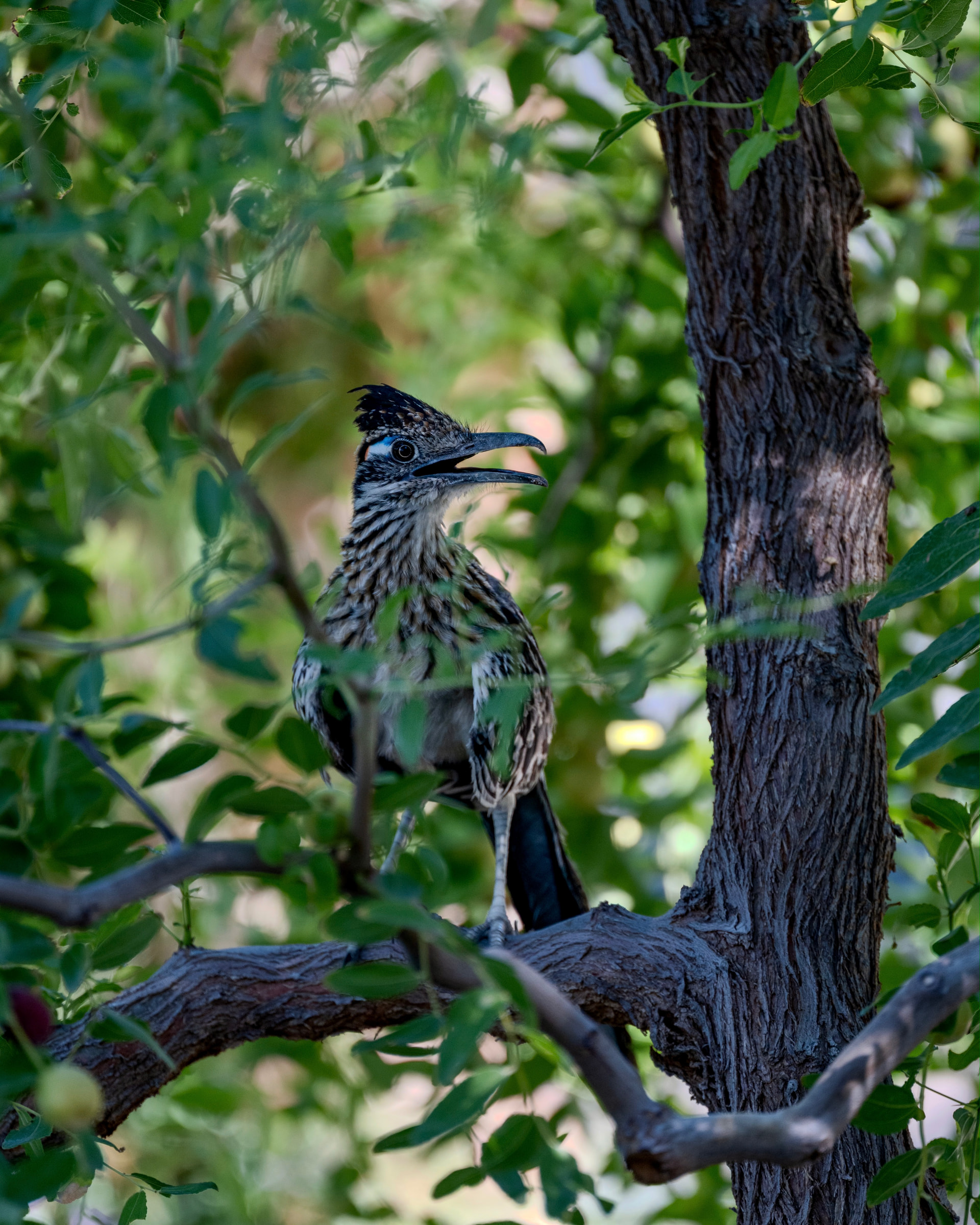
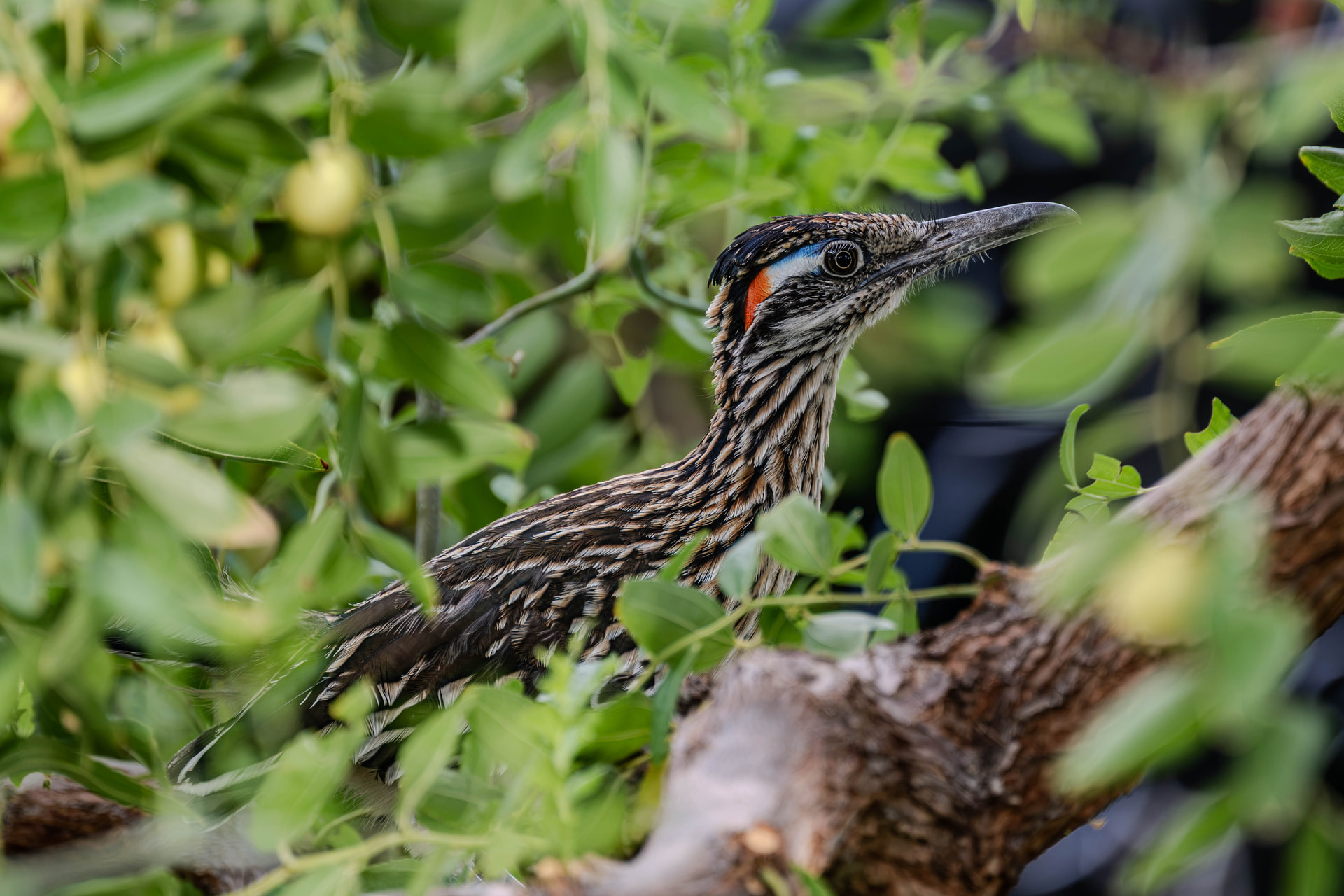
A Greater Roadrunner likes the So tree and I sometimes see him in there taking shade. He doesn’t appear to eat the jujubes, but he seems to consume a great deal of insects, and sometimes makes a play for the finches that come to eat the fruit. I don’t think he’s gotten any, but the other birds all hate him and I consider him an ally.

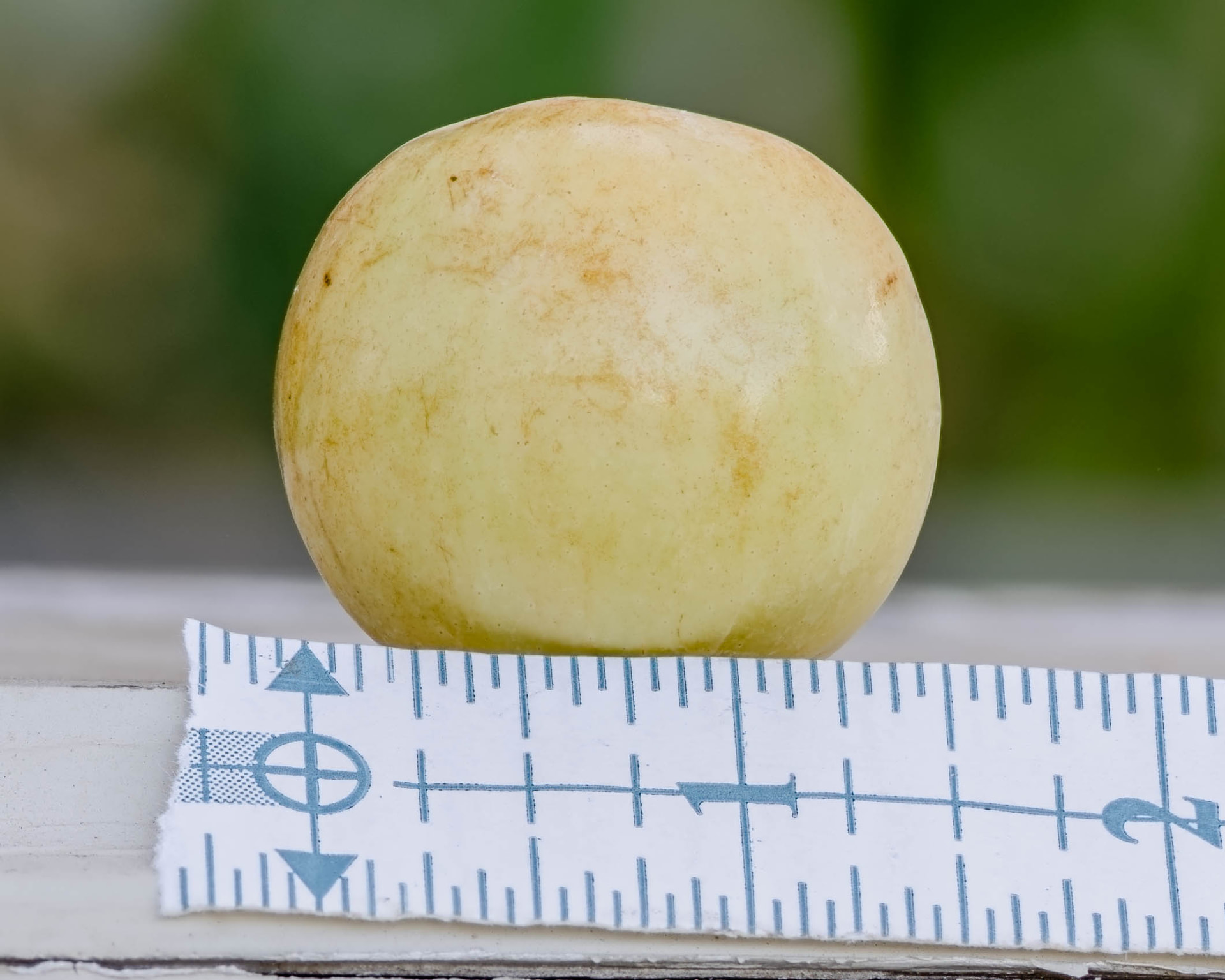
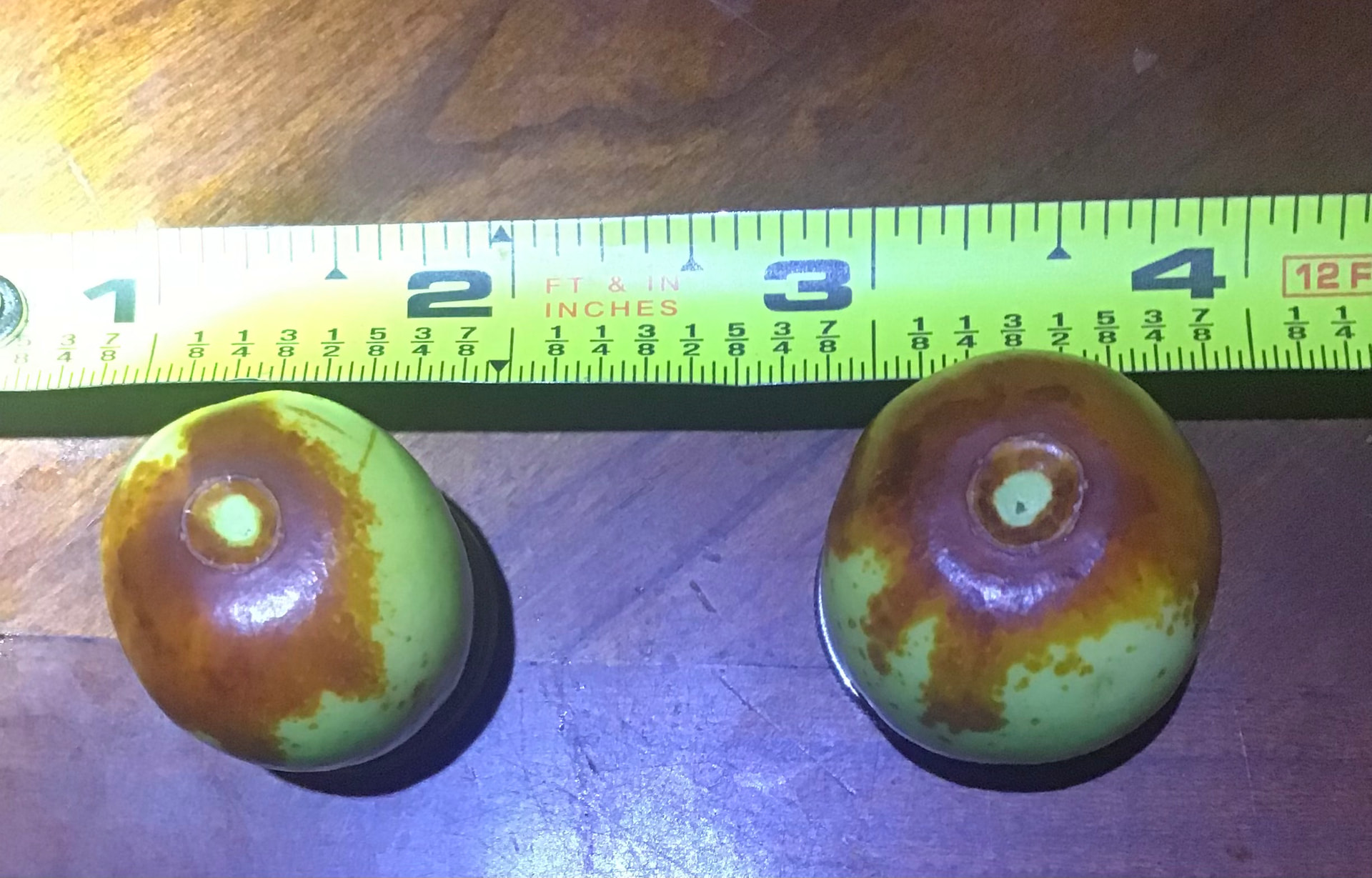
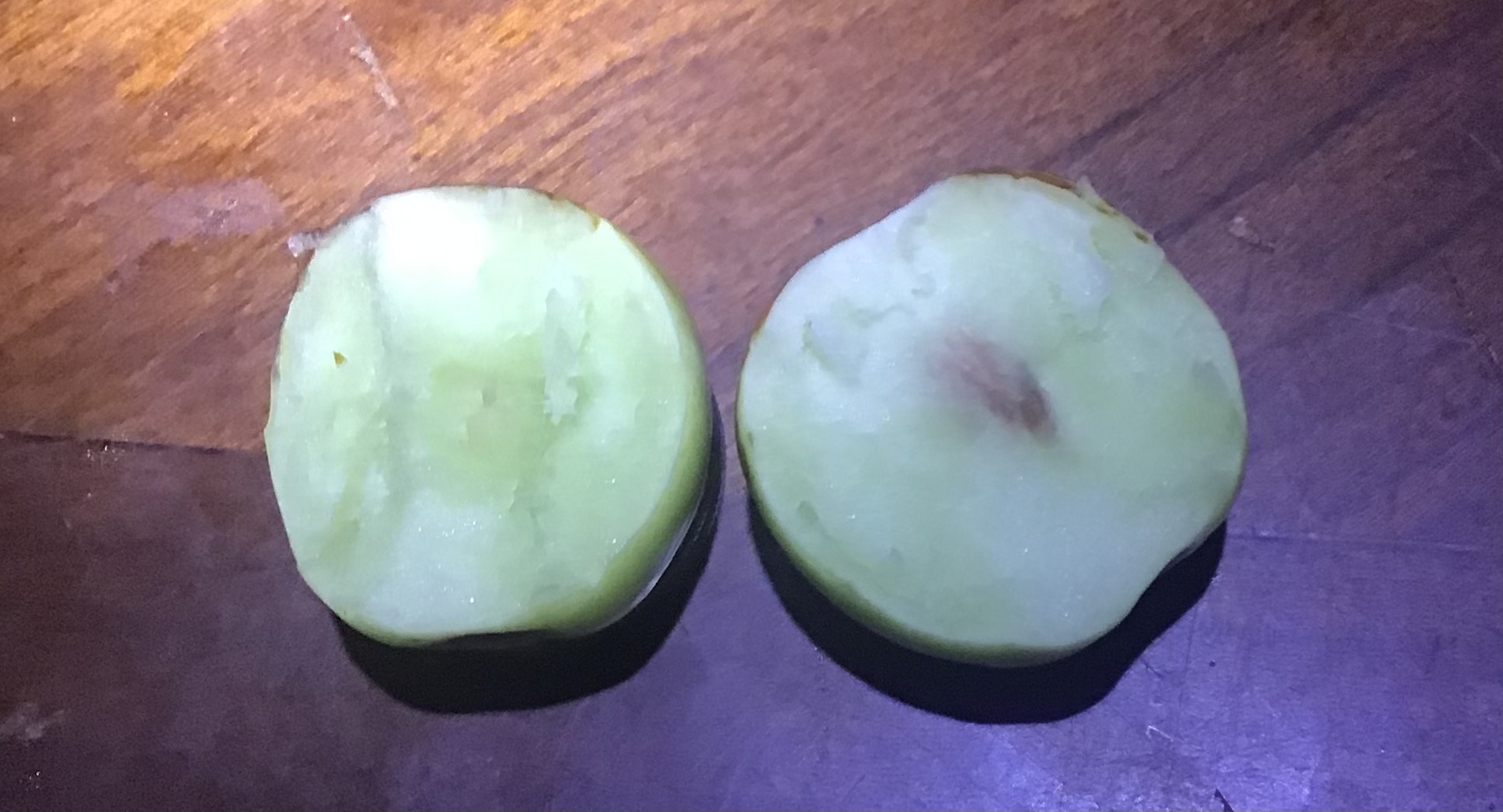
Chico is my biggest disappointment this year. It is my favorite jujube for flavor, but I am having a tremendous problem with cracking this year. Probably three quarters of the fruit are cracked, and this is before they are even ripening. Plus, the fruit are very large this year – larger than in the past. Here is an immature one that I picked as an exemplar:

I know that Chico has a reputation for cracking in other locales, but my explanation (up to this year) was that the extremely regularized and controlled watering schedule (and the fact that it basically never rains here) was insulating me from the problem. Evidently not.

On a positive note, the few uncracked, mostly ripened Chicos that I have sampled have been excellent, with its distinctive tart flavor and good texture.

This is the top of the crown of the Chico. It is nearing 20 feet tall and will need to be trimmed down this winter:
4 Likes

When should I expect to start seeing fruit if any is going to set this year in SE PA? I think they’ve been flowering for like two or three weeks now?

I’ve got a Li and Sugarcane tree on, I think, their third year. Had a sole Sugarcane jujube last year I found at the end of the season way up in the top of the tree I didn’t know whas there until probably October. Was pretty good, but would like to see increased production. :slight_smile:

Some of those So look pretty shriveled. In a video, Roger Meyers said that when the santa anna winds hit his area of CA, everything would dry out and the trees would take some of the water out of the fruit, damaging the texture. Did you get a dry stretch? Maybe followed by some rain/watering which caused the Chico to crack?

The other possibility with the So is that I often get a few prematurely ripened shriveled ones with poor texture. But, it is very few, generally at the start of the season.

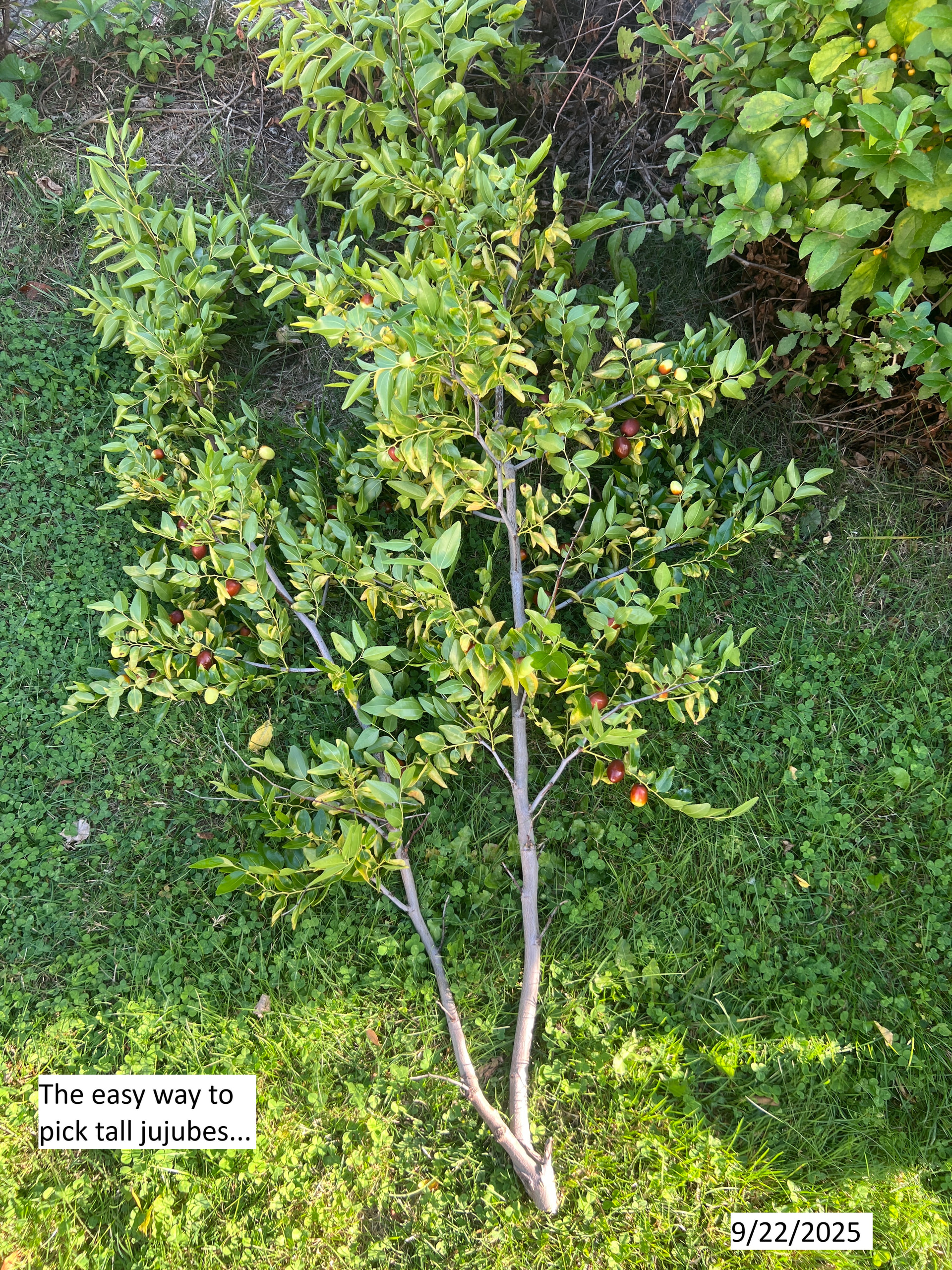
I tend to prune jujubes at 2 times, neither of them winter. I often prune in late June to stimulate fruiting. The other time (probably more relevant for you) is at harvest. Once a high branch is mostly ripe, I cut it off and pick them from the ground, rather than on top of a ladder.

Good news and bad news- when I cut wood this spring, I recorded where I got it from and when I looked later, I found that I grafted the branch that should be Pan, not the one that actually had Pan fruit. But, the good news is that the branch that should be Pan looks like it may actually be Pan as well.

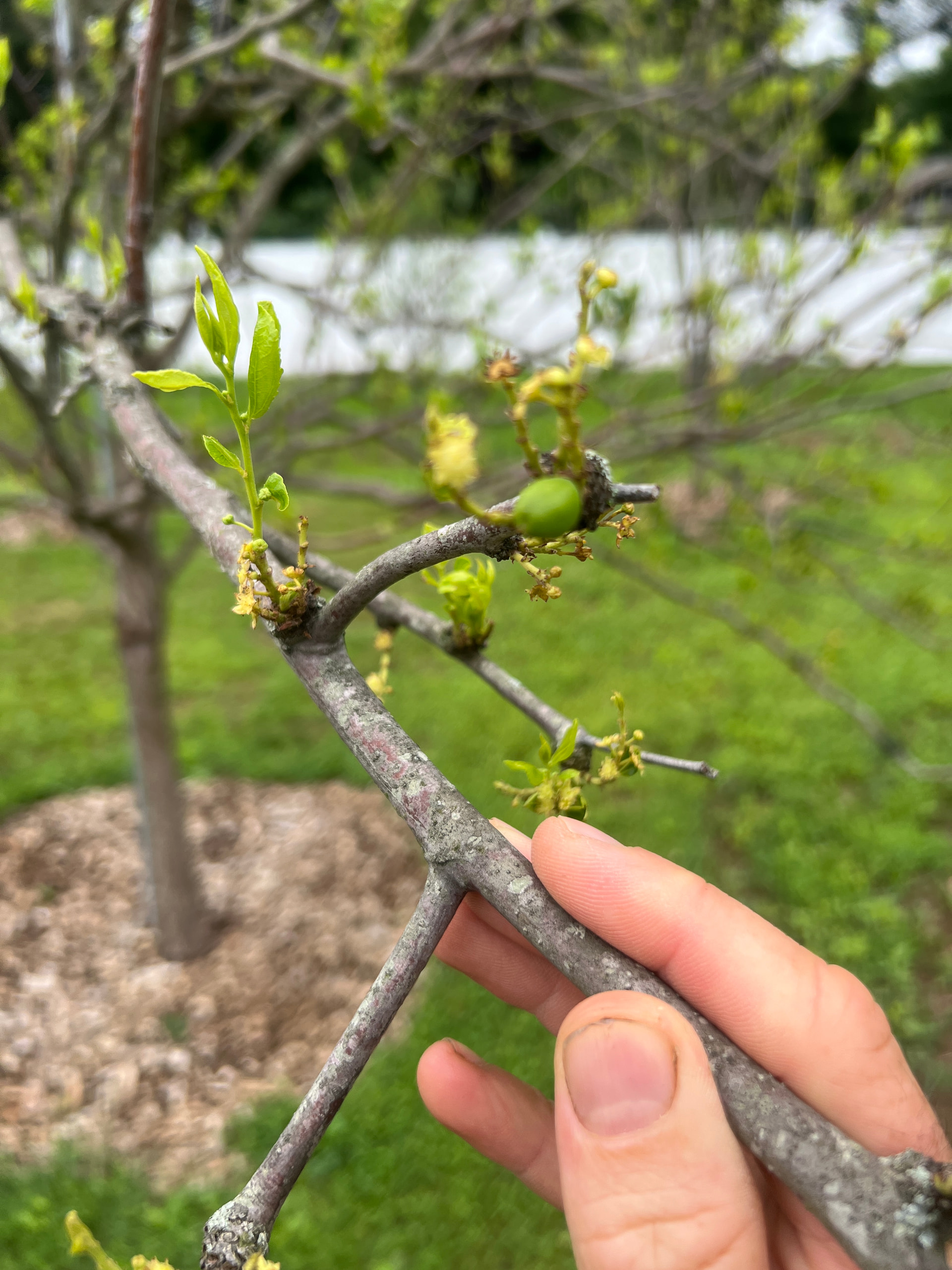
Here is the Pan which fruited last year:

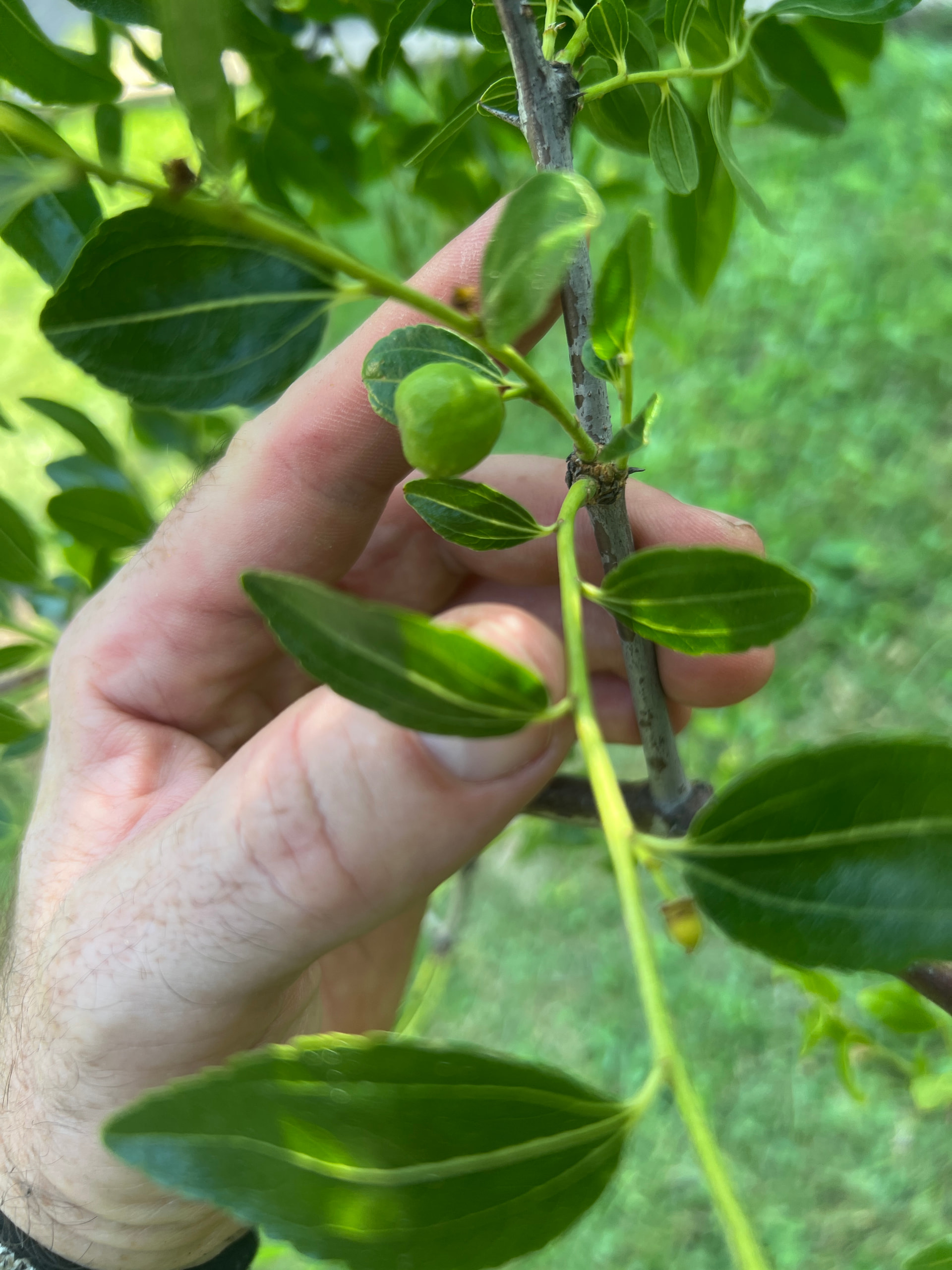
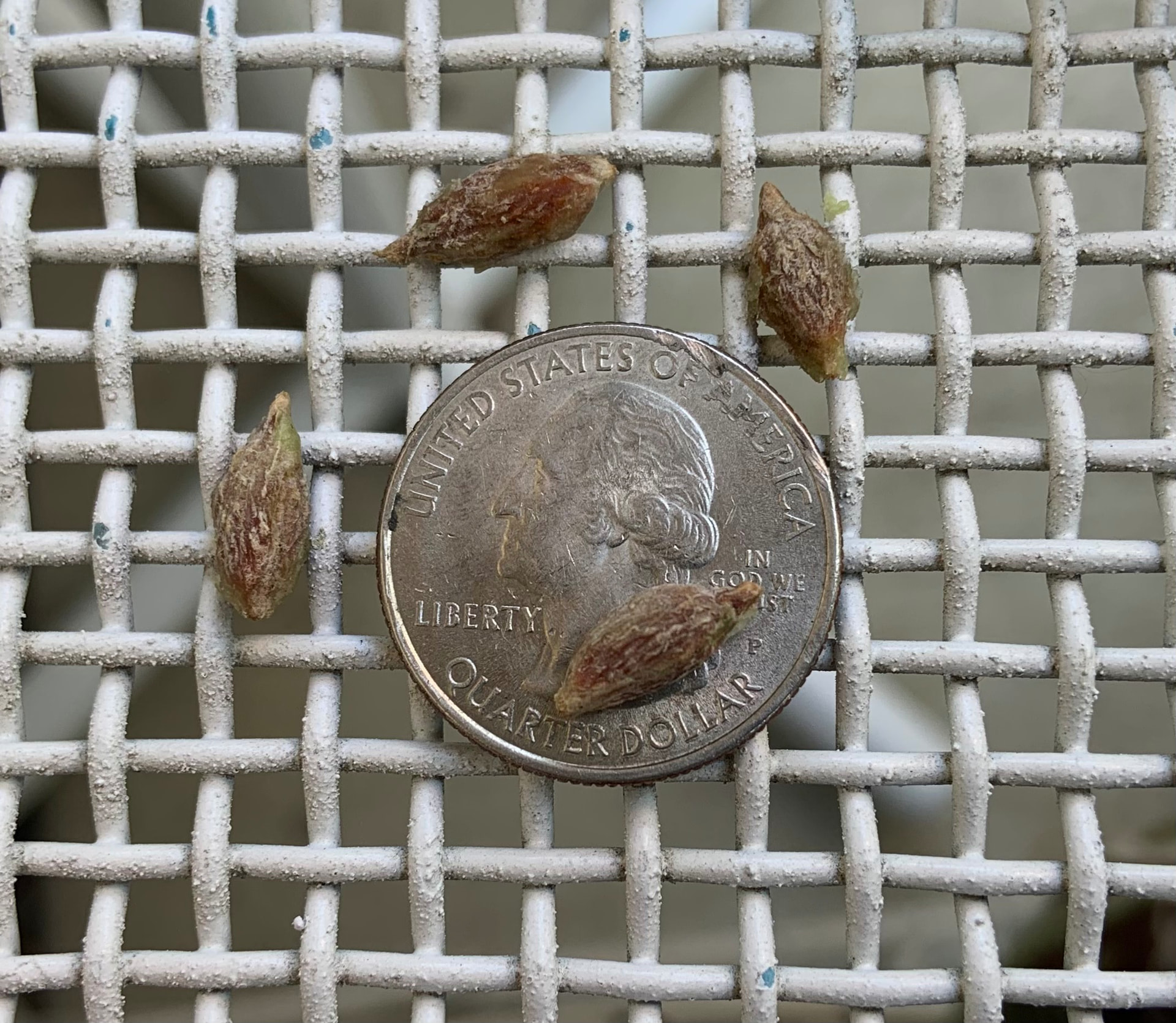
Here is the graft which should be Pan, but has never fruited before (note that both Pan are flattened on one end of the small fruitlet):

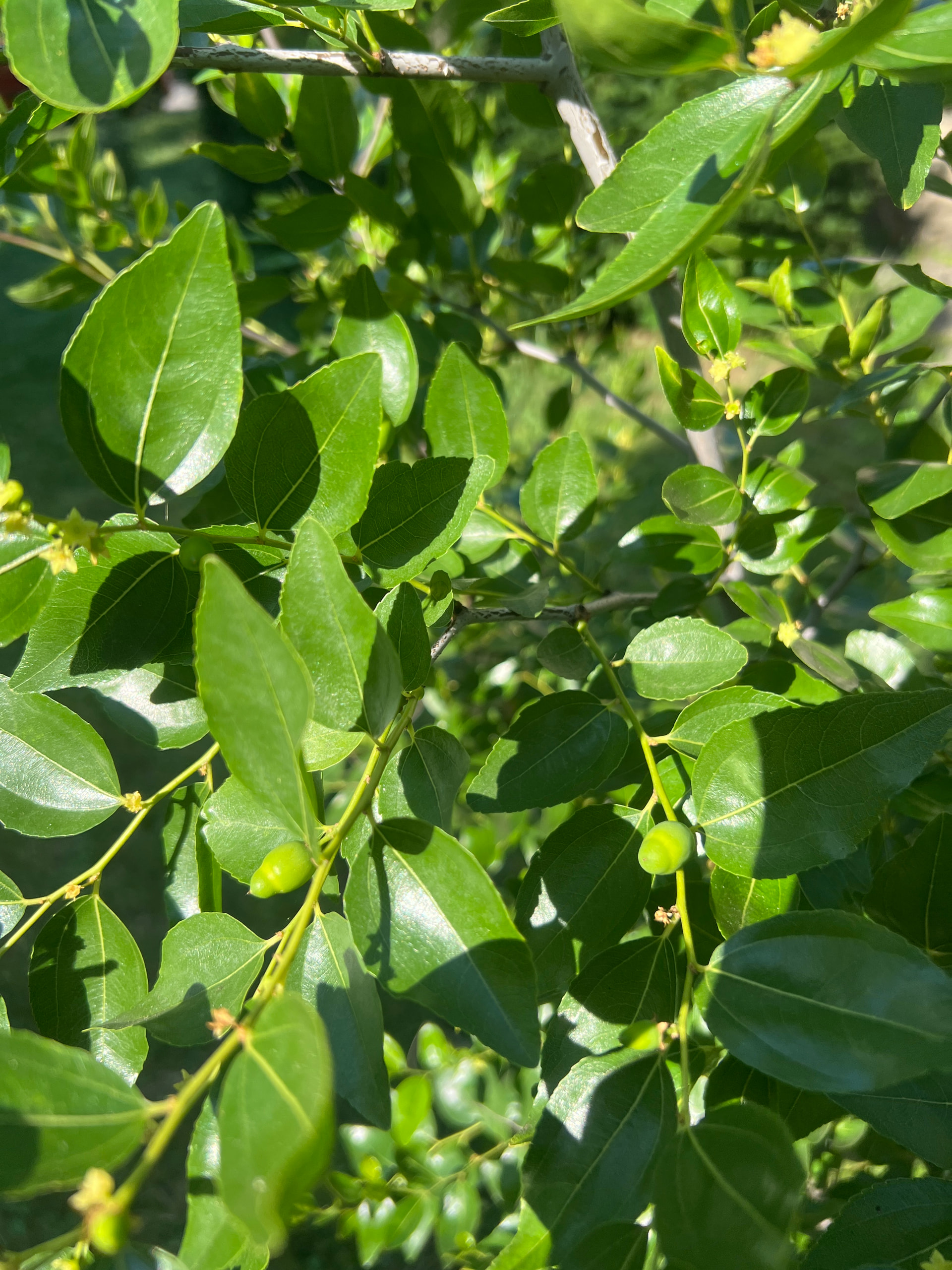
Sugar Cane for comparison at a similar level of development:

Black Sea often has an Interesting shape early on. It is usually less pronounced when ripe.

3 Likes

These trees are in Las Vegas, so there is basically no rain. However, the trees are irrigated daily, with the same schedule I have always used.

Other than the fruit, I haven’t noticed any signs of water stress. The trees are growing vigorously and look lush. But perhaps they have gotten so big – and are fruiting so much – that they need even more water.

Come to think of it, they are at least a week or so early this year. That would be another point in favor of inadequate watering. One confounder is the fact that the fruit on So (and Chico) is bigger than it has ever been.

Thanks for the tip; I will try that out.

3rd year is just getting started. It should generally increase each year until it is really pumping around 7-10, though there can be ups and downs depending on the weather. And beyond 10+ it seems to get more reliable. I got very little fruit from most of my So last year (a bad year), except the 15 year old one, which shrugged off the weather and produced a fairly normal crop (20-25 lb vs 50 lb in great years). On the other hand, a smaller tree might produce 0.1 lb vs 4 lb depending on weather.

Of course, the above is for me in CT, just North East of NYC. Other, sunier regions will likely be faster. And I’ve also had properties which were slower (either shaded or soil which doesn’t hold enough water). If shaded, cut some trees (hopefully not houses…) down. If the soil doesn’t hold water well, add mulch and break out the hose :slight_smile:

2 Likes

I think part of the reason my older trees are more productive is that they have big enough roots to consistantly get to water. Maybe watering more heavily and deeper, but slightly less often, would stimulate a bigger, deeper root system?

All just conjecture for me, as my climate is so different. Most of my sites don’t really dry out, other than the top layers. But I remember being surprised at the site where the jujubes weren’t growing when I dug a hole for a new tree and the soil was bone dry, a few hours after a rain-storm. After 3-4 years of almost no growth, trees there have done a lot better once I started adding organic mulch on top and periodically (maybe every few weeks) letting the hose run for a while (like 5+ minutes on a tree) in the summer. I’m now back to not watering much, but the trees seem much better. Maybe they’ve gotten their roots big/deep enough to get to water on their own.

I should clarify- I’ve seen common advice to prune in the winter. I just don’t get around to it. If I prune at those other two time (which provide concrete benefits), the trees are generally kept in check enough that I don’t need to do any winter pruning. Though occasionally a tree gets too bushy (often a So, which usually takes a bush form rather than a tall tree) and need some branches to be thinned out to make sure enough sun gets to what is left.

3 Likes

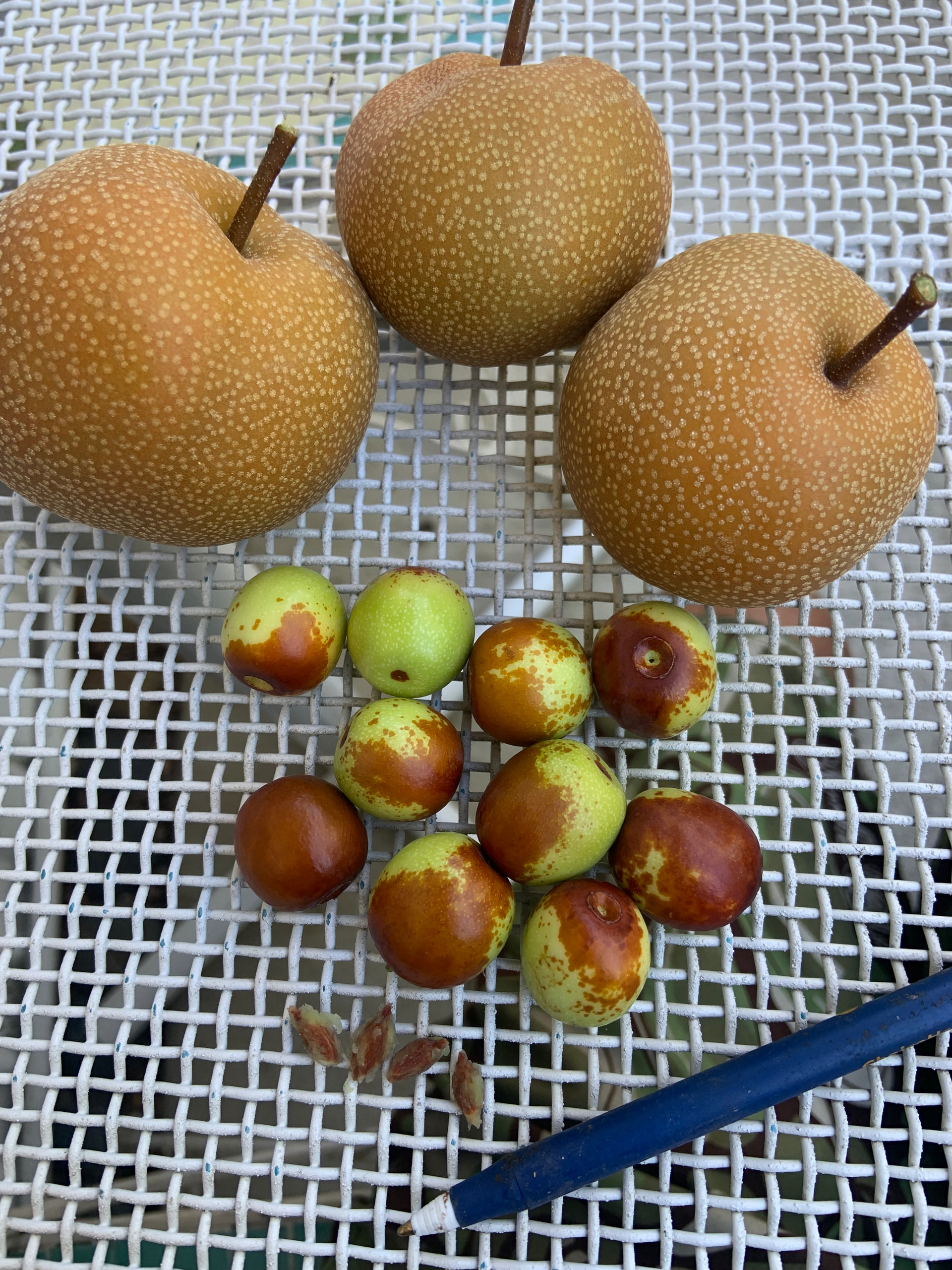
Sugarcane is still turning color on top but they still don’t seem close to ripening just yet. Been eating and sharing a lot of the Fucui Honey though. Does this look ttt?


5 Likes