It’s looking more and more like KSDS is from Asian or hybrid Persimmons grafted to 60 chromosome rootstock, whether it’s actually a bacterial cambium infection or some sort of self pruning mechanism/delayed graft failure, I’m not sure yet.
But I don’t think we have a confirmed 90 chromosome rootstock KSDS yet, do we?
Also it would be interesting to see if they can survive with a 90 chromosome interstem?
Trav - I think that again you are leaping to conclusions. This seems wrong on both ends.
It’s called “Kaki Sudden Death Syndrome” for a reason. It kills Kakis. For example, in my own yard (and my own grafts) I have lost (a) an in-ground Saijo tree, and (b) three grafts of Miss Kim. On the other hand, in-ground Sheng, potted Taishu, and potted Saijo (again, all grafted by me) survive.
Hybrids are presumably susceptible because they inherit from Kaki.
I’m quite sure that Missouri is in the 90-chromosome zone. So my infected tree from Stark (purchased as “Prok”) and my infected root stock trees from Missouri Dept of Conservation are all very likely 90 chromosome.
I concur with @jrd51 - Most of the D. kaki and hybrid trees I’ve lost to KSDS are likely on 90 chromosome D. viriginiana rootstock. I haven’t done any genetic testing, but the new growth of suckers from these rootstocks is different from the wild D. virginiana I see locally in my area. The local trees have shiny leaves, while the rootstocks (presumably 90 chromosome, northern race) have pubescent new growth with less reddish color. I’ve asked nurseries about whether there is any graft incompatibility between D. kaki and the 90 vs 60 chromosome D. virginiana rootstocks, and they’ve said no. A pathogen is a more plausible explanation for KSDS than graft incompatibility.
I am in southern middle TN and have lots of wild dv 60c rootstock trees.
I have grafted 3… 90c Americans to them Prok, Barbaras blush, H63A… these are in years 3-5 and are all doing well… growing strong with no sign of disease.. fruiting.
I have grafted 5 Hybrids to them.. Journey, JT02, Kasandra, Nikitas Gift, Dar Sofiyivky… and these are in years 3-5 and are doing well.. strong growers, 3 are producing fruit this year.
I have one Asian.. Saijo grafted to one of my wild DV and it is doing well, growing strong.. in year 3.. no fruit yet.
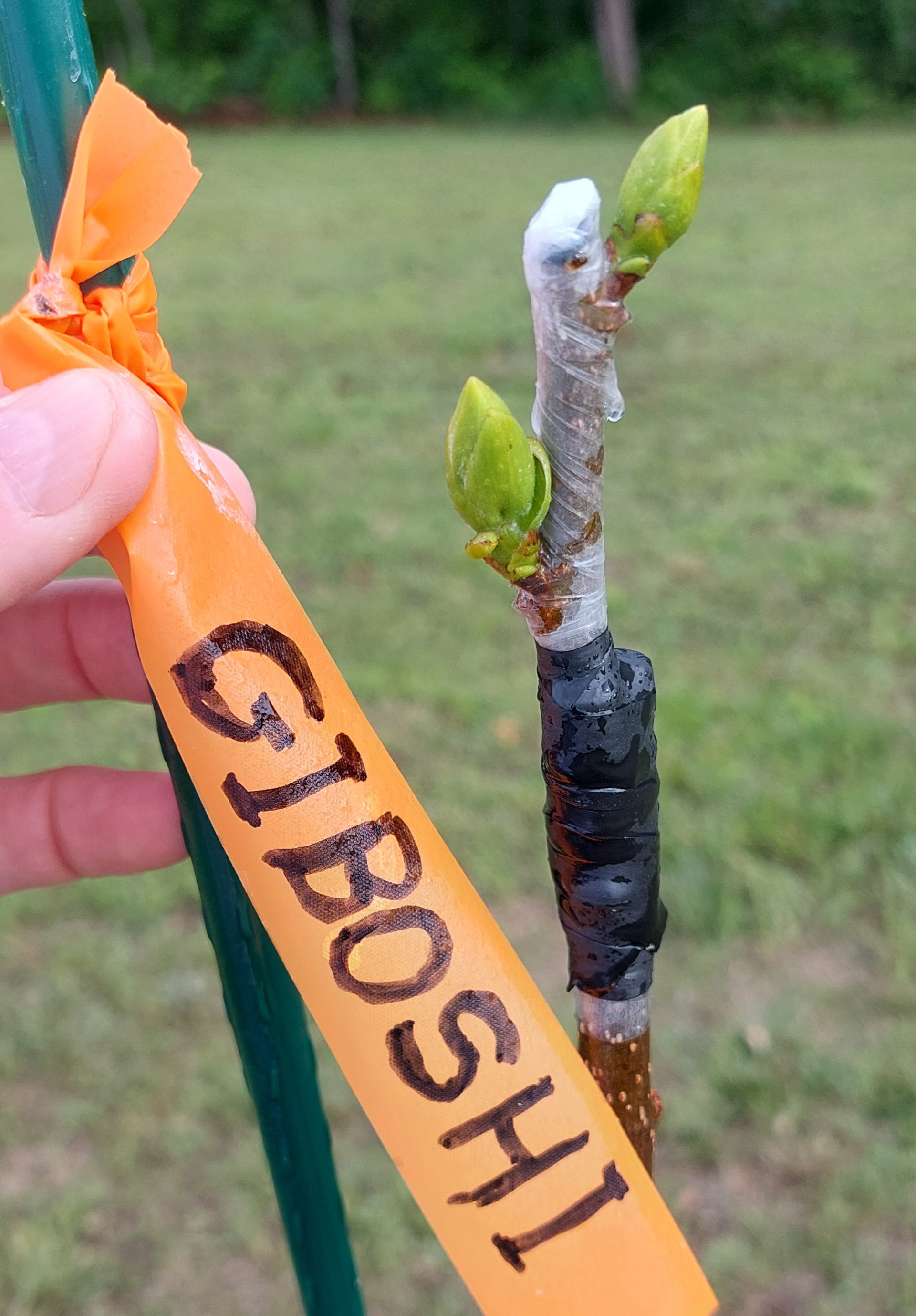
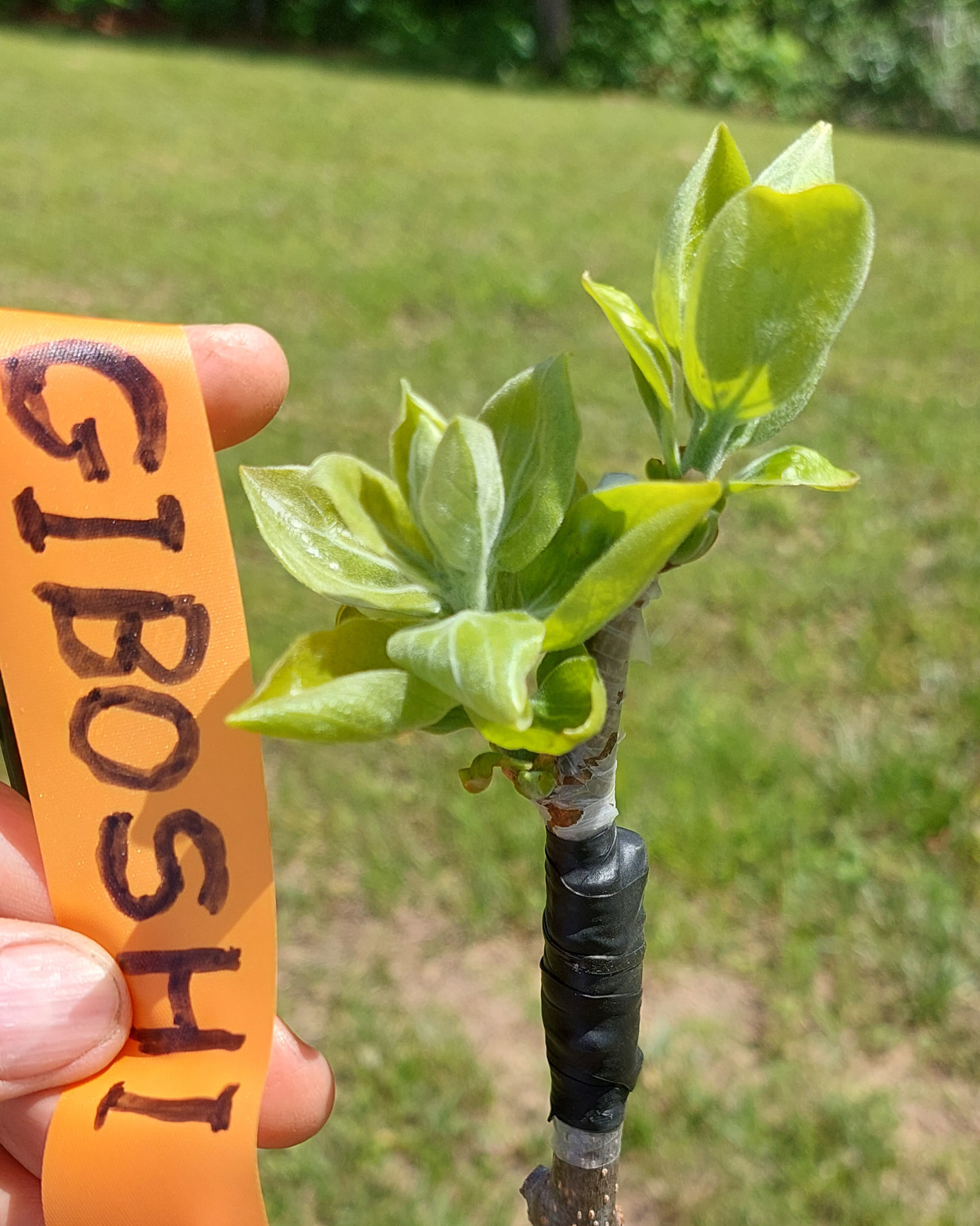
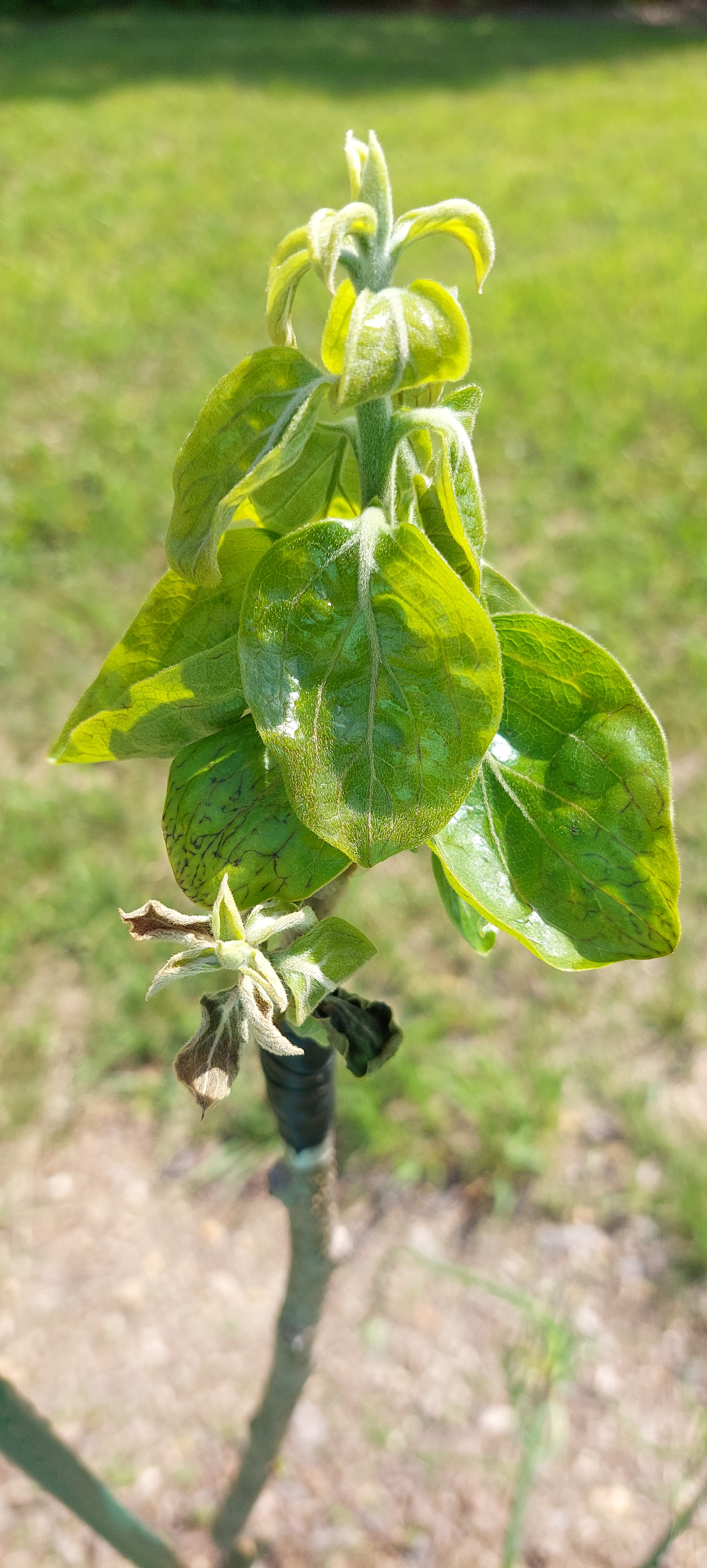
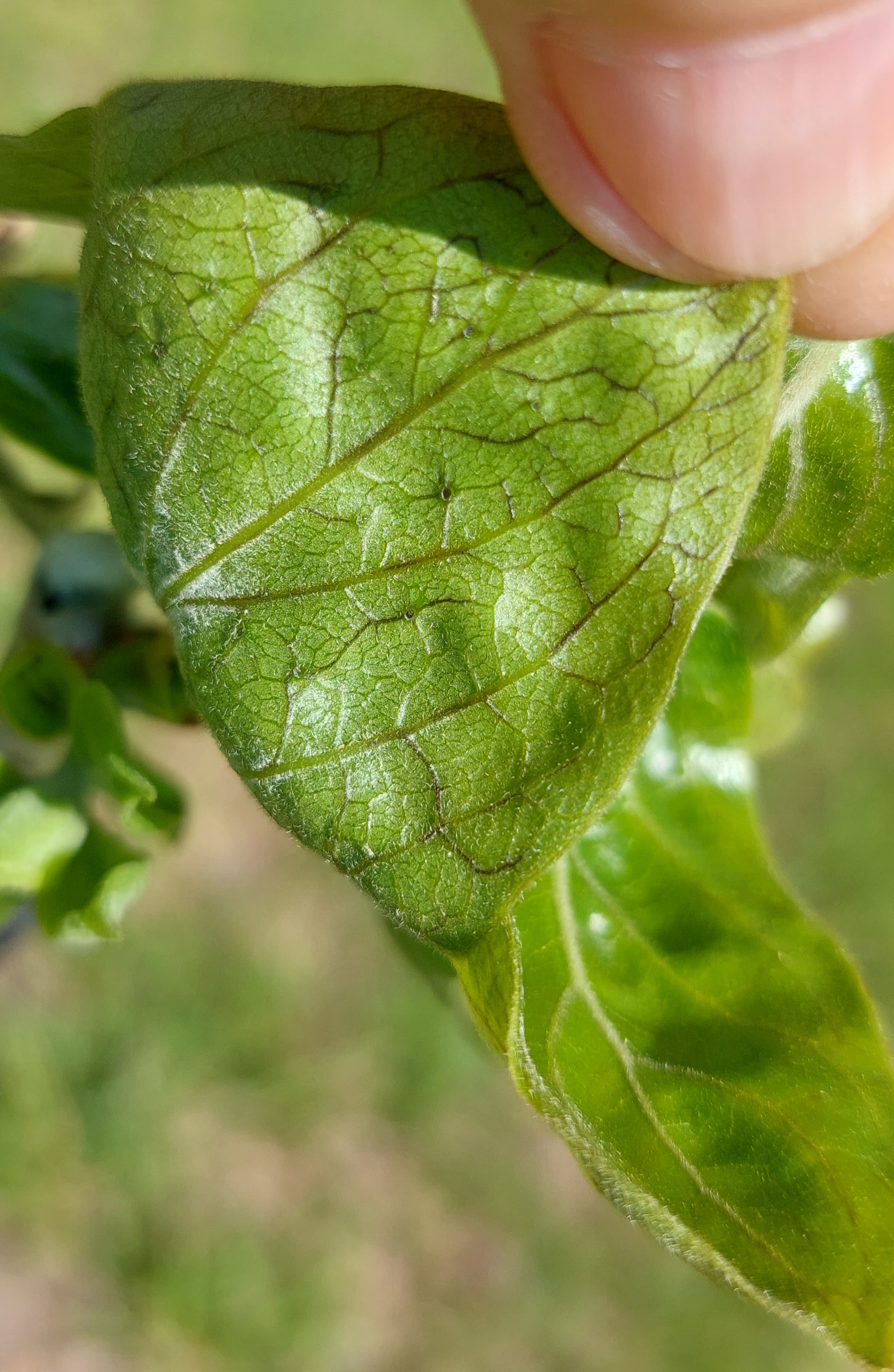
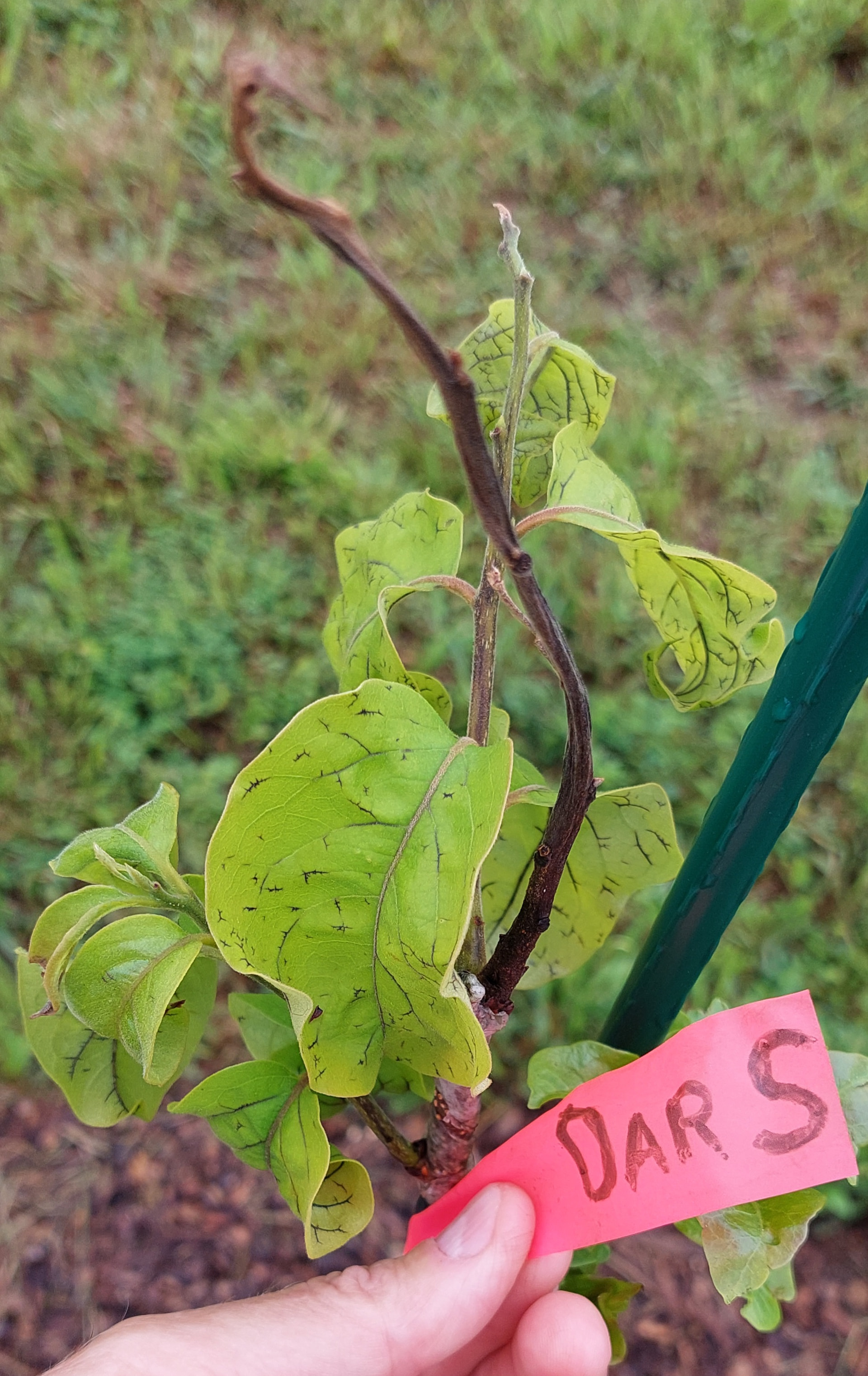
I have found one wild 60c DV out in my orchard… That seems to be a carrier of KSDS… year before last grafted Dar Sofiyivky to it and it did well initally… then a short while later died with the classic black vein thing happening. Then this spring I tried it again with Giboshi… the graft looked amazing, healthy, initally… then a week or two later died with the black vein look.
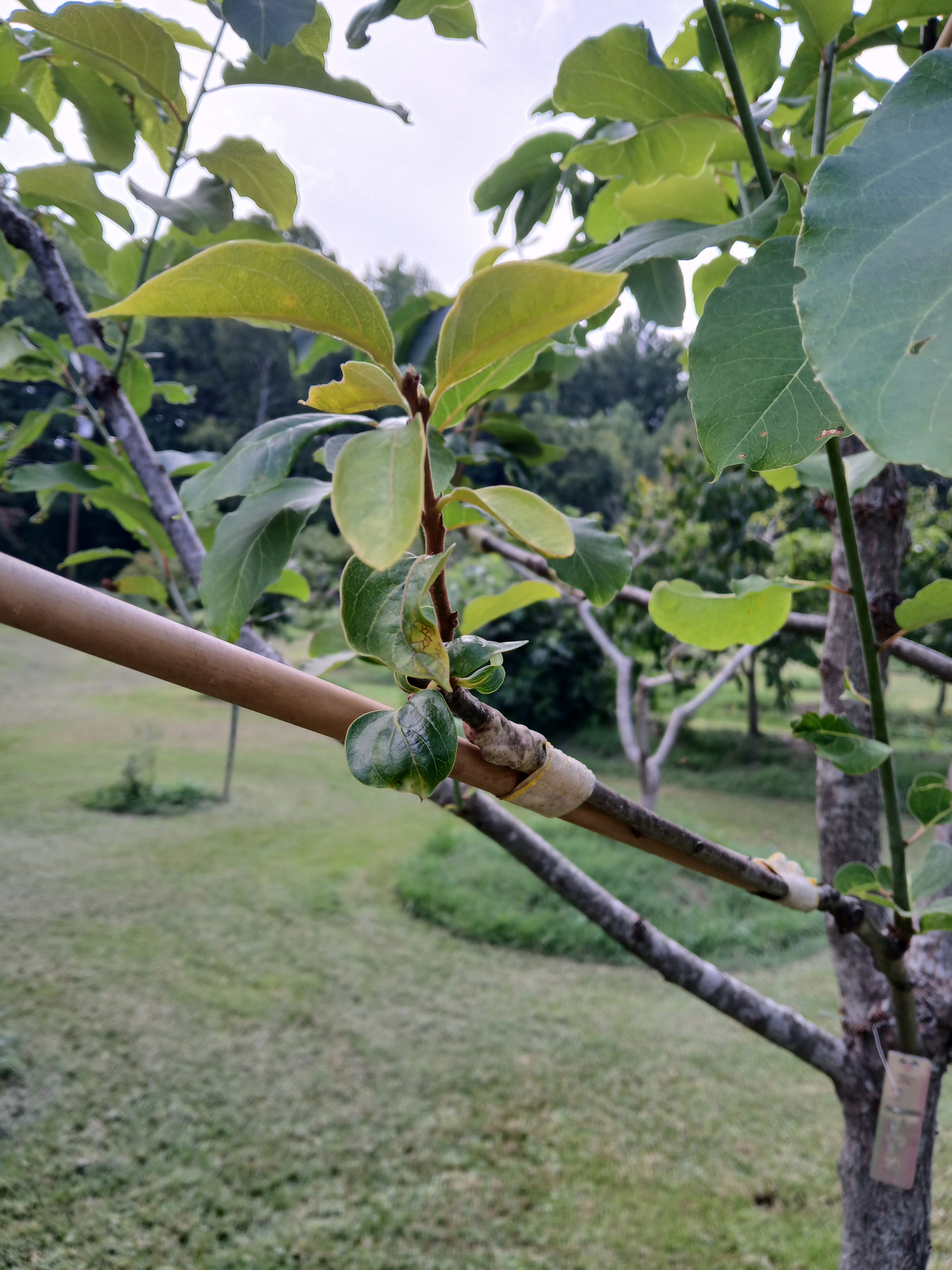
@scottfsmith Thanks for sharing your results throughout the growing season. This past spring, I grafted D. kaki cultivars (Kyung San Ban Si, Sheng, Maru, Hana Gosho, Lindy’s Giant, Giombo, Luo Tian Tian Shi) and hybrid cultivars (Sosnovskaya and Pamyati Chernyaeva) to three well established D. virginiana trees in my yard that I suspected were infected with KSDS but asymptomatic. Almost all of the grafts took initially and grew at least 3 inches before any had any KSDS symptoms (except all three Maru grafts which never grew at all). All of the grafts on two of the rootstock trees died back after that point (around a month after grafting), but on one of the rootstock trees most grafts kept growing to 1-2 ft in length. Only then did the kaki grafts start to die back from what looked to me like KSDS. The two Kyung San Ban Si grafts on that tree hung on for months, and one is still alive but looking rough with a few black leaf veins, yellowish stunted leaves and very little growth (see photo below). One Sosnovskaya graft on the same tree looks perfectly healthy and one Pamyati Chernyaeva graft is not as vigorous but still looks okay with no KSDS symptoms. The other PC graft on the same tree died back after growing a few inches. Both Sosnovskaya and PC grafts also died back quickly on the other other two rootstocks. These results make me think that there could be differences in the resistance of different cultivars, but also that some rootstocks might be more heavily infected than others. It makes it a little trickier to assess resistance if susceptible cultivars can hang on for a year or more before showing symptoms, and if not all infected rootstocks seem to transmit KSDS to the grafts as quickly as others.
I also am thinking that there might be different degrees of infection in the various stocks. I have five total and all the ones still going are on only one of those five. Pure kaki failed for several years on this one good stock so it clearly has KSDS.
See my post today in the Hybrid Persimmons thread. JT-02 grafted to an infected tree thrived for like 5 years before succumbing. So yes it seems somewhat resistant but sadly not immune.