There’s both “Mosquito Dunks” (the donuts) and “Mosquito Bits” (the granules). Both are Bt, and interestingly both are from a Baltimore-based company.
1 Like
I recently saw a demo of the mosquito dunks, I was going to try it this year so I’m glad I see some of you using it and having some success!
In other news, I have been struggling with my blueberries. Well, maybe not struggling, but wondering if being in the ground is more trouble than it’s worth. I’ve been fighting the pH battle and using Espoma Soil Acidifier to try and get to 4.5. I can’t seem to get it to drop past 5.5 or even 6 in some spots of the patch. Anybody try mixing peat moss in the ground? Or should I just bite the bullet and get something raised and just do an acidic mix?
Raised bed. it can be hard to overcome soil that has a lot of buffering (eg caco3).
Also your water is likely (it should be) basic. So if you’re watering, depending on whether your water is hard or not, you may need to acidify it or add sulfur to soil occasionally in the long term.
2 Likes
Thank you! I wanted to tread lightly switching to raised beds just because I know they aren’t too unhappy where they are but I can tell the pH is holding them back. Maybe I will let them grow this season and then get them in a raised bed with a good mix during dormancy. They aren’t too big yet. It’s funny, I am near massive blueberry farms and I wonder what they do to get their soil right. Maybe I should look into that.
1 Like
One of my friends grows their blueberries in half wine barrels. She finds it really easy to manage the soil that way.
Farm probably uses a pond/well for water and probably adds lots of acidifier throughout the year/soil testing
1 Like
I really like the look of the barrels too. I wonder where I could source them. I don’t mind amending my soil but if it is proving to be more of a challenge just to upkeep then I’d rather grow raised. I just hope there isn’t too much transplant shock if I do it during dormancy… I guess we will see!
Noticing a strange trend in the orchard over the course of years. I have a good number of plum trees. Most in full sun and a few in extreme partial shade. Oddly the shaded plums set just as good as full sun and flavor/size does not really seem to be affected. Also the shaded trees managed to retain more fruit after the freeze damage. Maybe a fluke, but I’m thinking of trying one or two more in some poor locations.
1 Like
I’ve been growing blueberries in-ground for a long time and don’t think it’s that hard. First of all if the leaves are not reddened don’t worry what the pH gauge says, the plants are fine. If the leaves are reddened I just keep raking in more and more sulfur until it stops. I use a garden rake, the narrow kind with the long tines, but other implements will also work. I haven’t used my pH meter in years, I just do this. Usually just fertilizing with Holly-Tone each spring keeps everything in line with nothing else needed, but occasionally I need to put in the Epsoma Soil Acidifier.
I have some beds where I worked in a lot of peat moss and other spots where I didn’t. It’s definitely better to put in the peat, I had fewer problems on those plants. But the ones without peat are also happy now. If you do use peat I think I used something like one of the large blocks for 2-3 plants. Lots of peat.
3 Likes
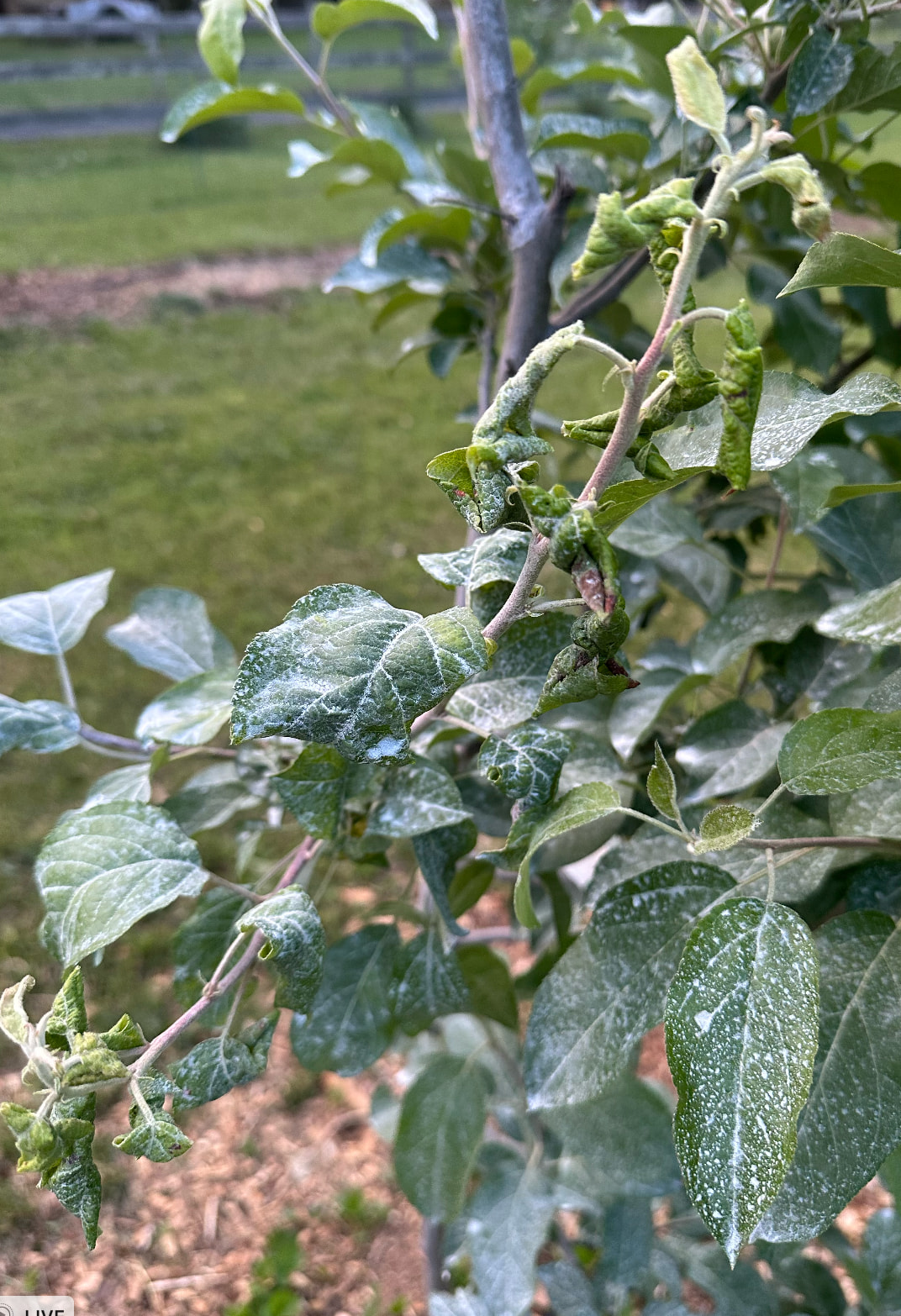
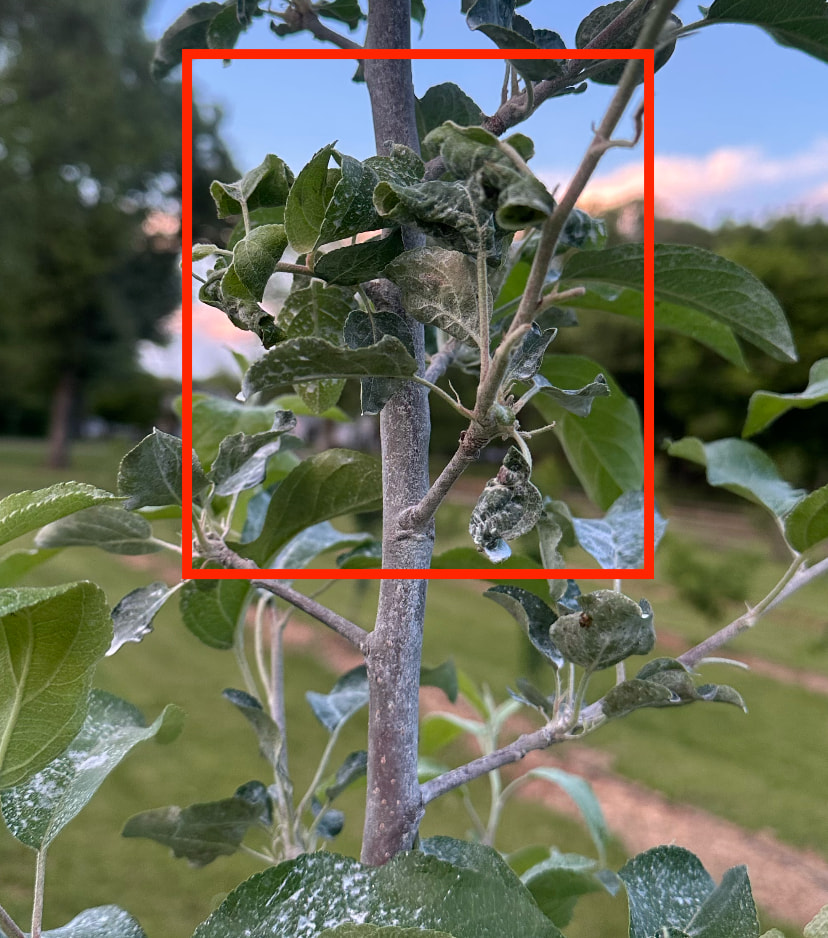
I sprayed Surround on Friday, we had a cold spell this past weekend, and now I noticed this on my best growing tree. Are we thinking frost/cold damage, damage from surround, or fire blight? Hoping it is not the latter, because it is on one new growth scaffold branch and many spurs higher up on the tree.
Does anyone in the region grow huckleberry well? How cold seems too cold for them if you do? I’m referring to the “huckleberries” as sold by places like One Green World and Restoring Eden that appear to be variations of evergreen huckleberry.
gotta define what you mean by huckleberry, theres like 10 plants that go by that name
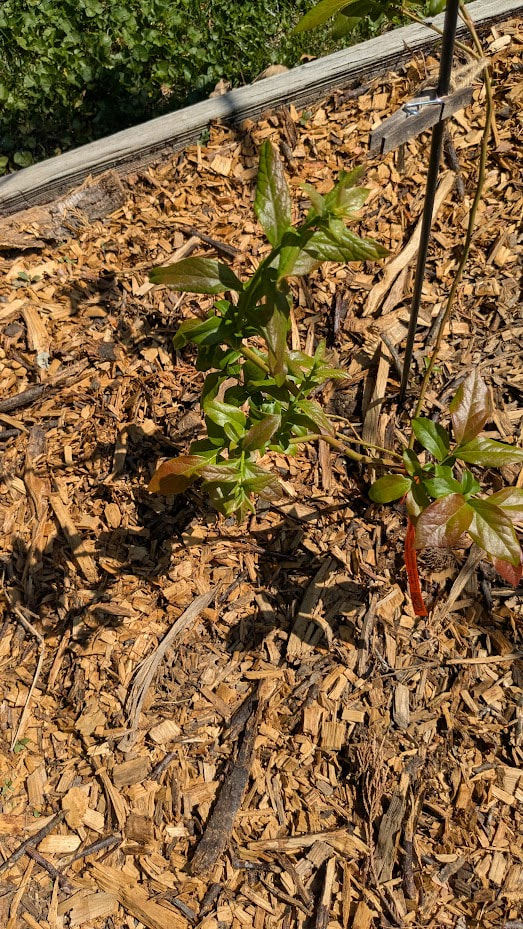
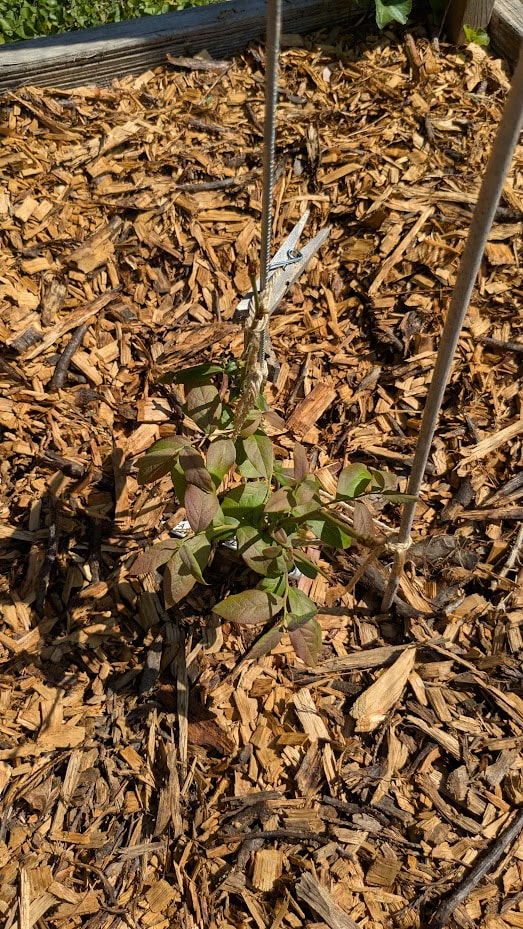
I just planted a few blueberries and assumed the young leaves were suppose to be red. Guess I need to spread some more acidifier. The ground was prepped with lots of peat and topped with some acidifier when they were planted a few weeks back.
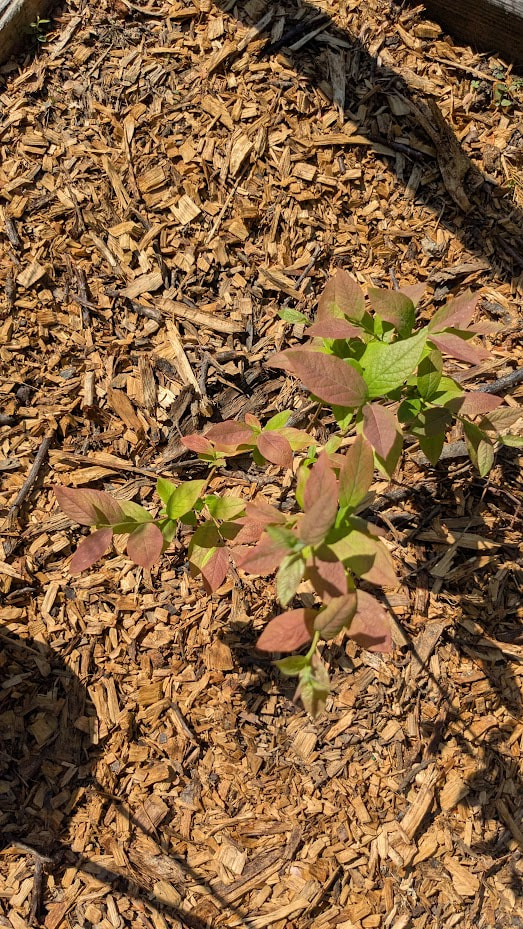
1 Like
the red leaves are just a form of natural sunscreen i think. young leaves are often red. its just a stress symptom afaik. so it could be from low acid or sun stress
2 Likes
Those curled leaves are aphids, open up the curls and you will see the little devils. If it’s only a small infestation you can just leave them alone and the ladybugs or other predators will eventually show up. I have enough ladybugs that I never need to spray them any more.
Re: red leaves on a newly planted blueberry, they can start out red but should go to green as they get comfortable in their new home. My view of the red is they are not super happy with the soil they are in, but it can just be that they got moved recently so its more unfamiliarity than anything else. Or it could be the soil is not acidic enough. The pH meter can help you decide which it is.
4 Likes
My neighbor has one. It’s about six foot and looks like it’s not having any problems.
1 Like
Yes agree with all of this.
My soil is naturally alkaline clay. pH around 7.5. I basically dug pits 3 times the width of the blueberry and put a ton of peat moss and some compost and the blueberries seem to respond well.
Most soil has a lot of buffering capacity so it’s hard to move the needle if soil is very alkaline and just using a bit of acidifier (as opposed to mostly replacing the soil with peat moss)
Unfortunately my mini Aussie loves to chew on blueberry twigs (especially the thinner wood) and also runs around in the area, eroding the soil and the plants have suffered. Most of my blueberries have died because of him. I will probably just put the blueberries in elevated planters at the next house.
2 Likes
The acidifier works, but it works slowly and will take time (months) to really change the pH much. If the plants start seeming more unhappy and you get any chlorosis, etc. you may want to consider ammonium sulfate, which works much faster and provides plenty of nitrogen as well. I generally use and prefer Hollytone 2X per season and adding the acidifier with the first dose in the early spring, but if I feel like the plants are showing signs the pH is drifting up, I’ll give them a dose of the ammonium sulfate and they usually get nice and green and happy pretty quickly. The variety Elizabeth seems to be the first one to show signs of less than ideal pH, so that is the one I keep an eye on to see if things are changing.
This is the brand I use and have the same bag I’ve been using that I bought several years ago. Hi-Yield AMMONIUM SULFATE Granules Plant Food 3.25 lb Mfr# 34177 - Ace Hardware
3 Likes
Good tips. I just started ammonium sulfate this year. How much are you using per gallon?
1 Like
Thank you for this! I have minor red leaves, very faint hue but like @Fishsauce and @snarfing mentioned it is usually on the new growth. The bushes are mostly green. Maybe I will just keep an eye on it. I already have the acidifier so might as well use it this season. Gosh, I am so wishy washy with this kind of stuff!
2 Likes
Thanks for reminding me of this, somewhere along the way it got mixed up with aluminum sulphate in my head which is not recommended. I have used ammonium sulphate in the distant past and it works great. I think I still have half a bag somewhere. Too many orchard projects to keep it all in my head..
2 Likes