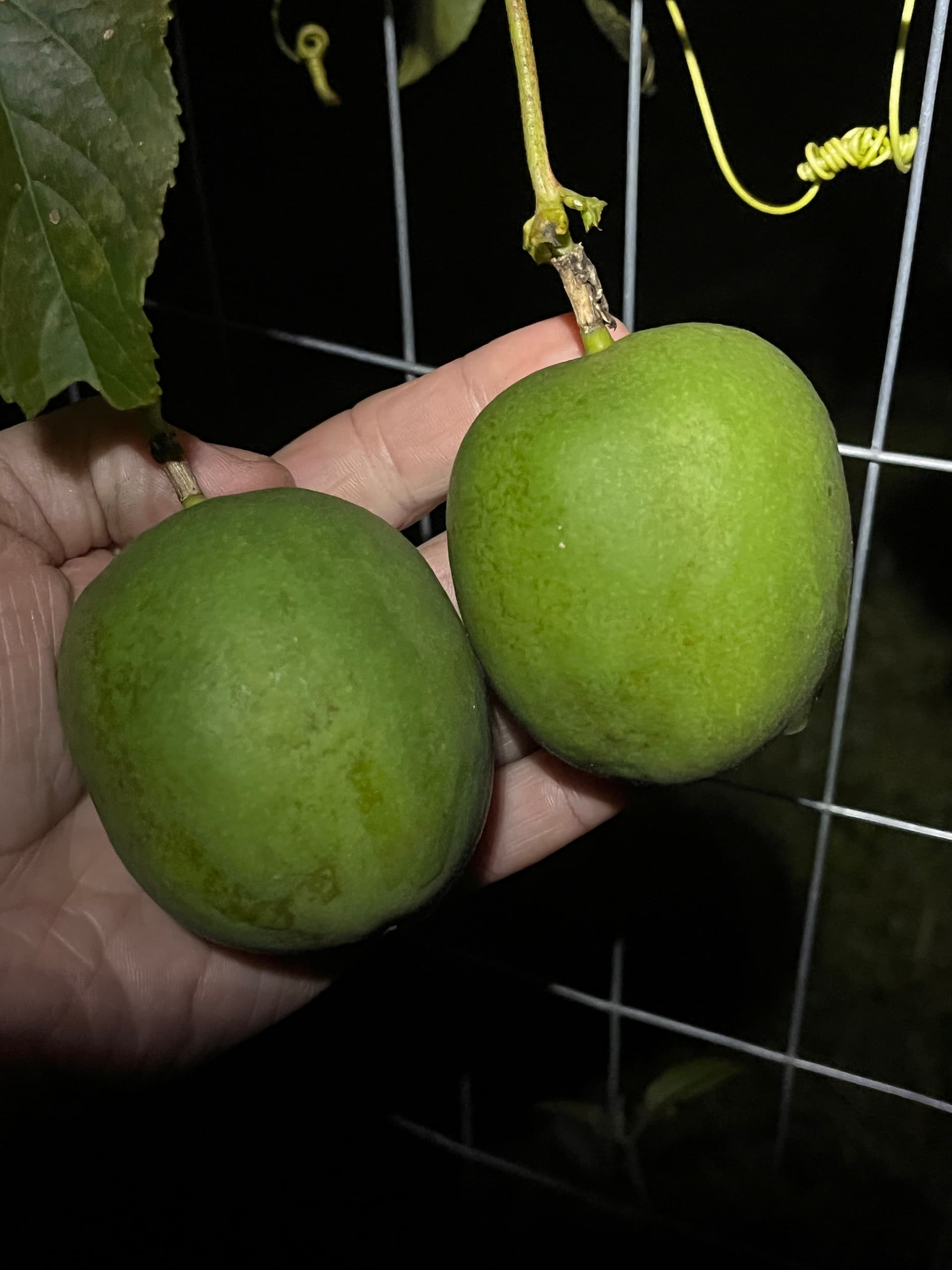
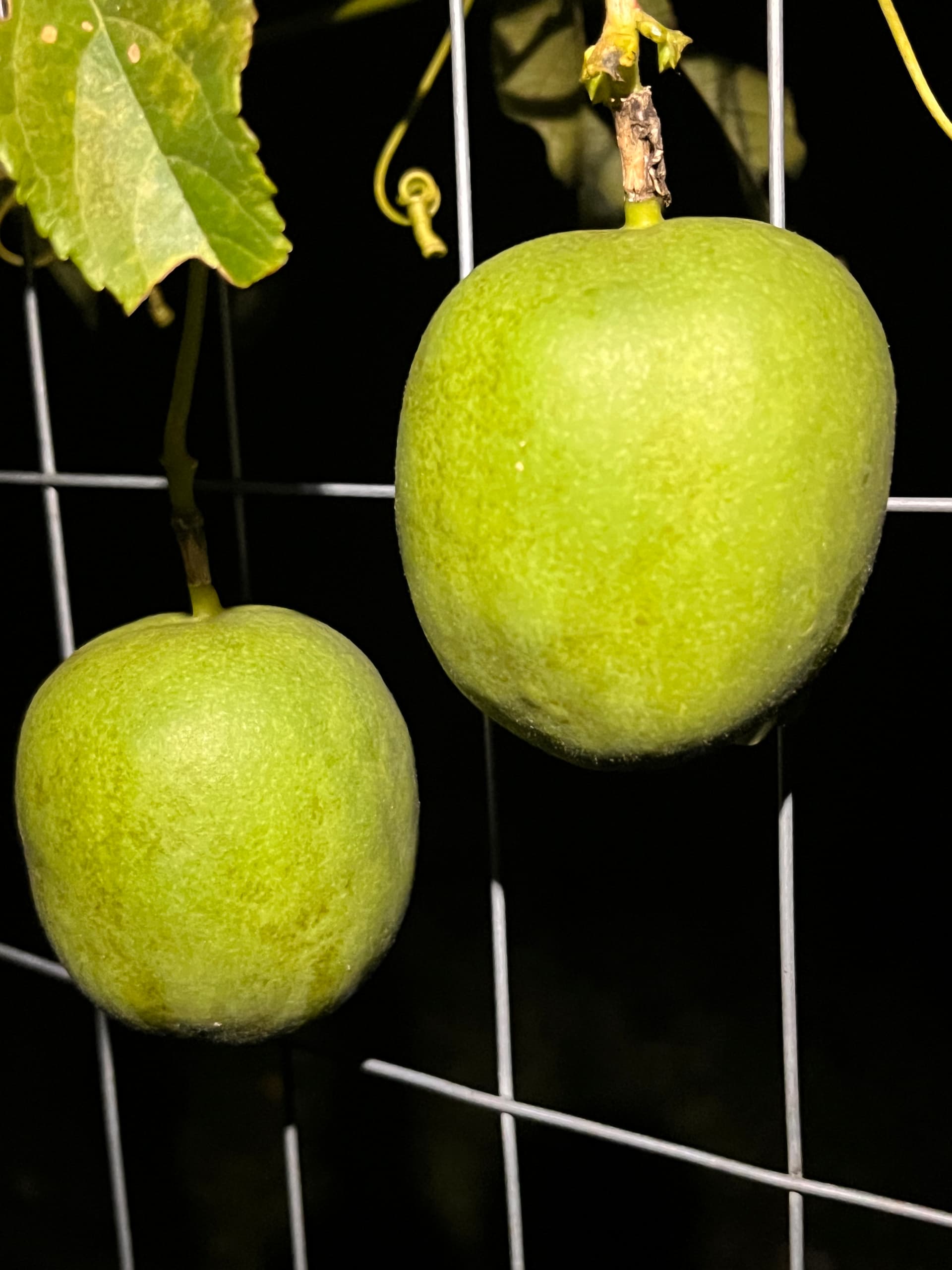
I got the originals from a now closed/retired eBay merchant who sold passion fruit of various kinds and hybrids, including some of his own crosses.
They’re somewhat similar to the variety Incense if you’ve ever grown that one.
The original plants are F2 and F3 seedlings of a complex tetraploid hybrid. Genetically, they’re mostly Passiflora cincinnata and P. incarnata with some P. edulis background as well.
My plants are a mix of the originals and seedlings I’ve selected from them.
They’ve been entirely hardy here in zone 8, I suspect they’re probably hardy somewhere into zone 7. I think fruit not ripening before frost would be an issue before the roots hardiness becomes an issue. They do set good fruit unlike a lot of hybrids, and a lot of it once established, especially if it’s hot and relatively dry. They have incredible flowers that are large, fragrant, and plentiful. The fruit are sweeter than most P. edulis varieties and get good shelf life from P. cincinnata. I’m still testing but I think some of them are at least partially self fertile. The vines are extremely drought tolerant from what I can tell, again a trait they get from P. cincinnata which is a tropical savanna species.
Drawbacks are they aren’t as vigorous as standard passion fruit varieties, they do sucker, and best as I can tell they’re more shade intolerant than P. incarnata. Some of them are very late to come up in the spring, and they aren’t genetically stabilized yet so seedlings can present unexpected traits.
I’m working on back crossing them to tetraploidized Passiflora incarnata for better hardiness and earlier fruit set and ripening. I’ve a handful of other crosses in mind, but most of them are a bit further out.
You can treat the seedlings with antimitotic agents, but there are also wild populations of tetraploid P. incarnata present in central Florida. I have a few tet incarnatas or 3/4 incarnatas (with 1/4 edulis or edulis hybrids), but they are almost completely sterile.
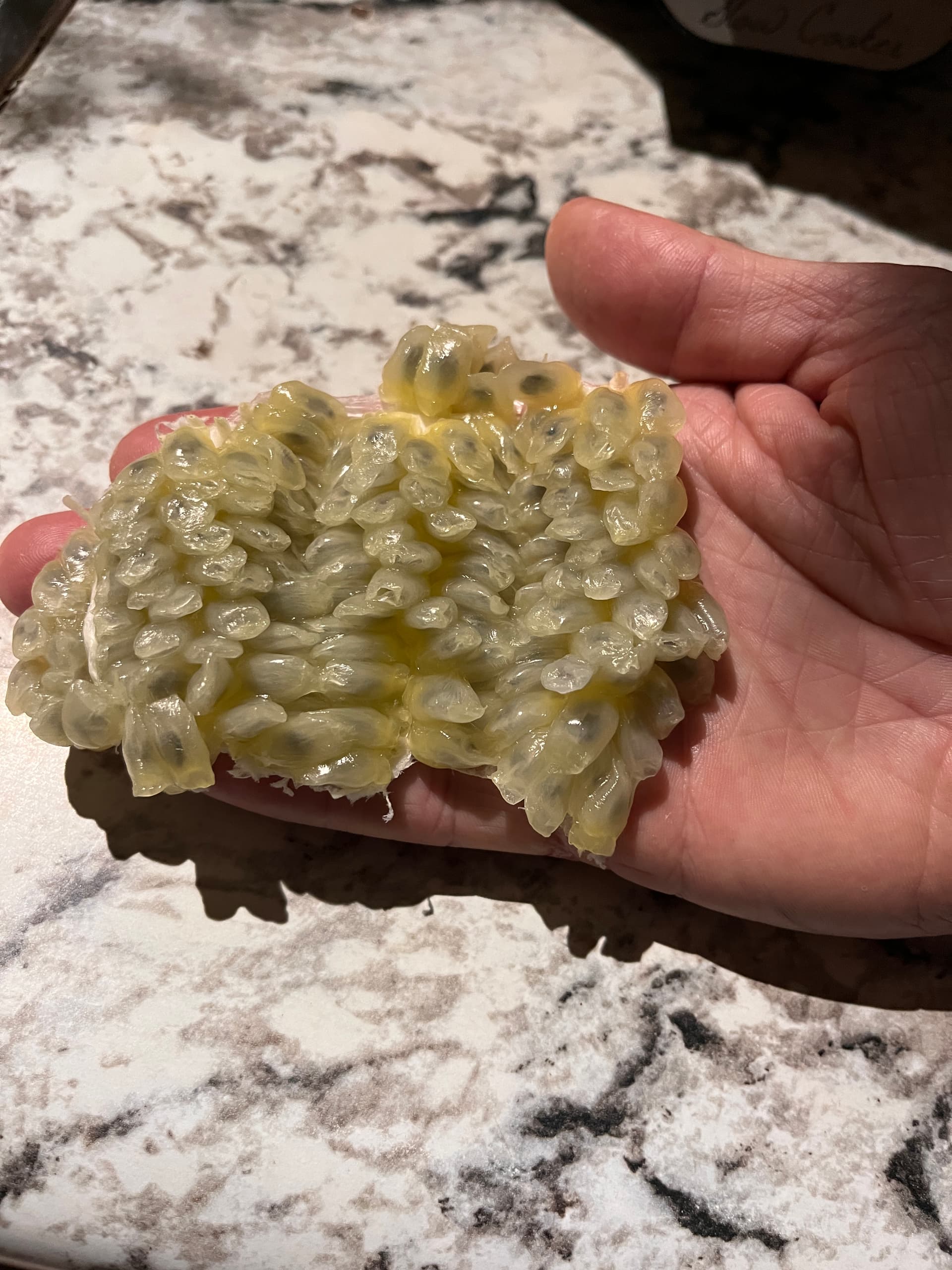
This is a pure P. incarnata that I have been growing and testing for several seasons now. I’m planning on cloning and releasing it soon. That’s the pulp from ONE fruit. Averages around 80 grams. It’s dense. Flavor is outstanding.
That’s beautiful. Can you or someone clarify- p. Incarnata needs a genetically distinct other incarnata to pollinate? If so, how do you go about finding a different one? I see one site selling an “alba” but that’s it.
Zebra longwings and Julias are typically only found as far north as Florida and South Texas. Gulf Fritillary are mainly found in the Gulf states, but can go as far north as Virginia and Kentucky in the summer and can be found on the west coast as well.
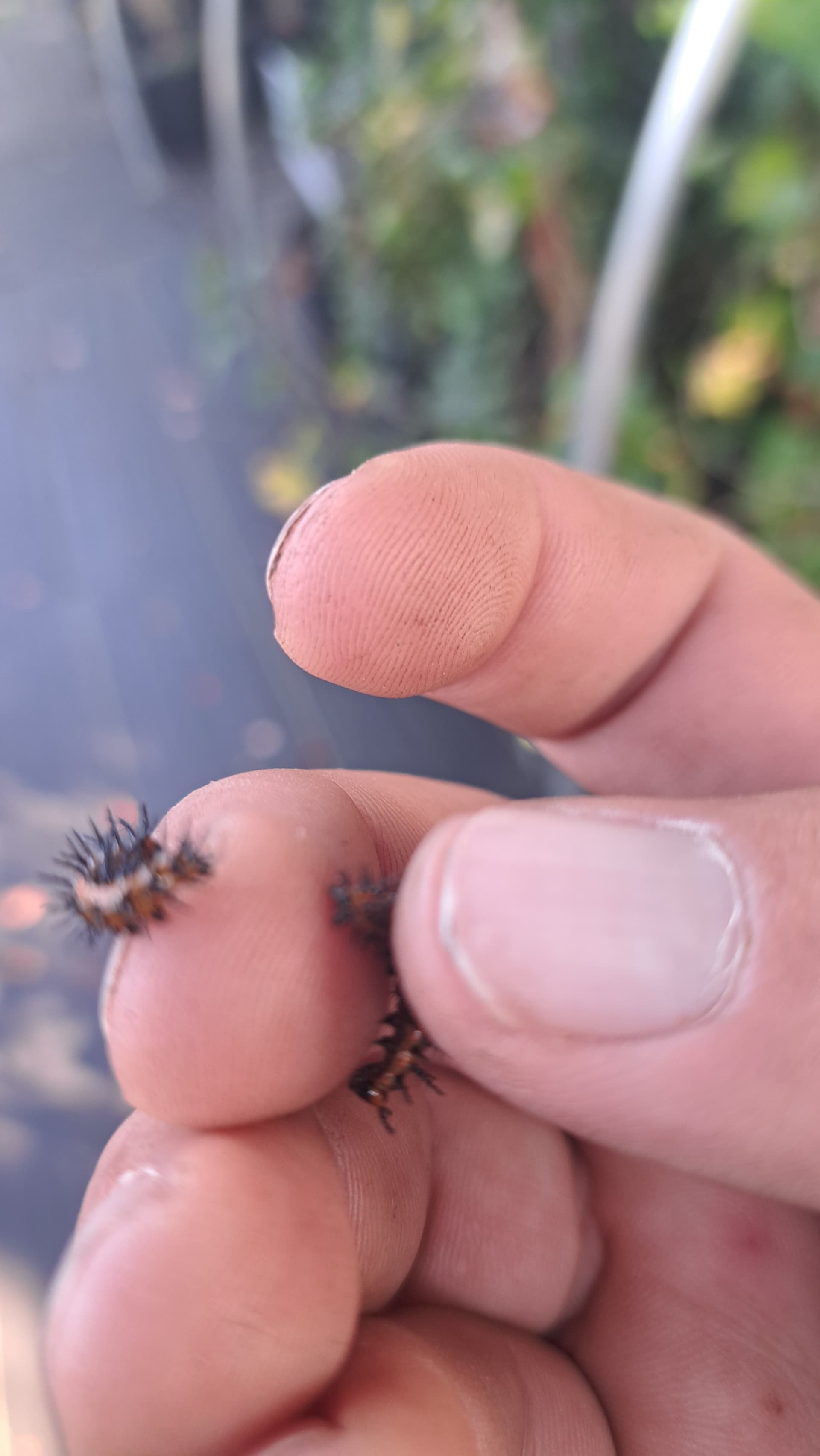
Same, we are a breeding ground here at the nursery. I’ve seen online it say the caterpillars don’t sting, but I think I’ve been stung before, and my son also. Bee stings are nothing compared to one of those. Those will sting the fire out of you.
Gulf fritillaries definitely don’t sting. Their little spikes feel like eyelashes. However there is a fuzzy moth caterpillar that has the same color pattern that may sting, haven’t touched it to find out. I have found it around my passionfruit before, but I don’t think it actually feeds on it.
I have to grow all my maypop covered or they devour it. They eat maypop first, round leafed edulis second, trifoliate edulis (like purple possum) 3rd and corkystem (our most common native) last. They’ve only nibbled on my malformis and quadrangularis once or twice, but I have lost many a maypop and corkystem to them. We use the corkystem to teach classes (both about host plants and about how plants move) so its always a struggle to keep them alive.
We also have them at work where they devour the poor potted ones and not the two massive vines my boss has in his orchard.
For me its a feature not a bug. I plan on planting a couple eventuallt for them and for me to get a little. Pretty aggressive vine so not tok worried about having enough
There is only one species there (maypop) and you would only have wild seedlings. The selections Blake has made would almost CERTAINLY taste much better with larger fruit and any hybrid with higher fruit quality species would taste better
It’s like saying “I’ve eaten a couple wild plums, can’t get excited about flavor king”
there are a few cultivars of incarnata floating around already.
its confusing to me though, id love to buy a couple. maybe i’ll just wait for blakes releases lol. last night i kept my wife up 30 minutes discussing where id plant maypop (ina small 7k square feet area you gotta get clever) ive decided near the bramble patch up against the fence, so id plant between brambles and then train them up the fence behind them. south facing fence
Are they self fertile? i see some sources sayign yes some saying no
I believe most are not self fertile, if going for the ornamental aspect I’d probably get Incense and Pinkpop, both flower aggressively and have strong fragrance