Very nice!
1 Like
Dutchess County NY Z6A…back in the saddle again after month long illness…catching up on all the posts…was not able to make it down to West Farms in Jersey to pick up my tree order…so somebody was lucky and scooped up 5 primo varieties…Dr. West said full bloom for him (Z7A) this year was April 20…the day before the 25F killing frost…said his crop is down 90+% with the surviving fruit on trees mostly in the shade and which bloomed later…full bloom for me (Z6A) was May 9 …a full 20 days later and 80 miles further north…most of the flower buds on my trees were still sealed and survived…my buddy, 45 miles further north and a day or two later in bloom got 25 fruit on one tree and 6 on another …marking his first crop…and a happy man…rolled out my order with Dr. West to next year…fate willing…so my only new variety I got in the ground this year is the Mammoth X I got from Blake…was planted under severe duress in the middle of a heat wave by my lawn guy…missed the SPOT by about a foot…so gets full morning sun and full sun till 3:15PM…despite no shading, I came home today seeing it looking pretty stout…near daily watering and an extensive root system pulled it through…I’m sure…thank you Blake…still hope to make it down to the patch on my new electric tricycle although this set me back a good ways…sales lady said I was the only person who has asked her how slow it will go…might have to still use the pedals …Beemster
3 Likes
Looking forward to your next update. Confirms my theory on shading being potentially beneficial when used strategically to keep trees dormant a little longer and hopefully avoid frosts.
Season is just starting here with Barrets Best, Nyomi’s Delicious, and a couple Susquehannas.
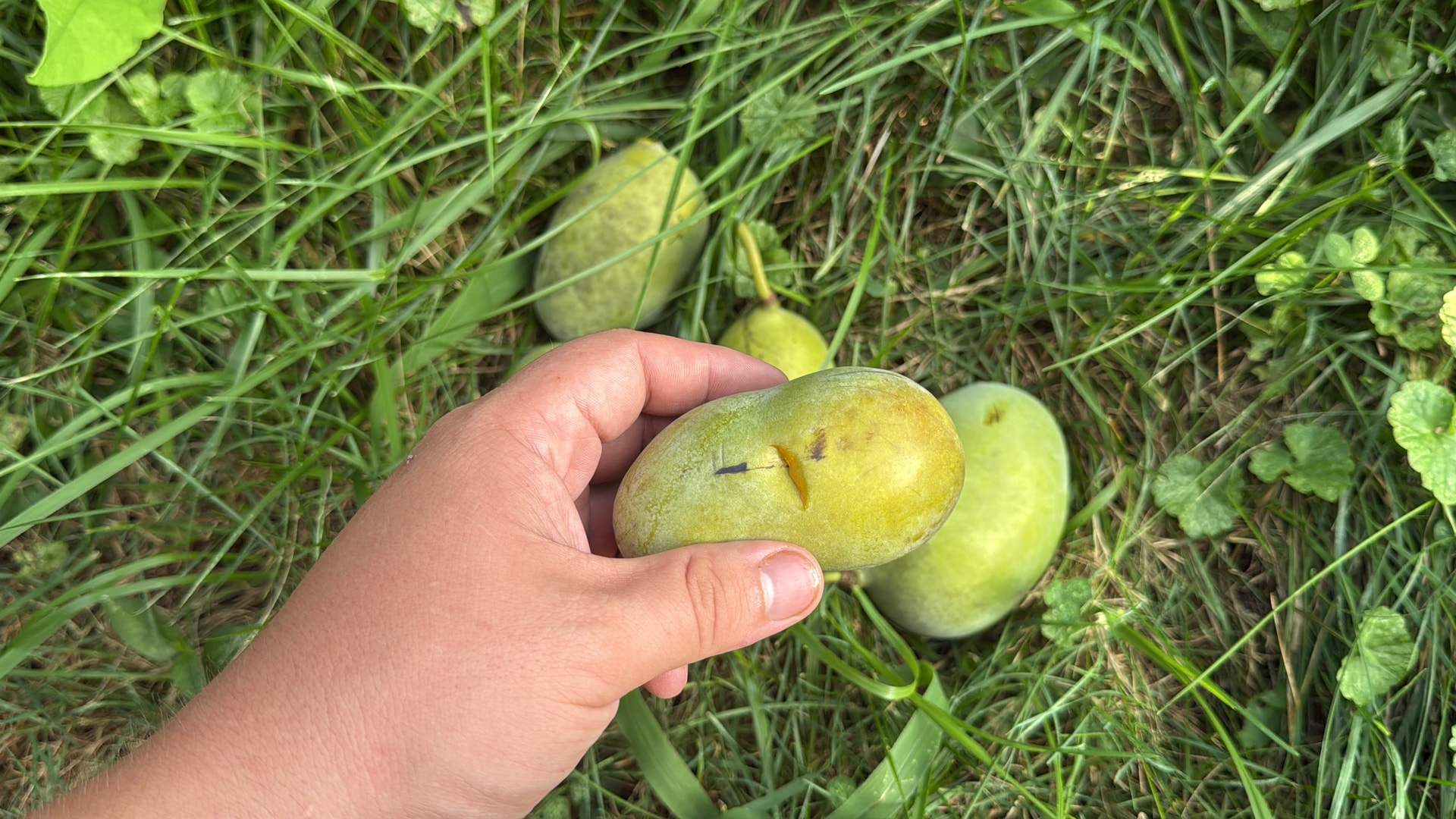
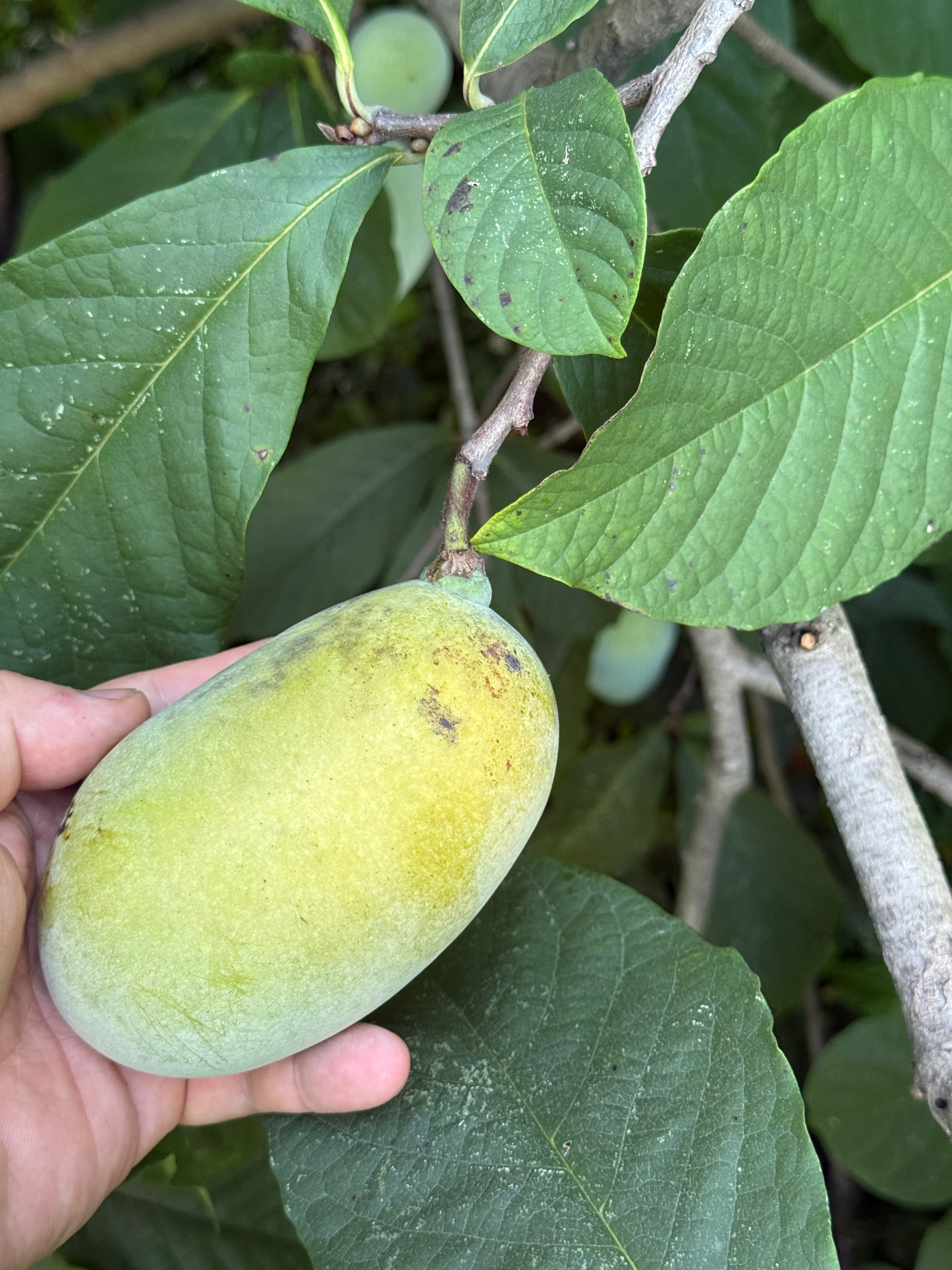
7 Likes
3 Likes
Dutchess County NY Z6A…can’t fathom fruit that early…my first fruit last year was Sept 26th (Allegheny) at 141 days…when was full bloom this year by you?..I do think mid/late afternoon shading causes less heat stress and allows for more “unattended” culturing…if one has a lot of property and many tree lines, it is possible to adjust the daily sun duration with judicial location…but does that location have the best soil profile?..I think the soil profile is more important as the ability to irrigate during prolonged dry/heat spells probably makes the ideal daily sun / shade profile moot…all I can say unequivocally is that the location I chose has had completely unattended growth for the last 5+ years (except for one watering during last year’s late extreme drought period) and the trees grow wonderfully …and if the 90F days less than a week before the 3+ hour 25 degree frost this spring still resulted in more than enough fruit, I will just leave it at that…pawpaws have figured it out how to produce a crop virtually every year…by contrast, consider apricots / sweet cherries / apples / etc…Beemster
2 Likes
I put Azomite on in Spring as you suggested and it appears my problem tree is doing OK; also reduced height of mulch. Repeat annually?
1 Like
Good to hear about the tree pulling through
Probably not necessary to do so annually, as it should last a while. Maybe every 5 years? You could also treat with kelp extract and calcium just to make sure no nutrient deficiencies are problematic.
2 Likes
Hmm. My tropical treat is scratching brown at the base but green up top…. Leaves have wilted. Hope it didn’t die and I’m just seeing wrong
Dutchess County NY Z6A…does BSD occur in trees in the wild?..often / seldom / never ??..since we routinely grow pawpaws in areas or specific environments within an area where they are not natural, I think some kind of deficiency which may be paramount in the prevalence of BSD could be expected…ideas anyone??..so far, I have seen no instances of BSD in 7 years here (knock on wood)…with no fertilization / soil amendment of any kind…but, as I have noted…if pawpaws grew naturally anywhere near me, they would very probably grow in areas just like mine…deep alluvial soil which holds moisture well due to nearby stream / swamp…Beemster
1 Like
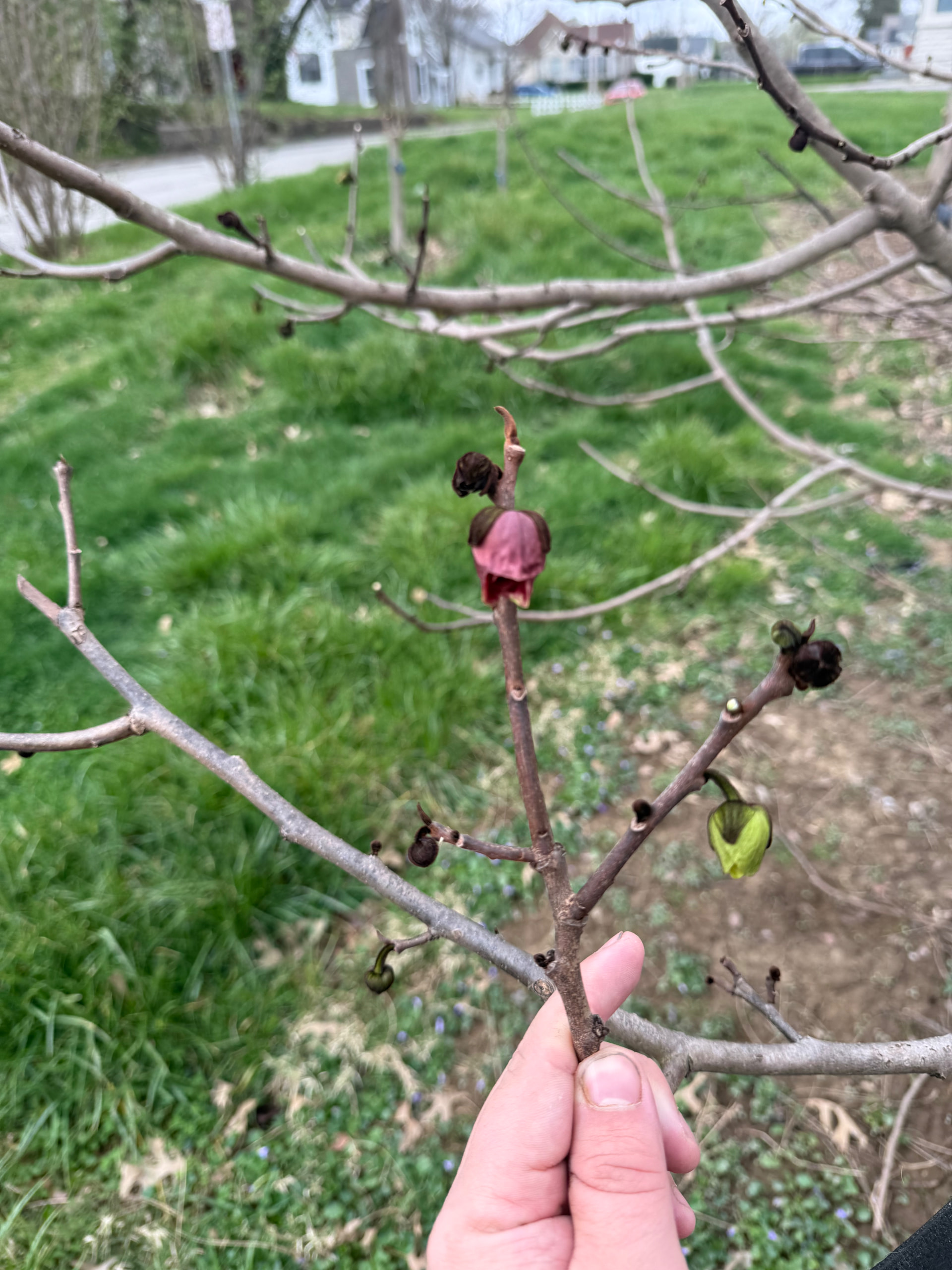
Agree that soil is a huge factor and agree on your points of shading and less work. Here is when they started blooming, mind you I am in a much hotter climate that starts way earlier. For me strategically pushing flowering back a week or two(in some plantings not all) with could considerably extend the harvest season.
March 23rd 2026
1 Like
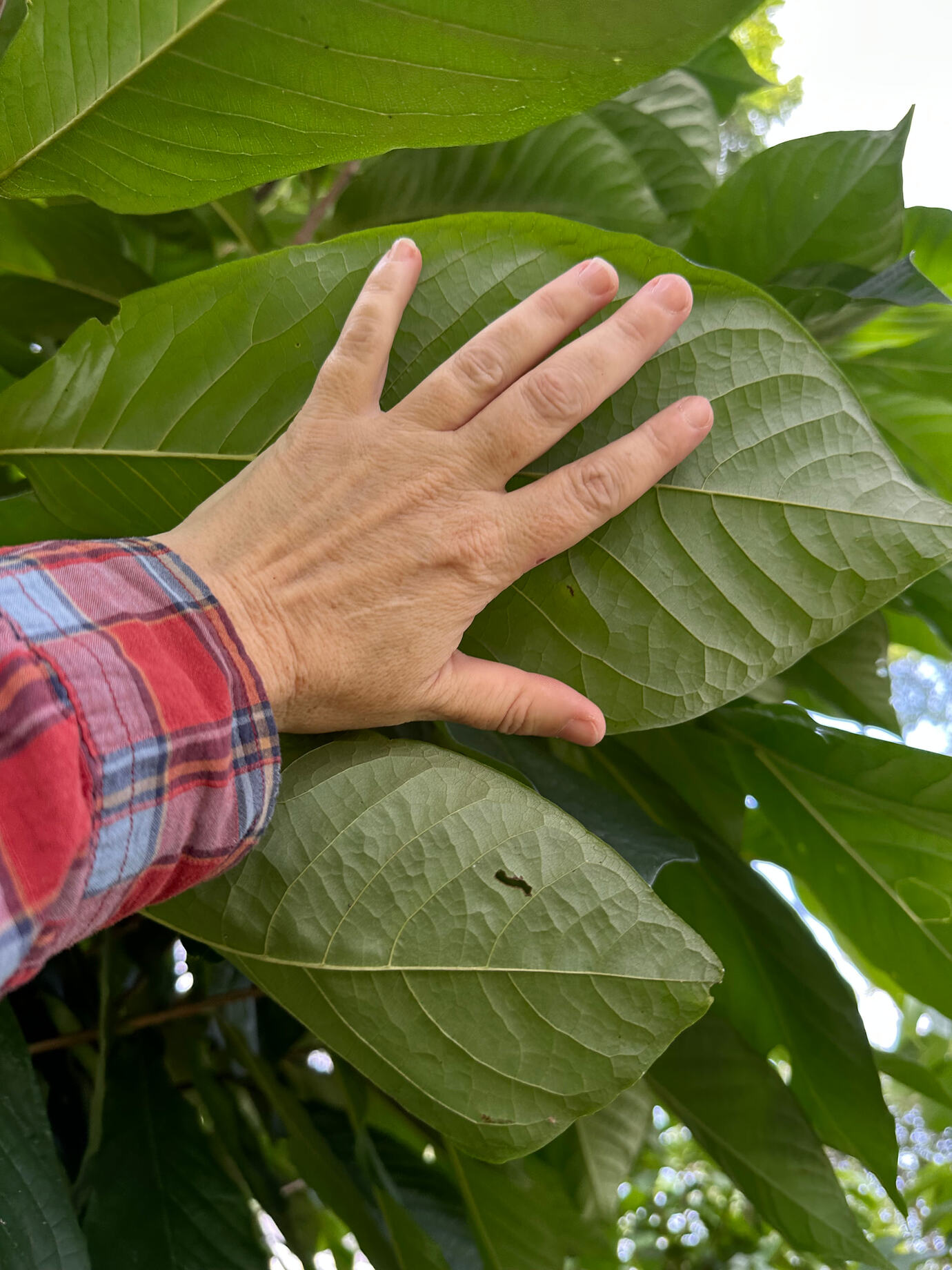
I don’t know! It’s a leaf from an approx 20 year old ramet that was growing on my property when I bought my house. It is definitely a cultivated variety planted on purpose and produces medium-sized fruit with a pleasant taste. I did what I will call “rejuvenation pruning” on it and it grew back with a lot of gusto.
Of the named cultivars I know I have, I have 3 grafted Maria’s Joy which all have pretty big leaves. Also, they are my most vigorous of the ones that I grafted.
I have wondered this too!!! When you cut many healthy pawpaws the cuts get a blue hue. So that blue color seems to be a reaction to wounds. I have wondered if BSD is some sort of minor graft incompatibility.
I am near lots of wild pawpaw patches. They are not very picky about soil in terms of sand/silt/clay or water retention. They don’t like standing water and they don’t like xeric environments, but seem pretty okay with most other things.
There do seem to be more patches where the soil is high in calcium-based limestone and shale. Even though every website says that they grow best in acidic soil, they seem to grow naturally in these soils which usually have pH between 7 and 8.
They are almost always understory trees. The larger patches have some big ramets which are tall enough to get full sun or there will be some on the edge of a shaded area which get full sun.
The leaves of the native/wild ones get even bigger than mine do.
They are such cool plants and I wish they were more studied in the “wild” to see how they grow.
2 Likes
BSD occurs in seedling trees as well as grafted. It’s more likely that it starts in the roots and moves up into the vascular system from there.
I have been eagerly watching for them in my area but I shall await while my pawpaw patch creates more habitat for them. I don’t see any pawpaws in my area so I’d be surprised to see those anytime soon.
Dutchess County NY Z6A…Beemster
…FWIW…here is LLM Gemini’s response to an inquiry into BSD in pawpaws…for some reason, on multiple boards, I have noticed a distinct hesitation to consider or make use of information from LLM models…I suffer from no such affliction…if one follows thru on all the suggested follow up questions and also makes inquiries from other LLMs, one could spend many hours / days absorbing all the information…(not suggested!)
…
Regarding Blue Stem Disease (BSD) in North American pawpaws (Asimina triloba )—also referred to as vascular decline—the role of nutritional deficiencies like calcium is an active topic of discussion among fruit researchers and orchardists.
While there is no definitive scientific consensus that low calcium directly causes Blue Stem Disease, the hypothesis that calcium deficiency contributes to its severity or acts as a predisposing factor is biologically sound.
The Core Biological Connection
1. Cell Wall Integrity and Bark Cracking
Blue Stem Disease typically manifests as bark splitting, vertical trunk cracking (frequently on the north-facing side), and blue-tinted vascular discoloration beneath the cambium, leading to decline or dieback.
-
Role of Calcium: In plants, calcium ($Ca^{2+}$) forms calcium pectates, which serve as the primary “structural cement” holding cell walls and vascular bundles together.
-
The Link: Deficient soil calcium leads to weaker tissue cell walls. When environmental stressors hit—such as sudden freeze-thaw cycles or moisture shifts—trees lacking sufficient structural calcium are significantly more prone to bark splitting and cellular collapse, creating open wounds.
2. Infection Pathogens vs. Physiological Stress
-
Primary Suspects: Most experts (including researchers at Kentucky State University and Oregon Regional Variety Trials) suspect BSD is a vascular decline linked to opportunistic pathogens (such as Pseudomonas bacteria or fungal wilt organisms) or secondary infections following physical freeze damage.
-
Nutritional Predisposition: Low soil calcium, improper soil pH (which locks up calcium), or imbalances with potassium and copper act as major physiological stressors. A calcium-starved tree cannot mount a strong physiological defense or seal off damaged vascular tissue, making it far more vulnerable to systemic pathogen spread.
3. Root Health and Micronutrients
Other growers and researchers suspect BSD may start with root stress or soil chemistry issues (such as poor drainage or copper/calcium assimilation problems). When soil calcium is lacking or leached by excessive moisture, root tips struggle to grow and maintain resistance against soil-borne organisms.
Summary
A calcium deficiency alone is unlikely to be the sole cause of Blue Stem Disease, but it is a very viable contributor. Low calcium weakens cell structure and bark tissue, lowering the tree’s defense threshold and allowing underlying pathogens or freeze damage to trigger the severe vascular decline known as BSD. Maintaining balanced soil nutrients, proper soil pH, and adequate calcium is widely recommended to help pawpaws resist vascular stress.
…
For North American pawpaw trees (Asimina triloba), optimal soil conditions and targeted nutrient levels play a critical role in preventing vascular stress and promoting strong structural development.
Target Soil Parameters
- Ideal Soil pH: 5.5 to 6.5 (slightly acidic). Pawpaws can tolerate pH ranges from 5.0 up to 7.0, but acidic conditions ensure micronutrients (like iron and manganese) remain available.
- Target Calcium Levels: Aim for 1,000 to 1,500 ppm (or roughly 60% to 70% of total Cation Exchange Capacity [CEC]).
- Soil Type: Deep, rich, organic-rich loam with excellent drainage. Pawpaws dislike heavy clay or waterlogged soils.
How to Amend the Soil
Always conduct a standard soil test before adding large quantities of soil minerals. The right calcium amendment depends directly on your current soil pH:
| Soil Condition | Recommended Amendment | Application & Function |
|---|---|---|
| Low Calcium + Acidic Soil (pH < 5.5) | Agricultural Lime / Dolomitic Lime | Raises soil pH while supplying calcium. Dolomitic lime also provides magnesium if needed. |
| Low Calcium + Optimal pH (5.5 – 6.5) | Gypsum (Calcium Sulfate) | Adds bioavailable calcium without altering the soil pH. |
| Organic & Slow-Release Calcium | Composted Manure, Bone Meal, or Crustacean Meal | Provides slow-release calcium while enriching soil organic matter and boosting beneficial soil microbes. |
Step-by-Step Soil Preparation Guidance
- Incorporate Organic Matter: Work 3 to 4 inches of leaf mold, aged compost, or rotted wood chips into the top 12–18 inches of soil. Pawpaws thrive in forest-edge soils naturally rich in organic matter.
- Apply Amendments to the Drip Line: Avoid piling high-concentration mineral fertilizers directly against the trunk. Spread gypsum or lime across the root zone out to the drip line and gently work it into the top layer of soil or mulch.
- Maintain Mulch: Apply a 3–4 inch layer of hardwood bark or leaf mulch annually. Decomposing hardwood mulch continuously releases calcium into the topsoil over time.
…
if someone gets a soil test done…this information gives some Target Ranges for Pawpaws & General Soils
…
How do I calculate Cation Exchange Capacity (CEC) and calcium saturation percentage from a soil test?
Calculating Cation Exchange Capacity (CEC) and calcium (Ca) base saturation percentage from a soil test relies on measuring the key exchangeable cations held on soil particles: Calcium (Ca2+), Magnesium (Mg2+), Potassium (K+), Sodium (Na+), and exchangeable Hydrogen (H+).
Step 1: Standardize the Units
Most soil lab reports express cation concentrations in milliequivalents per 100 grams of soil (meq/100g or cmol/kg, which are numerically identical).
If your lab reports results in parts per million (ppm), convert them to meq/100g using the element’s valence and atomic weight conversion factors:
- Calcium (meq/100g): ppm Ca÷200
- Magnesium (meq/100g): ppm Mg÷120
- Potassium (meq/100g): ppm K÷390
- Sodium (meq/100g): ppm Na÷230
Step 2: Calculate Total Cation Exchange Capacity (CEC)
Sum the meq/100g values for all primary exchangeable cations (including exchangeable acidity/hydrogen, if reported):
CEC (meq/100g)=Ca2++Mg2++K++Na++H+
- Example:
- Ca2+=8.0 meq/100g
- Mg2+=2.0 meq/100g
- K+=0.5 meq/100g
- Na+=0.1 meq/100g
- H+=1.4 meq/100g
CEC=8.0+2.0+0.5+0.1+1.4=12.0 meq/100g
Step 3: Calculate Calcium Base Saturation Percentage
Divide the calcium value in meq/100g by the total CEC, then multiply by 100:
Calcium Saturation %=(CEC (meq/100g)Ca2+ (meq/100g))×100
- Using the Example Above:
Calcium Saturation %=(12.08.0)×100=66.7%
Target Ranges for Pawpaws & General Soils
| Parameter | Ideal Range | Significance |
|---|---|---|
| Total CEC | 10 – 25 meq/100g | Measures nutrient-holding capacity (higher in clay/organic soils). |
| Calcium Saturation | 60% – 70% | Ensures strong cell walls without suppressing magnesium or potassium uptake. |
| Magnesium Saturation | 10% – 20% | Supports photosynthesis and chlorophyll production. |
| Potassium Saturation | 3% – 5% | Key for fruit development and water regulation. |
3 Likes
So far only Rappahannok, Tallahatchie and Nc-1 are dropping fruits, Tropical Treat is behind and also Prima. I think Prima is delaying because I left too much fruit on it. Do you ever experience this issue? Tastewise I like Rappahannock and Nc-1 better because they have a plain taste and no tropical note aftertaste compared to Prima. Wabash also seems good but it was the first fruit so no final judgment on it. Also the super fast ripening is notable.
4 Likes
Prima is later for me too, Tallahatchie was early before I topworked it. For me Prima makes a ton of good looking fruit that is just kind of bland. Maybe it is a soil/ligh issue but I am not the first to feel this way. I suspect that there is a difference in palatte between me and the people that selected it. It was also selected 20 years ago and we have sweeter pawpaws now. I don’t have NC-1 so I can’t comment on it much either. I have tasted it but it didn’t move me to graft it.
4 Likes
I think could be a climate issue, it was selected in a mediterranean climate, not a continental one. Mine is pretty sweet, I might check all the variety with a brix just to get a reference.
1 Like
Could be, its also not in the best spot possible. Still makes a ton of fruit though, and the seedlings tend to be vigorous.
1 Like