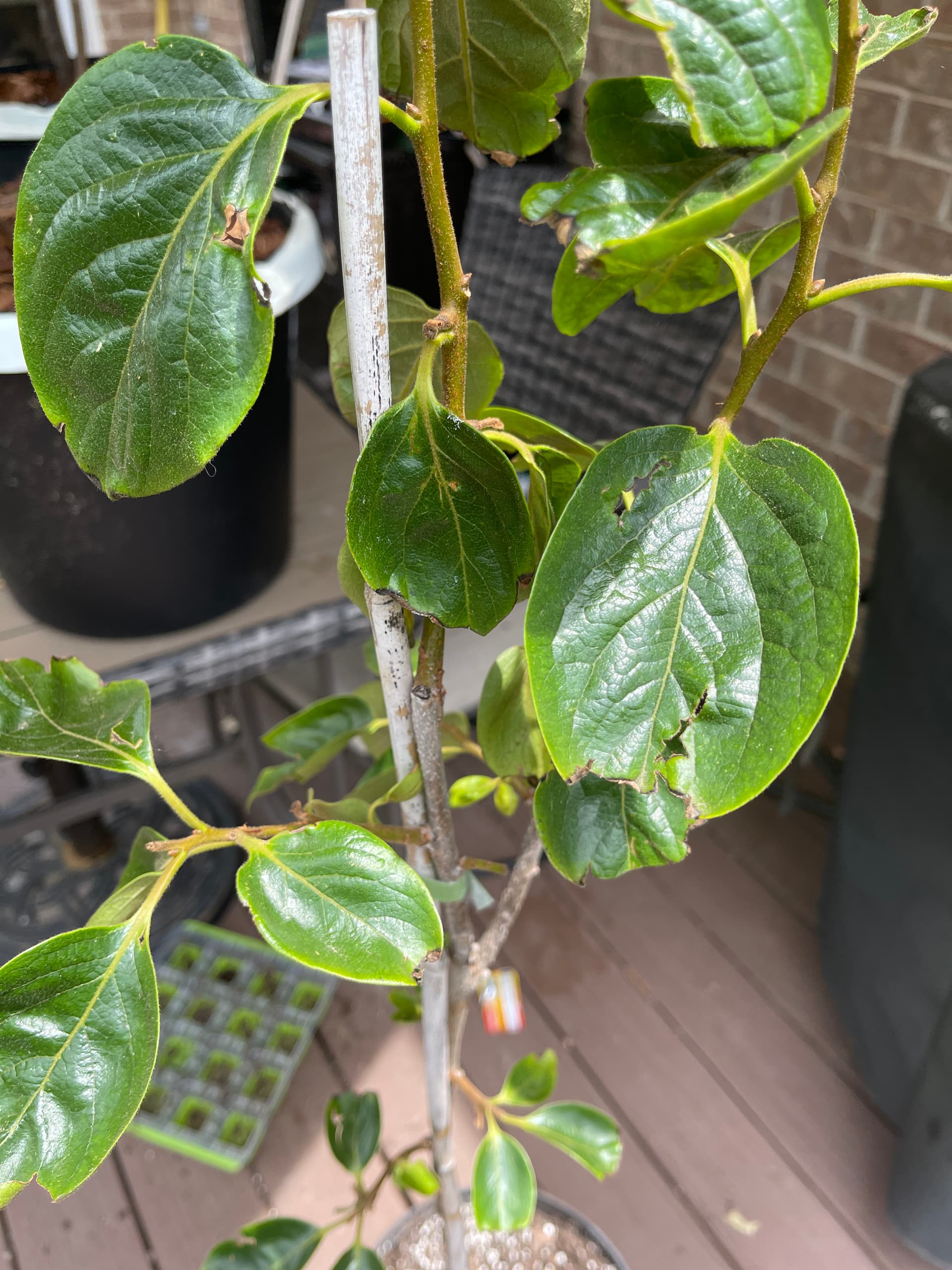
I think you’re right. Inspecting my plant over weeks, there is no clear sign of disease and definitely no pests. I did see that calcium deficiency could cause the burned tips look and deformation of new leaves. So, I thought to add foliar calcium, but at the same time I suspected poor nutrient uptake - so I checked soil pH, and it was way low. After researching and finding no suitable way to raise pH in an already-potted plant, I elected to repot in a more alkaline mix. The roots look good (at least as good as they ever did; persimmon trees have black roots LOL).
TL;DR increasing pH and adding foliar calcium. I’ll let you know the results.
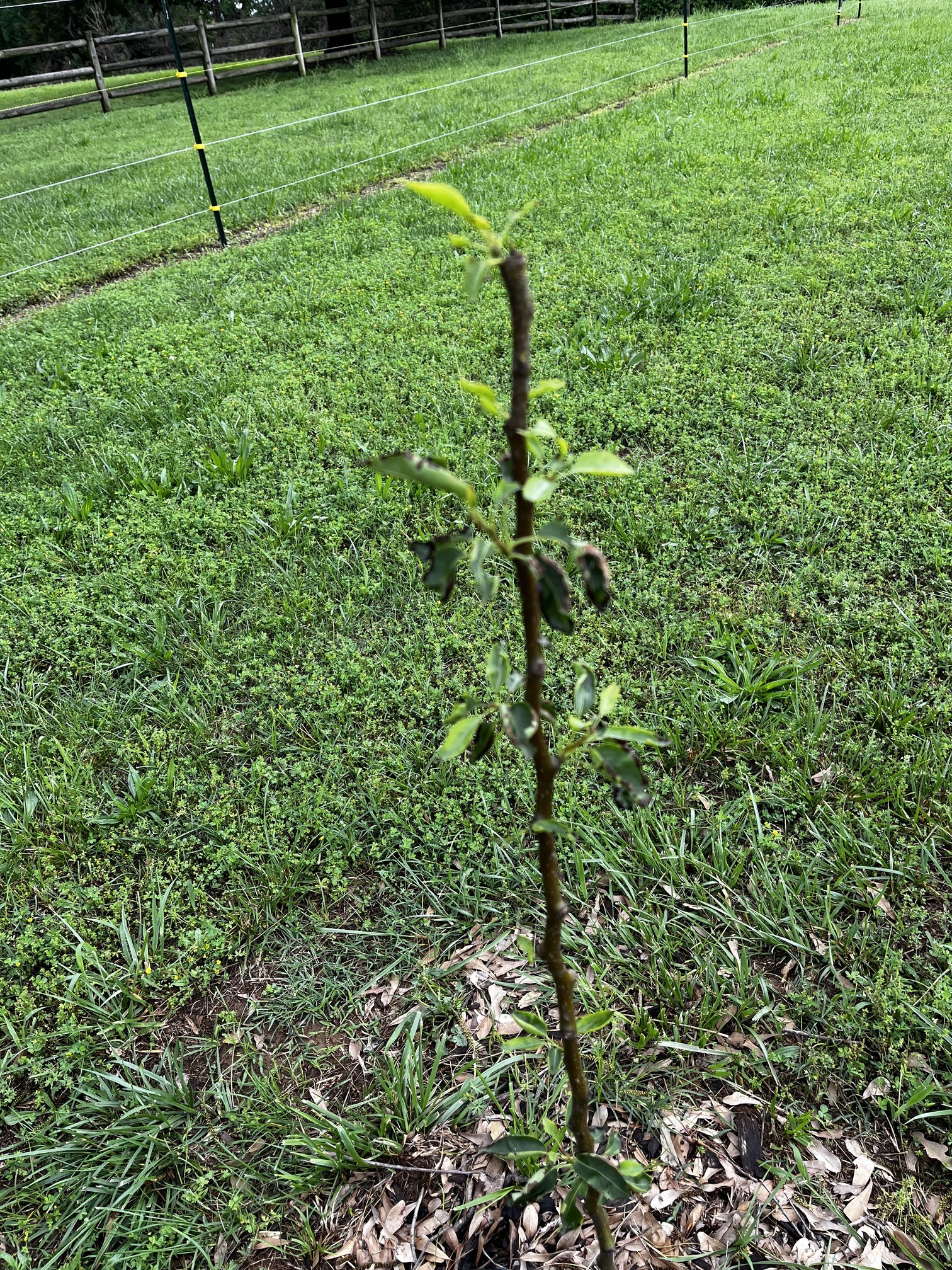
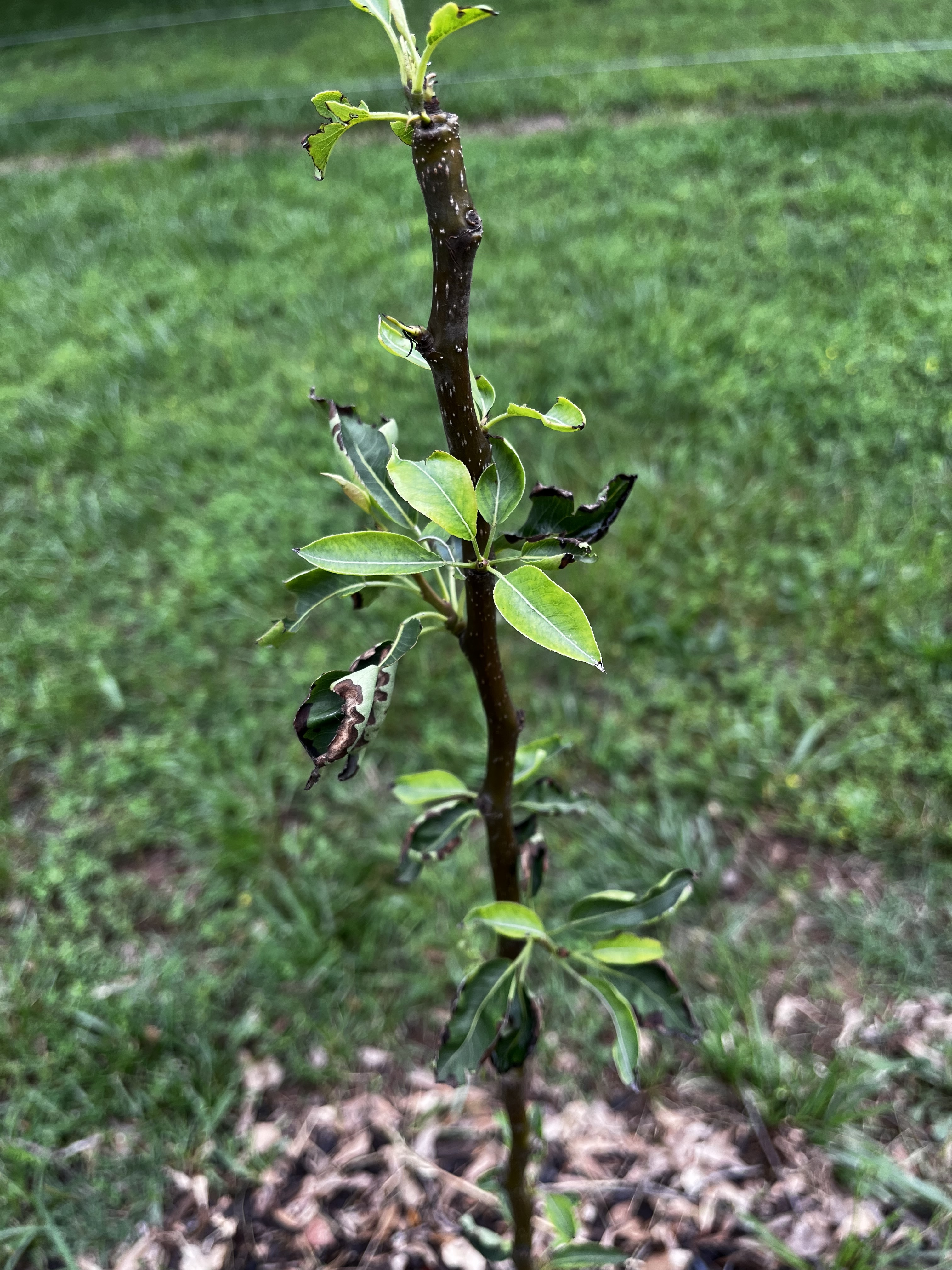
Piggy backing off of this thread but seeing similar results on my Harrow Sweet pear. Just planted it this spring and have had plenty of rain since. Any thoughts?
That is fabraea a bacterial spot disease. Asian pears have a natural resistance compared to european pears. It is more noticeable during the rainy seasons
The tree (and Ichi Ki Kei Jiro persimmon) continues to fail to thrive. There are no new leaves, and the small leaves at the top disintegrated shortly after emerging (same black tip issue). I have kept the tree (mostly) in weak sun/half shade to rule out sunburn. I added Cal-Mag (foliar and watering). I added silicon to toughen the leaves (DynaGro Protekt). Leaves began to yellow. I decided the pot was too large and the mix was slow to drain, so I down-potted into a much more well-drained citrus and cactus mix. I’m adding Azomite to address any mineral issues. Of note: I ordered a Saijo persimmon tree earlier this year that arrived with the same issue. Every leaf tip was black.