Most people are concerned about die back to the graft union or ground level at around -25 F / -32 C. And whether the few American Persimmon rootstocks selected to survive that would survive a once-a-decade polar vortex event going much colder.
2 Likes
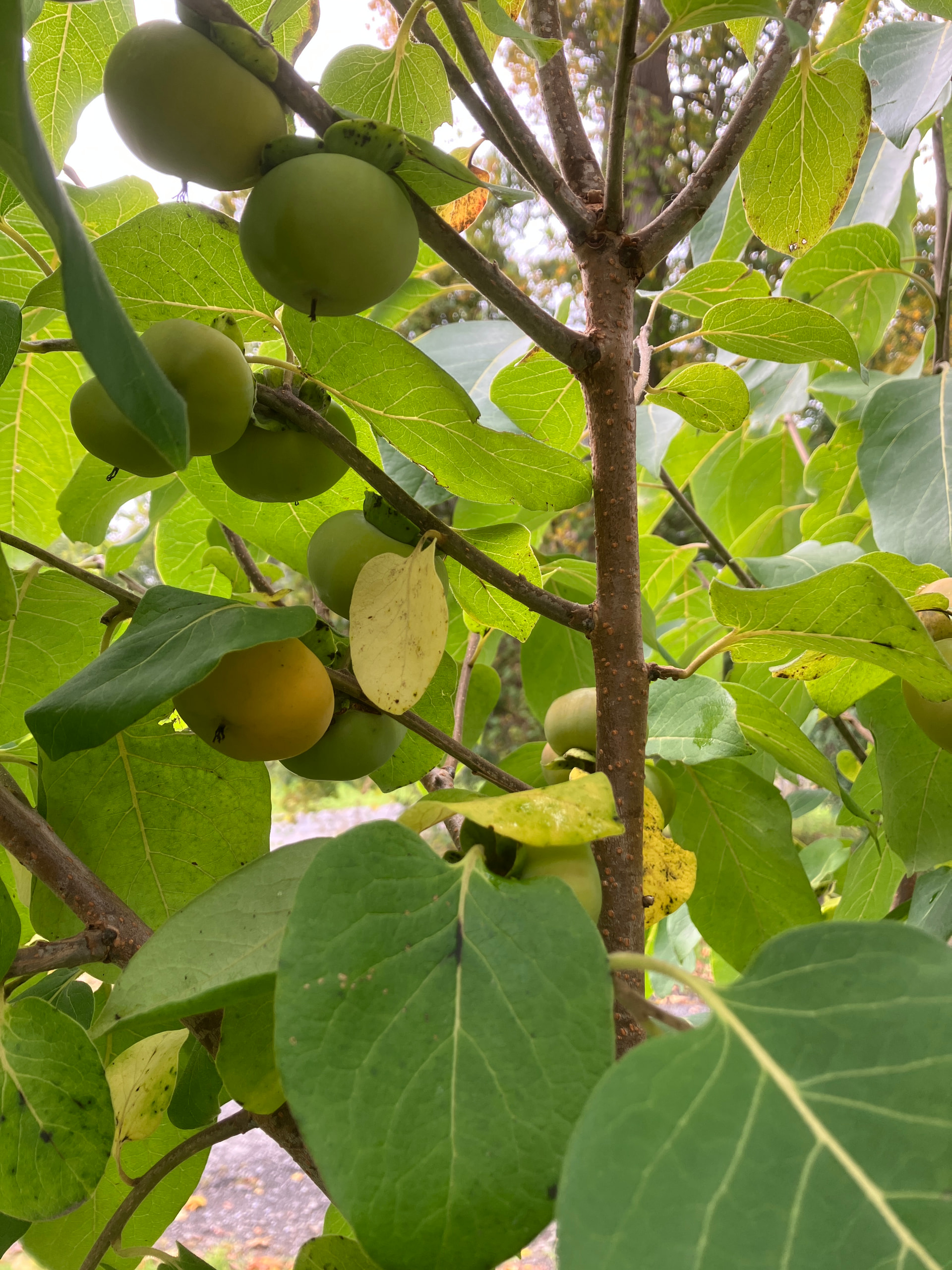
Not a lot of color yet on the fruit here in this zone 5 on this H-118. Weather has certainly cooled this past week dipping into high 30’s at night, mid 60’s during the day. Native trees are starting to show color in the leaves – nothing showing yet in the persimmon leaves.
One interesting note this year for me is that little persimmons saplings are popping up everywhere in the yard in the vicinity of my persimmons trees. I know that within the native range clones pop up from surface roots much like pawpaws, but guess I wasn’t it expecting it to happen here. I set the original seedling trees out in the Spring of 2013.
9 Likes
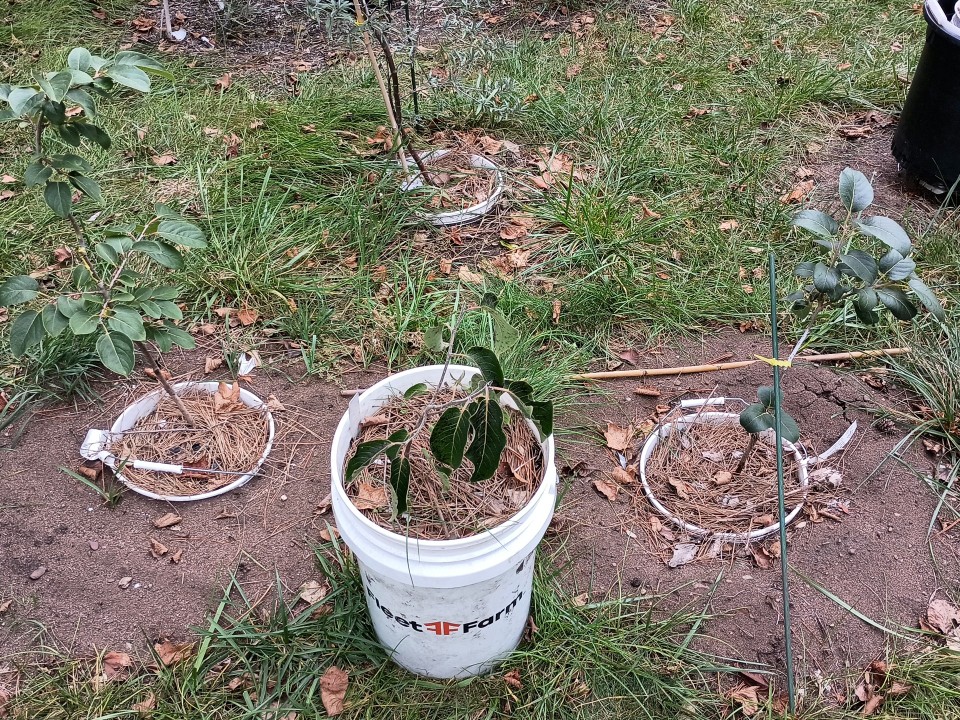
At the end of their first summer, the initially bare-root Meader on left and bare-root Tin Cup on right look healthier than the initially leafed-out A-33 Prairie Sun in the middle. Only A-33 doesn’t have buds yet on Sept 29 in Minneapolis.
Really small sample size here of 1 each.
I don’t even have a caliper of 1 cm measured at ground level on any. Since I’m usually gone Feb - May, I’m really worried about survival. If I pulled out their buckets in December and wrapped around the top with Saran wrap, do you think they would dry out in a wine cellar? The buckets are 3 inches deeper than a standard 5 gallon bucket, which helped me bury the graft unions.
1 Like
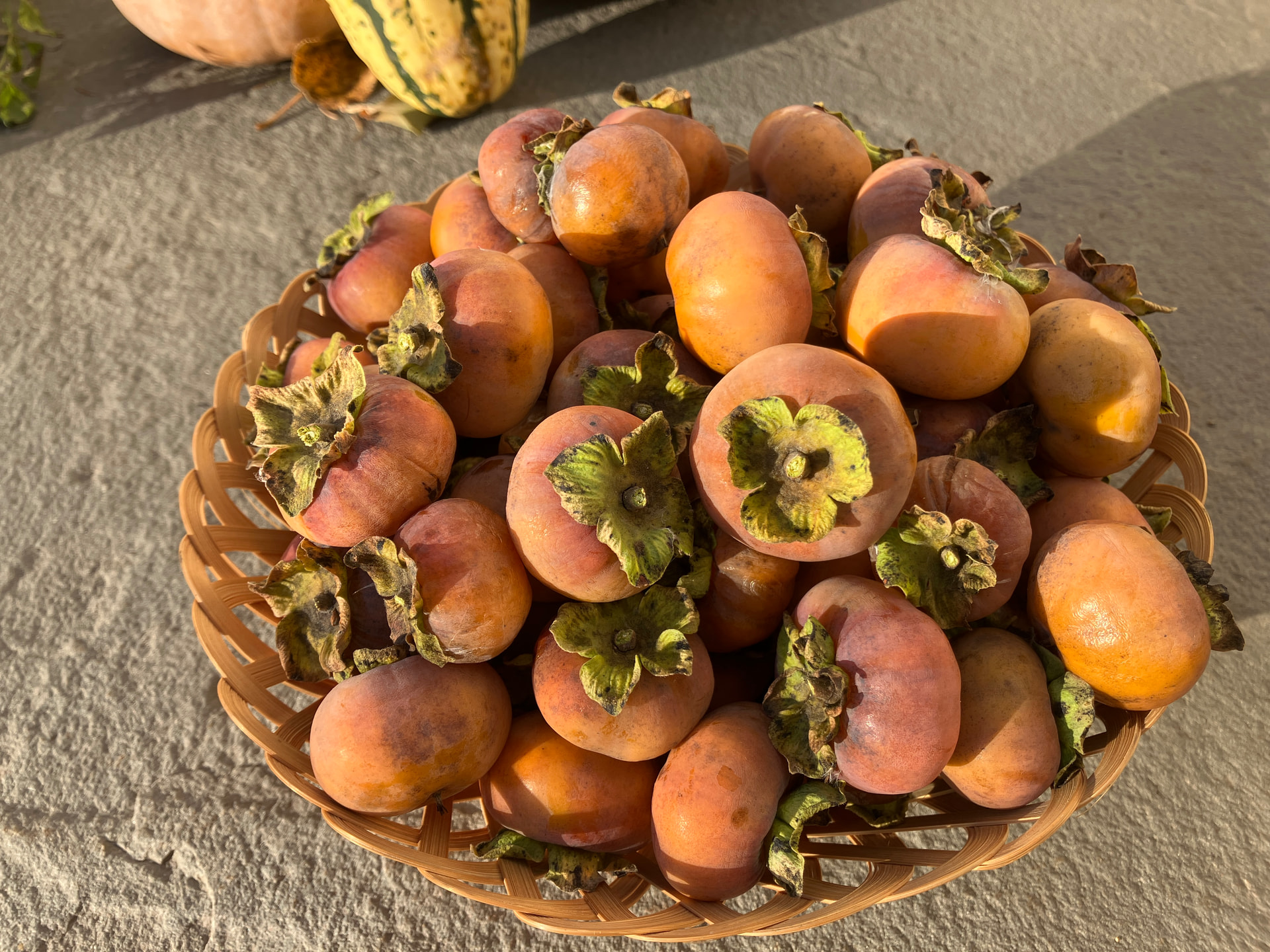
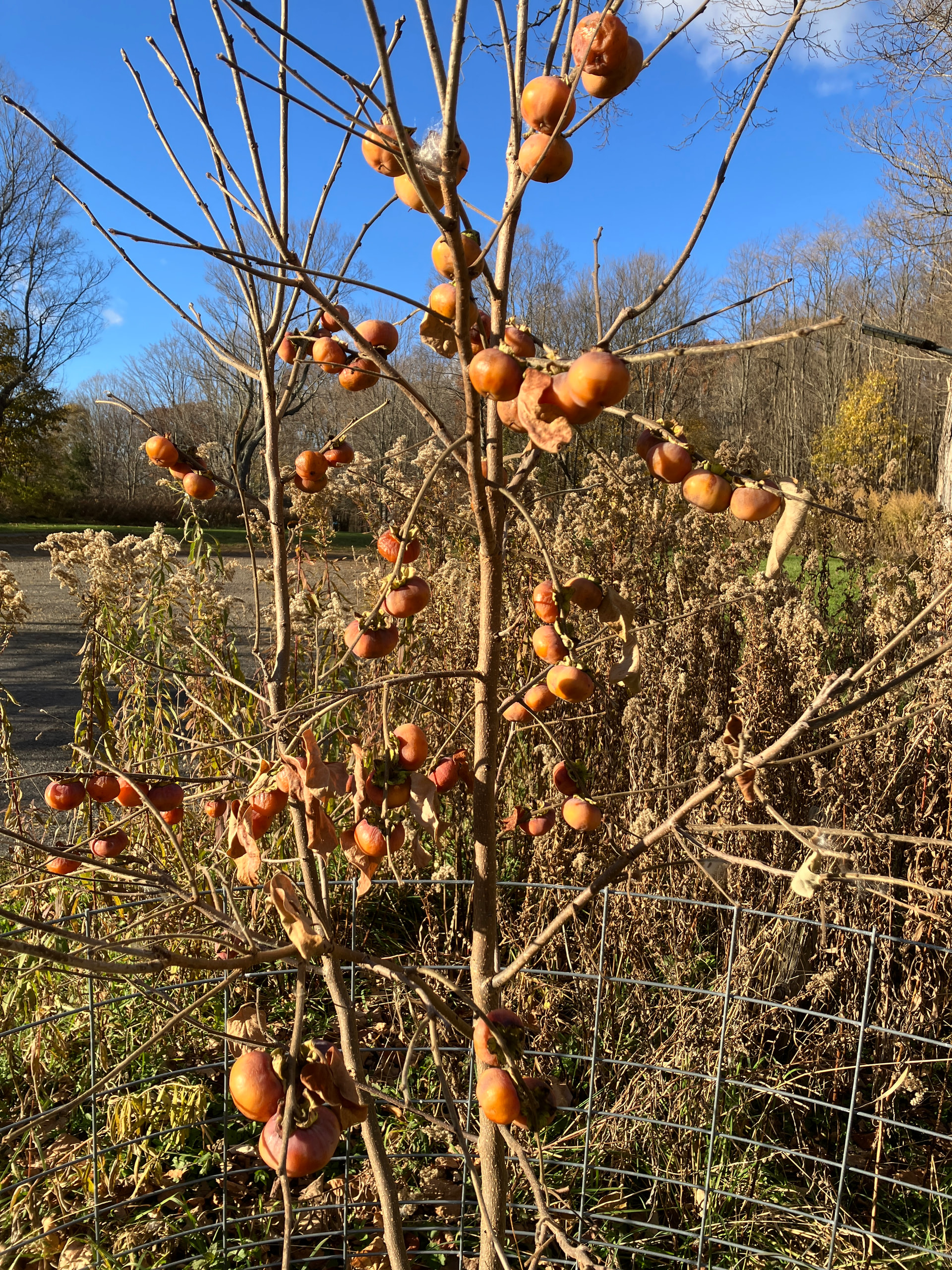
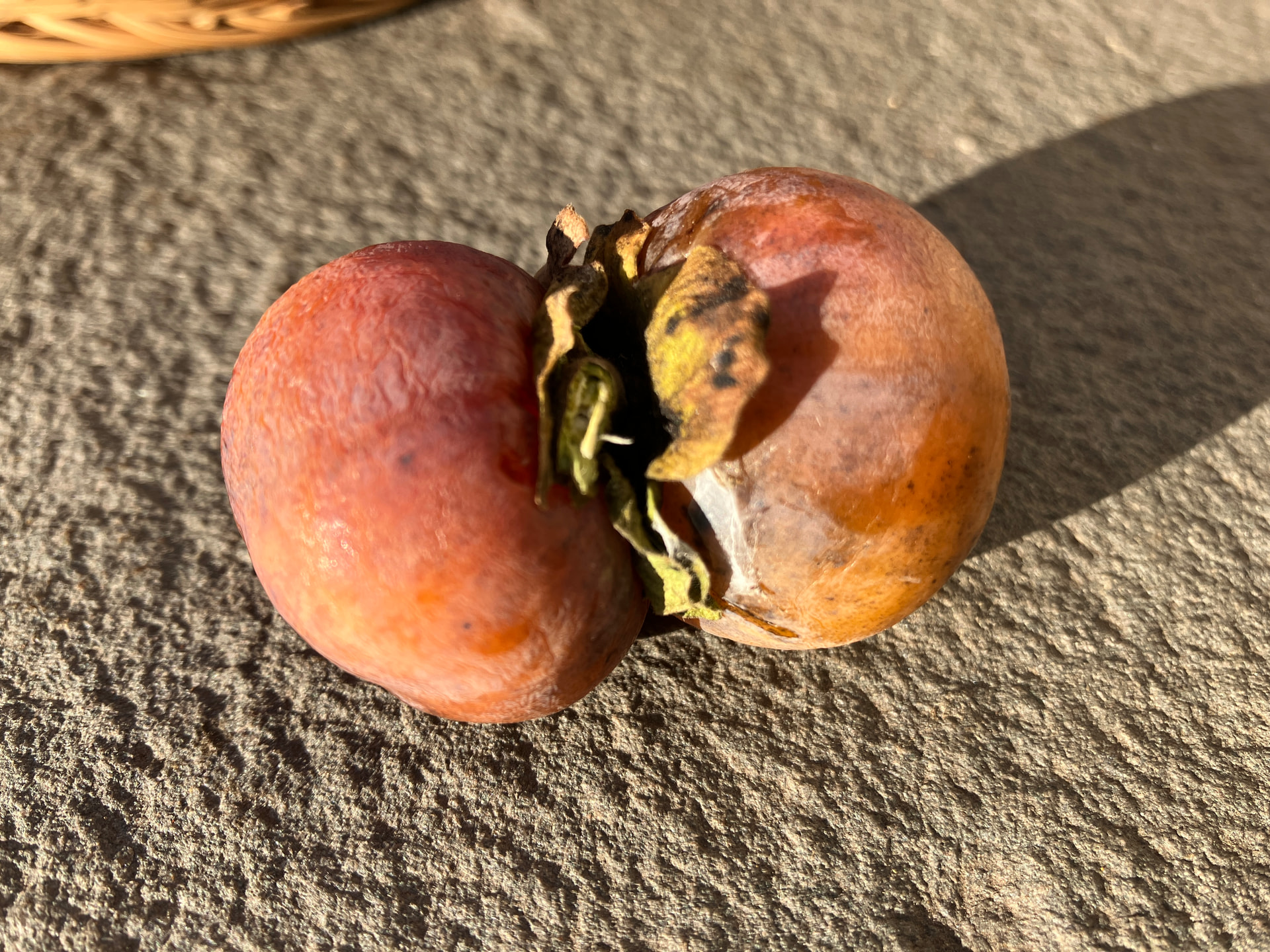
Well, thought All Hallow’s Eve might be an auspicious date to harvest my Early Jewel persimmon crop for the year. It’s the 3rd year for the tree to bear fruit. I picked 88 fruits with a total weight of 1800 g, or an average of 20.45 g. Individual fruits ranged from 11 g to 31 g (with calyx). Interestingly to note – one fruit pair shared the same stem. All were colored, but there was a range of soft to firm fruits. Even the soft ones have an astringent aftertaste.
I have decided to experiment with a large portion of them by removing the calyx and partially splitting the fruit and combining it with an equal weight of granulated white sugar and sealing in a half gallon mason jar. I’m curious to see what, if any, effect this with have on the astringency, if the resulting syrup might be pleasant and useful to some purpose. My area did have one week in mid July of hot weather, but otherwise not so much, probably not enough heat for good ripening.
10 Likes
There are pawpaws hardy to Zone 4, as long as you have a spot with sun for more than half of the day, you could try them, I’m pretty sure they’ll work. Mine are growing slowly, but a friend by the lake has a great bunch of them.
Asian pears are a safe bet too, Raja is growing really fast, faster than anything else except the apricots, and Korean Giant aka Olympic Asian pear is bearing great here.
1 Like
The problem is not survival but ripening. Here in coastal RI Z7A, the early-ripening varieties of pawpaw and American persimmon ripen in late September / early October. Much later than that and they wouldn’t ripen at all.
4 Likes
I have tried to grow pawpaws, both from seed and grafted larger trees. None have survived.
Sun exposure was not the problem. They got 13-14 hours of sun mid-summer.
They would grow the year they were planted, then not wake up in spring…
On average, I think I get around 1200 GDDs in a season. Not enough..
Now, all I have are 2 Meader persimmon seedlings. Growing in pots. Not going to plant them in ground, as I am sure they will end up like the pawpaws.
2 Likes
Have you tried just waiting for them just to get wrinkly and fall off the tree?
Wasn’t sure if it needs more heat hours to ripen, or relatively warm fall days (50F-60F’s) and cold nights will help them get wrinkly.
Think I’ve seen a few people ripen indoors in a glass chamber as well if they are close to ripe.
2 Likes
I know it’s a warm fall, but I got LOADS of pawpaws off of my friends trees here in Zone 5b and here’s in basically the same conditions as here, so no. These pawpaws will be just fine there, I think one of the three is Shenandoah.
And they get ripe on his tree every year, it’s not a fluke, but it might be a bumper crop.
1 Like
I planted 42 pawpaws, and in the end only 7 survived, most were roughly a ug up suckers, but some were seedlings and others were seedlings off eBay (all of them died, no surprise), so they’re not easy to transplant and many of mine died over the first or even second winter.
I could send you cuttings off these varieties that do well here if you’d like. My friend lost track of what they are, but one of the two with bigger fruit is likely Shenandoah.
1 Like
That’s very kind of you. But I’m unable to even grow rootstock/seedlings of pawpaws.. Nothing to graft the cuttings onto.
I’m also in Norway, so shipping cost would be insane.
Great to hear that people are having success in colder climates though! Love to read about pawpaws and persimmons, even though I cant grow them myself.
Good luck to everyone, and keep posting both your success and the less successful trials 
3 Likes
Yeah Persimmons are hard, but I’ve got one American growing now, I’d like more and hybrids in the future, but this is what I’ve got for now. Am l all American varieties like Meader are probably the best in the coldest areas, but I’m not sure how theyd do there.
Uh, Z4B is not Z5B. There’s a ~10 F difference, which at those temperatures is very material.
And Z4B Norway implies a very short growing season. Like I said, the problem is not survival (so much) but ripening.
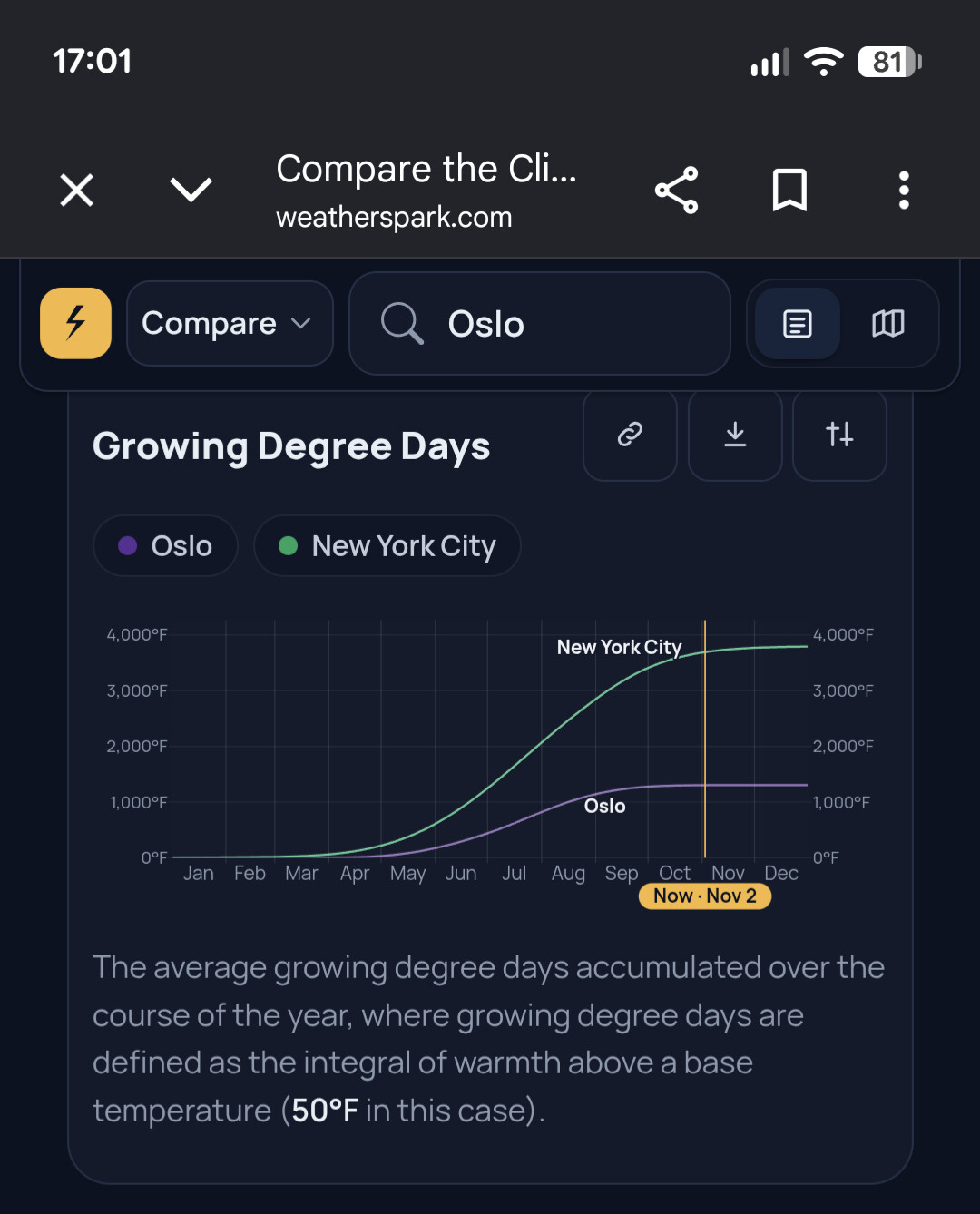
Where are you? Can you compare the length of the growing season there vs Norway? Maybe we define it as number of days >60 F but not <40 F?
3 Likes
Weatherspark.com is a good site for doing just that.
You can choose two or more cities around the world, and get a lot of different statistics.
Like this comparison in GDDs between Oslo, Norway and New York City:
2 Likes
You’re always negative and contrary.
I don’t see any point in trying to reason with anyone with constantly negative tones.
LOL. I don’t think I’m “constantly” negative. With a little effort, you could find lots of examples where I’m helpful and encouraging.
But I do get impatient with posters who spread misinformation. Telling a guy in Z4B Norway that his conditions are “basically the same” as yours is just cruel. Telling him that your pawpaw varieties (e.g., Shenandoah) “will be just fine there” in his location is just wasting his time.
Honesty and accuracy is not negativity. Asking for a little data to back up assertions is not “contrary.”
And remind us – where are you, exactly?
5 Likes
Being near a cold sea cuts jrd51’s Growing Degree Days down a lot. So even if things don’t freeze to death, they might not have enough growing time to produce fruit.
I’m in a similar pinched position trying to replace some bare spots in the yard. Hardy grass seed planted mid fall when rain started, but it won’t survive if a frigid cold spell comes before the grass plants are mature enough.
Recent couple years people are getting Pawpaw trees to live through winter in my area, but no one has fruit yet.
2 Likes