Is there a small amount of good topsoil… (from the compost application) then the orange clay starts 2 3 4 5 inches down?
Here at my place (ridge top land) it varies some from place to place… but I have a pretty good layer of soil 3-5 inches deep in most locations… in just a few spots the good soil is deeper than that.
Under the good soil layer there is red stickey clay with lots of rock.. from fist size to head sized tiller jammers.
I break up the soil until I hit that red clay level.. easy to tell when the rock shows up.
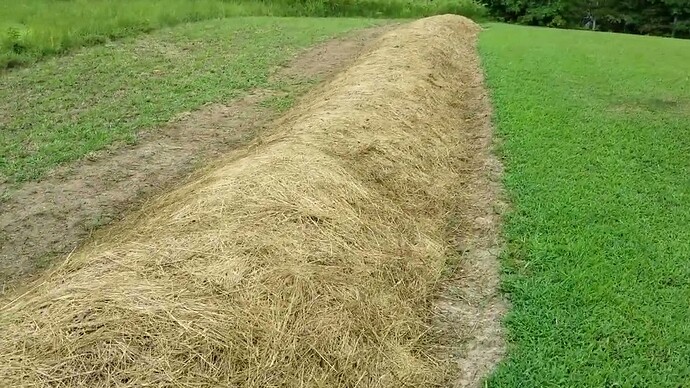
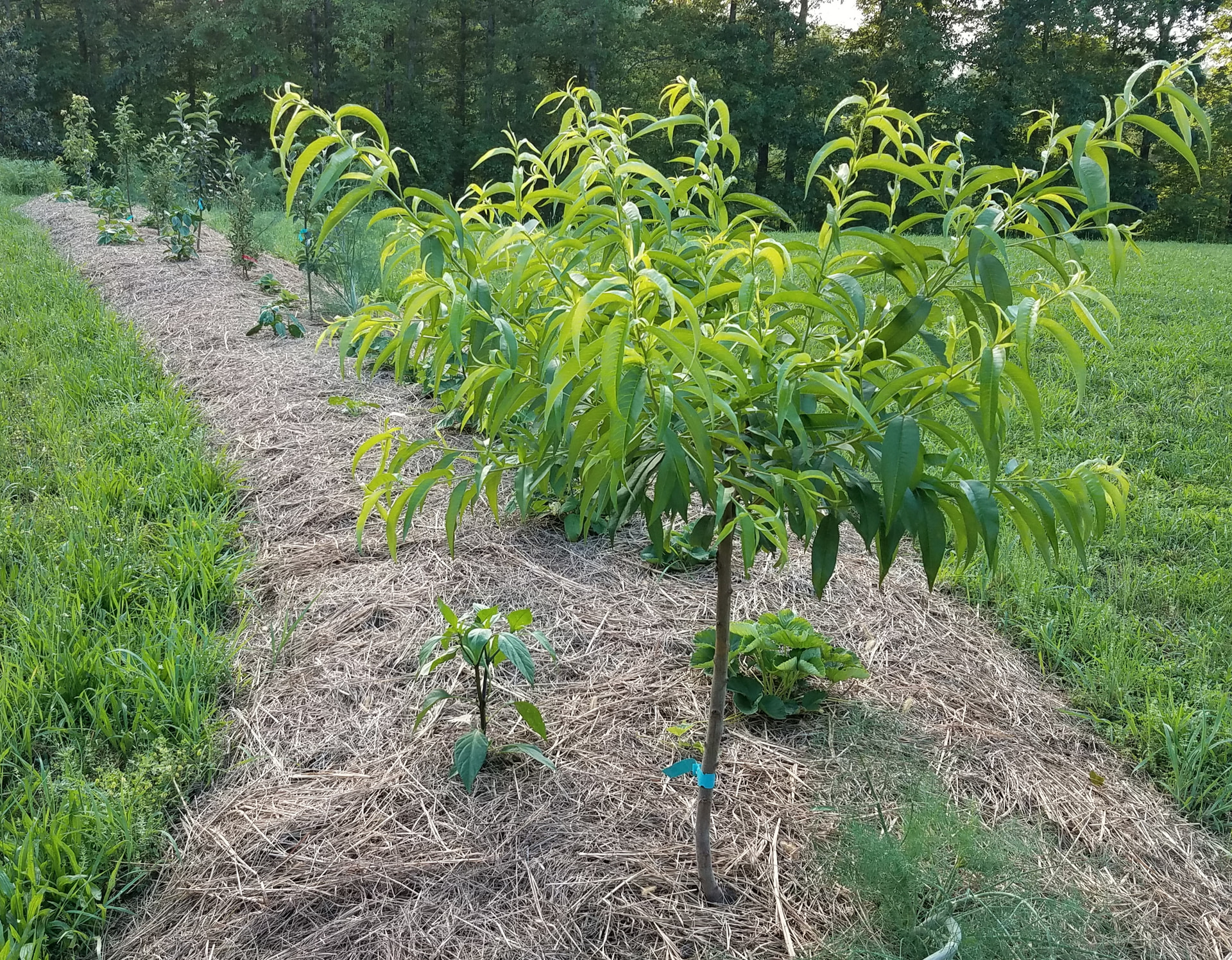
I may break up a 8-12 ft wide strip.. 4 inches deep… 16 ft long (for raspberries).. and then rake that 8-12 ft wide strip up to the middle creating a borderless raised bed 4 ft wide x 16 ft long.
I may end up with 8 inches of good soil in the bed.. that is raised a bit.. drains well…
and on each side of that strip (of borderless raised bed) the ground is lower.. which gives the bed a good place to drain too.
grass grows well in the lower ground on the sides of the bed.. and all kinds of fruit trees, cane and bush fruit grows well in the borderless raised beds with 8 inches of decent top soil.
This bed was 90 ft long… the good soil was around 4 inches deep.. I doubled that by creating a borderless raised bed.
So you are fortunate Clark, to have a readily amendable soil with iron oxide among its mineral traces. The video by Tennessee Hunter is a good illustration of how to start with a windrow approach to prepare you soil you could follow this prescription that I found in an AI search:
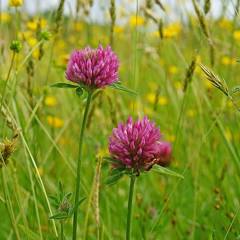
and is an excellent choice for improving it, as the plants help break up compaction, add nitrogen, and increase organic matter. While they thrive in heavy, moisture-retentive clay soils, they prefer a pH of 6.0–7.0. For best results, amend the clay with lime to reduce acidity.
Key Considerations for Growing Clover in Red Clay:
Types: Red clover and white clover are suitable, though different varieties like Crimson or Arrowleaf can be used depending on the region.
Soil Preparation: While clover can tolerate compacted clay, aerating the soil or mixing in organic matter (compost) before planting will boost success.
pH Level: Red clay is often acidic. A soil test is recommended, as clover prefers a pH of 6.0–7.0.
Planting Time: Sow in early spring or early autumn, when the soil is moist and, in the case of spring, after the ground has thawed.
Planting Method: Mix seeds with sand or potting soil to ensure even distribution, as they are very small.
Clover acts as a, beneficial “pioneer” plant that can transform heavy, hard-pan red clay into healthier soil over time.
The first thing you need is a good source of organic mass: sources might be livestock feeder, horse barn, or simply buying enough bales of straw and alfalfa to start a burried compost that over time would breakdown into the soil that can be refilled into the clay. If you have to have a stream bed nearby that might give you the sand to add to the mounds before you till.
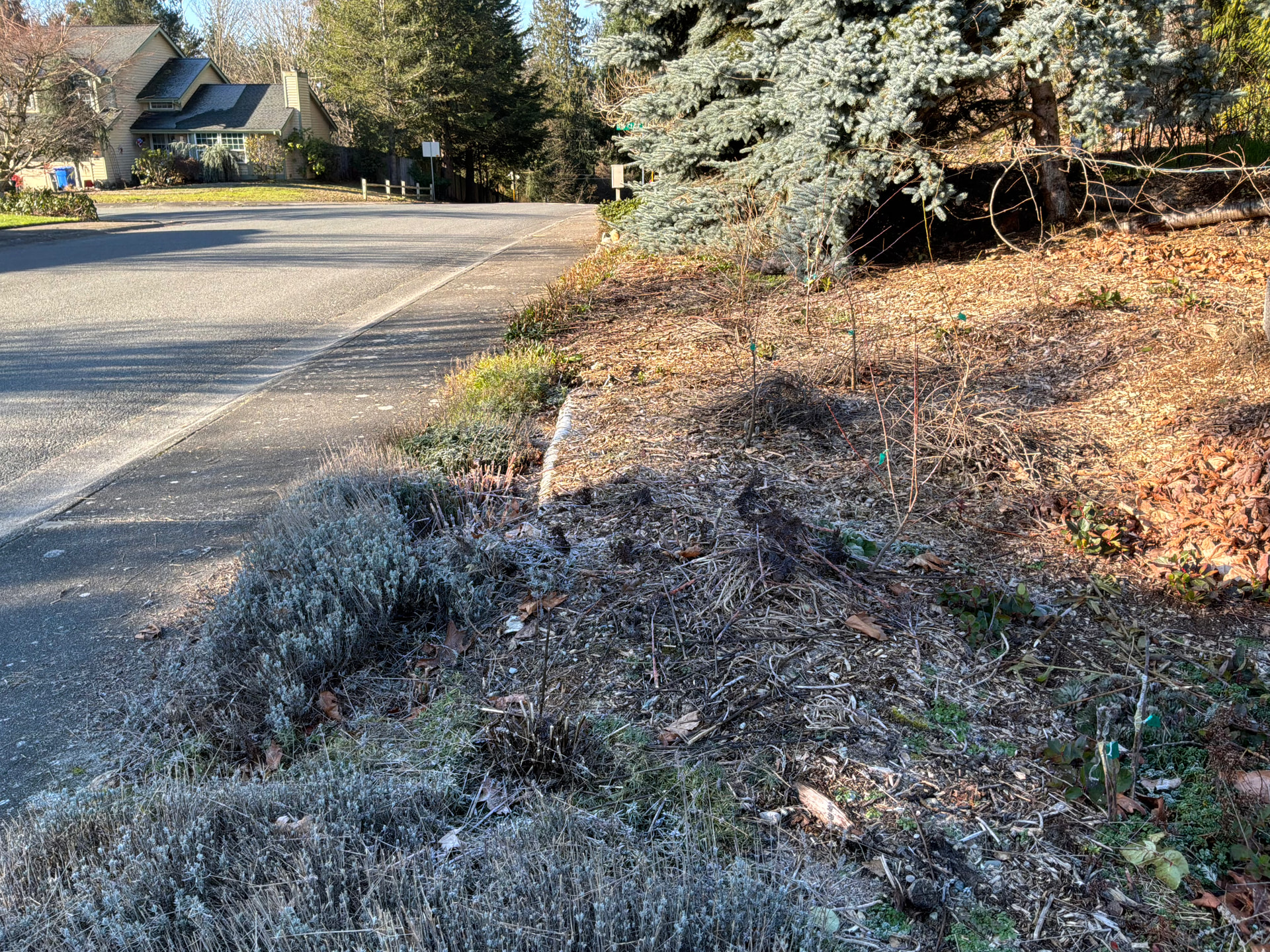
I did something similar here on my property by burying fresh cut logs in some of my poorest stony area near my sidewalk. As I dug the trench for log burial, I had about 10% large stone embedded in the clay hardpan, so I had to use a pickax to do most of the digging. Once buried I covered the logs with decaying leaf matter and wood chips to help preserve a high moisture content. Finally I sowed crimsom clover and kept it well watered until the clover germinated. Just uphill of this berm I planted my new row of plum trees. Below is a pic of my hugelculture mound. Several logs are now poking thru so I will soon lay a new bark chip layer to help them breakdown. My tree roots can now enjoy a new sources of nutrients as these materials breakdown over time and the clover continues each year to add nitrogen to the soil.
Hope this gives you some ideas and ways of doing your renovation at least cost.
If you want a rootstock that can grow in a wetland you can try Malus fusca. The downsides are that it is slow growing, dies if the soil gets too dry, and probably will die if the winter gets colder than zone six (it grows in southern alaska). I’ve grown it from seed and it is really easy to sprout if you leave the seeds outside all winter it took about 3 seasons for the saplings to get to pencil diameter but that might be because the voles kept chewing on the roots.
Another fun wetland edible is Wapato or duck potato
I have lots of Indian Plum. Here it’s not on sandy soil, but usually on the side of a shady ditch. It gets lots of water, but doesn’t sit in water except during floods.
@Bdav .. after breaking up a 8-10 ft wide strip, 90 ft long… 4 inches deep… with my 18 Inch 5 hp cub cadet rear tine tiller… I raked it to the middle with a garden rake.
I then covered it with several old weathered bales of hay.
I started that in July one year… and let it sit all fall and winter and planted it in the spring.
Much of that old hay had composted in place and when planting it… it was loaded with earth worms.
Red clay indicates good drainage. The iron in the soil is oxidized to a reddish color. Gray clay indicates poor drainage and wet soil. Brown or yellow are somewhere in between. The water table in Clark’s soil is probably often at 5-15ft depth. The soil in question sounds like it should grow something especially with a foot of compost on top. Even in the desert of West Texas where I formerly grew things that soil would grow good weeds during rainy spells.
That looks absolutely awesome and it is gonna be some good soil . I was looking into doing some borderless raised beds about a decade ago. I wanted to find a method that would not require so much watering. It looks exactly like the Permaculture that they were doing in England. The only difference is they were putting logs or limbs at the bottom then covering them. As the wood would release moisture into the soil, they really used it a lot for vine crops.