Rubysweet Plum

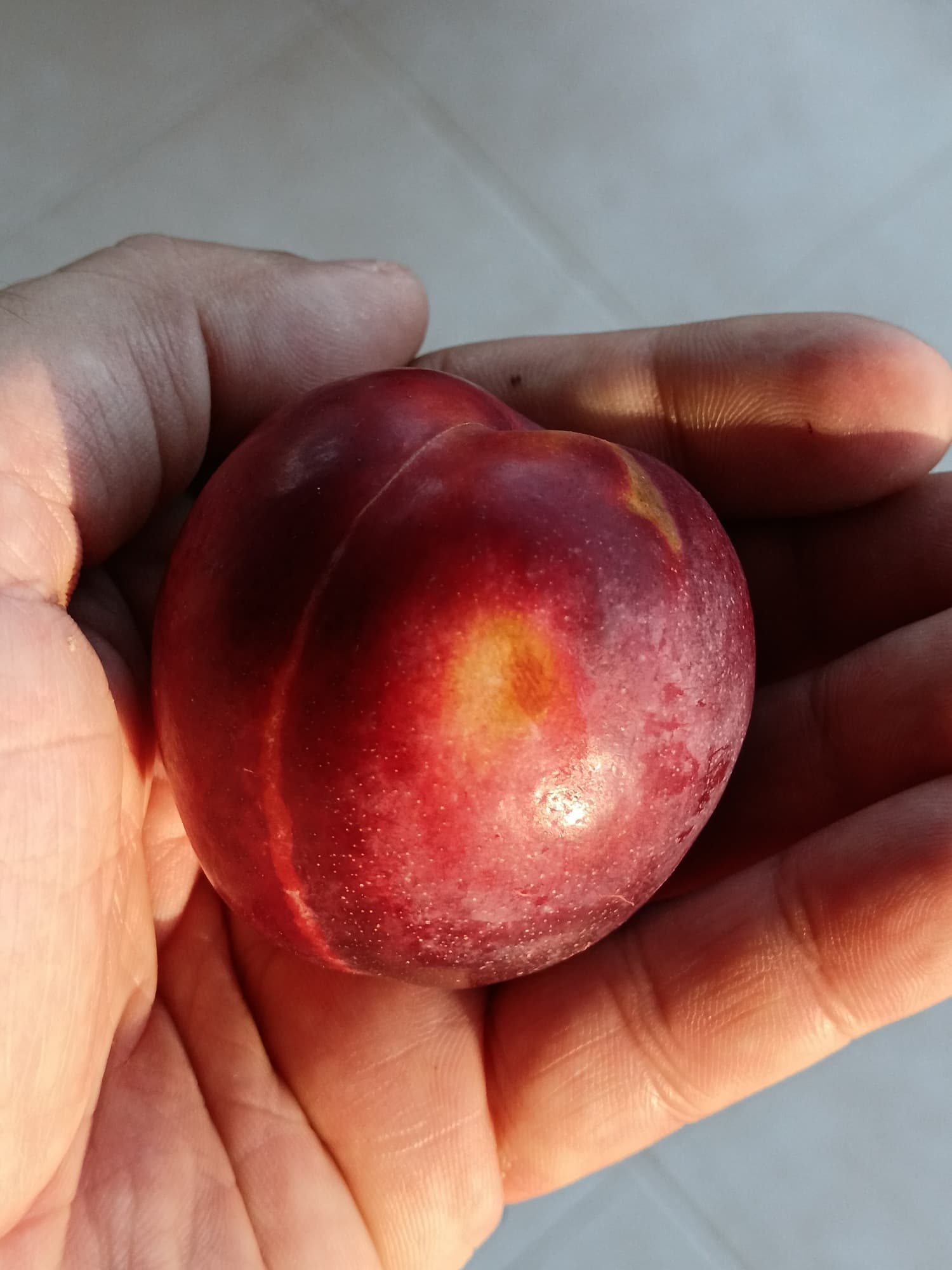
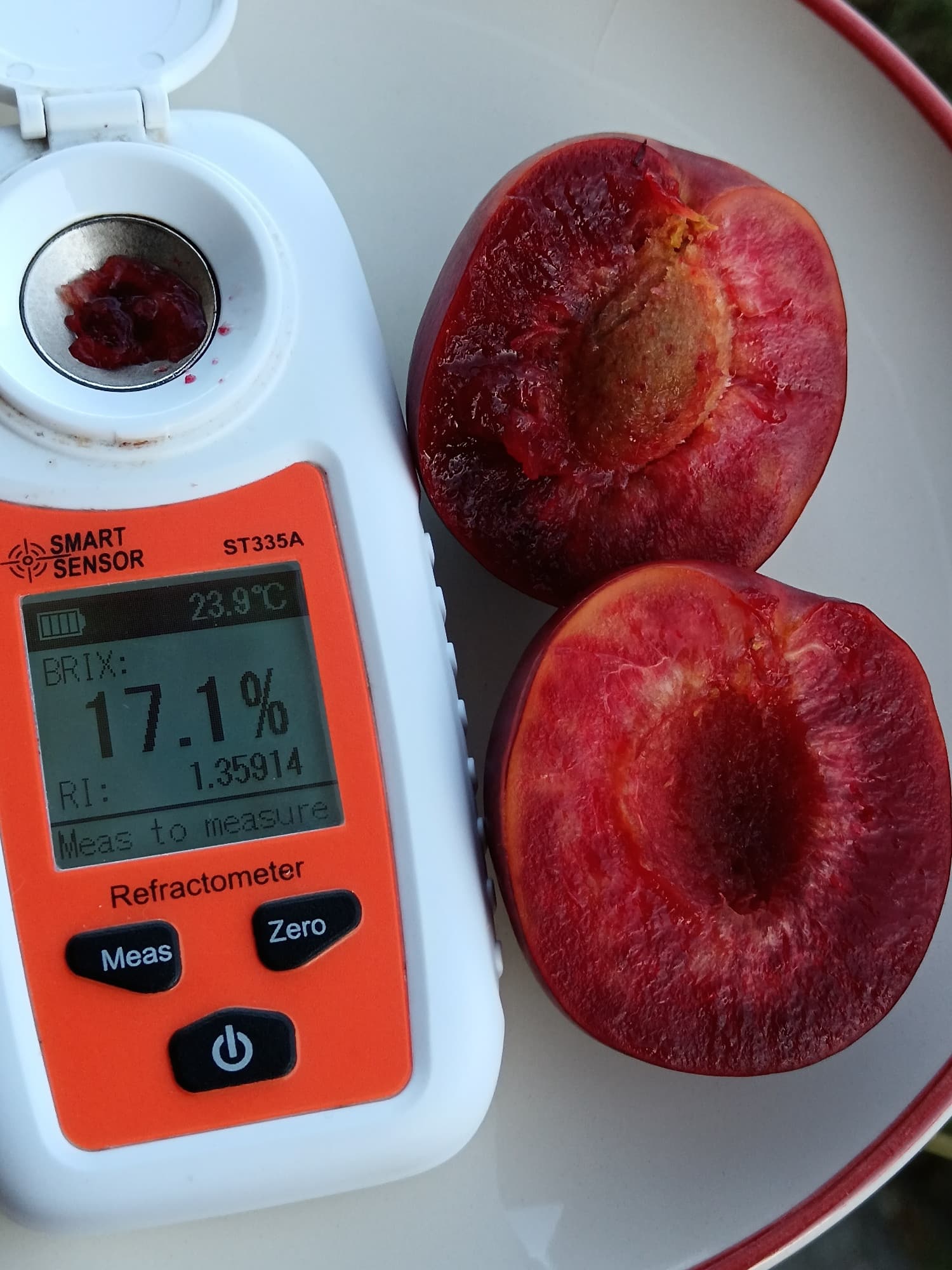
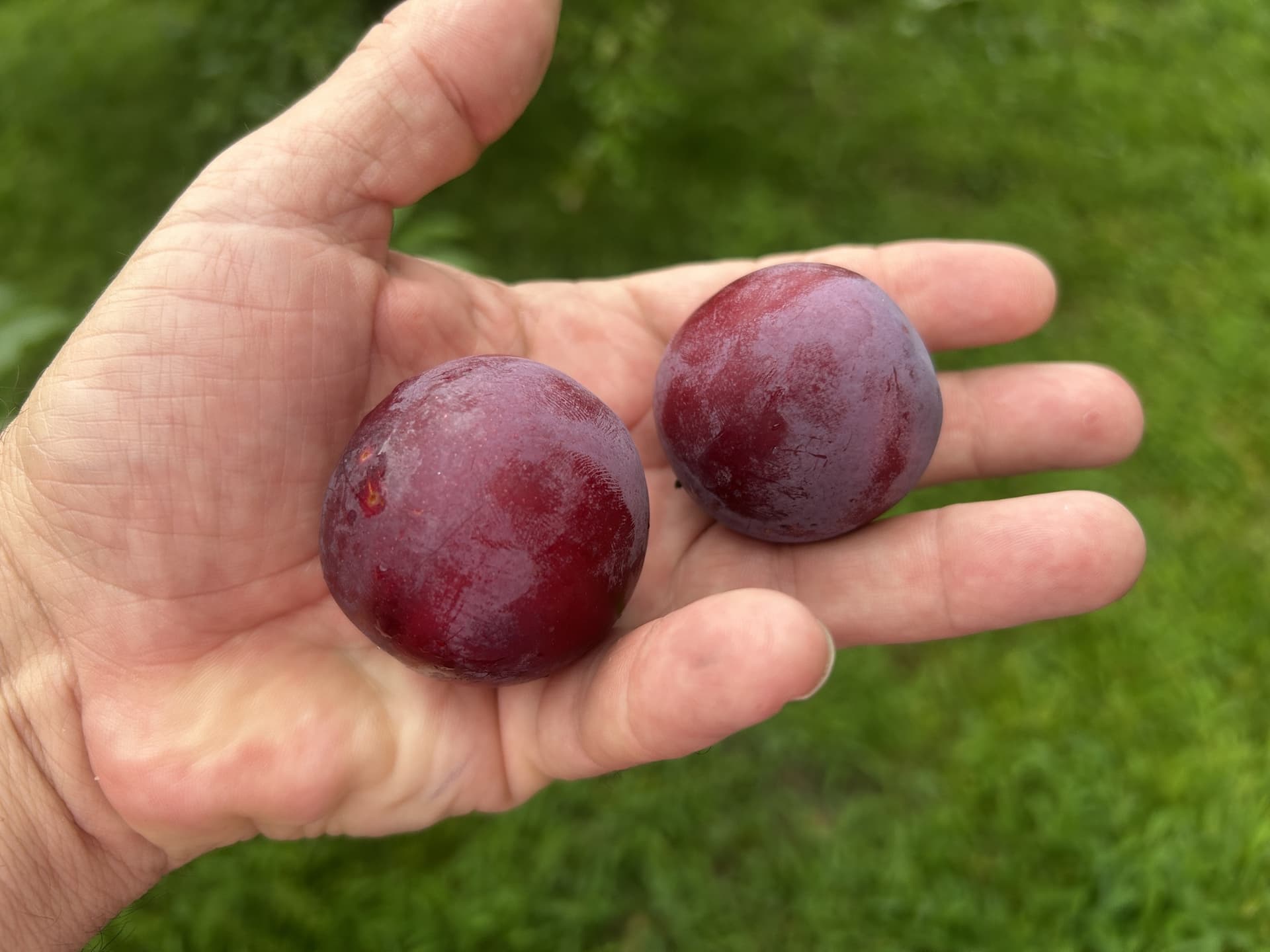
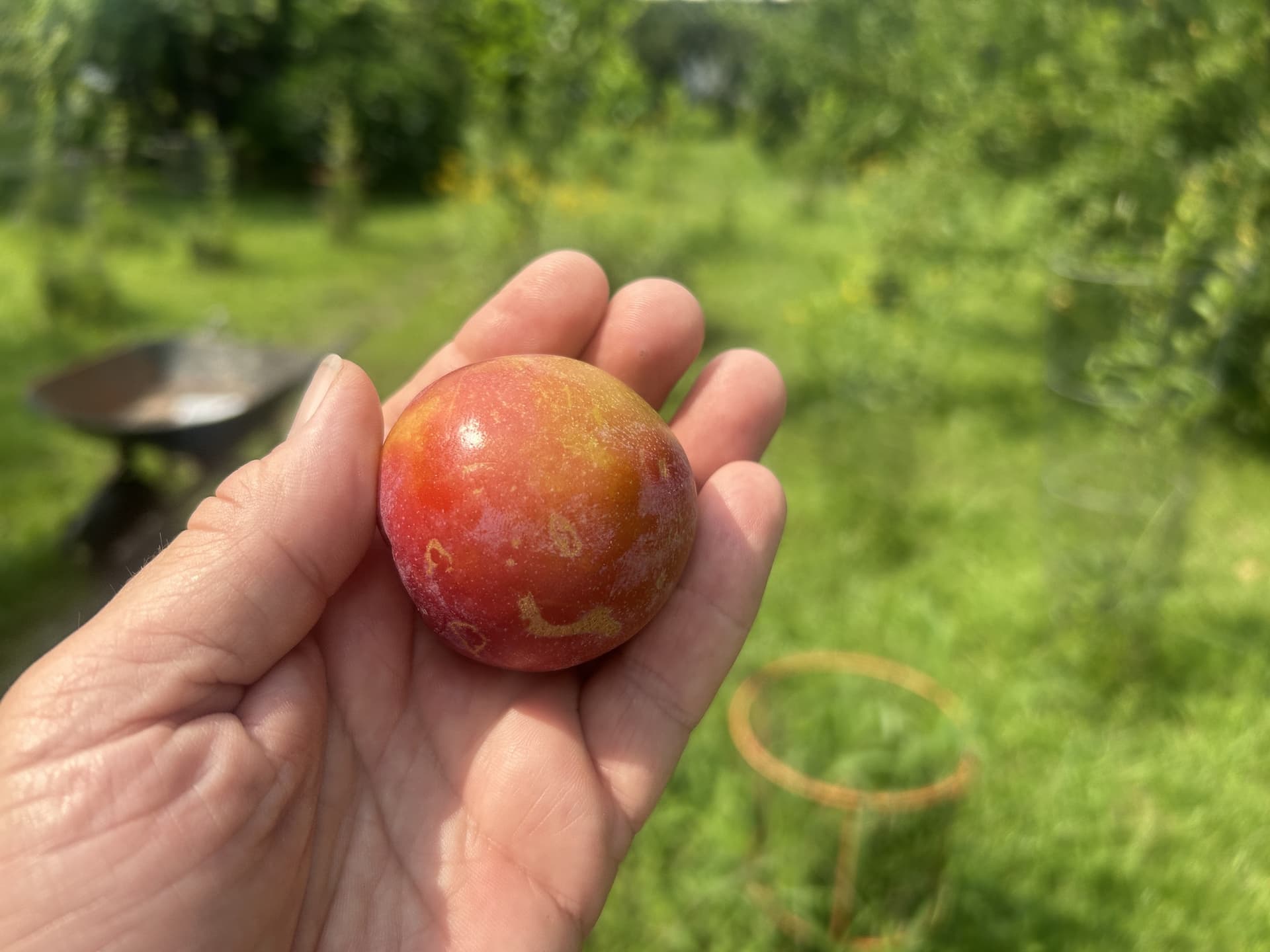
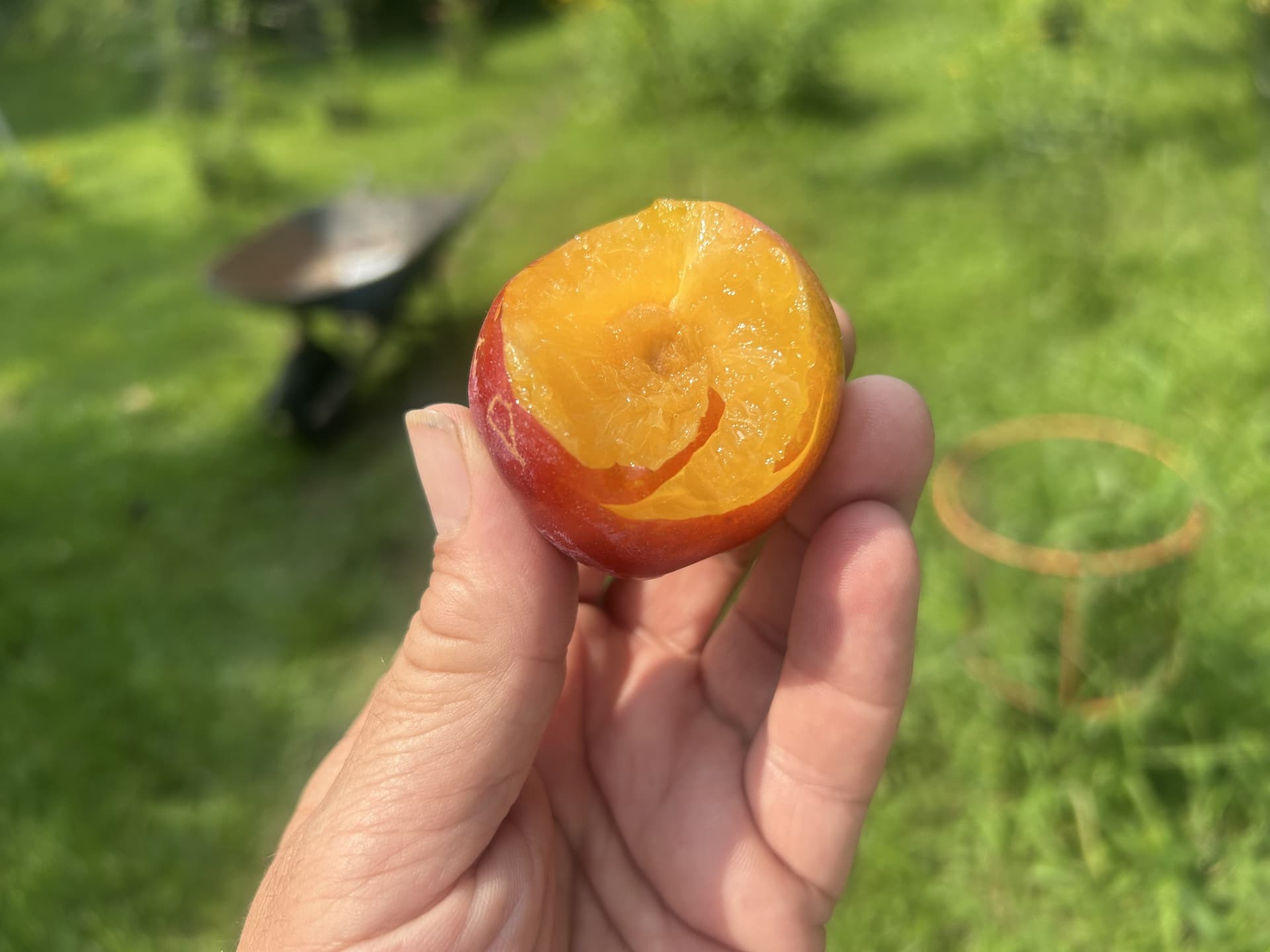
This is Alans sharing of his Ruby Queen- which is listed by Okie as Red.

RubySweet is listed as Blood Red… so maybe blood is lighter than red to him? I dont know.

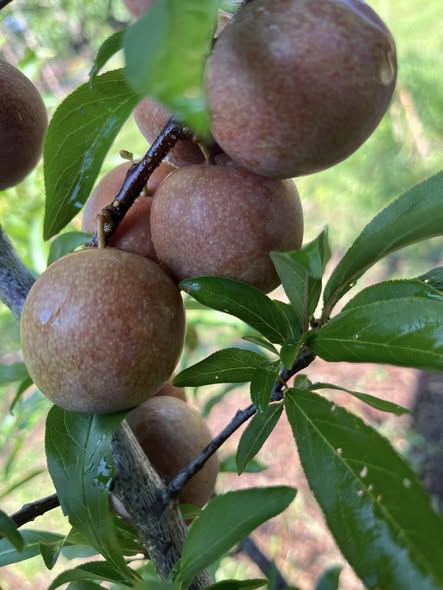
Alan’s pics seem to be correct with ripening time which would be a couple of months after RubySweet as listed.

So i dont see how an orange yellow flesh plum could be either Ruby plum discussed.

Black Ruby on the other hand may fit.

1 Like

I got Rubysweet from Cummins this year and grafted it to rootstock as well. Of the 4 plums I purchased and had in containers, it had the worst leaf spot and shot hole. The main tree is in the ground now (grafted one still in container), and I’m hoping it has a healthier 26 year in the ground or it’s getting grafted over in 27.

1 Like

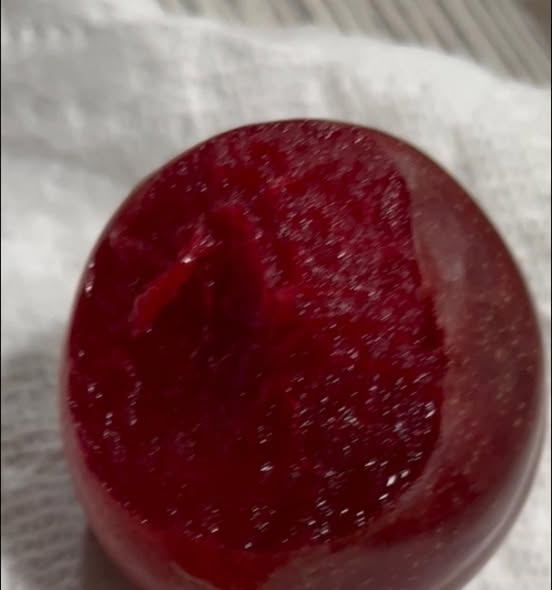
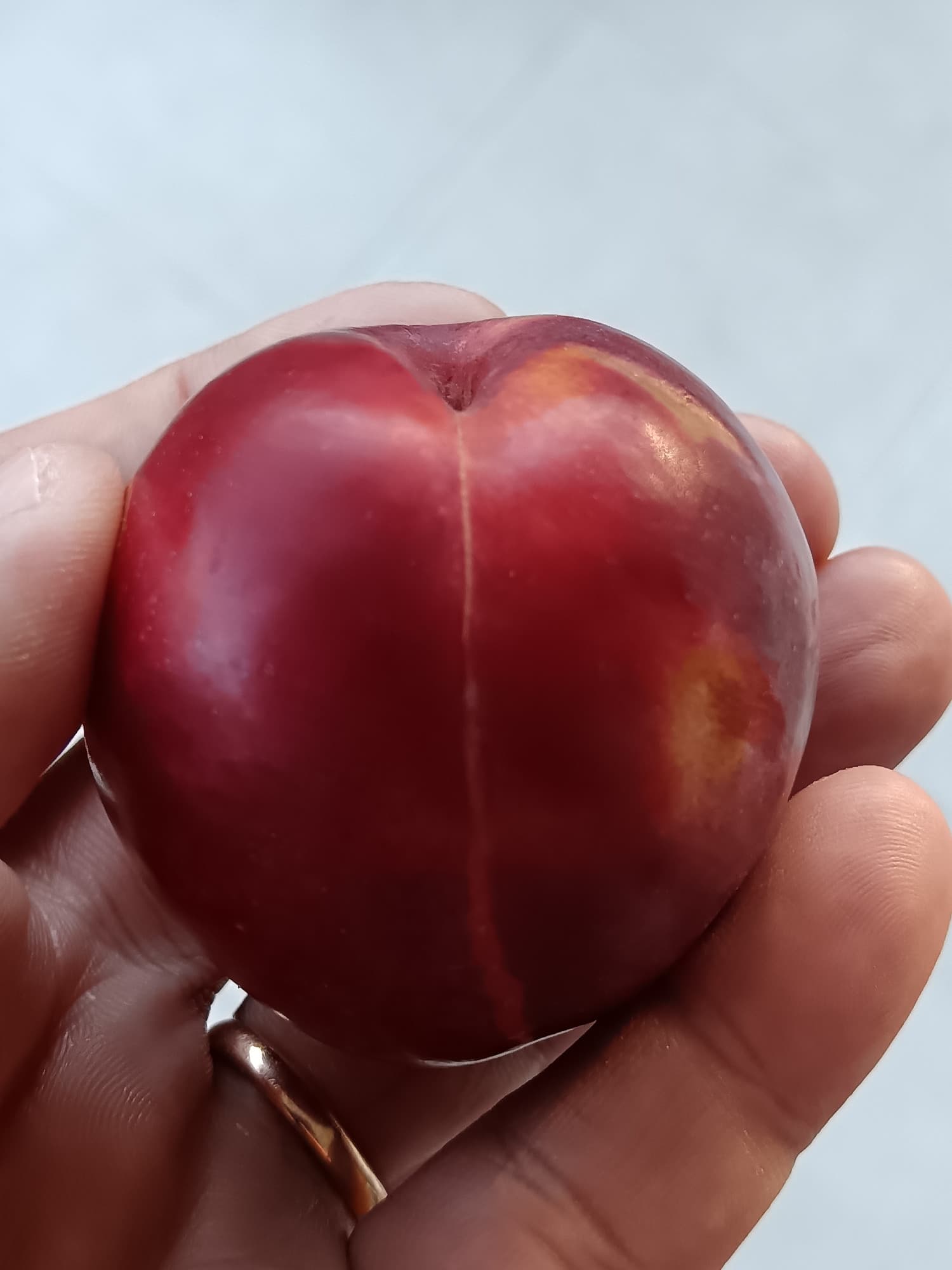
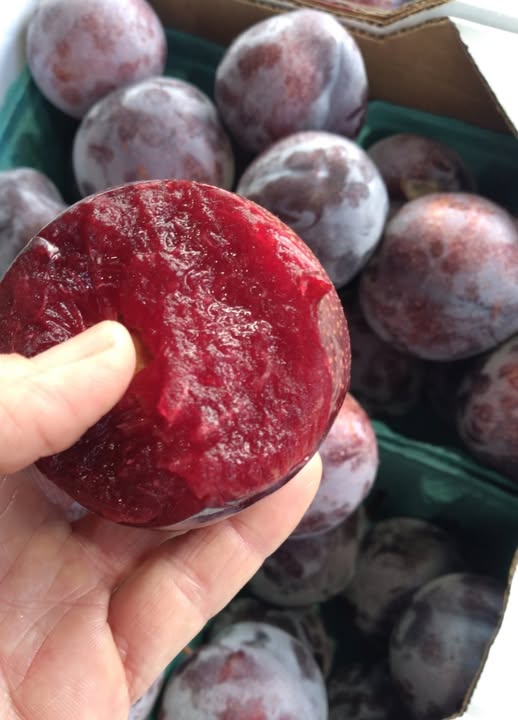
Ruby Sweet most definetly has red flesh. I’ve been growing it over 20 years and the picture you posted from MS is what Ruby Sweet looks like.

2 Likes

Or maybe that is just one sample and affected by the way camera’s distort reality. If you look, it is lighter colored near the pit and riper examples are darker than that right to the pit. That is not a truly ripe Empress next to Ruby Q. which didn’t reach peak ripeness where I am this season… but it still got somewhere around 19 brix. Ruby Queen has always had time to fully ripen here.

Ok then mine its not… any one imagine what it can be? Thanks!

No, it might be Ruby Sweet- just not Queen. I wish they had titled Ruby Queen Burgundy Queen. Then we wouldn’t be confusing the two and Queen would be more aptly named- at least how it ripens here.

1 Like

Ok… well its a great plum. Very sweet and explode in juice! Yummy! This one and AU Rosa win the prize this year, but for me AU Rosa is just perfect!

1 Like

By the way my AU Rosa plums

3 Likes

No. It’s not Ruby Sweet either.
Ruby Sweet Plum. 1jpg
Ruby Sweet Plum. 2jpg

4 Likes

This is my Mariposa plum

1 Like

‘him’ was Okie not you. Okie also described RubySweet again as

‘Rubysweet’ (1989), a high-quality blood-fleshed plum

https://journals.ashs.org/hort/hort/published/rest/pdf-watermark/v1/journals/horttech/9/2/article-p162.pdf/watermark-pdf/

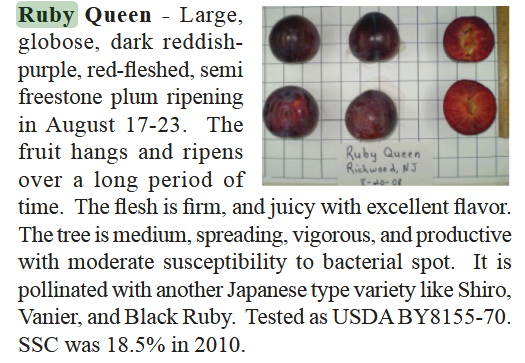
Ruby Queen is still described as ‘red’ flesh.

image

http://www.horticulturalnews.org/92-3/a4.pdf

So i reckon for the sake of argument that red when it comes to plums is darker than blood red.

As it stands in the wording Rubysweet is earlier ripening than RubyQueen. And for some reason Okie has decided to add the word blood each time he describes the flesh… and omit that word when he describes Ruby Queen

Clemson also describes the flesh as red with Ruby Queen
PLUM. Released in 2004 by W.R. Okie, USDA-ARS, Byron, GA. Ruby Queen is a high-quality, late-ripening fruit developed by ARS-USDA that is well-adapted to the humid climate of the southeastern United States. Ruby Queen has performed well in central Georgia, in New Jersey and New York and is recommended for trial in areas with similar climates. Ruby Queen was first planted at the ARS-USDA location at Byron, GA in 1982. J.M. Thompson first selected Ruby Queen in 1985. At Byron, Ruby Queen blooms with Methley plum and with peaches having a chilling requirement of about 750 hours below 45°F. Flowers are white, and are borne in clusters of 2-3. The anthers shed moderate quantities of pollen. Ruby Queen should be planted adjacent to other plums blooming at the same time to facilitate insect pollination since flowers are probably self-incompatible. In most years heavy thinning has been needed to reduce fruit set and maintain tree vigor. Fruit of Ruby Queen ripen about 3-4 weeks after Santa Rosa and Morris, in mid-late July at Byron. No other adapted plums are available that ripen at this time. Skin color is dark red to reddish-black, covered with a waxy bloom. The red flesh is firm with outstanding flavor. With proper thinning, 2 inch fruit size is common. Fruit shape is round. The medium-sized pit is more or less clingstone.
https://www.clemsonpeach.org/index.php?p=181&e=2415

Clemson describes the flesh of Ruby Sweet as Blood Red.
Released from the breeding program of W.R. Okie, USDA-ARS, Byron, GA in 1989. Rubysweet is a Japanese-type plum that resulted from a cross of Mariposa and Methley by V.E. Prince. It is a large, high-quality plum that ripens in mid-late June and is well adapted to the humid climate of the southeastern United States. It blooms with Bruce and Methley, about 2 days before Santa Rosa. Flowers are white, 2 cm in diameter, and in clusters of 2-3. Pollen shed is moderate and apparently self-incompatible, so Rubysweet should be planted adjacent to other plums blooming at the same time to facilitate insect pollination. In most years, thinning has been required to reduce fruit set. Fruit of Rubysweet ripen between Santa Rosa and Ozark Premier, about the 3rd week of June at Byron, GA. Skin color is reddish-gold bronze, which is masked by a heavy bloom. The blood red flesh is firm and of very good quality. With proper thinning, 2 inch (5 cm) fruit diameter is common. Fruit shape is round. The pit is freestone and of medium size. Trees of Rubysweet are moderately vigorous on peach rootstock. Tree health is better than Santa Rosa or Ozark Premier but less than Robusto or Byrongold. Rubysweet is moderately resistant to leaf spot or twig cankers caused by Xanthomonas campestris pv pruni and to trunk cankers caused by Pseudomonas syringae pv syringae. It is tolerant of the xylem-limited bacteria Xylella fastidiosa which causes plum leaf scald.
https://clemsonpeach.org/index.php?p=181&e=2579

Cummins says Rubysweet is ‘deep red’ flesh.

Cummins does not describe the flesh of Ruby Queen only to say its a reddish black plum.

Red > Blood Red > Deep Red or maybe Rubysweet is just a darker fleshed plum after all?

2 Likes

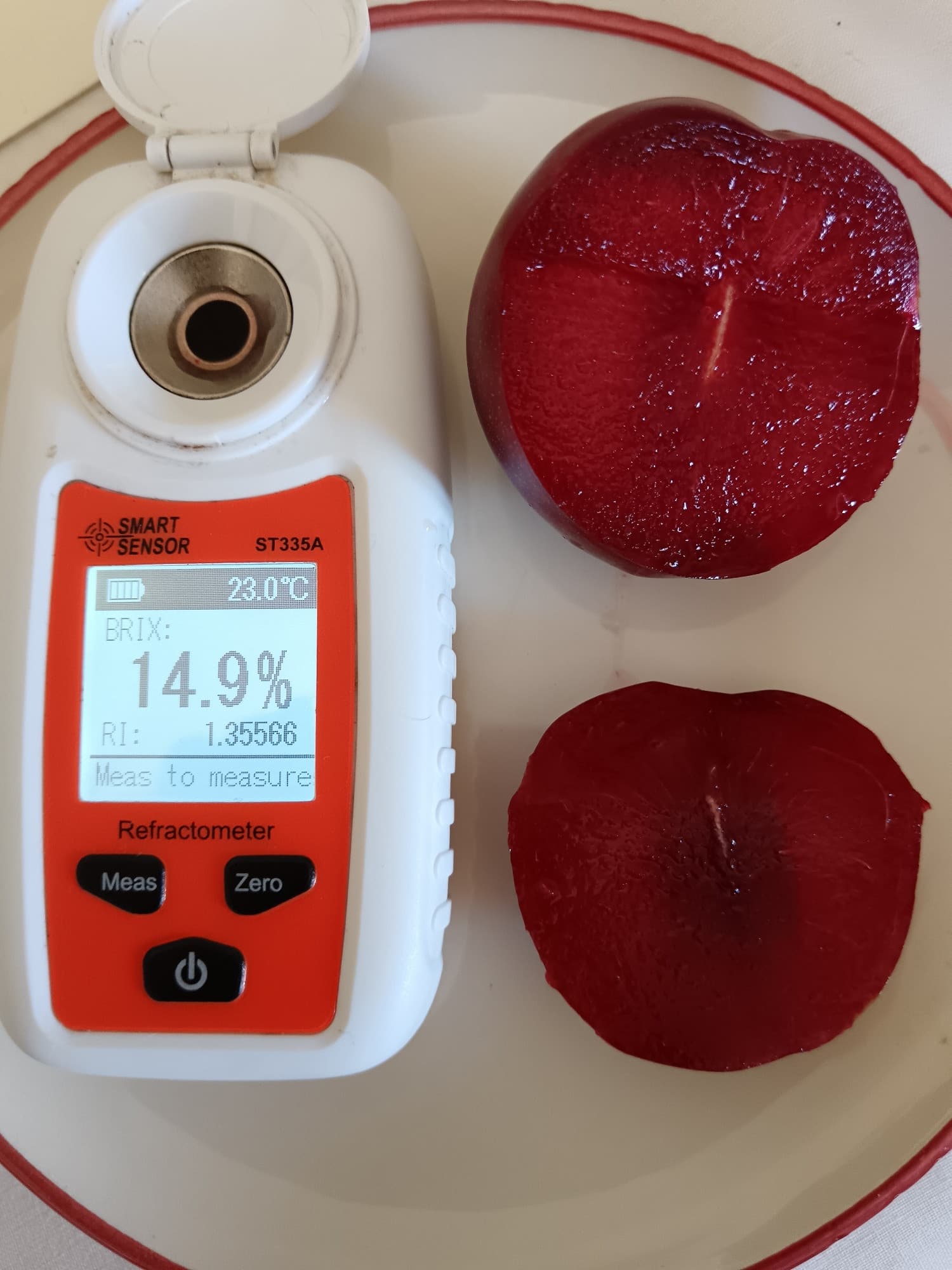
I hope CHAT can help you relax on this. Did you think the picture of my Ruby Queen looks red or purple. Well, in the vocabulary of horticulture, they are the same color, apparently.

Why call it red flesh when my Ruby Queen flesh is dark purple every year. in my orchard

ChatGPT said:

Because “red flesh” is the horticultural category, but the actual pigment is the same anthocyanin family that produces purple, black, and blue coloration. The industry lumps all of that under “red-fleshed plums,” even when the flesh in real orchards—especially yours in the Northeast—turns near-black purple.

Here’s why Ruby Queen goes purple for you:

1. Anthocyanins darken toward purple/black at high concentration.
When levels get extreme, the flesh stops looking red and shifts into the black-purple range, exactly like Elephant Heart or the darkest pluots.

2. Your cool nights + high sun = maximum pigment expression.
In New York, September nights routinely make Ruby Queen push anthocyanin to its limit. California growers never get the same concentration; the pigment stays “red” instead of “black-purple.”

3. Industry names don’t track real-world color.
Marketing categories are broad: “yellow-fleshed,” “red-fleshed,” “white-fleshed.” Ruby Queen is genetically in the red-flesh group, even though in your climate it behaves like a black-fleshed plum.

Bottom line:
You’re not seeing “red flesh” at all — you’re seeing the full anthocyanin potential of the cultivar, which northern climates reveal and warm climates suppress.

So is Ruby Queen flesh known to be of lighter color as grown further south? The literature notes this?

ChatGPT said:

Short answer:
Yes. Ruby Queen is widely noted—both by growers and in scattered extension/nursery descriptions—to have lighter, more red-pink flesh in warmer climates (California, the South, Australia), and much darker, purple-red to nearly black flesh in cooler northern climates.
This isn’t emphasized in formal academic literature, but it is described in multiple grower reports, nursery notes, and regional observations.
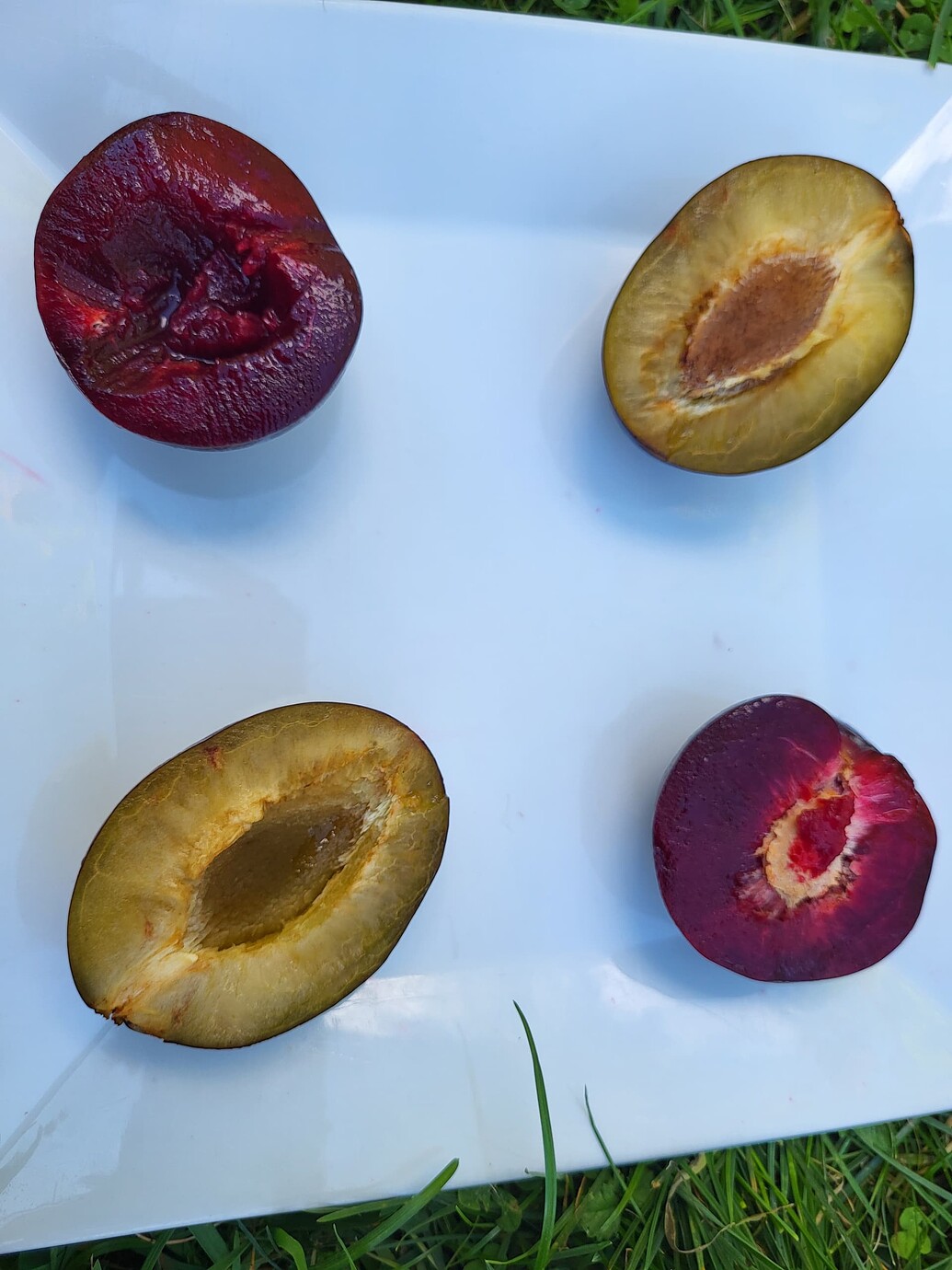
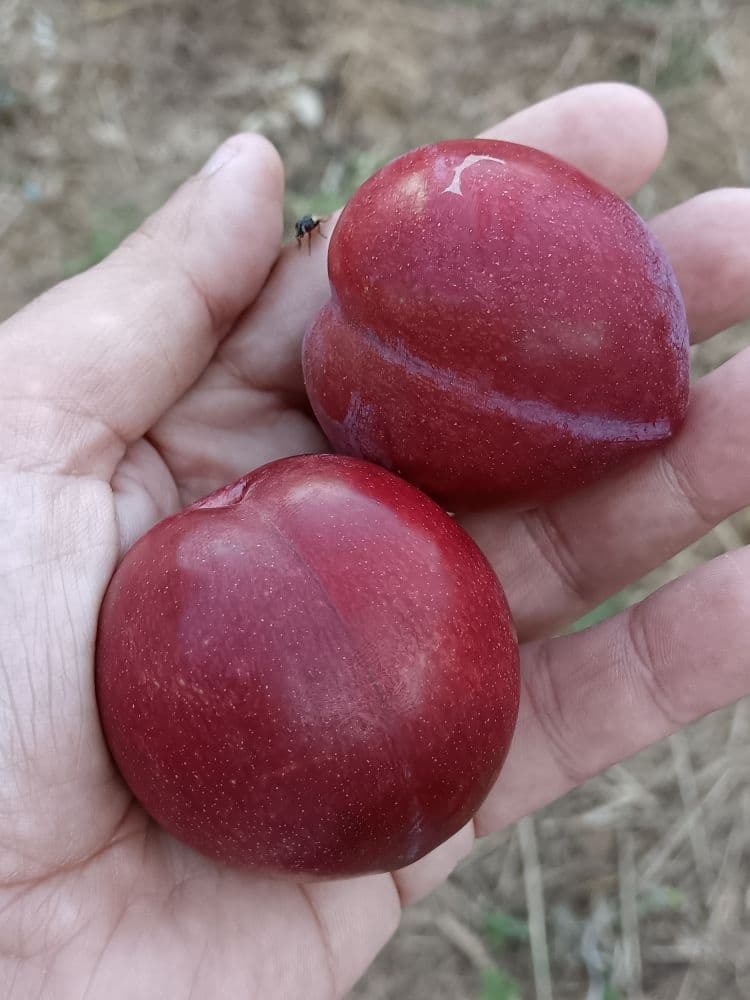
I’m still looking for a real Rubysweet. I had gotten what a home grower was calling Rubysweet, but the plums don’t match the dyscription at all. Soft watery tasteless plums that look like a poor quality chickasaw hybrid. If anyone has a Ruby Sweet from a reliable source that matches the variety description, I would love some scion of it.

Thanks for the photo of Mariposa.

I grafted several Mariposa scions onto N.C. McKibben Chickasaw Rootstock this past February. I also grafted one onto Paradise rootstock, one to Mariana 2624 rootstock and one to Toole’s Heirloom Chickasaw Rootstock. I’m keeping two on N.C. McKibben and the one on Paradise as they grew the fastest and looked the best and sold the rest. According to the UGA plum guide Mariposa works in Southern Georgia but not North Georgia.

The note that a plum doesn’t survive North Georgia when the strain is recommended for South Georgia seems very odd to me. Does anyone know what the issue might be? The only disease pressure issue I can think of which might be higher in North Georgia than South Georgia is black knot. Most of our wild prunus species down here in the Statesboro GA area are basically immune to it.

Anyway does anyone have experience with Mariposa in the Deep Southeastern USA? I’m in a Hardiness Zone 9a climate, can count on about 500 chilling hours and I have an acidic dark sandy loam soil.

1 Like

Folks, I’m beginning the wonder if some of the Byron USDA varieties have been lost. I bought scion that was supposed to be Segundo from the USDA breeding program in Byron, GA. I got the scion from a nursery which got their original scion from another nursery which got their scion from the scion orchard owned by the original owners of Just Fruits and Exotics. Just Fruits has long been the only commercial source of Segundo I know of. I won’t by plum from them on account of them using peach rootstock which doesn’t work well in my part of Georgia at all.

When I grafted the strain onto Toole’s Heirloom the thing grew 12 ft the first season and bloomed the next spring (last spring). The plums do not fit the breeder description of Segundo at all. Yes, they are big redish plums with yellow flesh but the flesh is firm and actually too high quality to be Segundo. Segundo is supposed to best used green and become a water bomb when fully ripe. Most descriptions say things like "Just like Robusto but with yellow flesh.) These plums are nothing like Robusto and are way too astringent when green to be used as green plums.

This past spring I grafted three University of Florida Gulf Series plum strains which included Gulf Beauty, Bulf Blaze and Gulf Rose. It each case the ones grafted to Toole’s Heirloom grew 12 ft or more their first season and are full of bloom buds. Vegetatively Gulf Blaze and Gulf Beauty look just like this supposed Segundo. Segundo is supposed to look a lot more like a chickasaw hybrid.

In researching the trail of where the mis-IDed scion really came from, it led back to the Just Fruits scion orchard. Here is what I know about that orchard. When the University of Florida ended their fruit tree breeding program, Ted and Brandy, the owners of Just Fruits at the time rescued some unnamed seedling strains U of F was working with. This false Segundo bloomed so early and looks and acts so much like the U of F Gulf series plums that I think this is one of those rescued seedling strains. The plums look a lot like how Gulf Blaze is supposed to look except Gulf Blaze is supposed to be freestone, and this plum is definately not freestone. I think it might be from a sister seedling. Anyway, I’m calling it “Gulf Maby” because I don’t know what else to call it. I like that better than “False Segundo”.

Anyway, I’ve been looking for a real Segundo, and I’m not at all convinced that it’s out there anymore. Anyway, below are some picks of Gulf Maybe Plums. I will have scion this year. I know for a fact that an extreemly early blooming wild type chickasaw plum pollenizes it. My guess is that all the Gulf Series plums will as well. It’s a huge, firm plum which stays tart until very ripe. It never becomes a watery juice bomb. It becomes fleshy, almost peach-like in texture when overripe.

It started blooming the first week of February here, but fruit and flowers survived a couple of hours of 25F with zero damage. In comparison most Asian type plums bloom in late February / early March here. This plum does not go completely dormant here. Newer leaves survived 22F last year. We’ve already gone down to 29F and the leaves aren’t turning color or dropping at all. This is a very strange plum tree.

It’s just finished its second year, and it’s 10’ high and over 5’ across and full of bloom buds for next year. I plan to sell scion of it under the name “Gulf Maybe”. My guess is that it will bloom too early to be reliably productive in anything other than a low elevation Zone 8 or 9 coastal climate.


4 Likes

It will not.

CHAT is probably much better than i am at gathering information… but not sure about interpreting… as it relies on the internet which is full of hearsay and non truths…and i think to some extent has an algorithm to justify whatever question is asked of it in favor of the participant.

I also include social medias as a reference as they are real life examples of some of these not well known things that we discuss.

Ruby Queen real life example from an orchard-
481903085_610426051703629_8788912138661487545_n

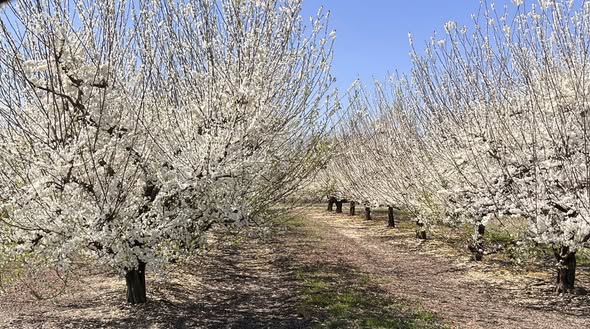
Trees in bloom from a social media person that says he was involved in the breeding… this is his orchard of them.

515501324_30771218442469182_5507899796468093361_n

There is no dispute i dont think that Ruby Queen is a great plum to grow here and obviously there… however information is lacking on Ruby Sweet… as there isnt as much information out there other than Okies old wording. and a few scattered growers that are mostly shy about sharing information.

Threads like this may get more folks to grow Ruby Sweet… but more likely Ruby Queen. I think it has sparked interest at the least.

Perhaps Marcus as he is an avid storyteller will bring it further than we can when he gets his going.

1 Like

You are correct… there is no trustworthy documentation of Ruby Queen being a plum capable of achieving almost black colored flesh- very deep purple. Do you have any reports of growers describing it as grown as far north as me? What is well documented is that J. plums and pluots sometimes realize darker color when grown further north.

1 Like

I’ve asked Jen, my agent at Adams County Nursery, for her opinion on this topic. She is immersed on the qualities of the varieties that ACN sells and is part of the family that owns it. I’ll get back to you on what she knows about its regional flesh coloration.

I feel certain that what they’ve been selling me for the last 15 or 20 years is genuine Ruby Queen because nothing else meets its description as far as quality and timing of harvest. The picture you show is how one would look if I picked it too early. When it looks like that here it isn’t something you’d likely want to eat.

Commercial growers cannot handle a plum properly that has a ripening period that can extend a month from first to last pick. I have to feel every single plum when I harvest them… or shake the tree so the ripe ones will drop. Great for the home orchardist with the time to devote to a few trees but a nightmare for the commercial grower. Valor is like that. Empress is not.

Why is the flesh color issue so important to you? Do you suspect that my trees are not genuine Ruby Queen?

No. Your harvest times fit as well as description.

Its not important… other than the fact that Okie went out of his way to add the word ‘blood’ to one and omit that word on the other.

Ruby is more purple than Blood Red on the color chart i think… so perhaps that is why it is the Queen. If we are to interpret Okie… then we have to imagine that Rubysweet is going to be ‘sweeter’. Why else would he choose that name?

Because Queen was taken or because the word sweet would help sell the tree. Honey Crisp doesn’t taste like honey at all, but the word is a proven brand enhancer. Fruit names are chosen to help sell a tree as much as to describe it. Kids would have a lot of fun with Flavor Grenade plots is it worked as the name suggests.